Categories
Leaders

Mukesh Ambani commits Rs 7 Lakh cr to Gujarat for 5 years

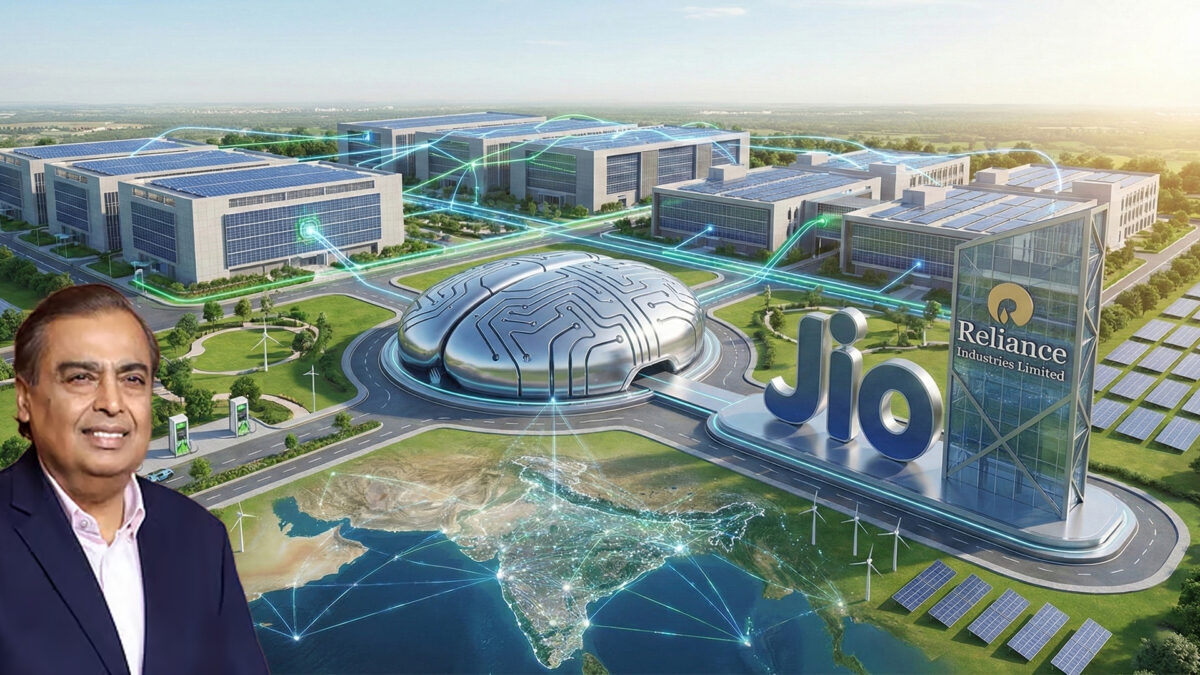
Reliance Industries Chairman Mukesh Ambani on Sunday announced an investment of Rs 7 lakh crore in Gujarat over the next five years, reaffirming the group’s long-term commitment to the state. The announcement was made at the Vibrant Gujarat Regional Conference held in Rajkot, which focused on development in the Kutch and Saurashtra regions.

Ambani said the proposed investment is nearly double what Reliance invested in Gujarat over the previous five years. He described the commitment as a strategic push to strengthen Gujarat’s role in India’s growth story, while creating large-scale employment and boosting industrial capacity.

A major share of the investment will go into transforming Jamnagar into a global clean energy hub. Reliance plans to expand projects related to solar power, green hydrogen, energy storage and advanced materials. The Jamnagar complex, already a key refining and petrochemicals centre, is expected to evolve into a major exporter of clean energy solutions.

Reliance also plans to set up one of India’s largest AI-ready data centres in Gujarat and roll out an India-specific artificial intelligence platform through Jio. The platform is aimed at making AI accessible in Indian languages and supporting digital services across sectors.

In addition to energy and technology, the investment roadmap includes healthcare, education and sports infrastructure. Ambani said Reliance would support Gujarat’s preparations for hosting the 2036 Olympic Games, if India’s bid succeeds.

At the same event, Adani Ports and SEZ Managing Director Karan Adani announced a Rs 1.5 lakh crore investment plan for Mundra, including port expansion and a large renewable energy park. Together, the announcements underscored Gujarat’s position as a major destination for private investment.

Also Read: Adani plans ₹1.5 lakh cr investment in Kutch

Categories
Leaders

Google founders Brin and Page cut ties with Silicon Valley

Google cofounders Sergey Brin and Larry Page are reducing their connections to California, the state where they built one of the world’s biggest tech companies. This comes as California plans a proposed wealth tax that could affect the richest residents.

Records show that Brin and Page have moved several of their business companies out of California. One example is T‑Rex LLC, a company managed in Palo Alto, which was changed into T‑Rex Holdings in Delaware in late December 2025. The new company lists its main office in Reno, Nevada, while Brin and Page remain in charge.

Brin has either closed or moved around 15 California-based companies linked to his investments, including a private yacht and airport projects. Page has acted even more, moving more than 45 companies out of California or making them inactive, while relocating his family office and other businesses to Delaware and other states. He has also bought a luxury property in Miami, showing that he is spreading his personal and business presence across different states.

The timing of these changes is connected to a California ballot measure expected in November 2026. If approved, the law would tax residents with net worth over $1 billion at 5 percent. The tax could be applied retroactively from January 1, 2026. Critics say this might cause wealthy people to leave the state.

Other tech leaders, like LinkedIn founder Reid Hoffman, have spoken against the tax, saying high taxes could slow down innovation and investments. Brin and Page’s move shows how new tax laws may influence where billionaires keep their businesses and homes.

By moving companies and personal offices out of California, Brin and Page are preparing for the possible tax while continuing their investments and lifestyle in other states. Their decision has attracted attention because it highlights the impact of wealth taxes on some of the world’s richest people.

Also Read: US lets India buy Venezuelan oil

Categories
Leaders

Zoho founder faces $1.7bn bond in divorce case

Zoho co‑founder Sridhar Vembu has been asked by a California court to post a $1.7 billion bond as part of his ongoing divorce proceedings with his estranged wife, Pramila Srinivasan. The unusual order, issued in January 2025, is intended to protect her share of marital assets while the case continues.

Vembu, who relocated to India in 2019, and Srinivasan, who remained in the US., had been married for nearly 30 years. Their divorce, which began in 2021, involves complex disputes over property and financial interests accumulated during their marriage. Under California law, assets acquired while married are generally considered joint property, and both parties have a right to an equitable share.

The court order included the appointment of a receiver to oversee several US-based entities linked to Vembu and temporarily blocked certain corporate restructuring moves, aiming to prevent any transfers that might affect Srinivasan’s potential claims. Court filings suggest that Srinivasan’s legal team alleged Vembu transferred significant business stakes and intellectual property without her consent, prompting the court to act.

Vembu’s US attorney, Christopher C. Melcher, has strongly criticised the bond order, calling it “invalid” and legally impossible to meet. He said the order was issued on limited notice and based on incomplete information. Melcher also highlighted that Vembu had already offered Srinivasan a 50 percent share in Zoho Corporation Pvt Ltd and had transferred ownership of their family home to her, offers which she reportedly declined.

Melcher further pointed out that some of Srinivasan’s legal counsel were not licensed in California and accused them of misleading the court. He added that the matter is not about alimony, as no support order has been requested.

This case illustrates the challenges of high-stakes, cross-border divorces, especially when major business interests are involved. While the bond order has made headlines for its unprecedented size, insiders say the situation is less about money and more about ensuring fair treatment under the law.

Vembu and his team have indicated they will continue to contest the bond while the legal proceedings move forward, aiming for a resolution that respects both parties’ rights.

Also Read: Alphabet beats Apple to become No. 2 company

Categories
Leaders

Vedanta chairman Anil Agarwal’s son dies at 49

Agnivesh Agarwal, the eldest son of Vedanta Group chairman Anil Agarwal, passed away at the age of 49 in the United States, days after sustaining injuries in a skiing accident. He died following a sudden cardiac arrest while undergoing treatment, according to the family.

In an emotional message shared on social media, Anil Agarwal described the loss as the “darkest day” of his life, saying the family was devastated by the sudden turn of events.

“Today is the darkest day of my life. My beloved son, Agnivesh, left us far too soon. He was just 49 years old, healthy, full of life, and dreams. Following a skiing accident in the US, he was recovering well in Mount Sinai Hospital, New York. We believed the worst was behind us. But fate had other plans, and a sudden cardiac arrest snatched our son away from us,” Agarwal wrote in a post on X.

He said Agnivesh was admitted to Mount Sinai Hospital in New York. However, his condition deteriorated unexpectedly.

Born in Patna on June 3, 1976, Agnivesh studied at Mayo College, Ajmer, and later played a key role in setting up Fujeirah Gold and served as Chairman of Hindustan Zinc.

Tributes have poured in from industry leaders and associates, remembering Agnivesh as a capable professional and a warm, grounded individual.

Categories
Leaders

Rekha Jhunjhunwala’s Titan stake hits ₹20,000 crore

Rekha Jhunjhunwala’s investment in Titan Company Ltd has crossed the ₹20,000 crore mark, following a sharp rise in the company’s share price to record levels. The surge comes after Titan reported strong quarterly performance, reaffirming investor confidence in the Tata Group-owned company.

Titan shares climbed over 4 percent, hitting an intraday high of around ₹4,300 on the BSE. This rally significantly boosted the value of Jhunjhunwala’s 5.32 percent stake, underscoring the wealth creation potential of long-term holdings in India’s blue-chip companies.

The growth momentum was led by Titan’s jewellery business, which includes brands such as Tanishq, Mia, Zoya, and CaratLane. The division saw a remarkable 41 percent year-on-year increase, fueled by strong festive season demand, rising premiumisation, and a growing retail footprint. Gold coin sales nearly doubled, while studded jewellery saw solid double-digit growth. Titan also expanded internationally, targeting markets in the Gulf, Singapore, and North America.

Other segments of Titan’s diversified portfolio also contributed to the positive performance. The watches division grew by over 13 percent, while eyewear and fragrances continued to see steady gains. Titan’s omni-channel approach, combining physical stores and online presence, helped sustain consumer demand beyond the holiday season.

Market analysts have praised Titan’s growth strategy and operational execution. Brokerage Nomura reaffirmed a Buy rating, highlighting the company’s potential to outpace industry growth and capture further market share.

The rise in Titan’s stock demonstrates how consistent performance, strong brand equity, and strategic expansion translate into tangible investor value. For Rekha Jhunjhunwala, the milestone is a reflection of patience and faith in one of India’s most trusted consumer brands, illustrating the power of long-term investment in creating significant wealth.

Also Read: Venezuela to send 30–50 mn barrels of oil to US

Categories
Leaders

Marc Berson joins Mastek board to boost AI

Mastek, the global digital engineering and cloud transformation company, has appointed Marc Berson, a seasoned technology executive from Google, to its Board of Directors, effective January 1, 2026. This move reflects Mastek’s ambition to strengthen its AI and cloud initiatives as it expands its footprint across global markets.

Berson, currently Google’s Chief Information Officer, has over three decades of experience in driving digital transformation for major corporations. He has held leadership roles at Gilead Sciences, Hewlett‑Packard, IBM, and Philips, helping organizations modernize technology systems and leverage digital tools to achieve business growth. His deep expertise in cloud solutions and AI will provide Mastek with strategic guidance as it works to deliver innovative, enterprise-ready solutions.

Umang Nahata, CEO of Mastek, said, “Marc’s experience in leading large-scale technology transformations is a perfect fit for Mastek’s AI-first agenda. His insights will help us further strengthen our offerings and deliver measurable impact for our clients.”

Berson expressed excitement about joining Mastek, saying that the company’s focus on AI-enabled transformation resonates with his professional experience. “I look forward to contributing to Mastek’s journey of helping enterprises harness the power of AI and cloud technologies to create meaningful business outcomes,” he said.

Mastek, which operates in over 40 countries and serves clients across sectors like healthcare, retail, financial services, and the public sector, has been steadily investing in cloud and AI capabilities. The company is focusing on GenAI-powered solutions and strategic partnerships that simplify digital transformation and help businesses achieve faster results.

With Berson on board, Mastek aims to combine global technology insight with local execution expertise, positioning itself as a trusted partner for enterprises looking to embrace AI-first strategies and accelerate their cloud adoption. This appointment underscores Mastek’s commitment to innovation, leadership depth, and delivering tangible value to clients worldwide.

Also Read: Apple’s made-in-India iPhones cross $50 bn in 2025

Categories
Leaders

Air India seeks new CEO as leadership changes loom

Tata Sons has begun a global search for a new CEO to lead Air India, signaling a potential leadership change at the airline. Campbell Wilson, who joined as CEO in July 2022, still has a contract until June 2027, but the group is considering a transition sooner.

Chairman N. Chandrasekaran has reportedly spoken with executives from leading carriers in the UK and US as possible successors. The move is part of Tata Sons’ effort to strengthen Air India’s operations and improve overall performance.

Wilson has overseen major organisational changes, including the merger with Vistara and integration of other subsidiaries. However, sources indicate challenges remain, such as aircraft delivery delays, refurbishment slowdowns, and inconsistent service, particularly on long-haul routes.

Air India Express, the group’s low-cost carrier, is also under review, with leadership assessments ongoing across the airline group. Wilson’s exit from the Air India Express board in April 2025 hinted at early restructuring, although Tata Sons says no formal succession plan has yet been finalised.

The leadership search reflects Tata Sons’ focus on ensuring Air India not only grows but competes effectively on the global stage, building on investments made since privatisation while tackling lingering operational challenges.

Also Read: Trump flags tariff risk over India’s Russian oil imports

Categories
Leaders

Instagram enters AI era, Mosseri tells creators

Instagram CEO Adam Mosseri has signaled a major shift in how content will be valued on the platform, declaring the era of highly polished, curated posts effectively over. With AI-generated content becoming widespread, carefully staged visuals no longer hold the same appeal. Instead, Mosseri says, authenticity and originality are emerging as the most important qualities for creators.

In an end-of-year message shared on Instagram and Threads, Mosseri reflected on the challenges and opportunities posed by AI. “Flattering imagery is cheap to produce and boring to consume,” he noted, highlighting how users now often share raw, unpolished moments privately rather than posting them publicly. This trend is giving rise to a “raw aesthetic,” where candid, imperfect content feels more human and engaging.

Mosseri warned that AI’s ability to replicate creator styles at scale makes originality a crucial differentiator. Creators who focus on personal stories, real-life experiences, and their unique voice will be better positioned to connect with audiences than those chasing perfection.

AI also complicates trust on social media. Mosseri acknowledged that distinguishing real content from AI-generated media will grow increasingly difficult. He suggested exploring new ways to verify genuine human-created content, including marking photos at capture or enhancing ranking systems to reward originality.

For creators, the message is clear: the future of social media will favor genuine, relatable, human content over flawless visuals. Success in 2026 and beyond will depend less on aesthetic perfection and more on storytelling, honesty, and the ability to connect authentically with audiences in an AI-driven world.

Also Read: Adani Enterprises opens Rs 1,000 cr NCD issue

Categories
Leaders

Zomato CEO says New Year’s eve deliveries smooth

Zomato CEO Deepinder Goyal has clarified that the food delivery platform’s record-breaking performance on New Year’s Eve was achieved without offering any extra incentives beyond standard pay. Despite some gig workers calling for a nationwide strike, over 4.5 lakh delivery partners completed more than 75 lakh orders for over 63 lakh customers across India, marking the busiest day in the company’s history.

Goyal explained that standard New Year’s Eve pay rates, combined with strong support from local authorities, were sufficient to keep operations running smoothly. He acknowledged that a small number of disruptions occurred due to “miscreants” but said these were effectively managed, ensuring minimal impact on customers.

The CEO also addressed criticisms about the gig economy. He argued that if the system were fundamentally unfair, large numbers of people would not choose to work in it. Highlighting the flexibility and earning potential of gig work, he said it has become an important source of organised employment in India, benefiting both workers and their families.

On calls for more regulation, Goyal stated that the gig economy does not need additional rules. He emphasised that existing measures, including pay transparency, insurance, and safety provisions, make the current model sustainable. He suggested that further regulation could inadvertently reduce opportunities for workers while limiting the industry’s growth potential.

Goyal’s remarks come amid ongoing debate about delivery pressures, pay structures, and social security for gig workers, especially in light of initiatives like the 10‑minute delivery promise and growing competition from quick-commerce platforms.

Thanking delivery partners and ground teams, Goyal said their dedication and resilience made the record-breaking day possible. He urged the public not to be influenced by “narratives pushed by vested interests” and described the performance as a testament to the professionalism and commitment of India’s gig workforce.

Also Read: Vision Pro hits sales snag, Apple halts production

Categories
Leaders

Tarun Garg named Hyundai India MD & CEO

Hyundai Motor India Limited (HMIL) has entered a new chapter with Tarun Garg taking charge as Managing Director and Chief Executive Officer (MD & CEO) from January 1, 2026. His appointment is significant as he becomes the first Indian national to head the company since Hyundai began operations in India in 1996, underscoring the growing role of Indian leadership in global corporations.

Tarun Garg brings with him over three decades of rich experience in the automotive industry, spanning sales, marketing, strategy, finance, distribution and brand building. Since joining Hyundai Motor India in December 2019, Garg has played a pivotal role in strengthening the company’s market position. He previously served as Director – Sales, Service and Marketing, and later as Whole-time Director and Chief Operating Officer, during which the company reported record-breaking sales for three consecutive years, improved profitability and robust EBITDA margins.

One of the key highlights of his recent tenure was Hyundai Motor India’s landmark IPO in 2024, one of the largest public offerings in the Indian market, which further strengthened the company’s financial standing and public presence.

Before Hyundai, Garg spent a long and successful stint at Maruti Suzuki India, where he held several senior leadership roles, including Executive Director. His academic background includes a Mechanical Engineering degree from Delhi Technological University and an MBA from IIM Lucknow.

Speaking on his new role, Garg described the appointment as a privilege and said he aims to build on Hyundai’s strong legacy in India. His focus areas include sustainable growth, innovation, advanced mobility solutions and customer-centricity, while reinforcing the company’s commitment to the ‘Make in India’ initiative.

Tarun Garg succeeds Unsoo Kim, who will move back to Hyundai’s global headquarters in South Korea. The leadership transition reflects Hyundai’s confidence in India as a strategic market and signals a future driven by local insight and global ambition.

Under his leadership, HMIL plans to accelerate investments in electric vehicles, hybrid technology and connected mobility, with a proposed investment of around ₹45,000 crore by 2030. Strengthening localisation, boosting exports and deepening engagement with employees, dealers and suppliers will also be key priorities.

Also Read: Warren Buffett retires as Berkshire CEO After 6 decades