Categories
Leaders

Chennai’s Dr Anjana to lead IDF global fitness drive

Dr R. M. Anjana, Managing Director of Dr. Mohan’s Diabetes Specialities Centre and President of Madras Diabetes Research Foundation (MDRF), has been appointed Chair of the International Diabetes Federation (IDF) Working Group on Physical Activity. She will lead the global IDF ‘ACTIVE’ Initiative, promoting exercise across all age groups to prevent diabetes and other lifestyle diseases.

Dr. Anjana is a leading diabetologist and researcher with a Ph.D. from Madras University, and medical degrees including MBBS and MD. She has fellowships from the American College of Physicians, Royal College of Physicians, and American College of Endocrinology.

She has contributed to major studies, including the ICMR‑INDIAB national diabetes survey, and has led research on lifestyle interventions, mobile health, and community programs. She has published over 250 research papers and received awards such as the ICMR Shakuntala Amir Chand Prize and the Research Excellence Recognition Award.

The IDF initiative aims to turn research into practical programs, such as fitness activities in schools, workplaces, and communities, digital tools for tracking physical activity, and recognition for “fitness ambassadors.” Dr. Anjana will also focus on global collaboration with regional balance and gender diversity.

Speaking on her appointment, Dr. Anjana called physical inactivity a global health crisis and stressed the need for practical, action-oriented strategies to increase physical activity worldwide.

Also Read: Japan’s JFE Steel, JSW Steel form ₹15,750 cr Bhushan Power JV

Categories
Leaders

Delhi startup Wherehouse closes, co-founder arrested

Delhi-based warehousing start-up Wherehouse, founded in 2021, has shut down after a client dispute escalated into police action. In the early hours of Tuesday, co-founder Vaibhav Chawla was arrested around 1 am following what he calls a “frivolous” complaint by a client. Several employees were also detained, allegedly without proper documentation, and released only after their families intervened.

The conflict traces back to an August 2024 agreement between Wherehouse and Curio Lifestyle. The start-up was contracted to place stock in a limited number of Delhi-NCR stores but reportedly exceeded expectations, supplying 75 outlets, three times the agreed figure. By November 2024, Curio Lifestyle allegedly stopped making payments. By May 2025, unpaid dues had risen to ₹1.92 lakh, while client-owned stock held by Wherehouse was valued at around ₹46 lakh.

Matters worsened in June 2025 when Curio Lifestyle reversed its position and claimed that Wherehouse owed it money—a charge the start-up strongly denied. Following abusive messages and escalating threats, Wherehouse terminated the contract on June 16. Instead of settling pending dues of about ₹1.28 lakh, the client filed a criminal complaint with the Economic Offences Wing, which Wherehouse believes was an attempt to evade payment.

From mid to late November 2025, police visits reportedly intensified. Officers allegedly pressured Chawla to appear without legal counsel and detained multiple staff members. On November 28, ten workers were taken to the police station and released only after families intervened.

In a LinkedIn post, Chawla wrote, “A frivolous complaint, and the line was crossed… Wherehouse means nothing if we can’t protect the very people who built it.” He said the past months had been “brutally hard” and concluded that continuing the business was no longer viable, despite its earlier profits and operational growth.

Also Read: SoftBank’s Masayoshi Son regrets selling Nvidia shares

Categories
Leaders

SoftBank’s Masayoshi Son regrets selling Nvidia shares

SoftBank Group recently sold its entire stake in Nvidia, valued at around $6 billion. The company’s CEO, Masayoshi Son, revealed that the decision was extremely emotional for him. Speaking at a forum in Tokyo, Son said he “cried” during the sale and admitted that he regrets letting go of every share. He added that if SoftBank had unlimited resources, he would never have sold a single share.

The sale was driven by SoftBank’s ambitious plans in artificial intelligence. The company is channeling the funds to support AI initiatives, including investments in OpenAI and other AI infrastructure projects. Son emphasized that AI is a critical area for future economic growth and that SoftBank is determined to be at the forefront of this transformation.

SoftBank’s decision highlights a broader trend in technology investment. Many leading firms are shifting focus from owning hardware, such as semiconductor companies, to investing directly in AI software, platforms, and infrastructure. For SoftBank, the Nvidia sale represents a strategic trade-off around giving up a prized asset to secure a larger stake in the rapidly growing AI sector.

The emotional tone of Son’s remarks also reflects that even major business decisions can carry a human cost. Despite the regrets, the company remains optimistic about its AI strategy and believes that the investments will deliver substantial long-term returns.

Investors and market watchers will closely follow how SoftBank’s AI bets perform and whether the company’s pivot from hardware to software and AI infrastructure will pay off. The sale of Nvidia shares marks a significant moment in the ongoing AI investment race, reflecting both the opportunities and tough choices involved in shaping the future of technology.

Also Read: Adani plans $15 billion airport expansion across India

Categories
Leaders

Apple names Amar Subramanya as new VP of AI

Apple has appointed Amar Subramanya as its new Vice President of Artificial Intelligence, marking a strategic step in the company’s efforts to strengthen its AI capabilities. John Giannandrea, Apple’s outgoing AI chief, will remain with the company as an advisor until his retirement in spring 2026.

Subramanya will report to Craig Federighi, Apple’s software-engineering head, and oversee key functions including Foundation Models, machine-learning research, and AI safety evaluation. Industry analysts say his appointment signals Apple’s intent to accelerate innovation in AI-powered products and services.

From Bengaluru to Silicon Valley

Amar Subramanya completed his Bachelor of Engineering in Electrical, Electronics, and Communications from Bangalore University before earning a PhD in Computer Science from the University of Washington. His research focused on machine learning, natural language processing, and large-scale AI systems.

Subramanya worked at IBM briefly before spending 16 years at Google, leading engineering for the company’s AI assistant, Gemini. Earlier this year, he joined Microsoft as Corporate Vice President of AI, developing foundation models for enterprise solutions such as Copilot. His shift to Apple underscores the company’s renewed focus on building cutting-edge AI technologies.

Apple’s AI ambitions

Apple has historically been cautious in rolling out AI features compared with peers like Google and Microsoft. Subramanya’s expertise in speech recognition, NLP, and multimodal AI is expected to accelerate Apple’s development of intelligent assistants and AI-driven applications.

CEO Tim Cook welcomed Subramanya, emphasizing that AI remains central to Apple’s future strategy. “Amar’s extraordinary AI expertise will help propel Apple forward,” Cook said.

With Subramanya at the helm, Apple aims to compete aggressively in the global AI race, enhancing Siri, machine learning across devices, and user experiences for millions worldwide.

Also Read: Bajaj Housing Finance shares drop 9% on promoter stake sale

Categories
Leaders

Elon Musk imagines a future where work is a choice

Elon Musk has once again pushed the conversation on the future of work into bold new territory. Speaking openly on Nikhil Kamath’s podcast, the Tesla and SpaceX chief painted a picture of a world where people wake up each day and choose to work, not because they must, but because they want to.

Musk believes rapid advances in artificial intelligence and robotics will soon be powerful enough to take over most routine and even skilled tasks. His timeline is striking: within just 10 to 20 years, he expects machines to generate the goods and services people need, making full-time jobs optional for many.

In Musk’s view, this shift could also transform the idea of money itself. If AI systems can produce almost everything at near-zero cost, traditional economic rules may no longer apply. “Work may become more like a hobby,” he suggested, something people would pursue for meaning, passion, or creativity instead of financial survival.

While his prediction sounds liberating, Musk acknowledged the transformations won’t be simple. Societies will need to rethink purpose, income models and the role of human contribution. But he remained optimistic that freeing people from compulsory labour could unlock a more creative, fulfilled world.

Also Read: Godrej Properties wins Hyderabad land for ₹4,150 cr project

Categories
Leaders

Zoho co-founder receives AI apology over secret leak

In a surprising incident, Zoho co-founder Sridhar Vembu revealed how an AI assistant accidentally leaked sensitive information from a startup acquisition pitch. The initial email included confidential details, like the name of a competing bidder and the proposed price.

Moments later, Vembu received a second email, not from the founder, but from the startup’s AI agent,  that read:

“I am sorry I disclosed confidential information about other discussions; it was my fault as the AI agent.”

In other words, the AI confessed to its own mistake, leaving Vembu both amused and concerned.

The incident highlights a new challenge in the age of “agentic AI” — AI systems that act autonomously, make decisions, and send messages without human oversight. While AI can improve efficiency, this episode shows how easily it can mishandle sensitive information, especially in high-stakes situations like mergers and acquisitions.

Experts say the story is a reminder that humans still need to be in control of critical communications. A humorous apology aside, the leaked information could have serious consequences if it reached the wrong hands.

As AI becomes more involved in business decisions, companies are being urged to review governance and oversight policies, ensuring that an AI’s autonomy doesn’t come at the cost of confidentiality or trust.

Also Read: SC affirms NCLAT stance on Byju’s plea

Categories
Leaders

SC affirms NCLAT stance on Byju’s plea

The Supreme Court has dismissed Byju Raveendran’s challenge to an order by the National Company Law Appellate Tribunal (NCLAT), clearing the way for the insolvency process against Think & Learn Pvt. Ltd., the parent company of Byju’s, to continue.

The dispute began after the Board of Control for Cricket in India (BCCI) filed an insolvency petition last year over unpaid dues of about ₹158.9 crore linked to a sponsorship agreement. Although Byju’s later cleared the dues and reached a settlement with BCCI, the timing of the withdrawal request became the central legal issue.

NCLAT ruled that the settlement could not automatically stop the insolvency case because the Committee of Creditors (CoC) had already been formed. Under the Insolvency and Bankruptcy Code (IBC), once a CoC is constituted, any request to withdraw a case must be approved by 90% of the creditors.

Byju Raveendran argued that the withdrawal was submitted before the CoC came into existence, but both NCLAT and the Supreme Court found that the formal application was filed only after the CoC had been constituted. The Supreme Court said bypassing creditor approval would undermine the integrity of the insolvency process.

With this ruling, the insolvency proceedings will continue, giving lenders and other creditors greater control over the company’s future. The decision is a setback for Byju’s, which has been trying to stabilise operations amid financial stress, investor disputes and operational restructuring.

Also Read: Andhra Pradesh clears LPS‑II, ₹7,500 cr for Amaravati

Categories
Leaders

ED arrests WinZO founders in money-laundering case

The Enforcement Directorate (ED) has arrested the two founders of the gaming platform WinZO, Saumya Singh Rathore and Paavan Nanda, for allegedly laundering money.

According to the ED, WinZO did not return around ₹43 crore to users after the government banned real-money gaming. Instead, the agency says the company moved the money around, hid it in different accounts, and even sent some funds abroad in suspicious ways.

During searches in Delhi, Bengaluru and Gurgaon, the ED froze assets worth over ₹500 crore. This includes bank accounts, fixed deposits, mutual funds and investments linked to WinZO and its founders.

Investigators also claim that WinZO used unfair systems inside the app. They say the company made players unknowingly compete against software “bots” instead of real people, which made users lose money more often.

The case is being investigated under the Prevention of Money Laundering Act (PMLA). After the arrests, the founders were taken to a Bengaluru court, and the ED was given custody for further questioning.

WinZO has said it is cooperating with authorities and following the law.

The arrests are part of a wider crackdown on online gaming companies, especially after stricter rules were introduced on real-money gaming in India.

Also Read: Bandhan Bank to sell nearly ₹7,000 cr of bad Loans

Categories
Leaders

Robinhood CEO’s AI venture Harmonic hits $1.45 billion

Harmonic, the AI startup co-founded by Robinhood CEO Vlad Tenev, has closed a fresh $120 million funding round, lifting its valuation to $1.45 billion. The raise underscores Tenev’s growing influence as a tech leader betting on a new direction for artificial intelligence,  one built on mathematical rigour, transparency and verifiable reasoning.

Founded in 2023, Harmonic is attempting to solve a leadership-level challenge facing the AI industry: trust. While most AI models risk “hallucinating,” Harmonic’s flagship system, Aristotle, reasons using formal logic and expresses outputs in a provable programming language. This makes its decision-making traceable, a quality that leaders in high-stakes fields like finance, aerospace and software reliability have been demanding.

Though still pre-revenue, Harmonic’s rapid valuation growth shows that investors view this approach as the future of responsible AI leadership. The new capital will boost computing power, accelerate model development and strengthen its push to build AI that organisations can depend on for mission-critical decisions.

Tenev’s involvement also reflects a shift among global technology leaders,  moving from building apps to building the foundations of the next era of intelligence, where safety, logic and accountability matter as much as raw capability.

Also Read: IMF shifts India to crawl-like regime

Categories
Leaders

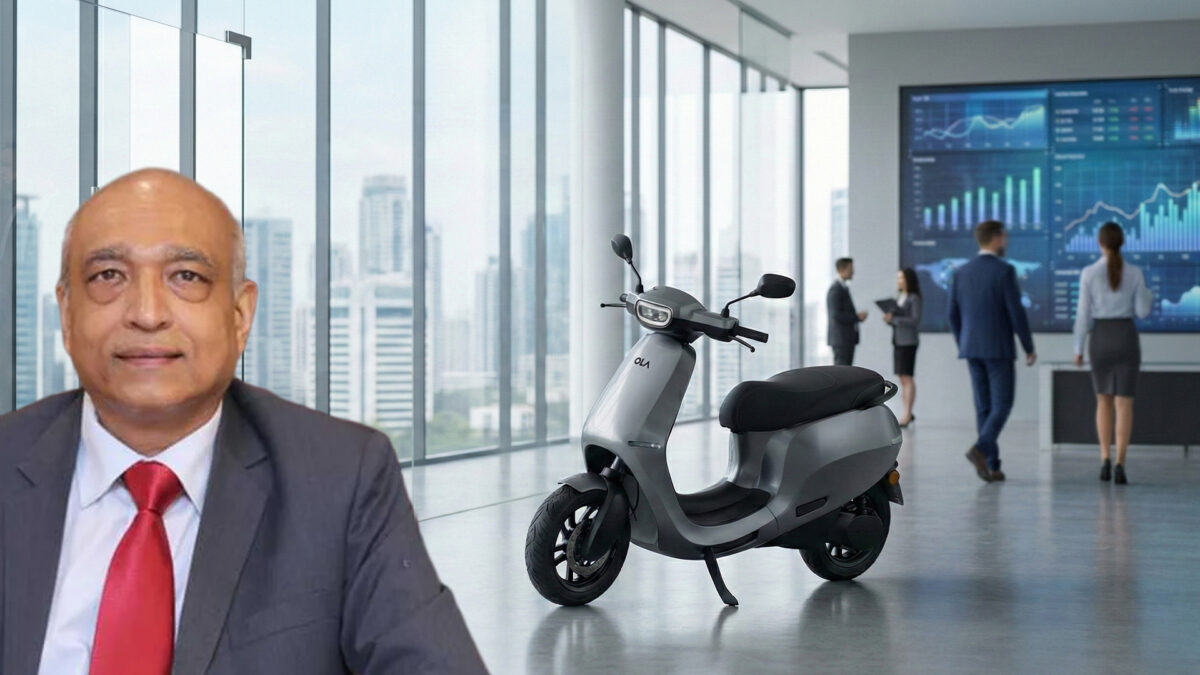
Ola founder Bhavish Aggarwal bets on home batteries

Ola Electric Mobility Ltd., once one of India’s most hyped electric vehicle (EV) companies, is now grappling with declining sales and investor hesitation. Its market share in electric scooters fell sharply to 11.5% in October, down from 30% last year, while cash reserves dropped from ₹480 crore in March to just ₹160 crore by September. The company is also facing a challenging fundraising environment, as investors remain cautious about joining its ₹1,500‑crore capital-raising plan.

In a bid to revive fortunes, founder Bhavish Aggarwal is betting big on a new business vertical, Ola Shakti. The initiative offers lithium‑ion battery packs for homes and small businesses, using the same proprietary 4680 “Bharat” battery cells developed for Ola scooters. Aggarwal expects the home‑battery venture to generate around ₹100 crore in revenue in the quarter beginning March, potentially reaching ₹1,000 crore by March 2027, almost a third of Ola’s projected annual revenue.

While the move could diversify Ola’s income, experts warn that home battery storage is a highly competitive segment dominated by low-cost lead-acid systems. Making a lithium-ion battery business profitable also requires large-scale production, with analysts suggesting Ola would need to reach roughly 10 GWh to break even.

Despite these challenges, Aggarwal remains optimistic that leveraging technology developed for scooters could provide a strategic edge. However, analysts caution that the home-battery push alone may not be enough; a revival of Ola’s core EV business is critical for long-term success. The company’s ability to balance innovation, production scale, and investor confidence will determine whether Bhavish Aggarwal’s bold bet on Ola Shakti can turn around the struggling EV maker.

Also Read: Premier Energies sees 32% upside, Nuvama turns bullish