Categories
Corporate

RBI approves Blackstone’s 9.99% stake in Federal bank

The Reserve Bank of India (RBI) has approved global private equity major Blackstone to acquire up to a 9.99% stake in Federal Bank, paving the way for one of the largest foreign investments in an Indian mid-sized private bank.

Blackstone will invest around ₹6,196 crore through its Singapore-based arm, Asia II Topco XIII Pte Ltd. The investment will be made through a preferential allotment of convertible warrants, subject to shareholder approval and other statutory clearances.

As part of the transaction, Federal Bank will issue up to 27.29 crore warrants to Blackstone at an issue price of ₹227 per share, which includes a premium over the market price. Each warrant can be converted into one fully paid equity share. Once fully converted, Blackstone’s holding will stand just under the 10% regulatory threshold for promoter classification.

The deal had earlier received clearance from the Competition Commission of India (CCI), removing a key regulatory hurdle before the RBI’s final approval.

Under the agreement, Blackstone will also have the right to nominate one non-executive director to Federal Bank’s board, provided its shareholding remains at 5% or more. This gives the investor a limited but meaningful role in the bank’s governance while maintaining its status as a minority shareholder.

Federal Bank is a professionally managed private lender with no single promoter, and its shareholding is widely dispersed among institutional and public investors. Analysts say Blackstone’s entry highlights growing global confidence in India’s banking sector, especially in lenders with strong retail and digital growth potential.

The fresh capital is expected to strengthen Federal Bank’s balance sheet, support future expansion plans, and improve its ability to grow its loan book across retail, MSME, and digital banking segments.

Also Read: Walmart raises pharmacy pay, top roles hit $42 an hour

Categories
Corporate

Walmart raises pharmacy pay, top roles hit $42 an hour

Walmart has announced a significant pay hike for employees working in its pharmacy operations across the United States, offering a welcome boost to thousands of frontline healthcare workers. The move reflects the retail giant’s growing focus on strengthening in-store healthcare services and supporting staff who play a critical role in patient care.

As part of the new structure, around 3,000 pharmacy technician roles have been upgraded to pharmacy operations team lead positions. These roles now earn an average of $28 an hour, with top pay going as high as $42 an hour, depending on location, experience, and performance. For many workers, this marks a major step up in both responsibility and income.

Walmart has also expanded pay ranges for pharmacy technicians, who can now earn up to $40.50 an hour, compared with earlier average wages of about $22 an hour. Importantly, many of these roles do not require a college degree, making them accessible to workers seeking stable, well-paying jobs without formal higher education.

The company says the wage increase is part of a broader effort to attract, retain, and motivate skilled pharmacy staff at a time when healthcare workers across the US are facing heavier workloads and rising costs of living. Walmart also continues to invest in employee growth by covering certification expenses for pharmacy technicians. Since 2016, the retailer has helped more than 22,000 employees gain professional pharmacy certifications.

For workers on the ground, the changes translate into more than just higher pay. The new roles offer clearer career pathways, leadership opportunities, and a sense of recognition for the work they do daily, filling prescriptions, assisting patients, and supporting pharmacists in busy community settings.

Walmart’s pharmacy employees also receive benefits such as health insurance, paid time off, and retirement plans with company matching, adding to the overall value of the compensation package.

Also Read: ElevenLabs raises $500 mn, valuation jumps to $11 bn

Categories
Corporate

Airtel Q3 profit falls 55% to ₹6,631 cr

Bharti Airtel reported a mixed set of results for the third quarter, with strong growth in revenue and operating performance, even as net profit dropped sharply compared with last year.

For the quarter ended December, the telecom major’s consolidated net profit fell 55% year-on-year to ₹6,631 crore, down from a high base in the same period last year. The decline was mainly due to one-time gains recorded in Q3 last year, including benefits from the Indus Towers consolidation, and a one-off provision related to labour law compliance during the current quarter.

Despite the fall in profit, Airtel’s core business showed solid momentum. Consolidated revenue rose nearly 20% year-on-year to ₹53,982 crore, driven by steady growth in India operations and continued expansion in Africa. Higher data usage, premium plans, and postpaid customer additions supported the topline.

A key highlight of the quarter was the improvement in Average Revenue Per User (ARPU), which increased to ₹259, up from ₹245 a year ago. The rise in ARPU reflects better customer monetisation, tariff discipline, and higher adoption of data-heavy plans. Airtel continues to maintain one of the highest ARPUs in the Indian telecom sector.

Operating profitability also strengthened. EBITDA grew over 25% year-on-year to around ₹31,144 crore, with margins improving to nearly 58%, indicating better cost control and operating leverage. Sequentially, both revenue and EBITDA showed growth, underlining stable quarter-on-quarter performance.

During the quarter, Airtel continued to invest in its network, expanding 4G and 5G coverage, adding new towers, and strengthening its fibre footprint. The company also added more smartphone and postpaid users, supporting long-term revenue visibility.

Management said the underlying business remains strong, with improving cash flows and a healthier balance sheet, even though headline profit numbers were impacted by exceptional items and accounting factors.

Also Read: RBI says most ₹2,000 notes returned, still legal tender

Categories
Corporate

Sensex slips 300+ points, Nifty dips below 25,550

Indian markets opened on a weak note on Friday, with the BSE Sensex falling over 350 points and the Nifty50 slipping below 25,550. Investors stayed cautious after the RBI kept interest rates unchanged at 5.25%, while global tech sell-offs and profit-taking added to the downward pressure.

IT stocks led the losses, with TCS and Infosys falling nearly 2%, and all ten Nifty IT constituents trading in the red. Metals and energy stocks, including Tata Steel and NTPC, also saw declines, further weighing on the market.

On the upside, Pharma and FMCG stocks gained as investors sought safer bets amid volatility. Companies like Sun Pharma, Divi’s Labs, and Hindustan Unilever posted modest gains, helping to partially cushion the broader market’s fall.

Global markets influenced domestic trading. Technology shares faced selling pressure in the US and Asia, while futures tied to the S&P 500 were lower, reinforcing the risk-off sentiment. Precious metals like gold and silver extended losses due to a stronger US dollar and weaker global demand.

Market participants are now focusing on upcoming corporate earnings and economic data for fresh cues. While the RBI’s policy was neutral, continued weakness in IT and metals, alongside gains in Pharma and FMCG, is likely to keep trading cautious in the near term.

Also Read: IndiGo faces CCI probe after ₹22 cr flight disruptions

Categories
Corporate

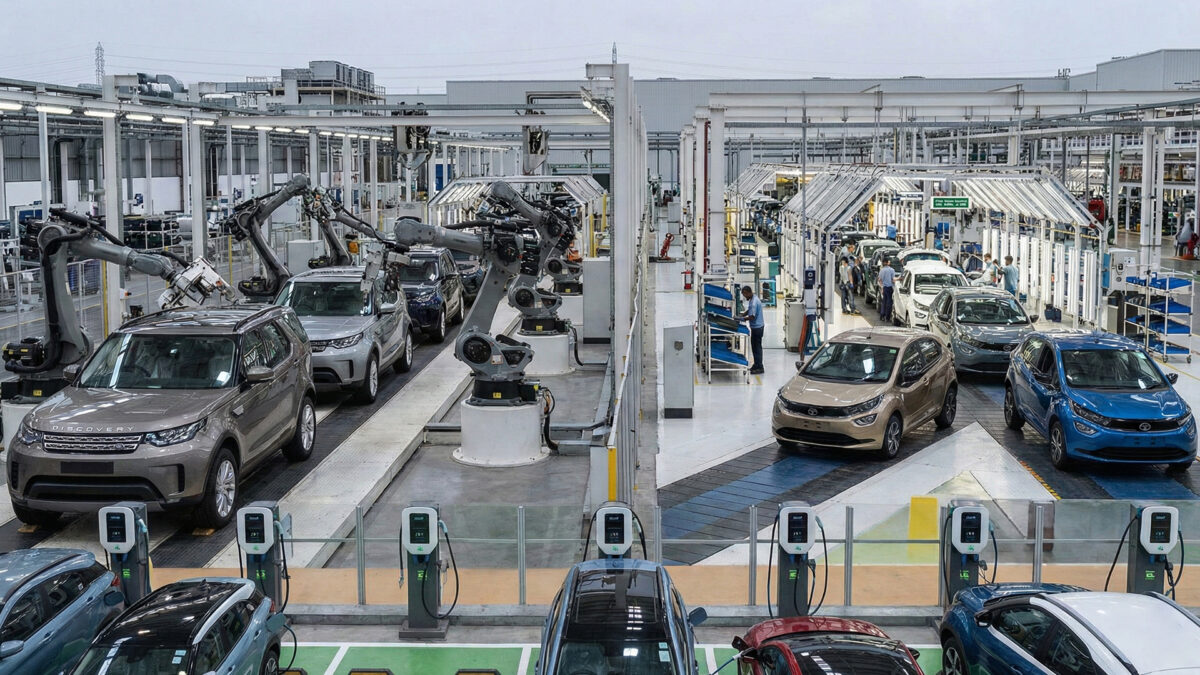
Tata Motors PV Q3 loss ₹3,486 crore

Tata Motors Passenger Vehicles Ltd (TMPVL) reported a consolidated loss of ₹3,486 crore for the third quarter of FY26, a sharp reversal from a profit of ₹5,406 crore in the same period last year. Revenue from operations fell 26% to ₹70,108 crore, reflecting pressure across its business segments.

The decline was mainly driven by Jaguar Land Rover (JLR), Tata Motors’ UK-based luxury car subsidiary. JLR faced a cybersecurity breach that disrupted production and distribution for several weeks, resulting in lost sales and a significant one-time charge. Weak global demand, higher US tariffs, and challenging conditions in China further impacted performance.

For JLR, revenue and profits tumbled, with its EBIT (earnings before interest and tax) turning negative, wiping out last year’s gains. Tata Motors expects JLR to recover gradually, but now anticipates a modest EBIT margin of 0–2% for the full year and continued free cash outflows. The British government has extended a £1.5 billion loan guarantee to support JLR’s operations and investment plans.

Despite international challenges, Tata Motors’ domestic passenger vehicle business performed well. Sales and exports in India rose 22% year-on-year, aided by lower GST rates, stronger market demand, and strategic incentives. This helped offset some losses from JLR and improved sequential performance quarter-on-quarter.

The company’s management said it expects production at JLR to normalise in the coming months, which should boost revenues and cash flows. Tata Motors is also focusing on new product launches, operational efficiency, and brand initiatives to strengthen both domestic and global segments.

Also Read: Anthropic’s AI Agents raise market concerns for Indian IT

Categories
Corporate

Sensex drops 504 points, Nifty falls below 25,700

Markets fell sharply on Thursday, ending a three-day winning streak. The BSE Sensex dropped 504 points, while the Nifty50 slipped below 25,700 at the close. Investors booked profits after recent gains, causing widespread losses across sectors.

Most sectors ended in the red, with IT, metals, and consumer stocks among the hardest hit. Heavyweights like Reliance Industries, Eternal, Airtel, and Tata Hotels declined, while GIFT City and Tata Capital were among the few gainers.

Experts said multiple factors drove the decline: profit-taking after recent gains, global market weakness, and caution ahead of the Reserve Bank of India’s policy meeting. The expiry of index futures contracts also added to volatility.

Mid-cap and small-cap stocks fell, reflecting investors’ risk aversion. Metal stocks dropped in line with weaker global commodity prices. The technology sector also declined amid global demand concerns and valuation pressures.

Market volatility stayed high, with the India VIX signaling increased uncertainty. Investors are watching the RBI’s policy announcement and other economic cues for guidance. Thursday’s session highlighted broad-based selling, with gains limited to select stocks such as GIFT City and Tata Capital.

Also Read: Sensex drops 400+, Nifty dips below 25,650

Categories
Corporate

Trent Q3 profit rises to ₹217 cr, revenue up 15%

Trent Ltd, the Tata Group retailer behind Westside, Zudio, and other brands, reported higher profit and revenue for the third quarter of the 2025‑26 financial year, though analysts cautioned that growth at existing stores could remain under pressure.

For the quarter ending December 31, 2025, Trent’s consolidated revenue rose about 15% to ₹5,345 crore, up from ₹4,657 crore a year ago. Net profit increased nearly 3% to ₹513 crore, compared with ₹497 crore in the same period last year. On a standalone basis, profit grew 36% to ₹640 crore, while revenue rose about 16%, reflecting stronger performance in the company’s core operations.

The company continued expanding its store network, adding 17 Westside and 48 Zudio outlets during the quarter, including its first Zudio store in the UAE. By December 2025, Trent operated over 1,100 stores across 274 cities, with Westside accounting for 278 stores and Zudio for 854, covering more than 15 million square feet of retail space.

Management said gross margins remained stable across both chains, and customer spending improved following economic measures such as tax cuts. Some one-time costs related to labour code changes slightly reduced overall profit.

Investor response was mixed. Trent’s shares rose modestly after the results, but brokerages highlighted that same-store sales,  sales at existing outlets,  may face pressure, creating uncertainty about future growth. While some analysts pointed to operational efficiencies and margin gains as positives, others urged caution due to slower growth compared with earlier quarters.

Also Read: Novo Nordisk sheds $50 bn as 2026 sales weak outlook

Categories
Corporate

Novo Nordisk sheds $50 bn as 2026 sales weak outlook

Novo Nordisk, the Danish pharmaceutical major behind popular weight-loss and diabetes drugs Wegovy and Ozempic, saw its market value drop by nearly $50 billion after it issued a weaker-than-expected outlook for 2026. The guidance raised concerns about slowing growth and led to a sharp sell-off in the company’s shares.

The company said it expects sales to fall between 5% and 13% in 2026, marking a significant slowdown after years of strong growth driven by global demand for obesity and diabetes treatments. The forecast came in well below market expectations and highlighted growing challenges in key markets, especially the United States.

Following the announcement, Novo Nordisk’s shares plunged about 16% on the Copenhagen exchange, while its US-listed stock fell more than 14%. The decline erased tens of billions of dollars in market capitalisation and marked one of the company’s steepest single-day losses in recent years.

Novo Nordisk attributed the weaker outlook mainly to pricing pressure in the US, where policy measures aimed at lowering drug costs are expected to impact revenues. The company is also facing intensifying competition, particularly from rival drugmaker Eli Lilly, which has gained momentum with its own obesity and diabetes medicines.

Another concern is the approaching patent expiries of some products in select international markets, which could open the door to cheaper alternatives and weigh on future sales. Together, these factors are expected to offset continued demand growth for GLP-1 drugs.

In its latest quarterly results, Novo Nordisk reported moderate performance. Sales of Wegovy rose by around 17% year-on-year, while Ozempic sales remained largely flat. Although the results broadly met expectations, investor focus remained firmly on the weaker forward guidance.

Company executives acknowledged that 2026 will be challenging but stressed confidence in the long-term outlook for obesity and diabetes care. Novo Nordisk said it will continue to invest in innovation, manage costs tightly and strengthen its product pipeline to protect growth over time.

Also Read: Washington Post in limelight after massive newsroom layoffs

Categories
Corporate

Washington Post in limelight after massive newsroom layoffs

The Washington Post has come into the global spotlight after carrying out one of the largest newsroom layoffs in its history, affecting more than 300 journalists. The job cuts have drawn widespread attention as they include well-known reporters and international correspondents, raising concerns about the future of global journalism.

Among those laid off is Ishaan Tharoor, a senior international affairs columnist and son of Indian MP Shashi Tharoor. Ishaan had spent 12 years at the newspaper and was known for his widely read column WorldView, which explained complex global issues in simple terms for readers around the world.

Following the layoffs, Ishaan described the moment as heartbreaking and said he was deeply saddened for his colleagues, many of whom had worked together for years. Several other journalists also took to social media to share their shock and disappointment, calling the cuts a major blow to international reporting.

Reports suggest that the restructuring has hit the international desk the hardest, with multiple foreign bureaus being closed. The newspaper has also reduced or shut down coverage of sports and books, signalling a sharp shift in editorial priorities.

Owned by Amazon founder Jeff Bezos, The Washington Post said the layoffs were part of efforts to adapt to a rapidly changing media environment. Like many legacy media organisations, the paper is facing challenges such as declining advertising revenue, digital competition and changing reader habits.

The developments have triggered a strong reaction from media professionals and readers alike, with many expressing concern that such deep cuts could weaken independent journalism and reduce in-depth global coverage. As an institution known for investigative reporting and democratic values, The Washington Post now finds itself at the centre of a wider debate about the future of quality journalism in the digital age.

Also Read: Nintendo stock slides 11% on Q3 profit miss

Categories
Corporate

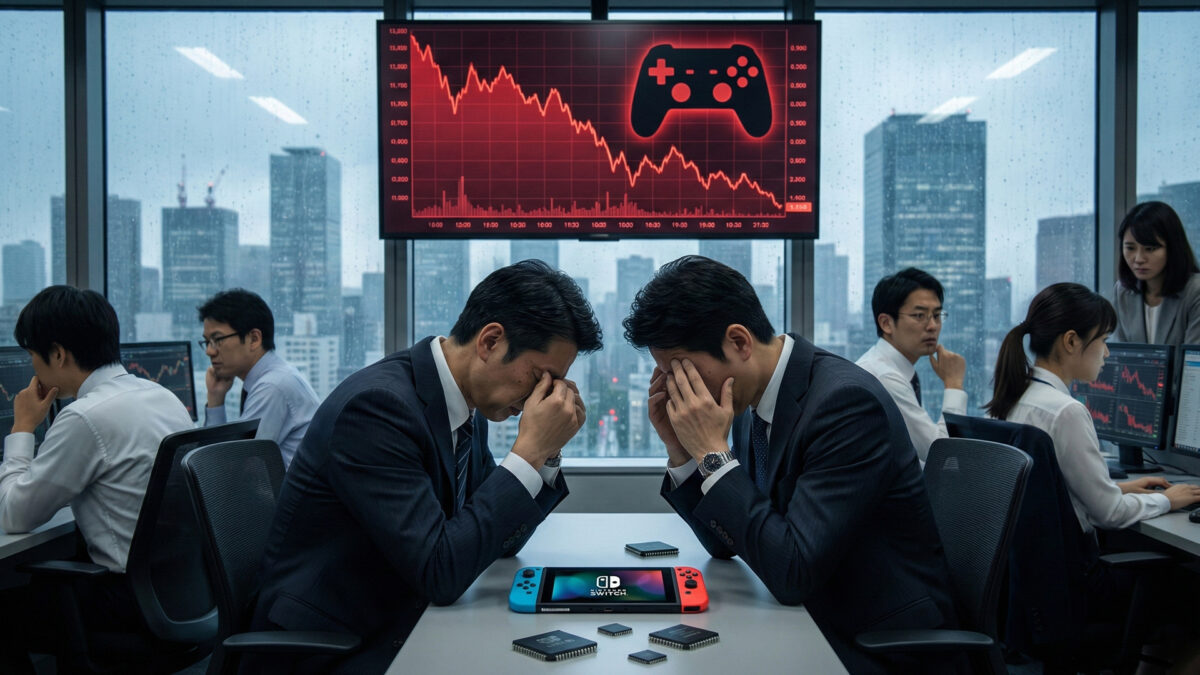
Nintendo stock slides 11% on Q3 profit miss

Nintendo’s shares fell sharply by around 11% after the Japanese gaming giant reported disappointing third-quarter earnings, triggering concerns about shrinking profit margins despite strong hardware sales.

For the quarter ended December 31, 2025, Nintendo’s operating profit came in below market expectations, even as revenue rose sharply year-on-year. The company benefited from robust demand for its newly launched Switch 2 console, which has already sold more than 17 million units, making it Nintendo’s fastest-selling console to date. However, higher production costs reduced overall profitability.

Investors were particularly worried about rising component costs, especially memory chips, which are squeezing margins on hardware sales. Analysts noted that while Nintendo has priced the Switch 2 competitively to drive volumes, this strategy has limited its ability to generate higher profits from console sales.

Concerns were also raised about the software pipeline, with fewer blockbuster game launches expected in the near term. Strong game releases are critical for improving margins, as software typically delivers higher profits than hardware. Without a steady flow of major titles, analysts fear Nintendo may struggle to maintain earnings momentum.

Adding to investor disappointment, Nintendo maintained its full-year profit forecast, which remains below market estimates. The lack of an upgrade signalled management caution about the months ahead, even after a strong holiday sales season.

The sharp fall in Nintendo’s stock pushed it to its lowest level since April 2025 and weighed on broader market sentiment. Analysts said the reaction reflects growing scepticism over whether Nintendo can balance volume growth with profitability in a competitive and cost-inflationary environment.

Despite the sell-off, some market watchers remain positive on Nintendo’s long-term prospects, citing its strong brand, loyal customer base and successful console launch.

Also Read: Nintendo switch tops sales record