Categories
Corporate

SpaceX puts Moon first, Mars to wait now

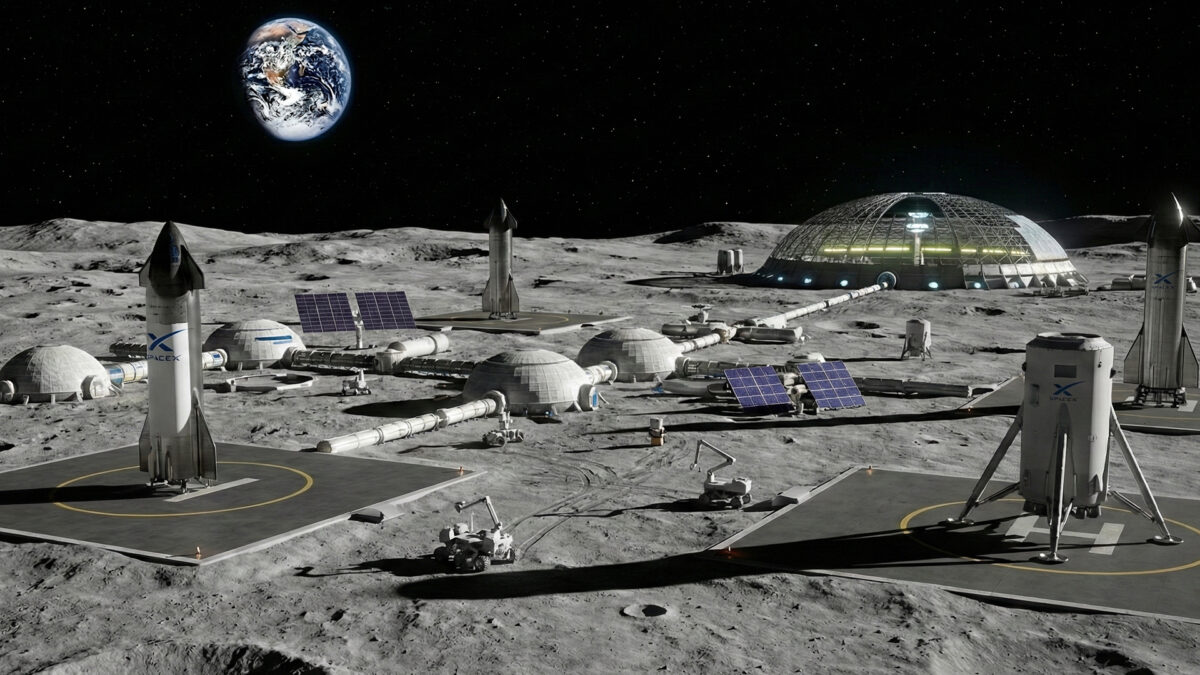
Elon Musk has once again reshaped the future of space travel, saying SpaceX will now focus on building a “self-growing city” on the Moon before sending humans to Mars. The decision marks a pause to Musk’s long-held dream of colonising the Red Planet.

In simple terms, Musk believes the Moon is the smarter place to start. It is closer to Earth, easier to reach, and allows SpaceX to move faster. A trip to the Moon takes just two days, and rockets can be launched every few weeks. Mars, on the other hand, is far away and only reachable during narrow windows that open once every 26 months. Each journey to Mars takes about six months, making mistakes costly and progress slow.

Musk says this difference matters. Being close to Earth means SpaceX can test new technology, fix problems quickly, and improve life-support systems through trial and error. That learning speed, he believes, could help build a sustainable lunar city within the next decade — a place that slowly grows as more people, machines and supplies arrive.

The idea of a “self-growing city” is not science fiction, Musk insists. He imagines small beginnings, basic shelters, power systems and supply chains, that expand over time. With frequent missions, the Moon could become a permanent home for humans, not just a research stop.

Importantly, Musk has made it clear that Mars is still the ultimate goal. He says serious work on a Martian city could begin in five to seven years. But first, SpaceX wants to reduce risks by learning how humans can live off Earth for long periods, starting closer to home.

The shift also fits well with global space plans. SpaceX is a key partner in NASA’s Artemis programme, which aims to return astronauts to the Moon later this decade. Starship, SpaceX’s next-generation rocket, is expected to carry people and cargo for these missions.

By learning to live there on the Moon , Musk believes humanity will be better prepared for the much harder journey to Mars. In his vision, the future of human life beyond Earth will begin not on a distant planet, but on the Moon just above us.

Also Read: Adani Energy wins Japanese funding for 6,000 MW link
Categories
Corporate

Adani Energy wins Japanese funding for 6,000 MW link

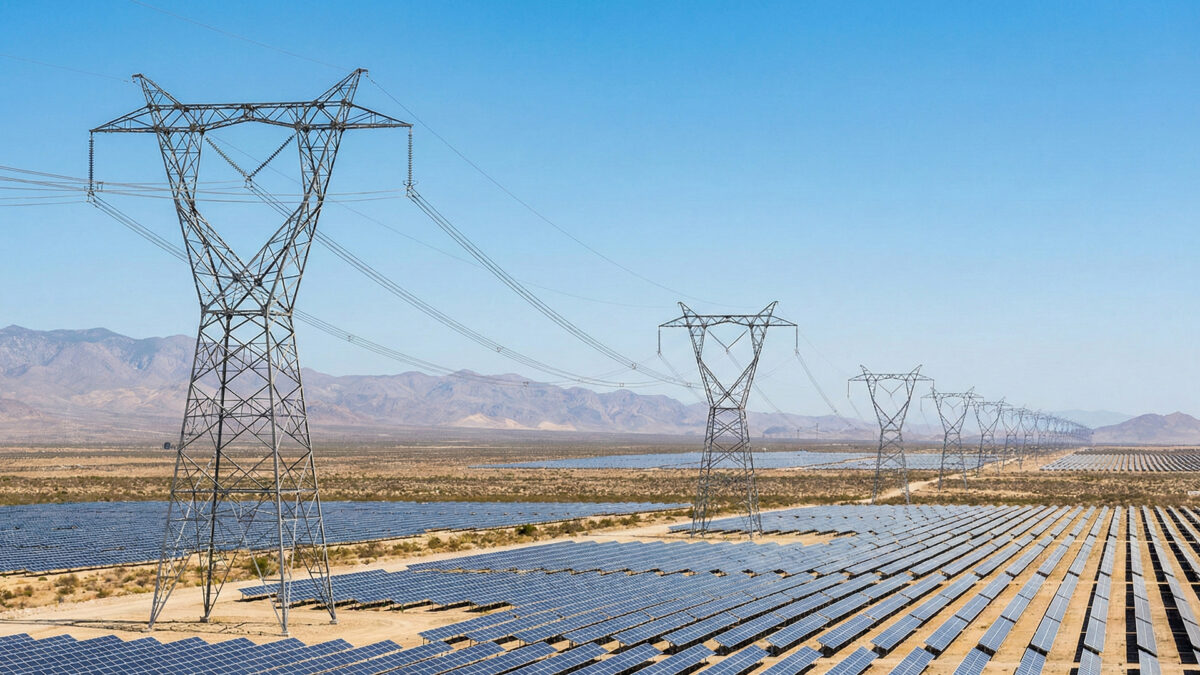
Adani Energy Solutions Ltd has taken a major step in strengthening India’s clean energy backbone by securing long-term funding from Japanese banks for a 6,000 megawatt green energy transmission corridor. The project will help move renewable electricity from areas where it is generated in large quantities to regions where demand is high, making clean power more accessible and reliable for millions of people.

The corridor will run for nearly 950 kilometres, connecting Bhadla in Rajasthan, one of the country’s biggest solar power hubs, to Fatehpur in Uttar Pradesh. Once completed, it will carry electricity generated from solar and other renewable sources across northern India. The project is expected to be operational by 2029.

The financing has come from a group of well-known Japanese financial institutions, led by MUFG Bank and Sumitomo Mitsui Banking Corporation. Their participation reflects growing global confidence in India’s renewable energy plans and in Adani Energy Solutions’ ability to deliver large infrastructure projects. The funding has been structured as a green loan, meaning it meets international environmental and sustainability standards.

What makes this corridor special is the technology being used. The project will use advanced high-voltage direct current (HVDC) systems, which allow electricity to travel long distances with minimal loss. The equipment will be supplied by Hitachi Energy, while Bharat Heavy Electricals Limited (BHEL) will handle key execution work, supporting India’s push for local manufacturing under the “Make in India” programme.

For Adani Energy Solutions, the project is more than just a transmission line. It is part of a larger effort to build a strong, future-ready power network that can support India’s rapid shift to renewable energy. As more solar and wind power is added to the grid, efficient transmission systems like this corridor become critical.

Experts are of the opinion that the project will help stabilise the power grid, reduce dependence on fossil fuels, and ensure that clean energy generated in remote regions reaches homes, factories, and cities without interruption. It also strengthens economic and strategic ties between India and Japan in the clean energy space.

Also Read: Jeff D’Onofrio steps in as Washington Post Chief

Categories
Corporate

Sensex up 300 points, Nifty near 25,800

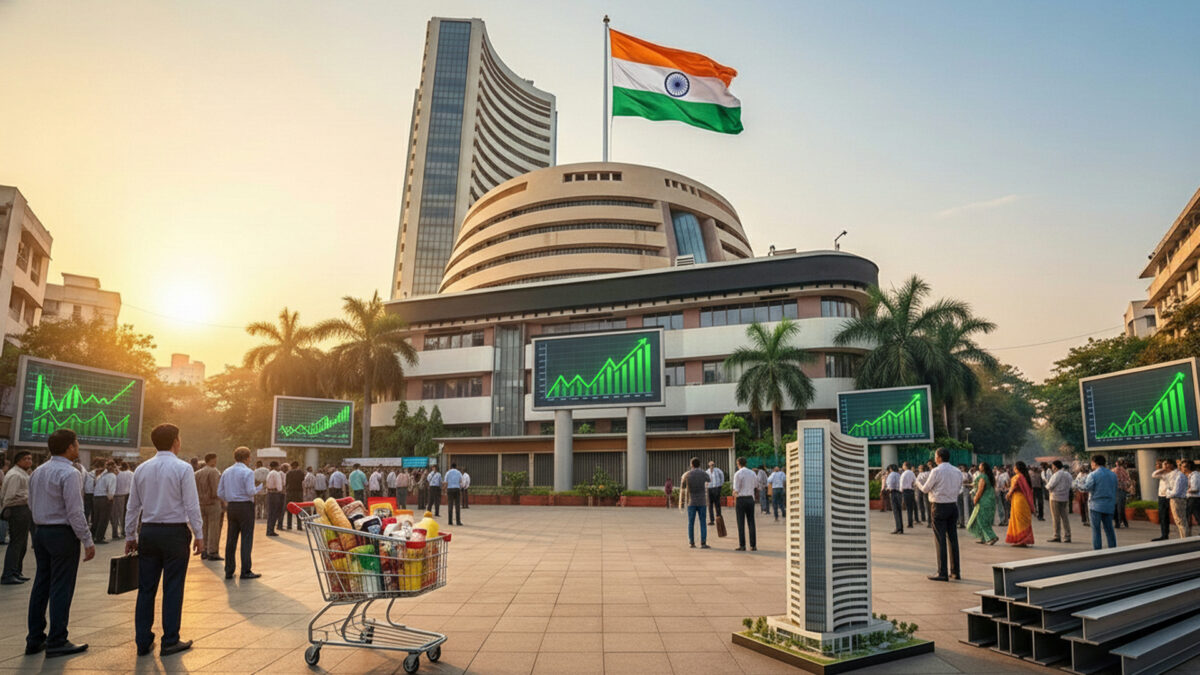
Equity benchmarks opened firmly on Monday as buying interest in heavyweight banking stocks lifted market sentiment. The BSE Sensex rose over 300 points, while the NSE Nifty 50 hovered near the 25,800 level in early trade, supported by positive global cues and steady domestic flows.

The rally was led by State Bank of India (SBI), which advanced sharply after reporting strong quarterly earnings and outlining a healthy growth outlook. The stock’s rise spilled over to the broader PSU banking space, with several public sector lenders posting solid gains. Other frontline financial stocks also traded higher, reflecting renewed confidence in the sector.
Outside banking, select infrastructure and metal stocks moved up on expectations of steady demand and supportive macro conditions, adding to the upward momentum in the indices.

On the flip side, IT stocks remained under pressure, as investors stayed cautious amid concerns over global demand and booked profits after recent gains. The auto sector also saw selling, with most major auto names trading lower as valuations prompted profit-taking. In addition, select pharma stocks slipped, contributing to the mixed tone in the broader market.

Overall market breadth was balanced, with advances in financials offset by weakness in IT, auto and pharma counters. The India VIX declined, indicating easing volatility, while the rupee traded marginally stronger against the US dollar.

Market participants said sentiment remains positive in the near term, but the Nifty’s move towards the 26,000 level will be closely watched, with global cues and ongoing corporate earnings likely to guide further direction.

Also Read: Mahindra to invest ₹15,000 cr in Maharashtra plant

Categories
Corporate

Mahindra to invest ₹15,000 cr in Maharashtra plant

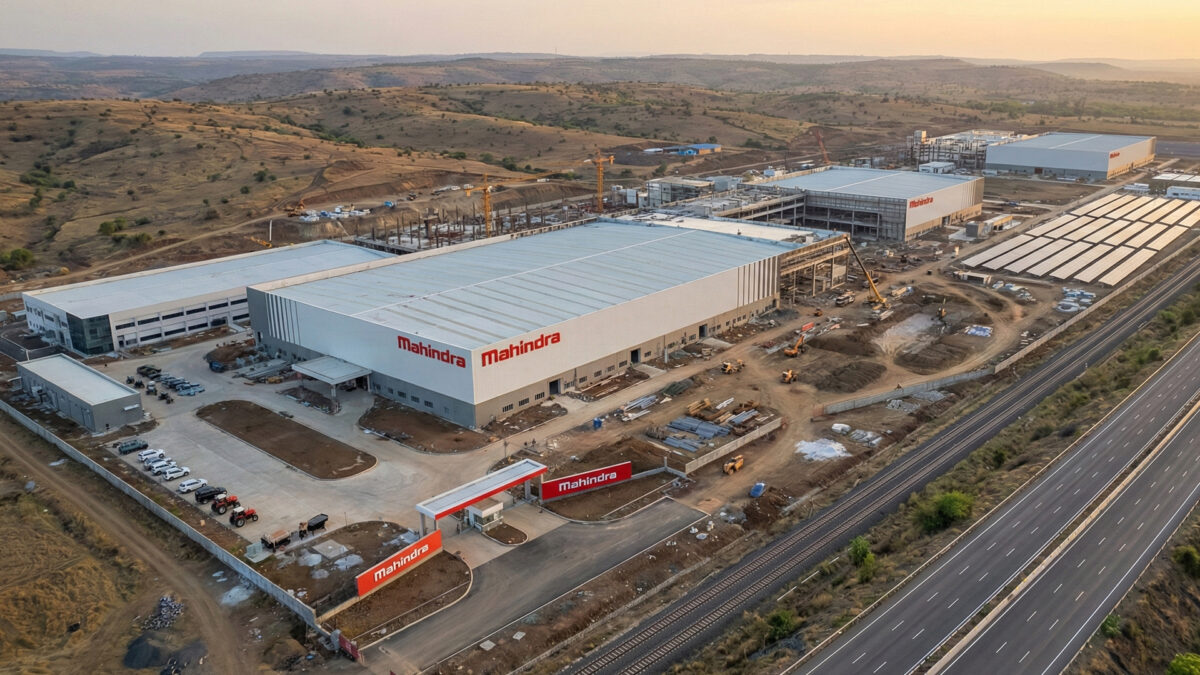
Mahindra & Mahindra (M&M) is set to invest ₹15,000 crore to establish India’s largest integrated automobile and tractor manufacturing facility in Nagpur, Maharashtra. The announcement came at the Advantage Vidarbha investment summit, underlining the region’s growing importance as a hub for industrial development.

The new facility will span 1,500 acres, complemented by a 150‑acre supplier park in Chhatrapati Sambhajinagar (Aurangabad). The park will supply parts to the Nagpur plant and other Mahindra factories in Chakan and Nashik, boosting local supply chains and production efficiency.

Production at the Nagpur plant is expected to begin in 2028. Once operational, it will have the capacity to manufacture more than 5 lakh vehicles and 1 lakh tractors every year, making it the largest such integrated plant in the country.

The plant will be equipped to handle internal combustion engines, electric vehicles, and future mobility technologies, supporting Mahindra’s NU_IQ platform and other next-generation vehicle architectures.

In addition, Mahindra is acquiring over 2,000 acres across three locations in Maharashtra, including land in the Igatpuri-Nashik region, to expand engine production and other advanced manufacturing capabilities.

Officials highlight that the Nagpur location offers strong logistical advantages, with access to the Samruddhi Expressway and major rail links, facilitating the movement of vehicles and components across India and overseas markets.

The project is expected to generate substantial employment opportunities and contribute to the economic development of Vidarbha and nearby areas. Maharashtra’s government has welcomed the investment, describing it as a significant boost to the state’s industrial ecosystem.

This ₹15,000 crore investment is a major step in Mahindra’s long-term manufacturing strategy, reinforcing its commitment to India’s “Make in India for the World” initiative while positioning the company for growth in both domestic and international markets.

Also Read: Tata Steel Q3 profit soars to ₹2,700 cr on Dutch boost

Categories
Corporate

Dow Jones tops 50,000, hits historic milestone

The Dow Jones Industrial Average (DJIA) soared past 50,000 points for the first time on Friday, marking a historic achievement for the US stock market. The index closed at 50,115.67, up 1,206.95 points, or roughly 2.5%, reflecting strong gains across multiple sectors.

This milestone comes after a volatile week in which technology stocks faced heavy selling pressure, prompting some investors to shift their focus to broader market sectors. Analysts say the Dow’s diverse composition, covering industrials, finance, and consumer goods, helped it outperform tech-heavy indices like the Nasdaq.

Among the top contributors, Caterpillar stood out, surging over 7% after posting strong earnings, while Goldman Sachs and Nvidia also rose sharply. Caterpillar’s stock has gained about 27% so far this year, building on last year’s impressive 50% rise.

Investor sentiment has been boosted by expectations that the Federal Reserve may consider future interest rate cuts without disrupting economic growth. Economists note that the market’s broad-based rally signals renewed confidence in the economy, beyond just high-profile tech stocks.

Even as some analysts caution that volatility may continue, Friday’s surge reflects a wider participation in equities, with companies tied to industrial and consumer activity leading the gains. President Donald Trump celebrated the milestone, attributing it to pro-growth policies and a strong economic outlook.

While the Dow hit the historic mark, other major indices posted more modest gains. The S&P 500 and Nasdaq rose, but they remain closely tied to tech sector performance, which continues to experience ups and downs.

Breaking 50,000 points is more than a symbolic achievement. It highlights the resilience of US markets and the confidence of investors across sectors. Analysts say sustained gains will depend on corporate earnings, Fed policy, and global economic conditions, but Friday’s rally provides a boost to market morale and investor optimism.

Also Read: Alphabet breaks $400 bn revenue barrier in 2025

Categories
Corporate

Tata Steel Q3 profit soars to ₹2,700 cr on Dutch boost

Tata Steel reported a huge increase in its net profit for the third quarter (October–December 2025), reaching around ₹2,690–₹2,730 crore, up more than nine times from roughly ₹300 crore a year ago.

The company’s revenue grew about 6% year-on-year, reaching nearly ₹57,000 crore, helped by strong sales in India and higher steel deliveries. Domestic deliveries crossed 6 million tonnes, marking a record for the company.

A major reason for the profit surge was the turnaround at Tata Steel’s Netherlands unit, which moved from a loss last year to a healthy profit. However, the UK business continued to face challenges due to weak demand.

Tata Steel’s EBITDA rose nearly 39%, reaching over ₹8,300 crore, thanks to cost-cutting measures and better efficiency. The company saved around ₹3,000 crore in the quarter and ₹8,600 crore in the first nine months of the year.

Despite tough global steel markets, including competition from China and trade uncertainties, Tata Steel maintained strong performance. The company also reduced its net debt to about ₹81,834 crore, strengthening its financial position.

In India, while steel prices were slightly lower, higher production and deliveries kept profits steady. Overall, the results reflect robust domestic demand, improved margins, and operational efficiency across key units.

Also Read: AI stethoscopes boost early health screening

Categories
Corporate

Alphabet breaks $400 bn revenue barrier in 2025

Alphabet Inc., the parent company of Google, has achieved a historic milestone by recording annual revenues exceeding $400 billion in 2025 for the first time. The landmark performance reflects strong momentum across its core businesses, supported by rising demand for artificial intelligence, digital advertising, video streaming and cloud services.

In its full-year earnings statement, Alphabet reported revenues of about $403 billion, representing around 15 per cent growth compared to the previous year. The company also delivered a robust final quarter, generating nearly $114 billion in revenue, comfortably beating analysts’ expectations and underscoring steady business expansion through the year.

Chief Executive Officer Sundar Pichai said the results demonstrate the strength of Alphabet’s long-term strategy, particularly its focus on AI-led innovation. He noted that artificial intelligence is now deeply integrated across Google’s products, improving performance, user engagement and monetisation.

Google’s search and advertising business continued to be the biggest contributor to revenues, helped by better ad targeting and the rollout of AI-powered search features. YouTube also posted solid gains, with advertising and subscription income together crossing $60 billion during 2025. Growth was driven by higher viewer engagement, strong demand for premium subscriptions and sustained interest from advertisers.

Google Cloud emerged as another major growth engine, as enterprises increasingly adopted cloud infrastructure and AI-based tools. The cloud division recorded sharp revenue growth during the year and continued to improve margins, strengthening its position in a highly competitive market.

Alphabet’s push into generative AI has been a key highlight. Its Gemini AI platform has rapidly scaled, attracting hundreds of millions of monthly users. The company said Gemini is being embedded across multiple services, from search and productivity tools to cloud offerings, helping unlock new revenue opportunities.

The strong revenue growth was matched by a rise in net profit, supported by higher scale and operational efficiencies. Looking ahead, Alphabet announced plans to significantly step up capital expenditure in 2026, with major investments planned for data centres, chips and AI infrastructure to support future demand.

Also Read: India removes small-car relief in new fuel emission rules

Categories
Corporate

MRF Q3 profit jumps 119% to ₹692 cr

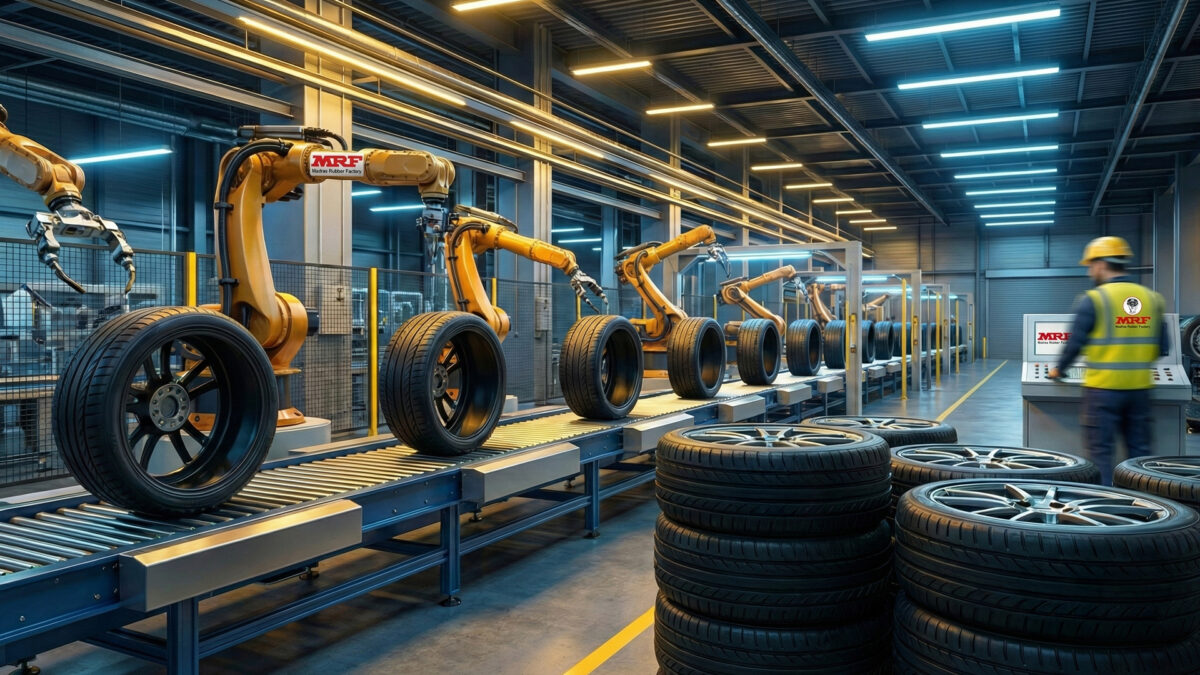
MRF Ltd posted a strong financial performance in the December quarter, with its consolidated net profit surging 119 per cent year-on-year to ₹692 crore, compared with ₹315 crore in the same quarter last year.

Revenue from operations grew by about 15 per cent to ₹8,050 crore, supported by steady demand across both original equipment manufacturers and the replacement tyre market. Better pricing and improved operating efficiencies helped the company deliver higher profitability during the quarter.

Operating earnings showed a sharp improvement, with EBITDA rising nearly 68 per cent to around ₹1,399 crore. This led to a significant expansion in operating margins to 17.4 per cent, up from 11.9 per cent a year ago, reflecting effective cost management and favourable input cost trends.

Total expenditure increased moderately to about ₹7,180 crore, in line with higher production volumes. The company also recorded an exceptional expense of ₹77.2 crore, arising from a one-time increase in gratuity and leave-related liabilities following changes in legislation.

In addition to the strong earnings, MRF’s board approved a second interim dividend of ₹3 per equity share for FY26. The company has fixed February 13, 2026, as the record date for determining eligible shareholders. The dividend will be paid on or after February 27, 2026.

MRF shares reacted positively to the announcements, climbing as much as 9 per cent in intraday trade, as investors welcomed the sharp profit growth and improved margin profile.

Also Read: RBI keeps repo rate at 5.25%, stance neutral

Categories
Corporate

Sensex ends 266 points lower, Nifty near 25,700

Markets ended the day on a weak note, with the Sensex falling 266 points to 86,120 and the Nifty 50 closing near 25,700. Investors remained cautious amid volatility in domestic indices and weak global cues from the US and Asian markets.

Among individual stocks, HDFC, Infosys, and Reliance Industries led the gainers, showing resilience despite broader market weakness. On the other hand, Tata Steel, Titan, and Bharti Airtel dragged the indices lower, reflecting selective profit-taking in cyclical and high-beta stocks. Sectoral indices mirrored this mixed trend, with IT and financials outperforming while metals and consumer durables lagged.

Foreign institutional investors (FIIs) continued as net sellers, while domestic institutional investors maintained selective buying, indicating cautious optimism in certain pockets of the market. Analysts noted that short-term volatility could persist as traders await clearer cues from domestic and global developments.

On the global front, markets in the US and Asia recorded sharp declines, particularly in technology and risk-sensitive sectors, which added pressure on Indian benchmarks. This comes as investors remain attentive to inflation trends, interest rate expectations, and geopolitical developments.

Corporate earnings updates also influenced sentiment. Nykaa reported a strong quarterly profit, while Bharti Airtel’s pre-exceptional profits rose, although net profits fell due to one-off expenses. Such results highlight selective sectoral strength even as the broader market remains under pressure.

With the Reserve Bank of India’s policy signals looming, market participants are advised to monitor key support and resistance levels before taking fresh positions.

Also Read: Tim Cook talks succession, denies retirement plans

Categories
Corporate

Suzlon Energy Q3 revenue rises 42% to ₹4,228 cr

Suzlon Energy delivered a strong set of numbers in the third quarter of FY26, showing clear signs of operational recovery and balance-sheet strength. However, despite the improved performance, the market reaction remained subdued, with the company’s shares slipping after the results announcement.

For the quarter ended December 2025, Suzlon reported revenue of ₹4,228 crore, a sharp 42% increase year-on-year, supported by record wind turbine deliveries. The company executed 617 MW of projects during the quarter, its highest ever in a single quarter, compared to 447 MW in the same period last year. This reflects faster project execution and improved on-ground momentum.

Net profit for the quarter stood at ₹445 crore, marking a 15% rise from a year ago. Operating performance also improved, with EBITDA climbing to ₹739 crore, up nearly 48% year-on-year. Margins expanded to around 17.5%, indicating better cost efficiencies and operating leverage as volumes increased.

Suzlon’s order book remained healthy at 6.4 GW, even after large deliveries during the quarter. Of this, around 2.4 GW is under active execution, providing good revenue visibility for the coming quarters. The company also highlighted a strong project pipeline of over 25 GW, reflecting growing demand for wind energy amid India’s renewable push.

On the financial front, Suzlon ended the quarter with a net cash position of about ₹1,556 crore, underlining its improved balance sheet after years of stress. Management reiterated confidence in meeting its FY26 execution guidance, supported by stable demand and ongoing projects.

Despite these positives, Suzlon’s shares fell 4–5% on the day of the results. Analysts pointed out that investor sentiment was tempered due to a sequential dip in profit, as the previous quarter had benefited from a one-time tax gain. Some concerns also remain around project timelines, site readiness, and grid connectivity.

Also Read: RBI approves Blackstone’s 9.99% stake in Federal bank