Categories
Corporate

Sensex up 300+ points, Nifty crosses 25,250

Today as the markets opened, BSE Sensex rose over 300 points, while the Nifty 50 moved above the 25,250 level, reflecting improved investor sentiment.

Buying interest was seen mainly in banking, energy, and metal stocks, which helped lift the indices. Heavyweights such as Axis Bank and Reliance Industries supported the uptrend, while metal stocks gained on expectations of stable global demand. The broader market also showed strength, with select mid-cap and small-cap stocks trading in the green.

Among individual stocks, Vodafone Idea was in focus as investors reacted to developments around its financial performance and business outlook. Vedanta and related stocks also saw active trading following updates linked to stake sale plans. Energy stocks such as ONGC gained amid firm crude oil prices.

However, the rally was capped by weakness in parts of the FMCG and auto sectors, where some stocks witnessed profit-booking after recent gains. Asian Paints, Tata Consumer Products, Maruti Suzuki, Eicher Motors, and Bajaj Auto traded lower, weighing slightly on the benchmarks.

Market participants remain cautious ahead of global cues, including movements in overseas markets and commodity prices. Analysts said near-term direction will depend on global trends, corporate earnings updates, and stock-specific news, while overall sentiment continues to remain positive.

Also Read: Ajit Pawar killed in plane crash
Categories
Corporate

PVR INOX sells 4700BC to Marico for ₹226.8 cr

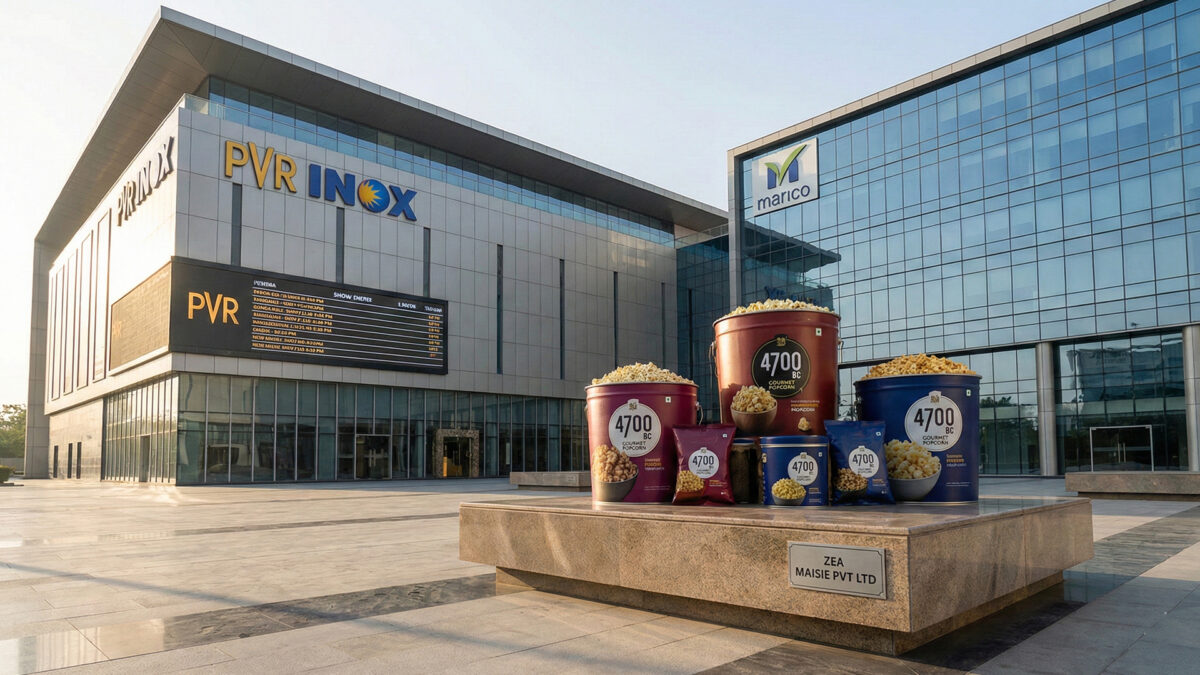
India’s biggest cinema chain, PVR INOX, has sold its premium snack brand 4700BC to FMCG company Marico Ltd for ₹226.8 crore. The deal is entirely in cash and marks a new phase for the popular snacking brand.

Under the agreement, Marico will buy 93.27% stake held by PVR INOX in Zea Maize Private Limited, the company that owns 4700BC. After the deal is completed, Zea Maize will no longer be part of the PVR INOX group.

The 4700BC brand started inside PVR cinemas, where it became known for gourmet popcorn sold at movie theatres. Over time, the brand moved beyond cinema halls and became available in supermarkets, online stores and quick-commerce platforms. Its product range now includes flavoured popcorn, popped chips, makhana, crunchy corn and nachos, and it has built a loyal customer base, especially in cities.

PVR INOX said the decision to sell the brand is part of its plan to focus on its main business of running cinemas. By selling a non-core business, the company aims to strengthen its finances, improve cash flow and invest more in its theatre operations. The company also clarified that the deal will not affect food and beverage sales inside cinemas, which remain an important part of its business.

PVR INOX Managing Director Ajay Bijli said the company is proud to have helped grow 4700BC from a small idea into a well-known snack brand. He added that the brand is now ready to grow faster under a company that specialises in consumer goods.

For Marico, the acquisition fits its strategy of expanding into fast-growing food and snacking categories. Known for brands like Saffola, Parachute and Livon, Marico plans to use its strong distribution network, marketing expertise and product innovation to take 4700BC to more homes across India.

Also Read: FTA to lift luxury cars, says BMW CEO

Categories
Corporate

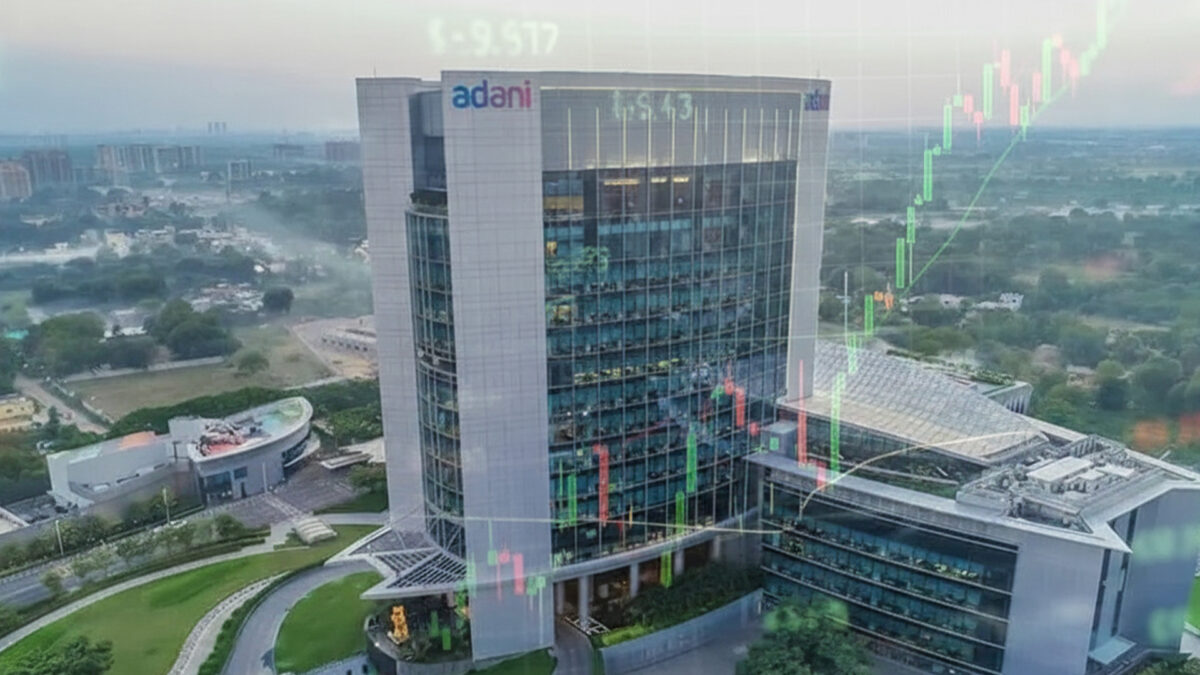
Adani shares jump 6% after legal clarity

Adani Group shares made a strong comeback on Tuesday, January 27, after last week’s steep losses rattled investors. Key companies in the group, including Adani Enterprises, Adani Ports, and Adani Green Energy, rose by up to 6% during trading, regaining some of the value lost during a sudden market slump.

The recovery followed a regulatory update from Adani Enterprises, which clarified its position regarding US legal proceedings that had caused investor concern. The company emphasized that it has not been accused of any wrongdoing and is not involved in the case highlighted in recent media reports. It reassured stock exchanges that the matter does not require disclosure under Indian listing rules.

This statement helped calm nerves after speculation grew around a US Securities and Exchange Commission (SEC) case involving Gautam Adani and his nephew, Sagar Adani. The SEC had been seeking alternative ways to serve legal notices in a civil case alleging fraud. The Adani Group has consistently denied any wrongdoing, stating that it will defend itself in court.

Investors responded positively to this clarification, pushing shares higher and partially restoring the market value wiped out in the previous sell-off. Analysts, however, caution that while Tuesday’s gains bring some relief, it remains uncertain whether this momentum will last, given ongoing legal uncertainties and market volatility.

Broader Indian markets also ended the day on a positive note, with the Nifty 50 and BSE Sensex gaining amid strong corporate earnings and sectoral strength. The rebound in Adani stocks was among the most notable movements, highlighting how investor sentiment can swing sharply on news and clarifications.

Also Read: Sensex climbs 320 points, Nifty tops 25,150

Categories
Corporate

Sensex climbs 320 points, Nifty tops 25,150

Markets rebounded strongly on Tuesday, 27 January 2026, the BSE Sensex ended over 320 points higher, while the Nifty 50 climbed above 25,150, boosted by upbeat domestic earnings and positive global cues. Investors drew confidence from the landmark India–European Union free trade agreement (FTA), expected to enhance exports across sectors like pharmaceuticals, textiles, and chemicals.

Gainers led the rally, with Axis Bank surging nearly 5%, supported by renewed buying interest in banking stocks. Tata Consumer Products impressed with a 38% year-on-year jump in quarterly profit and 15% revenue growth, attracting strong investor sentiment. Other financials and select FMCG names also added to the market’s momentum.

In contrast, losers moderated the overall gains. Asian Paints fell after reporting a slowdown in quarterly profits, raising caution among investors. Telecom stocks, particularly Vodafone Idea, remained under pressure despite a mixed earnings season. Some defensive and cyclical sectors saw muted participation as traders focused on high-growth and export-sensitive companies.

Global markets also influenced trading. Wall Street posted gains following expectations of steady corporate earnings and a cautious U.S. Federal Reserve stance on interest rates. Asian equities traded mixed, reflecting ongoing macro uncertainties and trade-related concerns.

Commodity markets reflected selective strength. Copper and zinc futures edged higher on improved demand expectations, though broader investor sentiment remained cautious ahead of major domestic earnings announcements.

Market participants said the coming sessions will likely remain sensitive to corporate results from BSE-listed companies and any new developments in international trade and monetary policies. Analysts believe sustained gains will depend on continued investor optimism around the India-EU FTA and domestic economic stability.

Also Read: Sensex slides over 250 points, Nifty breaches 25,000

Categories
Corporate

China’s Anta Sports invests in Puma for $1.8 bn

China’s leading sportswear company Anta Sports Products has taken a significant step onto the global stage by agreeing to buy a 29.1% stake in German sports brand Puma in a deal worth around $1.8 billion (€1.5 billion). The shares are being acquired from Artemis, the investment firm of the Pinault family, which has been a long-time major shareholder in Puma.

The deal will make Anta Puma’s largest shareholder, though the Chinese company has clarified that it does not plan a full takeover at this stage. Anta will pay €35 per share in cash, offering a substantial premium over Puma’s recent market price,  a sign of strong belief in the brand’s long-term value.

For Anta, the investment is part of a broader strategy to expand its international presence. The company already manages several well-known global brands, including Fila in China, outdoor label Jack Wolfskin, and sports names such as Salomon and Wilson through its stake in Amer Sports. Adding Puma to this portfolio strengthens Anta’s position as a major global player in the sporting goods industry.

For Puma, the move comes at a crucial time. The German brand has been facing slower sales growth and stiff competition from rivals like Nike and Adidas. While Puma has been working on a turnaround under new leadership, recent performance pressures have weighed on its market confidence. The entry of Anta as a strategic shareholder could provide both stability and new growth opportunities, especially in Asian markets.

The transaction is still subject to regulatory and antitrust approvals and is expected to be completed by the end of 2026. If cleared, the partnership could reshape the competitive landscape of the global sportswear industry, blending European brand heritage with Chinese market strength.

Industry observers say Anta’s strong distribution network and deep understanding of the Chinese consumer could help Puma regain momentum in the world’s largest sportswear market. At the same time, Puma’s global brand strength offers Anta greater international visibility.

Also Read: Public sector banks disrupted by nationwide strike

Categories
Corporate

Sensex slides over 250 points, Nifty breaches 25,000

Indian equity markets reopened post the Republic Day holiday, wherein the BSE Sensex and NSE Nifty 50 opened on a positive note, tracking supportive signals from global markets. The Sensex slipped over 250 points, while the Nifty briefly fell below the 25,000 mark, reflecting cautious investor sentiment.

Buying interest was seen in select heavyweight stocks. Axis Bank shares moved higher, lending some support to the banking pack, while Adani Enterprises gained around 3 per cent, emerging as one of the top performers on the benchmark indices.

On the downside, Kotak Mahindra Bank declined sharply following its quarterly results, adding pressure on the financial sector. Mahindra & Mahindra fell nearly 4 per cent, dragging auto stocks lower, while Wipro and other IT stocks also traded weak amid broader selling.

Market participants remained cautious amid mixed global macro cues, including tariff-related concerns and currency volatility, which kept risk appetite in check. Traders also monitored upcoming corporate earnings and macroeconomic triggers for clues on near-term direction.

Also Read: Adanis seek talks with SEC on summons

Categories
Corporate

ICICI Pru to halt new inflows into two FoFs

ICICI Prudential Mutual Fund has decided to stop accepting new investments in two of its fund-of-funds (FoF) schemes from January 27, 2026. The decision follows changes in regulatory guidelines and will place the schemes under a grandfathering process, meaning they will continue only for existing investors.

The two schemes affected are the ICICI Prudential Passive Multi-Asset Fund of Fund and the ICICI Prudential Global Advantage Fund of Fund. According to the asset management company (AMC), the structure and investment pattern of these schemes do not fully align with the Securities and Exchange Board of India’s (SEBI) updated framework for FoFs that invest in multiple underlying funds.

As part of this move, no fresh lump-sum investments, SIPs (Systematic Investment Plans), or STPs (Systematic Transfer Plans) will be allowed after the cut-off date. Applications received before 3 pm on January 23, 2026, will be processed as usual. Existing SIPs and STPs will be discontinued from February 5, 2026. In addition, the IDCW reinvestment option in both schemes will be shifted to an IDCW payout option.

While new inflows will stop, existing investors can continue to hold their units. They will also have the flexibility to redeem or switch out their investments at any time, including through Systematic Withdrawal Plans (SWPs). The AMC clarified that there will be no restriction on exits.

The Passive Multi-Asset FoF, launched in 2022, invests in a mix of domestic and international exchange-traded funds (ETFs) and index funds, offering exposure across equity, debt, and gold. The Global Advantage FoF focuses largely on overseas markets through international funds. Both schemes have attracted significant investor interest and assets over time.

ICICI Prudential AMC said the grandfathering will remain in place until the schemes are either merged with other suitable funds or wound up, in line with SEBI rules. This process can take up to three years.

Also Read: Jayant Acharya maps ₹2 lakh cr JSW Steel growth

Categories
Corporate

Samsung nears Nvidia approval for HBM4 AI chips

Samsung Electronics is nearing certification from Nvidia for its next‑generation HBM4 high-bandwidth memory, a key component for AI processors, according to industry sources. The approval would allow Samsung to supply these advanced chips, strengthening its position in the rapidly growing AI hardware market.

HBM4 memory, a stacked DRAM technology, delivers extremely high data bandwidth and energy efficiency, crucial for feeding large volumes of data into Nvidia’s AI accelerators. Nvidia has relied mainly on SK Hynix for HBM memory, making Samsung’s entry a notable shift in the supply chain.

Reports indicate Samsung is in the final stage of testing after submitting initial HBM4 samples late last year. The company aims to begin mass production in February 2026, with shipments expected soon after certification. Positive feedback from customers on Samsung’s HBM4 design highlights its competitiveness in performance and reliability.

The development has already boosted investor confidence. Samsung’s shares in Seoul gained on news of the potential approval, as analysts see it as a step toward diversifying the supply of high-end AI memory and challenging SK Hynix’s dominance.

Also Read: Shadowfax IPO allotment done, 2.7x subscribed

Categories
Corporate

Shadowfax IPO allotment done, 2.7x subscribed

Shadowfax Technologies Ltd has completed the allotment for its IPO, which attracted strong investor interest. The company’s public offering, valued at ₹1,907 crore, saw an overall subscription of 2.7 times, driven mainly by Qualified Institutional Buyers (QIBs), alongside notable retail participation. The IPO was open for bidding from January 20 to 22, 2026, and allotment was finalised on January 23.

Investors can check their allotment status through the registrar KFin Technologies or via the BSE and NSE websites. Those who did not receive an allocation will have their applications refunded in the coming days.

Shadowfax shares are scheduled to list on the Bombay Stock Exchange and National Stock Exchange on January 28, 2026. Grey market trends—a popular, though unofficial, indicator—suggest that shares could debut at or slightly below the issue price, reflecting cautious sentiment among investors.

The IPO price band was set at ₹118–₹124 per share, with retail investors required to buy a minimum lot of around ₹14,000. The company intends to use the funds to expand its logistics network, strengthen technology infrastructure, and support growth initiatives in its delivery business.

With the allotment completed and refunds underway for non-allocated applications, attention now turns to January 28, when trading begins. The subscription pattern highlighted strong institutional demand, with QIBs oversubscribing their portion, while the retail segment also showed solid participation.

Analysts note that the initial listing performance will be closely watched, as it will indicate investor confidence in Shadowfax’s expansion plans and operational model.

Also Read: Rupee slides to ₹92, raising costs for imports

Categories
Corporate

Adani Green Q3 profit down 99%

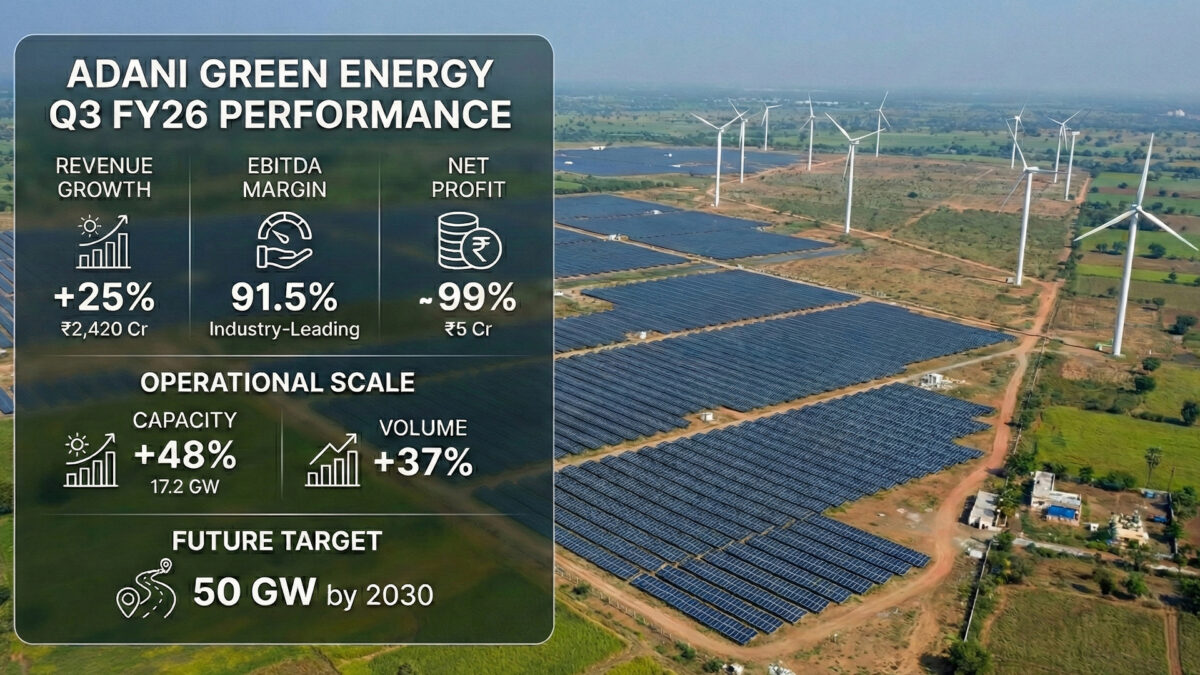
Adani Green Energy Ltd reported a mixed set of results for the third quarter of FY26, marked by strong revenue growth and operational expansion but a sharp decline in net profit due to rising costs.

During the December quarter, revenue from power supply grew 25 percent year-on-year to ₹2,420 crore, driven by a significant increase in generation. Energy sales volumes surged 37 percent compared to the same period last year, reflecting the commissioning of new renewable assets and improved utilisation. Consolidated revenue from operations rose about 12 percent year-on-year to ₹2,618 crore.

Operating performance remained robust. EBITDA from the power supply segment increased 23 percent year-on-year to ₹2,269 crore, underlining strong cash generation from core operations. The EBITDA margin stood at an industry-leading 91.5 percent, although it was marginally lower than the 92 percent recorded in the year-ago quarter, indicating some pressure from rising operating costs.

However, this strong top-line and operating performance did not translate into bottom-line growth. Consolidated net profit attributable to owners plunged by nearly 99 percent year-on-year to ₹5 crore. The sharp fall was primarily due to higher depreciation and interest expenses following aggressive capacity additions, along with the impact of one-off exceptional items during the quarter.

On the operational front, Adani Green continued to scale up rapidly. Its total operational renewable energy capacity expanded 48 percent year-on-year to 17.2 GW. A significant portion of the additions came from the Khavda renewable energy park in Gujarat, which is progressing as the world’s largest renewable energy installation and remains a key growth driver for the company.

Despite near-term pressure on profitability, the company reiterated confidence in its long-term growth strategy. Adani Green said it remains on track to achieve its target of 50 GW of renewable capacity by 2030, supported by a strong project pipeline and India’s accelerating transition towards clean energy.

Also Read: Adani Group fully acquires IANS