Categories
Corporate

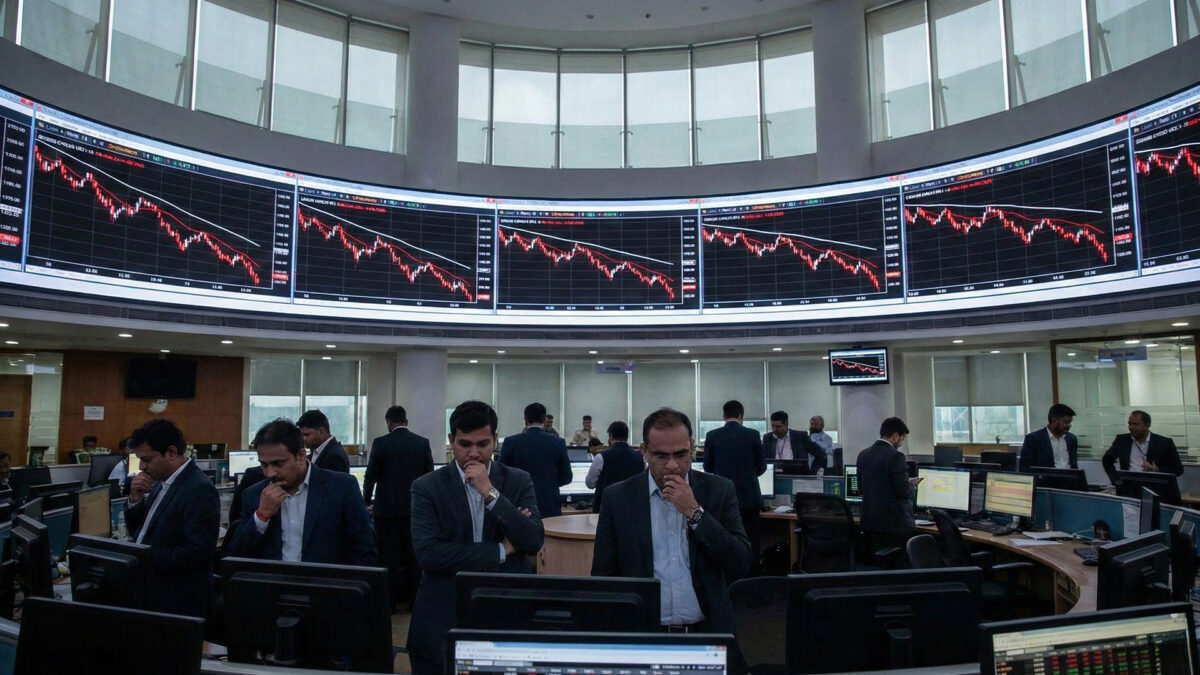
Sensex down 150, Nifty under 26,150

As the markets opened on Wednesday, the BSE Sensex fell around 150 points, while the Nifty50 slipped below the 26,150 mark in early trade. Selling pressure in heavyweight stocks weighed on overall market sentiment.

Market participants stayed on the sidelines due to concerns over global developments and uncertainty around interest rates. After recent gains, many investors chose to book profits, leading to mild losses across key indices. Broader markets also reflected weakness, with mid-cap and small-cap stocks trading mostly in the red.

Sector-wise, performance was mixed. Realty, media, and oil and gas stocks faced selling pressure, while select banking, IT, and consumer stocks showed limited strength. Rate-sensitive stocks underperformed as traders remained cautious about future policy signals.

Among individual stocks, Titan Company emerged as a top gainer, rising sharply on strong buying interest, supported by positive outlook for its jewellery business. On the other hand, Cipla was among the top losers, falling over 2% due to selling pressure. Other heavyweight stocks such as HDFC Bank and Tata Motors also traded lower, dragging the benchmarks.

Market breadth remained weak, with more stocks declining than advancing on both the BSE and NSE. Analysts said the market may continue to move in a narrow range in the near term, with investors closely tracking global cues, upcoming earnings announcements, and macroeconomic data.

Experts added that the 26,000 level on the Nifty remains an important support, while upside could be limited unless there is fresh positive news. Until then, markets are expected to remain volatile, with stock-specific action dominating trade.

Also Read: Sensex slips 376 points, Nifty below 26,200

Categories
Corporate

Unnati acquires Gramophone, Info Edge invests ₹35 cr

Unnati, an agritech startup co‑founded by former Paytm CFO Amit Sinha, has announced the acquisition of Gramophone, a digital platform that helps farmers buy seeds, fertilizers, nutrients, and equipment. The deal is structured as a stock‑swap transaction, where Info Edge (India) Ltd, Gramophone’s major investor, will transfer its entire stake in Gramophone to Unnati in exchange for shares in the combined entity.

Info Edge’s wholly-owned subsidiary, Startup Investments (Holding) Ltd (SIHL), currently holds just over 50.94% of Gramophone on a fully diluted basis. Under the agreement, SIHL will receive preference shares in Unnati representing about 15.7% of the merged company. In addition, Info Edge will invest ₹35 crore in fresh capital into Unnati, raising its stake in the company to around 20.5%, which is expected to settle at approximately 18.48% after shares are allotted to other Gramophone shareholders.

The transaction values Gramophone at roughly ₹92 crore, based on a per-share price of ₹2,703. Gramophone reported revenues of ₹67 crore for the financial year ended March 2025. Unnati, which focuses on distributing agricultural inputs and providing farmer financing, reported revenue of ₹291 crore during the same period, though it recorded a net loss of nearly ₹18 crore.

The merger aims to create a stronger digital agritech platform by combining Unnati’s distribution and financing capabilities with Gramophone’s marketplace and advisory services for farmers. This consolidation reflects a growing trend in India’s agritech sector, where startups are seeking scale and synergies to better serve the farming community.

The deal has received approval from the boards of both companies and is expected to close within 90 days, subject to customary approvals and regulatory conditions. By joining forces, Unnati and Gramophone hope to expand their reach across India, providing farmers with easier access to quality agricultural inputs, timely credit, and expert guidance, while creating a more integrated and efficient supply chain.

Also Read: AMD unveils new AI, PC chips at CES, Las Vegas

Categories
Corporate

Sensex slips 376 points, Nifty below 26,200

Equity markets ended lower with the Sensex fell 376 points, while the Nifty closed below the 26,200 level, as selling pressure emerged in heavyweight stocks despite positive global cues.

Markets opened on a firm note, supported by higher GIFT Nifty, gains in Asian markets, and a strong overnight close on Wall Street. However, profit-booking at higher levels and weak domestic sentiment dragged indices into negative territory by the afternoon.

On the sectoral front, pharma and select banking stocks outperformed. Apollo Hospitals, Sun Pharma, ICICI Bank, HDFC Life, and Tata Consumer Products were among the key gainers, helping limit the overall downside.

In contrast, heavy selling was seen in frontline stocks such as Reliance Industries, ITC, Kotak Mahindra Bank, and InterGlobe Aviation, which emerged as major drags on the benchmarks. Sectors including capital goods, infrastructure, oil and gas, and media declined 1–2 percent.

The broader market also remained under pressure, with midcap and smallcap indices closing lower, indicating widespread selling.

Market experts said cautious investor sentiment and profit-taking outweighed supportive global cues. Investors are expected to track global developments, upcoming economic data, and earnings for further direction in the near term.

Also Read: Nvidia launches Alpamayo AI to boost self-driving cars

Categories
Corporate

Nvidia launches Alpamayo AI to boost self-driving cars

US chipmaker Nvidia has unveiled Alpamayo, a new artificial intelligence system designed to improve the safety and performance of autonomous vehicles. The announcement was made at the Consumer Electronics Show (CES) 2026 in Las Vegas, where the company showcased its latest advances in automotive AI.

Alpamayo is a reasoning-based AI model that allows self-driving cars to better understand their surroundings and decide how to respond to real-world situations. Unlike traditional systems that mainly detect objects, Alpamayo is built to analyse complex traffic scenarios, predict risks and choose safer driving actions.

At the core of the system is Alpamayo-1, a large Vision-Language-Action model with 10 billion parameters. It processes data from vehicle cameras and sensors, interprets what it sees and determines the most appropriate response, such as slowing down, stopping or changing lanes. Nvidia says the model can also explain its reasoning, which is expected to help developers improve safety and transparency.

Nvidia CEO Jensen Huang described Alpamayo as a breakthrough for what he called “physical AI”, comparing it to how conversational AI transformed digital applications. He said the company’s goal is to make autonomous driving systems more reliable, especially in rare and unpredictable road situations, often referred to as edge cases.

The Alpamayo platform also includes AlpaSim, a simulation environment that allows developers to test self-driving software in virtual settings before deploying it on real roads. Nvidia has released the tools and models as open source, encouraging global researchers and automakers to use and improve them.

The company plans to begin deploying Alpamayo-powered systems in vehicles later this year, starting with select Mercedes-Benz models in the United States.

Reacting to the announcement, Tesla CEO Elon Musk commented that achieving most of autonomous driving is relatively easy, but solving the final, rare scenarios remains the biggest challenge. His remarks highlight the growing competition and debate among technology leaders racing to perfect self-driving technology.

Also Read: Rupee gains 18 paise to 90.12 as dollar eases

Categories
Corporate

AMD unveils new AI, PC chips at CES, Las Vegas

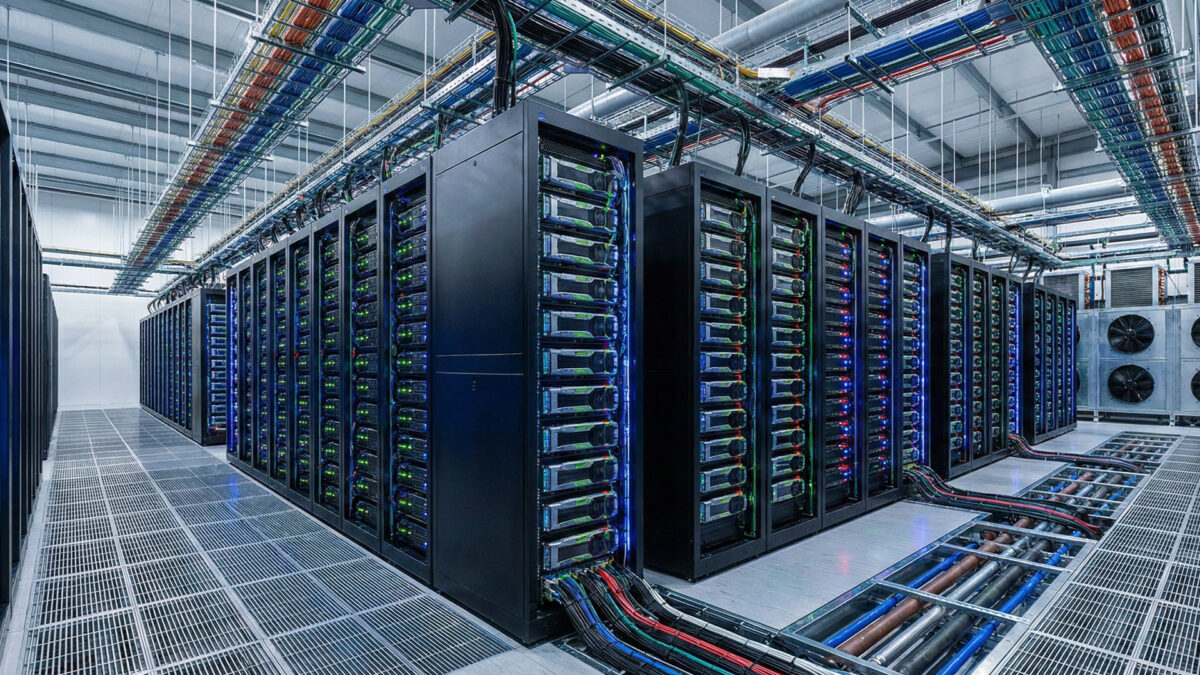
Advanced Micro Devices (AMD) has announced a new range of chips for artificial intelligence, data centres and personal computers at the Consumer Electronics Show (CES) 2026 in Las Vegas, outlining an aggressive roadmap to strengthen its position in the fast-growing AI market.

At the centre of the announcement was the MI455 AI accelerator, part of AMD’s Instinct GPU portfolio, designed for large-scale data-centre and high-performance computing workloads. The chip will be deployed in advanced AI computing racks and is already being supplied to key customers, including OpenAI. AMD also introduced the MI440X, a version aimed at enterprise clients that want to run AI workloads within their own data centres rather than relying on cloud-scale infrastructure.

AMD chief executive Lisa Su also previewed the upcoming MI500 series, expected to launch in 2027. According to the company, these future accelerators are being designed to deliver up to 1,000-fold performance gains over earlier generations, highlighting AMD’s long-term push to compete more strongly in AI hardware.

For personal computers, AMD expanded its AI-focused offerings with the launch of the Ryzen AI 400 Series processors. These chips include built-in neural processing units (NPUs) that allow laptops and desktops to run AI tasks locally, such as real-time translation, image generation and productivity tools. The processors support Microsoft’s Copilot+ PC platform and will be used across consumer and commercial devices.

The company also showcased Ryzen AI Max+ chips for thin-and-light systems, aimed at users who need strong graphics performance alongside on-device AI capabilities. In addition, AMD announced the Ryzen AI Halo mini-PC platform, targeted at developers working on AI models and applications, offering high memory capacity and local AI compute power.

In the gaming segment, AMD unveiled the Ryzen 7 9850X3D processor, built on its Zen 5 architecture with enhanced cache technology to deliver improved gaming performance.

With partners expected to begin shipping systems based on the new chips in 2026, AMD’s CES announcements underline its strategy to expand across AI infrastructure, enterprise computing and next-generation PCs, even as competition in the semiconductor industry continues to intensify.

Also Read: HDFC AMC launches ₹2500 crore credit fund

Categories
Corporate

HDFC AMC launches ₹2500 crore credit fund

HDFC Asset Management Company (HDFC AMC) has entered the private credit segment with the launch of a ₹2,500-crore structured credit fund, expanding its footprint beyond traditional mutual fund products into alternative investments.

The new vehicle, Structured Credit Fund-I, has an initial fundraising target of ₹1,500 crore, along with a green-shoe option of ₹1,000 crore. At its first close, the fund has raised around ₹1,290 crore from a mix of institutional investors, family offices and ultra-high-net-worth individuals. HDFC AMC will also commit capital to the fund, investing up to 14 per cent of the total corpus as sponsor contribution.

The International Finance Corporation (IFC), the private sector arm of the World Bank Group, has joined as the anchor investor with a commitment of up to ₹220 crore. IFC’s participation is expected to enhance investor confidence and underline the growing institutional interest in India’s private credit market.

The fund will focus on providing structured and secured debt to mid-market companies across multiple sectors. These firms often face challenges in accessing bank credit due to stricter lending norms and risk controls. By offering customised debt solutions, the fund aims to address funding gaps while maintaining a focus on capital protection.

HDFC AMC has said the fund will invest in businesses with predictable cash flows and strong fundamentals. It will not take exposure to real estate. The investment strategy is designed to deliver returns of about 14–17 per cent annually over a four-to-six-year period. Around ₹380 crore has already been deployed across three transactions in different sectors.

The launch comes amid rising interest in private credit as an asset class in India. With banks becoming more selective in lending and companies increasingly looking for flexible financing options, private credit funds are gaining traction as an alternative source of capital.

For asset managers, the shift towards alternatives also offers an opportunity to diversify revenue streams and cater to sophisticated investors seeking higher risk-adjusted returns. HDFC AMC indicated that Structured Credit Fund-I is part of a broader strategy to build a presence in the alternatives space, and more such offerings could be considered in the future as demand grows.

Industry experts expect India’s private credit market to expand steadily in the coming years, driven by structural changes in lending and increased participation from domestic and global investors.

Also Read: Novo Nordisk introduces cheaper Wegovy pill In US

Categories
Corporate

Novo Nordisk introduces cheaper Wegovy pill In US

Novo Nordisk has introduced the first oral version of its weight‑loss drug Wegovy in the United States, starting January 5, 2026, offering patients a convenient alternative to injectable treatments. The launch comes at a time of rising demand for obesity therapies and is priced significantly lower than existing injectables, triggering a price war in the U.S. market.

The oral pill is available in 1.5 mg and 4 mg doses at $149 per month, with insurance coverage potentially reducing out-of-pocket costs to $25 monthly. Higher doses, including 9 mg and 25 mg, are priced at $299 per month, while the 4 mg dose will increase to $199 in April. This pricing undercuts both Novo Nordisk’s own injectable Wegovy, which can cost over $1,000 per month, and rival products from Eli Lilly, including the injectable Zepbound and the oral candidate orforglipron, expected at roughly $346 per month.

Clinical trials indicate that patients taking the oral Wegovy experienced an average 17% reduction in body weight over 64 weeks, similar to results achieved with injectables. Novo Nordisk hopes the oral form will appeal to patients reluctant to use injections while expanding its share of the growing U.S. obesity treatment market.

The launch boosted Novo Nordisk’s shares, reflecting investor confidence that the lower-cost pill could strengthen the company’s market position. Analysts expect the new option to prompt further price competition and improve patient access, potentially reshaping the landscape of obesity drug pricing in the United States.

With this launch, Novo Nordisk is set to redefine the U.S. weight-loss drug market, offering a more convenient and affordable option to patients and intensifying competition in a sector increasingly focused on accessibility, effectiveness, and affordability.

Regulatory reviews in other countries, including the United Kingdom, are underway, and the pill may become available internationally later in 2026. Experts note that the oral Wegovy could accelerate the adoption of GLP-1 treatments, making effective obesity therapies more widely accessible while encouraging innovation among pharmaceutical competitors.

Also Read: Trump team to meet oil firms on Venezuela plans

Categories
Corporate

Sensex slips 100+ points, Nifty dips below 26,250

The equity markets opened on a weak note on Tuesday, with benchmark indices slipping into the red amid selling pressure in banking, IT, and select heavyweight stocks. The BSE Sensex fell by over 200 points in early trade, while the NSE Nifty 50 slipped below the 26,250 mark, reflecting cautious investor sentiment.

Markets had a mixed start despite positive signals from GIFT Nifty, but gains were short-lived as profit booking emerged soon after the opening bell. Heavyweight stocks such as HDFC Bank and Reliance Industries were among the top drags on the indices. HDFC Bank shares declined sharply for the second straight session, weighing heavily on the banking pack. Investors remained cautious despite the bank reporting steady advances growth, as concerns persisted around deposit mobilisation and margin outlook.

Other banking and financial stocks also traded lower, pulling the Bank Nifty into negative territory. IT stocks saw mild selling as traders adopted a wait-and-watch approach ahead of upcoming quarterly earnings announcements. Capital goods and auto stocks also faced pressure, adding to the overall weakness in the broader market.

On the sectoral front, most NSE indices were trading in the red. FMCG and metal stocks showed limited movement, while pharma shares were mixed. Torrent Pharma shares were in focus, while IndusInd Bank also witnessed volatility during the session.

Some pockets of strength were visible, with select private lenders and non-banking finance companies managing modest gains on the back of stock-specific triggers and positive business updates. However, these gains were insufficient to offset losses in index heavyweights.

Global cues were mixed, with Asian markets trading cautiously amid ongoing geopolitical concerns and uncertainty around global interest rate trajectories. Investors also remained alert to developments in the US markets and movements in commodity prices, which continued to show volatility.

In the currency market, the Indian rupee traded with a slight positive bias against the US dollar in early trade, offering limited support to sentiment. However, this did little to lift equity markets as domestic factors dominated trading.

Also Read: India opens first AI clinic in Greater Noida

Categories
Corporate

Sensex falls over 320 points, Nifty closes below 26,300

The BSE Sensex fell 322 points to close at 85,440, while the Nifty 50 slipped below the 26,300 mark to end at 26,250. Markets closed lower after a volatile session, as early gains fizzled out due to profit-booking in heavyweight stocks.

Markets opened on a firm note, tracking positive cues from Asian peers and strong indications from GIFT Nifty. The Nifty even touched a fresh intraday high of around 26,370 in early trade. However, selling pressure soon emerged in banking and IT stocks, pulling the benchmarks into the red by afternoon.

HDFC Bank, Infosys, HCL Technologies, Wipro and ONGC were among the top losers, weighing heavily on the indices. Weakness in large private banks and continued caution in IT stocks amid global uncertainty dented investor sentiment.

On the other hand, selective buying supported a few pockets of the market. Nestle India, Bharat Electronics, Eicher Motors, Asian Paints and Tata Steel ended the session higher, offering limited support to the broader market.

Sectorally, IT, oil & gas and telecom indices underperformed, while realty, consumer durables, metals and FMCG stocks showed relative resilience. Mid-cap and small-cap stocks also saw mild selling, reflecting a cautious undertone.

Also Read: Sensex up 50 pts, Nifty holds above 26,350 in early trade

Categories
Corporate

ONGC may get $500 million from Venezuela

State-run Oil and Natural Gas Corporation (ONGC) could receive around $500 million (about ₹4,100 crore) in long-pending dividends from its investments in Venezuela if the United States eases sanctions on Venezuelan oil, according to market analysts.

The unpaid amount is linked to ONGC’s overseas arm, ONGC Videsh Ltd (OVL), which holds a 40 per cent stake in the San Cristobal oil project in Venezuela. Although the oilfield has generated profits in the past, US sanctions imposed on Venezuela prevented the transfer of dividends to foreign partners, including ONGC.

Brokerage firm Jefferies said that a possible U.S.-led restructuring of Venezuela’s oil sector, along with changes in sanctions policy, could allow these blocked funds to be released. If this happens, ONGC would be able to recover the long-stuck dividends, improving its cash position.

Apart from San Cristobal, ONGC Videsh also owns an 11 per cent stake in the Carabobo oil block in Venezuela. This project has remained largely stalled due to funding issues, sanctions, and operational challenges. Any easing of restrictions could revive investment activity in this asset as well.

Analysts say the potential dividend recovery is not yet factored into ONGC’s stock price, making it an upside trigger for investors. However, they caution that the outcome depends heavily on geopolitical developments and US policy decisions, which remain uncertain.

ONGC has maintained strong financial performance in recent quarters, supported by steady crude oil production and stable energy prices. The possible recovery of Venezuelan dues would add further strength to its balance sheet.

While Venezuela’s oil output is currently limited, even a partial easing of sanctions could benefit global energy companies with legacy investments in the country. For ONGC, unlocking these funds would mark a significant recovery of long-delayed overseas earnings.

Also Read: Bharat Coking Coal IPO price set at ₹21–₹23