Categories
Beyond

Gold falls near ₹1.22 lakh, Silver slips over 1%

Gold prices in India fell on Thursday, with MCX December futures trading around ₹1,22,373 per 10 grams, down from the previous close of ₹1,22,727. Silver also declined, slipping over 1% to ₹1,52,433 per kg in early trade.

Globally, spot gold eased 0.1% to $4,072.87 per ounce, while silver dropped about 0.5% to $50.35 per ounce. Analysts attributed the fall to stronger-than-expected U.S. non-farm payroll data, which showed 119,000 new jobs, and a rise in the unemployment rate to 4.4%.

The data suggested that the U.S. labor market remains resilient, reducing expectations of an imminent Federal Reserve rate cut. A stronger U.S. dollar also made bullion more expensive for holders of other currencies, adding further pressure on prices.

Market analysts expect gold to find support near ₹1,21,800–₹1,22,000 per 10 grams and resistance around ₹1,23,050–₹1,23,700, while silver may hold support near ₹1,52,350–₹1,53,050 per kg with resistance at ₹1,55,140–₹1,55,980.

Investors are closely watching global economic cues as bullion prices react to changing rate expectations and currency movements.

Also Read: Sensex falls 300 points, Nifty slips below 26,100

Categories
Beyond

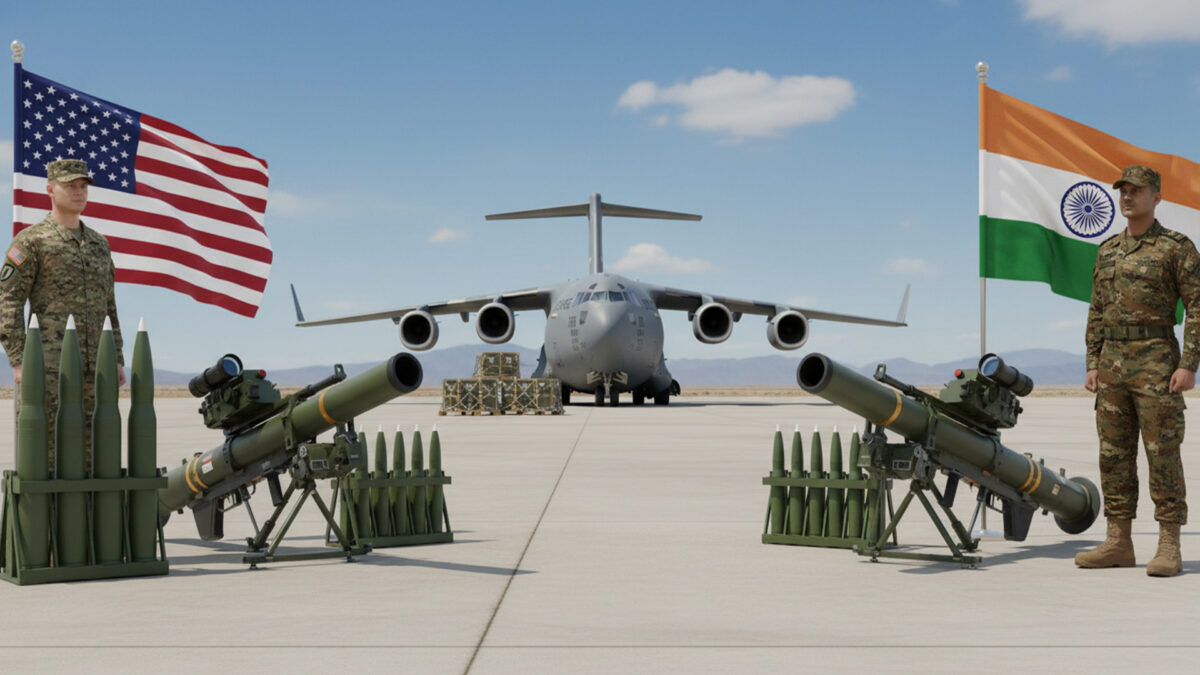
$93 million US arms deal strengthens India’s defence

India is set to receive a $93 million military shipment from the United States, aimed at enhancing its defence capabilities and reinforcing strategic ties with Washington.

The package includes 100 Javelin anti-tank missiles, 25 launch units, and 216 Excalibur precision-guided artillery rounds, along with spare parts, operator training, fire control systems, and technical support for seamless integration into India’s armed forces.

The Javelin missiles are portable, fire-and-forget weapons designed to destroy armoured vehicles, making them highly effective in modern combat scenarios. The Excalibur rounds use GPS guidance to deliver precise long-range strikes, reducing collateral damage and improving operational accuracy.

According to US officials, the sale will enhance India’s ability to counter regional threats while maintaining the military balance in the region. The US Defense Security Cooperation Agency (DSCA) has formally notified Congress of the transaction.

The deal highlights the growing defence partnership between India and the US, supporting India’s ongoing military modernization. American defence companies Lockheed Martin and RTX Corporation will supply the weapons and associated equipment, ensuring that India can operate and maintain the systems efficiently.

The sale also includes comprehensive training and technical assistance, enabling Indian forces to maximize the operational impact of the new systems. Analysts say the weapons will significantly improve India’s artillery and anti-armour capabilities, strengthening its deterrence posture.

This part of a series of agreements between the two countries, following previous deals involving fighter jets, surveillance systems, and missile technologies. Observers note that these transactions reflect deepening strategic cooperation and a shared commitment to regional security, as India continues to modernize its armed forces and enhance its operational readiness.

Also Read: Adani’s new ad film turns airports into caring companions

Categories
Beyond

Gold ₹1,24,870, Silver ₹1,68,100 in early trade

Gold and silver prices in India rose slightly on Thursday. The price of 24-carat gold increased by ₹10 to ₹1,24,870 per 10 grams, while 22-carat gold rose to ₹1,14,460 per 10 grams.

Silver gained ₹100, trading at ₹1,68,100 per kilogram in Delhi, Kolkata, and Mumbai, with Chennai slightly higher at ₹1,76,100.

Globally, spot gold was up around 0.3% at US $4,092.98 per ounce and silver rose 0.4% to US $51.58 per ounce. Analysts said the gains are driven by anticipation of the upcoming US jobs report, which may influence the Federal Reserve’s interest-rate policy.

Also Read: Sensex gains 150+ points, Nifty tops 26,050

Categories
Beyond

Bitcoin drops below $90,000, rebounds fast

Bitcoin had a shaky night. For the first time since April, the world’s largest cryptocurrency slipped below the $90,000 mark, touching around $89,500. The sudden fall came as global markets turned nervous, with investors pulling back from risky assets.

But the slump didn’t last long. By late Tuesday morning, Bitcoin was already climbing again, trading close to $93,600. The quick recovery shows that despite growing uncertainty, buyers are still willing to step in when prices fall sharply.

This turbulence comes just weeks after Bitcoin nearly hit $125,000 in early October, powered by strong optimism and a pro-crypto mood in the US. That excitement has cooled as investors now question whether the US Federal Reserve will cut interest rates soon. Concerns about the global economy have added to the caution.

It wasn’t just Bitcoin that felt the heat. Shares of major crypto-linked companies like Coinbase and Robinhood also dropped sharply during the sell-off, reflecting the broader anxiety in the market.

Analysts say the sudden dip is a reminder that cryptocurrencies remain highly sensitive to big economic signals. If the negative sentiment continues, Bitcoin could test lower support levels. But if calm returns to global markets, the recent dip may simply be seen as a temporary pause in its larger rally.

For now, the message is clear: Bitcoin may be strong, but it’s not immune to the mood swings of global finance.

Also Read: ₹623 crore laundered via 27 crypto exchanges

Categories
Beyond

Gold at ₹1.22 lakh, silver ₹1.53 lakh

On November 19, 2025, gold prices in India edged lower, while silver remained largely steady as investors stayed cautious.

24‑carat gold is trading at around ₹1,22,180 per 10 g, down from ₹1,22,924 the previous day, while silver (999 purity) is priced at ₹1,53,706 per kg.

In Delhi, 22‑carat gold is at ₹1,13,490 per 10 g and 24‑carat gold at ₹1,23,800 per 10 g. The modest decline in gold reflects uncertainty over global interest rate trends and subdued buying ahead of the wedding season.

Analysts say the dip may offer a short-term buying opportunity, but investors are advised to monitor international markets, currency movements, and domestic demand closely.

Also Read: Sensex gains 200 points, Nifty surpasses 25,950

Categories
Beyond

India’s October trade deficit hits $41.68 billion

India’s trade deficit surged to a record USD 41.68 billion in October 2025, up from USD 32.15 billion in September. The widening gap comes as exports fell sharply while imports rose, especially for precious metals like gold and silver.

Exports in October dropped 11.8% to USD 34.38 billion. Shipments to key markets such as the United States fell to USD 6.31 billion from USD 6.91 billion a year ago, affected partly by U.S. tariffs on Indian textiles, gems, and jewellery. Weak global demand also contributed to the decline in exports.

Imports, meanwhile, increased 16.6% to USD 76.06 billion. Gold imports alone jumped to USD 14.72 billion, nearly three times higher than in October 2024, driven by strong domestic demand and the festive season. Silver imports also rose sharply, by over 500%, reaching around USD 2.71 billion. Other imports, including crude oil, electronics, and machinery, also added to the higher import bill.

The combination of falling exports and rising imports has put pressure on India’s balance of payments. The growing trade deficit can affect the stability of the rupee and foreign-exchange reserves. Policymakers may need to take steps to manage non-essential imports while supporting export growth.

Despite the high merchandise trade deficit, India continues to see a surplus in services trade, which helps cushion the overall impact. Experts suggest closely monitoring trade data in November and December, as the festive season and year-end shipments could further influence numbers.

The October figures highlight challenges for India’s external sector and underscore the need for careful policy measures. Controlling non-productive imports, providing support to exporters, and promoting competitive shipments abroad will be key to managing the trade gap and maintaining economic stability.

Also Read: Government imposes import rules on certain platinum jewellery

Categories
Beyond

Centre clears 17 electronics component projects worth ₹7,200 cr

The Union government has approved 17 new manufacturing projects under the Electronics Component Manufacturing Scheme (ECMS), aiming to boost India’s ability to produce high-value electronic parts locally. These projects represent a total investment of ₹7,172 crore and are expected to significantly strengthen the country’s electronics supply chain.

According to the Ministry of Electronics and Information Technology (MeitY), the approved proposals together are projected to generate ₹65,111 crore worth of output over the coming years. They are also expected to create over 11,800 direct jobs, along with additional indirect employment opportunities as manufacturing capacity grows.

The 17 units will manufacture a wide range of critical components, including camera modules, connectors, multi-layer printed circuit boards (PCBs), quartz crystal oscillators, optical transceivers, and high-strength enclosures used in various consumer and industrial devices. Among the approved projects are several firsts for India — including the country’s first optical transceiver plant, a 40-layer PCB manufacturing facility, and a dedicated quartz crystal production unit, which will reduce dependence on imports of precision components.

The projects have been distributed across nine states and union territories, ensuring wider regional participation in the electronics value chain. These include Karnataka, Tamil Nadu, Maharashtra, Uttar Pradesh, Gujarat, Andhra Pradesh, Goa, Madhya Pradesh, and Jammu & Kashmir.

Major companies receiving approval include Jabil Circuit India, Uno Minda, Aequs Consumer Products, TE Connectivity, Zetwerk’s subsidiary Zetfab India, Syrma Mobility, and Meena Electrotech. Many of these firms are expanding beyond assembly into deeper component-level manufacturing, which the government sees as crucial for building a resilient and competitive electronics ecosystem.

Electronics and IT Minister Ashwini Vaishnaw urged companies to build strong in-house design capabilities, target world-class quality standards, and work closely with domestic raw material suppliers. He also announced that the government is preparing a comprehensive skilling framework to ensure the sector has a trained workforce capable of supporting high-precision component production.

Also Read: 16th Finance Commission’s submits 2026-31 fiscal transfers report

Categories
Beyond

16th Finance Commission’s submits 2026-31 fiscal transfers report

The 16th Finance Commission (XVI FC), chaired by economist Arvind Panagariya, on Monday submitted report on fiscal transfers for the 2026–31 period to President Droupadi Murmu.

The report has been prepared after nearly two years of analysis and nationwide consultations and will shape tax devolution, grants-in-aid and other transfers over the next five years.

It was also presented to Prime Minister Narendra Modi and Finance Minister Nirmala Sitharaman and will be made public once tabled in Parliament.

The Commission undertook a comprehensive review of Union and state finances, holding discussions with central ministries, state governments, local bodies, former Finance Commission members, academic institutions, multilateral agencies and other experts. Its findings are presented in two volumes: Volume I containing recommendations aligned with the terms of reference (ToR), and Volume II featuring detailed annexures.

Mandated to determine the distribution of the Centre’s net tax proceeds from April 1, 2026, the XVI FC also reviewed disaster-management financing and grant requirements. To better understand state-level fiscal realities, the panel visited all 28 states, examining their fiscal capacities, development priorities and resource gaps. The ToR for the current Commission were narrower than those of its predecessor, reflecting states’ demands for a more focused assessment.

During consultations, several states pressed for raising their aggregate share of the divisible tax pool from 41% to 50%, citing poverty burdens, demographic trends and the need to sustain growth-oriented spending. Many also urged a reduction in the 45% weight assigned to income distance in the horizontal devolution formula.

Tamil Nadu proposed lowering it to 35%, while Maharashtra suggested 37.5%.

Tamil Nadu, Karnataka and Gujarat further pushed for assigning a 15% weight to states’ contributions to national GDP. The Commission is expected to weigh these competing demands as it finalises the devolution framework for FY27–31.

Also Read: Tata Power commissions 300 MW solar plant for NHPC

Categories
Beyond

India, Russia nearing key deals before Putin’s visit

India and Russia are getting ready to complete several important agreements before Russian President Vladimir Putin visits New Delhi in early December. External Affairs Minister S. Jaishankar, who met Russian Foreign Minister Sergey Lavrov in Moscow, said both sides are working on multiple new pacts and updates to existing cooperation.

These agreements are likely to cover defence, energy, trade, science, mobility, and long-term development projects. Officials from both countries have been meeting regularly to finish the details so they can be signed during the upcoming annual India-Russia summit.

Jaishankar said the relationship between the two countries has stayed strong despite global tensions and shifting geopolitical situations. He added that India values its long-standing partnership with Russia and wants to expand it in practical areas that directly benefit both nations.

During the meeting, the two ministers also spoke about major world issues, including the conflict in Ukraine, the situation in West Asia, and security challenges in Afghanistan. India repeated its stand that dialogue and diplomacy are the only way to resolve conflicts.

Lavrov said Russia sees India as a reliable partner and is committed to strengthening cooperation. He also mentioned that both countries are exploring ways to protect their economic relationship from global disruptions.

President Putin’s visit in December is expected to mark an important moment in the partnership, with a clear focus on new agreements and future cooperation.

Also Read: Trump eyes F-35 jets sale to Saudi Arabia

Categories
Beyond

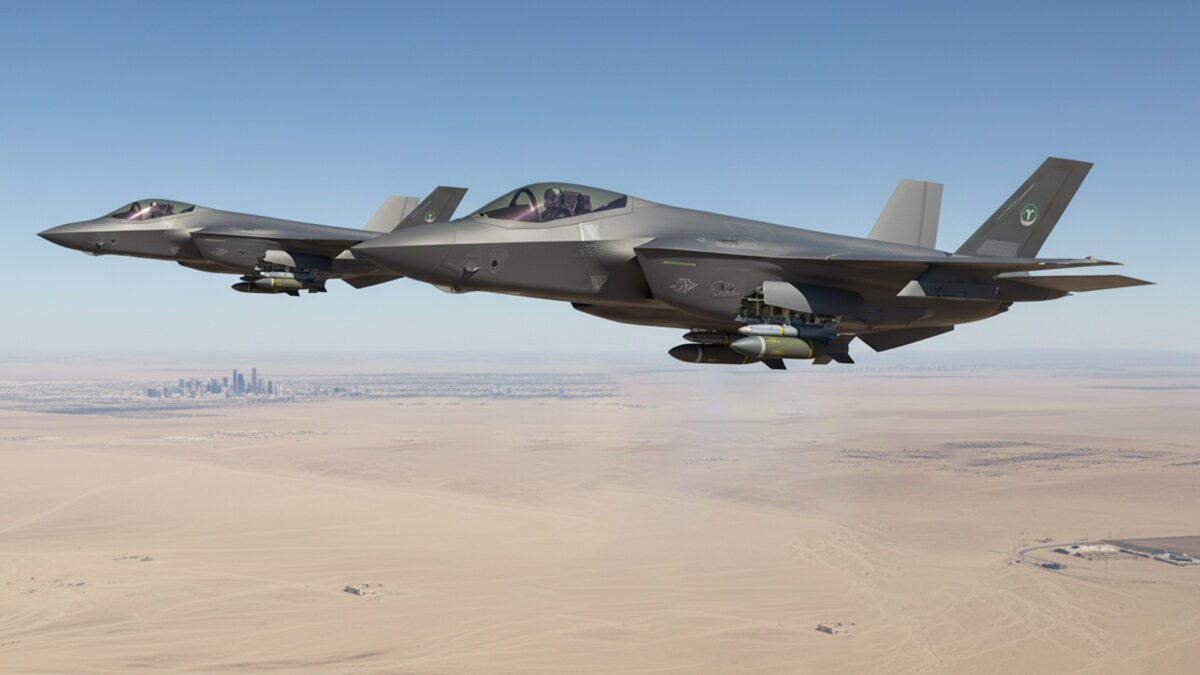
Trump eyes F-35 jets sale to Saudi Arabia

US President Trump plans to sell Saudi Arabia advanced F-35 fighter jets, days before Crown Prince Mohammed bin Salman’s White House visit.

Trump described Saudi Arabia as a “great ally” and said the sale is in line with strengthening US-Saudi ties. If completed, Saudi Arabia would become the first Arab country to acquire F-35 jets.

The deal raises concerns about maintaining Israel’s long-standing military edge in the Middle East. Israeli officials have warned that selling such advanced jets could trigger a regional arms race and weaken their aerial superiority.

The F-35, built by Lockheed Martin, is considered one of the most sophisticated fighter jets in the world, featuring stealth technology and advanced systems. Previous US administrations have ensured that arms sales to Arab nations do not compromise Israel’s qualitative military advantage.

The potential sale comes amid Trump’s broader Middle East strategy, which includes encouraging stronger relations between Arab nations and Israel under the Abraham Accords. Congress retains the power to block the sale, and the deal’s progress will be closely watched internationally.

Also Read: Trump’s tariff move boosts Indian tea, spices