Categories
Beyond

Oil drops 3% after Trump remarks on Iran

Global oil prices dropped by about 3 per cent on Thursday after US President Donald Trump’s remarks suggested a reduced risk of military conflict with Iran. The fall came after oil had risen in recent days due to concerns that unrest in Iran could threaten regional oil exports.

Brent crude, the international benchmark, slipped roughly 2.9 per cent to $64.5 per barrel, while West Texas Intermediate (WTI), the US benchmark, declined to around $60 per barrel. The decline reversed the previous day’s gains, which had been driven by fears that escalating tensions in Iran might disrupt global oil supply.

Trump said that reports indicated the killings of protesters in Iran had stopped and that plans for mass executions were no longer moving forward. Speaking from the White House, he added that he would “watch and see” before taking any further action, signaling a cautious approach rather than immediate military involvement. Market participants saw this as a sign that the risk of a major conflict affecting oil supply had lessened.

Analysts said that the president’s comments removed part of the “risk premium” built into oil prices due to geopolitical uncertainty. Rising crude inventories in the United States and potential increases in Venezuelan oil exports also added downward pressure on prices.

Iran produces a significant share of the world’s crude oil, so any disruption there can sharply influence market sentiment. With tensions easing temporarily, even slightly, investors quickly adjusted their expectations, triggering the drop in prices.

While geopolitical risks in the Middle East remain complex, Thursday’s market reaction highlighted how political statements can strongly impact oil prices. Traders continue to monitor developments in Iran and other key oil-producing regions, aware that shifts in risk perception can quickly move global crude markets.


Also Read: Windows 10 & 11 users alerted to security flaw

Categories
Beyond

Gold at ₹1.43 lakh , Silver rises ₹2.95 lakh

Gold and silver prices showed mixed movement in the domestic market on Friday, with gold edging lower and silver recording a small gain in early trade.

The price of 24-carat gold slipped by ₹10 to ₹1,43,610 per 10 grams. Similarly, 22-carat gold declined by ₹10 and was quoted at ₹1,31,640 per 10 grams. Prices remained largely stable across major Indian cities, with only minor variations. In Delhi, 24-carat gold was priced at around ₹1,43,760 per 10 grams, while Chennai saw slightly higher rates at close to ₹1,44,990.

Silver prices, however, moved in the opposite direction. The white metal gained ₹100 to trade at ₹2,95,100 per kilogram in major markets such as Mumbai, Delhi, and Kolkata. Chennai continued to quote higher silver prices at around ₹3,10,100 per kilogram.

Market analysts said the mild fall in gold prices was largely due to profit booking after recent record levels. The strength of the US dollar and strong economic data from the United States also weighed on sentiment. These factors have lowered expectations of an early interest rate cut by the US Federal Reserve, making gold less attractive in the short term.

In the international market, spot gold prices eased slightly in early Asian trade but continued to stay near recent highs. Silver prices overseas remained volatile but held firm after strong gains earlier in the week, supported by industrial demand and safe-haven buying.

Other precious metals also saw some pressure. Platinum prices declined by nearly 2 per cent, while palladium slipped by about 1 per cent, indicating a broader correction in metal prices.

Looking ahead, experts expect gold and silver prices to remain range-bound in the near term. Global economic data, movements in the US dollar, and signals from central banks will continue to influence the direction of precious metal prices.

Also Read: Sensex surges over 700 points, Nifty tops 25,850

Categories
Beyond

RBI approves Japan’s SMBC India Bank subsidiary

The Reserve Bank of India (RBI) has given in-principle approval to Sumitomo Mitsui Banking Corporation (SMBC) of Japan to set up a wholly-owned subsidiary (WOS) in India. The move marks a significant expansion of SMBC’s footprint in the country and underlines India’s growing importance in global banking and finance.

At present, SMBC operates in India through branch offices in Mumbai, New Delhi, Chennai and Bengaluru. With the RBI’s approval, these branches will be converted into a locally incorporated subsidiary. Once the bank fulfils all regulatory conditions laid down by the central bank, it will receive a formal licence under the Banking Regulation Act, 1949 to begin operations as an Indian entity.

A wholly-owned subsidiary structure offers several advantages over the branch model. As a locally incorporated bank, SMBC will be able to expand its branch network more freely, offer a wider range of services and operate on terms similar to domestic banks. The subsidiary will have its own capital base and governance framework, with its finances ring-fenced from the parent bank in Japan. This structure also gives the RBI stronger regulatory oversight and helps enhance financial stability.

The approval is especially significant in the context of SMBC’s investment in Yes Bank. In 2025, the Japanese lender acquired about 24.22 per cent stake in Yes Bank, becoming its largest shareholder. While the new subsidiary will operate independently, the development is expected to strengthen SMBC’s ability to support Indian corporates, multinational companies and cross-border business, potentially benefiting partnerships and collaborations within the Indian banking system.

SMBC is one of Japan’s largest financial institutions and has been active in India for over a decade, focusing mainly on corporate banking, project finance and trade finance. The new subsidiary is expected to deepen its engagement with India’s fast-growing economy, particularly in infrastructure, manufacturing, clean energy and international trade.

The RBI’s decision reflects its broader policy of allowing foreign banks to choose between branch operations and wholly-owned subsidiaries, while ensuring strong regulation and local accountability. As India’s banking sector continues to expand, the move is likely to encourage more long-term foreign investment and competition, strengthening the overall financial ecosystem.

Also Read: Citigroup CEO Fraser signals more job cuts

Categories
Beyond

Trump pushes Microsoft on data centre costs

US President Donald Trump has directed Microsoft to ensure its rapidly expanding artificial intelligence (AI) data centres do not raise electricity costs for Americans. Speaking on January 13, 2026, Trump emphasized that large technology companies must bear their own energy expenses instead of passing them onto residential households. He called on Microsoft to take “major steps” to prevent utility price hikes linked to its operations.

In response, Microsoft announced its “Community‑First AI Infrastructure” initiative, designed to address energy, environmental, and community concerns related to its data facilities. The initiative includes several commitments: the company will pay full electricity costs, ensure water usage is minimized and replenished, hire locally for construction and operational jobs, pay full property taxes without seeking incentives, and invest in community AI education and training through schools, colleges, and libraries.

The announcement comes amid growing public and political scrutiny. Residents in several states have criticized data centre projects for driving up utility bills, consuming large amounts of water, and putting pressure on local infrastructure. Some projects, including a planned Microsoft facility in Wisconsin, were paused after local opposition and activist campaigns.

Microsoft also said it will coordinate with utility companies and state regulators to fund necessary grid upgrades through commercial rates, ensuring that residential customers are not affected. Officials stressed that the program is designed to provide economic, educational, and environmental benefits to host communities while supporting the company’s AI expansion.

Analysts say the move reflects broader concerns about balancing AI innovation with community and environmental protection. As data centres grow to meet the increasing demand for AI services, tech companies are under closer scrutiny to ensure they do not negatively impact local residents or ecosystems.

Trump’s intervention marks a rare public instance of a U.S. president directly influencing corporate operations in the tech sector. The announcement is seen as a signal to other tech firms that they may face similar accountability demands, particularly as AI technology expands rapidly and its infrastructure footprint grows.

Also Read: Tata Elxsi Q3 profit falls 45% amid labour code charges

Categories
Beyond

World Bank sees 7.2% growth for India

The World Bank has projected that India’s economy will grow by 7.2 per cent in the fiscal year 2025‑26, keeping the country among the fastest-growing major economies in the world. This forecast, detailed in the Bank’s latest Global Economic Prospects report, highlights robust domestic demand and resilient economic activity as the main drivers of growth.

The report notes that private consumption is rising steadily, supported by higher rural household incomes and the positive effects of previous tax reforms. These factors, combined with strong performance in the services and merchandise export sectors, are helping India maintain economic momentum even amid global challenges.

The World Bank also pointed out that India’s growth is occurring despite external pressures such as trade tensions, slowing global growth, and higher US import tariffs, all of which have affected emerging markets. However, India’s strong internal demand and policy measures have cushioned the impact of these global headwinds.

Looking ahead, the Bank expects India’s growth to moderate to 6.5 per cent in FY2026‑27, before gradually rising to 6.6 per cent in FY2027‑28. This slowdown is attributed to a projected easing of domestic demand and global economic uncertainties, but overall, India’s economy is expected to remain resilient due to its diversified growth drivers and strong fundamentals.

The report emphasizes that continued investments in infrastructure, digital technology, and human capital, along with effective policy measures, will be key to sustaining growth over the medium term. India’s performance contrasts with other emerging economies, many of which are struggling with slower growth, inflationary pressures, and declining exports.

Overall, the World Bank’s forecast reflects optimism about India’s ability to maintain high growth rates, driven by domestic consumption, export resilience, and structural reforms. Policymakers are encouraged to continue focusing on inclusive growth, employment generation, and reforms to support long-term economic stability.

Also Read: Bharat Coking Coal IPO subscribed 147 times on last day

Categories
Beyond

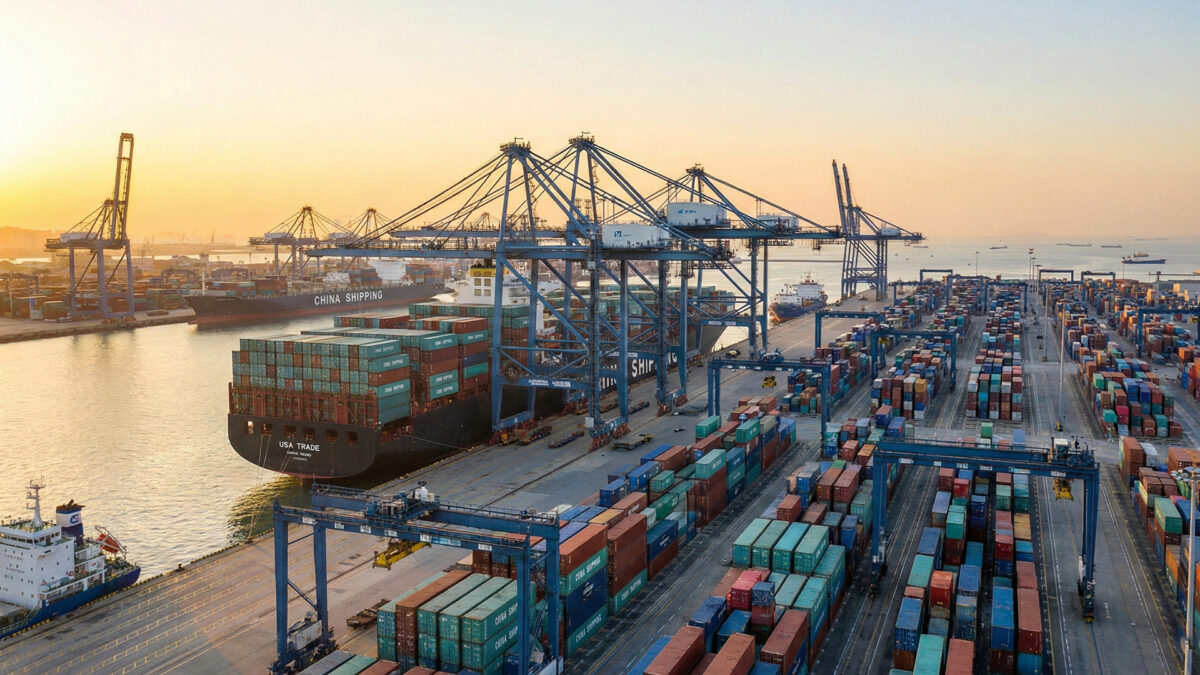
China’s trade surplus soars to $1.2 trillion in 2025

China closed 2025 with a record trade surplus of nearly $1.2 trillion, showing strong exports even amid U.S. tariffs and global tensions, official data released on January 14 revealed.

For the year, exports grew about 5.5 percent to $3.77 trillion, while imports remained nearly flat at $2.58 trillion. This created China’s largest trade gap ever, surpassing last year’s surplus of $992 billion.

December trade data was particularly strong. Exports in December rose 6.6 percent year-on-year, the fastest increase in months. Imports grew 5.7 percent, indicating continued demand for foreign goods and raw materials.

A major factor behind China’s trade performance was diversification of export markets. While exports to the United States dropped around 20 percent due to tariffs, shipments to other regions surged. Exports to Africa rose 26 percent, while sales to Southeast Asia, the EU, and Latin America grew by 13 percent, 8 percent, and 7 percent respectively.

Analysts say China’s strong export growth reflects global demand for electronics, machinery, and automobiles, as well as exporters’ efforts to reduce reliance on the U.S. market. Jacqueline Rong, chief China economist at BNP Paribas, noted, “Exports will continue to be a major growth driver in 2026.”

However, domestic challenges remain. Consumer demand is weak, and the property market is struggling. The International Monetary Fund has urged China to boost internal consumption to rely less on exports.

The strong trade numbers lifted Chinese markets, but experts cautioned that geopolitical tensions and future tariffs could affect growth. Despite this, China’s ability to expand trade with other regions helped it achieve record figures for 2025, showing resilience in a challenging global environment.

Also Read: Bajaj Housing raises ₹509 cr via bonds

Categories
Beyond Corporate

Gold at ₹1.42 lakh, Silver at ₹2.75 lakh after fresh rise

Gold and silver prices edged higher in early trade on Wednesday, staying close to record levels amid firm global cues and steady domestic demand.

24-carat gold rose by ₹10 to trade at ₹1,42,540 per 10 grams in Mumbai and Kolkata. In Delhi, gold was priced at ₹1,42,690, while Chennai saw higher rates at ₹1,43,690 per 10 grams. 22-carat gold was quoted at around ₹1,30,660 per 10 grams across major markets.

Silver prices also increased by ₹100, trading at ₹2,75,100 per kilogram in Delhi, Mumbai, and Kolkata. Chennai continued to command a premium, with silver priced at around ₹2,92,100 per kg.

Market experts said bullion prices are being supported by positive global trends, including expectations of lower interest rates and sustained safe-haven demand. Seasonal buying and investor interest have also contributed to the firmness in domestic prices.

Both gold and silver are currently hovering near their recent highs, with further movement likely to depend on global economic cues and currency trends.

Also Read: Sensex down 150 Points, Nifty below 25,700

Categories
Beyond

India’s retail inflation hits 1.33% in December

India’s retail inflation rose to 1.33% in December 2025, the highest in three months, up from 0.71% in November. The increase was mainly due to slower falls in food prices and higher costs for items like vegetables, meat, eggs, pulses, spices, and personal care products.

Despite the rise, inflation remains well below the RBI’s target range of 4% ±2%, staying under the lower comfort limit of 2% for the eleventh month in a row. Food inflation, while still negative, eased compared with November, helping lift overall prices.

Both urban and rural areas saw rising prices, with urban inflation increasing faster. Some sectors, such as housing, education, and health, showed mixed trends, with housing costs slightly easing.

Economists say that even with this increase, inflation is still low by historical standards, and core inflation (excluding food and fuel) remains modest, indicating limited demand pressure.

The low inflation gives the RBI room to keep monetary policy accommodative. In 2025, the central bank cut interest rates, and with inflation below the comfort level, there is scope to support economic growth further. Policymakers will keep an eye on new data, especially with the upcoming revised CPI series using 2024 as the base year.

Also Read: Germany eases air transit rules for Indians

Categories
Beyond

Trump plans 10% credit card interest cap

US President Donald Trump has suggested a plan to cap credit card interest rates at 10 per cent for one year, starting January 20, 2026. He says this is aimed at protecting consumers from high borrowing costs, as many credit cards charge 20–30 per cent or more in interest. Trump believes the cap would help Americans struggling to repay debt.

The proposal has sparked discussion in other countries, including India, where credit card interest rates are even higher. In India, cardholders can face rates of 36–48 per cent per year on unpaid balances. Some borrowers feel a lower interest cap, like Trump’s 10 per cent idea, could make repaying debt easier.

However, experts warn that strict limits on interest rates can also create problems. Banks and credit card companies might reduce lending to people with higher credit risks. They could also cut card benefits, like rewards or cashback, to make up for lost income. Some borrowers may turn to other options such as payday loans or buy-now-pay-later services, which can be costly.

The plan would need approval from the US Congress to become law. Similar attempts in the past have faced opposition from banks and financial groups. While the idea is intended to help consumers, economists say it could affect how easy it is to get credit.

In India, there is currently no official cap on credit card interest rates. A Supreme Court decision in 2024 allowed banks to charge more than 30 per cent per year, overturning an earlier limit. Experts say that while Trump’s plan may not directly affect India, it highlights a worldwide concern about the burden of high-interest debt on consumers.

Also Read: Rupee slips 5 Paise to 90.22 against US dollar

Categories
Beyond

Rupee slips 5 Paise to 90.22 against US dollar

The Indian rupee slipped by 5 paise to close at 90.22 against the US dollar on Tuesday, continuing its weak trend as global and domestic factors weighed on the currency. A stronger US dollar, firm crude oil prices and sustained selling by foreign investors kept the local unit under pressure.

The rupee opened on a cautious note in early trade and failed to recover during the session. Currency dealers said demand for the dollar remained high, while the supply of foreign funds stayed limited. The US dollar index moved higher, reflecting renewed strength in the American currency against major global peers.

Rising crude oil prices added to the rupee’s challenges. As India depends heavily on imported oil, higher prices increase the country’s import bill and push up dollar demand. This trend often weakens the rupee and raises concerns about inflation and the current account balance.

Another key factor impacting the rupee was continued foreign portfolio investor (FPI) outflows. Overseas investors have been trimming their exposure to Indian equities, leading to capital outflows and increased demand for dollars. Traders said this selling pressure has limited any meaningful recovery in the currency.

Market sentiment was also cautious ahead of global economic developments, particularly signals on US monetary policy. Expectations that interest rates in the US may remain elevated have strengthened the dollar and reduced risk appetite for emerging market assets.

However, the rupee’s losses were partly capped by suspected intervention from the Reserve Bank of India, which is believed to be active in smoothing sharp currency movements. Analysts said the central bank’s presence has helped prevent excessive volatility in the foreign exchange market.

Looking ahead, the rupee is expected to remain sensitive to global cues, oil price movements and foreign investment trends. Any improvement in risk sentiment or moderation in crude prices could provide some support to the currency in the near term.

Also Read: Germany eases air transit rules for Indians