Categories
Beyond

Disney plans 1,000 job cuts

The Walt Disney Company is planning to cut up to 1,000 jobs in the coming weeks as part of efforts to reduce costs and improve efficiency. The move comes under its new CEO, Josh D’Amaro, who took charge in March 2026.

The layoffs will affect less than 1% of Disney’s global workforce, which has over 230,000 employees. Most of the job cuts are expected to happen in the company’s marketing teams. Disney has recently combined several marketing functions, leading to some overlapping roles.

Although the layoffs are happening during D’Amaro’s leadership, reports suggest the plan was already in progress before he became CEO. Still, this is one of the first major steps under his leadership as he focuses on making the company more streamlined.

Disney is currently facing several challenges. Its streaming business is growing but is not as profitable as traditional TV. At the same time, the company is dealing with weaker box office performance and strong competition from digital platforms.

To manage these issues, Disney is restructuring its operations and cutting costs. A key part of this plan is to simplify its marketing structure and improve coordination across its film, television, and streaming businesses.

This is not the first time Disney has reduced its workforce. The company has made similar cuts in recent years as it adapts to changes in how people consume entertainment.

Also Read: Canva buys two AI startups in expansion push

Categories
Beyond

RBI keeps Repo rate at 5.25%

The Reserve Bank of India has decided to keep its key policy rate, the repo rate, unchanged at 5.25%, signalling a cautious approach as it navigates a complex global and domestic environment.

The decision was announced after the latest meeting of the Monetary Policy Committee (MPC), which voted to maintain the current rate while continuing with a “neutral” stance. This means the central bank is keeping its options open, depending on how inflation and growth trends evolve in the coming months.

Alongside the rate decision, the RBI projected India’s economic growth at 6.9% for the financial year 2026–27. While the outlook remains positive, it reflects a slightly moderated pace amid global uncertainties. Inflation is expected to average 4.6%, staying within the RBI’s comfort range but still requiring close monitoring.

The central bank highlighted that risks from global developments remain a concern. Ongoing geopolitical tensions, particularly in West Asia, and fluctuations in crude oil prices could impact both inflation and economic activity. Any sharp rise in oil prices may increase input costs and put pressure on household budgets.

Despite these risks, the RBI expressed confidence in the strength of the domestic economy. It pointed to steady consumption, improving investment activity, and stable financial conditions as key supporting factors.

For borrowers, the unchanged repo rate means lending rates on home, auto and other loans are likely to remain stable for now. This provides some relief to households and businesses that have been adjusting to higher interest rates over the past few years.

Also Read: Gold at ₹1.53 lakh, Silver near ₹2.60 lakh

Categories
Beyond

Gold at ₹1.53 lakh, Silver near ₹2.60 lakh

Gold and silver prices remained steady with slight gains in the domestic market today. Gold prices rose marginally by ₹10 to ₹1,53,830 per 10 grams, holding firmly above the ₹1.5 lakh level. Silver also moved higher, gaining ₹100 to trade at ₹2,60,100 per kilogram, reflecting stable demand and supportive international cues.

The rise in bullion prices comes at a time when safe-haven demand has slightly weakened following a temporary ceasefire between the United States and Iran. The development has reduced immediate global uncertainty, limiting sharp upward movement in gold, which is typically seen as a safe investment during crises.

However, prices have not fallen significantly. Analysts say this is because investors remain cautious amid ongoing global uncertainties. Factors such as currency movements, inflation concerns, and central bank policies continue to support gold at elevated levels.

Silver prices, meanwhile, are being supported not only by investment demand but also by industrial usage. Demand from sectors such as manufacturing and electronics has helped keep silver prices resilient, even when broader market sentiment shifts.

In major Indian cities, bullion prices remained largely uniform, with only minor differences due to local taxes and demand conditions. Jewellers reported steady retail demand, which has also helped stabilise prices in the domestic market.

Also Read: Sensex rises to 3000 points, Nifty hovers near 24,000

Categories
Beyond

Gautam Adani gets US Court hearing

A US federal court has agreed to hear a plea filed by Indian billionaire Gautam Adani seeking dismissal of a fraud case brought by the US Securities and Exchange Commission (SEC). The move marks an important step in the ongoing legal proceedings involving the Adani Group.

The SEC has accused Adani and his nephew, Sagar Adani, of being part of an alleged bribery scheme connected to business deals involving Adani Green Energy. According to the regulator, the alleged misconduct was not disclosed to investors during a bond issuance in 2021, potentially misleading those who invested in the offering.

During a recent hearing in New York, the court permitted Adani’s legal team to move forward with a pre-motion process. This allows them to formally argue why the case should be dismissed before it proceeds further in court. While this does not mean the case has been dropped, it gives the defence an opportunity to challenge the SEC’s claims at an early stage.

Adani’s lawyers have denied all allegations, stating there is no reliable evidence of wrongdoing. They have also argued that the SEC lacks jurisdiction, claiming the events in question occurred outside the United States and do not fall under US securities laws. Additionally, the defence maintains that neither Gautam Adani nor Sagar Adani played a direct role in the bond issuance tied to the case.

The lawsuit is part of a wider scrutiny of the Adani Group’s financial practices, which has drawn international attention over the past few years. The SEC alleges that critical information related to the alleged scheme was withheld from global investors.

Legal observers note that the court’s willingness to hear the dismissal plea is a routine but significant procedural step. The final outcome will depend on how convincingly Adani’s legal team can challenge both the allegations and the SEC’s jurisdiction.

Also Read: Jubilant shares drop 10% on weak Q4 growth

Categories
Beyond

Air India hikes fuel surcharge, flights costlier

Air India has announced an increase in fuel surcharges on both domestic and international flights, effective April 8 for domestic travel and April 10 for most international routes. The move comes as jet fuel prices surge worldwide, partly due to geopolitical tensions in the Middle East.

For domestic flights, the surcharge will now vary by distance. Short trips up to 500 km will see an extra ₹299 per ticket, while long flights over 2,000 km could add ₹899. International travelers will also feel the impact: flights to nearby countries may add about $24, while long-haul journeys to North America or Australia could see $280 extra per ticket. Charges on routes to Europe, Africa, West Asia, and Southeast Asia will fall somewhere in between.

Air India says that even with the higher surcharge, it will continue to absorb part of the increased fuel cost. Tickets booked before the surcharge increase won’t be affected unless changes are made to the booking.

The airline’s decision follows similar moves by other carriers, including budget airlines, as aviation turbine fuel (ATF) costs rise sharply. Fuel is one of the biggest expenses for airlines, so when global oil prices spike, passengers often bear some of the increase.

The government has tried to reduce the impact by capping monthly ATF price hikes domestically, but rising fuel costs still push up airfares. Experts say travelers should expect higher ticket prices in the coming months if oil price volatility continues.

For passengers, this means budgeting more for travel and checking updated fuel surcharge details when booking tickets. While it helps airlines manage costs, it also adds to the overall cost of flying, especially for long-haul journeys.

With global oil prices unlikely to stabilize immediately, this surcharge hike highlights the direct impact of energy markets on everyday air travel, showing how international events can quickly translate into higher costs for passengers.

Categories
Beyond

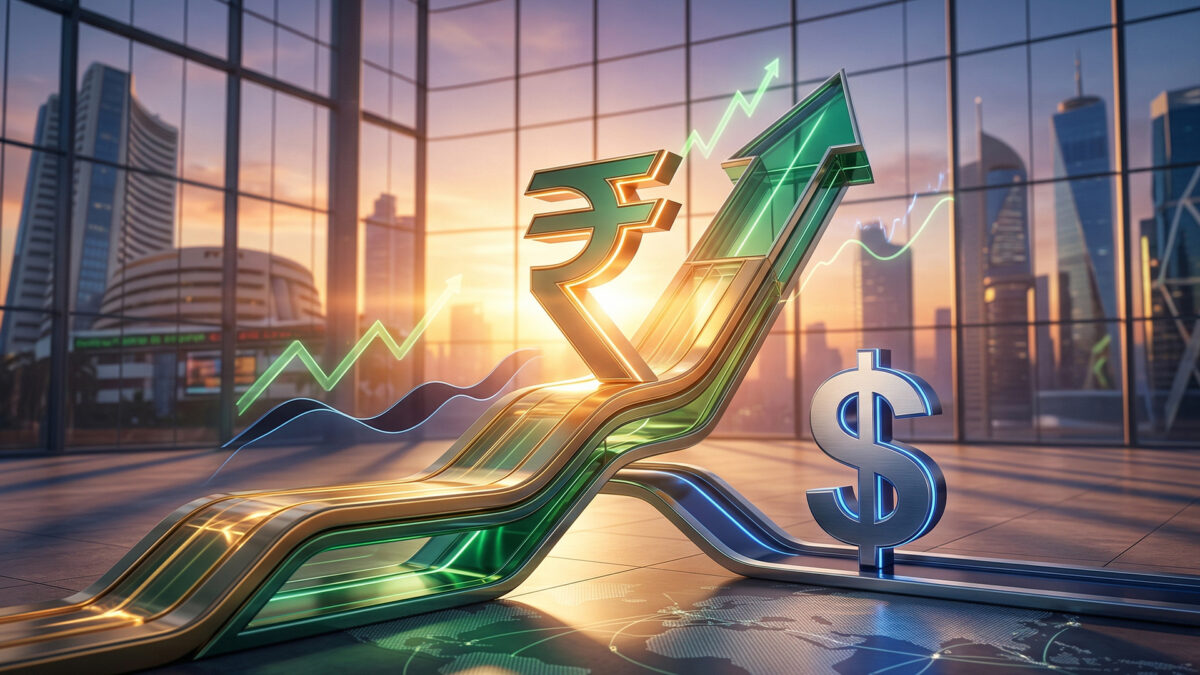
Rupee gains 50 paise to 92.56 against US dollar

The Indian rupee strengthened by 50 paise to 92.56 against the US dollar in early trade on April 8, 2026, recovering from its previous close of 93.06. The sharp gain reflects improved global sentiment and easing pressure on the currency.

The rise follows a temporary two-week ceasefire between the United States and Iran, which has reduced concerns over geopolitical tensions in the Middle East. This has improved investor confidence and supported emerging market currencies, including the rupee.

A drop in crude oil prices also aided the recovery. Oil prices slipped below $100 per barrel, easing concerns over India’s import bill and inflation. As a major oil importer, India benefits from lower crude prices, which typically strengthens the rupee.

In early forex trade, the rupee opened at around 92.92 and extended gains to 92.56. Traders attributed the move to positive global cues and reduced volatility in financial markets.

Stronger equity markets further supported the currency. Gains in domestic and Asian stocks signalled improved risk appetite, attracting investor flows into emerging markets.

Market participants also noted that recent measures by the Reserve Bank of India have helped stabilise the rupee after it had weakened close to 95 per dollar in recent sessions.

Also Read: Gold steady at ₹1.54 lakh, Silver slumps ₹1,600

Categories
Beyond

Gold steady at ₹1.54 lakh, Silver slumps ₹1,600

Gold and silver prices showed mixed trends on wednesday as global uncertainty and volatile crude oil prices influenced investor sentiment. Gold prices remained largely steady near ₹1.54 lakh per 10 grams in futures trade, while silver prices declined by around ₹1,600 per kilogram in early sessions, highlighting uneven movement in the bullion market.

The primary driver behind this volatility is the ongoing geopolitical tension in the Middle East, particularly involving Iran. Rising crude oil prices have added to inflation concerns, prompting investors to remain cautious and limiting strong directional moves in precious metals.

During the day, however, market sentiment improved slightly following reports of a temporary ceasefire between the United States and Iran. This development led to a rebound in bullion prices in global and domestic markets. Gold saw mild gains, supported by its safe-haven appeal, while silver recovered sharply in later trade, reflecting its dual role as both a precious and industrial metal.

In the domestic physical market, gold prices continued to hover above ₹1.5 lakh per 10 grams for 24-carat purity across major cities, including Delhi, Mumbai, and Chennai. Silver prices also experienced sharp intraday fluctuations, mirroring global trends and heightened market uncertainty.

Globally, gold prices stayed firm near recent highs as investors balanced safe-haven demand with improving risk sentiment. Silver, on the other hand, remained more volatile, reacting strongly to both geopolitical cues and industrial demand expectations. Analysts note that movements in the US dollar, crude oil prices, and interest rate outlook continue to play a key role in shaping bullion trends.

Despite the fluctuations, experts advise investors to remain cautious. Markets are highly sensitive to geopolitical developments, and any escalation in tensions could push gold prices higher. Conversely, easing tensions may reduce demand for safe-haven assets and cap further upside.

Also Read: Sensex jumps 3,000 points, Nifty nears 24,000

Categories
Beyond

₹2.5 lakh crore credit scheme launched

The Central government is set to introduce a large credit guarantee scheme worth around ₹2–2.5 lakh crore to help businesses cope with the economic impact of the ongoing West Asia crisis. The initiative is aimed primarily at supporting micro, small and medium enterprises (MSMEs), which are more vulnerable to global disruptions such as rising costs and supply chain uncertainties.

Officials familiar with the development said the scheme will provide government-backed guarantees on loans extended by banks and financial institutions. By reducing the risk for lenders, the plan is expected to encourage banks to continue lending to businesses facing temporary financial stress.

Under the proposed framework, the government may guarantee a significant portion of the loan amount, possibly up to 75–90%. This means that if a borrower fails to repay, most of the losses would be covered by the government, making it safer for banks to extend credit. The scheme could also include limits on loan size and interest rates to ensure affordability for borrowers.

The programme is likely to be implemented through a government-backed agency that manages credit guarantees. The Centre may allocate a financial buffer to support the scheme, ensuring that lenders are protected against defaults.

The design of the new scheme is expected to follow the model of the Emergency Credit Line Guarantee Scheme (ECLGS), which was launched during the COVID-19 pandemic. That programme helped businesses access collateral-free loans and maintain operations during a period of severe economic disruption.

The latest move comes as global tensions in West Asia continue to create economic uncertainty. India is facing indirect effects such as fluctuating oil prices, increased transportation costs, and potential trade disruptions. While the domestic economy remains stable, policymakers are taking precautionary steps to prevent stress from spreading across sectors.

Also Read: Saudi Arabia sets $19.50 oil premium

Categories
Beyond

Saudi Arabia sets $19.50 oil premium

Saudi Arabia has raised its official selling price of crude oil for Asian buyers to a record premium of $19.50 per barrel, underscoring the growing impact of geopolitical tensions in the Middle East. The sharp increase comes as instability around the Strait of Hormuz fuels fears of supply disruptions in one of the world’s most vital oil transit routes.

The Strait of Hormuz is a crucial passage for global oil shipments, and any threat to its operations quickly affects energy markets. Ongoing tensions linked to Iran have heightened uncertainty over the safety of oil flows, prompting producers to add a significant risk premium to prices. As a result, crude markets have become highly volatile.

The increase in crude prices is expected to have wider economic consequences. Higher fuel costs typically lead to increased transportation and production expenses, which can drive up the prices of goods and services. This adds to inflationary pressures already affecting many economies.

Financial experts have warned about the broader risks. JPMorgan CEO Jamie Dimon noted that an extended conflict involving Iran could lead to sustained inflation and force central banks to keep interest rates higher for longer. This could slow economic growth and create further uncertainty in financial markets.

Also Read: Jamie Dimon flags Iran war risk to inflation

Categories
Beyond

Army receives kamikaze drones in urgent deal

The Indian Army has added a new set of kamikaze drones to its arsenal, boosting its ability to carry out precise strikes during operations. These drones were bought under an emergency procurement deal worth ₹10 crore and have been supplied by a Gujarat-based company.

Officials confirmed that hundreds of these drones have already been delivered. Known as kamikaze or loitering drones, they are designed to hover over a target area and strike by crashing into the target, exploding on impact. This makes them highly effective in hitting enemy positions with accuracy.

These drones are expected to play an important role in modern warfare, especially in sensitive and high-risk zones. They can be used for targeted attacks without putting soldiers directly in harm’s way, making operations safer and more efficient.

One of the key advantages of these drones is their ability to operate in extreme conditions. They can function in very low temperatures, even down to -35 degrees Celsius, and can also work in areas where GPS signals are weak or unavailable. This makes them particularly useful in difficult terrains such as high-altitude border regions.

The purchase was made through the emergency route, which allows the armed forces to quickly acquire critical equipment when needed. The fast delivery shows how urgently the Army wanted to strengthen its capabilities.

Another important highlight is that these drones are made in India. This supports the government’s push for self-reliance in defence production and encourages local innovation in advanced military technology.

Defence experts say that drones are becoming a key part of modern combat, as they offer precision, speed, and reduced risk to human life. The addition of these kamikaze drones is expected to give the Indian Army an edge in future operations.

Also Read: India delays refinery shutdowns to boost supply