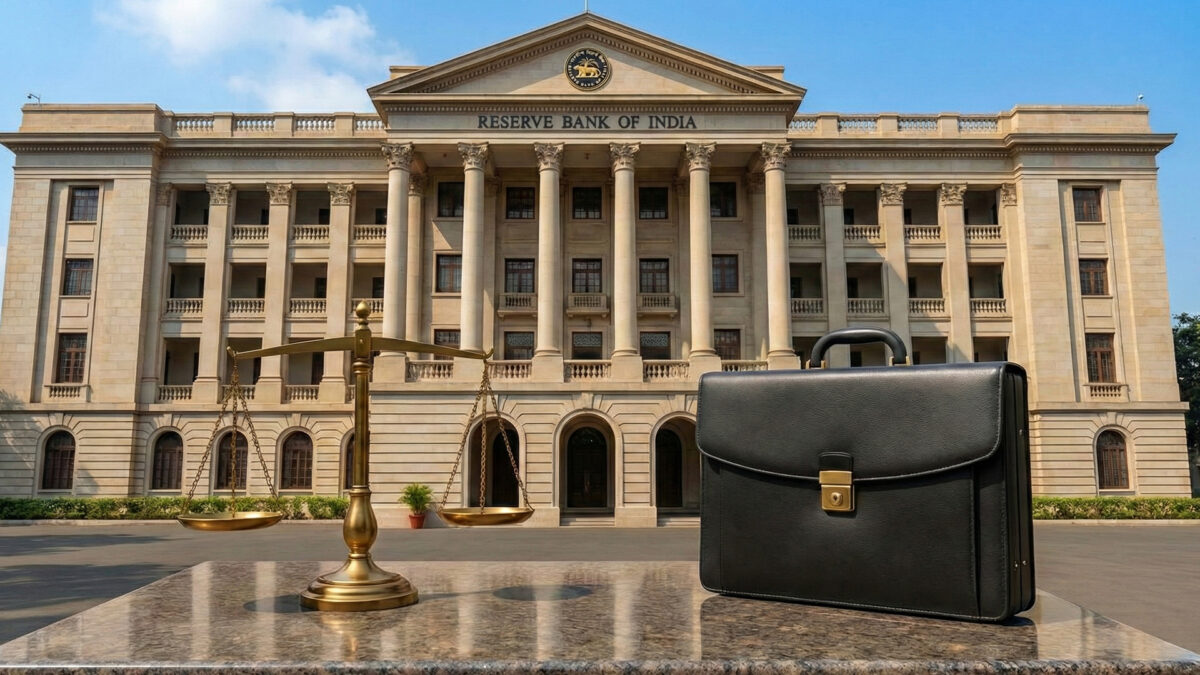
The Reserve Bank of India (RBI) has announced a ₹25,000 crore open market operation (OMO) auction for October 13, signalling a fresh move to absorb surplus liquidity from the banking system. The decision is expected to influence government bond yields, short-term interest rates and banks’ liquidity management in the coming days.
Bond market participants expect government bond yields to open 4-5 basis points higher on Monday, October 12, following the announcement. The move comes as the central bank intensifies its efforts to manage liquidity amid inflation concerns, pressure on the rupee and changing monetary policy conditions.
Through an OMO sale, the RBI sells government securities to banks and other market participants, receiving money in return. This reduces the funds available in the banking system and helps the central bank manage short-term interest rates.
The latest auction follows a series of bond sales and changes to cash reserve requirements, indicating a more active approach to liquidity management.
The RBI has said it will offer government securities worth ₹25,000 crore through the October 13 auction. The sale will include bonds maturing between 2030 and 2034, with coupon rates ranging from 6.10% to 7.95%. The auction will follow a multiple-price method, under which successful bidders pay the prices they have offered.
The proposed sale follows a ₹1 lakh crore government securities sale programme conducted by the RBI in September through three auctions. The central bank sold ₹50,000 crore on September 17, followed by ₹25,000 crore each on September 21 and September 28. It accepted the full notified amount in all three auctions.
The repeated sales indicate the RBI‘s willingness to withdraw funds from the financial system as it seeks to align liquidity conditions with its monetary policy objectives.
The central bank has also used variable rate reverse repo (VRRR) auctions to absorb excess funds from banks. These operations allow the RBI to manage short-term liquidity without directly changing the policy repo rate.
Despite the withdrawal measures, surplus liquidity remains in the banking system. The surplus was around ₹3.92 lakh crore on October 8, according to recent market data. However, liquidity conditions have tightened compared with September levels.
The upcoming auction will be closely watched for signs of investor demand and the extent to which the bond sale influences yields across different maturities.
The RBI is also tightening the rules governing banks’ cash reserve ratio (CRR) maintenance. From the fortnight beginning October 16, banks will be required to maintain at least 99% of their prescribed CRR on a daily basis, compared with the earlier minimum of 90%.
The statutory CRR remains unchanged at 4% of banks’ net demand and time liabilities. The change concerns the minimum daily maintenance requirement rather than the overall reserve ratio.
Under the earlier arrangement, banks could maintain lower cash reserves on individual days, provided they met the prescribed requirement on average during the reporting fortnight. The revised rule significantly reduces this flexibility.
The tighter requirement could lock up additional funds that banks might otherwise use for short-term lending or liquidity management. The actual impact will depend on deposit levels and how individual banks manage their reserves.
The CRR change, together with the OMO sale, is expected to withdraw liquidity through two separate channels. While bond sales transfer funds to the RBI, stricter reserve maintenance requires banks to hold a larger proportion of their prescribed reserves on a daily basis.
The RBI’s announcement has raised expectations of an increase in government bond yields when trading resumes on Monday. Bond prices and yields move in opposite directions, meaning prices generally fall when yields rise.
The anticipated increase of 4-5 basis points reflects expectations of tighter liquidity and the additional supply of government securities being absorbed by the market.
Higher government bond yields can influence borrowing costs for companies, financial institutions and other issuers. They also affect the market value of bonds held by banks, insurers and mutual funds.
However, the final market impact will depend on investor demand at the auction, liquidity conditions and expectations about future interest rates. Strong demand could limit the rise in yields, while weaker demand could add to selling pressure.
The liquidity measures come amid concerns over inflation, crude oil prices and the rupee. The RBI must balance price stability and currency management with the need to ensure that banks have sufficient funds to support economic activity.
The central bank’s actions also reflect its broader monetary policy priorities. Investors will assess the bond sale alongside the RBI’s policy decisions and its assessment of inflation and liquidity conditions.
This tighter liquidity could increase the importance of careful cash management and influence the cost of short-term funds. For investors, the focus will remain on the 10-year government bond yield, auction demand and movements in money market rates.
The October 13 auction will provide a clearer indication of how investors respond to the RBI’s latest measures. Together, the bond sale and tighter daily CRR requirement signal that liquidity management will remain a key factor shaping India’s debt market in the coming weeks.