Categories
Beyond

India-EU on the verge of a game-changing deal

Negotiations between India and the European Union are moving steadily toward a landmark free trade agreement. Ursula von der Leyen, European Commission President, described the prospective pact as historic, with wide-reaching benefits for businesses, workers, and consumers in both regions.

The agreement would connect nearly 2 billion people and cover about a quarter of the world’s GDP. It is expected to make it easier for Indian companies to enter European markets while giving European businesses greater access to India’s growing economy. Key areas include clean technologies, digital services, healthcare, and sustainable manufacturing.

Von der Leyen is expected to visit New Delhi later this month to finalise talks ahead of the India-EU summit, where progress toward signing the deal is likely to be formally announced. Leaders emphasised that political momentum is strong, although challenges such as tariffs, regulatory differences, and sensitive sectors remain to be resolved.

The India-EU trade talks, which began in 2007 and were revived in 2022, aim to deepen economic cooperation and remove barriers in goods, services, and investment. Observers say a successful agreement would be a major boost for Indian exporters and European investors alike, strengthening the long-term partnership between the two regions.

Also Read: China’s economy grows 5% in 2025

Categories
Beyond

IMF raises India’s FY26 growth forecast to 7.3%

India’s economy is showing renewed strength, prompting the International Monetary Fund (IMF) to raise its growth forecast for the 2025–26 financial year to 7.3 per cent, up from its earlier estimate of 6.6 per cent. The upgrade reflects stronger-than-expected performance in recent quarters and growing confidence in India’s economic momentum.

In its latest assessment, the IMF noted that India’s economy has benefited from resilient domestic demand, improved corporate performance and steady activity across key sectors such as manufacturing, services and infrastructure. A better third-quarter showing and continued momentum into the final months of the fiscal year played a significant role in the revised outlook.

This positive view broadly aligns with official Indian estimates. The National Statistical Office has projected GDP growth of 7.4 per cent for the year ending March 2026, indicating that the economy is holding up well despite global uncertainties.

However, the IMF also offered a note of caution. While near-term prospects remain strong, growth is expected to slow to around 6.4 per cent in FY27 and FY28. According to the Fund, some of the factors supporting current growth, such as post-pandemic recovery effects and supportive fiscal measures, are likely to fade over time, leading to a more moderate but stable growth trajectory.

Even with this expected moderation, India is projected to remain one of the fastest-growing major economies globally, outperforming many advanced and emerging peers. The IMF also pointed to easing inflation pressures, with price levels expected to move closer to the Reserve Bank of India’s target range, helped by lower food inflation and better supply conditions.

In essence, the IMF’s revised forecast paints a balanced picture: confidence in India’s current growth story, coupled with a reminder that sustaining high growth over the long term will require continued reforms, investment and policy discipline.

Also Read: JioHotstar introduces monthly plans from Rs. 79

Categories
Beyond

China’s economy grows 5% in 2025

China’s economy grew by 5 per cent in 2025, meeting the government’s annual growth target despite sluggish domestic activity and ongoing trade tensions with the United States. The growth was supported primarily by strong exports, which helped the country navigate challenges from slower consumer spending, low investment, and deflationary pressures.

Data released by Chinese authorities show that GDP rose 5 per cent year‑on‑year, although growth slowed in the fourth quarter to 4.5 per cent, marking the weakest quarterly expansion since the country reopened after the pandemic. Nominal GDP, which does not account for inflation, rose only 4 per cent, highlighting the pressure on domestic economic activity.

Exports remained the key driver of growth. Demand from overseas markets, including Europe, Southeast Asia, Latin America, and Africa, helped offset a slowdown in shipments to the United States caused by higher tariffs. China’s trade surplus reached about $1.2 trillion in 2025, underlining the strength of its external sector.

Domestic consumption and investment, however, showed uneven performance. Retail sales rose only modestly, while fixed‑asset and private investment weakened. Deflation continued for a third straight year, limiting consumer spending and overall confidence. Industrial production held up better, but the domestic economy’s recovery remained fragile.

Policy makers in Beijing acknowledge the imbalance between strong exports and weak internal demand. Plans under the new five‑year strategy aim to strengthen household consumption and the service sector, but authorities are cautious about large-scale stimulus due to local government debt and inflation concerns.

Analysts warn that China’s heavy reliance on exports makes growth vulnerable to future global trade disruptions. Sustainable long-term expansion will depend on boosting domestic demand and implementing structural reforms to encourage private investment and household spending.

Also Read: UAE signs $2.5bn LNG deal with HPCL

Categories
Beyond

Global markets fall on US Greenland tariff threats

Global markets fell this week after US President Donald Trump threatened tariffs on several European countries over his Greenland plans. Investors became cautious, pulling back from stocks and turning to safer assets like gold and silver.

In Asia, major stock markets dropped around 0.5%, while US S&P 500, Dow Jones, and Nasdaq futures were all pointing to lower openings. The declines came amid uncertainty as the US observed the Martin Luther King Jr. holiday, limiting regular trading.

European markets also fell sharply, with France’s CAC 40 and Germany’s DAX among the hardest hit. Traders worried about possible import tariffs on European goods, which could hurt trade and corporate profits.

Bond markets reacted too. US Treasury prices fell slightly, pushing yields higher. Japanese long-term bonds also saw small increases in yields, reflecting the global ripple of the tariff news.

The US dollar strengthened against most currencies, while safe-haven assets like gold and silver rose to record levels before slightly easing. This showed that investors were seeking security amid growing trade uncertainties.

Experts said the tariff threats come at a sensitive time, with markets already balancing central bank policies, corporate earnings, and other global tensions. Potential retaliation from Europe could further affect trade and investor confidence.

Also Read: India’s power utilities make ₹2,701 cr profit after

Categories
Beyond

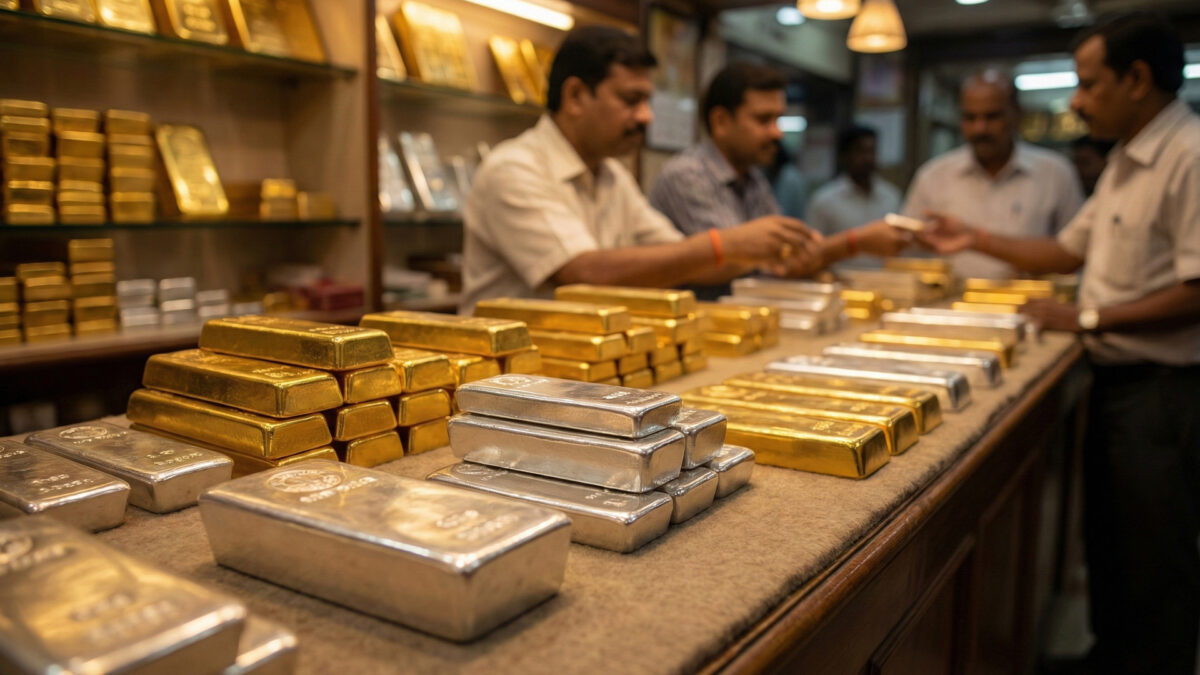
Gold at ₹1,46,250, Silver at ₹3,05,100 as bullion prices rise

Gold and silver prices moved higher in the domestic market on Tuesday, reflecting continued investor interest in precious metals amid global economic uncertainty. According to market data, the price of 24-carat gold increased marginally by ₹10 to ₹1,46,250 per 10 grams. Though the rise was modest, it extended the recent firm trend in gold prices.

Silver registered a stronger gain, with prices rising by ₹100 to trade at ₹3,05,100 per kilogram. The metal has been witnessing steady buying, supported by both industrial demand and investment interest, making its price movement more pronounced compared to gold.

The price of 22-carat gold also edged up and was quoted at around ₹1,34,060 per 10 grams. Gold rates across major Indian cities, including Mumbai, Delhi, Kolkata and Chennai, remained largely in line with national averages, with only minor variations due to local taxes and transportation costs.

Market experts attributed the firm prices to ongoing global uncertainties, including concerns over inflation, interest rate outlooks, and geopolitical developments. In such an environment, investors tend to shift towards gold and silver, which are traditionally viewed as safe-haven assets during volatile times.

Jewellery traders noted that retail demand remains cautious at current elevated price levels. Many buyers are making need-based purchases rather than large investments. However, investment demand from long-term investors and high-net-worth individuals continues to lend support to bullion prices.

Also Read: Sensex falls 350 points, Nifty slips below 25,500

Categories
Beyond

Steel prices rise on safeguard duty and exports

Domestic steel prices in India have witnessed a significant uptick in recent weeks, as mills increased hot-rolled coil (HRC) prices by ₹500‑750 per tonne. The move comes amid the recently imposed safeguard duty, rising input costs, and robust export demand, according to market intelligence firm BigMint.

Since mid-December, HRC list prices have climbed between ₹3,000 and ₹5,250 per tonne, pushing trade-level prices close to ₹52,000 per tonne. The rise is being seen across major steel products, including long products, where supply remains tight. The cost pressures are driven largely by higher prices of imported met coke and other raw materials, alongside a weaker rupee, which has increased the landed cost of imports.

Export demand has also supported the price hike. Indian steel exports surged by 31% year-on-year during April to November 2025, benefiting from pre-buying by European buyers ahead of the EU Carbon Border Adjustment Mechanism (CBAM) implementation. Safeguard duty on HRC imports has further strengthened domestic pricing power, providing relief to local mills and supporting margins.

Industry experts note that while demand is gradually improving, the market is cautious. Some analysts expect that as new capacities come online and demand growth slows, the price momentum could moderate. However, for now, the combination of strong exports, policy measures, and input cost pressures has created a favorable environment for domestic steel producers.

Also Read: ChatGPT adds ads, Google’s Gemini stays clean

Categories
Beyond

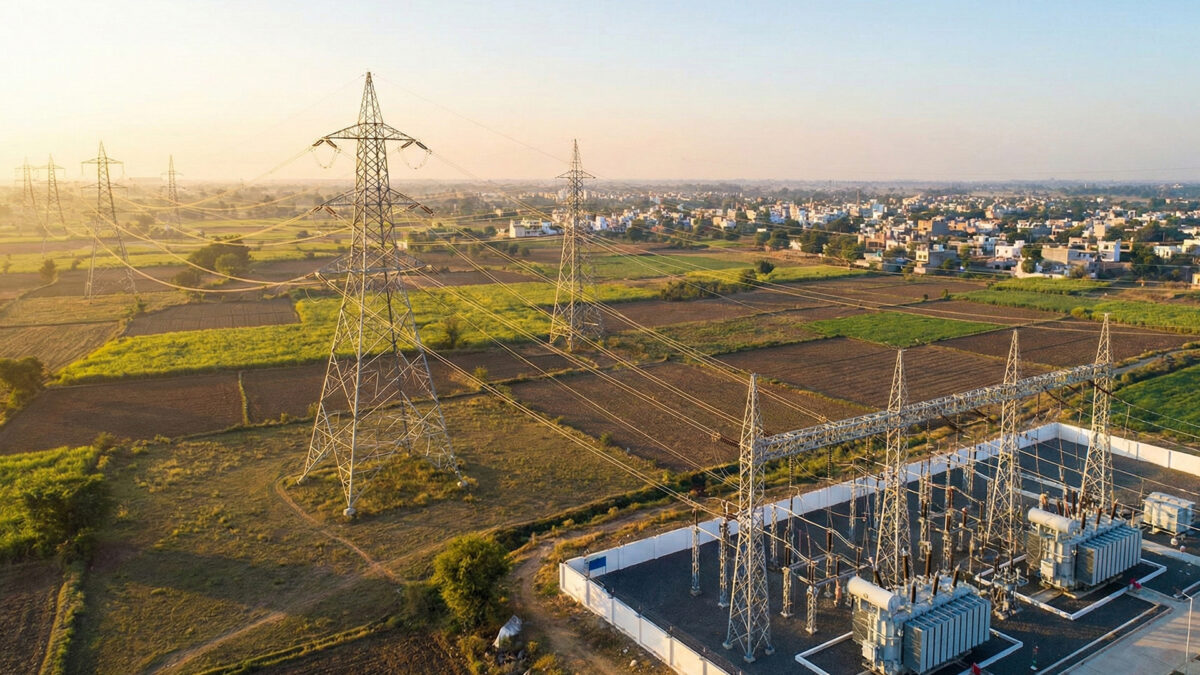
India’s power utilities make ₹2,701 cr profit after

India’s electricity distribution companies (DISCOMs) have recorded a net profit of ₹2,701 crore in FY25, marking a significant turnaround after years of heavy losses. In FY24, these utilities had reported a combined loss of ₹25,553 crore, and the sector had faced even larger deficits in previous years.

Union Power Minister Manohar Lal welcomed the results, calling them a “new chapter” for the sector. He highlighted that a financially healthy power distribution system is essential for India’s economic growth and development goals.

The turnaround is mainly attributed to several policy and operational reforms. Programs like the Revamped Distribution Sector Scheme (RDSS) helped modernize infrastructure, install smart meters, and improve efficiency. New rules for electricity tariffs and subsidies also made cost recovery more transparent and reliable.

Efficiency has improved significantly. Technical and commercial losses, energy lost or not billed, have dropped from 22.6% in 2013–14 to 15% in FY25. The gap between the cost of supply and revenue earned narrowed to just ₹0.06 per unit, compared with ₹0.78 per unit a decade ago.

Financial management has also strengthened. Outstanding dues to power generators fell dramatically by 96%, from ₹1.39 lakh crore in 2022 to ₹4,927 crore in January 2026. The average payment cycle for utilities shortened from 178 days in FY21 to 113 days in FY25, ensuring smoother cash flow and timely payments.

Also Read: Sandeep Bakhshi gets reappointed as ICICI Bank CEO

Categories
Beyond

DGCA fines IndiGo ₹22.2 cr for Dec. flight disruptions

India’s aviation regulator, the Directorate General of Civil Aviation (DGCA), has imposed a ₹22.2 crore penalty on IndiGo Airlines for large-scale flight disruptions that occurred in December, triggering widespread passenger inconvenience and renewed debate over airline accountability.

The action follows a detailed inquiry ordered by the DGCA after IndiGo faced severe operational breakdowns during the first week of December. Over a span of three days, the airline cancelled more than 2,500 flights and delayed nearly 1,900 services, leaving over three lakh passengers stranded across major airports. The disruption coincided with the implementation of revised Flight Duty Time Limitation (FDTL) norms for pilots, which aim to reduce fatigue and enhance flight safety.

According to the DGCA, the crisis was not caused by a single factor but by systemic planning failures. The regulator cited over-ambitious scheduling, insufficient buffer in crew and aircraft deployment, weaknesses in operational software systems, and inadequate preparedness for the new duty norms. These shortcomings, it said, exposed gaps in IndiGo’s management oversight and operational control mechanisms.

Of the total fine, ₹1.8 crore relates to one-time violations of aviation safety and operational rules. The remaining ₹20.4 crore was levied for continued non-compliance over several weeks, during which IndiGo sought repeated exemptions from full implementation of the revised duty norms while continuing to operate a dense flight schedule.

In addition to the monetary penalty, the DGCA issued warnings to senior IndiGo executives, including top management, for failing to anticipate and manage the operational fallout. The regulator also directed changes in responsibility within the airline’s operations control structure.

To ensure long-term corrective action, IndiGo has been asked to submit a ₹50 crore bank guarantee under a Systemic Reform Assurance Plan. The guarantee will be released in phases, subject to DGCA verification of improvements in crew planning, fatigue management, digital systems, leadership oversight, and governance practices.

The penalty has sparked mixed reactions across the aviation sector. While some pilots’ bodies and experts argue the fine is inadequate given the scale of passenger hardship, others point out that existing laws limit the DGCA’s ability to impose harsher financial penalties.

Also Read: EU and Mercosur seal major trade deal

Categories
Beyond

Gold at ₹1,43,770, Silver slips below ₹2.95 lakh

Gold and silver prices saw a marginal decline in the domestic bullion market on Monday, January 19, 2026, after holding near record highs in recent sessions. According to market data, the price of 24-carat gold slipped by ₹10 to ₹1,43,770 per 10 grams, while silver fell by ₹100 to trade at ₹2,94,900 per kilogram .

The price of 22-carat gold also edged lower by ₹10 and was quoted at ₹1,31,790 per 10 grams. Despite the dip, gold prices continue to remain elevated, reflecting strong investor demand and sustained interest in safe-haven assets.

Across major cities, gold prices showed minor variations. In Mumbai and Kolkata, 24-carat gold was priced at ₹1,43,770 per 10 grams, while Delhi recorded a slightly higher rate of ₹1,43,920. Chennai continued to see higher prices, with gold trading at ₹1,44,860 per 10 grams. Silver prices also differed by location, with Chennai quoting silver at a higher ₹3,09,900 per kilogram, compared with ₹2,94,900 in most other markets .

Market experts said the slight correction comes after a strong rally in precious metals over the past few weeks. Gold and silver prices have surged recently due to global economic uncertainty, geopolitical tensions, and expectations around interest rate movements in major economies. These factors have increased the appeal of bullion as a hedge against inflation and financial market volatility.

Internationally, spot gold and silver prices are hovering close to their recent peaks, lending continued support to domestic prices.

Jewellery demand, investment buying, and safe-haven interest are expected to keep gold and silver prices supported in the coming weeks.

Analysts believe that while short-term fluctuations are likely, the broader outlook for precious metals remains firm due to sustained global demand and cautious investor sentiment.

Also Read: Sensex slumps 500+ points, Nifty slips below 25,550

Categories
Beyond

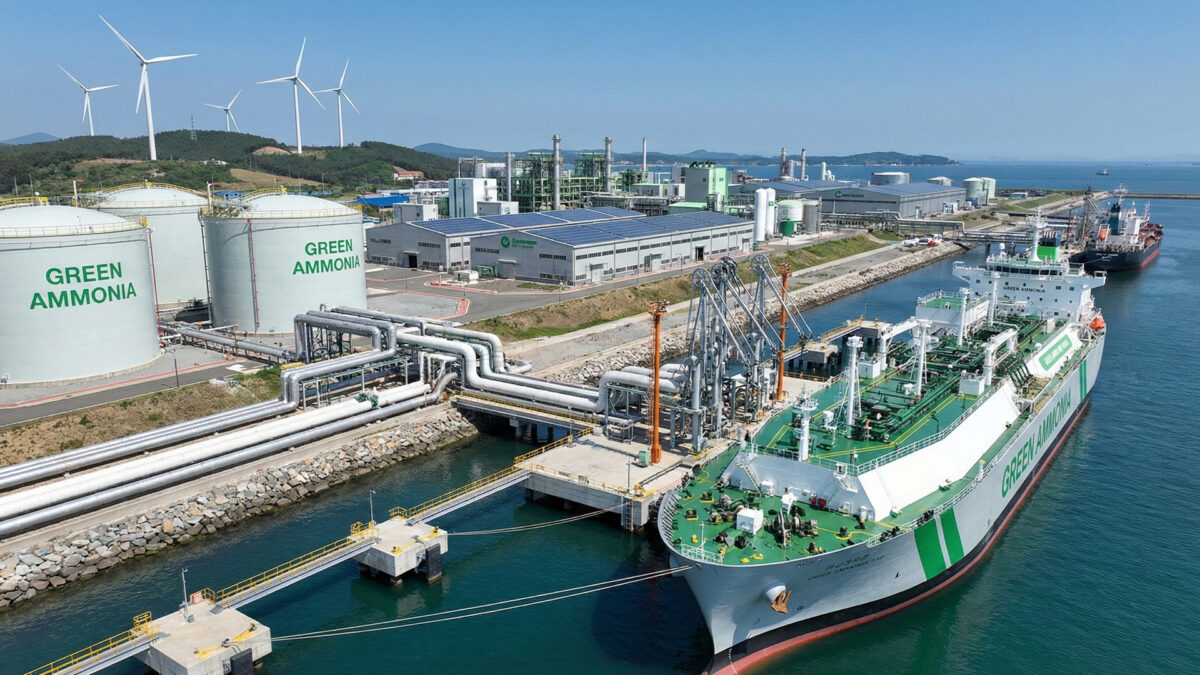
India’s first $10bn green ammonia venture in Andhra

Andhra Pradesh has launched India’s first green ammonia project, marking a significant investment in the country’s clean energy and industrial landscape. The $10‑billion facility, developed by AM Green, is set up near Kakinada Port on a brownfield site formerly used for ammonia‑urea production. Chief Minister N. Chandrababu Naidu and Deputy CM Pawan Kalyan inaugurated the project, emphasizing its potential to drive economic growth and sustainable industrial development.

At full capacity, the complex will produce 1.5 million tonnes of green ammonia annually, making it the largest facility of its kind in the world. Commissioning is planned in phases: 0.5 million tonnes per year by 2027, scaling to 1 million tonnes in 2028, and reaching full output by 2030.

The facility integrates large-scale renewable energy infrastructure, including 7.5 GW of solar and wind power, 1,950 MW of electrolyser capacity for green hydrogen, and 2 GW of continuous renewable energy supported by pumped hydro storage. These capabilities will make the project not only a clean energy milestone but also a strategic hub for industrial hydrogen-based exports.

The venture is expected to generate up to 8,000 jobs during construction, with additional long-term employment in sectors such as renewable energy operations, logistics, port management, and storage. AM Green has already secured supply agreements with Germany’s Uniper and is exploring partnerships with companies in Japan and Singapore, signaling strong international interest.

The project aligns with Andhra Pradesh’s Integrated Clean Energy Policy, 2024, reinforcing the state’s position as a leader in renewable energy and clean fuel exports. Analysts note that this initiative could significantly boost India’s presence in the global green ammonia market, a sector increasingly critical for shipping, power generation, and as a carrier of green hydrogen.

Also Read: US-Taiwan strike $250 billion trade deal