Categories
Beyond

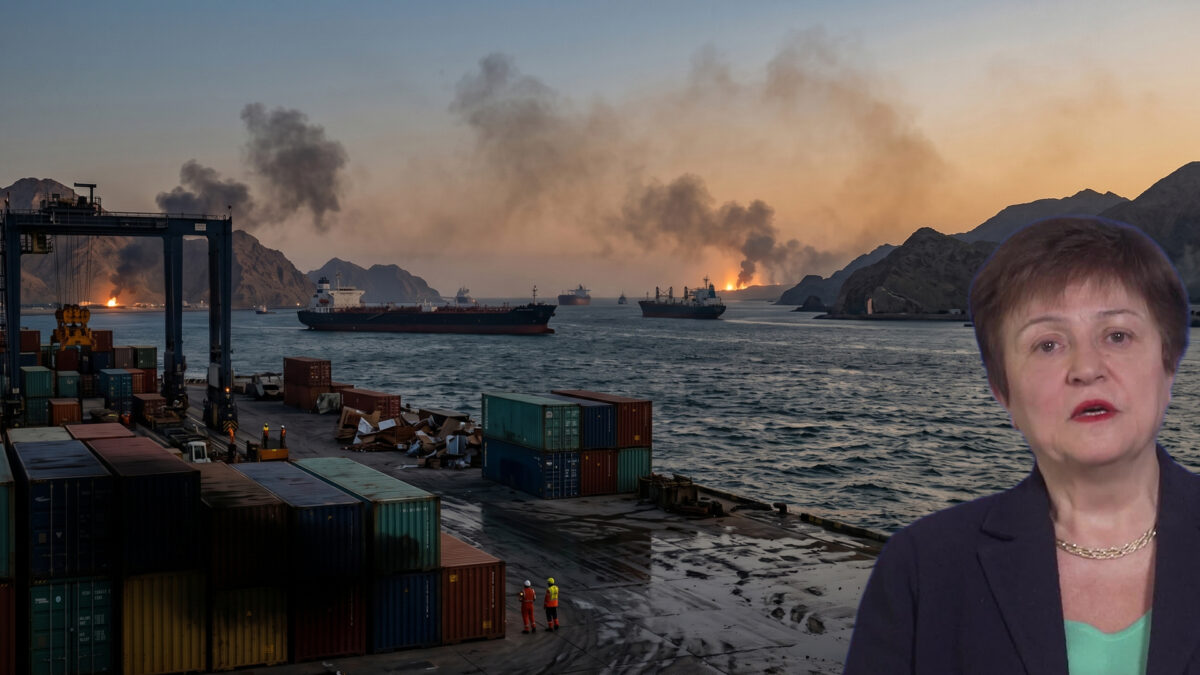
IMF warns Iran conflict could hurt global economy

The global economy could face serious challenges if the Iran-related conflict continues, the International Monetary Fund (IMF) has warned. IMF Managing Director Kristalina Georgieva said the situation is already putting pressure on growth and could get significantly worse if tensions do not ease soon.

The IMF had earlier expected global growth to remain stable in 2026. However, the ongoing conflict is now creating uncertainty, especially through rising energy prices and disruptions in supply chains. If the situation continues, growth could slow more than expected, while inflation may rise further.

One of the biggest concerns is oil. The conflict has already affected oil supply, pushing prices higher. If prices continue to rise, it could make fuel, transport, and everyday goods more expensive across countries. This would increase the cost of living and put pressure on both households and businesses.

Georgieva also pointed out that even if there is a ceasefire, the economic effects will not disappear immediately. Shocks like rising oil and food prices tend to last longer and can continue to affect economies for months. This means countries may still face challenges even after tensions ease.

Another worry is global trade. Key shipping routes in the region could be disrupted, affecting the movement of goods and increasing costs. This could slow down economic activity further, especially for countries that depend heavily on imports and exports.

The IMF has advised governments to be cautious in how they respond. Measures like controlling fuel prices may offer short-term relief but could worsen supply issues if not handled carefully.

Also Read: Cognizant plans 15000 layoffs, India faces impact

Categories
Beyond

IMF cuts global growth, India holds at 6.5%

The International Monetary Fund (IMF) has lowered its global growth forecast for 2026, while keeping India’s outlook steady at 6.5%, highlighting the country’s resilience in a slowing world economy.

In its latest update, the IMF cut global growth projections to around 3.1%, citing rising geopolitical tensions, especially in West Asia, and higher oil prices impacting economies worldwide. The report also warned that growth could weaken further if conflicts intensify or energy prices remain elevated.

Despite these challenges, India continues to stand out. The IMF expects the country to maintain strong growth, driven by robust domestic demand, steady consumption, and ongoing investment activity. This puts India on track to grow at nearly double the global average, making it one of the fastest-growing major economies.

The report noted that India’s economic stability and internal strength are helping cushion the impact of global uncertainties. Improvements in trade conditions and consistent policy support have also contributed to sustaining growth momentum.

At the same time, the IMF flagged risks for the global economy. Rising crude oil prices, supply disruptions, and uncertainty around key trade routes like the Strait of Hormuz could keep markets volatile. Inflation pressures are also expected to persist in several countries due to higher energy costs.

While advanced economies may see slower growth, emerging markets like India are expected to perform relatively better, supported by domestic factors.

Also Read: Sam Altman seeks relief in sister’s lawsuit

Categories
Beyond

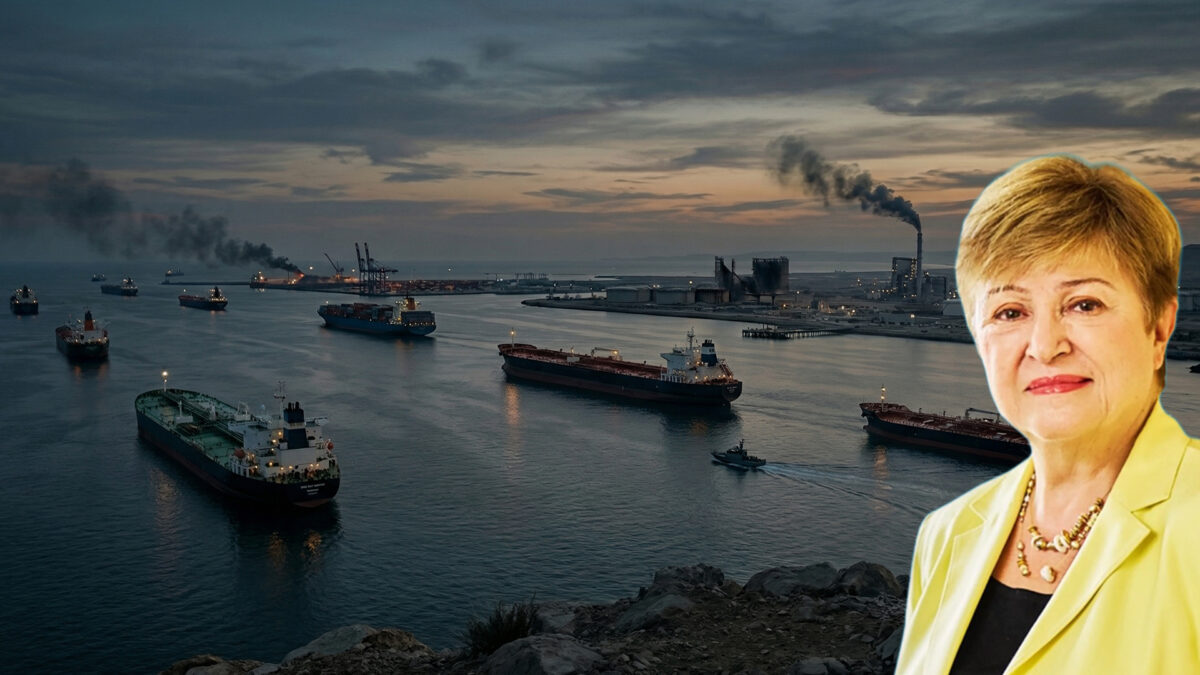
IMF warns of lasting impact of Iran war

The International Monetary Fund (IMF) has warned that the ongoing Iran war could leave long-lasting damage on the global economy, even if the conflict ends soon.

IMF Managing Director Kristalina Georgieva said the crisis has already disrupted global economic stability and may permanently affect growth. She cautioned that the world should not expect a quick return to normal, as the effects of the war are likely to continue for years.

One of the biggest concerns is the impact on energy supplies. The conflict has disrupted key oil and gas routes, especially around the Strait of Hormuz, a critical channel for global fuel shipments. This has pushed up energy prices, adding to inflation pressures in many countries.

The rising cost of fuel is also affecting food prices and transportation, making daily life more expensive, especially in poorer nations that depend heavily on imports. According to the IMF, these countries are the most vulnerable and could face worsening economic conditions and increased food insecurity.

The war has also shaken investor confidence and disrupted supply chains, slowing down global trade and business activity. As a result, the IMF is expected to lower its global growth forecasts in the coming months.

Georgieva noted that many countries are already seeking financial help to cope with the situation. The IMF estimates that demand for support could range between $20 billion and $50 billion as nations try to manage rising costs and economic uncertainty.

She also warned against protectionist measures like export bans, saying such steps could make the crisis worse. Instead, she urged countries to work together and focus on supporting vulnerable populations.

Also Read: Air India urged to stay focused amid challenges

Categories
Leaders

IMF Chief warns Iran conflict surging inflation

The head of the International Monetary Fund has warned that rising tensions in West Asia could push up global inflation if the conflict leads to a sustained increase in oil prices.

Kristalina Georgieva, Managing Director of the International Monetary Fund, said the ongoing crisis in the region is already creating uncertainty in energy markets and could have wider economic consequences. Speaking at an international symposium hosted by Japan’s finance ministry in Tokyo, she urged policymakers to prepare for unexpected developments.

Georgieva cautioned governments and central banks to “think of the unthinkable” as geopolitical tensions remain unpredictable. She said policymakers should remain vigilant and be ready to respond quickly if the situation worsens.

According to the IMF chief, a sharp rise in oil prices could translate into higher inflation globally. She noted that if oil prices increase by about 10 per cent and remain elevated for a prolonged period, it could add roughly 0.4 percentage points to global inflation.

Energy markets have been particularly sensitive to developments in West Asia because the region plays a crucial role in global oil supply. Any disruption to production or shipping routes could quickly affect energy prices worldwide.

One key concern for markets is the Strait of Hormuz, through which a significant portion of the world’s oil shipments pass. Any disruption along this route could lead to further volatility in global energy markets.

Georgieva said the global economy has shown resilience in recent years despite multiple shocks, including the pandemic and geopolitical conflicts. However, she warned that prolonged instability in West Asia could once again challenge economic recovery and complicate efforts to control inflation.

She added that governments and financial institutions should continue monitoring the situation closely and prepare policy responses if needed.

The IMF is currently assessing the possible economic impact of the conflict on different countries. Georgieva said the organisation will provide a clearer analysis in its upcoming global economic assessments, which will examine how the crisis could influence growth, inflation and financial stability in the months ahead.

Also Read: Sedemac Mechatronics IPO subscribed 2.68 times

Categories
Beyond

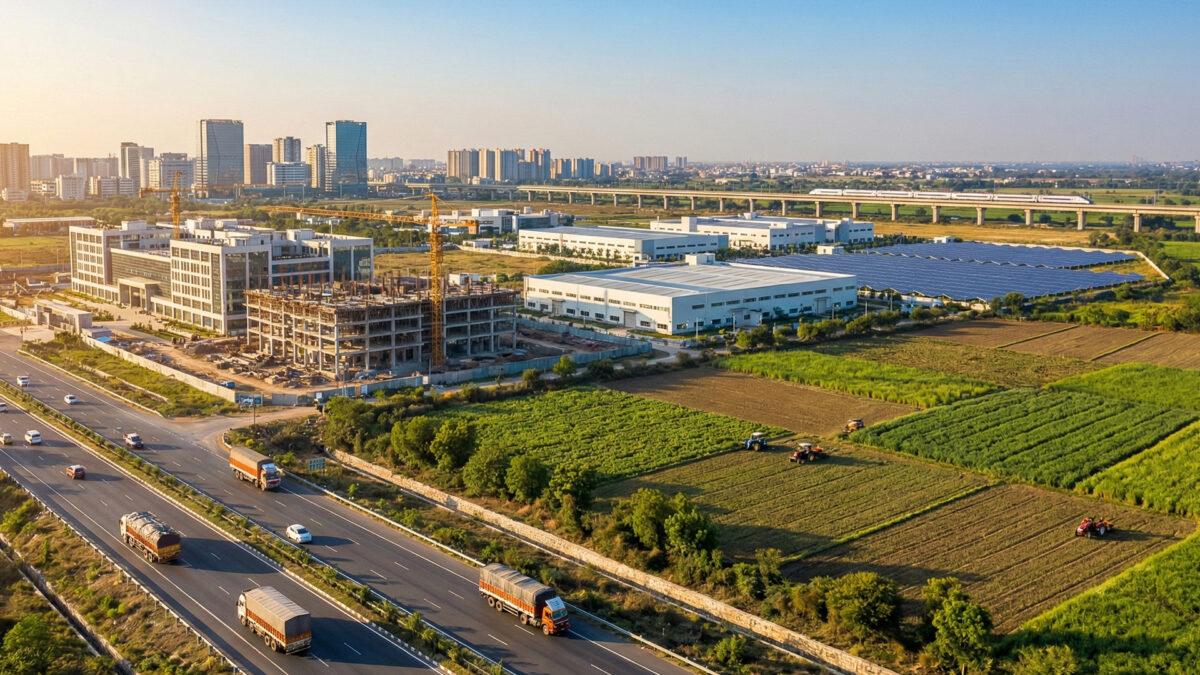
IMF raises India’s FY26 growth forecast to 7.3%

India’s economy is showing renewed strength, prompting the International Monetary Fund (IMF) to raise its growth forecast for the 2025–26 financial year to 7.3 per cent, up from its earlier estimate of 6.6 per cent. The upgrade reflects stronger-than-expected performance in recent quarters and growing confidence in India’s economic momentum.

In its latest assessment, the IMF noted that India’s economy has benefited from resilient domestic demand, improved corporate performance and steady activity across key sectors such as manufacturing, services and infrastructure. A better third-quarter showing and continued momentum into the final months of the fiscal year played a significant role in the revised outlook.

This positive view broadly aligns with official Indian estimates. The National Statistical Office has projected GDP growth of 7.4 per cent for the year ending March 2026, indicating that the economy is holding up well despite global uncertainties.

However, the IMF also offered a note of caution. While near-term prospects remain strong, growth is expected to slow to around 6.4 per cent in FY27 and FY28. According to the Fund, some of the factors supporting current growth, such as post-pandemic recovery effects and supportive fiscal measures, are likely to fade over time, leading to a more moderate but stable growth trajectory.

Even with this expected moderation, India is projected to remain one of the fastest-growing major economies globally, outperforming many advanced and emerging peers. The IMF also pointed to easing inflation pressures, with price levels expected to move closer to the Reserve Bank of India’s target range, helped by lower food inflation and better supply conditions.

In essence, the IMF’s revised forecast paints a balanced picture: confidence in India’s current growth story, coupled with a reminder that sustaining high growth over the long term will require continued reforms, investment and policy discipline.

Also Read: JioHotstar introduces monthly plans from Rs. 79

Categories
1 Minute-Read

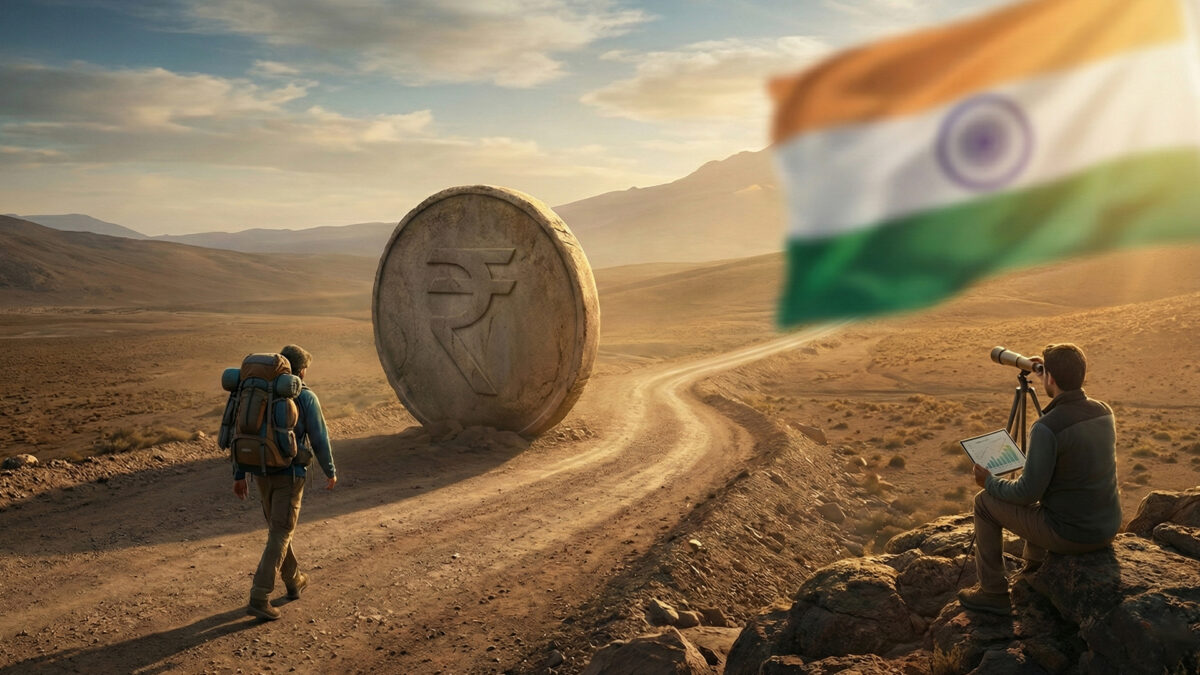
IMF shifts India to crawl-like regime

The IMF has reclassified India’s exchange-rate system as a “crawl-like arrangement,” replacing last year’s “stabilised” tag.

This change means the rupee is now allowed to move slowly within a small range instead of staying close to a fixed level. The shift comes after the rupee weakened and touched a record low of ₹89.49 per US dollar in November.

The IMF noted that the Reserve Bank of India has been intervening less in the forex market, allowing natural currency movements.

The Fund said this flexibility can help India handle global shocks better and still expects strong economic growth ahead.

Categories
Beyond

India’s $5 trillion goal delayed, growth strong

The International Monetary Fund (IMF) says India’s economy continues to grow steadily, but the country may reach the $5 trillion GDP mark a year later than previously expected. The new estimate now points to fiscal year 2028‑29, instead of 2027‑28. The main reasons for the delay are a weaker rupee and slower growth in GDP when measured in dollar terms.

Despite the delay, India remains one of the fastest-growing major economies in the world. Strong domestic demand, robust consumer spending, and healthy growth in services and manufacturing are helping the economy stay on track. Inflation is also under control, which supports stable prices and living costs.

The IMF forecasts that India’s economy will grow by 6.6% in FY2025‑26 and 6.2% in FY2026‑27. Even with the $5 trillion milestone pushed back, the underlying growth story remains strong. Policymakers will need to focus on sustaining domestic growth, managing inflation, and keeping the rupee stable to maintain momentum.

Also Read: Deloitte report in Canada faces AI citation controversy