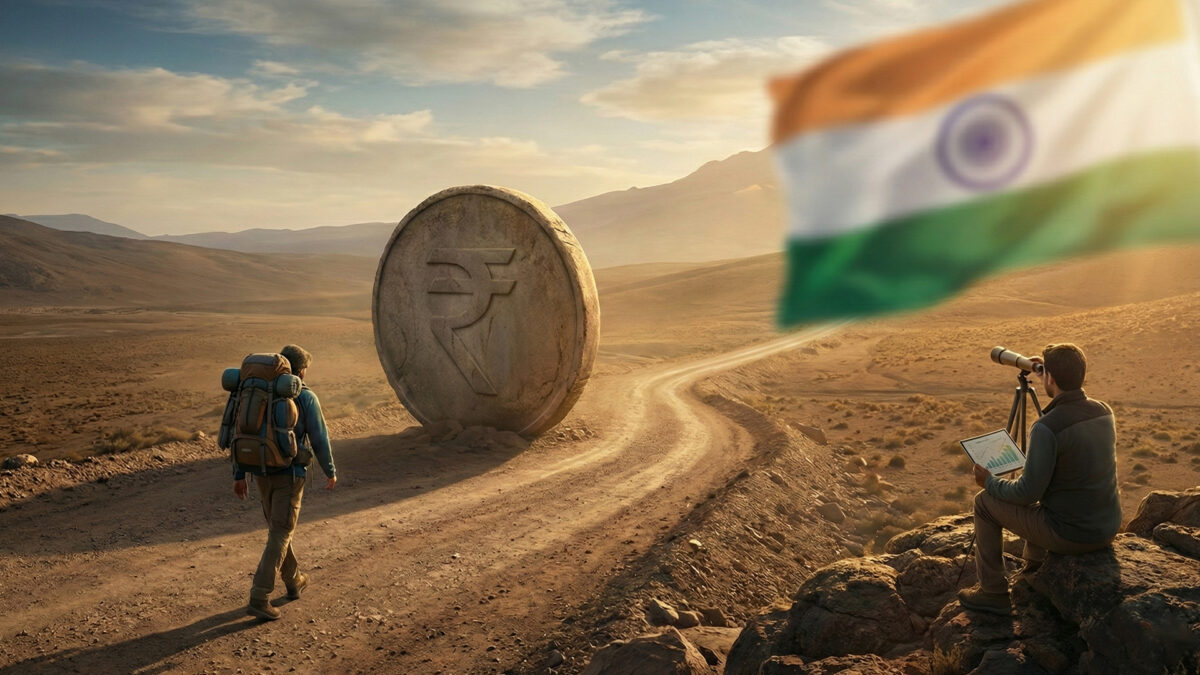
The International Monetary Fund (IMF) has raised India’s economic growth forecast for the financial year 2026-27 to 7%, up from its earlier estimate of 6.4% in July. The upward revision reflects stronger-than-expected economic activity, steady domestic demand and the continued performance of the services sector, even as the global economy faces uncertainty from geopolitical tensions and higher energy prices.
In its latest World Economic Outlook released on Tuesday, October 13, the IMF said India remained among the fastest-growing major economies. It also raised its growth forecast for 2027-28 to 7% from 6.7%, suggesting that the country’s economic momentum could continue beyond the current financial year.
The revised outlook comes at a time when several economies are dealing with higher oil prices, inflation risks and uncertainty over international trade. India’s ability to maintain growth despite these challenges has strengthened the outlook for its economy.
A key factor behind the IMF’s decision is resilient domestic demand. Household consumption, business activity and demand for services have helped support economic expansion. A large domestic market also gives Indian businesses a degree of protection when external demand weakens.
The services sector continues to play an important role in economic growth, supported by financial services, information technology, business services and other activities. India’s expanding digital economy and its position in global services trade have also contributed to its growth prospects.
The IMF’s revision follows an improvement in India’s economic performance. The country recorded GDP growth of 7.8% in the April-June quarter of the current financial year, exceeding expectations and providing a stronger base for subsequent quarters.
The Reserve Bank of India (RBI) has also raised its growth projection for 2026-27 to 7.1%. The World Bank and other international institutions have similarly improved their outlooks for India, reflecting confidence in domestic demand and the economy’s ability to withstand external pressures.
However, the positive forecast does not mean that the risks have disappeared. The IMF has warned that higher energy prices and prolonged geopolitical tensions could affect economic activity, increase inflation and put pressure on countries that depend heavily on imported fuel.
Crude oil is a particular concern for India because the country imports a large share of its energy requirements. The IMF expects the average price of crude oil, based on Brent, Dubai Fateh and West Texas Intermediate benchmarks, to reach $95.74 per barrel in 2026. This represents an increase of around 41% from 2025.
Persistently expensive oil can increase transportation and manufacturing costs, raise the import bill and put pressure on the rupee. If businesses pass these additional costs on to consumers, inflation could rise further and reduce household purchasing power.
The IMF expects India’s consumer price inflation to average around 5% in FY27 before easing to 4.4% in FY28. These projections will remain important for policymakers as they balance the need to support economic growth with the need to keep prices under control.
The global economic outlook is less encouraging. The IMF projects worldwide economic growth of 3.1% in 2026, slightly higher than its previous estimate of 3%. Growth is expected to reach 3.4% in 2027. However, the improvement remains uneven, with geopolitical conflicts, high borrowing costs and uncertainty over trade continuing to weigh on the outlook.
The IMF has also highlighted the growing influence of artificial intelligence (AI) investment on global economic activity. Strong demand for AI-related technology and infrastructure has supported trade and growth in several economies. However, the benefits are concentrated in certain countries and industries, leaving others more exposed to slower demand and economic shocks.
The Fund has cautioned that expectations surrounding AI productivity and profitability could create risks if investment returns fail to match market expectations. A correction in technology-related investments could affect financial markets and weaken business confidence.
For India, sustained growth will depend on maintaining domestic consumption, encouraging private investment, improving infrastructure and creating employment opportunities. Continued structural reforms and a growing working-age population could support long-term economic expansion, but the benefits will need to translate into stronger incomes and broader economic participation.
The revised IMF forecast is an encouraging signal for India’s economy, particularly at a time of global uncertainty. Yet, higher crude oil prices, inflation risks and external shocks remain important challenges. The ability to sustain demand while managing these pressures will determine whether India can maintain growth close to the projected 7% in the coming years.