Categories
Corporate

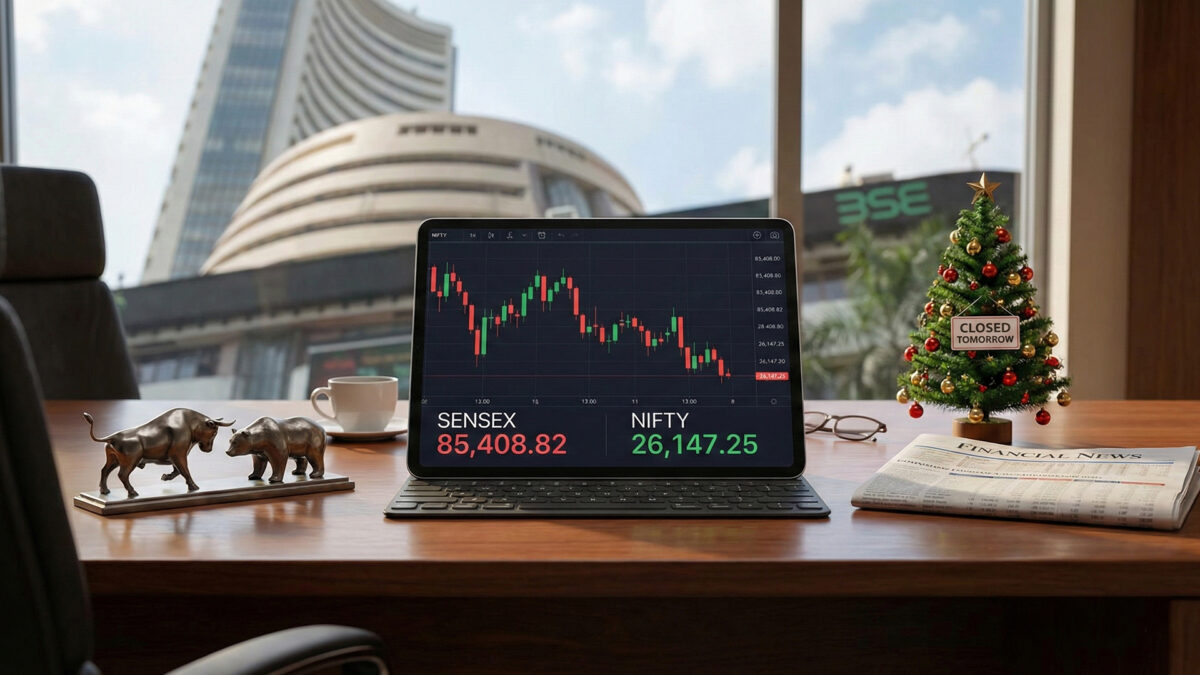
Sensex slips 116 points, Nifty ends below 26,150

On wednesday, the BSE Sensex fell 116 points to close at 85,409, while the Nifty 50 slipped 35 points to settle at 26,142. Markets traded in a narrow range throughout the session, reflecting consolidation after recent gains.

Early signals were positive, with GIFT Nifty indicating a firm start, supported by gains in US and Asian markets. However, the upbeat global cues failed to translate into sustained buying interest on Dalal Street. Traders preferred to stay on the sidelines ahead of the year-end holidays, leading to subdued activity.

Sector-wise, performance was mixed. Media and metal stocks posted modest gains, while selling pressure was seen in IT, pharma, oil and gas, and PSU banking stocks. The IT sector was among the key drags due to weakness in select large-cap names. Broader markets underperformed the benchmarks, with the midcap index falling about 0.4 percent, while smallcap stocks ended largely flat.

Among individual stocks, Trent, Shriram Finance, Apollo Hospitals, UltraTech Cement and Adani Ports were the top gainers, supported by stock-specific buying. On the losing side, Wipro, Sun Pharma, Dr Reddy’s Laboratories, InterGlobe Aviation (IndiGo) and Tata Motors Passenger Vehicles weighed on the indices.

Market experts said the session reflected a pause in momentum, with investors adopting a selective approach rather than aggressive buying. Technical analysts noted that both Sensex and Nifty are consolidating near record-high levels, with key support and resistance zones likely to guide near-term movement.

In the currency market, the Indian rupee weakened and closed at 89.78 against the US dollar, adding to cautious sentiment.

Also Read: US bans new foreign drone imports including DJI

Categories
1 Minute-Read

Canon wins TSMC 2025 production support award

Canon Inc. has been awarded the 2025 Excellent Performance Award by Taiwan Semiconductor Manufacturing Co. Ltd. (TSMC) for its exceptional contribution to semiconductor production.

The recognition highlights Canon’s timely delivery of equipment, high-quality support, and development of customer-focused functions that helped boost TSMC’s operations. This is the third time Canon has received this award, reflecting its ongoing commitment to innovation and excellence in semiconductor lithography.

The company aims to continue advancing its technology and services to support the semiconductor industry and contribute to broader technological progress.

Categories
Corporate

Reliance tops India’s wealth creation in 2025

Reliance Industries Ltd (RIL) emerged as India’s largest wealth creator in 2025, leading corporate value gains amid a strong year for equities driven by banking, financial services and automobile stocks. The Mukesh Ambani-led conglomerate delivered the highest addition to investor wealth, reinforcing its dominant position in India’s corporate landscape.

RIL’s shares rose close to 30 per cent during the year, adding about ₹4.6 lakh crore to investor wealth. This pushed the combined market capitalisation of the Reliance Group to around ₹23.44 lakh crore, making it the single biggest contributor to wealth creation among Indian companies. Analysts attributed the strong performance to steady earnings growth, improving margins and positive expectations around the group’s digital, retail and new energy businesses.

The broader wealth creation story in 2025 was shaped by strong performances in autos, banks and financial services. Companies such as Bharti Airtel, Bajaj Finance, State Bank of India (SBI), Maruti Suzuki and HDFC Bank each added more than ₹1.5 lakh crore to their market value. These stocks benefited from healthy demand, stable asset quality, improving profitability and sustained investor confidence in India’s economic growth.

Overall, the top seven business groups — Reliance, Bharti, HDFC, Bajaj, Adani, ICICI and Tata — together added nearly ₹10 lakh crore in market capitalisation during the year. Their combined value now stands at about ₹122 lakh crore, accounting for nearly 60 per cent of the total market capitalisation of the Nifty 50 index. Reliance alone contributed almost half of this wealth creation, followed by the Bharti Group.

In contrast, the Tata Group emerged as an outlier in 2025, lagging behind its peers. Its flagship company, Tata Consultancy Services (TCS), saw its market capitalisation fall by nearly ₹3 lakh crore. Investor concerns over slower revenue growth, margin pressures and delayed benefits from emerging technologies such as artificial intelligence and cloud services weighed on the stock. Several other Tata companies, including Tata Elxsi, Trent, Voltas and Tata Technologies, also faced sharp corrections.

Market experts expect wealth creation trends to remain selective, with investors continuing to favour companies and sectors that demonstrate strong earnings visibility, balance sheet strength and long-term growth potential. Reliance, banks and auto majors are seen as well positioned to benefit from these themes in the coming years.

Also Read:  BP close to $10 bn sale of Castrol stake

Categories
Corporate

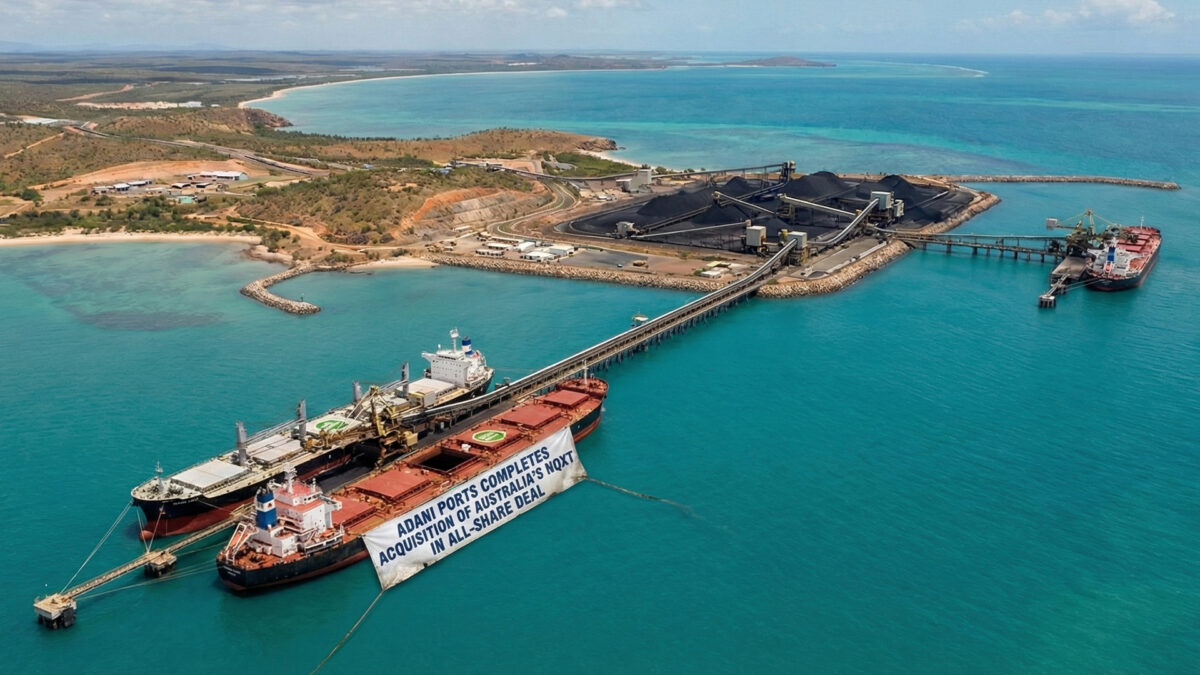
Adani Ports completes Australia NQXT deal

Adani Ports and Special Economic Zone Ltd (APSEZ) has completed the acquisition of North Queensland Export Terminal (NQXT) in Australia, strengthening its global ports portfolio and expanding its presence in the Asia-Pacific region.

The deal was executed as an all-share transaction, under which APSEZ acquired 100 per cent ownership of Abbot Point Port Holdings, the company that owns and operates NQXT. In return, APSEZ issued over 14.38 crore equity shares to Carmichael Rail and Port Singapore Holdings. The acquisition received all required regulatory and shareholder approvals in India and Australia.

NQXT is a deep-water, multi-user export terminal located at Abbot Point in Queensland. It currently has a handling capacity of 50 million tonnes per year and primarily supports bulk exports. A large part of its volumes is secured under long-term take-or-pay contracts, ensuring steady and predictable revenue. For FY25, the terminal reported strong operating performance with healthy earnings.

With this acquisition, APSEZ gains a strategically located asset close to key Asian trade routes. The company expects NQXT to play an important role in its long-term growth plans, including its goal of handling one billion tonnes of cargo annually by 2030. APSEZ also sees scope to expand the terminal’s capacity over time, supported by contract renewals and operational improvements.

Following the completion of the transaction, APSEZ has upgraded its financial guidance. The company now expects higher cargo volumes and improved earnings for the coming financial year, reflecting the addition of NQXT to its portfolio. The Australian terminal also brings foreign currency earnings, adding stability and diversification to APSEZ’s revenue base.

Company management described the acquisition as a key milestone in APSEZ’s international expansion strategy. They highlighted NQXT’s strong fundamentals, long asset life and potential for future growth, along with its location in a stable and developed market.

The NQXT deal adds to APSEZ’s growing list of overseas assets, which includes ports and terminals in Israel, Sri Lanka and Africa. With this move, Adani Ports continues to position itself as a global port and logistics player, focused on scale, long-term contracts and steady cash flows.

Also Read: Cholamandalam shares up 8% after rejecting claims

Categories
1 Minute-Read

Navi Mumbai Airport opens on Dec 25 with road-only access

The Navi Mumbai International Airport (NMIA) will begin operations on December 25, but access will initially be limited to road-based travel.

Dedicated metro and direct rail connections are still under development and will be introduced in later phases. Passengers can reach the airport via private vehicles, taxis and buses, with the Mumbai Trans Harbour Link offering the fastest route, though with tolls.

Suburban train users can travel up to Targhar station and complete the last stretch by road. Authorities advise travellers to plan journeys carefully and allow extra travel time.

Categories
1 Minute-Read

Cholamandalam shares up 8% after rejecting claims

Shares of Cholamandalam Investment and Finance Company jumped 8% after the firm dismissed a Cobrapost report alleging large related‑party transactions, cash irregularities, and governance lapses.

The company clarified the claims were “malicious and baseless” and reaffirmed that its asset quality, liquidity, and business guidance remain unchanged, with no revision to its board-approved plans.

Cholamandalam emphasized robust financials, including strong cash balances and adherence to reporting standards. Analysts maintained their “Buy” ratings, signaling confidence in the firm’s fundamentals despite the controversy. The stock’s reaction reflects investor reassurance following the firm’s clarification.

Categories
1 Minute-Read

OYO Parent Prism clears ₹6,650 cr IPO plan

OYO’s parent company, Prism, has received shareholder approval to raise ₹6,650 crore through an initial public offering (IPO).

The approval came during an Extraordinary General Meeting (EGM) held on December 20, 2025, where shareholders also cleared a bonus share issue.

The IPO is now set to move forward, pending regulatory approvals and market conditions. Prism aims to use the funds to strengthen its balance sheet and support growth initiatives.

Analysts say the listing could be a milestone for the company as it expands its hospitality and technology offerings.

Categories
Technology

Pulitzer winner Carreyrou, 5 authors sue AI giants over copyright

A group of six authors, including Pulitzer Prize winner John Carreyrou, has filed new lawsuits against six major AI companies, saying their books were used without permission to train AI models. The lawsuits were filed on December 22, 2025, in California.

The companies named are Anthropic, OpenAI, Google, Meta, xAI, and Perplexity AI. The authors claim these companies copied their books from pirate sites like LibGen and Z‑Library to teach AI systems, then profited from the AI models without paying the writers.

Carreyrou, known for Bad Blood, and the other authors rejected a $1.5 billion class action settlement offered by Anthropic earlier this year, saying the payment of around $3,000 per book is far too low for the value of their work.

Instead of joining a class action, the authors are filing individual lawsuits, which allows them to seek the maximum $150,000 per book per company. Across the six companies, this could reach up to $900,000 per book.

The group includes writers from different fields, spiritual books, psychology, IT, and political science, showing concern from many types of authors about how AI uses their work.

The lawsuits focus on AI using pirated books, which the authors say is not fair use and should have stronger legal consequences. Some courts have allowed limited AI use of copyrighted works, but using pirated copies is more serious.

So far, the companies have not responded, and no court dates have been set.

Also Read: Copper hits record $12,000 per ton

Categories
Beyond

Copper hits record $12,000 per ton

Copper prices have soared to an all-time high, surpassing $12,000 per metric ton due to supply disruptions and concerns over potential US import tariffs. Benchmark three-month copper futures on the London Metal Exchange (LME) touched $12,159.50 before settling near $12,065, reflecting a sharp rally in industrial metals.

Year-to-date, copper has gained over 35%, marking its strongest annual increase since 2009. Analysts attribute the surge to tight global supply as major mines face production challenges. This has reduced available stock in the market, pushing prices higher.

Adding to the pressure are fears of US import tariffs on copper. Traders and buyers have been stockpiling in anticipation of higher costs, increasing demand in the United States while leaving less copper available elsewhere. This has intensified the upward price movement.

Global demand is also playing a role. Copper is widely used in electric vehicles, renewable energy projects, and data centers, all of which are expanding rapidly. These structural demand factors are adding stress to supply chains that are slow to expand.

Economic factors are supporting the rally as well. Expectations that the US Federal Reserve may cut interest rates could weaken the dollar, which typically boosts commodity prices. Traders are closely watching for changes in monetary policy that could further influence copper markets.

Market experts warn that if production issues continue and demand keeps rising, copper could remain in deficit. While gold and silver have also risen this year, copper’s industrial importance makes its price movement a key indicator for the global economy, particularly for technology, construction, and energy sectors.

Also Read: ISRO launches heaviest commercial satellite on LVM3

Categories
Beyond

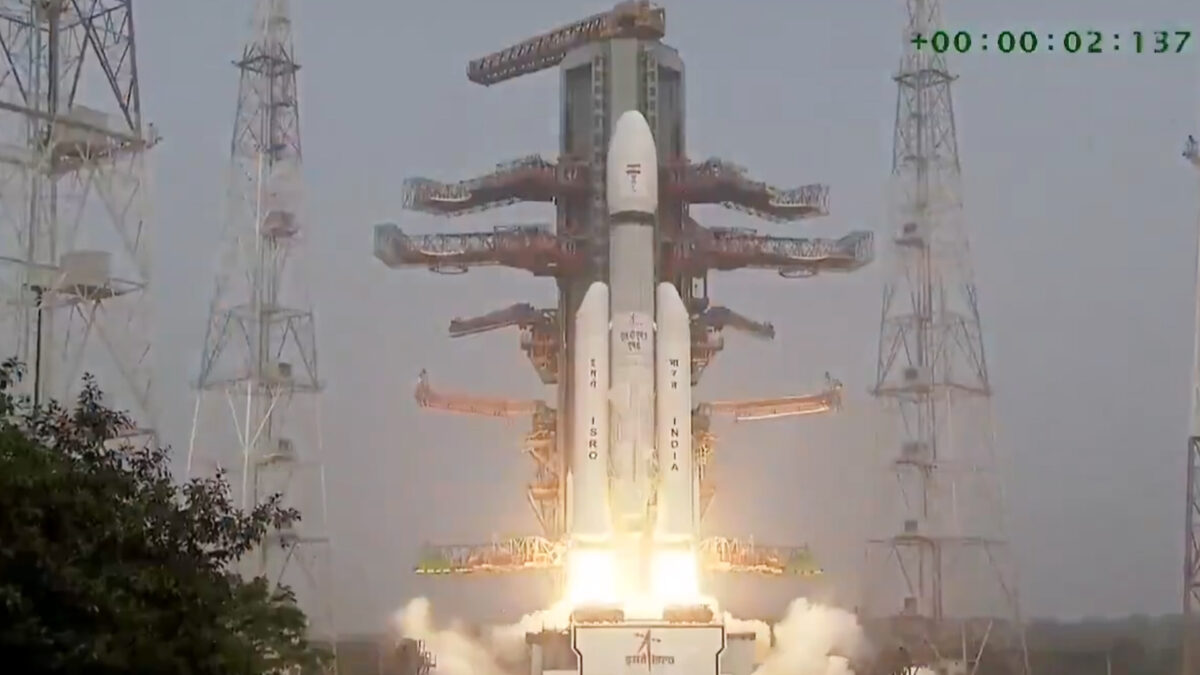
ISRO launches heaviest commercial satellite on LVM3

ISRO added another major success to its record on December 24 with the launch of BlueBird Block-2, the heaviest commercial satellite ever carried by India’s LVM3 rocket. The mission, executed from Sriharikota, signals India’s steady rise as a trusted player in the global space market.

Weighing about 6,100 kg, the satellite was placed into low earth orbit using the LVM3-M6 launch vehicle. This was the rocket’s sixth operational flight and one of its most demanding missions so far, underlining ISRO’s growing capability to handle large and complex commercial payloads.

BlueBird Block-2 is designed to deliver direct-to-mobile broadband connectivity, allowing standard mobile phones to receive signals from space without special equipment. The technology is expected to help improve digital access, especially in remote and underserved regions, making the mission both commercially important and socially relevant.

The launch was carried out through NewSpace India Ltd, ISRO’s commercial arm, reflecting India’s increasing focus on monetising its space expertise. With global demand rising for low-earth-orbit satellites and cost-effective launch services, India is positioning itself as a reliable and competitive option.

Prime Minister Narendra Modi described the mission as a proud milestone, praising ISRO’s scientists and engineers for pushing India higher in advanced technology and innovation. His remarks echoed the wider national sentiment around India’s expanding footprint in space.

Beyond the technical achievement, the mission reinforces confidence in India’s space economy. Each successful commercial launch strengthens India’s reputation, attracts international partnerships, and opens new business opportunities across satellite services, manufacturing, and downstream applications.

The BlueBird Block-2 launch is another reminder that India’s space story adds so much to think beyond exploration by tapping on possibilities that create impact, trust, and global relevance.

Also Read: Nikhil Kamath, Kishore Biyani launch The Foundery for startups