Categories
Corporate

Data firm Palantir shifts HQ to Miami

Palantir Technologies, the data-analytics firm known for its work with governments and enterprises, has officially moved its headquarters from Denver, Colorado, to Miami, Florida. This relocation marks another milestone in a broader trend of companies seeking the financial and operational advantages offered by the Sunshine State. Over the past few years, Miami has become increasingly attractive to tech firms and executives, drawn by lower taxes, fewer regulations, and a vibrant business environment.

Founded in California in 2003, Palantir initially operated from Silicon Valley before moving to Denver in 2020. Its decision to relocate to Miami follows several high-profile corporate moves to Florida, including Tesla, Blackstone, and Citadel, reflecting a growing migration of talent and capital away from traditional tech hubs like California and New York. Florida’s governor and local business leaders have actively promoted the state as a destination for innovation, emphasizing the absence of personal income tax and a strong pro-business climate.

Palantir employs more than 4,000 people worldwide, including a significant number in the US., and its Miami headquarters is expected to strengthen the company’s operations and talent acquisition. Analysts say the relocation may also influence other tech startups to consider Florida, contributing to the city’s ambition to become a global technology hub.

While Miami is not yet on par with Silicon Valley in terms of startup ecosystem depth, venture funding, or established tech infrastructure, the city’s momentum is evident. Entrepreneurs, executives, and investors are increasingly exploring Miami for its combination of business incentives, lifestyle appeal, and connectivity to Latin America. Palantir’s move is seen as a significant endorsement of this emerging trend, underlining Florida’s potential to reshape the US tech landscape.

Also Read: Cigarette stocks jump up to 12% on sharp price hikes
Categories
Corporate

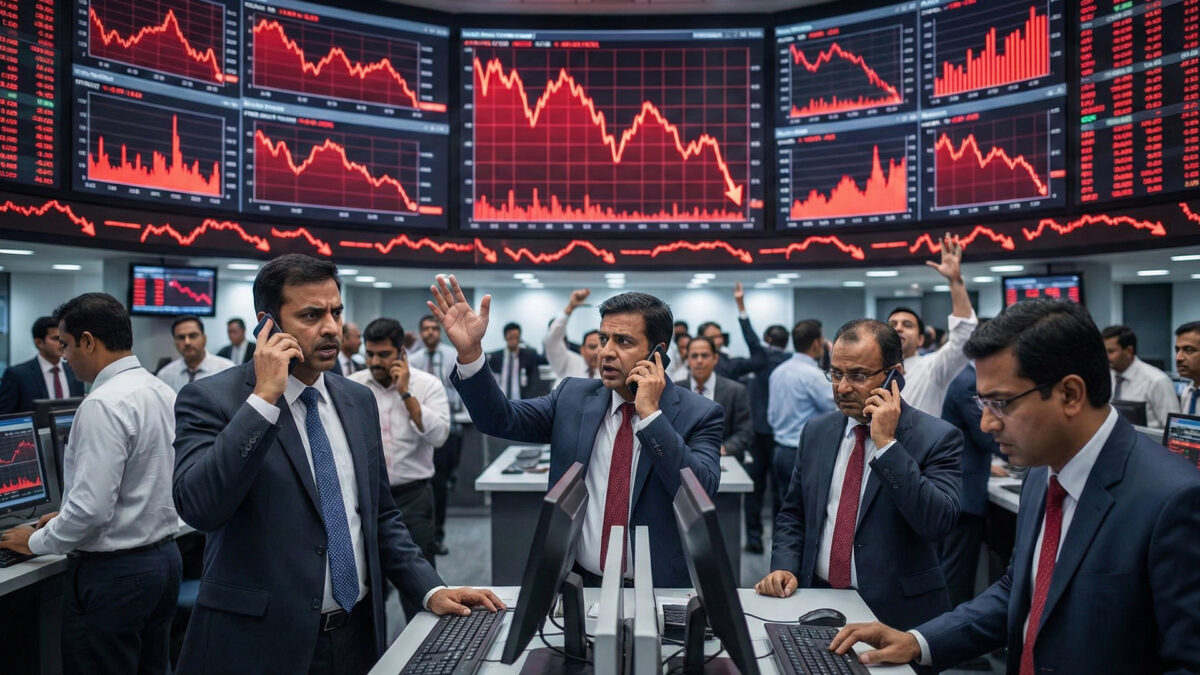
Sensex tumbles 1,236 pts, Nifty ends below 25,500

The equity markets fell sharply on Thursday, 19 February 2026, erasing nearly ₹8 lakh crore in investor wealth as widespread selling pressure dominated trading. The BSE Sensex plunged 1,236 points to 82,498, while the Nifty 50 slipped below 25,500, ending at 25,454, breaking a three-day rally.

Analysts attributed the sell-off to a combination of global and domestic factors. Escalating US-Iran tensions sparked fears of potential military action this weekend, driving investors away from emerging markets like India into safer assets. Meanwhile, Brent crude surged above $70 per barrel on concerns over Middle East supply bottlenecks, intensifying inflation worries and pressuring the Indian Rupee.

Investors also engaged in profit booking after the Sensex and Nifty had recorded gains over three consecutive sessions, particularly following major domestic events such as the Union Budget and RBI policy announcements. Adding to the pressure, uncertainty over US Federal Reserve policy and a “higher-for-longer” interest rate outlook strengthened the US Dollar, prompting Foreign Institutional Investors (FIIs) to reduce exposure to Indian markets.

Local technical factors compounded the decline, including a clearing holiday in India for Chhatrapati Shivaji Maharaj Jayanti that limited liquidity, as well as thin foreign participation due to Lunar New Year closures in key Asian markets.

Among the top gainers, Dr Reddy’s Laboratories Ltd and HDFC Life Insurance Co Ltd rose over 5 %, along with modest gains in Wipro Ltd. On the other hand, Trent Ltd, Adani Enterprises Ltd and InterGlobe Aviation Ltd fell 1–2 %, while Mahindra & Mahindra Ltd, Asian Paints Ltd and Jio Financial Services Ltd also ended lower, dragging the broader market down.

Also Read: Gold nears ₹1.53 lakh, silver tops ₹2.35 lakh

Categories
Corporate

Cigarette stocks jump up to 12% on sharp price hikes

Shares of major cigarette makers, including ITC, Godfrey Phillips India, and VST Industries, surged sharply this week, with some rising up to 12%, following a wave of price hikes aimed at offsetting recent tax increases.

The jump comes after the government’s excise duty hike in January had raised concerns about profitability and volume pressures across the sector. Investors had feared that higher taxes would significantly impact earnings. However, companies have acted quickly, passing most of the additional cost to consumers through price increases across their product lines.

Godfrey Phillips led the rally, with its Marlboro Compact sticks now priced at around ₹11.5, up from ₹9.5 earlier. ITC, meanwhile, raised prices across premium brands, some by as much as 41%, while moderating increases in more price-sensitive segments to balance sales volumes.

Brokerage firm UBS welcomed these moves, saying the pricing action could limit the hit to earnings before interest and tax (EBIT) to just around 2%, far below earlier estimates of 8–15%. The firm maintained a “Buy” rating on ITC, with a target price of ₹395, signaling strong upside potential.

Analysts say this carefully calibrated strategy demonstrates the sector’s pricing power and ability to protect margins despite regulatory pressures. Tobacco contributes over 40% of ITC’s revenue, so margin preservation is crucial for the company’s overall earnings outlook.

The market rally also reflects renewed investor confidence after recent corrections, with traders betting that demand for established cigarette brands remains resilient. Strong pricing and the ability to pass on taxes quickly have reassured the market that the sector can weather the new tax regime without major disruptions.

Also Read: Trump’s first Japanese investments under $550 bn trade pact

Categories
Beyond

Trump’s first Japanese investments under $550 bn trade pact

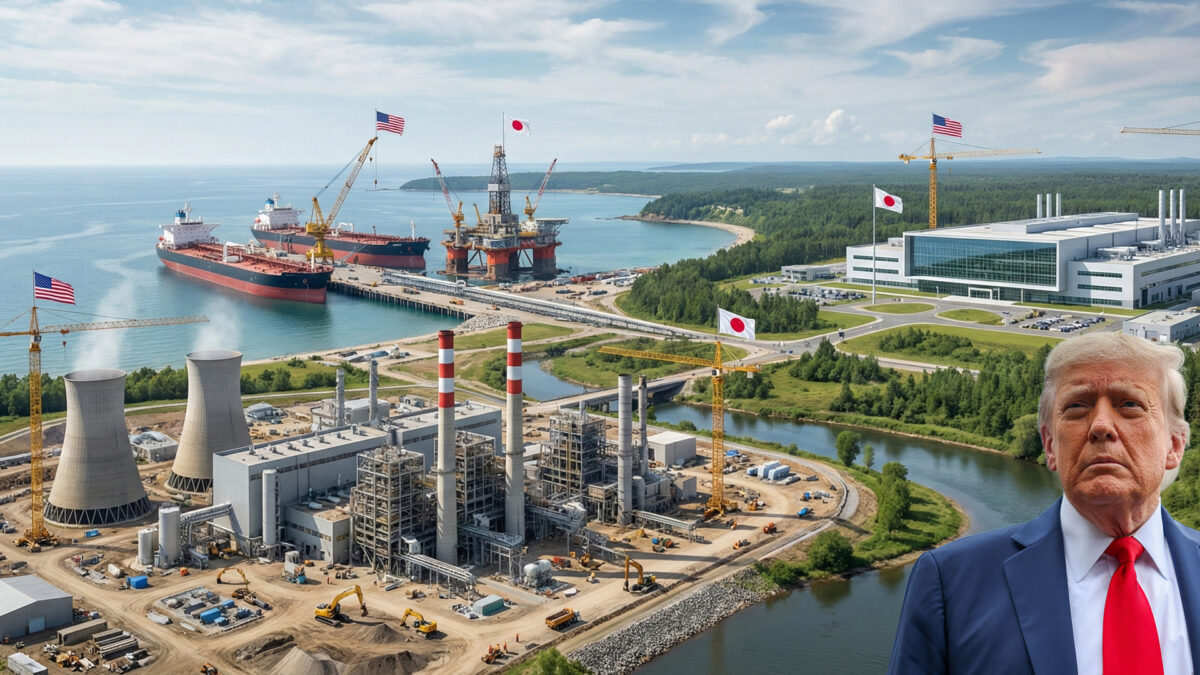
US President Donald Trump has unveiled the first set of Japanese investments in the United States under the recently signed bilateral trade pact, marking the operational rollout of Tokyo’s massive $550-billion financial commitment to the American economy.

The opening tranche, estimated at about $36 billion, is centred on energy, critical minerals and high-technology manufacturing—sectors that both countries consider crucial for economic security and resilient supply chains. The projects are expected to generate employment, strengthen industrial capacity and reduce dependence on imports in strategically important areas.

The largest investment is a $33-billion natural-gas-based power project in Ohio. The plant, to be developed by SB Energy, a unit backed by SoftBank Group, is designed to produce around 9.2 gigawatts of electricity. It is expected to support the fast-growing power demand from data centres and artificial-intelligence infrastructure in the United States.

Another key project is a $2.1-billion deep-water oil export terminal off the coast of Texas, which will expand the country’s energy export capability. In addition, a $600-million synthetic industrial diamond manufacturing facility will be set up in Georgia. The unit will produce critical materials used in semiconductors and advanced electronics, helping to cut reliance on overseas supplies.

Under the broader agreement, Washington has agreed to reduce tariffs on Japanese imports, while Japan will fund industrial and infrastructure projects through a combination of equity investments, loans and financial guarantees. The initiative is also aimed at giving Japanese companies greater access to the US market while reinforcing the strategic alliance between the two nations.

Japanese Prime Minister Sanae Takaichi said the investments would deepen economic cooperation and enhance long-term security for both countries. More projects are expected to be announced in phases as the two sides move to implement the full investment framework.

Also Read: Sarvam Kaze, India’s multilingual answer to Meta ray-ban

Categories
Leaders

Tata Sons move to renew Chairman’s term

Tata Sons is preparing to extend the tenure of its chairman N. Chandrasekaran for a third term, with the board expected to clear the proposal at its forthcoming meeting. The decision will subsequently be placed before shareholders at an extraordinary general meeting (EGM), in line with the group’s governance process.

Chandrasekaran’s current term runs until February 2027, but the early move to reappoint him signals the Tata Group’s intent to maintain leadership stability at a time when it is executing some of its most ambitious and capital-intensive projects. The Tata Trusts, the principal shareholders of Tata Sons, have already backed his continuation, indicating strong internal consensus.

Since taking over in 2017, Chandrasekaran has overseen a period of significant transformation. Under his leadership, the group has streamlined its structure, strengthened its balance sheet and pushed into new-age sectors such as semiconductors, electronics manufacturing, electric mobility and digital platforms. The high-profile acquisition and ongoing turnaround of Air India has been one of the defining developments of his tenure.

The proposed extension is also notable because it would go beyond the group’s conventional retirement age for executive roles, reflecting the importance placed on continuity as several long-gestation investments move from planning to execution.

The upcoming board meeting is expected to review broader business strategies across key companies. Tata Consultancy Services will present its roadmap in artificial intelligence and emerging technologies, while updates from Air India and Tata Electronics are also likely to be discussed as the conglomerate accelerates its global expansion and manufacturing push.

Chandrasekaran, who previously served as CEO and managing director of TCS, became the first non–Tata family professional to lead the holding company. His reappointment is being seen by industry watchers as a vote of confidence in his leadership and a signal that the group wants a steady hand to guide it through a complex investment cycle and an evolving global business environment.

Also Read: Ola Electric shares jump 5% after HC relief to CEO

Categories
Corporate

Ola Electric shares jump 5% after HC relief to CEO

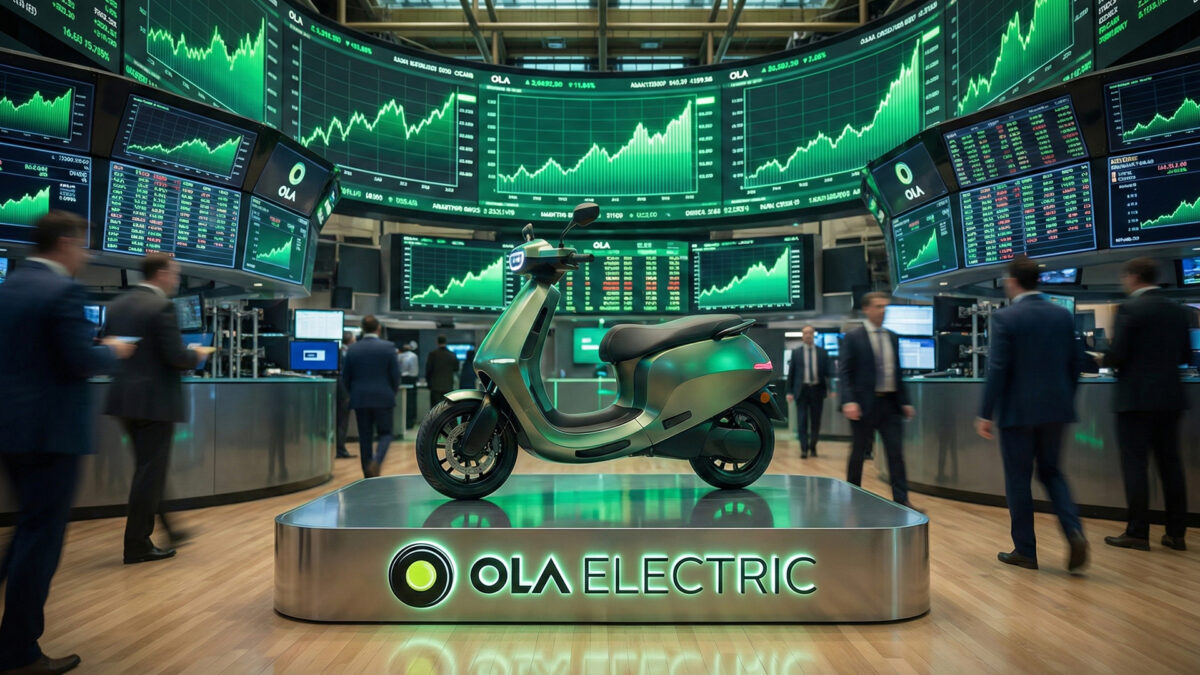
Shares of Ola Electric rose about 5% on Tuesday after the Bombay High Court stayed a bailable arrest warrant issued against its CEO Bhavish Aggarwal, offering much-needed relief to the company and its investors.

The stock, which had been under heavy selling pressure in recent sessions, witnessed strong buying during the day and climbed to an intraday high of around ₹29. This comes after it had fallen to a record low in the previous trading session, reflecting the sharp volatility in the counter.

The legal case originated from a consumer complaint filed before the South Goa District Consumer Disputes Redressal Commission. The commission had issued a bailable warrant against Aggarwal after he did not appear before it in connection with the matter despite receiving summons.

However, the High Court, while granting interim relief, observed that the consumer forum had gone beyond its jurisdiction under the Consumer Protection Act while passing the order. Following the court’s decision, the company informed exchanges about the development and advised stakeholders to take note of the updated legal status.

The court’s intervention eased concerns about possible leadership uncertainty and legal overhang, which had weighed on investor sentiment. The positive development also led to a surge in trading volumes, indicating renewed interest in the stock.

Despite the sharp single-day recovery, Ola Electric’s shares remain significantly lower compared to their earlier levels. The company has been facing pressure due to weak financial performance, including a notable decline in revenue in the December quarter and widening losses. These factors have contributed to the stock’s underperformance against the broader market so far this year.

The latest relief from the High Court has provided a temporary breather for the electric vehicle maker. However, the consumer dispute is yet to be fully resolved, and further legal proceedings are expected in the coming months.

Also Read: AI will transform science, medicine, states DeepMind CEO

Categories
Beyond

UK inflation drops to 3%, rate cut hopes rise

In a welcome break for millions of households, inflation in the United Kingdom has fallen to 3% in January, its lowest level in almost a year. The latest data from the Office for National Statistics shows that the sharp rise in everyday expenses is finally slowing, helped by cheaper fuel, lower airfares after the festive season and a gentler increase in food prices.

For families who have spent the past few years carefully balancing budgets, the change is more than just a number. Lower petrol prices mean less strain on commuting costs, while a slower rise in grocery bills offers some breathing space at the checkout. The easing of transport and food costs has been the biggest contributor to the overall decline in inflation.

The development has also sparked fresh optimism in financial markets. With price pressures cooling, expectations are growing that the Bank of England could begin cutting interest rates in the coming months. A reduction would be significant for homeowners facing high mortgage payments and for businesses struggling with expensive borrowing.

Yet, the picture is not entirely worry-free. Some underlying costs, especially in the services sector, are still rising faster than the central bank would like. This means policymakers are likely to move carefully, ensuring inflation continues to fall towards the 2% target before taking decisive action.

Economists believe inflation could edge closer to that goal by spring if global energy prices remain stable and wage growth cools. At the same time, signs of a softer job market are increasing the pressure on the central bank to support economic growth.

Also Read: Ashwini Vaishnaw opens WAVES Creators’ Corner at India Summit

Categories
Leaders

AI will transform science, medicine, states DeepMind CEO

Artificial intelligence is set to dramatically change the way science is conducted and how new medicines are discovered, but its benefits must be shared globally and developed responsibly, said Demis Hassabis, CEO of Google DeepMind.

Speaking at the AI Impact Summit in New Delhi, Hassabis described AI as a powerful tool that can significantly accelerate scientific research. He noted that advanced AI systems are no longer limited to analysing data but are increasingly capable of generating new ideas and helping scientists solve complex problems in areas such as biology, chemistry and physics.

He highlighted the growing role of AI in healthcare, particularly in understanding diseases and speeding up drug discovery. Processes that traditionally took many years can now be completed much faster with the help of AI models, raising the possibility of developing treatments more efficiently and at lower cost. This, he said, could improve access to life-saving medicines across the world.

Hassabis also pointed out that AI could help address some of the biggest global challenges, including climate change, energy sustainability and food security, by enabling faster innovation and deeper scientific insights.

At the same time, he cautioned that the rapid progress of AI brings important societal and ethical questions. Ensuring safety, fairness and equal access to the technology will require strong international collaboration. No single country or company, he said, can manage the impact of such a transformative technology alone.

He emphasised the need to make advanced AI tools available to researchers and institutions worldwide so that scientific progress is not limited to a few regions. Wider participation, he added, will lead to more inclusive innovation and better outcomes for humanity.

Also Read: Ashwini Vaishnaw opens WAVES Creators’ Corner at India Summit

Categories
Beyond

Ashwini Vaishnaw opens WAVES Creators’ Corner at India Summit

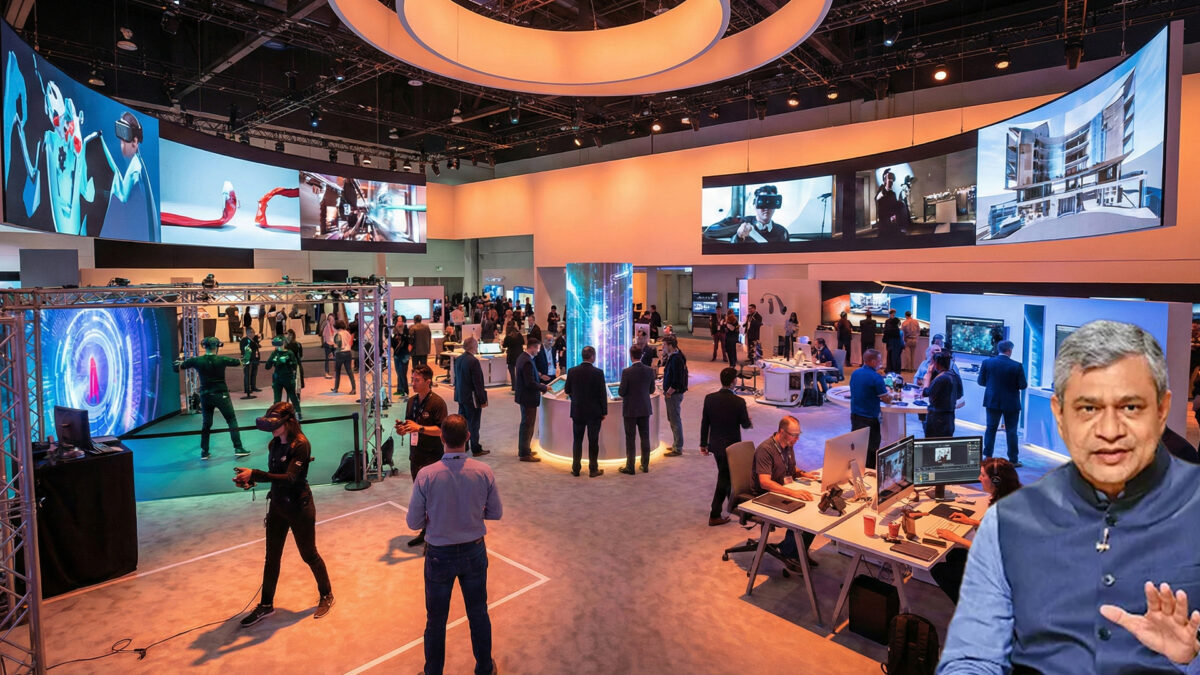
Union Minister Ashwini Vaishnaw inaugurated the WAVES Creators’ Corner at the India AI Impact Summit 2026, marking a significant step in the government’s strategy to position India as a global hub for AI-driven media and entertainment production.

Conceived as a live innovation workspace rather than a conventional exhibition, the platform brings together 51 startups from the AVGC-XR and media-tech ecosystem supported by WaveX. These firms are showcasing business-ready solutions ranging from prompt-to-cinema production pipelines and real-time gaming engines to agentic AI-powered newsroom automation, highlighting how artificial intelligence is reducing production costs and accelerating content creation cycles.

The pavilion also featured advanced technologies including multilingual AI interfaces and voice cloning solutions by Sarvam, immersive 270-degree film presentations curated by the National Film Development Corporation, digital face and voice re-ageing by Sony Research India, and marker-less motion capture built on consumer devices. The presence of global companies such as Adobe, Netflix, Sony and Amazon alongside early-stage startups reflected growing enterprise interest and collaboration opportunities in India’s creative technology value chain.

During his interaction with founders, including winners of the Bhasha Setu and Kalaa Setu challenges, Vaishnaw emphasised that AI is democratising content creation and enabling entrepreneurs from smaller cities to build globally competitive products. In a fireside conversation with Shradha Sharma, he underlined that the combination of policy support, talent and technology could unlock a new wave of digital entrepreneurship.

The initiative is closely linked with government programmes such as Waves Bazaar and the Create in India challenges, which aim to provide market access, funding pathways and international visibility for domestic creators.

A strong skilling component also runs through the project. The integration of AI into creative curricula by the Indian Institute of Creative Technology is expected to align the talent pipeline with future industry demand.

Also Read: Indian Railways tests LNG-powered DEMU trains

Categories
1 Minute-Read

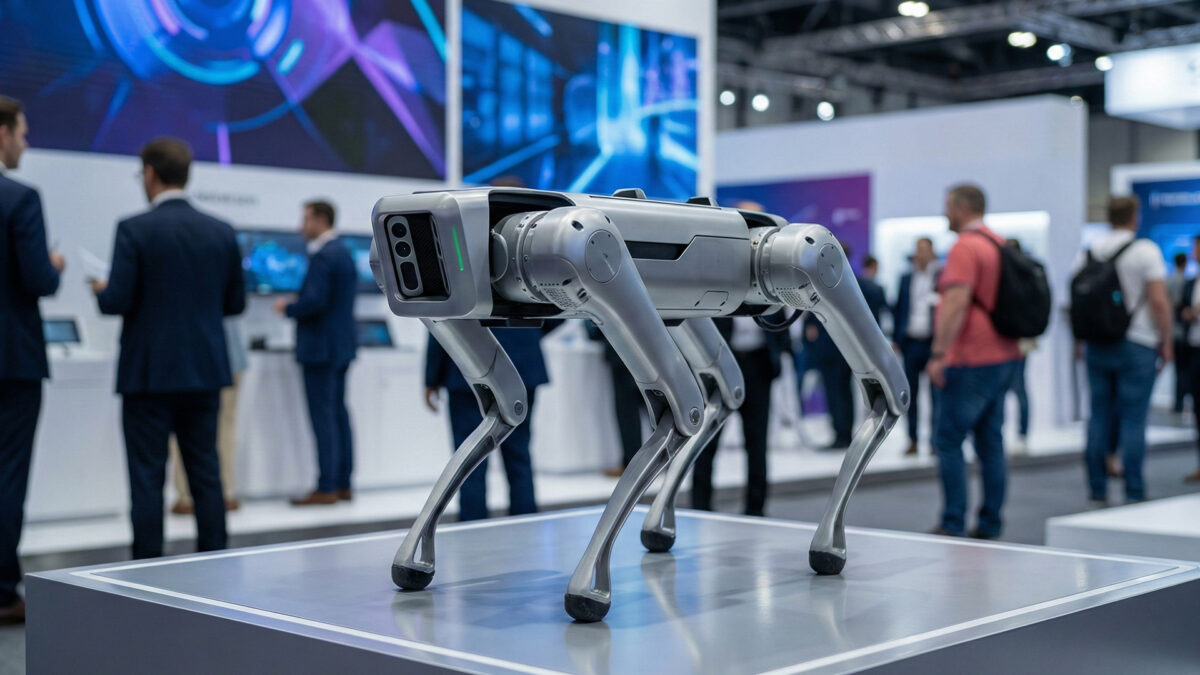
Galgotias University faces backlash over Chinese robodog claim

Galgotias University drew sharp criticism after a robotic dog displayed at the India AI Impact Summit in New Delhi was found to be a Chinese-made Unitree Go2.

A video of a representative presenting it as a university-developed innovation went viral, triggering questions about authenticity. The university later clarified that the robot was bought for student training and research, not built on campus, and said the person who spoke to the media was not authorised.

It also issued an apology for the confusion. Sources indicated the stall was asked to shut, but the institution denied any official eviction, calling the episode a misunderstanding during the high-profile event.