Categories
Corporate

Big Tech like ‘East India Company’, says Zoho’s Sridhar Vembu

Sridhar Vembu, co-founder of Zoho, has raised concerns over the growing technological and financial power of global Big Tech companies, saying their control over digital infrastructure now rivals that of sovereign nations and requires an urgent strategic response from countries like India.

His remarks came after Alphabet raised nearly $32 billion through a bond sale, including ultra-long 100-year debt. Vembu pointed out that such large and long-term capital mobilisation, typically associated with governments,  allows hyperscalers to invest aggressively in artificial intelligence, global cloud regions, subsea cable networks and large-scale data centres.

According to him, companies such as Google and Meta have moved beyond being software providers to become core digital infrastructure operators. Their platforms today support communication, enterprise applications, digital advertising, developer ecosystems and AI workloads used by startups, corporations and even public sector projects.

Vembu said this creates deep structural dependence as businesses build their products on foreign cloud and AI stacks, making switching difficult due to high migration costs, data gravity and platform lock-in. He added that while India contributes significantly in terms of engineering talent and data generation, a large share of the economic value is captured by overseas platform owners.

Calling for “technology sovereignty,” he stressed the need for long-term investments in domestic cloud infrastructure, AI capabilities, semiconductor ecosystems and globally competitive SaaS products. Owning the technology stack, he said, is critical for ensuring innovation, retaining economic value and maintaining strategic autonomy in the digital economy.

Vembu’s broader message is that in the AI-driven era, control over compute, data and digital platforms will define economic power, and nations that fail to build indigenous capabilities risk remaining dependent consumers in the global technology value chain.


Also Read: Press Note 3 review to speed up minor FDI deals

Categories
1 Minute-Read

Bride’s mehendi features Amazon logo

An Amazon India couple has captured social media attention after the bride incorporated the company’s signature smile logo into her mehendi during their wedding celebrations.

Priyanshi Shrimal and Rajat Verma, who met while working together, chose the design as a tribute to the organisation that brought them closer. The heartwarming video, shared by Amazon’s official social media handle, shows the intricate henna artwork and the couple’s joyful reaction.

Online users praised the thoughtful gesture, calling it a unique blend of professional journey and personal milestone. The groom said the company will always hold a special place in their lives for helping them find each other.

Categories
Beyond

Gold below ₹1.55 lakh, silver under ₹2.37 lakh

Gold and silver prices fell sharply on Monday, with gold slipping below ₹1.55 lakh per 10 grams and silver dropping under ₹2.37 lakh per kg on the Multi Commodity Exchange (MCX), as traders booked profits after the recent rally and global cues turned weak.

The decline followed a cooling in bullish momentum after record highs earlier this month and was driven by a stronger US dollar, reduced expectations of immediate rate cuts and long unwinding in the futures market. Globally, bullion prices also eased, limiting fresh buying at higher levels.

In the physical market, 24-carat gold was quoted at around ₹1.56 lakh per 10 grams at the all-India level, while silver hovered near ₹2.46 lakh per kg.

Across major retail centres, gold prices moved in a narrow band with local variations. Delhi, Mumbai, Kolkata and Hyderabad reported 24-carat gold in the range of about ₹1.56 lakh to ₹1.57 lakh per 10 grams, while Chennai traded slightly higher, closer to the ₹1.57 lakh–₹1.58 lakh range. Silver prices were around ₹2.46 lakh per kg in Delhi, Mumbai and Kolkata, whereas Chennai and Hyderabad continued to quote higher rates of nearly ₹2.74 lakh per kg, reflecting regional demand and logistics costs.

Market participants said the fall was largely due to profit-booking after gold briefly approached the ₹1.80 lakh per 10-gram mark earlier this month. The softer US inflation data failed to trigger fresh upside as it lowered the urgency for aggressive monetary easing, supporting the dollar and weighing on non-yielding assets such as bullion.

Analysts view the current correction as technical in nature within a broader positive trend supported by central-bank buying, geopolitical uncertainties and long-term investment demand.

Also Read: Sensex falls over 100 points, Nifty slips below 25,450

Categories
Corporate

Sensex falls over 100 points, Nifty slips below 25,450

The equity benchmarks opened lower on Monday as the BSE Sensex slided over 100 points in early trade, while the NSE Nifty50 dipped below the 25,450 mark.

The weak start came despite mixed global cues. Asian markets traded cautiously, and Gift Nifty signalled a muted opening, keeping traders on edge at the start of the week.

Gainers provide limited support, where select banking and auto stocks managed to trade in the green, helping limit deeper losses. On the gaining side, Power Grid and HDFC Bank featured among the top performers, providing some support to the broader market. However, buying interest remained selective, indicating cautious market participation.

Heavyweights in the IT sector were among the top losers in early trade. Infosys and ICICI Bank were among the top losers in morning trade, dragging the indices lower. Energy and select consumer stocks reeled under the selling pressure as investors continued to book profits after last week’s sharp correction.

Last Friday, the Nifty had dropped more than 300 points, driven by weakness in IT, energy, and consumer sectors. Monday’s soft opening suggests that investors are still assessing global trends and domestic triggers before taking fresh positions.

Unless strong buying emerges, markets may continue to trade in a narrow range with high volatility.

Also Read: Apple’s 6th India store to open in Borivali on Feb 26

Categories
Corporate

Cognizant warns AI could hit legacy services

Cognizant Technology Solutions has highlighted potential risks from artificial intelligence (AI) and automation in its latest annual report. The company warned that some traditional IT services could face lower demand or pricing pressures as clients increasingly adopt AI-driven solutions.

In its 2025 annual 10‑K filing, Cognizant noted that while AI offers opportunities, the notion that new AI tools can instantly replace large parts of enterprise IT work is “misplaced.” The firm emphasized that the transition to AI-enabled services will be complex and gradual.

The disclosure aligns Cognizant with other IT giants who are openly acknowledging AI’s potential to reshape traditional outsourcing and labor-intensive services. Analysts say this could pressure firms to rethink offerings, reskill employees, and adapt cost structures to stay competitive.

CEO Ravi Kumar S recently reiterated that while AI adoption is accelerating, its economic impact on existing enterprise IT workloads is not yet large enough to immediately replace legacy services.

Besides AI, Cognizant’s annual report also pointed to regulatory and reputational risks related to offshore outsourcing. Changes in laws or client perceptions could affect delivery models and workforce strategies, adding another layer of uncertainty to operations.

Despite these risks, Cognizant continues to invest in AI, cloud, and digital transformation services, aiming to help clients modernize and scale. The company is balancing growth opportunities with caution, ensuring emerging technologies do not cannibalize core business segments.

Also Read: Uday Kotak takes charge as Chairman of GIFT City


Categories
1 Minute-Read

Razorpay lines up four banks for $700mn+ IPO plan

Bengaluru-based payments firm Razorpay has appointed four leading investment banks, Axis Capital, Kotak Mahindra Capital, JPMorgan, and Citi, to manage its upcoming IPO.

The company plans to raise over $700 million through a mix of fresh issue and share sale by existing investors. Founded in 2014, Razorpay is backed by Tiger Global, GIC, and Peak XV, and is valued at around $9.2 billion.

The fintech generated revenue of nearly ₹3,900 crore in the fiscal year ending March 2025, marking its push toward a high-profile public listing.


Categories
Technology

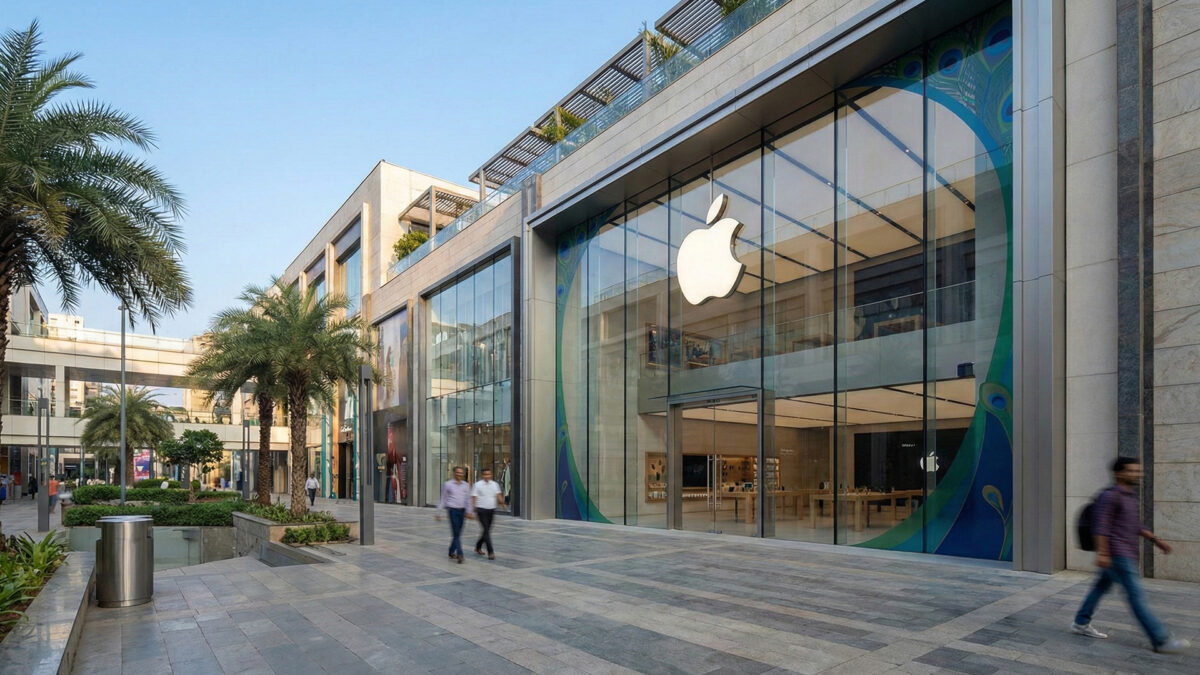
Apple’s 6th India store to open in Borivali on Feb 26

Apple Inc. will open its sixth official retail store in India on February 26, expanding its presence in one of its fastest-growing markets. The new outlet will be located in Borivali, a key residential and commercial hub in Mumbai.

The store will open at the Oberoi Sky City Mall, becoming Apple’s second retail outlet in Mumbai after its flagship store at Apple BKC. With this launch, Apple continues to deepen its physical retail footprint across major Indian cities.

India has become an increasingly important market for Apple, both in terms of sales and manufacturing. The company has steadily expanded its retail operations to provide customers with direct access to its full product lineup, including iPhone, iPad, Mac, Apple Watch and accessories.

The Borivali store will offer personalised services such as product setup, technical assistance at the Genius Bar, and Today at Apple sessions ,  free workshops designed to help customers explore photography, coding, creativity and more. Customers will also have access to Apple Trade In and pickup services.

Apple’s expansion strategy reflects its long-term commitment to India. By choosing Borivali, the company aims to serve customers in Mumbai’s western suburbs, making its products and services more accessible beyond central business districts.

Also Read: Uday Kotak takes charge as Chairman of GIFT City

Categories
Leaders

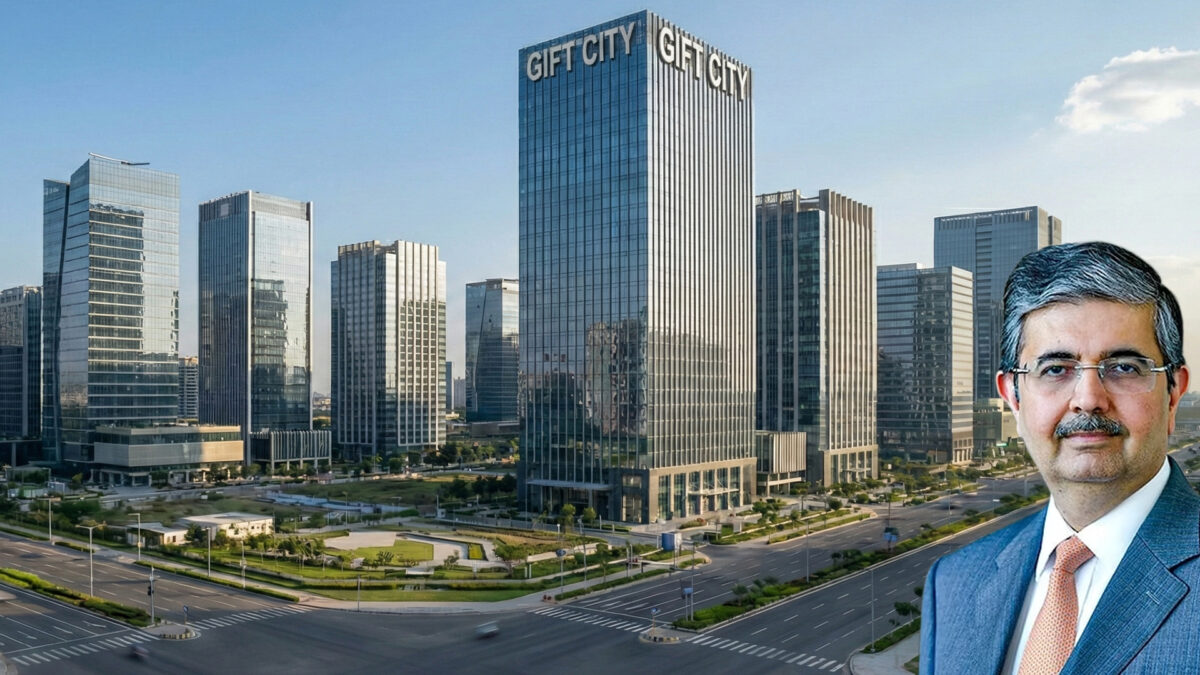
Uday Kotak takes charge as Chairman of GIFT City

The Gujarat government has appointed Uday Suresh Kotak as the new Chairman of Gujarat International Finance Tec-City Company Limited, commonly known as GIFT City. The appointment takes immediate effect, according to a government resolution issued on February 13, 2026.

Kotak succeeds Hasmukh Adhia, who had been serving as the Non-Executive Chairman of GIFT City since June 2023. The state government’s move to bring in one of India’s most respected banking leaders is seen as an effort to further strengthen the city’s position as an international financial centre.

Uday Kotak is the founder of Kotak Mahindra Bank, one of India’s leading private sector banks. Over nearly four decades, he built the institution into a diversified financial services group covering banking, insurance, asset management, investment banking and stockbroking. He stepped down as Managing Director and CEO in 2023 and currently serves in a non-executive role at the bank.

GIFT City, located in Gandhinagar, Gujarat, is India’s first operational International Financial Services Centre (IFSC). It was developed to compete with global financial hubs such as Singapore and Dubai by offering tax incentives, regulatory benefits and world-class infrastructure to international businesses. The centre hosts banks, insurance firms, capital market entities and fintech companies operating in foreign currencies.

Recently, the central government extended tax benefits for businesses operating in GIFT City, further boosting its attractiveness for global investors. With over a thousand registered companies and growing international participation, the financial hub is a key part of India’s strategy to expand its presence in global financial markets.

Also Read: US trade deal to lift cotton demand, says Piyush Goyal

Categories
Beyond

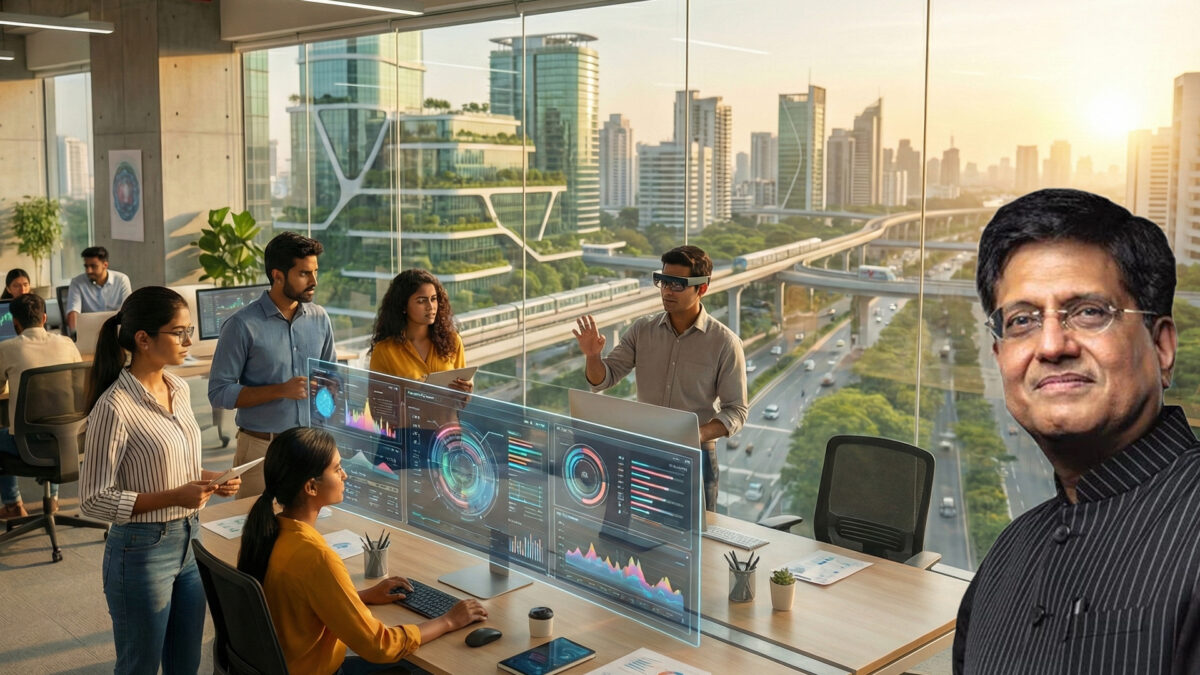
US trade deal to lift cotton demand, says Piyush Goyal

Union Commerce and Industry Minister Piyush Goyal has said that India’s interim trade agreement with the United States will increase cotton demand, support farmers, and create new employment opportunities, especially in technology sectors.

Speaking at the ET NOW Global Business Summit 2026, Goyal explained that the agreement will improve market access for Indian textiles in the US. With lower tariffs and favourable rules, garments made using US cotton or yarn and processed in India may enter the American market at competitive duty rates. This, he said, is expected to increase demand for cotton and benefit Indian farmers.

The minister clarified that sensitive agricultural products such as rice, wheat, maize, millets, dairy, and poultry have been kept out of the agreement to safeguard domestic interests. He emphasised that the government has ensured farmer protection while expanding export opportunities.

Goyal added that products like basmati rice, spices, tea, fruits, and marine goods could see better access to the US market, potentially improving incomes for farmers and exporters. He dismissed opposition criticism that the deal could harm agriculture, stating that the agreement has been carefully structured to balance growth and protection.

On the issue of artificial intelligence, Goyal said the AI revolution will not reduce employment but instead create new roles. He noted that India’s young and skilled workforce positions the country well to lead in emerging sectors such as data analytics, cybersecurity, and AI validation.

Also Read: India passport jumps 10 ranks

Categories
Beyond

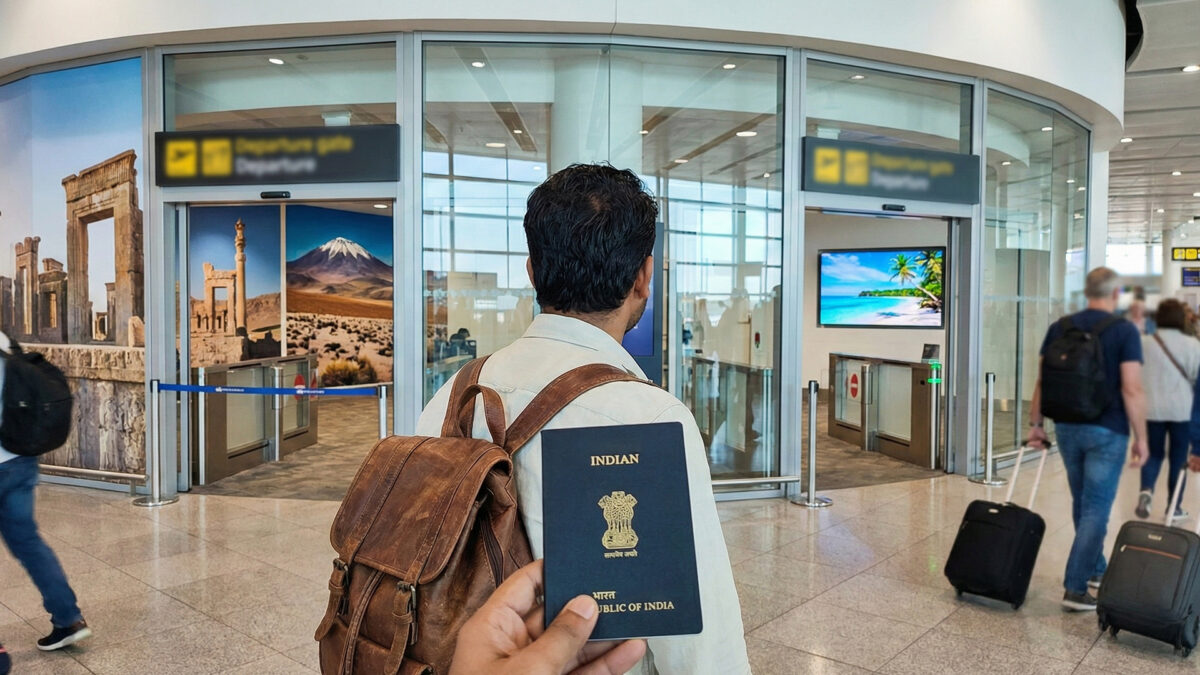
India passport jumps 10 ranks

India’s passport has climbed 10 places to rank 75th in the 2026 edition of the Henley & Partners Passport Index, marking a notable improvement in global mobility for Indian citizens.

The index ranks passports based on how many destinations holders can enter without securing a visa in advance. It counts visa-free access, visa-on-arrival, and certain electronic travel authorisations.

In 2026, Indian passport holders can travel to 56 destinations without prior visa approval. While this reflects improved global standing compared to last year’s 85th rank, the total number of visa-free destinations has slightly reduced from 57 in 2025.

The dip follows changes in entry rules by two countries.

Iran ended its visa-free entry for ordinary Indian passport holders in late 2025. Travellers must now obtain a visa before departure, removing Iran from India’s visa-free list under the index criteria.

Similarly, Bolivia replaced its visa-on-arrival facility for Indians with a pre-approved e-visa system. Since travellers must apply before flying, Bolivia no longer qualifies as visa-free access in the ranking methodology.

Experts point out that passport rankings are relative. India’s rise reflects not only its own travel access but also changes in other countries’ standings.

Despite the improvement, India remains far below the world’s most powerful passports, such as Singapore, which offers visa-free entry to nearly 200 destinations.

The latest ranking signals gradual progress in India’s international travel access. However, further diplomatic efforts and bilateral agreements will be essential to expand visa-free opportunities for Indian travellers in the future.

Also Read: Tamil Nadu, KLA sign ₹3,600 cr R&D MoU in Chennai