Categories
Beyond

Gold jumps ₹2,000, silver soars ₹10,000 to record highs

Gold and silver prices surged to fresh all-time highs on Monday, reflecting strong investor preference for safe-haven assets amid rising global uncertainty. On the Multi Commodity Exchange (MCX), gold futures climbed by around ₹2,000 per 10 grams, while silver prices jumped sharply by nearly ₹10,000 per kilogram, marking one of the strongest single-session rallies in recent months.

The sharp rise in precious metal prices comes against a backdrop of heightened geopolitical tensions and economic concerns across major global markets. Ongoing instability in parts of the Middle East, coupled with fears of an escalation in conflicts, has pushed investors towards assets traditionally seen as stores of value during uncertain times. Gold and silver typically benefit in such conditions, as they are viewed as protection against market volatility and currency risks.

Another key factor driving the rally is growing optimism around potential interest rate cuts by major central banks, particularly the US Federal Reserve. Expectations that borrowing costs could ease later this year have weakened the US dollar and reduced bond yields, making non-interest-bearing assets like gold and silver more attractive to investors. Market participants are closely watching upcoming economic data and policy signals for further clarity on the rate trajectory.

Internationally, gold prices have crossed important psychological levels, while silver has gained from both investment demand and its extensive use in industrial applications such as electronics, solar panels and electric vehicles. This dual demand has amplified silver’s price movement, leading to sharper gains compared to gold.

In the domestic market, bullion prices closely tracked global trends. Physical gold rates in major Indian cities also moved higher, with jewellers and traders reporting increased volatility. While higher prices have dampened immediate retail demand, investment interest remains firm, particularly ahead of key global economic events.

Market experts caution that while the broader outlook for precious metals remains positive, price swings could continue in the near term. Factors such as geopolitical developments, central bank commentary and movements in global currencies are expected to play a decisive role in shaping the next phase of the rally.

For now, gold and silver remain firmly in focus as investors seek stability and protection in an increasingly uncertain global economic environment.

Also Read: Sensex tumbles 400 points, Nifty drops below 25,600

Categories
Corporate

Sensex tumbles 400 points, Nifty drops below 25,600
Indian equity benchmarks extended their losing streak on Monday, BSE Sensex declined by over 400 points, while the NSE Nifty 50 slipped below the 25,600 mark, as selling pressure dominated most sectors.

The market opened lower and remained under pressure through early trade, tracking mixed trends in Asian markets and cautious signals from U.S. stock futures. Investor sentiment remained subdued amid concerns over global economic growth, interest rate uncertainty, and geopolitical risks, prompting risk-averse positioning.

Market volatility increased sharply, with the India VIX moving higher, reflecting growing nervousness among traders. Sector-wise, banking, real estate, auto and consumer discretionary stocks led the decline, dragging the broader indices lower. IT stocks also traded mixed as investors weighed demand outlook and currency movements.

Among individual stocks, Ola Electric emerged as a major loser, falling around 4% after reports of a stake sale by a key investor dampened sentiment. Tejas Networks plunged sharply after posting weak quarterly results marked by a steep fall in revenue and widening losses. Signatureglobal also remained under pressure, sliding closer to its 52-week low amid concerns over growth guidance.

On the other hand, a few stocks managed to buck the weak market trend. IREDA shares gained after the state-owned lender reported a strong rise in quarterly profit and revenue, supported by higher loan disbursements. Avenue Supermarts, the parent company of DMart, advanced after reporting better-than-expected earnings, offering some support on an otherwise weak trading day.

In the broader market, mid-cap and small-cap stocks also faced selling pressure, with declines outnumbering advances, indicating widespread weakness.

In currency markets, the rupee traded lower against the US dollar, reflecting continued foreign institutional investor ouniftytflows and global risk-off sentiment.

Also Read: SEBI eases tech glitch rules for brokers

Categories
Beyond

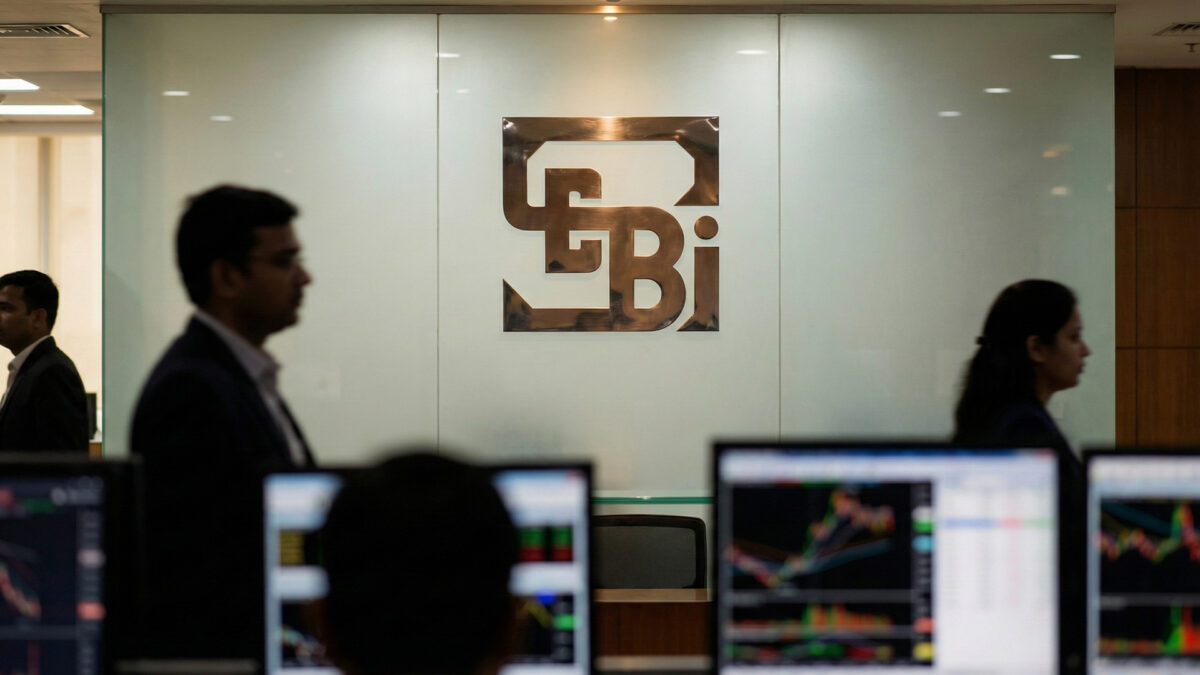
SEBI eases tech glitch rules for brokers

The Securities and Exchange Board of India (SEBI) has revised its framework for dealing with technical glitches at stock brokerage firms, giving major relief to small brokers. Under the new rules, the technical glitch framework will now apply only to brokers who have more than 10,000 registered clients. This change effectively removes nearly 60 per cent of brokers from strict reporting and penalty requirements related to technology failures.

SEBI said the move is aimed at reducing the compliance burden on smaller market intermediaries while ensuring that systemically important brokers continue to maintain strong technology safeguards. Smaller brokers had raised concerns that the earlier rules treated all firms alike, regardless of size, scale, or technological capacity.

As per the revised framework, not all technology-related issues will be treated as “technical glitches.” Problems that do not impact actual trading, such as back-office disruptions, issues caused by third-party vendors, or minor interface errors, will no longer attract regulatory action. SEBI clarified that only glitches affecting order placement, execution, or critical trading systems will come under the framework.

The regulator has also relaxed reporting timelines. Brokers will now get up to two hours to report a technical glitch, compared with the earlier one-hour limit. Reporting will also become simpler, with brokers required to use a common reporting platform instead of multiple exchange-specific systems. Brokers must inform stock exchanges as well as their clients within the stipulated time if a serious disruption occurs.

In addition, SEBI has rationalised several technology-related requirements, including capacity planning and disaster recovery drills. These obligations will now be proportionate to the size and client base of the brokerage. Financial penalties for glitches will also be assessed after considering exemptions and the nature of the disruption.

Market participants have welcomed the move, saying it strikes a better balance between market stability and ease of doing business. The revised framework comes into effect immediately and reflects SEBI’s effort to adopt a more practical and risk-based regulatory approach.

Also Read: Google founders Brin and Page cut ties with Silicon Valley

Categories
Leaders

Google founders Brin and Page cut ties with Silicon Valley

Google cofounders Sergey Brin and Larry Page are reducing their connections to California, the state where they built one of the world’s biggest tech companies. This comes as California plans a proposed wealth tax that could affect the richest residents.

Records show that Brin and Page have moved several of their business companies out of California. One example is T‑Rex LLC, a company managed in Palo Alto, which was changed into T‑Rex Holdings in Delaware in late December 2025. The new company lists its main office in Reno, Nevada, while Brin and Page remain in charge.

Brin has either closed or moved around 15 California-based companies linked to his investments, including a private yacht and airport projects. Page has acted even more, moving more than 45 companies out of California or making them inactive, while relocating his family office and other businesses to Delaware and other states. He has also bought a luxury property in Miami, showing that he is spreading his personal and business presence across different states.

The timing of these changes is connected to a California ballot measure expected in November 2026. If approved, the law would tax residents with net worth over $1 billion at 5 percent. The tax could be applied retroactively from January 1, 2026. Critics say this might cause wealthy people to leave the state.

Other tech leaders, like LinkedIn founder Reid Hoffman, have spoken against the tax, saying high taxes could slow down innovation and investments. Brin and Page’s move shows how new tax laws may influence where billionaires keep their businesses and homes.

By moving companies and personal offices out of California, Brin and Page are preparing for the possible tax while continuing their investments and lifestyle in other states. Their decision has attracted attention because it highlights the impact of wealth taxes on some of the world’s richest people.

Also Read: US lets India buy Venezuelan oil

Categories
Corporate

Mukesh Ambani’s Jio eyes 2.5% IPO in 2026

Mukesh Ambani-led Reliance Jio Platforms is preparing for an initial public offering (IPO) in 2026 that could become the largest in India’s history. The company is considering selling a 2.5 per cent stake, potentially raising over $4 billion (around ₹33,000 crore) if valuations hold.

The IPO is among the most anticipated in the Indian market, reflecting Jio’s rapid growth since its launch and its expansion into telecommunications, digital services, and AI. With more than 500 million subscribers, Jio is India’s biggest mobile network operator.

Valuation talks are ongoing. Investment bank Jefferies estimated Jio Platforms’ value at roughly $180 billion late last year. At that level, a 2.5 per cent stake could fetch about $4.5 billion, surpassing previous record IPOs in India. Some bankers have suggested even higher valuations, up to $200–240 billion, but final decisions on pricing and structure are yet to be made.

A key factor in the plan is a pending regulatory change that would reduce the minimum public float requirement for large IPOs from 5 per cent to 2.5 per cent. This would allow Jio to sell a smaller portion initially, generating higher investor interest and pricing tension.

Reliance executives have not publicly commented on the IPO. It remains unclear whether the offering will involve new shares, an offer-for-sale by existing shareholders, or a combination of both. Morgan Stanley and Kotak have been engaged to prepare the IPO prospectus, a regulatory requirement for listing.

If completed, the listing would energize India’s IPO market, which ranked among the world’s top markets in 2025. Jio’s entry could set a new benchmark for technology and telecom valuations in India and provide an exit for early investors who backed the company during its rapid growth phase.

The IPO would also highlight Mukesh Ambani’s strategy to unlock value from Reliance Jio Platforms while maintaining strong control over the company’s long-term vision.

Also Read: US lets India buy Venezuelan oil

Categories
Corporate

Amagi Media Labs IPO opens January 13

Amagi Media Labs, a Bengaluru-based cloud software and media technology company, will open its initial public offering (IPO) for public subscription on January 13, 2026. The issue will close on January 16, with anchor investor bidding scheduled a day earlier on January 12.

The IPO is a book-built issue worth about ₹1,788 crore, consisting of a fresh issue of shares worth ₹816 crore and an Offer for Sale (OFS) of ₹972 crore by existing shareholders, including Accel, Norwest Venture Partners and PI Opportunities Fund. At the upper end of the price band, the company is valued at over ₹7,800 crore.

Amagi has fixed the price band at ₹343 to ₹361 per share. Retail investors can apply for a minimum lot of 41 shares, requiring an investment of around ₹14,800 at the cut-off price. The allotment of shares is expected on January 19, while the company is likely to list on the NSE and BSE on January 21.

Founded in 2008, Amagi Media Labs operates as a software-as-a-service (SaaS) company, offering cloud-based solutions that help media companies and content owners manage, distribute and monetise video content. Its platforms are widely used in the fast-growing connected TV (CTV) and digital advertising space, enabling targeted ad placements across smart TVs, mobile devices and streaming apps.

The company plans to use proceeds from the fresh issue to strengthen its technology and cloud infrastructure, pursue strategic acquisitions, and meet general corporate needs.

The IPO allocation structure reserves 75 per cent for qualified institutional buyers, 15 per cent for non-institutional investors, and 10 per cent for retail investors. Early market indicators suggest healthy interest ahead of the issue, reflecting investor appetite for technology-driven and digital media-focused businesses entering the public markets.

Also Read: Nestlé India confirms local formula safe for consumers

Categories
Leaders

Zoho founder faces $1.7bn bond in divorce case

Zoho co‑founder Sridhar Vembu has been asked by a California court to post a $1.7 billion bond as part of his ongoing divorce proceedings with his estranged wife, Pramila Srinivasan. The unusual order, issued in January 2025, is intended to protect her share of marital assets while the case continues.

Vembu, who relocated to India in 2019, and Srinivasan, who remained in the US., had been married for nearly 30 years. Their divorce, which began in 2021, involves complex disputes over property and financial interests accumulated during their marriage. Under California law, assets acquired while married are generally considered joint property, and both parties have a right to an equitable share.

The court order included the appointment of a receiver to oversee several US-based entities linked to Vembu and temporarily blocked certain corporate restructuring moves, aiming to prevent any transfers that might affect Srinivasan’s potential claims. Court filings suggest that Srinivasan’s legal team alleged Vembu transferred significant business stakes and intellectual property without her consent, prompting the court to act.

Vembu’s US attorney, Christopher C. Melcher, has strongly criticised the bond order, calling it “invalid” and legally impossible to meet. He said the order was issued on limited notice and based on incomplete information. Melcher also highlighted that Vembu had already offered Srinivasan a 50 percent share in Zoho Corporation Pvt Ltd and had transferred ownership of their family home to her, offers which she reportedly declined.

Melcher further pointed out that some of Srinivasan’s legal counsel were not licensed in California and accused them of misleading the court. He added that the matter is not about alimony, as no support order has been requested.

This case illustrates the challenges of high-stakes, cross-border divorces, especially when major business interests are involved. While the bond order has made headlines for its unprecedented size, insiders say the situation is less about money and more about ensuring fair treatment under the law.

Vembu and his team have indicated they will continue to contest the bond while the legal proceedings move forward, aiming for a resolution that respects both parties’ rights.

Also Read: Alphabet beats Apple to become No. 2 company

Categories
Technology

Alphabet beats Apple to become No. 2 company

Alphabet Inc., the parent company of Google, has overtaken Apple Inc. to become the world’s second-most valuable company. The rise reflects strong investor confidence in Alphabet’s growth, especially in artificial intelligence (AI).

On January 8, 2026, Alphabet’s market value reached about $3.89 trillion, slightly above Apple’s $3.85 trillion. Alphabet’s shares continued to rise after this, while Apple’s slipped, confirming Alphabet’s new position in global rankings.

Despite Alphabet’s gain, Nvidia remains the world’s most valuable company, with a market capitalization of over $4.4 trillion, driven by its AI hardware and data center business.

Alphabet’s climb is largely due to its success in AI, including the Gemini 3 model and custom AI chips called TPUs. These technologies have helped Google expand from search and ads into cloud computing and AI services, attracting more investors. In 2025, Alphabet’s stock was one of the top performers among major tech companies.

Apple’s valuation has lagged because its AI efforts are slower, and investors are cautious about leadership changes. While Apple is adding AI features to its products, it has not yet matched Alphabet’s AI-driven growth.

AI is now a key factor in determining company value, and companies that lead in AI are attracting more investor attention. Alphabet’s new position highlights the importance of innovation in shaping the world’s biggest companies.

Also Read: Trump orders $200bn mortgage bonds to cut rates

Categories
Beyond

Trump orders $200bn mortgage bonds to cut rates

US President Donald Trump has announced a plan for Fannie Mae and Freddie Mac to purchase $200 billion in mortgage‑backed securities (MBS) to help lower mortgage rates and make housing more affordable. The announcement was made on his social media platform, Truth Social.

The plan aims to reduce monthly mortgage payments for homebuyers by increasing demand for mortgage bonds, which could push interest rates slightly lower. Trump said the government‑sponsored agencies have enough funds to carry out the purchases without using extra federal money. The Federal Housing Finance Agency (FHFA) confirmed that Fannie Mae and Freddie Mac will implement the plan, though details on timing and methods were not shared.

This move comes amid ongoing concerns about housing affordability. Mortgage rates, while slightly lower than last year, remain high, with the average 30‑year rate around 6.2%. Rising rates and a limited housing supply have made buying a home more difficult for many Americans.

Analysts have given mixed reactions. Some believe the plan could lower mortgage rates slightly, but others say $200 billion is a small part of the $11 trillion U.S. mortgage bond market and may have limited effect on overall housing costs. Questions have also been raised about the accuracy of Trump’s claims regarding the GSEs’ cash reserves.

The announcement follows other housing-related measures from the Trump administration, including proposals to limit institutional investors from buying single-family homes. Officials say this initiative is designed to help middle-class Americans afford homes and provide relief to the housing market ahead of economic challenges.

Also Read: RVNL wins Rs 201 cr East Coast railway project

Categories
Corporate

RVNL wins Rs 201 cr East Coast railway project

Rail Vikas Nigam Limited (RVNL), a government-owned company under the Ministry of Railways, has received a Letter of Acceptance (LoA) from East Coast Railway for a project worth Rs 201.23 crore. The order involves setting up a Wagon Periodic Overhauling (POH) workshop at Kantabanji in Odisha.

The workshop will have the capacity to repair and overhaul 200 freight wagons. Wagon POH facilities are important for Indian Railways as they help maintain freight wagons, improve safety, and ensure smoother movement of goods across the rail network. Once completed, the new workshop is expected to strengthen freight operations in the eastern region.

According to RVNL’s regulatory filing, the total contract value is Rs 201.23 crore, excluding GST. The company has been declared the sole bidder for the project, meaning no other company qualified or matched its bid. The project is expected to be completed within 18 months from the date work begins.

RVNL stated that the order has been awarded in the normal course of business. It also clarified that the project does not involve any related-party transactions. The promoters and promoter group of RVNL have no financial or other interest in East Coast Railway.

This new order adds to RVNL’s existing order book and supports its role as a key company involved in railway infrastructure development in India. RVNL is known for executing projects such as new railway lines, track doubling, electrification, station redevelopment, major bridges, and railway workshops.

Despite the positive news, RVNL shares came under pressure in the stock market following the announcement. Market participants appeared cautious, even though the project improves the company’s long-term revenue visibility.

The Kantabanji wagon workshop is expected to help Indian Railways reduce delays in wagon maintenance and improve efficiency in freight movement. Freight traffic plays a crucial role in India’s logistics and supply chain, and such infrastructure projects are seen as important for supporting economic growth.

Also Read: OpenAI launches ChatGPT Health linking medical data