Categories
Leaders

8-year-old Ranvir shines at India AI Summit

At just eight years old, Ranvir Sachdeva has captured the imagination of the tech world. The young prodigy made history as the youngest keynote speaker at the India AI Impact Summit 2026 in New Delhi, sharing the stage with some of the brightest minds in artificial intelligence.

Ranvir, who began coding at the tender age of three, spoke with confidence and clarity, discussing how young minds can shape the future of technology. He explained how India’s ancient philosophies could guide ethical innovation, and even shared insights from an AI model he has been exploring , showing that curiosity, creativity, and courage are not bound by age.

The summit offered Ranvir more than a platform to speak; it gave him the chance to meet global tech leaders, including Google CEO Sundar Pichai and OpenAI CEO Sam Altman. Images of him chatting with these industry giants went viral, symbolising a remarkable bridging of generations in the tech community.

Despite his young age, Ranvir’s message was simple but powerful: the next wave of AI innovation belongs to the youth, and children should be encouraged to create, experiment, and dream boldly. His presence reminded everyone at the summit that innovation is as much about imagination as it is about algorithms.

Ranvir’s journey is a testament to early passion and dedication. From coding at three to speaking at TEDx events, his story inspires not just other children but also adults, proving that age is no barrier to impact. As India positions itself as a global AI hub, voices like Ranvir’s highlight the importance of nurturing young talent alongside established expertise.

Also Read: Vishal Sikka sees AI boosting Indian entrepreneurs

Categories
Corporate

NCC shares plunge 10% to 52-week low on NHAI ban

Shares of NCC Ltd dropped about 10% to hit a 52-week low after the National Highways Authority of India imposed a two-year ban on the company and its step-down subsidiary OB Infrastructure Ltd from participating in its tenders.

The restriction, effective from February 17, 2026, bars the company from bidding for NHAI projects in any capacity, including as EPC contractor, concessionaire or consortium partner. The move triggered heavy selling in the stock as investors grew concerned about the impact on future order inflows.

NCC said the action is related to disputes in certain BOT (annuity) road projects. The company added that project delays were mainly due to issues such as land availability and other contractual constraints, and it is reviewing the order for possible legal action.

The decline in the share price also comes amid weak recent quarterly earnings, further dampening investor sentiment. The stock is now trading well below its 52-week high, reflecting a cautious market outlook.

The company clarified that the ban will not affect its existing order book or ongoing works. However, NHAI is a key client for highway developers, and the inability to bid for fresh projects for two years is expected to weigh on growth visibility.

Also Read: Sundar Pichai announces $15-bn AI investment for India

Categories
Corporate

Sundar Pichai announces $15-bn AI investment for India

Google CEO Sundar Pichai on Friday announced a $15-billion investment to expand artificial intelligence infrastructure and capabilities in India, saying the country has the potential to become a major global hub for AI.

Speaking at the India AI Impact Summit, Pichai described AI as the most important technological shift of our time and said it can bring large-scale changes in sectors such as healthcare, education, agriculture and scientific research.

A major part of Google’s plan includes building strong digital infrastructure, improving compute capacity and supporting a full-stack AI ecosystem in the country. He also highlighted the need to train students, developers and professionals so that India’s workforce is ready for the AI era.

Pichai said India’s digital public platforms, large pool of tech talent and fast-growing startup ecosystem give it a unique advantage in the global AI race. He praised efforts to develop AI models that work in Indian languages and understand local needs, calling them essential for making the technology useful for millions of people.

At the same time, he cautioned that the benefits of AI will not come automatically. According to him, governments, companies and academic institutions must work together to ensure the technology is developed and used responsibly. He stressed that AI should reduce inequality, not increase it, and must be accessible and affordable to all.

Pichai also pointed to scientific breakthroughs powered by AI, such as AlphaFold, to show how the technology can help solve complex global challenges.

On the sidelines of the event, Pichai was seen tasting Indian GI-tagged coffee, reacting with a cheerful “wow”, a moment that quickly went viral on social media.

Also Read: AI key to India’s sovereignty, says Jeet Adani

Categories
Leaders

AI key to India’s sovereignty, says Jeet Adani

Artificial intelligence will redefine national sovereignty and India must build its own core infrastructure to stay competitive and secure, Jeet Adani said at the India AI Impact Summit 2026.

The Adani Group executive director stressed that control over energy, computing power and digital platforms will determine global leadership in the AI era. Depending on foreign systems for critical technologies, he warned, could expose the country to economic and strategic risks.

Highlighting the link between power and technology, he said AI runs on electricity and nations that produce reliable, clean energy will gain a major advantage. He called for large renewable-energy capacities to support data centres and high-performance computing within India.

He added that AI should first solve India’s development challenges, improving productivity, expanding financial inclusion and strengthening service delivery, rather than only mirroring global consumption models.

Adani said “AI sovereignty” does not mean isolation but ensuring that key digital infrastructure and data processing capabilities are located in the country. This would allow startups, researchers and industries to access affordable computing and accelerate innovation across sectors such as agriculture, healthcare, manufacturing and logistics.

Pointing to the group’s massive investment plans, he said the proposed green energy–driven AI ecosystem would combine renewable power with data infrastructure at scale and could become the foundation for a much larger technology network.

Also Read: Boeing secures 50-aircraft order from Vietnam Airlines

Categories
Corporate

OpenAI–Tata partner for 100mw AI data centre in India

OpenAI has entered into a major infrastructure partnership with the Tata Group to build artificial intelligence-ready data-centre capacity in India, starting with 100 megawatts (MW) and with a long-term goal of expanding it to 1 gigawatt (GW). The move is aimed at strengthening the company’s presence in one of its fastest-growing user markets and supporting the rising demand for AI services in the country.

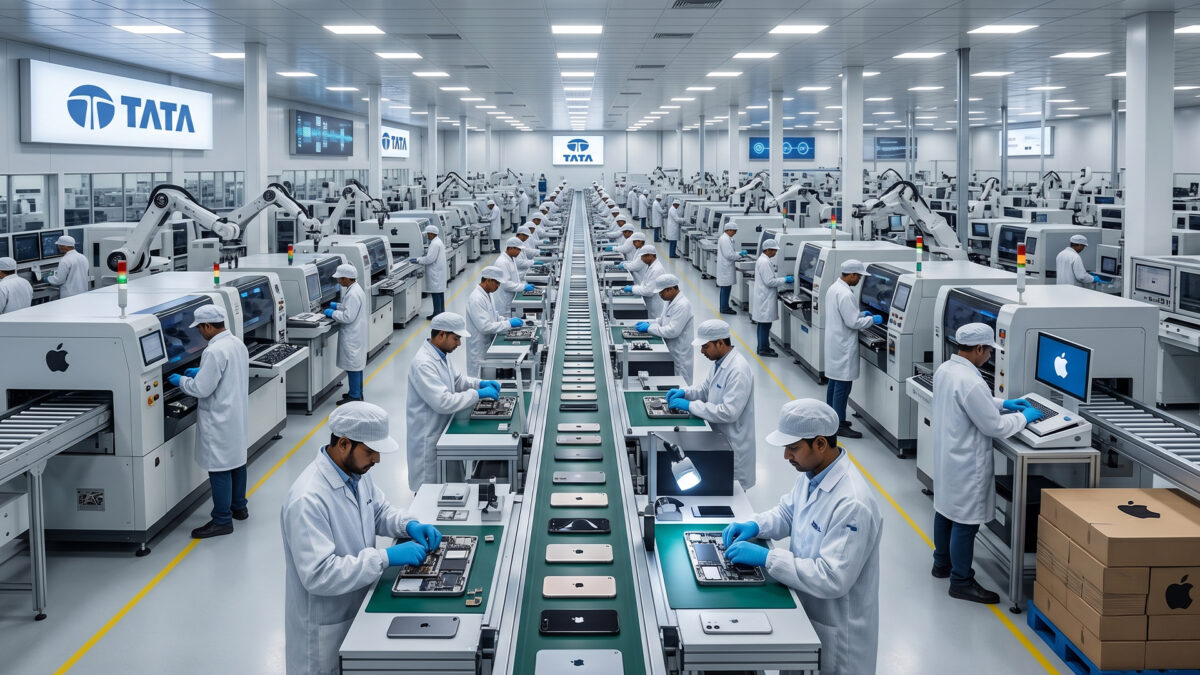
Under the agreement, Tata Consultancy Services (TCS) will provide the data-centre infrastructure, making OpenAI the first customer for its new AI-focused hosting platform. The facilities will be designed to handle high-performance computing required for training and running advanced AI models. Having local compute capacity is expected to improve speed, reduce latency and help meet India’s data-storage and regulatory requirements.

The project is part of OpenAI’s broader global plan to develop large-scale AI infrastructure through its “Stargate” programme. By hosting computing power within India, the company aims to enable wider adoption of AI across sectors such as finance, healthcare, manufacturing and government services, where domestic data processing is often essential.

The partnership also extends beyond infrastructure. ChatGPT Enterprise and other OpenAI tools will be deployed across several Tata Group companies to improve productivity, software development and automation. TCS is expected to integrate these AI solutions into its delivery platforms, helping clients adopt AI-driven workflows more quickly.

India has emerged as one of the largest markets for ChatGPT in terms of users, making local infrastructure a strategic priority for OpenAI. For the Tata Group, the deal provides a high-profile customer for its expanding digital and data-centre business and supports its ambition to become a key player in AI infrastructure.

Also Read: Trump’s first Japanese investments under $550 bn trade pact

Categories
Corporate

Sensex jumps 400 points, Nifty nears 25,600

Indian equity markets opened higher on Friday as investors sought opportunities after a sharp decline in the previous session. The BSE Sensex rose over 400 points, trading near 55,800, while the NSE Nifty 50 held around 25,600 in early deals, supported by buying in select heavyweight sectors.

The market rally was driven by value buying and sector-specific strength, particularly in public sector units, banks, and energy stocks. However, IT and realty counters underperformed, limiting the overall gains amid caution over global cues and recent volatility.

Among the top gainers, Coal India Ltd surged over 1%, while Oil & Natural Gas Corporation Ltd (ONGC) also rose about 1%. Heavyweight industrial stocks such as Bharat Electronics Ltd and Larsen & Toubro Ltd advanced around 0.8% each.

On the losers’ side, major IT stocks fell sharply. Infosys Ltd dropped more than 2%, while Tech Mahindra Ltd, Kwality Walls India Ltd, HCL Technologies Ltd, and Wipro Ltd all declined over 1%, reflecting profit-taking after recent gains.

Sector-wise, the Nifty Bank index showed resilience, while midcap and IT segments dragged market breadth lower. Investors remained watchful ahead of weekly derivatives expiry and potential global triggers that could influence market direction in the coming days.

After Thursday’s sharp sell-off, Friday’s session showed tentative stability, with defensive and cyclical stocks leading the rebound.

Also Read: Cigarette stocks jump up to 12% on sharp price hikes

Categories
Technology

Sarvam Kaze, India’s multilingual answer to Meta ray-ban

Bengaluru-based Sarvam AI has unveiled Kaze, its first AI-powered smart glasses, marking India’s formal entry into the global AI wearables segment. The device was showcased at the India AI Impact Summit, where Prime Minister Narendra Modi tested the glasses, signalling strong policy-level visibility for indigenous AI hardware.

Kaze is designed as a voice-driven, hands-free computing interface powered by Sarvam’s in-house foundational models, with a core focus on Indian language support and localised AI use cases. Through integrated cameras, microphones and open-ear audio, the glasses can process real-time visual context, respond to spoken queries and deliver contextual assistance without requiring users to access a smartphone.

The product targets enterprise and public-sector deployments in areas such as field services, education, accessibility, navigation and document workflows, alongside future consumer applications. Sarvam’s on-device and edge-optimised AI approach is expected to reduce latency and improve privacy for real-time interactions.

The launch places Kaze in direct comparison with Meta Ray-Ban smart glasses, which currently leads the category with camera, audio and voice assistant features. However, Sarvam is betting on multilingual AI, India-specific workflows and domestic design-to-manufacture capabilities as key differentiators.

Also Read: Tata Sons moves to renew N. Chandrasekaran’s term

Categories
Corporate

Sensex dips 100+ points, Nifty slips under 25,800

The markets opened lower on Thursday, 19 February 2026, after early optimism faded into profit-booking and cautious trading. The BSE Sensex fell over 100 points, while the Nifty 50 slipped under 25,800, dragged down by weakness in select IT and industrial stocks, even as metal and consumer segments showed resilience.

Tech Mahindra led the gainers with a roughly 2% rise, followed by Netweb Technologies and MCX, which benefited from strong demand in commodities. On the other hand, IndiGo and construction stocks such as NCC saw declines amid sectoral pressures and regulatory concerns. Broader market sentiment remained cautious, with retail investors gradually shifting funds from traditional bank savings into higher-yielding instruments like liquid funds.

Sectorally, metal stocks continued to outperform, with the BSE Metal Index rallying over 13% in the past three months, reflecting higher commodity prices and tight supply. Consumer and financial stocks contributed to early gains, while IT shares struggled, limiting overall upside.

Global markets presented a mixed picture. Asian benchmarks traded higher, with Nikkei 225 futures up 0.6% and Topix rising 1%, while European indices remained largely flat. Wall Street ended higher on Wednesday, lifted by gains in technology and AI-related stocks, including Nvidia and Amazon.

Meanwhile, the dollar strengthened ahead of key U.S. inflation data, and oil prices eased as investors monitored U.S.-Iran diplomatic developments.

Also Read: Sensex surges 283 points, Nifty climbs above 25,800

Categories
Beyond

NGT approves Great Nicobar Island mega project

The National Green Tribunal (NGT) has given the green light to the ₹80,000‑crore Great Nicobar Island mega infrastructure project, dismissing petitions that challenged its environmental clearance. The tribunal cited the project’s strategic importance for India and found that adequate safeguards had been put in place to protect the island’s fragile ecosystem.

A six‑member bench, led by Justice Prakash Shrivastava, reviewed petitions from environmentalists and activists, including Ashish Kothari, who raised concerns over forest diversion, impact on coral reefs, and threats to indigenous communities such as the Shompen and Nicobarese tribes. The tribunal noted that a high‑powered committee in 2023 had examined these issues and confirmed sufficient protections under the 2022 environmental clearance (EC).

The project spans 166 sq km and involves the diversion of roughly 130 sq km of forest land. Key components include a container transshipment port, a dual-use airport, an integrated township, and a 450 MVA power plant using gas and solar energy.

The NGT emphasized that authorities must ensure full compliance with EC conditions, including conservation of coral habitats, protection of sandy beaches critical for marine species, and safeguarding key wildlife such as the leatherback sea turtle, Nicobar megapode, and Nicobar macaque.

While the tribunal recognized environmental concerns, it highlighted the project’s role in strengthening India’s strategic presence in the Indian Ocean region and near the Strait of Malacca, a major global shipping corridor.

Although the NGT ruling removes legal barriers at the tribunal level, activists may still approach higher courts.

Also Read: YouTube faces global outage, millions affected

Categories
Technology

YouTube faces global outage, millions affected

On 17–18 February 2026, the video platform YouTube went down for users around the world, leaving many unable to watch videos or use the app properly. The outage affected countries including the US, India, the UK, Australia, and Mexico.

In the United States alone, over 3 lakh users reported problems on tracking site Downdetector. Users faced issues like blank homepages, error messages, videos not loading, and problems accessing related services such as YouTube Music, YouTube Kids, and YouTube TV.

Many users took to social media, including X (formerly Twitter) and Reddit, to share their frustration. While some videos could still be accessed through direct links, the home page and recommended videos were often missing or not working.

YouTube confirmed the outage and said its engineering teams were working to fix the problem. The company explained that a glitch in its recommendation system, the feature that suggests videos and populates users’ home pages, was the main cause.

By Wednesday morning, YouTube announced that services across all platforms had been fully restored. Users could again access videos, playlists, recommendations, and related services without issues. The company thanked users for their patience during the disruption.

Also Read: NPCI rolls out UPI wallet for Global AI Summit visitors