Categories
1 Minute-Read

IBM misses revenue estimates on weak client spending

IBM reported weaker-than-expected second-quarter revenue as enterprise customers delayed technology spending amid economic uncertainty.

The company said cautious client budgets slowed new project approvals, affecting sales despite continued demand for artificial intelligence and hybrid cloud solutions. IBM highlighted growing interest in its watsonx AI platform but said stronger AI demand could not fully offset weakness in other businesses.

Following the results, the company’s shares declined as investors reacted to the revenue miss. IBM remains optimistic about its long-term growth strategy, betting that AI, software and consulting services will drive future performance once enterprise spending recovers.

Categories
Corporate

IBM develops world’s first sub-1 nanometer AI chip

IBM has unveiled what it calls the world’s first sub-1 nanometer chip technology, marking a major breakthrough in semiconductor research that could power the next generation of artificial intelligence (AI), cloud computing and advanced electronic devices.

The new chip is built using a 0.7-nanometer (7-angstrom) transistor architecture called Nanostack, allowing engineers to pack nearly 100 billion transistors onto a chip roughly the size of a fingernail. According to IBM, this is nearly twice the transistor density of its 2-nanometer chip introduced in 2021.

IBM said the new design can deliver up to 50 per cent better performance or 70 per cent higher energy efficiency than its earlier 2-nanometer technology. The company believes the breakthrough will help meet the growing computing demands of AI systems while reducing power consumption in data centres and high-performance computers.

A key innovation behind the chip is IBM’s new Nanostack architecture, which stacks transistors vertically instead of relying only on shrinking them horizontally. This approach enables more computing power to be packed into a smaller space, helping overcome the physical limits that have slowed traditional chip miniaturisation in recent years.

The technology is still at the research stage and is not yet ready for commercial production. IBM expects it could take around five years before the chip reaches large-scale manufacturing through industry partners. The company no longer manufactures chips itself but licenses its technology to semiconductor firms.

While consumers are unlikely to see products using the new technology anytime soon, IBM’s announcement highlights how chipmakers are continuing to push the boundaries of semiconductor design. If successfully commercialised, the sub-1 nanometer technology could help power faster smartphones, more capable AI systems, energy-efficient data centres and the next generation of computing devices.

Also Read: Micron hits $1.398 trillion, briefly tops Meta, Tesla

Categories
Corporate

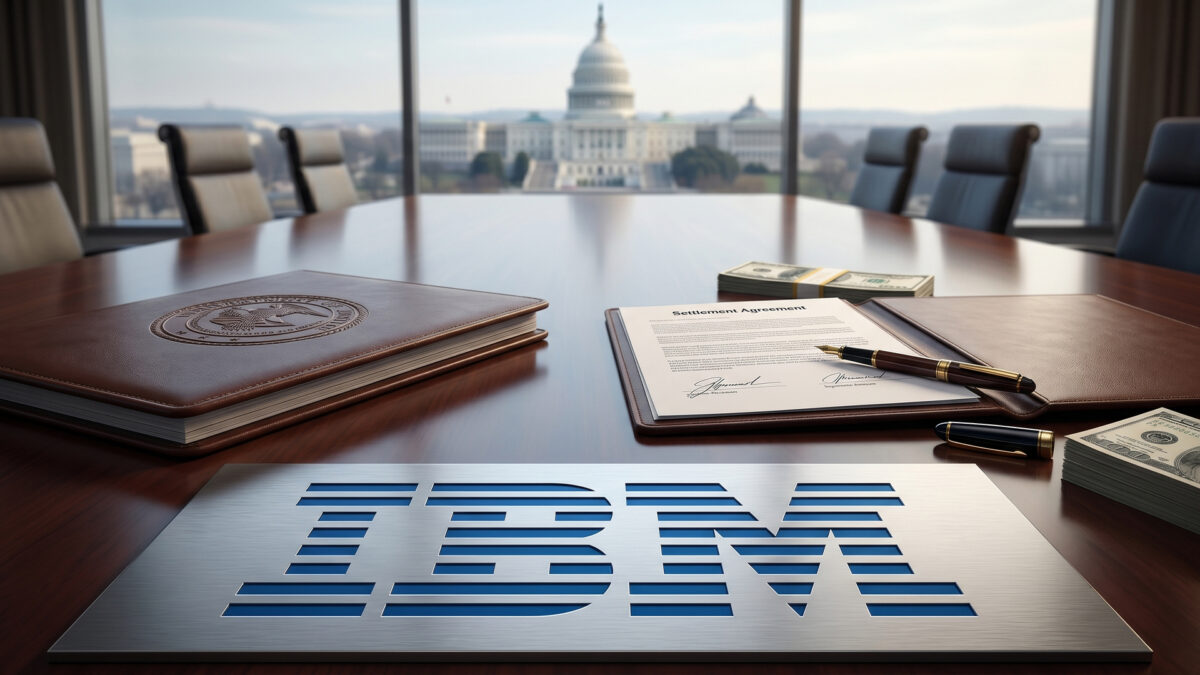
IBM settles US case over DEI practices

IBM has agreed to pay $17 million to settle a case brought by the U.S. Department of Justice over its diversity, equity and inclusion (DEI) practices.

The settlement resolves allegations that the company used hiring and promotion policies that considered factors such as race, gender, and national origin in ways that violated federal anti-discrimination rules tied to government contracts. The DOJ also claimed that some DEI-related programs and bonuses were linked to diversity targets.

IBM has denied any wrongdoing, and the settlement does not include an admission of liability. The company said it was pleased to resolve the matter and reiterated that its hiring approach is based on skills and business needs.

The case is part of a wider crackdown by U.S. authorities on corporate DEI programmes, particularly within companies that receive federal funding or work on government contracts. Officials have argued that such programmes must comply strictly with anti-discrimination laws.

As part of the resolution, IBM has agreed to pay the penalty and make changes to certain internal practices. The government said the case was handled under a civil rights enforcement initiative aimed at ensuring compliance with federal rules.

The settlement marks one of the more high-profile actions involving a major technology company and highlights growing legal and political scrutiny around DEI policies in corporate America.

While IBM maintains that it acted lawfully, the case underscores how companies are increasingly being required to reassess workplace diversity initiatives to align with evolving regulatory expectations.

Also Read: Microsoft to end Outlook Lite app