Categories
Leaders

Anil Chakravarthy named Adobe’s new CEO

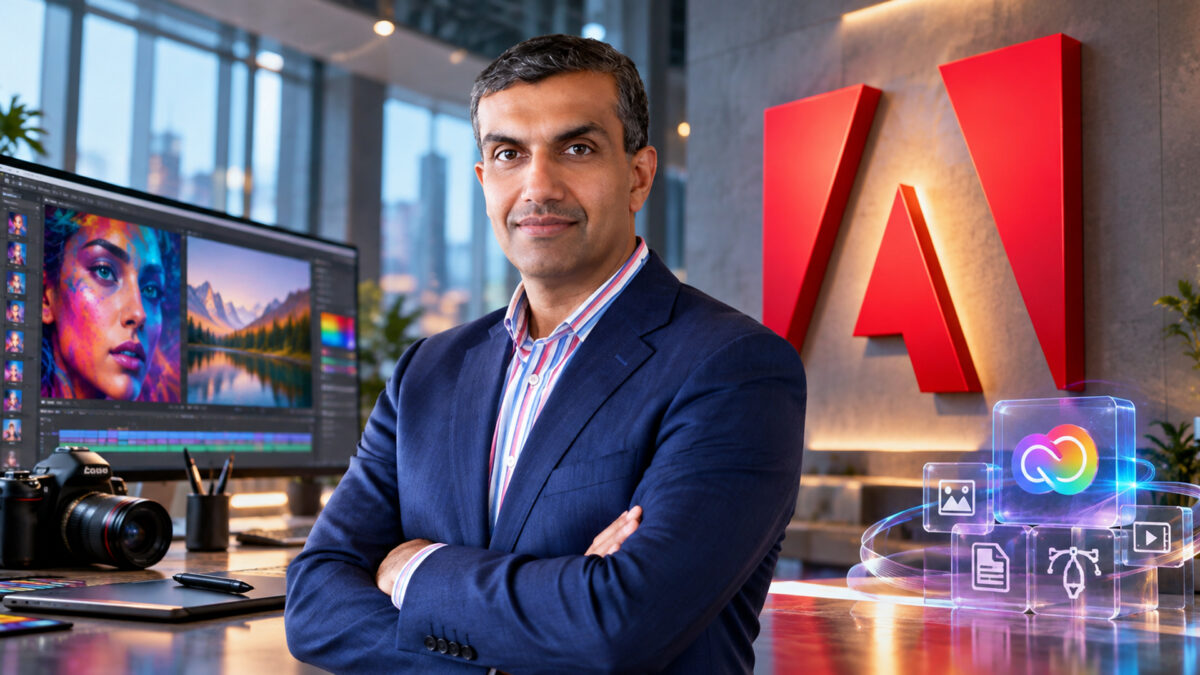
Adobe has named Indian-origin executive Anil Chakravarthy as its next president and chief executive officer, handing him the responsibility of leading the software giant through a period of rapid change driven by artificial intelligence.

Chakravarthy will take over as CEO on December 1, 2026, succeeding Shantanu Narayen, who has led Adobe for more than 18 years. Narayen will move into the role of executive chair and will continue working with the company during the leadership transition.

The appointment comes at an important moment for Adobe. The company behind widely used products such as Photoshop, Acrobat and Illustrator is facing a technology landscape that is changing quickly as generative AI becomes increasingly capable of creating and editing images, videos, documents and other digital content.

Chakravarthy, who currently serves as president of Adobe’s Customer Experience Orchestration business and oversees worldwide field operations, will also join Adobe’s board when he assumes the CEO role.

His appointment represents an internal transition for Adobe. Chakravarthy joined the company in 2020 after serving as chief executive of enterprise software company Informatica. At Adobe, he has held senior positions across its digital experience business and global operations.

His career also includes senior leadership roles at Symantec and VeriSign, along with experience at consulting firm McKinsey & Company. He holds an engineering degree from IIT-BHU, formerly known as IIT Varanasi, and later earned a PhD from the Massachusetts Institute of Technology.

That combination of technology and business experience is expected to be particularly relevant as Adobe works to adapt its products and business model to the rise of AI.

Artificial intelligence has become central to Adobe’s strategy. The company has introduced AI capabilities across its creative and digital experience products, allowing users to generate, edit and manipulate content using natural-language instructions and other AI-powered tools.

The shift has also created new competitive pressures. A growing number of startups and established technology companies are developing AI-powered creative tools that can perform tasks that once required specialised software and considerable technical skill.

Companies such as Canva and Figma have also expanded their presence in areas traditionally dominated by Adobe. Generative AI is lowering the barriers to content creation, forcing established software companies to show that their products remain valuable even as new tools become easier to use.

Adobe has been trying to respond by integrating AI directly into its existing products rather than treating the technology as a separate offering. Its Firefly family of generative AI tools has become a key part of that strategy.

His challenge will be to build on those efforts while keeping Adobe’s large base of professional and enterprise customers engaged.

The leadership change follows a period of uncertainty around Adobe’s position in the market. The company’s shares have faced pressure as investors assess the potential impact of AI on its traditional creative software business. Adobe’s stock has fallen significantly in 2026, adding to concerns about whether the company can maintain its strong position as AI-powered alternatives become more capable.

At the same time, Adobe has continued to report demand for its AI-powered products and has raised its annual profit outlook earlier this year. The company therefore enters the leadership transition with both opportunities and challenges.

Narayen’s move to executive chair means his experience will remain available to Adobe even after he leaves the CEO position. He has overseen one of the most significant transformations in the company’s history, particularly its shift from selling traditional packaged software to a subscription-based cloud model.

That transformation helped turn Adobe into a major recurring-revenue software business. Under Narayen, products such as Photoshop and Acrobat became part of the company’s broader Creative Cloud and Document Cloud ecosystems, while Adobe expanded significantly into digital marketing and customer experience services.

The next transformation is likely to be shaped by AI.

For Chakravarthy, this means balancing innovation with the needs of Adobe’s existing customers. Professional designers, photographers, marketers and businesses depend heavily on Adobe’s software, and the company will need to make AI tools useful without disrupting the workflows that have made its products industry standards.

The new CEO will also inherit a company operating in a market where the definition of creative software is changing. AI tools can now generate images, videos and designs in seconds, raising questions about how traditional creative applications will evolve.

Chakravarthy’s experience in enterprise technology and customer experience could become an important part of that transition. His current role involves helping businesses use Adobe’s technology to manage customer interactions in an increasingly AI-driven digital environment.

The CEO succession also has significance in India, where Chakravarthy’s appointment adds to the growing list of Indian-origin executives leading major global technology companies.

For Adobe, however, the immediate focus will be less on symbolism and more on execution. The company is entering a new phase in which its ability to turn artificial intelligence into sustainable growth could determine its position in the next generation of creative and enterprise software.

As Chakravarthy prepares to take charge, Narayen will remain involved from the boardroom. That gives Adobe continuity while putting a new leader at the centre of its next big challenge.

The question now is whether Chakravarthy can help Adobe make the same kind of successful transition with AI that Narayen achieved with cloud computing nearly two decades ago.


 

Categories
Technology

Anker launches wearable-free sleep tracker

Anker is taking sleep tracking off the wrist and moving it to the bedside. The company has unveiled the SleepLab Pro, a smart speaker that can monitor sleep without requiring users to wear a smartwatch, fitness band, smart ring or earbuds while in bed.

The device was introduced at IFA 2026 in Berlin as part of Anker’s expanding focus on health, wellness and sleep technology. Instead of placing sensors directly on the body, the SleepLab Pro sits beside the bed and uses radar to collect information during the night.

The technology behind the device is a 60GHz millimetre-wave radar system. It detects very small movements from the person sleeping, including movements associated with breathing. The collected information is then used to track sleep patterns and provide estimates of metrics such as heart rate and breathing rate.

The approach addresses one of the biggest limitations of wearable sleep trackers: not everyone enjoys wearing a device overnight. Smartwatches can feel uncomfortable, rings can take some getting used to and sleep earbuds are not suitable for everyone. Anker’s solution is designed to work in the background, allowing users to go to bed without putting anything on.

SleepLab Pro can monitor different stages of sleep and provide users with information about their night. The device is designed to help people understand their sleeping patterns and identify changes over time rather than simply recording when they went to bed and woke up.

Anker is also positioning the product as more than a sleep-monitoring device. The speaker combines sleep tracking with features intended to make the bedtime environment more relaxing. It includes a collection of more than 180 sounds that users can play while preparing for sleep or during the night.

The company is also promoting personalised audio experiences and a 28-day sleep programme aimed at helping users develop more consistent bedtime habits. The idea is to turn sleep data into practical routines rather than leaving users with a collection of numbers that may be difficult to understand.

A built-in night light adds another element to the device. Users can incorporate the speaker into their existing bedtime routine, using it for lighting, sounds and alarms while the radar system works in the background.

One of the more notable aspects of the SleepLab Pro is its subscription-free approach. Anker says the core sleep-monitoring features will not require users to pay a recurring subscription. That could give the product an advantage in a market where several health and fitness platforms charge monthly or annual fees for access to detailed insights.

The launch is part of a wider expansion of Anker’s sleep-focused product range. The company has also introduced the Sleep Earbuds 4 and Sleep Earbuds 4 Pro, which take a more conventional wearable approach. Those products place sensors directly in the ears and combine sleep monitoring with audio.

SleepLab Pro takes the opposite route. Rather than asking users to wear technology, it attempts to make monitoring completely contactless. The concept reflects a broader shift in consumer electronics towards devices that operate passively and require less interaction from users.

Radar-based monitoring could also offer practical benefits beyond comfort. Because the device remains on the bedside table, users do not have to remember to charge or wear a tracker before going to sleep. The system can potentially monitor sleep every night without changing the user’s routine.

However, the technology also raises questions about privacy. A device that continuously monitors a person while they sleep could collect highly personal information about sleeping patterns and other physiological signals. As health technology becomes more common inside homes, consumers are likely to pay greater attention to how such information is stored, processed and protected.

The SleepLab Pro should also be viewed as a consumer wellness product rather than a medical device. Sleep trackers can provide useful information about patterns and habits, but their measurements and estimates are not equivalent to those obtained through clinical sleep studies. Anyone experiencing persistent or serious sleep problems should seek professional medical advice rather than relying solely on consumer technology.

Anker has not yet announced complete pricing and availability details for every market. More information is expected as the company moves closer to the product’s commercial launch.

The introduction of SleepLab Pro highlights how quickly sleep technology is evolving. What began largely with basic fitness bands and smartwatches has expanded into smart rings, specialised earbuds, mattresses, bedside sensors and now radar-equipped speakers.

Sleep tracking can provide useful insights, but the best tracker is often the one people are comfortable using consistently. By moving the sensors away from the body, Anker hopes to remove one of the main barriers to overnight monitoring.

Categories
Beyond

Gold at ₹1,55,610, Silver slips to ₹2,40,560

Gold and silver prices eased in domestic futures trading on Friday, September 4, after both precious metals gained sharply in the previous session. Investors are now closely watching key US employment data for fresh signals on the Federal Reserve’s interest-rate policy.

On the Multi Commodity Exchange (MCX), gold futures were trading 0.38% lower at ₹1,55,610 per 10 grams, while silver futures declined around 0.59% to ₹2,40,560 per kg during morning trade. The movement came as traders remained cautious ahead of the US non-farm payrolls and unemployment data due later in the day.

The latest figures are important because they could influence expectations about the Federal Reserve’s next policy decision. Investors are assessing whether the US economy is slowing enough for the central bank to keep interest rates steady or consider monetary easing.

Despite Friday’s decline, gold prices continue to trade close to historically high levels. The precious metal has received support from expectations of easier US monetary policy, a softer dollar and continued demand for safe-haven assets.

Gold does not generate interest income, so it typically becomes more attractive when interest rates or bond yields decline. Conversely, expectations of higher rates can put pressure on bullion as investors may prefer interest-bearing assets.

Silver has also seen strong buying interest. Unlike gold, silver has a significant industrial-use component, making its price sensitive to both investment demand and expectations about global economic activity.

Retail gold rates continued to differ across major Indian cities on Friday. The price variations can arise from local taxes, transportation costs, demand conditions and jewellers’ pricing.

In Delhi, 24-karat gold was quoted at around ₹1,54,880 per 10 grams, while 22-karat gold stood at approximately ₹1,41,973 per 10 grams.

In Mumbai, the 24K gold rate was around ₹1,55,150 per 10 grams and 22K gold was priced at about ₹1,42,221.

Bengaluru recorded a 24K gold price of nearly ₹1,55,270 per 10 grams, while 22K gold stood at around ₹1,42,331.

In Kolkata, 24K gold was available at approximately ₹1,54,940 per 10 grams and 22K gold at ₹1,42,028.

Hyderabad recorded 24K gold at around ₹1,55,390 per 10 grams and 22K gold at approximately ₹1,42,441.

Among the major cities covered, Chennai recorded a 24K gold price of about ₹1,55,600 per 10 grams, while 22K gold was around ₹1,41,387.

Silver 999 prices also remained elevated across the major markets, with rates varying between cities.

The US employment report is likely to determine the short-term direction of global gold prices.

A weaker-than-expected jobs report could strengthen expectations that the Federal Reserve will maintain or eventually lower interest rates. Such a scenario could provide additional support to gold and silver.

On the other hand, stronger employment numbers could reduce expectations of an imminent policy shift and potentially put pressure on bullion prices.

Federal Reserve Governor Christopher Waller has indicated that he could support keeping interest rates unchanged at the September meeting if incoming data continues to show moderating inflation. This has added to the focus on Friday’s economic numbers.

The US dollar is another important influence on gold prices. Since international bullion is traded largely in dollars, movements in the currency can affect demand from investors holding other currencies. Treasury yields and geopolitical uncertainty are also likely to remain important factors.

Friday’s decline does not necessarily signal a major change in the broader gold market. Prices remain significantly higher than their levels earlier in the year, and daily movements can be sharp.

People planning to buy jewellery should also remember that the quoted gold rate is not the final price they pay. GST, making charges and other costs are added to the base value of the metal.

Gold purity is another important consideration. 24-karat gold represents the highest commonly traded purity, while 22-karat gold is widely used for jewellery because it offers greater strength and durability.

Investors tracking gold price today, silver price today, MCX gold, MCX silver, 24K gold, 22K gold and silver 999 will be watching the US employment numbers for the next major signal.

With precious metals already trading at elevated levels, changes in interest-rate expectations could result in further volatility in gold and silver prices over the coming sessions.


Categories
Technology

Vivo T5 5G brings 7,050mAh battery to India

Vivo has launched the T5 5G in India, expanding its T-series smartphone range with a strong focus on battery life, display quality and performance. The new smartphone starts at ₹34,999 and will go on sale from September 9.

The Vivo T5 5G is available in four configurations. The base model with 6GB RAM and 128GB storage costs ₹34,999, while the 8GB RAM and 128GB variant is priced at ₹39,999. The 8GB RAM and 256GB version costs ₹44,999, while the top-end 12GB RAM and 256GB model is priced at ₹49,999. The phone will be available in Royal Bronze and Silver Green colours.

The biggest highlight of the Vivo T5 5G is its 7,050mAh battery. It supports 44W FlashCharge technology and is designed for users who spend long hours streaming videos, gaming, browsing social media and using other applications.

Vivo claims the battery can provide up to 85 hours of music playback and 34.7 hours of local video playback under its testing conditions. The company has also focused on battery longevity, claiming that the battery can retain at least 80 per cent of its capacity after 1,600 charging cycles.

Despite the large battery, the smartphone has a slim 7.99mm body and weighs around 199 grams.

The phone features a 6.83-inch 1.5K 3D curved AMOLED display with a 2,800×1,260-pixel resolution. The panel supports a refresh rate of up to 144Hz, along with HDR10+ support and a 300Hz touch sampling rate.

The high refresh rate is aimed at delivering smoother scrolling, animations and gaming. Vivo has also designed the display with a curved profile that extends towards the sides of the handset, giving the phone a more premium appearance.

Performance comes from the 4nm MediaTek Dimensity 7500 Turbo chipset, paired with the MediaTek NPU 850 for artificial intelligence-related tasks. Vivo claims the device can deliver up to 233 per cent faster on-device AI computing under its internal testing conditions.

The smartphone also includes a 3,800mm² vapour chamber cooling system. This is intended to help manage heat during gaming and other demanding activities.

For photography, the Vivo T5 5G features a dual rear-camera setup. It consists of a 50MP Sony IMX882 primary sensor with optical image stabilisation and an 8MP ultra-wide camera. A 32MP front-facing camera handles selfies and video calls. The phone supports 4K video recording through both its front and rear cameras.

Vivo has also incorporated several AI-based imaging features to enhance photographs and edit unwanted elements. These tools are aimed at making everyday photography more convenient without requiring users to rely on separate editing applications.

The software experience is another important part of the device. The Vivo T5 5G runs OriginOS 6 based on Android 16. Vivo has promised three generations of Android operating system updates and five years of security updates.

For durability, the smartphone comes with IP68 and IP69 ratings for dust and water resistance. Vivo is also promoting the device with military-grade durability, positioning it as a handset designed to withstand demanding everyday use.

Connectivity options include 5G, 4G LTE, Wi-Fi 6, Bluetooth 5.4 and USB Type-C. The phone also supports NavIC and other major satellite navigation systems.

The launch comes as India’s smartphone market becomes increasingly competitive, particularly in the ₹30,000-₹50,000 segment. Manufacturers are competing by bringing features such as high-refresh-rate AMOLED displays, large batteries, AI capabilities and extended software support to phones below the traditional flagship price range.

Vivo is using battery capacity as the key differentiator for the T5 5G. The 7,050mAh unit is significantly larger than the batteries commonly found in many smartphones in this segment, while the 144Hz curved AMOLED display adds a premium element to the overall package.

The combination of a large battery, Dimensity 7500 Turbo processor, 50MP Sony camera, IP68 and IP69 protection and long-term software support gives the T5 5G a broad feature set.

The phone will be available through Flipkart, Vivo’s online store and authorised retail outlets from September 9. Launch offers include discounts of up to ₹4,000 on select bank cards, along with no-cost EMI options.

With the T5 5G, Vivo is targeting consumers who want a smartphone that can handle extended daily use without frequent charging while also offering a premium display, capable camera system and modern software experience.


Categories
Uncategorized

Hexaware names Vivek Jetley CEO, focuses on AI

Hexaware Technologies is changing leadership at a crucial time for the technology industry. The IT services company has appointed Vivek Jetley as its Chief Executive Officer-designate, with the experienced technology executive set to take charge on October 28, 2026.

Jetley will succeed Srikrishna Ramakarthikeyan, popularly known as Keech, who will step down as CEO and from the company’s board after leading Hexaware for 12 years. Ramakarthikeyan will continue to be associated with the company as a Senior Advisor to support the leadership transition.

The appointment comes as artificial intelligence, generative AI, data analytics and digital transformation rapidly reshape the global IT services business. Hexaware has made it clear that its next phase will focus heavily on expanding its AI-led services and accelerating growth across international markets.

Jetley brings more than 25 years of experience across analytics, consulting, artificial intelligence and enterprise transformation. He joins Hexaware from EXL, where he was serving as President and leading businesses covering insurance, healthcare and life sciences.

His career at EXL has included several senior leadership positions. He previously headed EXL Analytics and played a role in building businesses around data, analytics and technology-led transformation. His experience in helping enterprises use technology and data to improve business performance is expected to be particularly valuable as Hexaware expands its AI capabilities.

For Hexaware, the appointment is about more than simply replacing its outgoing chief executive. The company is entering a period in which the traditional IT services model is changing quickly.

Businesses that once relied primarily on software development, maintenance and outsourcing are now looking for technology partners that can help them introduce AI-powered automation, cloud platforms, data analytics and generative AI into everyday operations.

That shift is creating a large opportunity for IT companies, but it is also increasing competition. Hexaware wants to strengthen its position by making AI a bigger part of the services it offers to global customers.

Jetley is expected to lead that effort once he formally takes over. The company has said his mandate will include accelerating growth and scaling its AI-led services model globally.

The incoming CEO will inherit a company that has undergone significant changes during Ramakarthikeyan’s tenure. Under his leadership, Hexaware expanded its business and returned to the public markets in February 2025. Its re-entry into the stock market made it one of the newest listed major Indian IT services companies.

Ramakarthikeyan’s 12-year tenure also saw Hexaware grow into a global technology services business serving enterprises across multiple industries. His decision to step down therefore marks the end of an important period for the company.

However, the transition will not be an immediate break. His decision to remain as Senior Advisor is expected to help Jetley understand the company’s operations, customers and ongoing priorities before and after the handover.

The timing of the leadership change is also being watched by investors. Hexaware shares came under pressure after the announcement, reflecting some uncertainty around the change at the top. The company’s stock declined during trading on September 3 as investors assessed the leadership transition.

In the IT sector, this appointment highlights how strongly AI is influencing corporate strategy. Large technology companies are investing heavily in artificial intelligence while clients are demanding faster and more measurable returns from technology spending.

AI is also changing the nature of IT services themselves. Instead of simply developing software or providing technical support, technology companies are increasingly expected to help businesses redesign processes, automate repetitive work, analyse large volumes of data and deploy AI applications.

This makes Jetley’s background especially relevant to Hexaware’s plans. His experience spans analytics and enterprise transformation, areas that are becoming increasingly important as companies move from experimenting with AI to using it at scale.

The challenge will be converting that expertise into sustained business growth. Hexaware will need to expand its AI offerings while maintaining the customer relationships and service quality that have supported its existing business.

The company will also have to balance investment in emerging technologies with the financial discipline expected by shareholders. AI-led transformation requires spending on talent, infrastructure, research and development, while customers are becoming increasingly demanding about costs and results.

Jetley’s arrival could therefore bring a fresh approach to Hexaware’s growth strategy. Rather than treating artificial intelligence as an additional service, the company appears intent on making it central to its broader business model.

The leadership transition will become official on October 28. Until then, Ramakarthikeyan will continue as CEO, while Jetley prepares to take over the company’s leadership.


Categories
Beyond

Gold reaches ₹1,53,700, silver trades at ₹2,32,500

Gold and silver prices recovered on Thursday, September 3, after suffering a sharp decline earlier this week. The rebound was supported by a weaker US dollar and lower US Treasury bond yields, while investors turned their attention to upcoming US employment data for clues about the Federal Reserve’s interest-rate policy.

On the Multi Commodity Exchange (MCX), gold futures were trading higher in morning deals, while silver also gained nearly 1%. Gold was around ₹1.54 lakh per 10 grams, while silver was trading close to ₹2.38 lakh per kg. The recovery came after both precious metals faced heavy selling pressure in the previous session.

The latest movement highlights how quickly sentiment has changed in the bullion market. Gold had fallen sharply at the beginning of September as the US dollar strengthened and Treasury yields climbed. Silver also witnessed a sizeable correction. However, the decline was followed by renewed buying as yields eased and the dollar lost some ground.

Over the past two sessions, gold has gained around ₹2,300 per 10 grams on MCX, while silver has recovered nearly ₹3,300 per kg. The gains have brought some relief to investors after the recent sell-off.

The US dollar is an important factor for international gold prices. Since gold is traded globally in dollars, a weaker US currency generally makes the metal more affordable for buyers using other currencies. This can increase demand and support prices.

Bond yields are also closely watched by bullion traders. Gold does not pay interest, unlike government bonds and other fixed-income investments. When bond yields rise, investors may prefer interest-generating assets. When yields fall, the opportunity cost of holding gold becomes lower, which can encourage buying.

The focus is now shifting to the US labour market. Investors are waiting for the country’s nonfarm payrolls report, one of the most important economic indicators for the Federal Reserve. The report could influence expectations about the central bank’s next interest-rate decision.

A weaker-than-expected jobs report could increase expectations that the Federal Reserve may adopt a softer approach to interest rates. Such a development could support gold and silver because lower interest rates generally reduce the attraction of yield-bearing investments.

On the other hand, stronger employment data could push Treasury yields and the dollar higher. That could put renewed pressure on gold prices and trigger another bout of volatility in the precious metals market.

Gold prices have also been affected by changing expectations around US monetary policy. Earlier this week, concerns about the possibility of higher rates contributed to a major sell-off. Gold dropped more than 2% on Tuesday and briefly fell below its 200-day moving average, adding to technical selling pressure.

The latest recovery suggests that buyers are returning at lower levels. International gold prices rose more than 1% on Thursday, while silver, platinum and palladium also moved higher. The gains indicate renewed interest in precious metals as investors assess the direction of the global economy.

Geopolitical uncertainty remains another factor supporting gold. Tensions in the Middle East and concerns surrounding the US-Iran situation continue to influence investor sentiment. Gold is traditionally considered a safe-haven asset, meaning demand can rise when investors are worried about political, economic or financial risks.

In India’s physical market, gold prices remain close to record-high levels despite the recent correction. The price difference between 24-carat and 22-carat gold continues to reflect the difference in purity. Retail prices can also vary from one city to another because of local taxes, transportation costs and other charges.

Silver prices have also remained elevated. Unlike gold, silver has both investment and industrial demand. It is widely used in areas such as electronics, solar equipment and other industrial applications. This gives silver an additional price driver beyond currency movements and interest rates.

However, silver is generally more volatile than gold. Its prices can move sharply in either direction depending on investor demand, industrial activity and global economic expectations. The recent recovery in silver therefore does not necessarily mean that the metal will continue to rise without interruptions.

For retail buyers, the latest increase is a reminder that precious metal prices can change rapidly. Those planning to purchase jewellery, coins or bars may want to keep track of daily rates rather than making decisions based on a single day’s movement. Jewellery prices will also be higher than the basic gold rate because of making charges, taxes and other costs.

Investors, meanwhile, are likely to remain cautious until the US jobs data provides clearer direction. The dollar, Treasury yields and Federal Reserve policy will continue to be the major factors influencing the gold price today and silver price today.

Analysts are also watching important technical levels. If gold manages to hold its recent support and move above key resistance levels, the recovery could strengthen. A renewed rise in the dollar and bond yields, however, could bring selling pressure back into the market.

The precious metals market remains caught between strong long-term demand and short-term uncertainty. Gold and silver have recovered after their recent losses, but investors should expect continued volatility as markets react to every major US economic signal.

The immediate trigger will be the US employment report. Its impact on Federal Reserve rate expectations could determine whether the current recovery in gold and silver develops into a stronger rally or turns out to be only a temporary bounce.


Categories
Beyond

Gold at ₹1,50,530, Silver slips to ₹2,31,830

Gold and silver prices came under pressure on Wednesday, September 2, with both precious metals declining in the domestic futures market. Rising crude oil prices, a stronger US dollar and renewed concerns over inflation and interest rates weighed on bullion prices as investors assessed the impact of escalating US-Iran tensions.

On the Multi Commodity Exchange (MCX), gold futures were trading at ₹1,50,530 per 10 grams, down around 1.07%, while silver futures declined about 1.26% to ₹2,31,830 per kg around 9:13 am. The fall came as investors reassessed the outlook for interest rates amid growing concerns that higher oil prices could fuel inflation.

The decline in domestic bullion prices followed weakness in international markets. Spot gold fell to its lowest level in more than three weeks on Wednesday, extending its losing streak to a fourth session. The metal remained below its closely watched 200-day moving average, signalling continued pressure in the global gold market.

The latest weakness in gold comes against the backdrop of heightened tensions in the Middle East. The United States launched fresh airstrikes against Iran, prompting retaliation from Tehran. The escalation pushed crude oil prices higher for a third consecutive session and raised concerns about possible disruption to oil supplies from the region.

For gold investors, the rise in crude prices has created an unusual challenge. Gold is traditionally considered a safe-haven asset during periods of geopolitical uncertainty. However, if higher oil prices lead to stronger inflation, central banks may be forced to maintain or raise interest rates. Higher interest rates can reduce the appeal of gold because the metal does not generate interest income.

The US dollar has also remained firm, adding to the pressure on bullion. Gold is traded internationally in dollars, so a stronger US currency generally makes the metal more expensive for buyers using other currencies. This can reduce demand and contribute to a decline in international gold prices.

Retail gold rates across major Indian cities also moved lower. In New Delhi, 24-karat gold was priced at ₹1,50,000 per 10 grams, while 22-karat gold stood at ₹1,37,500. Mumbai recorded a 24K gold rate of ₹1,50,250 and a 22K rate of ₹1,37,729.

In Bengaluru, 24K gold was available at ₹1,50,160 per 10 grams, while 22K gold stood at ₹1,37,647. Hyderabad recorded 24K gold at ₹1,50,280 and 22K gold at ₹1,37,757. In Kolkata, 24K gold was priced at ₹1,49,840 and 22K gold at ₹1,37,353.

Chennai continued to quote one of the highest retail gold prices among the major cities, with 24K gold at ₹1,50,480 per 10 grams and 22K gold at ₹1,37,940 for 22K gold.

Silver prices also declined across the domestic market. Retail silver was quoted at around ₹2.31 lakh per kg in several major cities, with rates varying slightly depending on the location. The weakness in silver has come alongside the broader decline in precious metals, although its industrial applications make its price movement somewhat different from gold.

Silver is widely used in electronics, solar panels and other industrial applications. As a result, expectations about global economic growth and manufacturing activity can have a significant impact on silver demand. A weaker economic outlook can therefore weigh on the metal even when investment demand remains firm.

The MCX price and retail jewellery rate should not be confused. The final price paid for gold jewellery can be considerably higher because of making charges, wastage, GST and other applicable costs. The purity of gold also determines its value.

While 24-karat gold is the purest form commonly traded, 22-karat gold is widely used in jewellery because it is more durable. Buyers should therefore check both the purity and the per-gram rate before making a purchase.

The latest price movement also highlights the sensitivity of precious metals to global economic developments. Investors are now watching crude oil prices, US Treasury yields, the dollar and expectations for Federal Reserve policy.

The possibility of higher US interest rates has become a key factor for bullion markets. Recent market expectations indicate that persistent inflation could make policymakers more cautious about cutting rates. Upcoming US employment and economic data could therefore play an important role in determining the next direction for gold and silver.

The currency movements will also remain important. A weaker rupee can make imported gold more expensive domestically, even when international prices decline. On the other hand, a stronger rupee can provide some relief to local bullion prices.

The near-term outlook for gold and silver remains uncertain. Any further escalation in the Middle East could increase volatility, while signs of easing tensions may reduce safe-haven demand and bring additional pressure on precious metals.

The domestic bullion market remains under pressure, with MCX gold at ₹1,50,530 per 10 grams and silver at ₹2,31,830 per kg. Investors and buyers will be watching global oil prices, US interest-rate expectations and geopolitical developments closely for the next major price move.


Categories
Beyond

Trump strikes nine more deals to cut drug prices

US President Donald Trump has reached new agreements with nine pharmaceutical companies as his administration steps up efforts to bring down prescription drug prices in the country.

The latest group includes India’s Sun Pharmaceutical Industries, along with Alcon, Astellas Pharma, BeOne Medicines, BridgeBio, CSL, Kyowa Kirin, Teva Pharmaceuticals and UCB. With these companies joining the programme, the number of drugmakers that have signed similar agreements with the Trump administration has risen to 26.

The deals are part of Trump’s Most Favoured Nation (MFN) drug pricing programme, which aims to make US medicine prices more closely match the lowest prices charged in other developed countries.

Under the latest agreements, the participating companies will provide medicines to state Medicaid programmes at MFN prices. The companies have also agreed to offer similar pricing for certain future medicines launched in the US.

The announcement is another step in Trump’s campaign against what he considers excessively high drug prices in the United States. Prescription medicines in the US have often cost considerably more than comparable medicines in other wealthy countries.

Trump has been using a combination of pricing pressure and trade policy to push pharmaceutical companies towards the new system. For drugmakers, agreeing to lower prices can help reduce the risk of tariffs and provide greater certainty about their business in the US market.

For India, the participation of Sun Pharma makes the latest development particularly important. The company is one of India’s largest pharmaceutical firms and has a significant business in the United States.

Sun Pharma has agreed to provide MFN pricing to state Medicaid programmes. The company has also agreed to apply the pricing approach to certain future innovative medicines launched in the US. In addition, it will contribute antibiotics to the US medical reserve.

The agreement also gives Sun Pharma relief from potential US tariffs on innovative pharmaceutical products for more than two years, according to details released following the deal. The US is an important market for Sun Pharma, making the agreement significant for the company’s international business.

The nine companies involved in the latest round are generally smaller or mid-sized pharmaceutical and biotechnology firms compared with some of the world’s biggest drugmakers that signed earlier agreements.

The latest deals also include commitments to increase pharmaceutical investment in the United States. The White House has said the nine companies together have pledged around $19.6 billion in US manufacturing investment. Some companies have also agreed to contribute pharmaceutical ingredients or medicines to US medical reserves.

The administration says the wider programme now covers a large share of the US branded drug market. The goal is to ensure that Americans do not continue paying substantially more for medicines than patients in other developed economies.

However, the actual impact on patients could vary.

The latest agreements are focused mainly on prices paid by Medicaid, the US government health programme for eligible low-income Americans. A lower Medicaid price does not necessarily mean that every American buying the same medicine through private insurance or directly at a pharmacy will immediately see the same reduction.

That distinction has led to questions from healthcare experts and consumer groups about how much of the promised savings will reach patients. Medicaid already receives substantial discounts on medicines, and critics argue that the government has not provided enough detail to determine the full impact of the latest agreements.

The administration, however, has presented the agreements as evidence that its pressure on pharmaceutical companies is working.

The deals are also important for the pharmaceutical industry because they could influence how companies price medicines globally. If US prices become more closely linked to prices in other countries, drugmakers may have to reconsider their pricing strategies across different markets.


Categories
Corporate

ITC Infotech, Happiest Minds set for major merger

ITC Infotech is set to acquire a 22.1% stake in Happiest Minds Technologies for around ₹1,330 crore before merging the Bengaluru-based technology company with itself. The proposed transaction will create a larger technology services business with more than 19,000 employees and a target of reaching $1 billion in annual revenue by financial year 2028.

The deal marks a major consolidation in India’s information technology sector, as companies increasingly look to build scale and strengthen capabilities in areas such as artificial intelligence, cloud computing, cybersecurity, data analytics and digital engineering.

Under the agreement, ITC Infotech, a wholly owned subsidiary of ITC Ltd, will purchase 3,36,61,700 shares of Happiest Minds, representing 22.106% of the company’s paid-up equity capital. The shares will be acquired from Happiest Minds founder and promoter Ashok Soota and Ashok Soota Medical Research LLP.

The purchase will be completed in two tranches, with the total consideration amounting to approximately ₹1,330 crore. The acquisition will be funded through a rights issue by ITC Infotech.

The stake purchase is only the first stage of the proposed transaction. Once the acquisition is completed, Happiest Minds will be amalgamated into ITC Infotech under a scheme of arrangement. The merger will require approvals from shareholders, regulators, stock exchanges, the Competition Commission of India and the National Company Law Tribunal, among others.

Under the proposed share-swap arrangement, Happiest Minds shareholders will receive 25 fully paid-up shares of ITC Infotech for every 81 shares of Happiest Minds held by them on the relevant record date.

Following the merger, ITC Ltd is expected to become the promoter of the combined company with a stake of about 73.4%. Existing Happiest Minds shareholders will hold the remaining 26.6%.

The merged entity is also expected to be listed on the BSE and NSE. This will give ITC Infotech, which is currently unlisted, a direct presence in India’s public equity markets.

The combined business is expected to generate around ₹7,033 crore in revenue and employ more than 19,000 professionals. It will serve customers across India, the United States, Europe, the Middle East and the Asia-Pacific region.

The companies are positioning the proposed business as a technology services enterprise with a strong focus on artificial intelligence. Its offerings are expected to cover digital transformation, cloud computing, cybersecurity, data analytics and software engineering.

The combination brings together different strengths. ITC Infotech has an established presence in enterprise technology services, including cloud, SAP, product lifecycle management, Industry 4.0 and industry-specific technology solutions.

Happiest Minds, meanwhile, has built its business around digital transformation, product engineering, artificial intelligence, cloud technologies, cybersecurity and data services. Its capabilities are expected to complement ITC Infotech’s existing technology portfolio.

The merger could strengthen the combined company’s presence across sectors including banking and financial services, healthcare, manufacturing and high technology. A wider portfolio could also allow the company to pursue larger technology contracts and offer customers more integrated services.

For Happiest Minds, the transaction represents a significant development in the company’s journey since it was founded by Ashok Soota in 2011. The veteran technology entrepreneur’s promoter group is set to sell its 22.1% holding as part of the transaction.

The proposed merger comes at a time when the global IT services industry is undergoing rapid change. The growing adoption of generative AI and automation is pushing technology companies to invest heavily in specialised skills and new service models.

At the same time, clients are increasingly looking for technology partners capable of handling multiple aspects of digital transformation. Scale has therefore become an important factor in the IT services industry.

A larger workforce, wider geographical reach and broader technology capabilities could help the combined company compete for bigger global contracts while allowing it to invest more aggressively in emerging technologies.

The transaction also has strategic significance for ITC. The conglomerate has been expanding its technology presence through ITC Infotech, and the Happiest Minds deal would substantially increase the scale of that business.

Market reaction to the announcement was mixed. Happiest Minds shares came under pressure following the merger announcement, while ITC shares gained during trading. Investors are likely to assess the valuation, share-swap structure and potential benefits of the proposed combination before determining its long-term impact.

For Happiest Minds shareholders, the eventual value of the transaction will depend on the performance of the merged company and the market performance of the new ITC Infotech shares after listing. For ITC shareholders, the key question will be whether the acquisition can deliver stronger growth and improve the group’s position in the technology sector.

The transaction is expected to take several months to complete because of the regulatory and shareholder approval process. Until the merger becomes effective, the two companies will continue to operate separately.

If completed, the combination will create a significantly larger technology services business, with more than 19,000 employees, a global customer base and capabilities spanning AI, digital engineering, cloud, cybersecurity and enterprise technology.

The ambitious $1 billion revenue target by FY28 underlines the broader objective behind the deal — creating a technology company with the scale, expertise and global reach to compete more aggressively in the rapidly changing IT services market.


Categories
Beyond

Adani seeks wider credit lens for India infrastructure

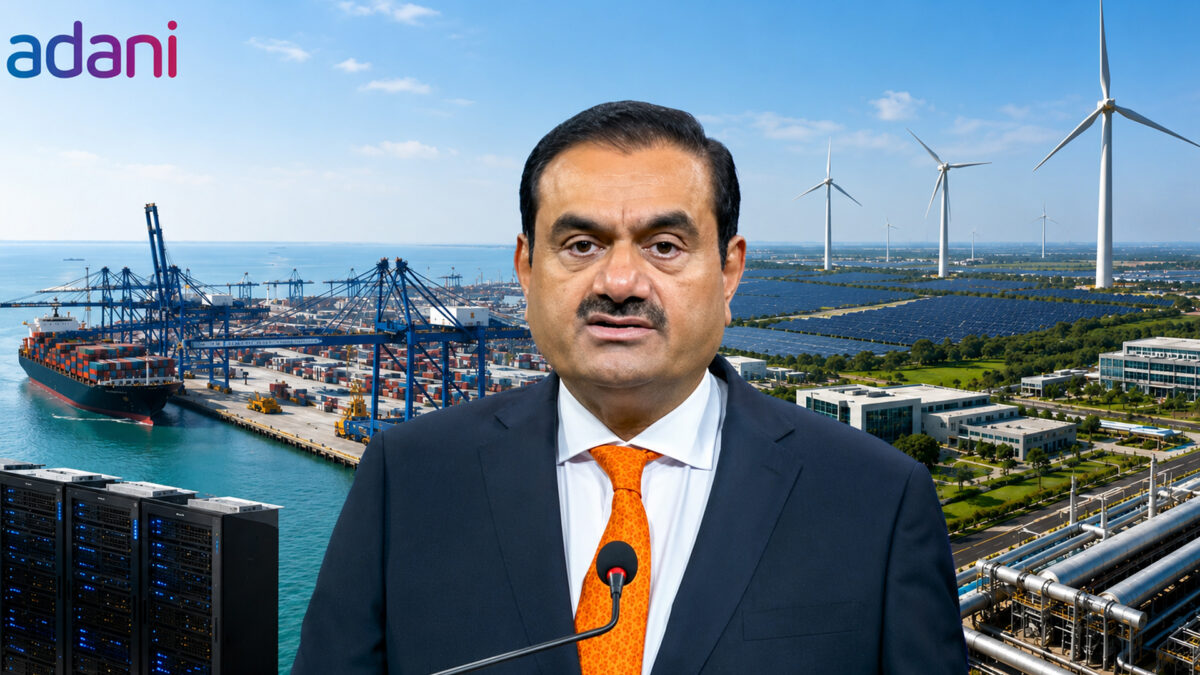
Adani Group chairman Gautam Adani has called on India’s credit-rating agencies to rethink how they assess large infrastructure projects, arguing that traditional rating models may not fully capture the wider economic and strategic value created by modern infrastructure platforms.

Speaking at the CareEdge Ratings Infrastructure Landscape 2026 event in Mumbai on Monday, Adani said India does not need easier credit standards but a broader approach to evaluating infrastructure. He urged rating agencies to look beyond the financial performance of individual projects and consider how interconnected infrastructure can create new businesses, markets, jobs and industrial ecosystems.

“India does not need lower standards. India needs wider lenses,” Adani said, calling on CareEdge to develop what he described as a comprehensive credit framework for what he termed “integrated platform infrastructure”.

The argument comes at a time when India is rapidly expanding its infrastructure network across ports, airports, renewable energy, power transmission, logistics, digital infrastructure and manufacturing. Large projects are increasingly being developed as interconnected platforms rather than as standalone assets.

According to Adani, this changing nature of infrastructure requires credit-rating agencies to update their assessment methods. A project may initially appear risky when judged only on its own cash flows, but its broader contribution to an industrial ecosystem could become significant over time.

He broadly divided infrastructure into three categories. The first is replacement infrastructure, where existing rating methodologies can continue to work reasonably well. The second is growth infrastructure, where the wider economic impact of a project needs greater consideration. The third is platform infrastructure, where a project can create entirely new markets, capabilities and industrial clusters.

Adani argued that the third category is becoming increasingly important as India pushes towards its long-term economic ambitions. Such projects can have effects that go well beyond the asset itself. A large port, for instance, can support logistics companies, manufacturing units, warehouses, transport networks and export-oriented industries around it.

The Adani Group chairman cited large infrastructure developments such as the Mundra and Vizhinjam ports as examples of projects whose impact can extend beyond the immediate revenue generated by the assets. These projects can act as platforms around which wider economic activity develops.

This is where Adani believes the current credit-rating framework may fall short. Conventional infrastructure ratings generally focus on factors such as project cash flows, debt levels, repayment capacity, operating performance and the risks associated with a particular asset.

While these measures remain important, Adani said they may not adequately reflect what he described as ecosystem multipliers, adjacency value and strategic resilience.

The debate is significant for investors and lenders, because credit ratings play an important role in determining how financial institutions assess risk and the cost at which companies and projects can borrow money. A rating that does not capture the full potential of a large infrastructure platform could, according to Adani’s argument, make financing more expensive or restrict access to capital.

India’s infrastructure expansion has also created a growing need for long-term financing. Projects such as renewable power generation, transmission networks, ports and logistics facilities typically require large amounts of capital and take years to generate returns.

A broader credit framework could potentially help lenders and investors distinguish between projects that carry conventional asset-level risks and those that could create wider economic benefits over time.

The call comes against the backdrop of India’s broader infrastructure push. The government has been increasing spending on roads, railways, ports, airports, power systems and digital infrastructure as part of its effort to strengthen connectivity and support economic growth.

Private-sector investment is also becoming increasingly important. Companies are participating in areas ranging from renewable energy and power transmission to logistics, manufacturing and data infrastructure.

The Adani Group itself has a significant presence across several infrastructure segments. Its businesses include ports, airports, energy, renewable power and transmission, giving the group a direct interest in how large infrastructure platforms are evaluated by lenders and rating agencies.

However, a broader rating methodology would not mean lowering standards or ignoring financial risks. The central issue raised by Adani is whether existing models should be expanded to account for benefits that emerge from interconnected infrastructure.

The distinction is important for credit-rating agencies because any new framework would still need to maintain rigorous assessment of debt servicing ability, project execution, cash flows and financial resilience.

The discussion also comes at a time when rating agencies are closely assessing India’s economic prospects and infrastructure investment. S&P Global Ratings recently affirmed India’s sovereign rating while maintaining a stable outlook, citing policy stability and infrastructure investment as positive factors, although it also pointed to fiscal and debt-related constraints.

The challenge for India is to ensure that infrastructure financing keeps pace with the scale and complexity of projects being planned. As infrastructure increasingly connects multiple sectors of the economy, the way risk is measured could become just as important as the amount of capital available.

Adani’s proposal therefore puts the spotlight on a larger question: whether India’s credit-rating framework is evolving quickly enough to assess the infrastructure that could shape the country’s next phase of economic growth.