
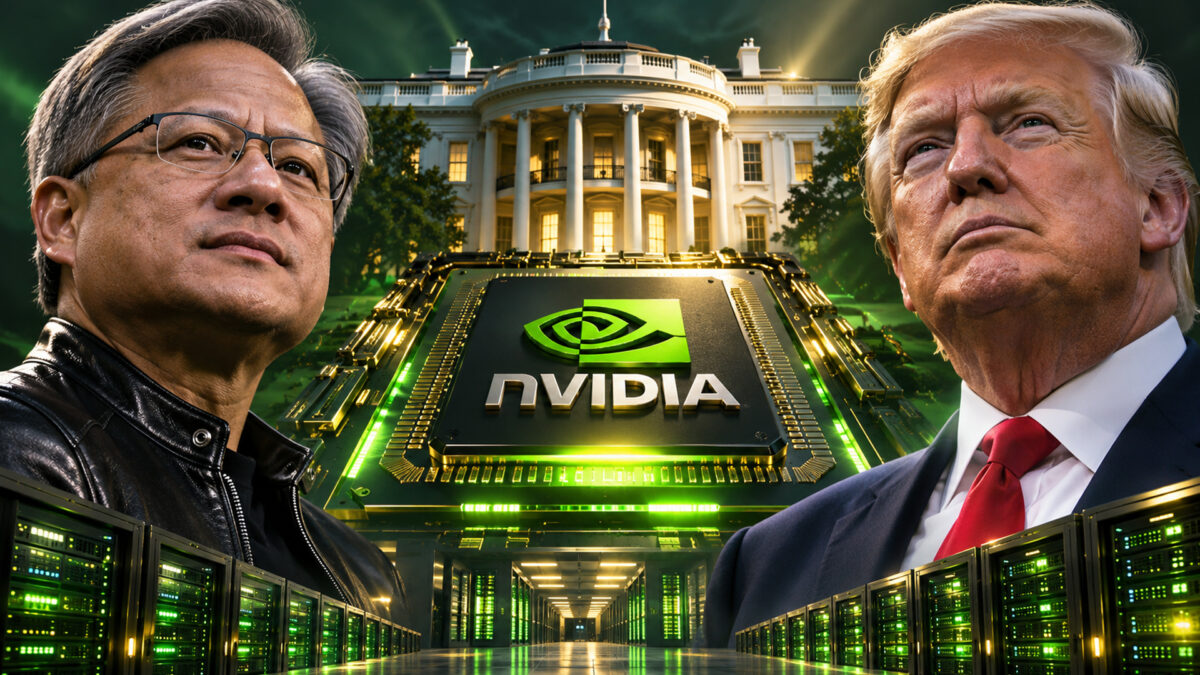
US President Donald Trump’s administration is planning to designate more than two dozen artificial intelligence companies, including Nvidia, Microsoft, Amazon, OpenAI and Anthropic, as American “national champions” in an effort to strengthen the country’s position in the global AI race and counter China’s growing technological influence.
The proposed initiative is aimed at helping leading US technology companies expand their international presence by making it easier for foreign governments and businesses to adopt American artificial intelligence products and infrastructure. The Wall Street Journal reported the development, citing people familiar with the plans. An official announcement is expected within the next week, although the timeline could change.
Commerce Secretary Howard Lutnick is expected to announce the selected companies. However, the US administration has not formally confirmed the reported list, and Reuters said it could not independently verify the information.
The proposed designation forms part of Washington’s broader strategy to promote American AI technology overseas and reduce countries’ dependence on Chinese technology providers. It also reflects the growing importance of artificial intelligence in the economic and strategic competition between the United States and China.
Under the proposed framework, selected companies could receive government assistance in expanding their overseas businesses, access to federal financing and faster processing of export licence applications. Such support could help American technology firms compete for major international projects, particularly in markets where Chinese companies are offering AI infrastructure and related services.
The initiative is expected to promote complete American AI technology packages rather than individual products. These packages could combine advanced semiconductors, servers, networking equipment, cloud computing services, AI models, software and cybersecurity systems.
The idea is to give foreign governments and businesses access to an integrated technology ecosystem developed by American companies. This could make it easier for countries planning large-scale AI investments to choose US-based solutions instead of relying on competing Chinese systems.
The proposed designations are linked to the American AI Exports Program, established through an executive order signed by Trump on July 23, 2025. The programme directed the Commerce Department to encourage the export of comprehensive American AI technology packages and coordinate support for companies seeking overseas opportunities.
The department invited applications from industry-led groups on April 1, 2026, with a June 30 deadline. It subsequently confirmed receiving 78 applications from industry consortia seeking government assistance for international AI projects.
The proposals were scheduled to undergo reviews involving multiple federal agencies before final decisions were taken by the Commerce Secretary. Under the programme’s guidelines, selected companies may receive government advocacy in overseas markets, financing assistance and priority consideration for export licences. However, designation does not automatically guarantee federal funding, approval of export licences or commercial contracts.
For companies such as Nvidia, the initiative could offer an opportunity to expand sales of advanced AI chips and related infrastructure in international markets. The company is a major supplier of graphics processing units (GPUs), which are widely used to train and operate artificial intelligence models.
Microsoft and Amazon could also benefit from increased international demand for cloud computing, data centre infrastructure and AI services. OpenAI and Anthropic, meanwhile, represent the growing American AI model development sector, which is competing with Chinese developers for global users and enterprise customers.
The proposed move comes at a particularly significant time for Nvidia, which has faced increasing scrutiny over its business dealings involving China and concerns surrounding the movement of advanced semiconductor technology through third countries.
The company has also been in the spotlight following reports concerning its former chief executive Jensen Huang, who resigned last week amid a controversy involving alleged personal relationships and questions surrounding possible links to Chinese intelligence. These allegations have attracted considerable attention, although their implications for the company’s reported inclusion in the government initiative remain unclear.
US Treasury Secretary Scott Bessent has also called for significant changes at Nvidia and demanded answers over whether the company knowingly allowed advanced chips to reach Chinese customers in violation of American export restrictions. He has urged the company’s board to consider appointing an outsider as its next chief executive.
The controversy highlights the delicate balance Washington faces between promoting American semiconductor companies internationally and preventing sensitive technology from reaching strategic competitors.
US lawmakers have repeatedly raised concerns about the possibility of advanced AI chips being diverted to China through intermediary countries. The government has consequently maintained restrictions on the export of certain high-performance semiconductors and is considering additional measures to address possible violations.
The national champions initiative is therefore expected to operate alongside existing export-control regulations rather than replace them.
The broader objective is to make American technology more attractive to international customers while protecting the country’s strategic interests. With China investing heavily in domestic semiconductor manufacturing, AI models and computing infrastructure, Washington increasingly views international technology partnerships as an important part of maintaining its competitive advantage.
If implemented as reported, the programme could give American AI companies stronger government backing as they pursue overseas contracts. However, its actual impact will depend on the final list of selected companies, the support extended to them and the willingness of foreign governments to adopt American technology.