Categories
Beyond

Trump flags tariff risk over India’s Russian oil imports

US President Donald Trump has warned India that continuing to import oil from Russia could prompt the United States to raise tariffs on Indian goods. Speaking to reporters on Air Force One, Trump said the US could act “very quickly” if New Delhi does not address Washington’s concerns, signaling potential economic implications for bilateral trade.

Trump also praised Prime Minister Narendra Modi, calling him “a very good man” who had “tried to make me happy” regarding India’s Russian oil purchases. Despite the compliment, he stressed that the tariff threat remains a real possibility if India does not align more closely with US policy.

For businesses, the warning could affect Indian exporters, particularly in sectors sensitive to US tariffs. Any increase could raise costs and disrupt trade flows, potentially impacting markets that rely heavily on Indian products. Analysts note that industries such as textiles, pharmaceuticals, and IT services could face heightened risks if tariffs are applied.

The US‑India trade tension comes amid India’s reliance on Russian crude, purchased at discounted rates due to Western sanctions on Russia. While this helps Indian refiners manage energy costs, it has drawn criticism from the US, which sees these imports as undermining its geopolitical strategy. India maintains that its energy decisions are market-driven and focused on domestic energy security.

To address concerns, India has instructed refiners to submit weekly data on oil imports, aiming to maintain transparency and support ongoing trade negotiations. Experts say that how India balances energy needs with trade relations will be closely watched by investors and global markets.

Trump’s warning underscores the complex interplay between geopolitics and business. Companies in India and abroad are monitoring developments closely, as any tariff escalation could have ripple effects on trade, supply chains, and economic growth.

Also Read: Adani Enterprises buys 49% stake in road firm

Categories
Beyond

US bans new foreign drone imports

The US Federal Communications Commission (FCC) has barred imports and sales of new foreign‑made drones and critical components, including models from China’s DJI and Autel Robotics, citing national security concerns. The FCC added all foreign drones and related parts to its national security “Covered List,” preventing future models from receiving the authorizations required for sale in the US.

Officials said the move targets potential risks from foreign drones, including unauthorized surveillance and data breaches. The ban follows a 2024 defence review of foreign drone technology, conducted by a White House interagency task force. Certain drones or components could still be cleared if they are deemed safe by the Department of Defense or the Department of Homeland Security.

Drones already approved in the US are not affected. Current owners and agencies can continue using their equipment, and retailers may sell models that received prior authorization.

DJI, a global market leader, expressed disappointment and criticized the decision as lacking transparency. The company said that existing products will continue to operate and reaffirmed its support for a competitive market. Autel and other affected manufacturers have also questioned the security rationale behind the ban.

China condemned the ban, calling it discriminatory and urging US authorities to reverse the decision. The Chinese government described the measure as unfair to foreign businesses.

Industry groups, including the Association for Uncrewed Vehicle Systems International, welcomed the move as a step toward reducing dependence on foreign technology and strengthening domestic drone production. However, US commercial operators warned that the ban could disrupt businesses that rely on advanced foreign drones, highlighting the gap in domestic alternatives.

The FCC said the measure aligns with broader US efforts to safeguard technology and national security ahead of major international events, including the 2026 FIFA World Cup and the 2028 Olympics, when drone use is expected to rise.

The ban marks a significant shift in US drone policy. It signals stricter oversight of foreign technology while promoting domestic innovation in unmanned aerial systems.

Also Read: Reliance tops India’s wealth creation in 2025

Categories
Beyond

US changes H‑1B rules, prioritises top-paid talent

The US government is overhauling the H‑1B visa programme, replacing the decades-old lottery with a wage- and skill-based selection system. The change, effective February 27, 2026, is aimed at prioritising highly skilled and higher-paid foreign workers while reducing reliance on lower-wage hiring.

Under the new model, the annual 65,000 visa cap, and 20,000 for holders of US advanced degrees, remains, but applications will no longer be randomly selected. Employers offering higher salaries and advanced skills will have better odds, while lower-paid positions will face reduced chances of approval.

Officials say the move is designed to protect domestic wages and prevent misuse of the lottery system, which some companies exploited to fill entry-level roles cheaply. The reform comes alongside higher H‑1B filing fees and stricter enforcement in other visa categories.

Business groups have voiced concerns that the changes could limit access to critical foreign talent, particularly in tech, healthcare, and engineering sectors. Advocates, however, argue that prioritising high-skill, high-pay workers aligns with the programme’s original intent and strengthens the US workforce.

The reform represents one of the most significant H‑1B policy shifts in decades, signalling a tighter focus on economic value and workforce protection.

Also Read: OYO Parent Prism clears ₹6,650 cr IPO plan

Categories
1 Minute-Read

Oil prices edge up after US intercepts Venezuelan tanker

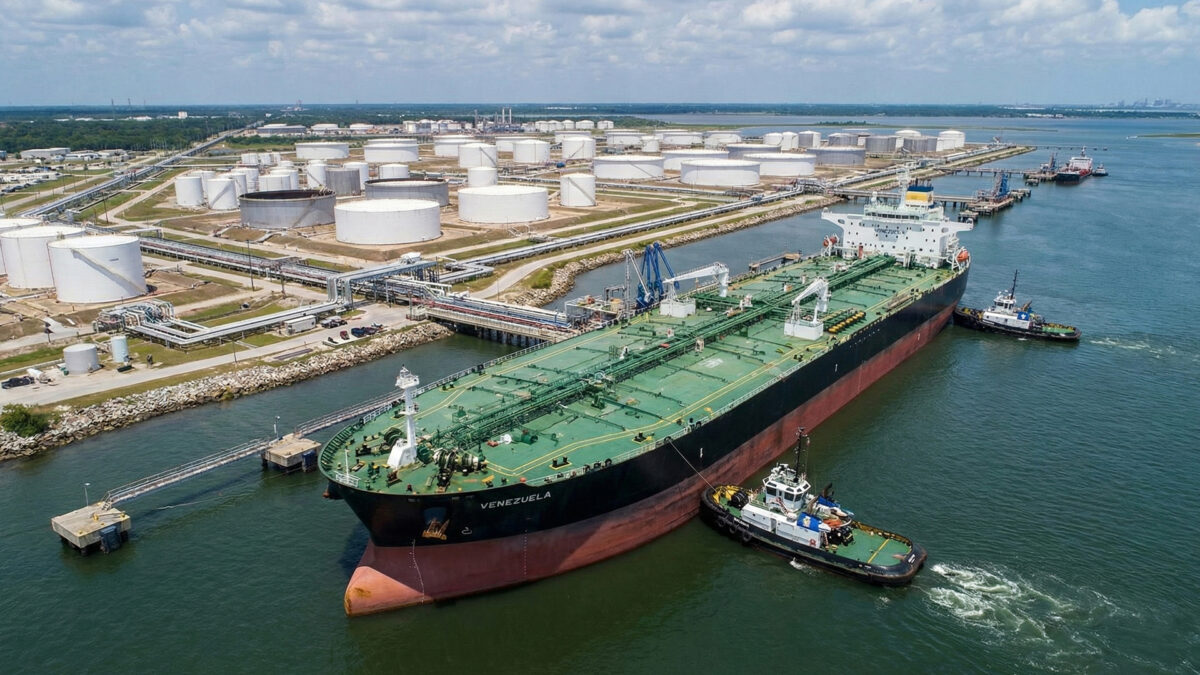
Oil prices rose on Monday following the US interception of an oil tanker near Venezuela over the weekend, raising fears of potential supply disruptions.

Brent crude climbed about 0.7–0.9 percent to roughly $61 per barrel, while West Texas Intermediate also gained. The US Coast Guard is reportedly pursuing another tanker, reflecting increased enforcement of sanctions on Venezuelan oil. Analysts said geopolitical tensions, including these actions and broader global uncertainties, outweighed oversupply concerns, supporting the market.

Traders remain cautious as Washington maintains a firm stance on Venezuela’s energy exports.

Categories
Beyond

US chases third Venezuelan oil tanker

The US Coast Guard is actively pursuing an oil tanker in international waters near Venezuela, marking the third such interception attempt in less than two weeks, officials said. The vessel,  identified by maritime trackers as the Bella 1,  is part of what Washington calls Venezuela’s “dark fleet” of ships accused of helping the South American nation evade sanctions. The tanker is reportedly flying a false flag and is under a US judicial seizure order, though it had not been boarded at the time of reporting.

The pursuit follows recent seizures of other tankers believed to be involved in transporting Venezuelan crude in defiance of sanctions. On December 10, the Coast Guard seized the large tanker Skipper, sanctioned for its alleged involvement in sanctions‑evasion networks. A second vessel, the Centuries, was intercepted and boarded by US forces just days ago.

These operations form part of a blockade ordered by the US president on all sanctioned oil tankers entering or leaving Venezuelan waters. The administration has positioned the crackdown as an effort to enforce sanctions on the Venezuelan government and cut off revenue it claims supports illicit activities, including narcotics trafficking and terrorism.

Officials argue that targeting these tankers is necessary to prevent sanctions evasion and deny revenue to Venezuelan President Nicolás Maduro’s government. They also assert that the actions are unlikely to significantly affect domestic oil prices, though global crude benchmarks rose modestly in early Asian trading amid the tensions.

The intensified maritime operations are occurring alongside a broader military presence in the Caribbean, including air and naval assets deployed under what officials describe as efforts against drug trafficking and sanctions runners. Critics,  including some lawmakers and international commentators, warn that the blockade and interceptions could increase geopolitical risks and strain diplomatic relations.

Venezuela’s government has condemned these actions as illegal and tantamount to piracy, promising to challenge the moves through international bodies such as the United Nations. Maduro has reiterated that Venezuela will continue its oil trade in the face of pressure.

Also Read: AI’s next leap will be memory, not reasoning, says Sam Altman

Categories
Beyond

42 US states warn tech giants on unsafe AI chatbots

Forty-two US state attorneys general have raised a serious concern with regard to the world’s most widely used AI chatbots are sometimes giving people wrong, confusing, or even harmful answers. They have written a joint letter to major companies including Microsoft, Google, Apple, Meta and OpenAI, warning them to fix these problems quickly.

The attorneys general said they are especially worried about how these chatbots talk to people who are sad, stressed or struggling with mental health issues. In several reported cases, when users expressed fear, confusion or emotional distress, the chatbot’s answers made things worse. Instead of correcting false beliefs or offering safe guidance, some systems encouraged the user’s harmful thoughts. In their letter, the officials described these responses as “delusional” or “sycophantic”,  meaning the AI simply agrees with a user, even when the user is clearly wrong or unsafe.

The states said this behaviour is dangerous and may even break consumer protection laws. They pointed out that millions of people now rely on AI tools for advice sometimes more than they rely on friends, family or professionals. This puts a big responsibility on tech companies to ensure their products do not cause harm.

The group has asked the companies to take several important steps. First, they want stronger safety systems that stop chatbots from giving harmful or misleading answers. Second, they want independent experts to test these AI models and openly share the results. Third, they want clear warnings for users so people know the limitations of AI and understand that chatbots can make mistakes.

The attorneys general have given the companies until mid-January 2026 to explain what actions they will take. They also said they will not hesitate to act if companies fail to protect users.

This joint warning shows how quickly AI has become part of everyday life and how concerned governments are about its risks. While AI can be helpful, state leaders say it must be safe, trustworthy and designed to protect people, especially children and those who are emotionally vulnerable.

Also Read: ₹148 Lakh crore wealth boom for India’s top firms

Categories
1 Minute-Read

H-1B applicants face expanded US social media scrutiny

The United States has announced stricter vetting for all H-1B and H-4 visa applicants from December 15.

Under the new rules, applicants must keep their social-media profiles public. Consular officers will review online activity, work history, and any involvement in content moderation, misinformation tracking, or roles that may be seen as restricting protected speech.

Anyone found to have “censored or attempted to censor” expression in the US could be denied a visa. The changes are expected to affect many Indian tech workers, especially those in digital safety or moderation roles, and may lead to delays or higher rejections.

Categories
Beyond

Trump orders green card check for 19 countries

The US government has ordered a nationwide review of all green cards held by immigrants from 19 countries after a shooting near the White House left one National Guard member dead and another critically injured.

The accused shooter, Afghan national Rahmanullah Lakanwal, came to the US under the 2021 evacuation program. Former President Donald Trump directed a “full-scale, rigorous re-examination” of permanent residency permits for immigrants from Afghanistan, Burma (Myanmar), Burundi, Chad, Republic of the Congo, Cuba, Equatorial Guinea, Eritrea, Haiti, Iran, Laos, Libya, Sierra Leone, Somalia, Sudan, Togo, Turkmenistan, Venezuela, and Yemen.

US Citizenship and Immigration Services (USCIS) will oversee the review, which will cover current green card holders, as well as pending and new applications from these countries, effective November 27, 2025. Officials said the applicant’s country of origin will now be a key factor in eligibility, citing national security concerns.

Supporters say the move is necessary to protect US citizens, while critics argue it unfairly targets immigrants based solely on nationality.

The review reflects a stricter, security-focused approach to immigration, shifting away from broad humanitarian resettlement programs. Thousands of residents from the 19 countries may face renewed scrutiny, and applicants seeking residency or asylum could encounter stricter requirements and longer processing times.

Authorities maintain the review aims to balance safety with fairness, but the decision has sparked debates over civil liberties and the treatment of immigrants from the targeted nations.

Also Read: Adani buys India’s top pilot-training company for ₹820 cr

Categories
Beyond

$93 million US arms deal strengthens India’s defence

India is set to receive a $93 million military shipment from the United States, aimed at enhancing its defence capabilities and reinforcing strategic ties with Washington.

The package includes 100 Javelin anti-tank missiles, 25 launch units, and 216 Excalibur precision-guided artillery rounds, along with spare parts, operator training, fire control systems, and technical support for seamless integration into India’s armed forces.

The Javelin missiles are portable, fire-and-forget weapons designed to destroy armoured vehicles, making them highly effective in modern combat scenarios. The Excalibur rounds use GPS guidance to deliver precise long-range strikes, reducing collateral damage and improving operational accuracy.

According to US officials, the sale will enhance India’s ability to counter regional threats while maintaining the military balance in the region. The US Defense Security Cooperation Agency (DSCA) has formally notified Congress of the transaction.

The deal highlights the growing defence partnership between India and the US, supporting India’s ongoing military modernization. American defence companies Lockheed Martin and RTX Corporation will supply the weapons and associated equipment, ensuring that India can operate and maintain the systems efficiently.

The sale also includes comprehensive training and technical assistance, enabling Indian forces to maximize the operational impact of the new systems. Analysts say the weapons will significantly improve India’s artillery and anti-armour capabilities, strengthening its deterrence posture.

This part of a series of agreements between the two countries, following previous deals involving fighter jets, surveillance systems, and missile technologies. Observers note that these transactions reflect deepening strategic cooperation and a shared commitment to regional security, as India continues to modernize its armed forces and enhance its operational readiness.

Also Read: Adani’s new ad film turns airports into caring companions

Categories
Beyond

US, India ‘pretty near’ trade deal, tariffs could ease

US President Donald Trump said the United States and India are “pretty close” to finalising a trade deal that would benefit both countries. He made the remarks at the swearing-in of Sergio Gor as the US Ambassador to India, highlighting Gor’s strong ties with Prime Minister Narendra Modi.

Trump noted that US tariffs on Indian goods are currently high, mainly due to India’s earlier purchases of Russian oil. With those purchases now reduced, he indicated tariffs could be lowered in the future.

India’s Commerce Minister Piyush Goyal said trade talks are progressing well but cautioned that several sensitive issues still need resolution.

The proposed agreement aims to more than double bilateral trade, from around $191 billion currently to $500 billion by 2030. Analysts say a deal could improve market access for goods on both sides, though details on tariff cuts and timelines are yet to be finalised.

Also Read: Goldman Sachs turns bullish on India