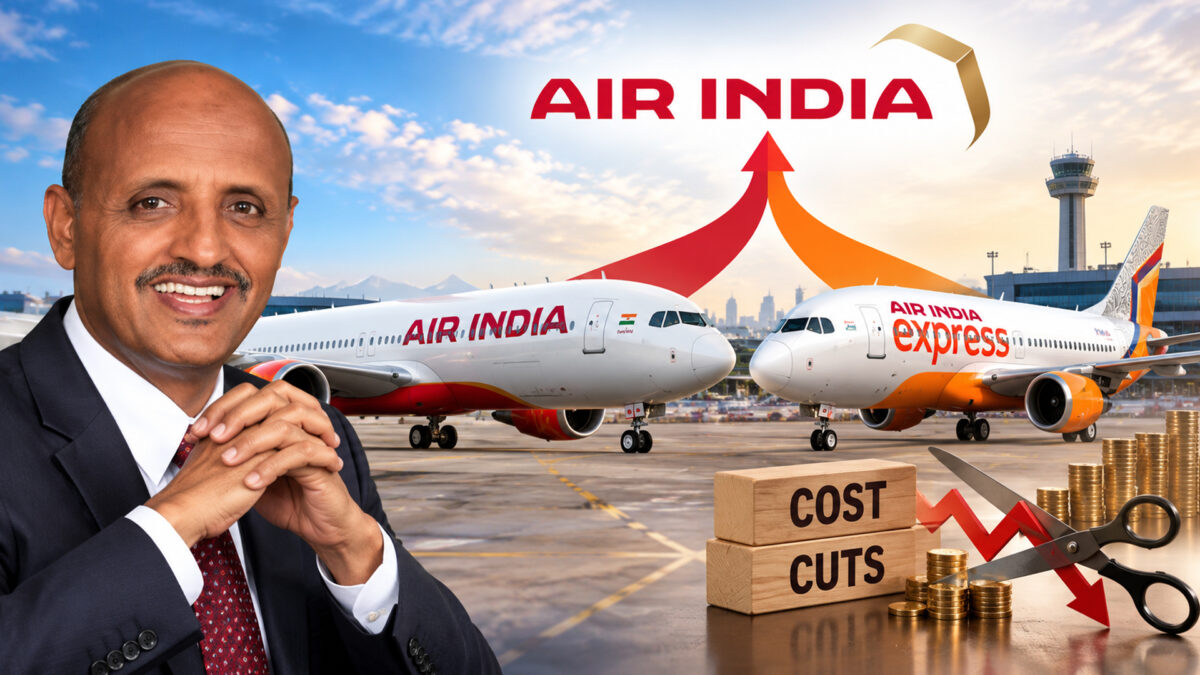
Air India is considering a possible merger of its budget carrier, Air India Express, with the parent airline as incoming CEO Tewolde Gebremariam looks for ways to reduce costs and simplify operations.
The proposal is still being discussed and no final decision has been taken. If approved, Air India Express could continue as a separate brand while being brought under a common operating structure with Air India.
The idea has emerged as Gebremariam prepares to take charge of the Tata Group-owned airline. People familiar with the matter said the incoming CEO has questioned whether Air India and Air India Express need to maintain separate operating structures and licences.
Combining parts of the two airlines could help remove duplication across management, engineering, administration and other support functions. A common structure could also allow the group to share resources more efficiently and reduce some operating expenses.
Air India Express would not necessarily disappear as a brand. The low-cost airline could continue serving price-sensitive travellers and short- and medium-haul routes, while Air India focuses on its full-service operations and longer international network.
The proposal would represent another step in the Tata Group’s effort to streamline its aviation business. When the group took control of Air India in 2022, it inherited several airlines and brands. Tata has since worked to bring them under a simpler structure.
Air India merged with Vistara in November 2024, creating a larger full-service airline. AirAsia India was also integrated into Air India Express, which became the group’s main low-cost carrier. The latest proposal could take consolidation a step further by bringing the two airlines under one operating framework.
Gebremariam is expected to focus heavily on costs and operational efficiency when he takes over at Air India. The airline has faced financial pressure despite the Tata Group’s investments in new aircraft, technology, airport facilities and passenger services.
Reports have put Air India’s loss for the financial year ended March at around ₹22,000 crore. The airline is also dealing with higher fuel and operating costs, international route disruptions and the impact of geopolitical tensions on its network.
The incoming CEO has already started examining areas where Air India can improve. Discussions have included aircraft utilisation, cargo operations and maintenance, with a focus on reducing delays and improving the use of the airline’s fleet.
Gebremariam brings extensive aviation experience to the role. He previously led Ethiopian Airlines and was associated with its expansion into a major international carrier. His appointment comes at a crucial stage in Air India’s transformation under the Tata Group.
The airline has been investing heavily in its fleet as part of a wider turnaround plan. Air India and Air India Express have placed large aircraft orders and are expanding their domestic and international networks. The group is also working to improve passenger experience and bring its fleet and services closer to global standards.
The possible merger could help the group reduce overlapping functions while giving management greater control over its combined fleet and workforce. However, bringing two separately structured airlines together would also involve regulatory, operational and organisational challenges.
Air India Express has grown significantly since becoming the group’s dedicated low-cost carrier. It operates a large domestic network and several international routes, particularly to destinations in the Gulf and Southeast Asia.
Keeping the Air India Express identity could allow the group to serve different passenger segments even under a common corporate or operating structure. Air India would continue to target full-service travellers, while Air India Express could retain its low-cost positioning.
The proposal is therefore still at the discussion stage and could change before any formal announcement. Any restructuring would require the necessary regulatory and internal approvals.
The possible Air India Express merger highlights the new management’s focus on simplifying the Tata Group’s airline operations. As Gebremariam prepares to begin his tenure, cutting costs, improving efficiency and strengthening operational performance are emerging as key priorities.