Categories
Beyond

UK backs Tata EV battery plant with $510 mn

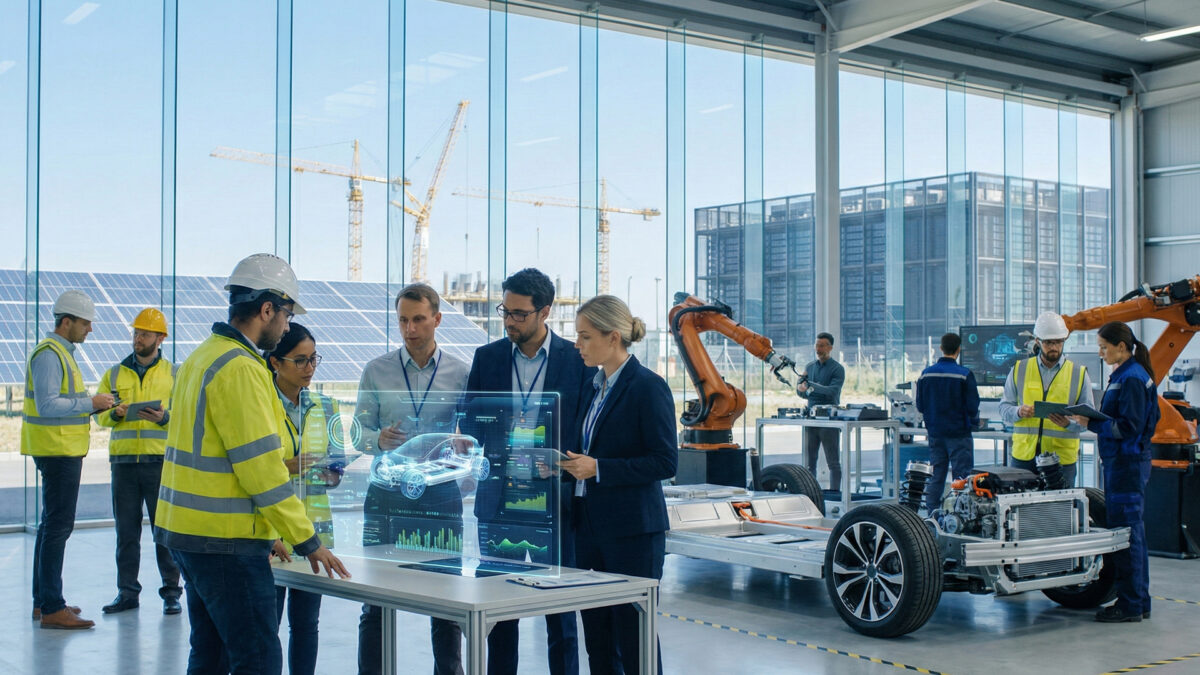
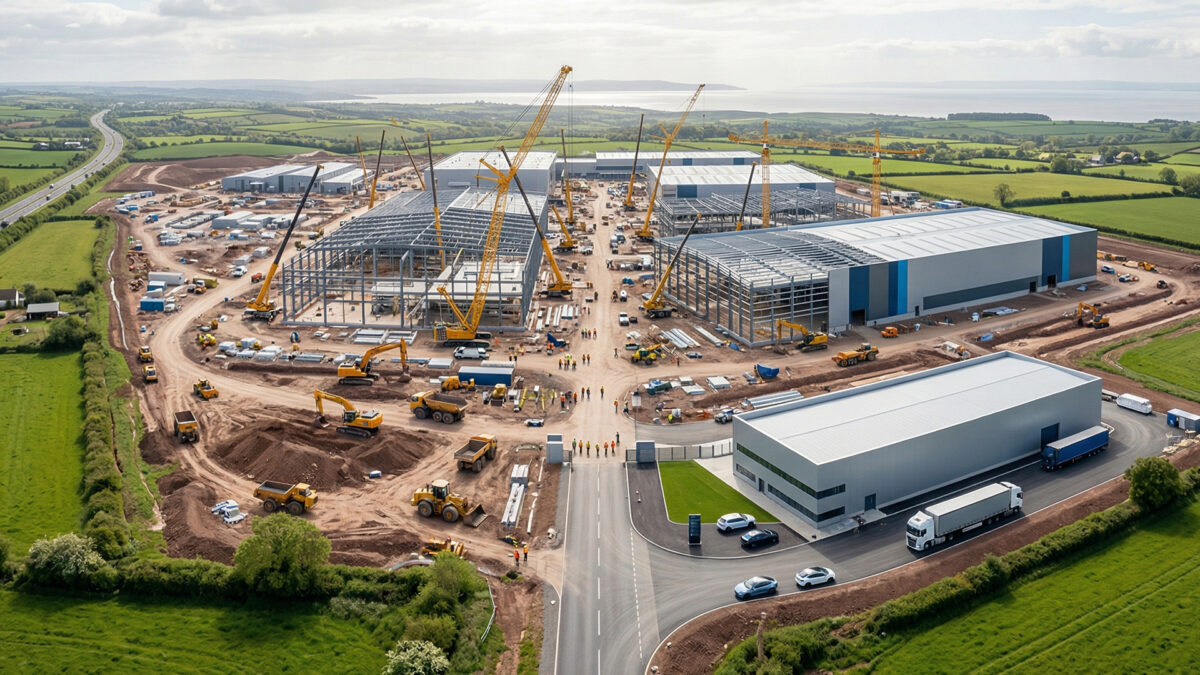
The UK government has announced a major funding boost of $510 million (£380 million) for Agratas, the battery arm of the Tata Group, to build a large electric vehicle (EV) battery plant in Somerset.

The new facility, often called a “gigafactory,” will manufacture batteries for electric cars and is expected to become one of the largest of its kind in the UK. Once fully operational, it will have the capacity to produce enough batteries to power hundreds of thousands of vehicles each year.

A major part of the production will supply Jaguar Land Rover, which is also owned by Tata Group. In the future, the plant could also cater to other carmakers, helping to strengthen the UK’s electric vehicle supply chain.

The funding is part of the UK’s wider plan to move towards cleaner energy and reduce reliance on imports for key technologies like EV batteries. By supporting domestic production, the government aims to make the country more competitive in the fast-growing electric vehicle market.

Officials say the project will also create thousands of jobs, both directly at the factory and indirectly through related industries. It is expected to bring investment into the region and support long-term economic growth.

The Somerset gigafactory is seen as a key step in the UK’s efforts to become a global hub for electric vehicle manufacturing. As demand for EVs continues to rise worldwide, countries are investing heavily in battery production to secure supply chains and stay ahead in the transition to cleaner transport.

For Tata Group, this project marks an important expansion of its global footprint in both the automotive and clean energy sectors. It also reflects the company’s growing focus on electric mobility.

Also Read: Wipro shares jump 3% on buyback buzz
Categories
Beyond

Air India urged to stay focused amid challenges

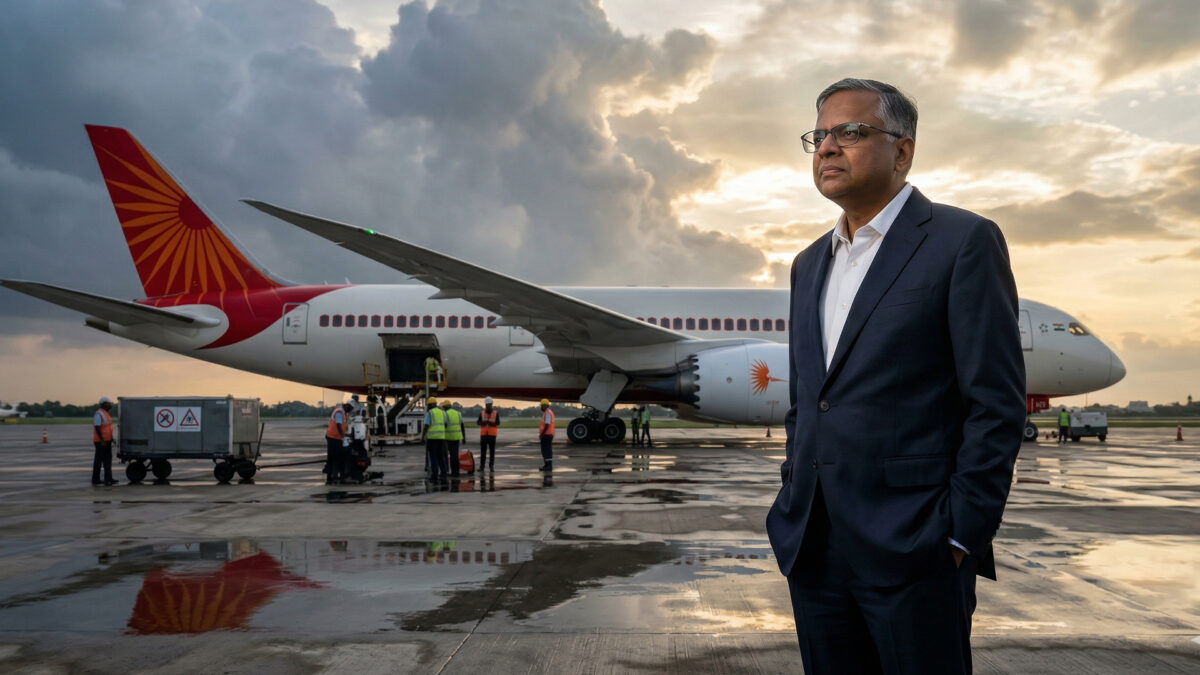
Natarajan Chandrasekaran has asked employees of Air India to stay focused and work better as the airline goes through a tough phase. His message comes after the resignation of CEO Campbell Wilson.

At a recent internal meeting, Chandrasekaran told staff to concentrate on their work and improve how things are done. He said that while challenges are there, employees should focus on what they can control and try to perform better.

Air India is currently facing several issues. Rising fuel prices, global tensions and changes in flight routes have made operations more difficult. These factors have also increased costs for the airline.

N Chandrasekaran reminded employees to stay realistic and careful about spending. He stressed the need to manage costs properly while continuing efforts to improve services. He also assured staff that the Tata Group remains committed to supporting the airline.

Since returning to the Tata Group in 2022, Air India has been trying to rebuild its operations. The airline has expanded, upgraded systems and worked on improving its services. However, the journey has not been easy, and it continues to face pressure.

The recent exit of CEO Campbell Wilson has added to the uncertainty. The airline is now looking for new leadership to guide it through the next phase of its transformation.

Also Read: Firebomb thrown at Sam Altman’s home

Categories
Leaders

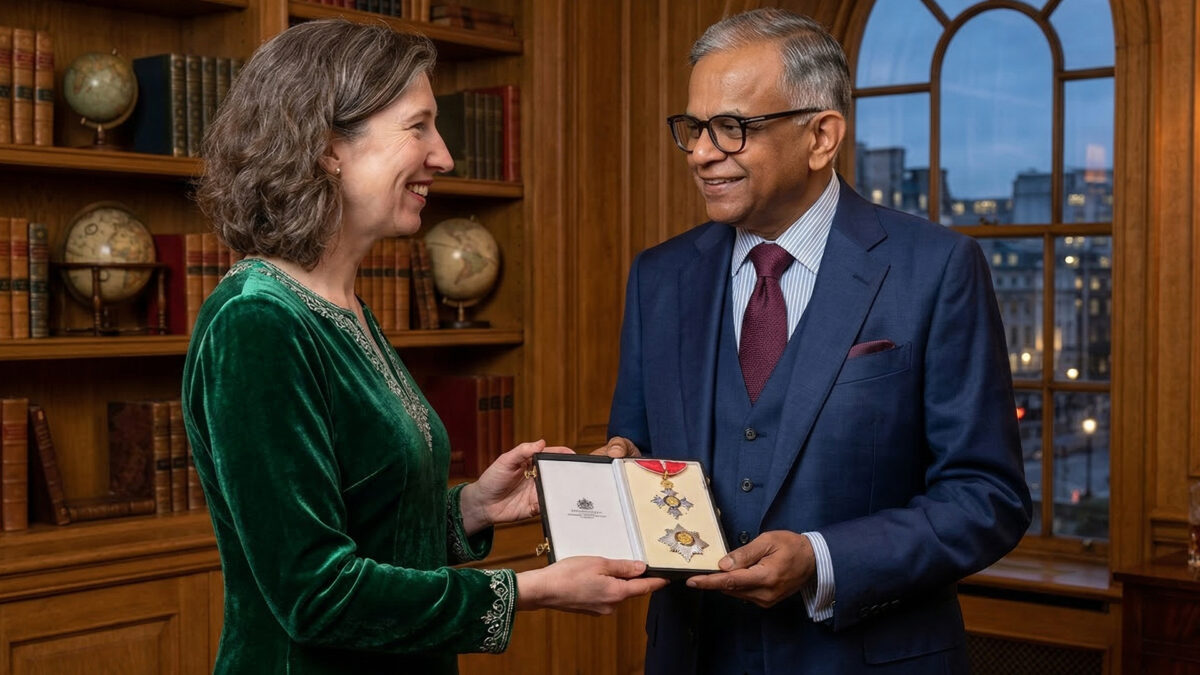
UK honours Tata Chairman with Knighthood

The United Kingdom has awarded an honorary knighthood to Natarajan Chandrasekaran, Chairman of the Tata Group, in recognition of his contributions to strengthening business relations between India and the UK. The honour reflects his leadership in expanding the group’s presence and investments in the British economy.

Chandrasekaran received the distinction under the Order of the British Empire (Civil Division), one of the UK’s most prestigious honours for individuals who have made notable contributions to public life, business, and international cooperation. The award has been conferred with the approval of King Charles III.

Under Chandrasekaran’s leadership since 2017, the Tata Group has strengthened its footprint in the UK across sectors such as automotive, steel, information technology, and hospitality. The group owns major British brands, including Jaguar Land Rover and Tetley, and is among the largest employers in the country’s industrial sector.

The recognition also highlights the Tata Group’s long-standing commitment to the UK market, where it employs tens of thousands of people and continues to invest in manufacturing, technology, and research. These efforts have played a key role in deepening economic and commercial ties between the two countries.

Reacting to the honour, Chandrasekaran expressed gratitude and said he was humbled by the recognition. He emphasised the Tata Group’s enduring relationship with the UK and its continued focus on building partnerships across business and academia. The group has collaborated with leading institutions such as University of Oxford and London School of Economics, reflecting its broader engagement beyond industry.

An honorary knighthood is awarded to foreign nationals and does not grant the title “Sir,” but it remains a significant global recognition of leadership and influence.

Also Read: India appoints Vikram Doraiswami as envoy to China

Categories
Corporate

Trent Q3 profit rises to ₹217 cr, revenue up 15%

Trent Ltd, the Tata Group retailer behind Westside, Zudio, and other brands, reported higher profit and revenue for the third quarter of the 2025‑26 financial year, though analysts cautioned that growth at existing stores could remain under pressure.

For the quarter ending December 31, 2025, Trent’s consolidated revenue rose about 15% to ₹5,345 crore, up from ₹4,657 crore a year ago. Net profit increased nearly 3% to ₹513 crore, compared with ₹497 crore in the same period last year. On a standalone basis, profit grew 36% to ₹640 crore, while revenue rose about 16%, reflecting stronger performance in the company’s core operations.

The company continued expanding its store network, adding 17 Westside and 48 Zudio outlets during the quarter, including its first Zudio store in the UAE. By December 2025, Trent operated over 1,100 stores across 274 cities, with Westside accounting for 278 stores and Zudio for 854, covering more than 15 million square feet of retail space.

Management said gross margins remained stable across both chains, and customer spending improved following economic measures such as tax cuts. Some one-time costs related to labour code changes slightly reduced overall profit.

Investor response was mixed. Trent’s shares rose modestly after the results, but brokerages highlighted that same-store sales,  sales at existing outlets,  may face pressure, creating uncertainty about future growth. While some analysts pointed to operational efficiencies and margin gains as positives, others urged caution due to slower growth compared with earlier quarters.

Also Read: Novo Nordisk sheds $50 bn as 2026 sales weak outlook

Categories
1 Minute-Read

Tata Group charts 2026 path with innovation and impact

Tata Group chairman N Chandrasekaran has shared the group’s vision for 2026, focusing on execution with purpose and innovation that makes a real difference.

The group plans to advance artificial intelligence, expand future-ready manufacturing, and nurture talent for tomorrow. Sustainability is at the heart of their strategy, with green steel and electric mobility leading the way.

Chandrasekaran also highlighted resilience against cyber, operational, and geopolitical challenges, while exploring global opportunities that strengthen India’s position as a technology and manufacturing hub. The approach blends ambition with responsibility, aiming for growth that matters.

Categories
Corporate

Reliance tops India’s wealth creation in 2025

Reliance Industries Ltd (RIL) emerged as India’s largest wealth creator in 2025, leading corporate value gains amid a strong year for equities driven by banking, financial services and automobile stocks. The Mukesh Ambani-led conglomerate delivered the highest addition to investor wealth, reinforcing its dominant position in India’s corporate landscape.

RIL’s shares rose close to 30 per cent during the year, adding about ₹4.6 lakh crore to investor wealth. This pushed the combined market capitalisation of the Reliance Group to around ₹23.44 lakh crore, making it the single biggest contributor to wealth creation among Indian companies. Analysts attributed the strong performance to steady earnings growth, improving margins and positive expectations around the group’s digital, retail and new energy businesses.

The broader wealth creation story in 2025 was shaped by strong performances in autos, banks and financial services. Companies such as Bharti Airtel, Bajaj Finance, State Bank of India (SBI), Maruti Suzuki and HDFC Bank each added more than ₹1.5 lakh crore to their market value. These stocks benefited from healthy demand, stable asset quality, improving profitability and sustained investor confidence in India’s economic growth.

Overall, the top seven business groups — Reliance, Bharti, HDFC, Bajaj, Adani, ICICI and Tata — together added nearly ₹10 lakh crore in market capitalisation during the year. Their combined value now stands at about ₹122 lakh crore, accounting for nearly 60 per cent of the total market capitalisation of the Nifty 50 index. Reliance alone contributed almost half of this wealth creation, followed by the Bharti Group.

In contrast, the Tata Group emerged as an outlier in 2025, lagging behind its peers. Its flagship company, Tata Consultancy Services (TCS), saw its market capitalisation fall by nearly ₹3 lakh crore. Investor concerns over slower revenue growth, margin pressures and delayed benefits from emerging technologies such as artificial intelligence and cloud services weighed on the stock. Several other Tata companies, including Tata Elxsi, Trent, Voltas and Tata Technologies, also faced sharp corrections.

Market experts expect wealth creation trends to remain selective, with investors continuing to favour companies and sectors that demonstrate strong earnings visibility, balance sheet strength and long-term growth potential. Reliance, banks and auto majors are seen as well positioned to benefit from these themes in the coming years.

Also Read:  BP close to $10 bn sale of Castrol stake