Categories
Corporate

Sensex soars 300 points, Nifty holds above 24,100

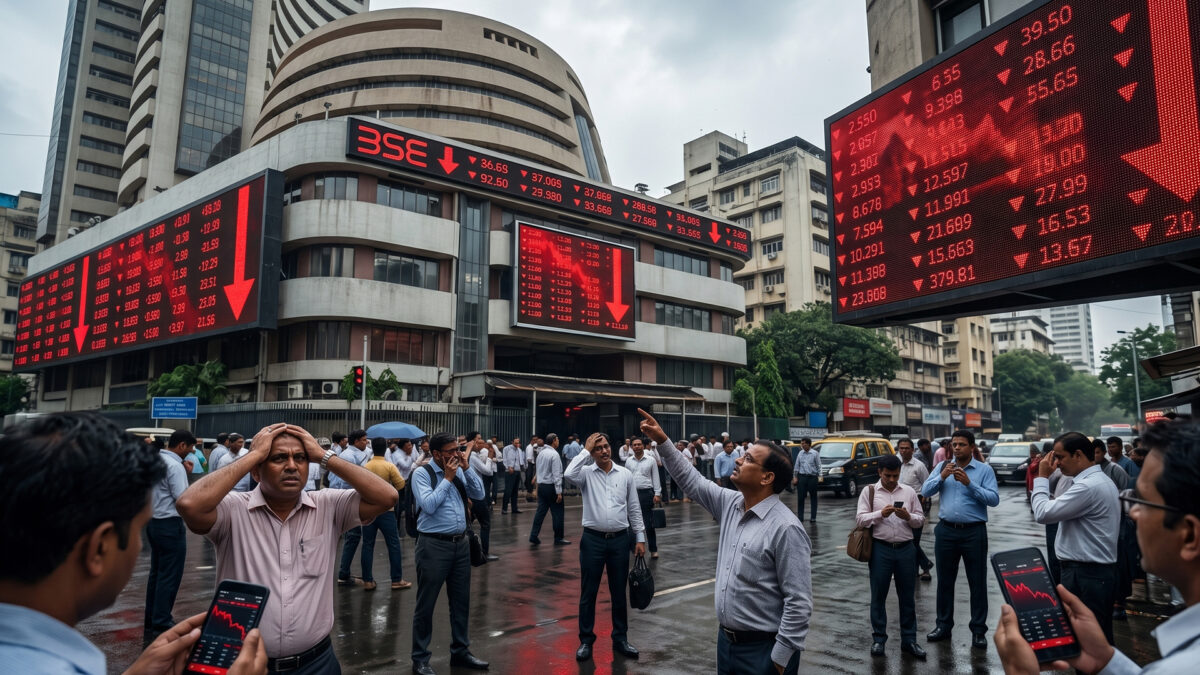
Indian equity markets staged a strong recovery in early trade on Friday, August 28, after a sharp fall in the previous session. The Sensex jumped more than 300 points, while the Nifty 50 moved above the 24,100 mark as investors returned to select large-cap and information technology stocks. The opening gains offered some relief after Thursday’s heavy selling, although the overall mood remained cautious amid global uncertainties.

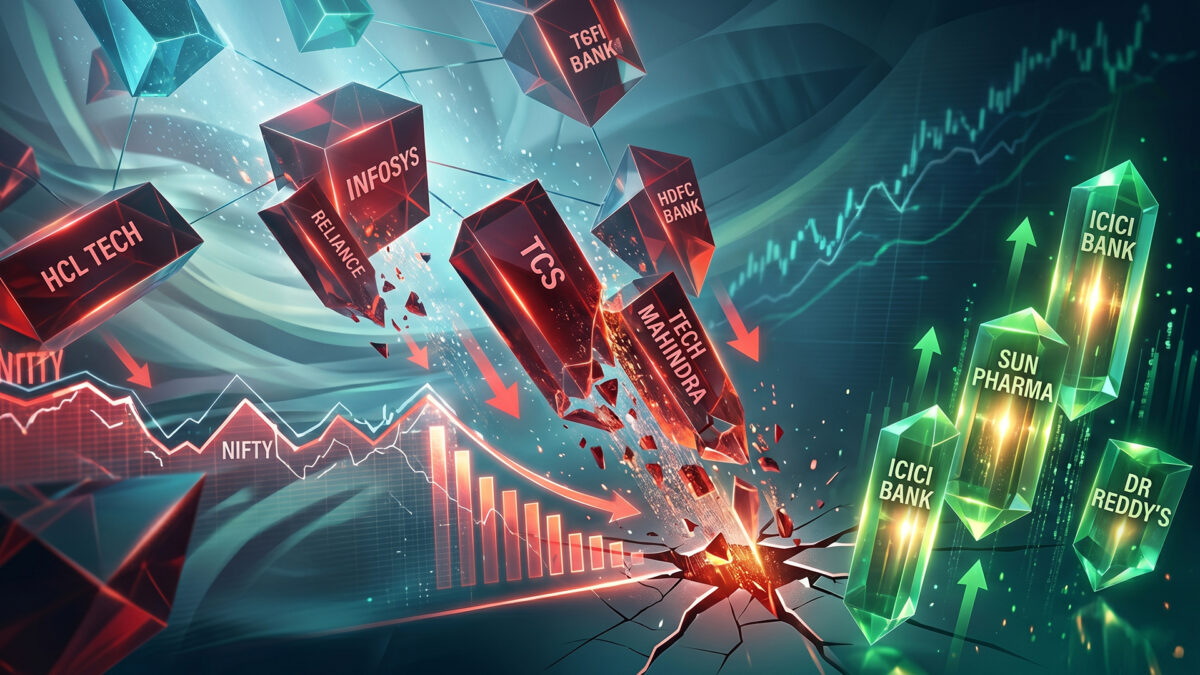
The Sensex opened higher and extended its gains during the morning session, while the Nifty also strengthened as buying emerged across several sectors. Information technology stocks were among the biggest contributors to the market’s recovery. Infosys and Eternal were among the notable gainers, rising around 2% each in early trade. The Nifty IT index also outperformed other sectoral indices as investors responded positively to stronger global technology cues.

The recovery, however, was not uniform. SBI Life Insurance and Tata Consultancy Services were among the notable laggards in early trading. The mixed performance of heavyweight stocks indicated that investors were still being selective rather than making broad-based bets across the market.

Among individual stocks, Tejas Networks was one of the prominent movers. The company came into focus after securing a major order from Tata Consultancy Services, triggering strong buying interest. Ather Energy was another stock in focus after Hero MotoCorp increased its stake in the electric two-wheeler maker to 32.8% through an investment of about $184 million. The development provided fresh support to the electric vehicle company’s shares.

Friday’s rebound followed a particularly volatile session on Thursday, when the Sensex and Nifty came under intense selling pressure towards the close. The Sensex ended the previous session sharply lower, while the Nifty slipped below the 24,100 level. The decline came amid heightened volatility surrounding the first monthly derivatives expiry after the introduction of the new Closing Auction Session mechanism.

The unusual price movements during the final minutes of Thursday’s trading session left investors cautious. Friday’s gains therefore represent an attempt by the market to stabilise rather than a clear indication that the recent volatility has ended.

Global cues are also playing an important role in determining the direction of Indian equities. Technology stocks received support from the positive performance of US technology shares, helping domestic IT counters recover. Investors are closely watching developments in the US, particularly signals on interest rates and the outlook for the global economy.

US Federal Reserve policy remains a major factor for emerging markets. Any indication of a more accommodative monetary policy could improve global risk appetite and encourage foreign investors to allocate more money to equities. Conversely, a hawkish policy stance could strengthen the US dollar and keep pressure on emerging-market assets, including Indian stocks.

Crude oil prices are another key factor for the Indian stock market. Oil prices remained below recent highs and were heading towards a weekly decline. Lower crude prices are generally favourable for India because the country relies heavily on imports to meet its energy needs. Cheaper oil can reduce the import bill, ease inflationary pressures and improve corporate cost conditions.

However, geopolitical tensions continue to create uncertainty in the energy market. Developments involving the United States and Iran remain closely watched by investors. Any escalation that affects oil production, transportation or shipping through key routes could send crude prices higher. Such a move could increase India’s import costs and put pressure on inflation and the rupee.

Foreign institutional investor flows remain another concern for domestic equities. Overseas investors have been selling Indian shares amid concerns over valuations, global interest rates and geopolitical risks. Domestic institutional investors have helped absorb some of this selling, providing a degree of stability to the market.

From a technical perspective, the 24,000-24,100 range remains an important support zone for the Nifty 50. Holding above this area could help the index attempt a recovery towards 24,300 and beyond. On the other hand, a sustained break below 24,000 could increase selling pressure and weaken the short-term outlook. The 24,300-24,400 zone is expected to remain an important resistance area.

Traders will be watching whether the index can hold its early gains and build on Friday’s recovery. The strength in IT stocks is a positive signal, but weakness in selected heavyweight shares suggests that investors have not completely regained confidence.

The market is therefore likely to remain sensitive to global developments, crude oil movements, foreign fund flows and US monetary policy expectations. After Thursday’s sharp sell-off, Friday’s early gains have provided some breathing room. However, a sustained recovery will require buying support across a wider range of sectors and stocks.

The direction of the Sensex and Nifty through the rest of the session will indicate whether Friday’s rebound can turn into a meaningful recovery or remain a short-term bounce after a volatile trading session.


 

Categories
Corporate

Sensex slips 100 points, Nifty trades below 24,200

Indian equities struggled to hold on to early gains on Thursday as investors turned cautious ahead of the derivatives expiry, with weakness in heavyweight HDFC Bank pulling the benchmark indices lower.

The BSE Sensex opened 103.82 points higher at 77,576.76, while the Nifty 50 started at 24,277.60. The initial optimism, however, faded as selling emerged in large-cap stocks. Around the morning session, the Sensex was down about 0.12% at 77,379.50, while the Nifty slipped 0.06% to 24,191.85.

HDFC Bank was the biggest weight on the benchmarks, with its shares falling around 1%. The stock came under pressure following reports of a US class-action lawsuit involving the bank and two executives. Given its significant weight in both the Sensex and Nifty, the decline had an outsized impact on the overall market.

Among the stocks showing strength, Bharat Electronics was one of the notable gainers, rising around 1% after the defence electronics company announced new orders worth ₹730 crore. Bajaj Finance and several other financial stocks also found buying interest. Technology stocks received some support from the positive global cues, while selected metal and banking shares traded higher.

The broader market was not as weak as the headline indices suggested. Seven of the 16 major sectoral indices were trading higher, while the midcap and smallcap segments remained largely steady. This indicated that investors were still finding opportunities beyond some of the large-cap stocks under pressure.

Tata Power was among the prominent losers in early trading. Its shares fell around 4% after the company lost a $490-million arbitration challenge in Singapore. The development added to pressure on the power stock and made it one of the key names to watch during Thursday’s session.

ICICI Prudential Asset Management Company was another notable decliner, falling around 3.7%. The stock came under pressure after British insurer Prudential Plc announced plans to sell up to a 2% stake in the asset management company. The proposed stake sale raised concerns about additional supply in the market and weighed on investor sentiment towards the stock.

The movement in crude oil prices provided some relief to Indian investors. Brent crude declined around 0.5%, helped by signs of easing tensions in the Middle East. Iran and Oman were involved in negotiations concerning the Strait of Hormuz, while diplomatic efforts by Qatar were also aimed at reducing regional tensions. For India, lower crude prices are generally positive because the country imports a large portion of its oil requirements. A sustained decline could reduce pressure on the import bill, inflation and corporate costs.

Global technology stocks provided another positive signal. Asian technology shares gained after Nvidia reported stronger-than-expected earnings and offered an upbeat sales outlook. The development renewed optimism around artificial intelligence spending and supported technology stocks across global markets. However, the positive global backdrop was not strong enough to overcome domestic selling pressure in key index heavyweights.

Investors were also watching the rupee, foreign institutional investor flows and movements in US bond yields. The broader global interest-rate outlook remains an important factor for emerging markets such as India, particularly as investors assess where US monetary policy could be headed in the coming months.

The expiry of derivatives contracts added another layer of caution. Traders typically expect increased volatility around expiry as positions are adjusted and rolled over. The Nifty had already ended Wednesday’s session at 24,207.75, down 126.80 points or 0.52%, while the Sensex lost 183 points. The weak close had set a cautious tone for Thursday’s trading session.

The Nifty’s struggle to remain above 24,200 therefore remained a key level for traders. A sustained move below this mark could keep sentiment under pressure, while a recovery above the level may encourage selective buying. With the Sensex also finding it difficult to reclaim 77,500, market participants were likely to remain watchful rather than make aggressive bets.

Dalal Street is being pulled in different directions. Falling oil prices and stronger global technology stocks are providing a cushion, but selling in heavyweight banks and select corporate names is limiting the upside. Bharat Electronics, Bajaj Finance and other selected stocks are offering support, while HDFC Bank and Tata Power remain major drags. The market’s direction through the rest of the session will likely depend on expiry-related volatility, global cues, crude prices and institutional activity.


Categories
Corporate

Sensex rallies over 250 points, Nifty tops 24,350

The equity markets opened higher on Wednesday as easing pressure in global oil prices and improving geopolitical sentiment encouraged investors to step up buying. The Sensex jumped more than 250 points in early trade, while the Nifty 50 moved past 24,350, giving the market a firmer start after its recent volatility.

The gains came as Brent crude prices eased following developments around the Strait of Hormuz, one of the world’s busiest energy routes. Investors saw the softer oil prices as a positive for India, which relies heavily on crude imports and remains sensitive to changes in global energy costs.

In the morning, the Sensex was trading near 77,979, up about 0.4%, while the Nifty stood around 24,375, higher by nearly 0.2%. Mid-cap and small-cap stocks also remained in demand, pointing to broader participation in the morning rally.

Kotak Mahindra Bank and ICICI Bank featured among the leading Nifty gainers, giving the banking sector a lift. The Nifty PSU Bank index climbed about 1.5%, while private lenders and other financial companies also traded higher.

Oil-related counters benefited from the softer crude environment. BPCL, HPCL and Indian Oil advanced around 1.5% each, as lower international oil prices improved the outlook for fuel retailers. Cyient gained more than 5%, emerging as one of the strongest individual performers following its analyst day.

On the losing side, Jana Small Finance Bank fell nearly 4%, while Federal Bank also traded lower. The weakness followed reports of a possible Federal Bank acquisition of a controlling stake in Jana Small Finance Bank. Investors remained cautious about the potential transaction, particularly given Jana’s exposure to unsecured lending.

Crude oil remained a key driver of the day’s sentiment. Brent crude slipped to around $86 a barrel after Iran and Oman discussed a temporary navigational corridor through the Strait of Hormuz and efforts to clear mines from the strategic waterway. The developments reduced immediate fears of a prolonged disruption to oil shipments.

The movement is significant for India because crude oil prices have a direct bearing on the country’s import bill, inflation and currency stability. Lower energy costs can ease pressure on businesses and consumers while supporting the profitability of industries that depend heavily on fuel.

Overseas markets added to the positive mood. Asian equities largely advanced, while softer global bond yields encouraged investors to seek opportunities in emerging markets. The improved global backdrop helped Indian shares absorb some of the uncertainty surrounding geopolitical developments.

Market breadth remained favourable, with most major sectoral indices trading in positive territory. PSU banks, private banks and financial services were among the better-performing segments, while selected auto, FMCG, IT and consumer stocks lagged.

Foreign institutional investors have also shown renewed interest in Indian equities. Foreign investors bought shares worth around Rs 1,593 crore in the previous session, while domestic institutional investors continued to provide support. Sustained institutional buying could help the market maintain its recovery if global conditions remain stable.

The Nifty’s move above 24,350 is important from a technical perspective. Analysts are watching whether the index can sustain this level, with 24,550 emerging as the next potential resistance zone. On the downside, the 24,200-24,220 range is being viewed as an important support area.

The previous session ended with the Sensex at 77,656.09 and the Nifty at 24,334.55. Wednesday’s opening gains therefore placed both benchmarks on firmer ground as traders assessed developments in oil markets and overseas equities.

The immediate market triggers remain crude prices, geopolitical developments, foreign fund flows and global interest-rate expectations. Any fresh disruption around the Strait of Hormuz could put oil prices back under pressure, while continued easing in crude could provide further support to Indian stocks.

The market’s early gains point to improving risk appetite, but investors are likely to remain cautious amid geopolitical uncertainty and global oil price movements. Sustained buying in banking and financial stocks could provide further momentum if crude prices remain contained.

As of now, the combination of lower oil prices, stronger banking shares and positive global cues has given Dalal Street a solid start. Traders will be watching whether the Nifty can consolidate above 24,350 and whether the Sensex can approach the 78,000 mark as the session progresses.

Categories
Corporate

Sensex falls 200 points, Nifty slips below 24,150

Indian stock markets came under pressure on Tuesday, August 25, as investors remained cautious amid higher crude oil prices, rising tensions between the United States and Iran and uncertainty ahead of the monthly derivatives expiry. The benchmark Sensex fell nearly 200 points in morning trade, while the Nifty 50 slipped below the important 24,150 level.

At around 9:58 am, the Sensex was down 0.24% at 77,184.66, while the Nifty fell 0.32% to 24,142.25. The Nifty later touched 24,136, while the Sensex dropped below 77,150 as selling pressure increased. The fall came after both indices ended lower in the previous session.

The market opened weak as investors reacted to renewed concerns over the impact of US sanctions on Iran. Washington has announced tougher economic measures against Tehran, while Iran has warned of retaliation. The possibility of further pressure on Iranian oil supplies has kept crude prices elevated and added to worries about inflation and India’s import bill.

Brent crude futures were trading around $92.50 a barrel on Tuesday. Higher crude prices are important for India because the country imports a large part of its oil requirement. A sustained rise in oil prices can increase costs for companies, put pressure on inflation and weigh on the Indian rupee.

The weakness was broad-based, although market breadth improved as the session progressed. Fourteen of the 16 major sectoral indices were trading lower in early trade. Metal and information technology stocks faced notable selling pressure. The Nifty Metal index fell around 0.6% in early trade, while the Nifty IT index declined about 0.4%.

Later in the morning, the Nifty Metal index was down 0.90%, while Nifty IT fell 0.66%. Nifty Energy declined 0.56%, Auto dropped 0.54% and Oil & Gas fell 0.51%. Media and PSU Bank stocks were among the few sectors trading higher, gaining 0.35% and 0.23%, respectively.

Among individual Nifty 50 stocks, Adani Enterprises emerged as the top gainer at one point, rising 1.05% to ₹3,030.10. Eternal gained 0.64%, Trent rose 0.57%, Adani Ports advanced 0.40% and Max Healthcare added 0.35%. In another update later in the session, Eternal was up 0.72%, Trent 0.69%, Adani Ports 0.63%, SBI Life Insurance 0.50% and Bharti Airtel 0.34%.

On the losing side, Cipla was down 1.20%, making it the biggest Nifty 50 loser in the latest market update. Hindalco Industries declined 1.13%, HCL Technologies fell 0.91%, Tech Mahindra slipped 0.85% and Tata Motors Passenger Vehicles lost 0.78%. IT stocks were particularly weak, with HCL Technologies and Tech Mahindra among the stocks facing selling pressure.

Banking stocks also showed a mixed trend. AU Small Finance Bank was among the strongest performers in the banking space, gaining around 1.8%. Union Bank of India rose 0.79%, while ICICI Bank and Canara Bank posted smaller gains. On the other hand, IndusInd Bank declined 0.82%, Federal Bank fell 0.88%, Kotak Mahindra Bank lost 0.47% and HDFC Bank was down around 0.40% in one of the morning updates.

The broader market also remained subdued. At one stage, the Nifty Midcap 100 was down 0.13%, while the Nifty Smallcap 100 fell 0.29%. India VIX, which measures expected market volatility, eased 0.61% to 11.46 in late-morning trade, indicating that investors were cautious but there was no major panic in the market.

One of the biggest stock-specific moves came from Hindustan Copper. The stock fell around 6.5% after the government announced an offer to sell up to a 6% stake in the company. The offer was priced at a 10.5% discount to the previous closing price, putting pressure on the shares.

Great Eastern Shipping, meanwhile, gained around 2% after its board announced that it would consider a share buyback proposal. The development gave the stock a boost even as the broader market remained weak.

Investors were also watching the derivatives market closely. Tuesday marked the monthly expiry of Nifty 50 derivatives, which can lead to sharp intraday movements because of futures and options positions. Market participants were also monitoring the impact of the new closing auction session, which is being tested during the monthly expiry.

From a technical perspective, 24,150 has emerged as an important support level for the Nifty. Analysts have identified the 24,000-24,100 zone as the next support area if selling intensifies. On the upside, 24,300-24,400 is seen as an important resistance range, while 24,500 remains a stronger resistance level.

The direction of the Indian stock market is likely to depend on crude oil prices, developments involving the US and Iran, global market cues and foreign investor activity. With the Nifty trading close to the 24,150 support level, investors are likely to watch closely for signs of recovery or further selling pressure as the trading session progresses.

Categories
Corporate

Sensex rises 200 points, Nifty trades at 24,200

The equity markets opened higher on Monday, August 24, where the benchmark Sensex gained more than 200 points in early trade, while the Nifty 50 moved above the 24,300 mark. However, gains remained measured as investors continued to watch developments around possible US sanctions on Iran and their impact on global oil supplies. In fact, a decline in crude oil prices offered some relief to investors worried about the economic fallout from rising tensions between the US and Iran.

The early recovery came after Indian equities suffered losses for two straight weeks. Last week, the Sensex declined 468.42 points, or 0.60%, while the Nifty dropped 114 points, or 0.46%. Elevated crude oil prices, higher global bond yields and continuing geopolitical uncertainty had weighed on investor sentiment.

IT and banking stocks provided much of the support in Monday’s opening trade. Infosys and HDFC Bank emerged among the leading gainers, while HCL Technologies, Tata Steel, Tech Mahindra and Tata Consultancy Services also advanced. Apollo Tyres gained more than 6% after UBS upgraded the stock to Buy from Neutral.

On the other side, Asian Paints, Titan, Power Grid and Bharat Electronics were among the notable laggards. The broader sectoral picture was mixed, with technology, financial services, metals, realty and media stocks showing strength, while consumer durables, public sector banks, automobiles, pharmaceuticals, healthcare and FMCG stocks remained under pressure.

One of the day’s prominent individual movers was Vishal Mega Mart. Its shares jumped around 9-10% after the company announced the reappointment of Gunender Kapur as managing director and chief executive officer for another five-year term. The leadership continuity was viewed positively by investors, with Morgan Stanley also seeing significant upside potential in the stock.

Oil prices provided some breathing room to Indian markets on Monday. Brent crude fell more than 1% to around $93 a barrel, while US West Texas Intermediate crude slipped to about $85.6 a barrel. Investors booked profits after both benchmarks gained more than 5% last week.

The decline in crude prices was particularly important for India because the country depends heavily on imported oil. A sustained rise in crude can increase India’s import bill, put pressure on the rupee, raise inflation risks and potentially affect corporate earnings.

The market, however, remains nervous about the Strait of Hormuz. The strategic waterway has historically carried roughly a fifth of global oil supplies, and any further disruption could push energy prices higher. The latest uncertainty follows stalled US-Iran talks and threats of tougher US sanctions against Iran.

Foreign portfolio investors have shown renewed interest in Indian equities during August, but they remain net sellers for the year. According to market data cited in Monday’s live updates, FPIs have withdrawn around ₹2.3 lakh crore from Indian equities in 2026, although they invested about ₹23,544 crore during August.

The rupee also began the week on a firmer note, gaining seven paise to trade at ₹95.64 against the US dollar. Currency movements will remain important because a weaker rupee can make India’s oil imports more expensive.

Market experts expect the Indian stock market to remain range-bound in the near term. Geojit Investments said the Nifty could move within 24,200-24,600, with crude prices and geopolitical tensions likely to limit the upside. Market analysts are also watching the 24,060-24,000 zone as an important support area.

Global cues remain mixed. Asian markets largely traded lower, with South Korea’s Kospi falling sharply and Hong Kong’s Hang Seng also declining. Investors are also awaiting US inflation data and signals on interest rates from the Federal Reserve.

The immediate focus for Dalal Street, is primarily on crude oil, the US-Iran situation, foreign fund flows, the rupee and global interest-rate expectations. Today’s early gains show that investors are willing to buy on declines, but the market is unlikely to find a clear direction until geopolitical risks and oil prices become more predictable.

Investors are likely to remain cautious through the week as global and domestic factors continue to shape market sentiment. Earnings updates, institutional fund flows and movements in the rupee could also influence trading patterns. While easing crude prices may offer some support, any escalation in US-Iran tensions could quickly revive concerns over inflation and energy costs. For now, traders are expected to remain selective, favouring stocks with stronger fundamentals.

Categories
Corporate

Sensex falls over 300 pts, Nifty below 24,100

Indian equity markets came under renewed selling pressure when it opened on Wednesday, August 19, as rising crude oil prices, fresh geopolitical uncertainty and elevated global bond yields made investors more cautious. The Sensex fell more than 300 points, while the Nifty 50 slipped below the 24,100 mark as the market extended its recent losing streak.

The weakness followed another difficult session on Tuesday. The Nifty closed 132.75 points, or 0.55%, lower at 24,154.90, marking its sixth consecutive session of losses. The Sensex fell 492.70 points, or 0.63%, to end at 77,235.46. The continued decline has pushed investors to reassess near-term risks for the Indian stock market as global factors increasingly dictate trading sentiment.

The biggest concern for investors remains crude oil prices. Brent crude moved above $91 a barrel and was approaching $92, adding to worries for oil-importing economies such as India. Oil prices have risen sharply in recent weeks as uncertainty surrounding the Middle East has increased, with the US-Iran situation emerging as a major market trigger.

Concerns have also intensified around the Strait of Hormuz, one of the world’s most important energy transit routes. US President Donald Trump has denied that Washington is currently holding talks with Iran, while Tehran has made conflicting claims regarding the situation. The uncertainty has raised fears that geopolitical tensions could remain elevated and disrupt energy markets.

For India, expensive crude has wider economic implications. The country imports a significant share of its oil requirements, meaning a sustained increase in international crude prices can raise the import bill and put pressure on the rupee. Higher fuel and transportation costs can also feed into inflation and increase expenses for companies across sectors.

The impact is already visible in the currency market. The Indian rupee opened around Rs 95.71 against the US dollar, compared with Rs 95.68 in the previous session. A weaker rupee combined with higher crude prices can make India’s imports more expensive and add another challenge for policymakers and businesses.

Global bond yields are another factor weighing on equities. Long-term borrowing costs have climbed across major economies amid concerns over government debt, inflation and geopolitical risks. Higher yields can make bonds more attractive relative to emerging-market equities, potentially reducing the flow of global capital into markets such as India.

Foreign investor activity has therefore remained a key focus. Foreign investors have sold about $25 billion of Indian equities so far in 2026, according to market data cited in the latest trading setup. However, they turned buyers on Tuesday, purchasing Indian shares worth around Rs 1,651.5 crore. Domestic institutional investors provided stronger support, buying stocks worth roughly Rs 2,579.3 crore.

Despite the broader market decline, some stocks continued to attract buying interest. Prism Johnson was among the strongest gainers, climbing sharply after the company secured long-term coal supply contracts from Eastern Coalfields and South Eastern Coalfields. The development provided a stock-specific trigger at a time when the broader market remained weak.

Mahanagar Gas (MGL) and Indraprastha Gas (IGL) were also among the notable gainers. The city gas distribution companies benefited from government measures designed to encourage an increase in domestic connections for piped cooking gas.

On the other side, Tata Steel and Bajaj Finance featured among the major losers in morning trade. Weakness in financial and metal stocks added to the pressure on the benchmark indices. With financial companies accounting for a large portion of the Nifty’s weight, declines in banking and financial stocks can have a significant impact on overall index performance.

The sectoral picture was mixed. IT stocks showed some resilience after a sharp decline in the previous sessions, while auto and pharma counters also found selective buying. However, most major sectoral indices remained in negative territory.

The weakness extended to broader markets as well. The Nifty Midcap 100 and Nifty Smallcap 100 were trading lower, indicating that investor caution was not confined to large-cap stocks. The negative breadth reflected a wider risk-off mood, with traders preferring to reduce exposure rather than aggressively buy into declines.

Global markets also offered little encouragement. Asian equities opened lower on Wednesday, with South Korean markets among the hardest hit. Other major Asian markets also remained under pressure, reflecting concerns about higher oil prices, elevated borrowing costs and geopolitical risks. US equities had ended lower in the previous session, adding to the cautious tone in Indian markets.

The latest fall has also brought key Nifty technical levels into focus. The 24,000-24,100 zone is increasingly important after the index slipped below 24,100. A sustained break below nearby support could invite additional selling, while a recovery above 24,200-24,260 would be needed to improve the short-term market outlook.

Investors will now track crude oil prices, developments involving the US and Iran, movements in global bond yields and foreign institutional investor flows. The latest US Federal Reserve meeting minutes will also be watched closely for signals on the future direction of interest rates.

The immediate challenge is the combination of expensive oil and fragile global sentiment. While domestic institutional buying and selective stock-specific gains are providing some support, the Sensex and Nifty remain vulnerable as long as crude prices stay elevated and geopolitical uncertainty continues.

With the Nifty now below 24,100 and its losing streak extending into a seventh session, investors are likely to remain selective. Any easing in crude prices or improvement in global risk sentiment could provide relief, but until then, volatility is expected to remain a defining feature of trading on Dalal Street.

Categories
Corporate

Sensex falls over 350 points, Nifty tests 24,200

Indian benchmark indices extended their decline on Tuesday, with the Sensex falling more than 350 points and the Nifty 50 testing the crucial 24,200 level as rising crude oil prices and renewed geopolitical tensions in West Asia weighed on investor sentiment. The sell-off came as hopes of a fresh US-Iran agreement faded, pushing Brent crude above $91 a barrel.

The decline marked another weak session for the Indian stock market, with the Sensex heading for its third consecutive session of losses and the Nifty extending its losing run to six sessions. Investors remained cautious as higher oil prices threatened to increase inflationary pressure and widen India’s import bill.

Among major stocks, Titan Company, Tata Consumer Products, Bajaj Finance and Shriram Finance were among the stronger performers, helping limit the broader decline. Defensive sectors such as pharmaceuticals and selected consumer stocks also attracted buying interest.

On the other side, State Bank of India, Eternal, ITC and Dr Reddy’s Laboratories were among the prominent laggards in early trade. IT stocks were particularly weak, with the Nifty IT index falling around 1.4 per cent, making it the worst-performing major sectoral index. Colgate-Palmolive also declined nearly 3 per cent after brokerages raised concerns over margins following an analyst meeting.

The sectoral picture was mixed rather than uniformly negative. Auto, pharma, healthcare, consumer durables, oil and gas, mid-cap and chemical stocks showed pockets of strength, while banking, IT, realty, FMCG, financial services and metal stocks came under selling pressure.

The immediate trigger for the market weakness was the sharp rise in crude oil prices. Brent crude was trading around $91.46 a barrel, up 0.63 per cent, after Iran indicated a potentially more aggressive military posture and US President Donald Trump ruled out an extension of the temporary ceasefire arrangement.

The development has raised concerns about possible disruptions to global energy supplies. For India, which imports most of its crude oil requirement, sustained high oil prices can have a significant impact on the economy and financial markets.

Higher crude prices increase the cost of imports and can put pressure on the rupee. They can also raise transportation and production costs for companies, potentially affecting profit margins. If elevated oil prices persist, they could make the inflation outlook more challenging and limit the room for monetary easing.

The rupee opened weaker at ₹95.68 against the US dollar, compared with Monday’s close of ₹95.61. Persistent dollar demand and expensive crude contributed to the currency’s weakness. A weaker rupee can further increase the domestic cost of imported oil, adding to the concerns facing investors.

Foreign institutional investor selling has also emerged as a concern for Dalal Street. FIIs sold equities worth ₹2,535.10 crore on Monday, their highest selling in three weeks. Continued foreign outflows can put additional pressure on large-cap stocks and keep the broader market volatile.

At the same time, the US 10-year Treasury yield climbed to 4.73 per cent. Higher US bond yields can make American fixed-income assets more attractive to global investors and reduce the relative appeal of emerging markets such as India.

The domestic market was also tracking a cautious global environment. Asian markets were mixed to lower, while US equities ended Monday’s session in negative territory. Wall Street futures were also pointing towards a weaker opening.

The Nasdaq Composite fell 0.6 per cent on Monday, adding to concerns around technology stocks. The weakness was reflected in India, where the Nifty IT index led sectoral losses.

Technology companies with significant exposure to the US market remain sensitive to global growth expectations, currency movements and changes in US financial conditions. The combination of geopolitical uncertainty and elevated bond yields has therefore created additional pressure on IT stocks.

Apart from the broader market decline, several stocks remained in focus because of company-specific developments. Paytm saw a large block transaction, with 1.92 crore shares, representing around 3 per cent of its equity, changing hands at ₹1,535 per share. The transaction was valued at nearly ₹2,950 crore.

Groww also witnessed significant block activity, with about 1.2 per cent of its equity changing hands in two block deals. Investors were closely watching the stock for further movement following the transactions.

Bharti Airtel, Paytm, SpiceJet, ONGC and ZEE were among other stocks in focus because of company-specific developments. Indo-MIM, meanwhile, bucked the broader market trend and jumped around 10 per cent after reporting a 32 per cent rise in June-quarter profit. Highway Infrastructure also gained after securing an ₹80.17-crore contract from the National Highways Authority of India.

The immediate direction of the market will depend heavily on crude oil prices, developments in the Middle East, foreign fund flows and global bond yields. With the earnings season largely behind investors, global developments are playing a bigger role in determining market sentiment.


Categories
Corporate

Sensex slides 300 points, Nifty below 24,350

Indian equities opened sharply lower on Friday as investors turned cautious amid renewed geopolitical uncertainty and elevated crude oil prices. The Sensex fell more than 300 points, while the Nifty50 slipped below 24,350, putting the benchmarks on track for a weaker week.

The Sensex was down 0.33% at 77,820.91, while the Nifty declined 0.26% to 24,332.40 by 9:37 am. The benchmarks were headed for a weekly loss of around 1%, which would end their two-week winning run.

The pressure came as oil prices remained elevated following renewed uncertainty over the situation involving the US and Iran. Brent crude was trading near $87 a barrel and had gained about 4% during the week as efforts to ease tensions in the Middle East remained stalled. For India, higher crude prices are closely watched because they can raise the import bill and put pressure on inflation, the rupee and corporate profitability.

The weakness was widespread. Fifteen of the 16 major sectoral indices were trading lower in early deals, with metal stocks emerging as the biggest drag. The Nifty Metal index fell about 1.3% as aluminium and copper producers declined following weakness in base-metal prices. Financial stocks also remained under pressure, with the Nifty Financial Services index down around 0.2%.

Among individual stocks, Tata Motors Passenger Vehicles was the biggest Nifty loser, falling around 5%. The stock came under pressure after the company reported an almost 80% year-on-year fall in quarterly profit and indicated that cost pressures could remain elevated in the July-September quarter. The company has also been dealing with challenges at Jaguar Land Rover, including supply disruptions, weaker Chinese demand and higher commodity costs.

Trent and Hindalco were also among the prominent early losers, each declining around 2%, according to market updates. The selling reflected the broader risk-off mood, particularly across stocks exposed to global commodity and demand trends.

There were, however, some bright spots. LG Electronics India jumped around 7% after reporting a strong first-quarter performance and maintaining its full-year revenue outlook. The company reported a 27% rise in profit and 15.5% growth in revenue, encouraging investors despite the uncertain market environment.

Other stocks remained active on the back of quarterly results. Jubilant FoodWorks gained around 6% after reporting a 6% year-on-year rise in consolidated net profit to ₹100 crore for the June quarter. Praj Industries also advanced after its quarterly profit more than doubled, while Welspun Living climbed after reporting an 83.6% increase in net profit. These moves showed that company-specific earnings were continuing to attract buyers despite the weak benchmark performance.

The broader market also weakened, with the Nifty Midcap and Smallcap indices falling around 0.3% and 0.2%, respectively. This suggested that the cautious mood was not limited to large-cap stocks.

Foreign investor activity remains another factor investors are monitoring. Overseas investors have continued to remain cautious towards Indian equities, with foreign selling recorded for three consecutive sessions through Thursday. At the same time, the absence of strong domestic macroeconomic triggers has kept the market in a consolidation phase.

Friday’s decline followed a subdued session on Thursday. The Nifty50 closed at 24,395.85, down 40.10 points, while the Sensex ended at 78,079.96, up marginally by 0.15%. Elevated crude prices and uncertainty in the Middle East had already limited gains despite supportive global cues.

Market participants will also track the rupee, US bond yields and global equity trends, which could influence foreign flows and risk appetite during the session. Any sharp movement in crude oil could have an immediate impact on inflation-sensitive sectors and the currency, while easing geopolitical tensions could provide some relief.

For investors, the current market is increasingly becoming a stock-picker’s market, with strong earnings helping companies such as LG Electronics India and Honasa Consumer outperform even as the benchmarks weaken. However, persistent oil-price pressure and foreign selling could keep the broader Indian stock market volatile in the near term.

Going ahead, crude oil prices, geopolitical developments, foreign fund flows and corporate earnings are likely to remain the key triggers for Dalal Street. For now, the Nifty’s inability to hold 24,350 and the Sensex’s sharp early decline point to a cautious trading environment. A cooling in Middle East tensions could help markets recover, but any further rise in oil prices may keep the pressure on Indian equities.

Categories
Corporate

Sensex drops 160 points, Nifty falls below 24,350

Indian equity markets remained under pressure on Thursday as investors stayed cautious amid elevated crude oil prices, geopolitical uncertainty and selling in heavyweight stocks. The Sensex fell more than 160 points, while the Nifty 50 slipped below 24,350, extending losses for a third consecutive session. The weakness came despite some support from easing oil prices and gains in select stocks, including Tata Motors.

The opening weakness reflected a cautious mood on Dalal Street after the benchmark indices had already closed lower in the previous two sessions. The Nifty had ended Wednesday at 24,435.95, while investors continued to assess the impact of higher crude prices, developments in the Middle East and recent selling across Tata Group stocks.

Crude oil continues to be one of the biggest risks for Indian equities. Oil prices have remained elevated amid uncertainty surrounding the Middle East and unresolved negotiations involving Iran and the United States.

Brent crude was trading close to $88 a barrel, keeping investors concerned about the impact on India’s import bill. India is one of the world’s largest crude oil importers, making the domestic economy particularly sensitive to sharp increases in global energy prices. Higher crude prices can put pressure on inflation, the current account and corporate margins.

The concern is also reflected in the currency market. The rupee slipped 7 paise to ₹95.40 against the US dollar in early trade on Thursday, with foreign fund selling and geopolitical risks weighing on sentiment. A weaker rupee can further increase the domestic cost of imported crude oil.

Among the major stocks, Tata Motors was one of the strongest performers, with shares surging around 4.6% after the company reported strong quarterly results and offered a positive demand outlook. The gain provided some support to the broader auto sector at a time when most major indices were trading in the red.

Tata Motors’ performance also stood out against the broader weakness in Tata Group stocks. The group had faced selling pressure in the previous session following the announcement that N Chandrasekaran would not seek another term as Tata Sons chairman. Tata-related stocks stabilised somewhat on Thursday, although investor attention remained firmly on the group’s leadership transition.

Top gainers included Tata Motors, along with stocks such as Gujarat Fluorochemicals, Somany Ceramics and Sun TV Network, which also saw buying interest during the session.

On the other side, Reliance Industries fell around 1.1%, adding pressure to the benchmark indices. The stock came under pressure after MSCI reduced its weight in its index. Given Reliance’s significant representation in India’s major equity benchmarks, movements in the stock can have a meaningful impact on the Sensex and Nifty.

UltraTech Cement was among the major losers, while Titan and several financial and technology stocks also traded lower. Goodyear India and Shriram Properties were among other stocks that faced selling pressure.

The top losers therefore included Reliance Industries, UltraTech Cement, Titan, Goodyear India and Shriram Properties, while Tata Motors, Gujarat Fluorochemicals, Somany Ceramics and Sun TV Network featured among the notable gainers.

The broader market did not move in one direction. Financials and IT stocks remained under pressure, with both sectors falling around 0.4% during mid-morning trade. However, small-cap stocks gained about 0.3%, suggesting that buying interest remained present in selected pockets of the market. Mid-cap stocks were comparatively weaker.

Investors are also tracking a busy corporate earnings calendar. UltraTech Cement, Tata Motors Passenger Vehicles, Axis Bank, Apollo Hospitals and Ircon are among the stocks in focus as traders assess quarterly results and company-specific developments.

Thursday’s trading session is also taking place against the backdrop of derivatives expiry, which could amplify intraday movements. With the Nifty already below the 24,350 level, traders are watching whether the index can regain key support zones or whether further selling emerges.

Despite the weak domestic market, global cues have been relatively supportive. US equities ended higher, helped by expectations around interest rates and strong earnings from companies linked to artificial intelligence infrastructure. Asian markets were also broadly positive. However, these gains have not been enough to offset concerns over crude oil and geopolitical developments.

As far as investors are concerned, the current market phase is being shaped by a tug-of-war between strong domestic fundamentals and external risks. Corporate earnings and domestic economic activity offer some support, but expensive crude, a weaker rupee, foreign institutional selling and geopolitical uncertainty continue to keep traders cautious.


Categories
Corporate

Sensex falls over 150 points, Nifty slips below 24,450

Indian equities opened lower on Wednesday as a combination of higher crude oil prices, geopolitical uncertainty and cautious global cues kept investors on the defensive. The Sensex fell more than 150 points, while the Nifty 50 slipped below 24,450, with selling pressure visible across several key sectors.

The Nifty opened around the 24,400 level and remained under pressure in early trading, while the Sensex traded below the previous session’s close. The weakness came after both benchmarks had ended lower on Tuesday, reflecting concerns over the impact of elevated crude prices on India’s inflation outlook, corporate profitability and external balances.

Crude oil remained the biggest macroeconomic trigger for Indian markets. Brent crude moved closer to $90 a barrel, raising concerns for India, one of the world’s major oil importers. A sustained rise in crude prices can increase input and transportation costs for businesses, put pressure on operating margins and widen India’s trade deficit. It can also weigh on the rupee and complicate the inflation outlook.

The latest movement in oil prices has been influenced by geopolitical developments and uncertainty around supply, particularly concerns involving the Strait of Hormuz. Investors are watching whether the increase in crude prices will be temporary or develop into a prolonged trend. For Indian companies, the distinction is important because a short-term spike can often be absorbed, while sustained high energy costs can have a more meaningful impact on profitability.

Despite the broader market weakness, Hindalco Industries emerged as one of the top gainers, rising around 2% in early trade. The stock’s performance provided some relief as metal shares showed relative strength. Investors continued to track commodity-linked companies amid changes in global commodity prices and demand expectations.

On the other side, Bajaj Finserv was among the top losers, declining around 1% during early trading. Financial stocks remained under pressure as investors assessed the broader risk environment and the possibility of continued volatility in domestic and global markets.

Godrej Consumer Products witnessed a much sharper decline and became one of the key stocks in focus. Its shares fell heavily after CEO Sudhir Sitapati resigned unexpectedly, creating uncertainty around the leadership and execution of the consumer goods company. The sudden management change triggered a negative response from investors, with analysts reassessing the company’s near-term outlook.

HSBC subsequently downgraded Godrej Consumer Products, citing uncertainty and execution challenges following the leadership transition. Aasif Malbari is expected to take over as the company’s new CEO. Investors will now watch the transition closely, particularly its potential impact on business strategy, growth and execution.

Several other stocks were also in focus during Wednesday’s session, including Larsen & Toubro, Tata Motors, Hindustan Aeronautics, Grasim Industries, NBCC India and IRCTC. Company-specific developments, earnings updates and sectoral trends continued to influence individual stocks even as broader market sentiment remained weak.

Another factor likely to influence market activity in the coming weeks is the expiry of post-IPO lock-in periods. Shares of at least 45 recently listed companies are expected to become eligible for trading over the next two months. Nuvama Alternative & Quantitative Research estimates that shares worth about $7.6 billion could be unlocked between August 12 and the end of September.

The expiry of these lock-ins does not automatically mean shareholders will sell. However, the additional supply could increase volatility in recently listed companies, particularly those trading at elevated valuations. Institutional investors are expected to monitor these unlocks closely as they assess potential changes in liquidity and selling pressure.

Domestic investment flows have also emerged as an important market indicator. Retail investors’ equity mutual fund investments declined nearly 15% in July to Rs 24,697 crore, compared with Rs 28,973 crore in June. Despite the fall in monthly equity fund investments, systematic investment plan contributions remained resilient.

SIP contributions stood at Rs 31,961 crore in July, marginally higher than Rs 31,781 crore in June. The steady SIP numbers indicate that India’s domestic investor base continues to provide structural support to equities even when market conditions become volatile.

For traders, the 24,400 level on the Nifty has emerged as an important immediate support. Analysts are also watching the 24,250-24,200 zone, while a recovery could bring the index towards 24,800. The ability of the Nifty to hold these levels could determine the direction of the market in the near term.

Global markets provided mixed signals. Asian equities traded unevenly, with the Hang Seng, Nikkei futures and Australia’s ASX 200 under pressure, while South Korea’s Kospi gained. The mixed trend offered little clarity to Indian investors ahead of key global economic data.

Markets are also awaiting the US Consumer Price Index inflation data, which could influence expectations around the Federal Reserve’s interest-rate decisions. A stronger-than-expected inflation reading could push bond yields higher and weigh on emerging-market equities, while softer inflation could support expectations of easier monetary policy.

The GIFT Nifty also indicated a cautious start before the Indian market opened, reflecting the lack of strong positive global cues.