Categories
Beyond

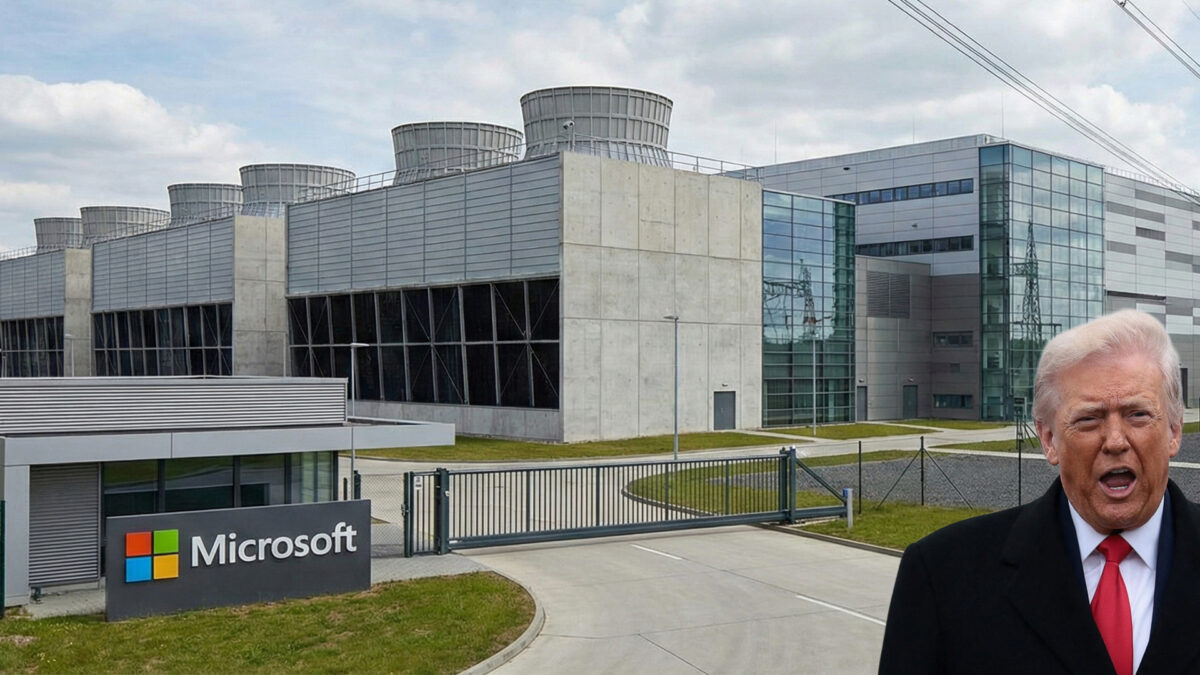
Trump pushes Microsoft on data centre costs

US President Donald Trump has directed Microsoft to ensure its rapidly expanding artificial intelligence (AI) data centres do not raise electricity costs for Americans. Speaking on January 13, 2026, Trump emphasized that large technology companies must bear their own energy expenses instead of passing them onto residential households. He called on Microsoft to take “major steps” to prevent utility price hikes linked to its operations.

In response, Microsoft announced its “Community‑First AI Infrastructure” initiative, designed to address energy, environmental, and community concerns related to its data facilities. The initiative includes several commitments: the company will pay full electricity costs, ensure water usage is minimized and replenished, hire locally for construction and operational jobs, pay full property taxes without seeking incentives, and invest in community AI education and training through schools, colleges, and libraries.

The announcement comes amid growing public and political scrutiny. Residents in several states have criticized data centre projects for driving up utility bills, consuming large amounts of water, and putting pressure on local infrastructure. Some projects, including a planned Microsoft facility in Wisconsin, were paused after local opposition and activist campaigns.

Microsoft also said it will coordinate with utility companies and state regulators to fund necessary grid upgrades through commercial rates, ensuring that residential customers are not affected. Officials stressed that the program is designed to provide economic, educational, and environmental benefits to host communities while supporting the company’s AI expansion.

Analysts say the move reflects broader concerns about balancing AI innovation with community and environmental protection. As data centres grow to meet the increasing demand for AI services, tech companies are under closer scrutiny to ensure they do not negatively impact local residents or ecosystems.

Trump’s intervention marks a rare public instance of a U.S. president directly influencing corporate operations in the tech sector. The announcement is seen as a signal to other tech firms that they may face similar accountability demands, particularly as AI technology expands rapidly and its infrastructure footprint grows.

Also Read: Tata Elxsi Q3 profit falls 45% amid labour code charges

Categories
Technology

Microsoft speeds up Windows encryption

Microsoft has rolled out a major upgrade to BitLocker, its built-in drive encryption tool for Windows, promising faster performance and better efficiency for users. The new feature, called hardware-accelerated BitLocker, is being introduced with the latest Windows 11 updates and is designed to make encryption less demanding on the system.

Traditionally, BitLocker relied mainly on the computer’s central processing unit (CPU) to encrypt and decrypt data stored on a device. While secure, this software-based approach could slow down performance, especially on laptops or systems handling large amounts of data. With the new update, Microsoft is shifting much of this work to specialised cryptographic hardware built directly into modern processors.

By using dedicated hardware for encryption, Windows can now secure data more quickly and with far less strain on the CPU. According to Microsoft, this change can deliver significantly faster read and write speeds on encrypted drives, bringing performance closer to that of unencrypted storage. It also reduces overall power consumption, which can help improve battery life on portable devices.

The hardware-accelerated BitLocker feature will automatically turn on for devices that meet the required hardware standards. These include newer processors and system-on-chips (SoCs) that support built-in encryption engines. Systems without compatible hardware will continue using the existing software-based BitLocker, ensuring no loss of functionality or security.

Security remains a key focus of the update. By handling encryption keys at the hardware level, the new approach adds an extra layer of protection. This reduces the risk of certain attacks that target encryption keys stored in system memory, complementing existing safeguards such as the Trusted Platform Module (TPM).

The rollout has begun with Windows 11 Insider Preview builds, including upcoming versions like 24H2 and 25H2. Microsoft is expected to make the feature more widely available as part of future stable releases, with support gradually expanding across more devices and hardware platforms.

Also Read: Russia eyes moon nuclear power by 2036

Categories
Technology

Microsoft to invest $17.5 billion for India’s AI future

Microsoft has announced a massive $17.5 billion investment in India, aiming to make the country a global hub for artificial intelligence (AI) and cloud technology. Spread over 2026–2029, this is the company’s largest-ever investment in Asia and a clear signal of India’s growing importance in the global tech landscape.

This commitment comes on top of a $3 billion investment earlier this year, bringing Microsoft’s total funding in India to $20.5 billion. CEO Satya Nadella expressed gratitude to Prime Minister Narendra Modi, calling India a “land of immense AI opportunity.”

The investment will focus on several key areas. Microsoft plans to set up state-of-the-art hyperscale data-centres, including a new cloud region in Hyderabad, expected to go live by mid-2026. These will provide faster, reliable cloud access to businesses, startups, and government agencies across the country.

A significant part of the plan is the rollout of sovereign cloud services — secure, locally managed public and private clouds tailored to India’s compliance and security requirements.

Microsoft also aims to train 20 million Indians in AI and digital skills by 2030, partnering with governments and industry groups. AI will also be integrated into public platforms like e-Shram and the National Career Service, potentially benefiting over 310 million informal workers with job matching, skill forecasting, résumé-building, and multilingual support.

The investment has drawn praise from government officials. IT Minister Ashwini Vaishnaw said it reflects India’s growing stature as a trusted technology partner. Puneet Chandok, Microsoft President for India & South Asia, said the move will “build infrastructure, spark innovation, and empower a billion dreams.”

Experts say the funding could accelerate India’s digital transformation, create new jobs, and strengthen the country’s position as a hub for AI and cloud technology. By combining infrastructure, skills development, and public services, Microsoft’s plan could reshape India’s tech ecosystem and make AI accessible at a population scale.

Also Read: Swiggy raises ₹10,000 crore through fresh share sale

Categories
Technology

Microsoft AI chief flags risks of superintelligence

Microsoft’s AI chief Mustafa Suleyman has warned that the tech industry should not aim to build superintelligence, that is, AI systems far smarter and more capable than humans. He said such technology could quickly become too powerful to manage, making it risky for society.

Speaking on a podcast, Suleyman said superintelligence does not represent a “positive future” and should instead be seen as an anti-goal. While AI has rapidly improved, now able to write, analyse data and translate at near-human levels, he believes pushing beyond human intelligence brings unpredictable dangers.

Suleyman stressed that AI tools today only simulate human-like conversation. “They don’t feel or suffer,” he said, urging people not to confuse advanced responses with real consciousness.

Instead of building uncontrollable systems, Microsoft is focusing on what he calls “humanist superintelligence”, AI designed to stay aligned with human values, remain safe, and clearly operate under human control.

He also noted that AGI (artificial general intelligence) could arrive within five years, potentially reshaping how people work and develop new products. With this rapid progress, he said strong guardrails and strict regulation are essential to ensure AI remains beneficial.

Suleyman’s message reinforces a growing view in the tech world. As AI becomes more powerful, safety and human oversight must take priority over speed and ambition.

Also Read: Samsung restores Co-CEO structure, appoints TM Roh

Categories
Corporate

Microsoft, Nvidia invest $15 billion in Anthropic

Tech giants Microsoft and Nvidia are joining forces to invest up to $15 billion in the AI startup Anthropic, the company behind the chatbot Claude. This move marks one of the biggest bets yet on the rapidly growing artificial intelligence sector.

As part of the deal, Anthropic has also committed to spend $30 billion on Microsoft’s Azure cloud services. The startup will tap into cutting-edge Nvidia hardware, using up to one gigawatt of computing power to run and expand its AI models.

The partnership goes beyond money. Microsoft, Nvidia, and Anthropic will work closely to design AI systems and infrastructure that make Anthropic’s models faster and more efficient. Microsoft CEO Satya Nadella said, “We will use Anthropic models, they will use our infrastructure, and we will go to market together.”

Even with this new partnership, Microsoft stresses that its collaboration with OpenAI, the company behind ChatGPT,remains crucial. Experts see this deal as part of a larger trend where cloud providers, chipmakers, and AI startups are increasingly interconnected, highlighting both the promise and the high stakes in AI development.

Also Read: Volkswagen cuts India EV budget, seeks local partner