Categories
Beyond

Summit marks India’s big play in AI

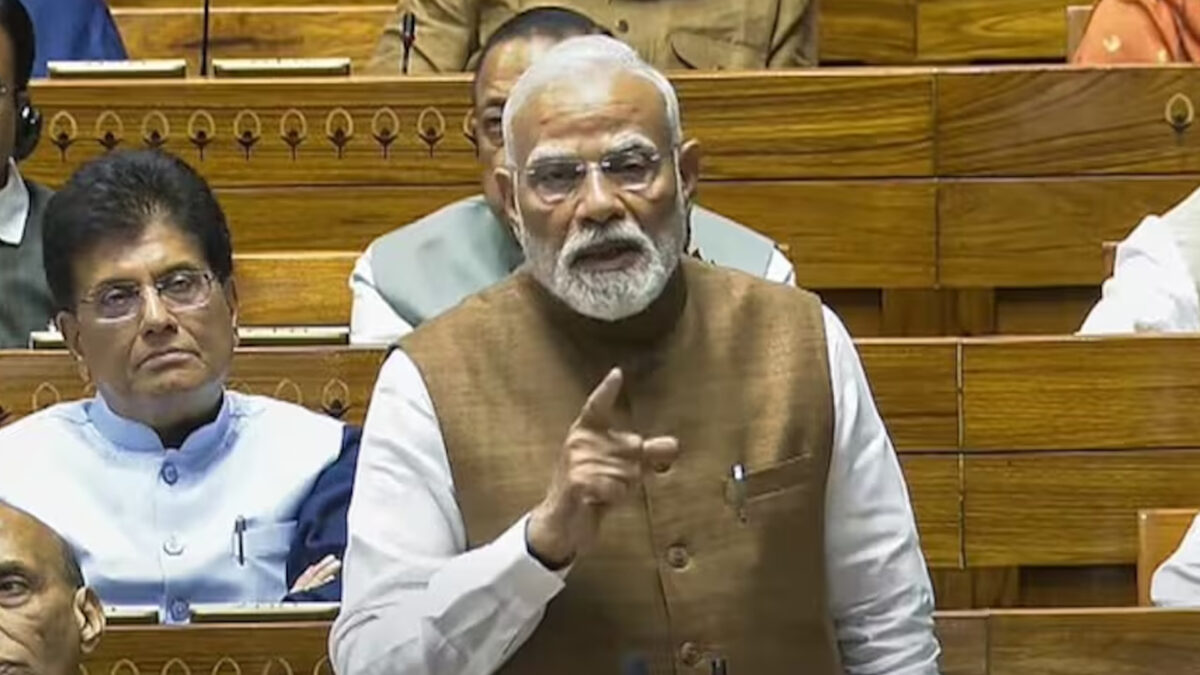
India sharpened its pitch to global technology companies and investors on the second day of the India AI Impact Summit, with Prime Minister Narendra Modi projecting the country as a trusted and scalable destination for artificial intelligence development, deployment and manufacturing.

Addressing delegates at Bharat Mandapam, Modi said India’s digital public infrastructure, expanding talent base and vast data ecosystem provide a ready foundation for building affordable AI solutions for both domestic use and export to emerging markets. The messaging was aimed at positioning India not just as a consumer market but as a full-stack AI economy spanning compute, models, applications and governance.

A key highlight of Day 2 was the emphasis on sovereign AI capabilities, with domestic large language models and multilingual platforms showcased as strategic assets for government deployment and regulated sectors. This aligns with policy efforts to build local compute capacity and reduce reliance on overseas ecosystems while continuing to invite global partnerships.

The summit also functioned as a deal-making and collaboration platform, drawing participation from more than 100 countries, global CEOs and ministerial delegations. Several countries signalled interest in joint research, talent development and market access partnerships, underlining the role of the event in India’s technology diplomacy.

India’s scale as an AI deployment market emerged as a central theme in the discussions, with its rapidly growing user base expected to drive demand for data centres, cloud infrastructure and enterprise AI solutions. Sectoral case studies in healthcare, agriculture, education and energy pointed to immediate commercial applications, particularly in public service delivery and productivity gains.

Union IT Minister Ashwini Vaishnaw reiterated plans to expand the domestic AI talent pool and support product development through the proposed “Create in India” mission, a move seen as critical for attracting long-term investments.

The 70,000-sq-m expo, featuring hundreds of startups, country pavilions and global technology firms, provided a live marketplace for customer acquisition, government-enterprise engagement and capital flows.

 India is leveraging its data scale, digital infrastructure and policy push to move up the global AI value chain, positioning itself as both a high-growth market and a strategic innovation base for companies looking to build for the world.

Also Read: Gold at ₹1.55 lakh, Silver near ₹2.41 lakh as prices slide

Categories
Beyond

India powers ahead with 50 GW growth in FY26

India has added more than 50,000 MW (50 GW) of power generation capacity during the current financial year, marking the highest-ever annual increase in the country’s history. The rapid expansion reflects rising electricity demand and a strong push towards cleaner energy sources.

A major share of the new capacity has come from renewable energy, with solar power contributing the largest portion, nearly 35 GW. Wind energy additions have also gathered pace, while thermal, large hydro and nuclear projects accounted for the remaining capacity. The strong renewable growth means non-fossil fuel sources now form a larger share of India’s total installed power capacity.

With the latest addition, India’s overall installed power capacity has crossed 520 GW, strengthening the country’s ability to meet peak demand from industry, infrastructure, urbanisation and the fast-growing digital economy. The capacity addition represents a significant year-on-year increase and highlights the speed at which new projects are being commissioned.

The record build-out has been supported by policy measures, faster project execution, improved transmission networks and rising investments in clean energy. Government schemes promoting solar parks, rooftop solar and manufacturing of renewable equipment have played a key role in accelerating installations.

The expansion is also crucial for India’s long-term energy transition goals. The country has set ambitious targets to increase the share of non-fossil fuel capacity in its energy mix, reduce carbon emissions and ensure reliable power supply for sustained economic growth.

At the same time, the addition of thermal and hydro capacity is helping maintain grid stability and meet base-load requirements, ensuring that the shift to renewable energy remains balanced.

Also Read: India AI Impact Summit greets skills, tech, leaders

Categories
Beyond

India passport jumps 10 ranks

India’s passport has climbed 10 places to rank 75th in the 2026 edition of the Henley & Partners Passport Index, marking a notable improvement in global mobility for Indian citizens.

The index ranks passports based on how many destinations holders can enter without securing a visa in advance. It counts visa-free access, visa-on-arrival, and certain electronic travel authorisations.

In 2026, Indian passport holders can travel to 56 destinations without prior visa approval. While this reflects improved global standing compared to last year’s 85th rank, the total number of visa-free destinations has slightly reduced from 57 in 2025.

The dip follows changes in entry rules by two countries.

Iran ended its visa-free entry for ordinary Indian passport holders in late 2025. Travellers must now obtain a visa before departure, removing Iran from India’s visa-free list under the index criteria.

Similarly, Bolivia replaced its visa-on-arrival facility for Indians with a pre-approved e-visa system. Since travellers must apply before flying, Bolivia no longer qualifies as visa-free access in the ranking methodology.

Experts point out that passport rankings are relative. India’s rise reflects not only its own travel access but also changes in other countries’ standings.

Despite the improvement, India remains far below the world’s most powerful passports, such as Singapore, which offers visa-free entry to nearly 200 destinations.

The latest ranking signals gradual progress in India’s international travel access. However, further diplomatic efforts and bilateral agreements will be essential to expand visa-free opportunities for Indian travellers in the future.

Also Read: Tamil Nadu, KLA sign ₹3,600 cr R&D MoU in Chennai

Categories
Beyond

US edits India trade deal factsheet

The White House has revised its factsheet on the proposed India-US interim trade deal, making key changes to language on agricultural imports, investment commitments and digital taxation following concerns flagged by New Delhi.

In the earlier version of the document, the US had stated that India would cut or eliminate tariffs on a list of American agricultural products, including tree nuts, fruits, soybean oil, wine, spirits and “certain pulses.” The mention of pulses,  a politically sensitive crop in India,  drew attention because India is the world’s largest producer and consumer of lentils, chickpeas and other pulses, and domestic farmers depend heavily on tariff protection.

In the updated factsheet, the specific reference to “certain pulses” has been removed. Instead, the language now broadly mentions improved access for a “wide range of US agricultural products,” without naming individual commodities.

Another notable revision relates to India’s proposed purchases of American goods. The original text said India was “committed” to buying more than $500 billion worth of US products over the next five years, including energy, coal and technology equipment. The revised version softens this to say India “intends” to purchase such goods, signalling that the figure is indicative rather than a binding obligation. Mentions of agricultural goods within this purchase commitment have also been omitted.

Changes were also made to the section on digital trade. The earlier draft suggested India would remove or roll back its digital services tax. The revised document now says both countries will work toward negotiating digital trade rules, bringing the language in line with prior joint statements.

Sources indicated that the corrections were made to accurately reflect what had been mutually agreed upon.

Also Read: Rupee declines 6 paise to ₹90.62 in early trade

Categories
Beyond

India pledges $175 mn economic support for Seychelles

In a significant move reflecting India’s commitment to regional development, Prime Minister Narendra Modi announced a $175 million special economic package for Seychelles, aimed at supporting the island nation’s key development priorities. The announcement came during a joint press briefing with Seychelles President Patrick Herminie in New Delhi, marking a milestone in the two countries’ long-standing diplomatic and economic partnership.

The package is designed to finance projects that will have a tangible impact on the daily lives of Seychellois citizens. Social housing projects will be a major focus, addressing the pressing need for affordable homes, while investments in electric mobility and vocational training aim to create new employment opportunities, particularly for young professionals. Health infrastructure and maritime security initiatives are also included, reflecting India’s holistic approach to development support.

“This package is about more than funds; it’s about empowering communities and strengthening Seychelles’ capacity for sustainable growth,” Modi said. Analysts note that such initiatives often generate long-term economic benefits, as improved housing, transport, and training contribute to workforce productivity and regional stability.

President Herminie, on his first state visit to India, expressed appreciation for the package, highlighting the strong historical ties and strategic partnership between the nations. He noted that India’s support demonstrates trust and a shared vision for economic resilience and regional stability in the Indian Ocean.

For businesses, this package signals a growing scope for Indian companies to participate in development projects in Seychelles, particularly in infrastructure, technology, and renewable energy sectors.

The agreement also includes capacity-building programs, including training Seychellois civil servants in India, and enhanced digital and trade cooperation, facilitating smoother economic and technological integration. Both governments emphasized that the package aligns with priorities identified by Seychelles and will support projects that directly impact citizens’ livelihoods.

Also Read: India clarifies $500bn US import figure

Categories
Beyond

India clarifies $500bn US import figure

India’s Commerce Minister Piyush Goyal has clarified that the $500 billion figure for imports from the US over five years reflects India’s growing commercial needs, not a firm commitment under the new trade framework.

Goyal emphasized that India “intends to” source goods from the US where it makes sense, but there is no obligation to buy a fixed annual amount. Decisions will depend on price, quality, and demand.

The estimate comes from India’s rising import requirements, expected to reach $2 trillion over five years. Key sectors include energy (crude oil, LNG, LPG), aviation (aircraft, engines, spare parts), technology products, precious metals, and coking coal.

India already has aircraft orders with Boeing worth $50 billion, and future aviation needs could push imports to $80–100 billion. Similarly, growing tech infrastructure,  data centres, AI, and quantum computing,  will drive demand for high-end US products.

Goyal noted that India currently imports about $300 billion of goods that could come from the US. He described the $500 billion figure as conservative, reflecting intent to diversify supply chains rather than any enforced quota.

The interim trade framework also reduces tariffs and gives Indian exporters better access to the US market, benefiting sectors such as pharma, gems and jewellery, and labour-intensive industries.

The clarification addresses concerns that India might be forced into higher imports, reassuring that sensitive sectors like agriculture and dairy remain protected.

Also Read: Sarvam AI beats global rivals in India tests


Categories
Beyond

India removes small-car relief in new fuel emission rules

India has decided to drop the proposed special concession for small petrol cars in its upcoming fuel-efficiency and emission norms, following objections from several domestic automakers. The move is part of a revised draft of the Corporate Average Fuel Efficiency (CAFE) regulations, which will come into force from April 2027 and remain valid for five years.

Earlier, the draft rules had offered relaxed emission targets for petrol cars weighing 909 kg or less. This provision was strongly opposed by companies such as Tata Motors and Mahindra & Mahindra, which argued that it would unfairly favour one manufacturer that dominates the small-car segment. Industry executives said the concession would distort competition rather than promote genuine fuel-efficiency improvements.

After reviewing the feedback, the government removed the small-car exemption and introduced a more uniform framework. The revised draft tightens emission targets across the passenger vehicle segment and reduces the scope for weight-based advantages. All passenger vehicles with a gross weight of up to 3,500 kg will now be assessed under the same broad efficiency principles.

Under the new proposal, average fleet carbon dioxide emissions must fall steadily, reaching about 100 grams per kilometre by 2032, compared to roughly 114 g/km currently. The targets could become even stricter if electric vehicles gain a higher share of overall car sales.

To support the shift towards cleaner mobility, the draft rules provide incentives for electric vehicles and plug-in hybrids through a credit-based system. Automakers that exceed targets can earn credits, while those falling short will need to buy credits or face penalties. Companies may also pool compliance performance with other manufacturers to meet the norms more efficiently.

Penalties for non-compliance could go up to around $550 per vehicle, making adherence financially critical for automakers.

Transport accounts for about 12% of India’s total energy consumption and is a major contributor to carbon emissions and fuel imports. Passenger vehicles form the bulk of these emissions.

Also Read: MRF Q3 profit jumps 119% to ₹692 cr


Categories
Beyond

US drops 25% tariff on Indian goods

In a major relief for Indian exporters, the United States has lifted the extra 25% tariff on Indian goods that was imposed last year over India’s purchases of Russian oil. The tariff rollback, effective February 7, 2026, comes after India pledged to stop both direct and indirect imports of Russian crude, addressing a key US concern.

The decision is part of a new interim trade framework aimed at improving economic ties between the two countries. Under this agreement, the US will reduce general tariffs on Indian products to about 18%, while India will expand purchases of US goods, including energy, aircraft parts, and technology, worth up to $500 billion over the next five years.

Officials say the framework also sets the stage for closer cooperation in defence and supply chains, while easing barriers that had made it harder for Indian exports in sectors like textiles, pharmaceuticals, and machinery to compete in the US market.

This is seen as a boost for Indian businesses, as the removal of the extra levy will make exports more competitive and strengthen long-term trade relations. Both governments described the deal as a step toward a larger bilateral trade agreement, marking a new phase of economic and strategic partnership between the two nations.

Also Read: Reliance returns to Venezuelan oil, buys 2 mn barrels

Categories
Beyond

India plans $80 bn Boeing aircraft purchase

India is preparing to place one of its largest-ever aircraft orders with US aerospace giant Boeing, following a major trade agreement between the two countries. Commerce and Industry Minister Piyush Goyal said India’s planned purchase could be worth $70–80 billion, potentially exceeding $100 billion when engines, spare parts, and long-term support contracts are included.

The proposed Boeing order is part of a broader push by India to expand imports of American goods across key sectors, including aviation, energy, and advanced technology. Officials have described the demand as “ready,” signaling that negotiations with Boeing could move quickly once the trade deal is formally signed.

The US–India trade agreement is expected to be finalized in March 2026, with a joint statement likely in the coming days. As part of the deal, the United States has agreed to reduce tariffs on Indian exports, which currently average around 50%, while India will commit to purchasing roughly $500 billion worth of US products over five years, including aircraft, engines, and other high-tech equipment.

Analysts say the Boeing order could have a significant impact on both countries’ economies. For the US., it would represent one of the largest single-country sales in Boeing’s history, providing a boost to manufacturing and the aerospace supply chain. For India, the aircraft purchases will support the growth of its civil aviation sector, expand fleet capacity for airlines, and strengthen economic ties with a key trade partner.

While the deal signals a major step in bilateral trade, final details on the number of planes, delivery schedules, and pricing are still being finalized. Officials say discussions with Boeing and US authorities are ongoing to ensure that both countries maximize the benefits of the agreement.

Also Read: RBI says most ₹2,000 notes returned, still legal tender


Categories
1 Minute-Read

India eyes higher 49% FDI in public banks

The Indian government is considering raising the foreign direct investment (FDI) limit in public sector banks (PSBs) from 20% to 49% to attract capital and strengthen state-owned banks.

Officials say the proposal is under discussion, and the government would still retain majority control. Currently, private banks allow up to 74% foreign ownership.

Raising the limit for PSBs is part of efforts to boost capital, support growth, and make public banks more competitive, while keeping government oversight intact.