Categories
Beyond

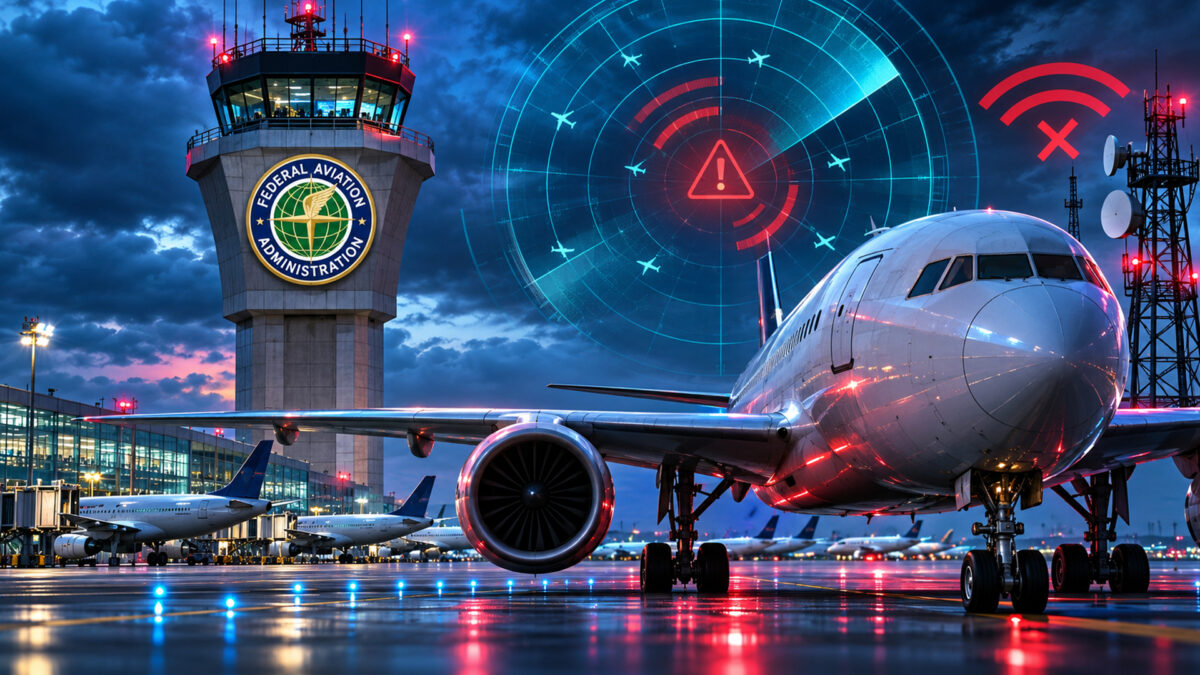
US grounds flights after FAA communication failure

Air travel across the United States faced widespread disruption on Friday, November 13, after a communication failure in the Federal Aviation Administration’s (FAA) air traffic control network forced authorities to ground departing flights nationwide. The unprecedented move affected major airports, disrupted airline schedules and left thousands of passengers stranded, with some travellers facing long waits on aircraft and at terminals.

The nationwide flight restrictions were imposed as a safety precaution after a telecommunications outage affected regional air traffic control centres responsible for managing aircraft movements across the country. The FAA described the situation as an extraordinary circumstance and ordered airports to suspend departures until communication systems could be stabilised.

The ground stop was subsequently lifted on Friday evening after several hours. However, the restoration of normal flight operations was expected to take longer, as airlines had to reorganise aircraft, flight crews and passenger schedules.


US Transportation Secretary Sean Duffy said the communication failure was linked to an ageing air traffic control system that became overloaded with data. Old network switches and routers reportedly struggled to process information, resulting in inconsistent data transmission and intermittent communication and radar failures.

The problem affected multiple air traffic control facilities, raising concerns about the ability of controllers to communicate reliably with pilots and coordinate aircraft movements. The disruption reportedly spread across all 22 regional air route traffic control centres.

According to officials, the combination of new technology and outdated infrastructure contributed to the problem. The overloaded equipment disrupted the flow of information needed to maintain safe and orderly air traffic operations.

Rather than risk operating with unreliable communication systems, the FAA decided to halt departures across the country. Aircraft that were already airborne were allowed to continue towards their destinations and land safely.

The FAA later confirmed that its technicians had tested the systems thoroughly before allowing departures to resume. Transportation Secretary Duffy said US airspace reopened at around 8.15 pm Eastern Time on Friday, but cautioned that restoring normal operations would take time.

The disruption affected a significant portion of the US aviation network, with consequences extending beyond domestic travel. According to aviation analytics firm Cirium, around 11,000 flights carrying more than 1.5 million passengers were scheduled to depart from US airports after 4 pm Eastern Time on Friday.

At least 600 flights were diverted during the disruption, with several aircraft returning to their departure airports while others were redirected to different destinations. Major airports, including Chicago O’Hare, Denver International, Dallas-Fort Worth and Ronald Reagan Washington National Airport, were among those dealing with diverted flights.

Flight tracking data also indicated more than 4,000 cancellations and over 10,000 delays across the country as the disruption unfolded. The impact was felt by passengers travelling for business, holidays, family visits and other commitments.

Some passengers remained inside aircraft for several hours while waiting for permission to take off or for airport gates to become available. Others faced uncertainty over connecting flights, hotel arrangements and alternative travel plans.

The disruption also affected international aviation. Flights entering US airspace and departures from other countries were handled on a case-by-case basis. Air Canada announced cancellations involving services to and from the US, while flights connecting Canada, the Caribbean and South America through American airspace also faced possible disruptions. European aviation authorities temporarily suspended certain US-bound departures following the FAA’s request.

Cargo operations were affected as well, raising concerns about delays to packages and freight shipments that depend on air transport.

The communication failure raised questions about the security and reliability of the US aviation network. However, American officials said there was no immediate evidence suggesting that the disruption was caused by a cyberattack or deliberate interference.

US President Donald Trump was briefed on the situation, while Homeland Security Secretary Markwayne Mullin said preliminary assessments did not indicate a national security threat.

Officials also ruled out an established connection between the incident and Microsoft’s recent service disruption. Questions were raised about whether the FAA’s newly introduced artificial intelligence-supported SMART system had contributed to the problem. However, the company behind the system said the ground stop was not caused by its technology.

Authorities continued examining the circumstances surrounding the failure.

The incident has renewed concerns about the condition of America’s air traffic control infrastructure. Duffy said several parts of the system still depend on outdated equipment, including old switches, routers and copper communication lines.

The US administration has been pushing for substantial investment to modernise the network. Congress had approved $12.5 billion for improvements, while the government is seeking additional funding of around $30 billion to complete the upgrade programme. Homeland Security Secretary Mullin estimated that a comprehensive overhaul could cost approximately $50 billion.

The nationwide ground stop also brought back memories of the January 2023 FAA computer failure, when departures across the US were temporarily suspended. That incident disrupted thousands of flights and highlighted the vulnerability of critical aviation systems.
 

Categories
Beyond

Air India begins Dreamliner safety upgrades

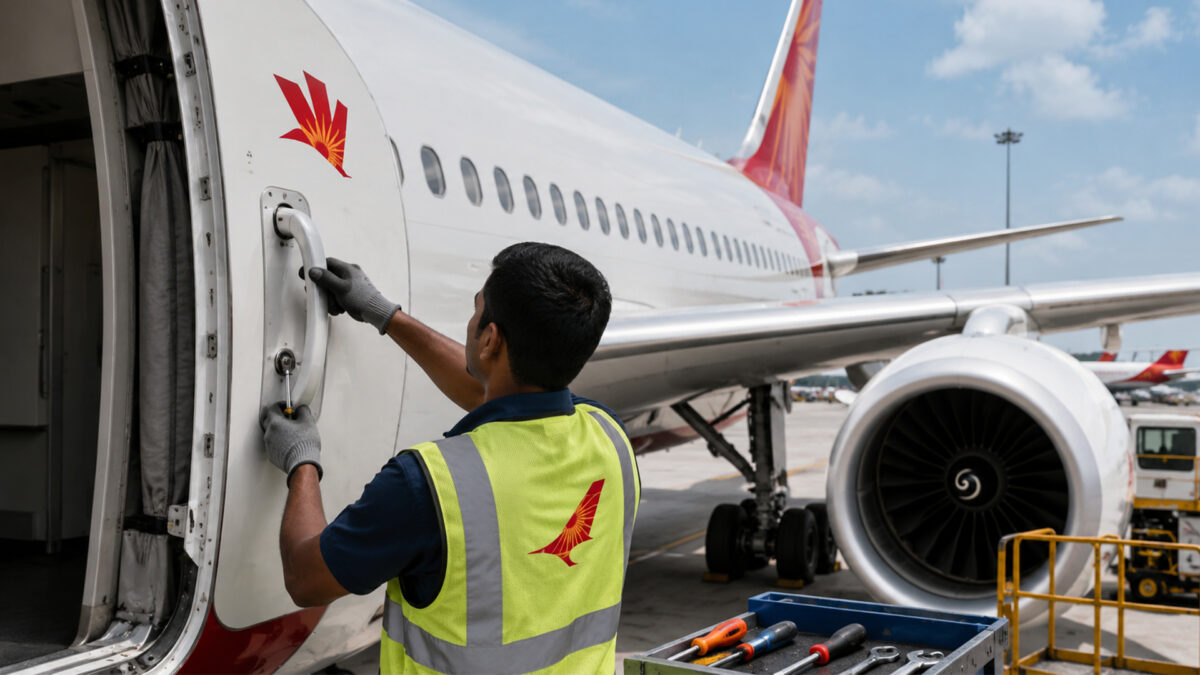
Air India has started upgrading parts of its Boeing 787 Dreamliner fleet after the US Federal Aviation Administration (FAA) issued a safety directive highlighting a potential issue with door assist handles on certain aircraft. The airline has clarified that the modifications are purely precautionary and that there is no immediate risk to passengers or flight operations.

The phased upgrade programme is already underway and is being carried out alongside scheduled maintenance to avoid disruptions to domestic and international services. Air India said the work is part of its commitment to maintaining the highest standards of aviation safety and regulatory compliance.

The FAA recently issued an Airworthiness Directive (AD) covering select Boeing 787-8, 787-9 and 787-10 aircraft after receiving reports of door assist handles becoming detached from their lower attachment points during inspections. While the issue was discovered on the ground rather than during flights, the regulator warned that a detached handle could pose a risk of injury to passengers, crew members or maintenance personnel. In an emergency, the defect could also make opening an aircraft door more difficult.

Although the directive has drawn attention, aviation experts stress that it is a preventive measure rather than an indication that the aircraft are unsafe to fly. Airworthiness Directives are regularly issued by aviation regulators worldwide whenever a design improvement or inspection is considered necessary to maintain safety standards.

Air India has responded quickly to the directive by beginning modifications across the affected aircraft in its fleet. According to airline sources, several older Boeing 787 Dreamliners have already undergone the required changes, while the remaining aircraft will be upgraded in phases over the coming months.

The airline currently operates 35 Boeing 787 Dreamliners. The fleet includes 26 Boeing 787-8 aircraft from the legacy Air India fleet and nine Boeing 787-9 aircraft, including those inducted after the merger with Vistara. These aircraft serve several long-haul international destinations and form an important part of the airline’s global network.

Officials familiar with the development said the modifications are being carried out without affecting passengers or scheduled services. Since the work is being integrated into routine maintenance checks, travellers are unlikely to notice any operational changes.

The FAA directive requires airlines to install additional retaining components on the door assist handle assembly to prevent the handle from becoming detached. Depending on the aircraft’s configuration, operators may also need to inspect the support brackets, install identification markings and carry out corrective actions wherever necessary.

These additional retainers are designed to keep the assist handle securely in place, reducing the possibility of accidental separation while the aircraft door is being opened or closed. The FAA said the modification will improve reliability and ensure emergency exits function as intended under all operating conditions.

The issue first came to light during routine inspections when maintenance personnel found that some door assist handles had become disengaged from their attachment points. Although there have been no reported injuries or incidents linked to the problem, regulators chose to act before it could develop into a larger safety concern.

Air India has maintained that there is no immediate operational impact and that passenger safety has never been compromised. The airline’s decision to begin the upgrades immediately reflects its intention to comply with international aviation standards and complete the modifications well within the regulator’s timeline.

The directive is not limited to Air India. Airlines around the world operating affected Boeing 787 aircraft are expected to carry out the required inspections and modifications. In India, IndiGo, which operates leased Boeing 787 Dreamliners for select international routes, will also be required to comply with the directive wherever applicable.

The Boeing 787 Dreamliner is one of the most widely used long-haul aircraft globally. Known for its fuel efficiency, lightweight composite structure and improved passenger comfort, the aircraft is operated by dozens of international carriers on medium- and long-haul routes.

The safety directives such as these are a routine part of aircraft maintenance. As manufacturers gather operational data from aircraft in service, regulators may identify components that require improvements or additional inspections. Airlines are then required to implement the recommended modifications within specified timelines.

For passengers, the latest development should be viewed as evidence of the aviation industry’s layered safety system rather than a cause for concern. Aircraft manufacturers, airlines and regulators continuously monitor fleet performance to identify even minor issues before they can affect operations.

By beginning the FAA-mandated Boeing 787 Dreamliner upgrades promptly, Air India aims to strengthen passenger confidence while ensuring its fleet continues to meet global safety standards. The phased modifications are expected to be completed without disrupting flight schedules, allowing the airline to continue operating its long-haul network smoothly while reinforcing its commitment to safety, compliance and operational excellence.

Air India’s ongoing fleet upgrade programme also aligns with its broader transformation strategy under the Tata Group. Alongside introducing new aircraft and refurbishing existing cabins, the airline has been investing heavily in engineering, maintenance and operational reliability to improve the overall travel experience.