Categories
Leaders

AI key to India’s sovereignty, says Jeet Adani

Artificial intelligence will redefine national sovereignty and India must build its own core infrastructure to stay competitive and secure, Jeet Adani said at the India AI Impact Summit 2026.

The Adani Group executive director stressed that control over energy, computing power and digital platforms will determine global leadership in the AI era. Depending on foreign systems for critical technologies, he warned, could expose the country to economic and strategic risks.

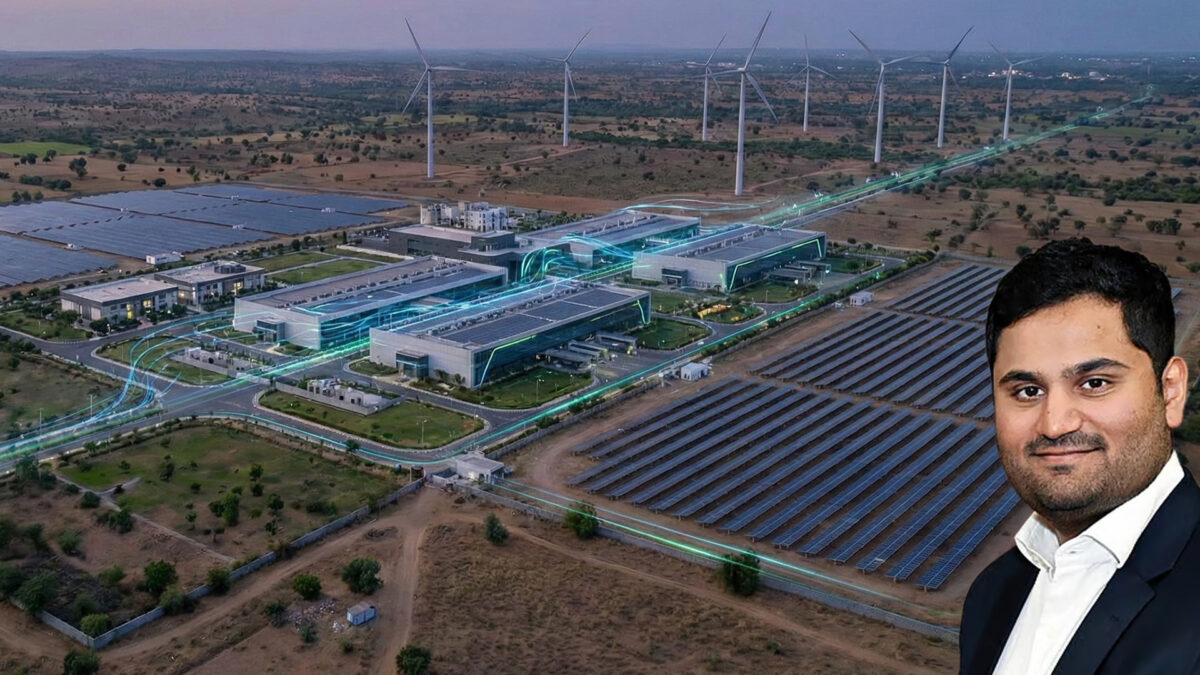
Highlighting the link between power and technology, he said AI runs on electricity and nations that produce reliable, clean energy will gain a major advantage. He called for large renewable-energy capacities to support data centres and high-performance computing within India.

He added that AI should first solve India’s development challenges, improving productivity, expanding financial inclusion and strengthening service delivery, rather than only mirroring global consumption models.

Adani said “AI sovereignty” does not mean isolation but ensuring that key digital infrastructure and data processing capabilities are located in the country. This would allow startups, researchers and industries to access affordable computing and accelerate innovation across sectors such as agriculture, healthcare, manufacturing and logistics.

Pointing to the group’s massive investment plans, he said the proposed green energy–driven AI ecosystem would combine renewable power with data infrastructure at scale and could become the foundation for a much larger technology network.

Also Read: Boeing secures 50-aircraft order from Vietnam Airlines

Categories
Leaders

AI will transform science, medicine, states DeepMind CEO

Artificial intelligence is set to dramatically change the way science is conducted and how new medicines are discovered, but its benefits must be shared globally and developed responsibly, said Demis Hassabis, CEO of Google DeepMind.

Speaking at the AI Impact Summit in New Delhi, Hassabis described AI as a powerful tool that can significantly accelerate scientific research. He noted that advanced AI systems are no longer limited to analysing data but are increasingly capable of generating new ideas and helping scientists solve complex problems in areas such as biology, chemistry and physics.

He highlighted the growing role of AI in healthcare, particularly in understanding diseases and speeding up drug discovery. Processes that traditionally took many years can now be completed much faster with the help of AI models, raising the possibility of developing treatments more efficiently and at lower cost. This, he said, could improve access to life-saving medicines across the world.

Hassabis also pointed out that AI could help address some of the biggest global challenges, including climate change, energy sustainability and food security, by enabling faster innovation and deeper scientific insights.

At the same time, he cautioned that the rapid progress of AI brings important societal and ethical questions. Ensuring safety, fairness and equal access to the technology will require strong international collaboration. No single country or company, he said, can manage the impact of such a transformative technology alone.

He emphasised the need to make advanced AI tools available to researchers and institutions worldwide so that scientific progress is not limited to a few regions. Wider participation, he added, will lead to more inclusive innovation and better outcomes for humanity.

Also Read: Ashwini Vaishnaw opens WAVES Creators’ Corner at India Summit

Categories
Beyond

AI and biologics set to transform India’s pharma Industry

India’s pharmaceutical industry is turning to artificial intelligence (AI) and biologic drugs to make medicine development faster, cheaper and more innovative.

Major companies are now using AI to study huge amounts of medical and scientific data. This helps them find new drug targets quickly, design better clinical trials and reduce the long trial-and-error process in research. As a result, the time and money needed to develop a new medicine can come down significantly. The move is important as Indian firms try to go beyond their traditional focus on low-cost generic medicines and enter the high-value innovation space.

At the same time, biologics and biosimilars are becoming a key growth area. These are complex medicines used to treat diseases such as cancer and autoimmune disorders and are in high demand globally. Indian companies are investing in this segment so they can capture a larger share of the global market while continuing to supply affordable generics.

Hyderabad is emerging as a major centre for this change. The city is seeing new investments in research facilities, global capability centres and AI-based healthcare technology. This is helping create skilled jobs and strengthening India’s position in life-sciences innovation.

Experts say AI can improve not only drug discovery but also manufacturing, supply chain planning and demand forecasting. This will make the industry more efficient and competitive worldwide.

However, some challenges remain. The sector needs more funding for research, faster regulatory approvals and a stronger system that rewards companies for developing new drugs. Industry leaders believe India must move from a low-cost model to an innovation-driven model to stay ahead globally.

Also Read: PM Modi says India ready to lead global AI era

Categories
Beyond

AI jitters trigger global stock market selloff

In the United States, major indices closed lower. The S&P 500 dropped around 1.6%, while the tech-heavy Nasdaq 100 fell nearly 2%. Investors became worried that heavy spending on AI may not quickly translate into strong profits for companies, especially large technology firms.

The weakness in the US affected Asian markets the next day. The MSCI Asia Pacific Index slipped about 0.7%, with shares in Japan and South Korea among the biggest losers. Technology stocks were hit the hardest, as global investors reduced exposure to riskier assets.

Back in India, markets also reacted to global cues. The Sensex and the Nifty 50 saw notable declines, mainly due to selling in IT and tech-related stocks. Broader market sentiment remained weak as traders tracked international developments.

Apart from AI concerns, investors are also watching US economic signals closely. A strong jobs report has reduced expectations that the Federal Reserve will cut interest rates aggressively this year. Higher interest rates generally make investors more cautious, especially toward growth stocks.

Also Read: Rolls-Royce bets bigger on India after PM Modi meet

Categories
1 Minute-Read

N Chandrasekaran leads TCS’ AI shift

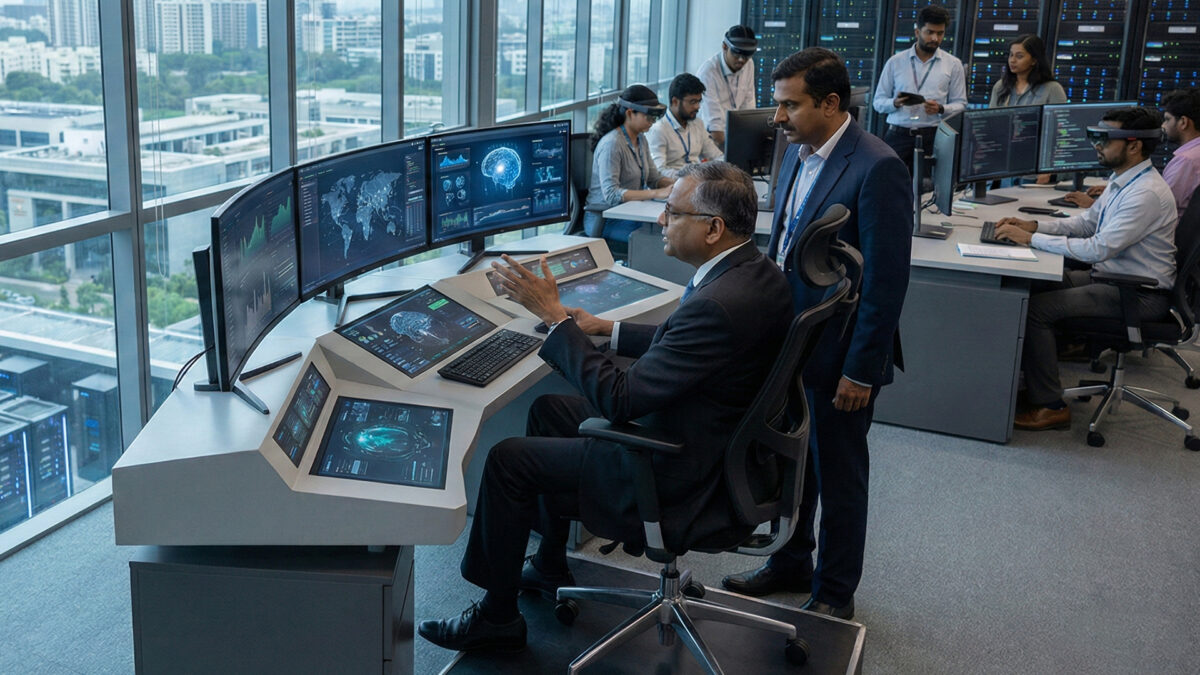
Tata Sons chairman N. Chandrasekaran has stepped into a more active leadership role at Tata Consultancy Services (TCS) to drive its transition towards artificial intelligence.

Addressing employees in Dubai, he stressed that AI is reshaping the global technology landscape and warned that traditional IT service models face disruption. Chandrasekaran urged TCS to rethink its operating model, embed AI across all offerings, and focus strongly on reskilling talent.

He also highlighted the need for agility, innovation, and selective acquisitions to stay competitive. The push aims to position TCS as a leader in AI-driven digital transformation worldwide.


Categories
Technology

AI stethoscopes boost early health screening

AI-powered digital stethoscopes are emerging as powerful tools that could change how diseases are detected during basic health screenings, according to recent research. By combining traditional auscultation with artificial intelligence, these devices help clinicians identify warning signs that might otherwise go unnoticed.

The technology works by capturing detailed heart and lung sounds and analysing them through AI algorithms trained to recognise disease-specific patterns. This approach has shown strong results in detecting heart valve disorders and respiratory conditions, even in early or mild stages.

One of the key advantages of AI-enabled stethoscopes is their potential to address screening shortfalls in resource-limited settings. Many regions lack access to imaging tests and specialist doctors, leading to delayed or missed diagnoses. Portable digital stethoscopes can be used in community clinics and outreach programmes, bringing advanced screening closer to patients.

Researchers say the tools could be particularly useful in identifying lung infections such as tuberculosis, which continues to affect millions worldwide. AI systems can detect abnormal lung sounds linked to infection, helping health workers decide who needs further testing.

The devices also support digital storage and remote sharing of recordings, making them suitable for telehealth services. This allows doctors to review patient data from afar and advise on next steps.

Also Read: Alphabet breaks $400 bn revenue barrier in 2025

Categories
Technology

AI tools set to transform software jobs

The rapid evolution of AI-driven development tools is poised to transform the software industry, changing how applications are created and challenging traditional coding roles. Generative AI models, such as Anthropic’s Claude, are now capable of handling tasks that once required experienced programmers, from writing code to building entire software systems.

A striking example comes from a recent app development scenario: a non-technical investor, using AI tools, built a fully functional iOS app on the Bhagavad Gita without writing a single line of code. The app, 10 Minute Gita, includes daily readings, translations, searchable content, and customization — all generated through AI prompts. This highlights the growing ability of AI to automate complex software engineering tasks.

Advanced models like Claude have even achieved technical milestones such as creating a complete C compiler, demonstrating that AI can now handle core programming functions traditionally reserved for trained engineers. These capabilities signal a shift in the software landscape, where productivity and application development are increasingly augmented or even replaced by AI.

Industry experts warn that this could have profound implications for IT professionals. Developers who have relied on coding as a primary career skill may find traditional roles shrinking as AI takes over routine and even advanced tasks. While this shift poses challenges, it also opens avenues for human creativity, innovation, and oversight in AI-driven workflows.

The broader tech community is observing these trends closely, as generative AI continues to influence IT strategies, investment decisions, and employment patterns globally. Companies are exploring ways to integrate AI tools into their development pipelines, emphasizing efficiency and faster product delivery, which could redefine career expectations for software engineers.

In this changing environment, the message is clear: IT professionals must adapt and diversify their skill sets to remain relevant. Embracing AI as a collaborator rather than a competitor, learning AI integration, and focusing on creative or managerial roles could help coders navigate the future of work.

Also Read: Tim Cook talks succession, denies retirement plans

Categories
Corporate

Asia IT shares slide as AI triggers global tech sell-off

Asian software and IT stocks fell sharply after a heavy sell-off in U.S. technology markets, as investors grew increasingly nervous about the disruptive impact of new artificial intelligence tools on traditional software and services businesses.

The market jitters were triggered by recent announcements from U.S.-based AI startup Anthropic, which unveiled advanced automation features for its AI model, Claude. The tools are designed to perform complex tasks across areas such as legal research, marketing, sales, coding and data analysis. While Anthropic has said the outputs are meant to assist professionals rather than replace them, investors fear that such technology could significantly reduce demand for conventional software products and subscription-based services.

These concerns sparked a sharp global reaction. In the U.S. and Europe, software, data and professional services companies suffered steep losses, wiping out nearly $300 billion in market value in a single session. Shares of major information and analytics firms, including legal and financial data providers, dropped by double digits, dragging down broader tech indices such as the Nasdaq and the S&P 500.

The negative sentiment quickly spilled over into Asian markets. Software and IT stocks across the region declined as investors reacted to the overnight rout in global tech shares. India’s IT sector was among the worst hit, with shares of leading exporters such as Infosys, Tata Consultancy Services (TCS), Wipro and HCLTech falling as much as 6–7%. The sector is particularly vulnerable because a large share of its revenue comes from U.S. and European clients, where spending sentiment is closely tied to technology trends.

China’s software services stocks also came under pressure, with sector indices falling around 3%. Technology shares in Hong Kong and parts of Japan weakened as well, reflecting broader concerns that rapid AI adoption could disrupt existing business models faster than companies can adapt.

However, the sell-off was not uniform across the tech space. Hardware and semiconductor stocks held up better in parts of Asia, supported by expectations that demand for AI-related chips and infrastructure will continue to grow. South Korea’s market, for instance, found support from chipmakers seen as direct beneficiaries of the AI boom.

Also Read: Gold up ₹1,53,940, Silver slips to ₹2,79,900

Categories
Leaders

Elon Musk’s SpaceX buys xAI in $1.25 trillion merger

Elon Musk has brought his two biggest futuristic bets closer together. His space exploration company SpaceX has acquired his artificial intelligence firm xAI in a deal that values the combined private entity at around $1.25 trillion, according to reports.

The merger brings xAI, the company behind the AI chatbot Grok, fully under SpaceX, creating a single organisation that blends space technology, satellite networks and advanced artificial intelligence. While SpaceX is estimated to be worth about $1 trillion, xAI’s valuation is pegged at roughly $250 billion.

Musk said the deal is aimed at solving one of the biggest challenges facing AI today: infrastructure. Modern AI systems rely on massive data centres that consume huge amounts of electricity and water for cooling. Musk has argued that this model is unsustainable in the long run.

His solution is ambitious, move AI data centres into space.

By placing large-scale computing infrastructure in orbit, Musk believes AI systems could run on near-constant solar energy, reduce strain on Earth’s power grids and avoid many land-based environmental constraints. Space-based data centres could also operate at scale without competing with cities and industries for electricity and water.

As part of this broader vision, SpaceX has reportedly applied to US regulators for permission to launch up to one million additional satellites in the coming years. These satellites could form a vast network capable of supporting AI processing, data transfer and global connectivity from space.

The merger also strengthens the link between xAI and Musk’s social media platform X, which already uses AI tools such as Grok for content analysis and real-time information. Integrating these systems with SpaceX’s satellite and launch capabilities could give Musk an edge in building a global AI-powered communications ecosystem.

The deal comes at a time when SpaceX is preparing for a potential initial public offering (IPO), expected later in 2026. Analysts say combining AI and space infrastructure under one roof could significantly boost investor interest, while also positioning the company as a competitor to major cloud and AI firms.

Also Read: Snowflake, OpenAI seal $200 million AI deal

Categories
Beyond

India offers tax-free AI cloud incentive until 2047

The Union Budget 2026–27 unveiled a major tax incentive to attract foreign cloud providers and AI firms to India. Under the new policy, companies operating AI and cloud services from Indian data centres will pay zero corporate tax on revenues until 2047, provided they serve Indian customers through a locally incorporated reseller.

The government has also introduced a 15% safe-harbour tax regime for Indian data centre operators serving foreign clients. This ensures predictability for investors and encourages long-term infrastructure expansion. The measures are aimed at strengthening India’s digital backbone, boosting cloud and AI capacities, and making the country a global hub for advanced computing services.

Industry leaders have welcomed the move as a significant step to attract multinational technology firms to set up or expand data centre operations in India. Analysts predict that the policy could generate thousands of jobs, enhance technology transfer, and position India competitively against established AI and cloud markets in the US, Europe, and Asia.

However, experts have also flagged potential challenges, including ensuring sufficient power and water supply, handling cooling requirements, and streamlining regulatory approvals. The government will need to address these infrastructure and operational hurdles to make the policy fully effective.

By offering a 21-year tax holiday, India aims to provide certainty and long-term incentives for global firms to invest in local infrastructure, secure local market participation, and establish a durable technological presence.

This initiative is part of a broader push to expand India’s digital ecosystem, encourage private investment in data centres, and foster growth in emerging technologies such as AI, cloud computing, and machine learning.

Also Read: Oracle plans massive layoffs through AI funding crunch