Categories
Corporate

AMD launches Helios AI System to challenge Nvidia

Advanced Micro Devices (AMD) has taken a major step in the artificial intelligence race by unveiling Helios, a next-generation AI infrastructure system designed to compete directly with Nvidia’s dominant AI computing platform. The announcement signals AMD’s biggest push yet to win a larger share of the rapidly expanding AI chip market, where demand for powerful hardware continues to surge as businesses invest heavily in generative AI.

The Helios system was introduced as part of AMD’s broader strategy to offer customers a complete AI computing platform instead of just standalone chips. By combining advanced AI accelerators, high-performance processors, networking technology and open software, AMD hopes to provide enterprises with an alternative to Nvidia’s widely used AI infrastructure.

At the heart of the new platform are AMD’s upcoming Instinct MI500-series AI accelerators, which are expected to power the Helios system when it launches in 2027. These next-generation chips will succeed the company’s MI350 series and are designed to deliver significantly higher performance for training and running large artificial intelligence models.

AMD says Helios has been built to meet the growing demand for AI data centres capable of handling increasingly complex workloads. As companies develop larger language models and AI-powered applications, they require faster processors, greater memory capacity and high-speed networking to support billions of calculations every second. Helios aims to address those requirements through a tightly integrated computing platform.

A major boost for AMD came from Microsoft, which confirmed its support for the Helios platform. Microsoft plans to continue working closely with AMD as it expands AI infrastructure across its cloud business. The partnership is seen as an important endorsement because Microsoft is one of the world’s largest buyers of AI chips and data centre hardware.

Microsoft executives said the company wants greater diversity in AI hardware suppliers as demand continues to grow rapidly. While Nvidia remains the market leader, cloud providers are increasingly looking for additional options to reduce costs, improve supply flexibility and encourage greater competition in the AI ecosystem.

AMD Chief Executive Officer Lisa Su said the artificial intelligence market is entering a new phase where customers need complete AI solutions rather than individual components. According to her, Helios combines AMD’s processors, GPUs, networking technologies and software into a unified platform capable of supporting the world’s most demanding AI workloads.

The announcement comes as competition in AI infrastructure intensifies. Nvidia currently dominates the AI accelerator market with its powerful GPUs and integrated AI systems, which are widely used by companies including OpenAI, Meta, Amazon and Microsoft. However, rivals such as AMD and Intel are investing billions of dollars to challenge Nvidia’s leadership as spending on AI hardware continues to accelerate.

Industry analysts believe AMD’s strategy of offering an open ecosystem could appeal to businesses seeking greater flexibility. Unlike proprietary platforms, AMD supports open software standards that allow developers to build AI applications without being tied to a single vendor. This approach may attract enterprises looking to diversify their AI infrastructure.

The company also highlighted advances in its AI software stack, which has become increasingly compatible with leading machine learning frameworks. Improving software support is considered critical because developers want AI applications to run efficiently regardless of the underlying hardware.

The AI chip industry has become one of the fastest-growing segments in global technology, driven by the explosive popularity of generative AI. Companies across healthcare, finance, manufacturing, retail and software are investing in AI-powered tools that require massive computing resources. This has fuelled unprecedented demand for AI processors and data centre infrastructure.

Despite AMD’s ambitious plans, Nvidia remains the benchmark in AI computing with its mature hardware ecosystem, extensive developer tools and long-standing relationships with major cloud providers. Analysts say Helios represents AMD’s strongest attempt yet to narrow that gap, but widespread adoption will depend on its real-world performance, software compatibility and customer confidence once the platform becomes available.

For businesses investing in artificial intelligence, increased competition could prove beneficial. More AI hardware choices are expected to drive innovation, improve performance and reduce costs over time. As AI becomes central to digital transformation strategies worldwide, technology companies are racing to build the infrastructure that will power the next generation of intelligent applications.

With Helios, AMD has made its intentions clear. Rather than competing only in AI chips, the company is positioning itself as a full-scale AI infrastructure provider. Backed by Microsoft and a roadmap of increasingly powerful AI accelerators, AMD is preparing for a long-term battle with Nvidia in one of the technology industry’s most valuable and strategically important markets.

Also Read: Fintechs oppose NPCI’s default UPI plan

Categories
Corporate

AMD invests $5 bn in Anthropic AI partnership

Advanced Micro Devices (AMD) has announced a landmark partnership with artificial intelligence startup Anthropic, committing to invest up to $5 billion in the company as both firms strengthen their position in the rapidly expanding artificial intelligence (AI) industry. The deal combines a major financial investment with a long-term technology collaboration aimed at accelerating the development and deployment of next-generation AI systems.

The partnership marks one of AMD’s biggest strategic moves in the AI sector and reflects the growing competition among technology companies to build the computing infrastructure needed for increasingly powerful AI models. As businesses worldwide adopt generative AI at an unprecedented pace, demand for advanced AI chips and high-performance computing continues to surge.

As part of the agreement, AMD will make a strategic investment of up to $5 billion in Anthropic over several years. The AI startup, known for developing the Claude family of AI models, will also use AMD’s latest AI accelerators to train and run future generations of its artificial intelligence systems.

The collaboration gives Anthropic another major hardware partner beyond Nvidia and broadens AMD’s role in the fast-growing AI chip market. For AMD, the agreement represents an opportunity to showcase the performance of its AI processors while expanding its presence among leading AI developers.

The announcement comes at a time when technology companies are investing billions of dollars to secure access to advanced computing resources. Training large language models requires enormous computing power, making specialised AI chips one of the most valuable assets in the global technology industry.

AMD Chief Executive Officer Lisa Su said the partnership reflects the company’s commitment to building an open AI ecosystem and providing customers with greater choice in AI infrastructure. She noted that developers increasingly want alternatives that can deliver high performance while avoiding dependence on a single hardware supplier.

Anthropic has rapidly emerged as one of the world’s leading AI companies through its Claude chatbot and enterprise AI solutions. The company focuses on developing reliable and responsible artificial intelligence systems for businesses, researchers and consumers. As demand for its AI services grows, expanding computing capacity has become a critical priority.

For Anthropic, partnering with AMD offers access to advanced AI hardware that can support the growing computational demands of developing increasingly capable AI models. Diversifying its hardware suppliers may also improve resilience and flexibility as competition for AI chips intensifies worldwide.

The partnership extends beyond investment alone. The two companies plan to optimise Anthropic’s AI models for AMD’s latest AI accelerators, improving performance, efficiency and scalability. Engineers from both organisations are expected to work closely to fine-tune software and hardware for large-scale AI training and inference.

Industry analysts view the agreement as another sign that the AI hardware market is becoming increasingly competitive. Nvidia continues to dominate the sector with its graphics processing units (GPUs), but rivals such as AMD are investing aggressively to capture a larger share of the rapidly expanding market.

The deal also highlights the enormous capital flowing into artificial intelligence. Over the past two years, leading AI companies have attracted billions of dollars in funding from technology giants and institutional investors as competition intensifies to develop the most advanced generative AI models.

For enterprises, increased competition among AI chip providers could eventually reduce costs, improve hardware availability and accelerate innovation. Businesses deploying AI applications are seeking powerful yet flexible computing platforms capable of supporting everything from chatbot services to scientific research and enterprise automation.

AMD has significantly expanded its AI strategy in recent years through new product launches, software investments and partnerships with cloud providers and AI developers. The collaboration with Anthropic further strengthens its position in the evolving AI infrastructure ecosystem and demonstrates its ambition to become a leading supplier of AI chips for generative AI workloads.

Meanwhile, Anthropic continues to grow its global presence as demand rises for enterprise-grade artificial intelligence solutions. The company has increasingly focused on building secure and trustworthy AI systems that can be deployed across industries including finance, healthcare, education and software development.

The AMD-Anthropic partnership underscores how artificial intelligence has become one of the world’s most competitive technology sectors. As companies race to develop faster AI models and more powerful computing infrastructure, collaborations between semiconductor manufacturers and AI developers are expected to play a central role in shaping the future of generative AI, AI chips, cloud computing and advanced AI infrastructure. With billions of dollars now committed to the partnership, both companies are positioning themselves for the next phase of the global AI revolution.

Categories
Corporate

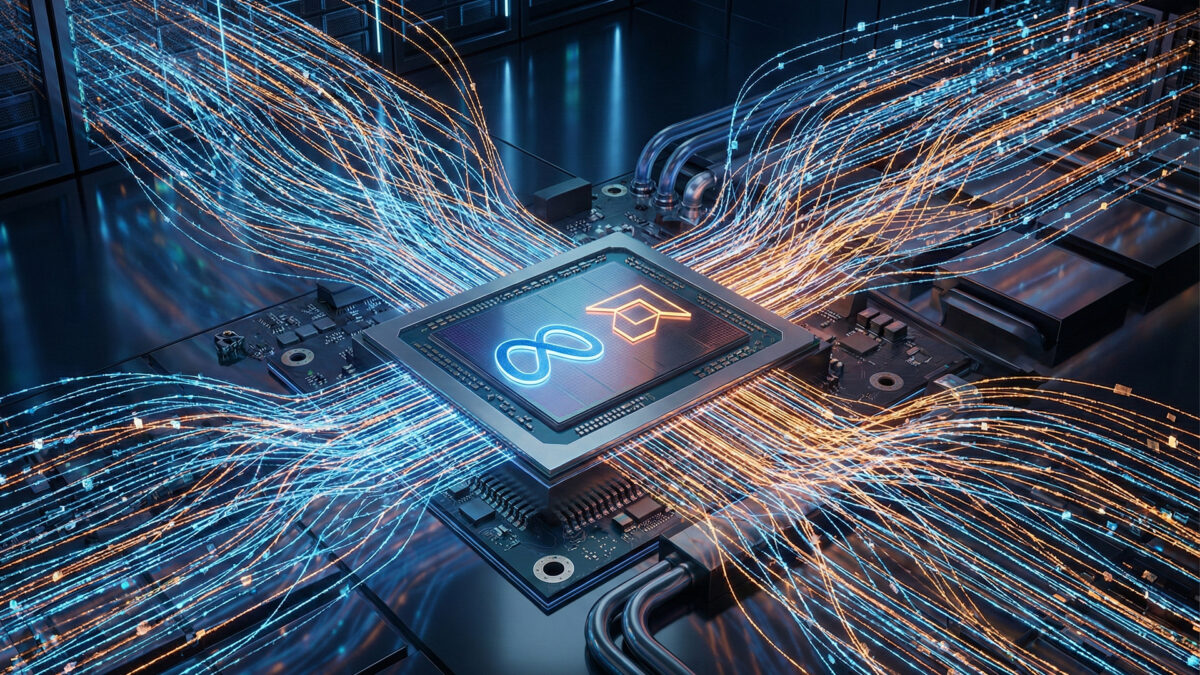
Meta–AMD seal AI chip deal

Meta has signed a major long-term agreement with semiconductor firm AMD to supply advanced artificial intelligence (AI) chips for its growing data-centre operations, marking a significant shift in the social media giant’s hardware strategy. The deal is expected to reduce Meta’s heavy dependence on Nvidia, currently the dominant supplier of AI processors.

Under the partnership, AMD will provide its latest AI accelerators and supporting infrastructure, which will be used to train and run large-scale AI models across Meta’s platforms, including Facebook, Instagram and WhatsApp. The move comes as the company rapidly expands its AI capabilities for content recommendations, advertising, generative AI tools and its metaverse projects.

Meta has been investing billions of dollars in AI infrastructure, and chip costs have become one of its biggest expenses. By diversifying its suppliers, the company aims to improve efficiency and gain stronger bargaining power in a market where demand for high-performance AI hardware has surged.

For AMD, the agreement represents a major opportunity to challenge Nvidia’s dominance in the fast-growing AI chip sector. The company has been positioning its latest processors as a competitive alternative, focusing on performance, energy efficiency and open software ecosystems that allow customers greater flexibility.

The announcement comes at a time when investors are closely watching whether the massive spending on AI infrastructure will translate into long-term revenue growth.

The deal is expected to roll out over several years, with AMD’s chips gradually integrated into Meta’s global data-centre network. Both companies said the partnership would help accelerate innovation and support the next generation of AI-driven services.

Also Read: Paramount enters Warner Bros. deal race against Netflix

Categories
Corporate

AMD unveils new AI, PC chips at CES, Las Vegas

Advanced Micro Devices (AMD) has announced a new range of chips for artificial intelligence, data centres and personal computers at the Consumer Electronics Show (CES) 2026 in Las Vegas, outlining an aggressive roadmap to strengthen its position in the fast-growing AI market.

At the centre of the announcement was the MI455 AI accelerator, part of AMD’s Instinct GPU portfolio, designed for large-scale data-centre and high-performance computing workloads. The chip will be deployed in advanced AI computing racks and is already being supplied to key customers, including OpenAI. AMD also introduced the MI440X, a version aimed at enterprise clients that want to run AI workloads within their own data centres rather than relying on cloud-scale infrastructure.

AMD chief executive Lisa Su also previewed the upcoming MI500 series, expected to launch in 2027. According to the company, these future accelerators are being designed to deliver up to 1,000-fold performance gains over earlier generations, highlighting AMD’s long-term push to compete more strongly in AI hardware.

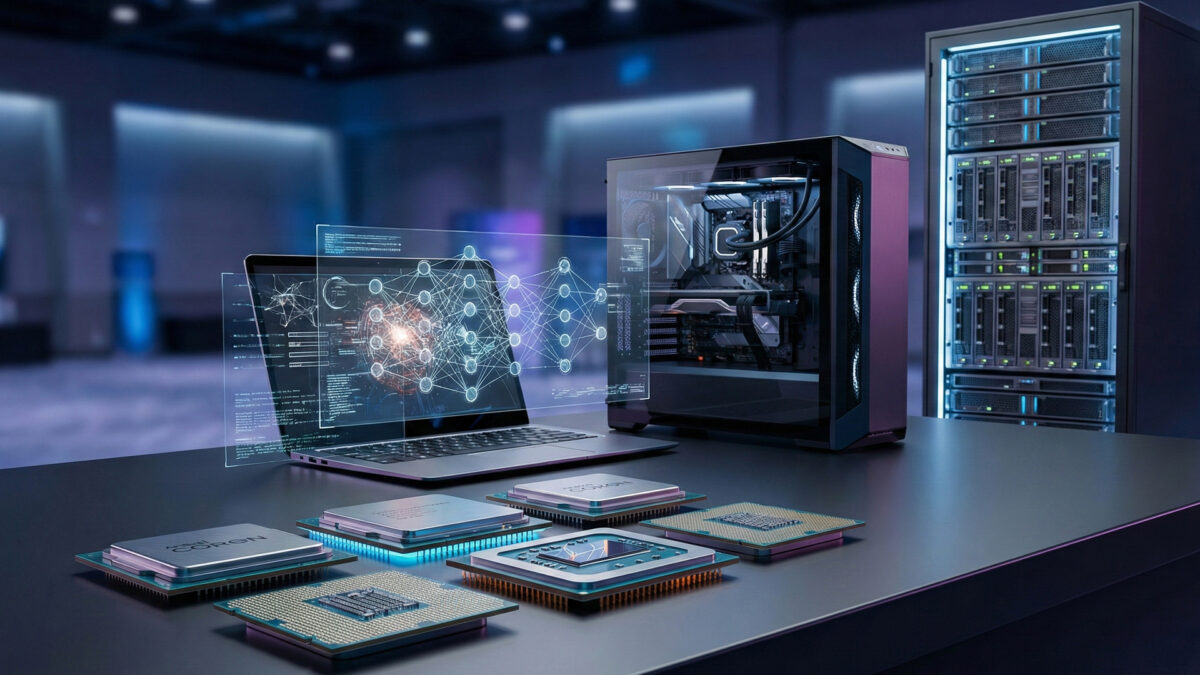
For personal computers, AMD expanded its AI-focused offerings with the launch of the Ryzen AI 400 Series processors. These chips include built-in neural processing units (NPUs) that allow laptops and desktops to run AI tasks locally, such as real-time translation, image generation and productivity tools. The processors support Microsoft’s Copilot+ PC platform and will be used across consumer and commercial devices.

The company also showcased Ryzen AI Max+ chips for thin-and-light systems, aimed at users who need strong graphics performance alongside on-device AI capabilities. In addition, AMD announced the Ryzen AI Halo mini-PC platform, targeted at developers working on AI models and applications, offering high memory capacity and local AI compute power.

In the gaming segment, AMD unveiled the Ryzen 7 9850X3D processor, built on its Zen 5 architecture with enhanced cache technology to deliver improved gaming performance.

With partners expected to begin shipping systems based on the new chips in 2026, AMD’s CES announcements underline its strategy to expand across AI infrastructure, enterprise computing and next-generation PCs, even as competition in the semiconductor industry continues to intensify.

Also Read: HDFC AMC launches ₹2500 crore credit fund