Categories
Corporate

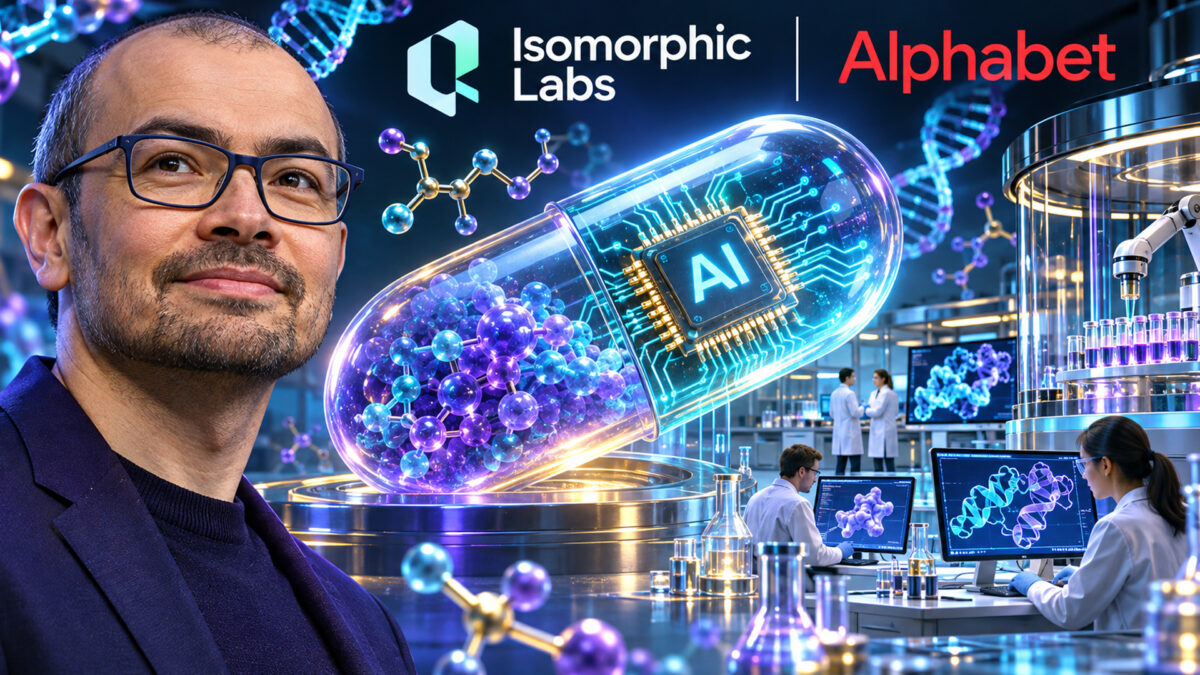
Isomorphic raises $5 bn for AI drug discovery

Artificial intelligence is moving beyond chatbots, automation and software development, with the pharmaceutical industry emerging as one of its most promising frontiers. In a major development for AI-powered healthcare, Isomorphic Labs, the drug-discovery company backed by Alphabet, has raised $5 billion in fresh funding as it prepares to take its AI-designed drug candidates closer to human clinical trials.

The London-based company announced on November 17 that it had secured the funding through a Series C investment round co-led by Greenoaks and Sequoia Capital. Andreessen Horowitz (a16z) and several other new investors also participated, while Alphabet and the company’s existing investors continued their financial backing.

The latest funding comes just six months after Isomorphic Labs raised $2.1 billion in a Series B round in May 2026. The successive multibillion-dollar investments underline the growing confidence among major investors in the potential of artificial intelligence to transform drug discovery and pharmaceutical research.

Isomorphic Labs plans to use the fresh capital to strengthen its proprietary AI-powered drug design technology, expand its pipeline of potential medicines and build the infrastructure required to move experimental drug candidates into clinical development.

The company’s ambitions extend beyond using AI to accelerate existing research methods. It is working towards developing a technology platform capable of designing medicines by understanding and modelling complex biological processes at the molecular level.

Founded in 2021 as a spin-off from Google’s DeepMind, Isomorphic Labs was established to apply advances in artificial intelligence to biological research and medicine development. It is led by Demis Hassabis, the co-founder of DeepMind and Nobel Prize-winning scientist whose work on AlphaFold helped transform the understanding of protein structures.

At the centre of the company’s research is its proprietary Isomorphic Drug Design Engine, known as IsoDDE. The platform combines multiple artificial intelligence and simulation models to examine complex biological systems, study molecular interactions and identify potential drug candidates.

Traditional drug discovery is a lengthy and expensive process. Researchers often spend years identifying promising molecules, testing their interactions with biological targets and refining their chemical properties before a potential treatment can enter clinical trials.

AI-powered drug discovery aims to make this process more efficient by allowing scientists to explore large chemical spaces, predict molecular behaviour and identify promising candidates through computational models. This can help researchers narrow down potential compounds before moving to laboratory experiments.

IsoDDE is designed to bring these capabilities together across different therapeutic areas and drug types. The company says its models are generating increasingly precise predictions and helping researchers develop molecules with improved drug-like properties.

The latest investment will allow Isomorphic Labs to further develop these foundational simulation models, expand into additional areas of biology and strengthen its understanding of disease mechanisms. The company also intends to establish a broader network of research partnerships and build global infrastructure for AI-led bioengineering.

An important part of the funding will go towards developing its translational research and clinical development capabilities. These will help bridge the gap between computer-designed molecules and medicines that can be tested in humans.

The company has reported positive preclinical results from its internal programmes in oncology and immunology. Its first oncology programme is approaching the preclinical study stage, while more than 20 programmes are reportedly underway across its research pipeline.

However, these developments do not mean that its AI-designed medicines are ready for patients. Preclinical research involves laboratory and other early-stage testing to assess the safety and potential effectiveness of a drug before human trials can begin. The candidates will still need to meet regulatory requirements and demonstrate their safety and efficacy through clinical testing.

Isomorphic Labs has also established partnerships with major pharmaceutical companies, including Eli Lilly, Novartis and Johnson & Johnson. These collaborations are aimed at applying its AI drug-design technology to challenging drug discovery programmes.

The company’s latest fundraising also reflects a broader shift in the pharmaceutical industry, where technology companies and traditional drugmakers are increasingly exploring artificial intelligence to improve research productivity.

Despite the enthusiasm surrounding AI-designed medicines, significant scientific and regulatory challenges remain. Predictions generated by AI models must be validated through laboratory experiments and clinical trials. A promising molecular design does not automatically translate into a safe or effective medicine.

No AI-designed drug has yet received regulatory approval, making the transition from computational research to successful human treatment a critical test for companies operating in this space.

Hassabis said the fresh investment would help accelerate the company’s efforts to build foundational biology models, deepen its understanding of diseases and move its first therapeutic programmes towards clinical trials. The broader objective is to create a platform capable of developing medicines at a much greater scale.

The company has not disclosed its valuation following the Series C funding round. Earlier reports had suggested that it was seeking a valuation of around $50 billion, but this figure has not been officially confirmed.

With $5 billion in additional capital, Isomorphic Labs is positioning itself among the most heavily funded players in AI-driven drug discovery. The coming years will be crucial in determining whether its technology can translate advances in artificial intelligence into effective medicines and make the drug development process faster, more precise and potentially more accessible.


 

Categories
Corporate

AMD invests $5 bn in Anthropic AI partnership

Advanced Micro Devices (AMD) has announced a landmark partnership with artificial intelligence startup Anthropic, committing to invest up to $5 billion in the company as both firms strengthen their position in the rapidly expanding artificial intelligence (AI) industry. The deal combines a major financial investment with a long-term technology collaboration aimed at accelerating the development and deployment of next-generation AI systems.

The partnership marks one of AMD’s biggest strategic moves in the AI sector and reflects the growing competition among technology companies to build the computing infrastructure needed for increasingly powerful AI models. As businesses worldwide adopt generative AI at an unprecedented pace, demand for advanced AI chips and high-performance computing continues to surge.

As part of the agreement, AMD will make a strategic investment of up to $5 billion in Anthropic over several years. The AI startup, known for developing the Claude family of AI models, will also use AMD’s latest AI accelerators to train and run future generations of its artificial intelligence systems.

The collaboration gives Anthropic another major hardware partner beyond Nvidia and broadens AMD’s role in the fast-growing AI chip market. For AMD, the agreement represents an opportunity to showcase the performance of its AI processors while expanding its presence among leading AI developers.

The announcement comes at a time when technology companies are investing billions of dollars to secure access to advanced computing resources. Training large language models requires enormous computing power, making specialised AI chips one of the most valuable assets in the global technology industry.

AMD Chief Executive Officer Lisa Su said the partnership reflects the company’s commitment to building an open AI ecosystem and providing customers with greater choice in AI infrastructure. She noted that developers increasingly want alternatives that can deliver high performance while avoiding dependence on a single hardware supplier.

Anthropic has rapidly emerged as one of the world’s leading AI companies through its Claude chatbot and enterprise AI solutions. The company focuses on developing reliable and responsible artificial intelligence systems for businesses, researchers and consumers. As demand for its AI services grows, expanding computing capacity has become a critical priority.

For Anthropic, partnering with AMD offers access to advanced AI hardware that can support the growing computational demands of developing increasingly capable AI models. Diversifying its hardware suppliers may also improve resilience and flexibility as competition for AI chips intensifies worldwide.

The partnership extends beyond investment alone. The two companies plan to optimise Anthropic’s AI models for AMD’s latest AI accelerators, improving performance, efficiency and scalability. Engineers from both organisations are expected to work closely to fine-tune software and hardware for large-scale AI training and inference.

Industry analysts view the agreement as another sign that the AI hardware market is becoming increasingly competitive. Nvidia continues to dominate the sector with its graphics processing units (GPUs), but rivals such as AMD are investing aggressively to capture a larger share of the rapidly expanding market.

The deal also highlights the enormous capital flowing into artificial intelligence. Over the past two years, leading AI companies have attracted billions of dollars in funding from technology giants and institutional investors as competition intensifies to develop the most advanced generative AI models.

For enterprises, increased competition among AI chip providers could eventually reduce costs, improve hardware availability and accelerate innovation. Businesses deploying AI applications are seeking powerful yet flexible computing platforms capable of supporting everything from chatbot services to scientific research and enterprise automation.

AMD has significantly expanded its AI strategy in recent years through new product launches, software investments and partnerships with cloud providers and AI developers. The collaboration with Anthropic further strengthens its position in the evolving AI infrastructure ecosystem and demonstrates its ambition to become a leading supplier of AI chips for generative AI workloads.

Meanwhile, Anthropic continues to grow its global presence as demand rises for enterprise-grade artificial intelligence solutions. The company has increasingly focused on building secure and trustworthy AI systems that can be deployed across industries including finance, healthcare, education and software development.

The AMD-Anthropic partnership underscores how artificial intelligence has become one of the world’s most competitive technology sectors. As companies race to develop faster AI models and more powerful computing infrastructure, collaborations between semiconductor manufacturers and AI developers are expected to play a central role in shaping the future of generative AI, AI chips, cloud computing and advanced AI infrastructure. With billions of dollars now committed to the partnership, both companies are positioning themselves for the next phase of the global AI revolution.

Categories
Beyond

US halts use of Anthropic AI

US President Donald Trump has ordered federal agencies to stop using artificial intelligence tools developed by Anthropic, marking a sharp escalation in tensions between the administration and the fast-growing AI sector.

The directive requires departments to begin phasing out Anthropic’s systems, including those already embedded in administrative and defence operations. According to officials familiar with the decision, the move follows weeks of disagreement over limits placed on the company’s flagship AI model, Claude, particularly in military contexts.

At the heart of the conflict are safeguards built into Anthropic’s technology. The company has imposed restrictions designed to prevent applications such as mass domestic surveillance and fully autonomous weapons. Representatives from the Department of Defense have argued that those constraints reduce operational flexibility and complicate legitimate national security planning.

Trump described the decision as necessary to protect executive authority and ensure that government agencies are not constrained by private-sector policies. The administration is reportedly reviewing existing contracts and examining whether additional regulatory steps could follow.

Anthropic’s chief executive, Dario Amodei, defended the company’s approach, stating that its safety guardrails are central to responsible AI deployment. He warned that removing such protections could lead to unintended and potentially dangerous outcomes. The firm has indicated it may pursue legal avenues if further punitive measures are imposed.

The dispute has drawn significant attention across Silicon Valley, where AI companies are increasingly partnering with government agencies.

Also Read: OpenAI wins Pentagon deal as Donald Trump clashes with Anthropic