Categories
Corporate

Bitcoin falls 26% to $94,000, erases 2025 gains

Bitcoin has dropped sharply over the past few days, completely erasing the gains it had made since January. The world’s largest cryptocurrency fell below $94,000, slipping under last year’s closing price and signalling a clear shift toward a bear market.

In early October, Bitcoin had touched a record high of $126,000, driven by strong investor excitement and heavy buying through crypto exchange-traded funds (ETFs). But the mood changed suddenly after political uncertainties in the US triggered fear across global financial markets. As investors became cautious, Bitcoin was one of the first assets to react, sliding faster than many stocks or commodities.

Analysts say one major reason for the fall is that big institutional investors,  who had supported Bitcoin through much of the year, have stepped back for now. Several Bitcoin ETFs, which had attracted billions earlier, have seen large withdrawals recently. Nearly $870 million left these funds in just a few days, removing an important source of steady demand.

Market liquidity has also weakened. Traders report that the number of active buyers and sellers in the market has dropped, which means even medium-sized trades can now push the price up or down very quickly. This makes the market more sensitive and increases volatility.

The decline has also affected companies that hold large amounts of Bitcoin. One major US-based firm, well known for building its business strategy around Bitcoin, has seen its own market value fall close to the value of the Bitcoin it owns. This suggests investors are becoming doubtful about companies heavily tied to crypto price movements.

For retail investors, the sudden drop has come as a shock. Many who joined the rally earlier this year are now worried about whether the slide will continue. Experts say Bitcoin’s price could remain unstable in the near future unless confidence returns and new buyers step in.

Also Read: Tata Motors PV shares fall 7% despite profit surge

Categories
Corporate

Tata Motors PV shares fall 7% despite profit surge
Shares of Tata Motors’ passenger-vehicle (PV) business fell around 7% even though the company reported a huge year-on-year profit increase of 2,110% for the September quarter.

The big profit came mostly from a one-time gain of about ₹82,616 crore. Without this, the PV business actually made a loss of around ₹6,368 crore. Revenue also fell by about 13% year-on-year.

Jaguar Land Rover (JLR), the luxury car arm, faced a cyber-attack that temporarily halted production and weak global demand. It posted a loss of £559 million and cut its margin forecast for FY26 to 0–2% from 5–7%. JLR also expects negative cash flow of up to £2.5 billion.

Analysts say the Indian PV business is stable and improving, but the problems at JLR are worrying investors. As a result, brokers have downgraded the PV business stock to “Reduce” or “Sell.”

Also Read: Sensex climbs 200 pts, Nifty tops 25,950

Categories
Corporate

Sensex climbs 200 pts, Nifty tops 25,950

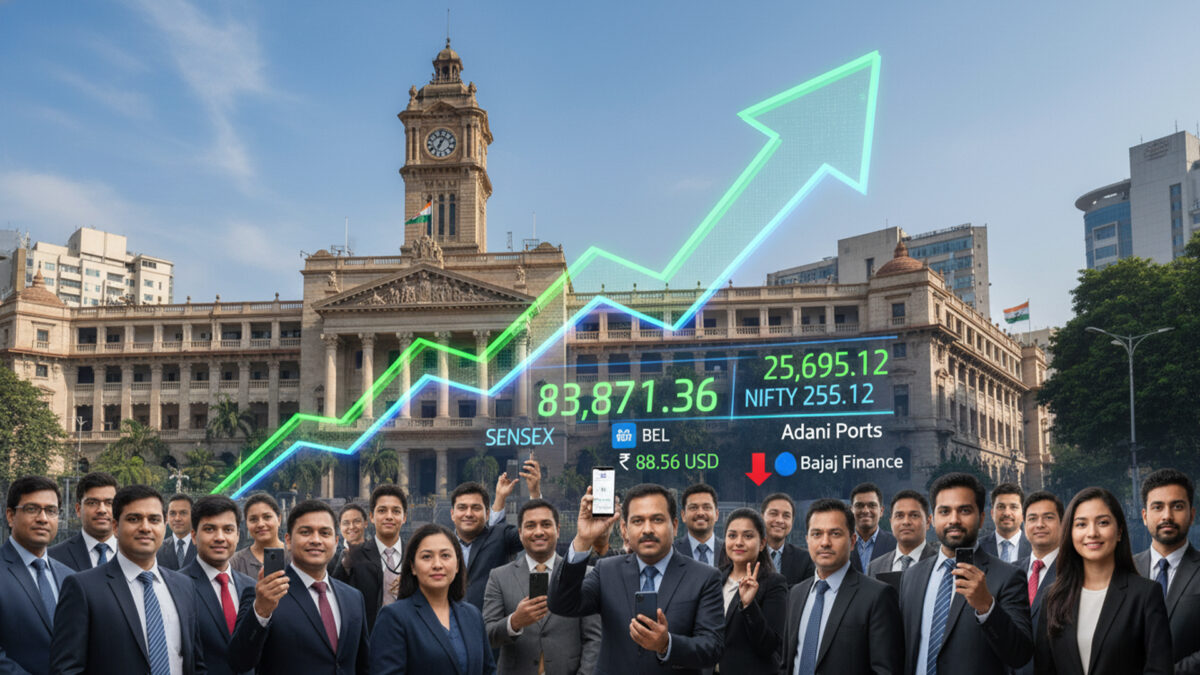
Indian markets climbed on Monday with the BSE Sensex rising over 200 points and the Nifty 50 crossing 25,950. The Nifty Bank index hit a fresh all-time high, supported by strong buying in private and public sector banks.

Investors were encouraged by better-than-expected Q2 earnings and hopes of stronger domestic consumption, although global trade uncertainties and US rate-cut signals kept caution in the background.

Among the top gainers, Kotak Mahindra Bank rose after announcing a board meeting to consider a stock split. Bharti Airtel, NTPC Ltd., and IdeaForge Technology also advanced, with IdeaForge surging nearly 11% after winning a defence contract.

On the losing side, Tata Motors PV tumbled around 7% after weak guidance on its JLR business, while TCS and Infosys were among the major IT laggards.

Overall, the market sentiment was buoyed by optimism in earnings, led by banking and select blue-chip stocks.

Categories
Corporate

Maruti recalls nearly 40,000 Grand Vitaras for fix

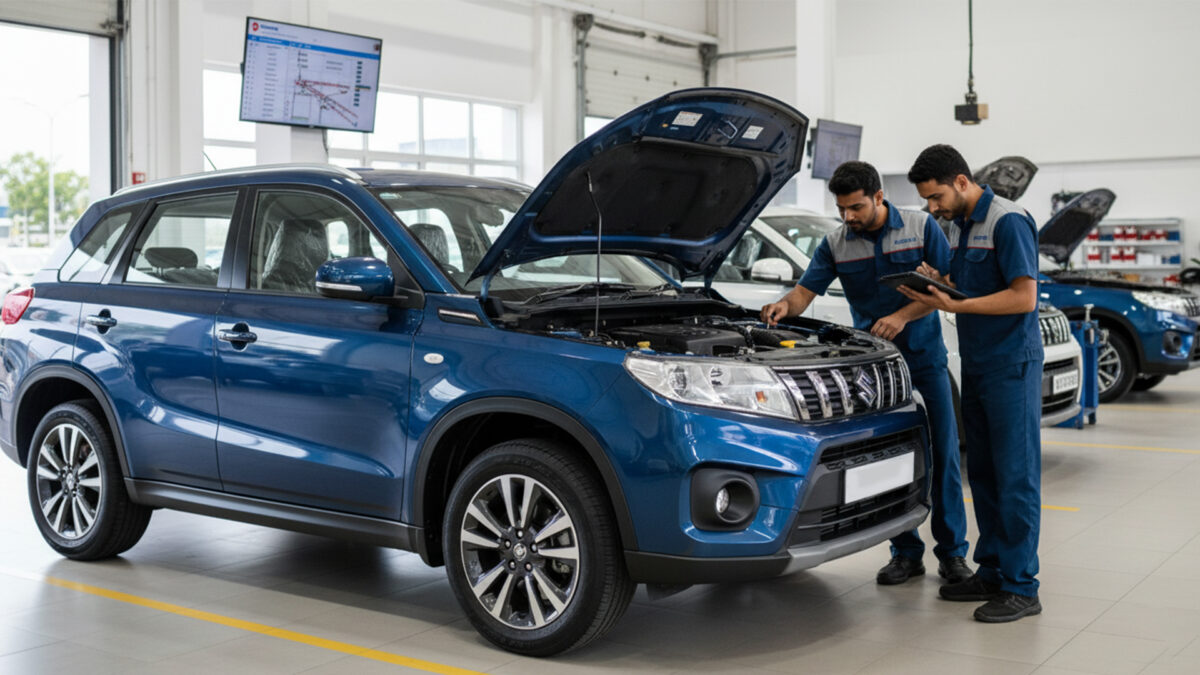
Maruti Suzuki has announced a recall of 39,506 units of its Grand Vitara SUV to fix a problem with the fuel indicator. The company said some vehicles may show incorrect fuel levels on the speedometer, and in certain cases, the low-fuel warning light may also malfunction.

The affected SUVs were manufactured between 9 December 2024 and 29 April 2025. Maruti Suzuki said the issue was found during internal checks and the recall is being carried out as a precautionary measure, not because of any reported safety incident.

As part of the recall, customers will be contacted by Maruti Suzuki. They will be asked to bring their vehicles to an authorised service centre, where the speedometer assembly will be replaced free of cost.

The company added that the recall is aimed at ensuring the vehicle’s fuel-related information is accurate and that customers do not face inconvenience while driving.

Also Read: Reliance announces 1-GW AI data centre in Andhra

Categories
Corporate

Reliance announces 1-GW AI data centre in Andhra

Reliance Industries Ltd (RIL) has signed an MoU with the Andhra Pradesh government to build a 1-gigawatt AI data centre in Visakhapatnam. The agreement was finalised during the CII Partnership Summit 2025, attended by Chief Minister N. Chandrababu Naidu and senior Reliance leaders.

The upcoming facility will be a modular, high-performance data centre designed to handle next-generation AI workloads. It will support advanced processors such as GPUs, TPUs and specialised AI chips. The company said this centre will act as a “twin” to its gigawatt-scale AI hub in Jamnagar, Gujarat, creating a strong national network for AI computing.

To ensure sustainable power supply, Reliance will also set up a 6 GWp solar power plant in Andhra Pradesh. This will help meet the heavy energy needs of the AI facility while supporting the state’s push for renewable energy.

In addition to the data centre, RIL plans to develop a fully automated greenfield food park in Kurnool, spread across 170 acres. The park will manufacture beverages, packaged water, snacks and various food products. The project is expected to generate thousands of jobs and boost local supply chains.

Reliance said the new investments reflect its commitment to supporting Andhra Pradesh’s economic growth. The company has already invested over $25 billion in the state across its energy, retail and digital businesses.

Chief Minister Naidu welcomed the announcement, saying the projects will help position Andhra Pradesh as a hub for AI innovation, renewable energy and advanced manufacturing.

Also Read: Google to invest $40 billion in Texas

Categories
Corporate

Google to invest $40 billion in Texas

Google has announced a massive $40 billion investment in Texas to expand its artificial intelligence and cloud computing capacity by 2027. The multi-year plan marks one of the company’s biggest infrastructure commitments in the US and positions Texas as a major hub for its next phase of AI growth.

The investment includes building three new data center campuses across West Texas, one in Armstrong County and two in Haskell County. One of the Haskell sites will be developed alongside a solar and battery storage facility, reflecting Google’s push to power AI infrastructure with cleaner energy. The company will also scale up its existing data center operations in Midlothian and the Dallas–Fort Worth region.

As AI workloads surge, Google is also focusing on securing long-term power supply. The company plans to add over 6,000 MW of new energy capacity through partnerships with energy developers. In addition, it has launched a $30 million Energy Impact Fund to support energy-efficiency and community projects across Texas.

To meet rising demand for skilled labour, Google will support electrical training programmes statewide, aiming to prepare more than 1,700 electrician apprentices by 2030. The company expects the investment to generate thousands of jobs over the next few years.

CEO Sundar Pichai said the Texas build-out will “power the new era of AI innovation,” while Texas Governor Greg Abbott welcomed the project as a major vote of confidence in the state’s business environment.

The move comes as global tech giants race to expand data center capacity to support AI models, cloud services, and advanced computing needs. While the scale of the investment highlights Texas’s growing importance in the AI economy, it also raises questions around energy consumption, environmental impact, and long-term sustainability.

Also Read: Trump drops tariffs to ease food prices

Categories
Corporate

Sensex up 84 points, Nifty tops 25,900

The BSE Sensex ended 84 points up, while the Nifty 50 surpassed the 25,900 mark, closing at 25,916, on Thursday.

The market witnessed a quiet session in the morning, weighed down by profit-taking and cautious sentiment. However, optimism returned in the fag-end of trading, fueled by expectations of policy stability after the Bihar election results. Investors were seen snapping up stocks that had underperformed in earlier trades.

Among the gainers, TMCV led the charge with a 4% rise, followed by Eternal, which gained 2%. Other notable contributors included Trent, BEL, and SBI, which saw healthy buying interest.

On the downside, counters such as Tata Motors PV, Infosys, Tata Steel, ICICI Bank, Tech Mahindra, UltraTech Cement, and ITC ended lower, with losses ranging from 1% to 2.5%. Analysts noted that profit-booking in heavyweight stocks kept the gains in check despite a positive end to the session.

Market participants said the late rally reflected selective buying in fundamentally strong stocks, while broader market trends remain cautious ahead of upcoming corporate earnings and macroeconomic updates.

Also Read: Sensex sheds 300, Nifty below 25,800, muted opening

Categories
Corporate

Adani secures ₹63,000 cr worth power projects in Assam

Adani Power and its affiliate Adani Green Energy Ltd have won two major contracts from Assam Power Distribution Company Limited, aiming to strengthen the state’s power infrastructure with a combined investment of around ₹63,000 crore.

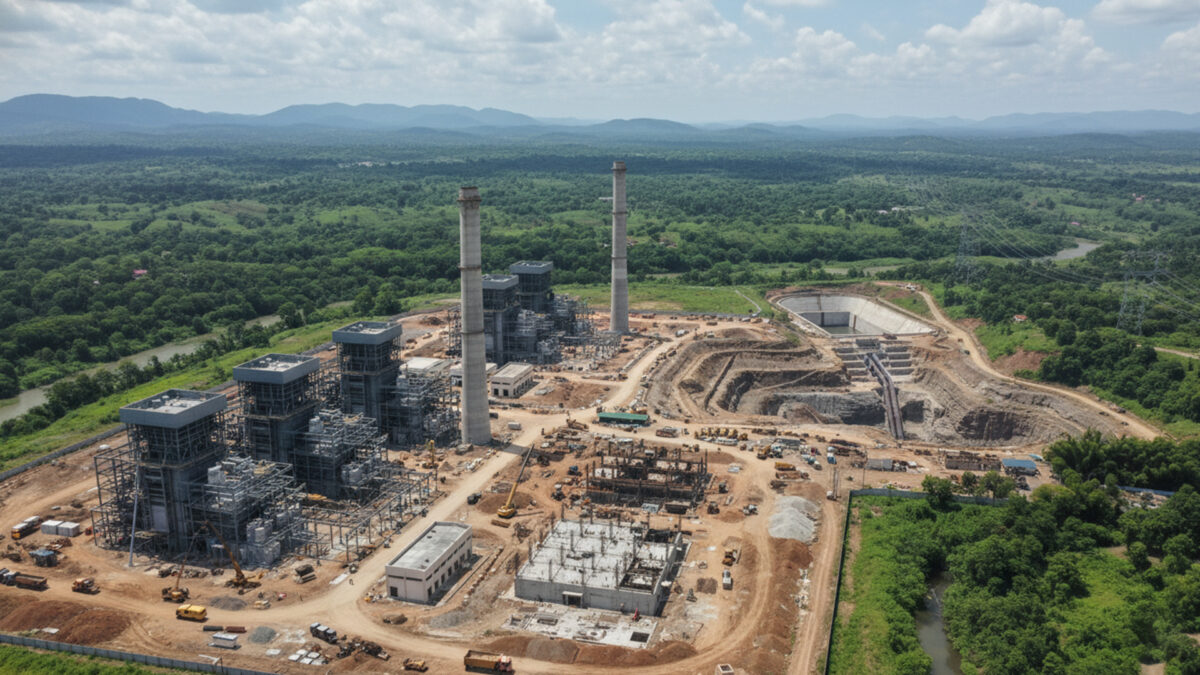
Under the first project, Adani Power will build a 3,200 MW ultra-supercritical thermal power plant. The plant will have four units of 800 MW each and is expected to start operations in phases from December 2030, with full commissioning by December 2032. The project will be developed under a design-build-finance-own-operate model, supplying electricity to Assam under a long-term agreement. Coal for the plant will be procured following government guidelines to ensure steady fuel availability. The estimated investment for this project is around ₹48,000 crore.

The second project involves a 500 MW pumped hydro energy storage facility to be developed by Adani Green’s subsidiary. This is part of a wider plan to set up two pumped storage plants in Assam with a combined capacity of 2,700 MW and an investment of roughly ₹15,000 crore. Pumped storage allows electricity to be stored and released when needed, improving grid stability and supporting reliable power supply. The project will operate under a fixed tariff for 40 years from the start of commercial operations.

These projects come as the Adani Group expands into both traditional thermal power and large-scale storage solutions, reflecting Assam’s push to increase electricity generation and strengthen the grid. The initiatives are expected to boost regional infrastructure, create local employment opportunities, and enhance supply chain engagement, though the projects have long-term timelines.

Overall, these twin contracts mark a major expansion for the Adani Group in northeast India and align with national priorities to enhance generation capacity, introduce storage solutions, and build a stronger, more resilient power grid for the future.

Also Read: Adani Cement’s big green leap with TNFD adoption, a first in India

Categories
Corporate

Suraj Estate launches ₹1,200‑cr Mumbai commercial hub

Suraj Estate Developers has taken a significant step in expanding its commercial presence with the launch of ‘One Business Bay’, a premium workspace project valued at ₹1,200 crore. The development is located on Senapati Bapat Marg, an emerging business corridor in South‑Central Mumbai, offering excellent connectivity via western and central railway lines, and soon, the Mahim‑BKC connector.

The project, designed by celebrated architect Hafeez Contractor, features 182 premium office spaces alongside retail outlets, restaurants, cafés, and a double‑height “E‑Deck” for collaborative work and relaxation. Spanning 2.09 lakh sq ft, One Business Bay combines modern design with sustainability, including UV‑protected double‑glazed facades, advanced air filtration systems, central air-conditioning, and a target Gold LEED certification.

According to Rahul Thomas, Whole-Time Director at Suraj Estate, the project reflects rising demand from institutional and corporate tenants seeking well-designed, sustainable workspaces in Mumbai’s key micro-markets. The company has already launched projects worth approximately ₹1,600 crore in the current financial year.

The market responded positively as the company’s stock jumped nearly 6% intraday on the BSE following the announcement, signaling investor confidence in its commercial growth strategy.

With One Business Bay, Suraj Estate is betting on a new wave of premium commercial spaces in a strategically connected business belt, blending modern design, sustainability, and convenience for Mumbai’s evolving corporate landscape.

Also Read: Adani Cement’s big green leap with TNFD adoption, a first in India

Categories
Corporate

Godrej Consumer buys Muuchstac for ₹450 crore

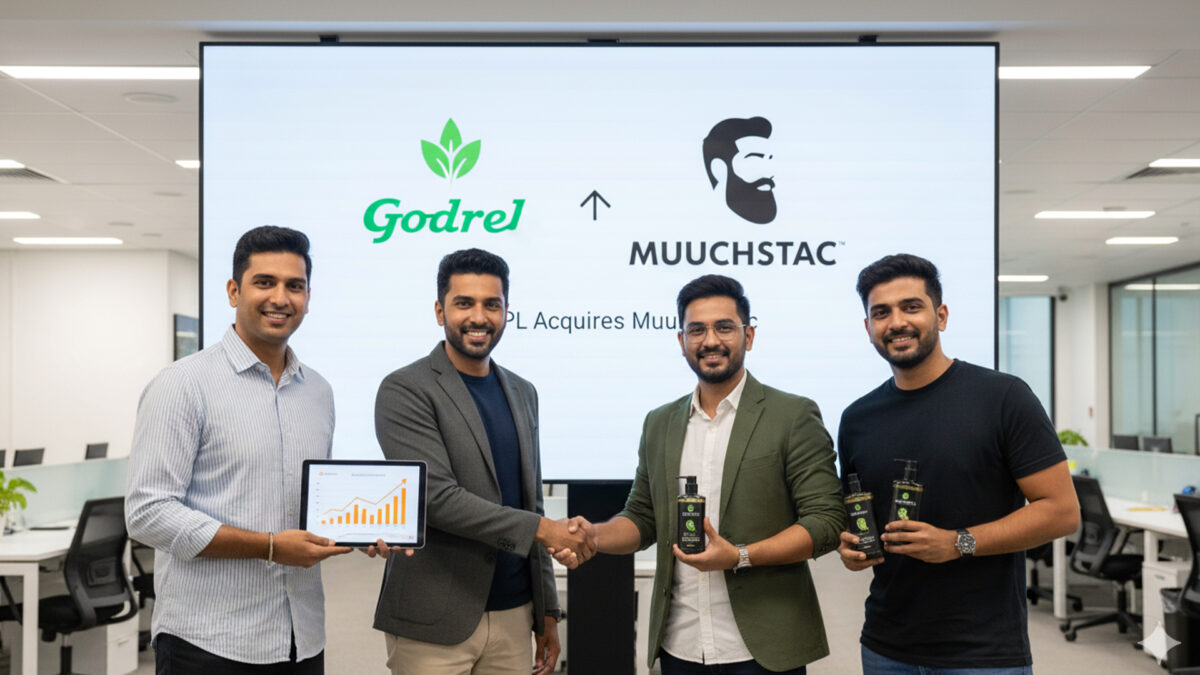
Godrej Consumer Products Ltd (GCPL) has acquired the men’s grooming brand Muuchstac in a deal worth ₹450 crore. The founders, Vishal Lohia and Ronak Bagadia, will continue to run the business under GCPL’s ownership.

Muuchstac, launched in 2017, has grown quickly in the direct-to-consumer space, with its best-selling face wash contributing nearly 90% of total sales. The brand achieved profitability early, which made it an attractive acquisition target.

GCPL said the move aligns with its plan to expand into fast-growing, digital-first personal-care brands. The company sees strong potential in men’s grooming and believes Muuchstac’s focused product range and online presence will strengthen its portfolio.

The acquisition marks another step in GCPL’s strategy to tap high-growth, new-age FMCG brands and deepen its presence in the D2C market.

Also Read: Adani Cement’s big green leap with TNFD adoption, a first in India