Categories
Corporate

Lenskart to Launch IPO on October 31

Indian eyewear retailer Lenskart Solutions Ltd. is gearing up for its initial public offering (IPO), slated to open on October 31 and close on November 4, 2025.

The offering aims to raise about ₹7,278 crore through a combination of fresh equity issuance and an offer for sale (OFS).

The IPO is structured with a fresh issue amounting to ₹2,150 crore, while the remaining portion involves the sale of over 12.75 crore equity shares by promoters and early investors via the OFS.

The board has fixed the price band at ₹382-402 per share, and the minimum lot size for subscription is 37 shares.

Backed by heavyweight investors including SoftBank Vision Fund II, Temasek Holdings, Kedaara Capital and Abu Dhabi Investment Authority (ADIA), Lenskart’s IPO is seen as one of the marquee listings of 2025.

A compelling element is the company’s recent turnaround: Lenskart reported a net profit of ₹62 crore in Q1 FY26, up from a loss in the prior year’s comparable period.

According to media reports, the IPO values Lenskart at roughly ₹69,000-72,000 crore (approximately USD 8 billion), at the upper end of the price band.

Proceeds from the fresh issue will be utilised by Lenskart for the expansion of company-owned stores, enhancement of technology infrastructure, brand marketing, and general corporate purposes.

This IPO ticks several positive boxes for the company: it offers an exit route for early investors, is backed by strong institutional participation, shows improved profitability, and taps into the growing organised eyewear market in India.

With the IPO opening at a time when investor sentiment is buoyant, Lenskart’s listing is likely to command significant market attention as it enters the public markets.

Also Read: Reliance, Meta Form $100 Million AI Joint Venture

Categories
Corporate

Reliance, Meta Form $100 Million AI Joint Venture

Reliance Industries Ltd. and Meta Platforms on Friday announced the formation of a joint venture aimed at building and scaling enterprise artificial-intelligence tools for businesses in India and select international markets, with an initial capital commitment of about ₹855 crore (roughly $100 million).

Under the agreement, Reliance will hold the majority stake while Meta will be a strategic minority partner; the companies said the new unit will leverage Meta’s open-source Llama models and Reliance’s distribution channels and enterprise relationships to offer sovereign, enterprise-ready AI platforms.

Company statements and reporting indicate the venture will be capitalized in a 70:30 ratio in favor of Reliance, reflecting Reliance’s controlling interest and operational lead in delivering products and services to Indian businesses, small and large.

Meta said the partnership is intended to accelerate adoption of its Llama family of models in enterprise contexts by tailoring them to local regulatory and data-sovereignty requirements, while Reliance framed the deal as part of a broader push to build an “AI backbone” for India that combines cloud infrastructure, data centers and applied AI use cases across energy, retail, telecom and financial services.

The announcement follows a period of conversations between major global AI developers and Reliance about deeper collaboration in India’s fast-growing AI market.

Meta’s blog post describing the strategic partnership said the JV will develop Llama-based enterprise AI solutions and bring those tools to Indian companies, while Reliance executives have highlighted plans to host and operate technology locally to meet customer and regulatory needs.

Market analysts and coverage from Reuters and other outlets characterized the move as part of Reliance’s push to diversify its digital portfolio and to position Jio Platforms and related businesses as distribution partners for third-party AI models and services.

Regulatory approvals and international clearances have been reported as part of the path to operationalize the venture.

Several Indian and international media outlets noted that the arrangement has begun to clear required scrutiny, enabling the companies to start onboarding customers and building enterprise products.

Observers said the partnership signals a broader trend in which global AI developers seek local allies in prominent emerging markets to deliver tailored, compliant AI services while tapping into established sales and infrastructure networks.

Reliance’s concurrent partnerships with other technology companies to develop cloud and data-center capacity also position the group to host and scale models and services produced through the new JV.

The joint venture is likely to intensify competition in India’s nascent enterprise-AI landscape, where international cloud providers, local startups and conglomerates are racing to offer industry-specific models and managed AI services.

Both Reliance and Meta said in their announcements that the JV will focus on delivering “enterprise-ready” solutions while respecting local data rules, but the companies did not disclose detailed product roadmaps or customer names at the time of the announcement.

Analysts will be watching closely for follow-on disclosures about governance, model-safety measures, and the timeline for commercial rollouts.

Also Read: RIL Faces Margin Pressure Amid Fresh Russian Oil Sanctions

Categories
Corporate

RIL Faces Margin Pressure Amid Fresh Russian Oil Sanctions

Reliance Industries Ltd. (RIL) is carefully assessing the implications of recent sanctions imposed by the United States Department of the Treasury, the European Union and the United Kingdom on major Russian oil producers, as the company moves to align with compliance obligations while managing potential impacts on its refining business.

The new U.S. sanctions announced on October 22 specifically target Rosneft Oil Company and Lukoil Oil Company, two of Russia’s largest crude-oil exporters.

Under the restrictions, non-U.S. entities must wind down business with those firms by November 21, or risk secondary sanctions.

Reliance, which has a long-term deal to import approximately 500,000 barrels per day from Rosneft, is one of the most exposed refiners in India due to its historically large purchases of discounted Russian crude.

In its official statement, Reliance affirmed that it has “noted the recent restrictions announced by the European Union, United Kingdom and United States on crude-oil imports from Russia and export of refined products to Europe. Reliance is currently assessing the implications, including the new compliance requirements.”

The firm emphasized commitment to full compliance with applicable regulations and indicated it will adapt its refinery operations accordingly.

Analysts estimate that the margin impact could be meaningful. The discounted Russian barrels had provided Reliance a cost advantage in its feedstock basket.

With the discount narrowing and the need to shift to alternative crude sources—potentially from West Asia or Africa—the cost base could increase, squeezing refining margins by an estimated US$3 to 5 per barrel in some scenarios.

One analyst noted that despite the discount falling to about US$2-3 a barrel versus over US$10 previously, losing access entirely or transitioning to more expensive barrels would “hit export competitiveness directly.”

A company spokesperson reiterated confidence in the company’s “time-tested, diversified crude-sourcing strategy” and said the firm expects to maintain stability and reliability in its refining operations, including exports to Europe.

However, industry sources point out that switching supply lines at scale presents challenges.

One senior executive noted that other refiners will also target the same non-Russian barrels, which could drive up the premium on alternative crude and further eat into margins.

In addition to feedstock cost risks, the sanctions may complicate trade-flows for refined products. The EU’s recent sanction package prohibits imports of refined products made from Russian crude if the crude was processed within 60 days through third-country refineries.

This could affect Reliance’s exports and logistics strategy.

Despite the uncertain outcome, Reliance has indicated it will remain aligned with Indian government guidelines on the matter.

While the company holds some inventory buffer and believes immediate margin impact may be limited, the long-term adjustment remains delicate. Reliance’s refining business contributes nearly 60 percent of its consolidated revenue, so even a moderate margin squeeze could affect profitability at scale.

Categories
Corporate

IMF Backs India’s Growth Story With 6.6% Forecast

The International Monetary Fund (IMF) has raised its growth projection for India’s economy to 6.6% for FY2025, a slight uptick from its earlier estimate of 6.5%, underscoring the country’s resilience amid a volatile global environment.

According to the IMF, India’s strong 7.8% growth in the first quarter, supported by buoyant domestic demand, robust government capital expenditure, and improving private investment sentiment, has contributed to the upward revision.

With this forecast, India is expected to maintain its position as the world’s fastest-growing major economy, significantly outpacing China’s 4.8% growth projection for the same period.

At the global level, the IMF expects overall growth to remain steady at 3.2% in 2025, easing slightly to 3.1% in 2026, amid continued trade frictions, geopolitical tensions, and structural labour-market pressures.

The Fund, however, anticipates a marginal slowdown to 6.2% in FY2026, reflecting potential moderation as global financial conditions tighten and export demand softens.

In its latest assessment, the IMF urged economies to maintain fiscal prudence, uphold central bank independence, and pursue structural reforms to strengthen long-term growth prospects.

Also Read: Blackstone Backs Federal Bank With Nearly ₹6,200 Crore Investment

Categories
Corporate

Blackstone Backs Federal Bank With Nearly ₹6,200 Crore Investment

Federal Bank has announced a significant capital-raising decision, with global private equity firm Blackstone committing an investment of ₹6,196.51 crore that could give it close to a 10% stake in the bank. The board has approved issuing 272.97 million convertible warrants at ₹227 per share, forming part of a broader fundraising plan to strengthen the bank’s balance sheet and support future growth.

Blackstone will pay 25% of the warrant value upfront, with the remainder due at the time of conversion. The warrants can be exercised within 18 months in one or more tranches. Any unconverted warrants after this period will lapse, and the upfront payment will be forfeited.

As part of the agreement, Federal Bank will also offer Blackstone the right to nominate one non-executive director to the board, provided the investor holds at least 5% of the bank’s post-conversion equity.

The bank is also exploring additional capital-raising avenues, including a rights issue, preferential allotment and a qualified institutional placement, to enhance its financial flexibility.

An Extraordinary General Meeting is scheduled for 19 November to seek shareholder approval for the proposals. Shares of Federal Bank rose modestly in early trade following the announcement, reflecting positive investor sentiment around the infusion.

Also Read: L&T Secures Major Orders from Hindalco and Tata Steel


Categories
Corporate

GX Group to Establish Photonic Module and Chip Subsidiary in India

Broadband equipment manufacturer GX Group announced plans to invest ₹500 crore to establish a photonic module and chip subsidiary in India.

The new venture aims to bolster GX Group’s presence in the rapidly growing Indian telecommunications and data center markets.

The subsidiary will be headquartered in Manesar, Gurgaon, and is expected to generate over 300 direct jobs.

GX Group CEO Paritosh Prajapati emphasized that the Phase 1 investment will be allocated towards setting up a manufacturing facility in Bhiwadi, Rajasthan, and expanding the company’s existing research and development (R&D) center in Chennai.

Operations at both the manufacturing facility and the R&D center are slated to commence by the first quarter of fiscal year 2027.

Following the operational launch, GX Group plans to begin rolling out chips, with availability in the local market anticipated by October 2026.

The move is part of GX Group’s strategy to tap into India’s burgeoning quantum photonics market, which is projected to be worth about USD 50 billion.

The company’s existing customer base includes major telecom operators and data center companies such as Airtel, ACT, and Tata Play, all of which have expressed interest in the forthcoming products.

This investment underscores GX Group’s commitment to strengthening its foothold in India and contributing to the country’s technological advancement in the field of photonics.

Also Read: L&T Secures Major Orders from Hindalco and Tata Steel

Categories
Corporate

L&T Secures Major Orders from Hindalco and Tata Steel

Larsen & Toubro (L&T), one of India’s leading engineering and construction conglomerates, has announced the receipt of significant orders from Hindalco Industries and Tata Steel, collectively valued between ₹2,500 crore and ₹5,000 crore.

The orders, awarded under L&T’s Minerals & Metals business, mark a substantial boost to the company’s industrial infrastructure portfolio and reflect growing investment in India’s metals and mining sector.

The largest of the contracts comes from Hindalco Industries for the development of a 180 KTPA aluminium smelter and an associated gas treatment centre at a greenfield project in Odisha.

L&T’s responsibilities include civil and structural construction, engineering, procurement, and installation of the plant. This order reaffirms the company’s long-term collaboration with Hindalco, which spans over three decades and has seen L&T contribute to multiple expansions of Hindalco’s alumina, aluminium, and copper plants across India.

Analysts note that the project’s scale and technical complexity underscore L&T’s engineering capabilities and its capacity to deliver large, integrated industrial solutions.

In parallel, L&T has secured a major order from Tata Steel for the construction of a 1 MTPA coke oven battery at the company’s Jamshedpur facility.

The project scope encompasses engineering, manufacturing, supply, construction, and installation, positioning L&T as a key partner in Tata Steel’s ongoing modernization and capacity expansion initiatives.

Industry observers highlight that this project not only strengthens L&T’s relationship with Tata Steel but also signals confidence in India’s steel and allied sectors amid global supply chain uncertainties.

The new orders come at a time when L&T’s Minerals & Metals division has been expanding its footprint across India, winning multiple contracts in recent months.

These projects, spread across diverse states and industrial segments, demonstrate the company’s growing leadership in delivering complex infrastructure for the metals and mining industry.

L&T’s portfolio now includes both greenfield projects and modernization efforts, reinforcing its reputation as a versatile and reliable contractor for large-scale industrial undertakings.

The market response to these developments has been positive, with investors viewing the orders as an endorsement of L&T’s sustained growth prospects.

The contracts also highlight broader trends in India’s industrial sector, where private players are ramping up investment in metals, mining, and associated infrastructure to meet rising domestic demand and reduce reliance on imports.

Experts believe that L&T’s successful execution of such projects will further solidify its position as a premier engineering and construction firm in the country.

With these wins, L&T has demonstrated its ability to secure and execute large-scale projects that require advanced technical expertise, financial stability, and project management excellence.

The contracts from Hindalco and Tata Steel not only reinforce L&T’s prominence in India’s industrial landscape but also signal continued confidence in the company’s capability to drive growth in the metals and mining sector for years to come.

Also Read: Microsoft Expands Copilot AI Capabilities: See Details Here

Categories
Corporate

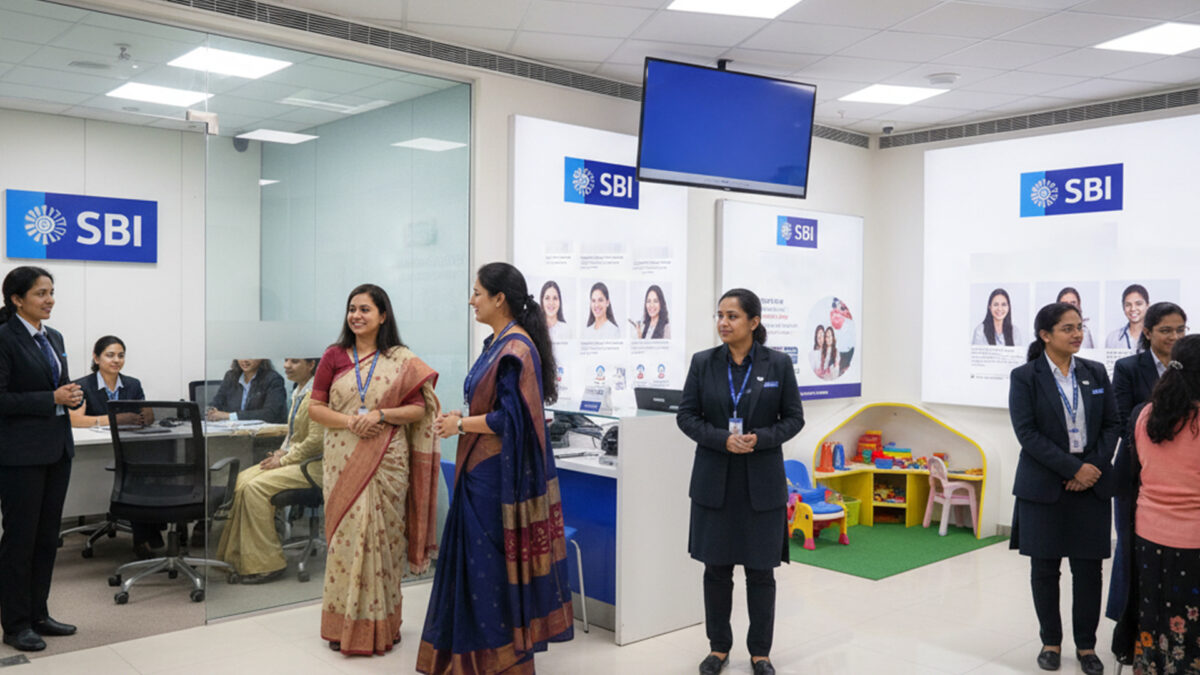
SBI Awarded “World’s Best Consumer Bank 2025”

State Bank of India (SBI) has been named World’s Best Consumer Bank 2025 by the New York-based financial publication Global Finance at its annual awards ceremony held during the International Monetary Fund/World Bank meetings, the bank announced on Thursday.

Simultaneously, SBI and Global Finance jointly recognised the Indian lender as Best Bank in India 2025.

In its statement, SBI said the twin awards validate its global banking status and reflect the bank’s sustained investment in technology, digital channels and inclusive financial services.

The awards were conferred in recognition of the bank’s ability to deliver “world-class banking experiences” across its vast customer base while maintaining technological leadership and geographic reach.

SBI serves over 520 million customers and adds approximately 65,000 new customers each day, according to commentary by the bank’s Group Chairman, Challa Sreenivasulu Setty.

The bank’s flagship mobile banking app is used by more than 100 million customers, with 10 million daily active users, the bank reported. “Serving 520 million customers and adding 65,000 new customers daily requires significant investment in technology and digitalisation,” Setty said.

Commerce and Industry Minister Piyush Goyal congratulated SBI on the achievement, describing it as an important milestone for India’s banking sector and for financial inclusion efforts.

“Heartiest congratulations to the entire SBI family on this well-deserved recognition,” Goyal commented in a social media post. “SBI’s steadfast commitment to financial inclusion and its continuous efforts to serve every section of society is a testament to the pivotal role it is playing in advancing India’s growth story.”

Industry observers note that the Global Finance awards evaluate banks on criteria such as customer service, innovation in digital banking, market reach and financial performance.

In last month’s research article, Global Finance recognised SBI’s transformation into a digitally-driven, customer-focussed bank with special emphasis on vernacular voice-banking, 24/7 digital support and omni-channel engagement, especially across rural and semi-urban areas.

For SBI, this recognition comes at a time when the bank continues to push its ‘Digital First, Consumer First’ strategy.

The bank has significantly expanded its branch and ATM network, built an integrated digital platform, and launched new services aimed at India’s emerging credit and savings segments.

According to bank-disclosed metrics, it has a deposit base of over Rs 54.7 lakh crore and advances exceeding Rs 42.5 lakh crore as of June 2025.

SBI said the awards “reinforce its position as a global banking leader committed to innovation, financial inclusion and customer excellence.”

In a statement, the bank added that the recognition underscores its large-scale delivery of banking services, technological investments and ability to expand across India’s diverse geography.

As SBI moves into the next phase of its growth, the awards are expected to enhance its brand reputation both domestically and globally, and may help cement partnerships and business expansion.

The bank’s achievement also signals a wider recognition of India’s banking system on the global stage, especially as Indian lenders ramp up digitisation and customer-centric services.

Also Read: Eli Lilly, Cipla to Co-Market Tirzepatide in India Under New Brand

Categories
Corporate

Microsoft Expands Copilot AI Capabilities: See Details Here

Microsoft on Thursday unveiled a sweeping update to its AI assistant, Microsoft Copilot, introducing a dozen major features aimed at transforming the tool into a more conversational, collaborative, and deeply integrated companion across its ecosystem.

According to the company’s announcement, the Fall 2025 release equips Copilot with group-work support allowing up to 32 users to collaborate in a single chat, a new personalized memory function enabling the assistant to recall user-specific details for future engagements, and enhanced integrations with core products such as Outlook, Google apps, and the Edge browser.

The update also introduces a new animated avatar, “Mico,” designed to bring a more natural and emotionally responsive interface to voice and chat interactions.

Microsoft’s Edge browser is also receiving its own Copilot Mode upgrade. Among the improvements are “Journeys,” which organize browsing sessions into topic-oriented themes, and “Actions,” which allow Copilot to perform tasks such as unsubscribing from email lists or booking hotel reservations.

These additions reflect Microsoft’s ambition to make Copilot not just a search assistant but a proactive digital companion capable of managing complex user tasks.

In the enterprise space, the update highlights the expansion of Copilot-powered agents across Microsoft 365 applications such as Teams and SharePoint, enabling users to delegate multi-step workflows to the assistant.

Microsoft said Copilot Studio now offers model choice, allowing users to select from different AI engines—including those from Anthropic—to build and deploy specialized agents with varying capabilities.

Microsoft AI Chief Mustafa Suleyman described the release as part of a broader shift from “AI hype to real-world utility,” emphasizing that “technology should work in service of people, not the other way around.”

He added that the new Copilot aims to integrate more seamlessly into users’ daily workflows, enhancing productivity while maintaining accessibility and personalization.

Industry analysts say the update raises the stakes in the competitive generative AI assistant market.

While rivals such as OpenAI and Alphabet continue to advance their own AI platforms, Microsoft’s strategy leverages its massive install base across Windows 11, Microsoft 365, and Edge to position Copilot as the central access point for AI functionality.

The rollout of 12 new features underscores Microsoft’s push to make Copilot a ubiquitous presence across personal, professional, and enterprise environments.

However, some challenges persist. Advanced features such as group collaboration, the Mico voice avatar, and cross-app orchestration are initially being released only in the United States, with global rollout plans still unspecified.

Privacy and data governance issues also loom large as Copilot gains memory functions and greater autonomy. Microsoft has said it is reinforcing transparency controls, enterprise-level safeguards, and model-selection flexibility to address these concerns.

The update is now available to early testers and enterprise customers, with broader availability expected in the coming months.

By expanding Copilot’s reach from productivity apps to a full-stack digital assistant, Microsoft is doubling down on its strategy to make AI a natural and indispensable part of both work and everyday life.

Also Read: Tech Trouble Halts Alaska Airlines Operations Across US

Categories
Corporate

Tech Trouble Halts Alaska Airlines Operations Across US

Alaska Airlines, one of the largest US carriers based in Seattle, grounded all its flights nationwide on Thursday due to a major IT outage.

The disruption also affected its regional subsidiary, Horizon Air. Together with Hawaiian Airlines, the group serves 140 destinations worldwide, spanning 37 US states and 12 countries.

The Federal Aviation Administration (FAA) issued a temporary ground stop, leaving thousands of passengers stranded.

The outage, traced to a failure at Alaska Airlines’ main data center, affected booking systems, mobile apps, and other essential operational services. Over 140 departures were delayed at major hubs, including Seattle-Tacoma International Airport.

“This was an unexpected disruption, and we sincerely apologize to our passengers,” Alaska Airlines said on social media, urging travelers to check flight status before heading to airports. Hawaiian Airlines reported no impact and continued normal operations.

This is the second IT-related outage for Alaska Airlines this year because a similar incident in July grounded all flights for three hours. Flexible travel policies are now in effect as the airline works to restore full service.

Also Read: Starlink Begins Security Trials in India Ahead of Commercial Launch