Categories
Corporate

Tata Chemicals Wins ₹783 Crore Land-Rates Case in Kenya

Tata Chemicals Ltd. has secured a major legal victory after the Court of Appeal in Nairobi ruled that the Kajiado County Government’s demand for land rates amounting to ₹783 crore (KSh 11.84 billion) was arbitrary and illegal, clearing the way for the company’s Magadi unit to avoid a large contingent liability that had weighed on its books.

The appellate court issued its order on October 24, 2025, according to company statements and market reports, overturning the county government’s assessment and finding that the charge lacked the open and accountable framework required for levying the disputed land rates.

Tata Chemicals said the matter had been disclosed as a contingent liability in its financial statements and that management would review the treatment of the item in light of the judgment.

The ruling closes a chapter in a long-running dispute between Tata Chemicals and Kajiado County, which stretches back several years and has included court battles, temporary shutdowns of the Magadi plant, and competing claims over which land is rateable.

In earlier litigation, the High Court had issued conservatory orders and directed the parties to negotiate a settlement; the matter was later appealed to the Court of Appeal.

Legal records and previous judgments show the dispute at times involved demands for much larger sums and allegations of irregular enforcement actions, including attempted closures of the company’s premises.

Market reaction was immediate: shares of Tata Chemicals rose following the appellate decision, reflecting investor relief that the company might no longer face the sizeable Kajiado demand as a probable outflow.

Analysts noted the verdict reduces the near-term legal overhang on the company’s East African operations while management considers whether and how to reclassify the contingent liability in the company’s accounts.

Local media and business reporting have traced the dispute to a 2018 assessment by Kajiado County, which TCML repeatedly disputed, arguing the lease terms and the extractive nature of its operations exempted large portions of its holdings from the county’s rate regime.

The County Government has periodically sought to collect arrears and, at times, moved to enforce the assessments—actions that prompted filings in Kenyan courts and political scrutiny at the county level.

Tata Chemicals has maintained that it has paid dues where applicable and that it has sought resolution through Kenya’s courts and administrative channels.

In its most recent public filings, the company described the Kajiado demand as contested and disclosed the amount in question as part of contingent liabilities.

Following the Court of Appeal order, Tata will determine next steps, including the accounting treatment and whether to pursue further remedies or settlements.

The ruling is likely to reshape the local fiscal dispute landscape and could affect how Kenyan counties frame and implement land-rate policies for extractive and freehold properties.

Kajiado County officials had previously defended their levy as lawful revenue-raising; the appellate finding, however, highlights procedural gaps and the importance of public participation and transparent frameworks when imposing sizable charges on private landholders.

Also Read: Indian Oil Swings to Strong Q2 Profit on Refining Margin Boost

Categories
Corporate

Shriram Properties Signs ₹600 Crore Deal in Bengaluru

Bengaluru-based real estate developer Shriram Properties Ltd (SPL) has entered into a joint development agreement (JDA) for an approximately seven-acre plot in North Bengaluru, signalling its ambition to launch a premium row-housing project valued at around ₹600 crore in gross development value (GDV).

The deal concerns part of a larger 15-acre land parcel located in the growing Yelahanka corridor, one of Bengaluru’s increasingly sought-after residential zones.

The company said the project is expected to be rolled out in the next financial year (FY27).

SPL has described the development as “premium row houses designed to combine modern architecture with sustainable design principles.”

It called Yelahanka’s strong infrastructure growth and proximity to the upcoming Madappanahalli Biodiversity Park (sometimes referred to as ‘Mini Lalbagh’) as defining advantages for this venture.

In its filing, SPL emphasised that the project aligns with its strategic focus on design-led, sustainable homes: “We believe great homes should offer both comfort and connection with people, place and nature,” said Akshay Murali, Vice President of Business Development at SPL.

He added that Yelahanka’s evolving landscape will “redefine the residential landscape in North Bengaluru.”

The new agreement comes at a time when SPL is actively building its pipeline across key metros.

According to a recent regulatory disclosure, the company has delivered 48 projects covering a saleable area of 28.3 million sq ft, and as of September 30, 2025, holds a development pipeline of 39 projects representing an aggregate area of 36 million sq ft, including 19 million sq ft under implementation.

Analysts view the deal as indicative of SPL’s asset-light growth strategy: by entering into partnerships via JDAs rather than outright land acquisitions, the company is seeking to deploy capital more efficiently while tapping into high-growth micro-markets.

Nonetheless, the success of the project will depend on execution and sustained demand.

While North Bengaluru has seen infrastructure impetus and expanding residential supply, challenges remain in maintaining pricing, managing construction timelines and differentiating product quality in a competitive market.

The location next to the biodiversity park offers a unique positioning, but SPL will need to deliver the premium experience it promises to fully capitalize on the GDV potential.

Shriram Properties’ ₹600 crore JDA in Yelahanka marks a significant step in its residential expansion strategy.

It emphasizes its focus on premium housing, sustainable design and select growth corridors, and reflects broader confidence in Bengaluru’s northern periphery as a growth engine for real estate.

The coming months will test the company’s ability to translate this agreement into a flagship project and to deliver meaningful returns from the idealized vision.

Also Read: Indian Oil Swings to Strong Q2 Profit on Refining Margin Boost

Categories
Corporate

Indian Oil Swings to Strong Q2 Profit on Refining Margin Boost

India’s flagship energy firm, Indian Oil Corporation Ltd (IOC), has turned around its performance in the second quarter of fiscal year 2026 (ended 30 September 2025), posting a robust net profit and signaling improved operational strength.

According to official filings, IOC reported a standalone net profit of approximately ₹7,610 crore, a dramatic rise from just ₹180 crore in the corresponding quarter of the previous year.

At the consolidated level, the company marked a profit of around ₹7,818 crore, compared to a loss of roughly ₹170 crore a year ago.

Revenue from operations increased by approximately 4 % year-on-year to about ₹2.03 lakh crore.

The turnaround has been largely attributed to a rebound in refining margins and lower input costs.

IOC’s gross refining margin (GRM) rose sharply, with estimates showing the April-to-September period averaging US $6.32 per barrel (versus US $4.08 per barrel a year earlier) and a current-price GRM of US $7.89 per barrel after inventory and other adjustments.

One report noted that the immediate quarter saw GRMs hitting around US $10.6 per barrel.

Meanwhile, input costs declined thanks to weaker crude prices and cost efficiencies, contributing to a margin improvement.

Refining operations—which handle a substantial portion of India’s oil-processing capacity—have benefited from higher crude throughput, stronger fuel spreads (especially in diesel), and increased export volumes.

At the same time, the marketing business remains closely watched: while fuel volumes showed recovery in July through September, lower margins in volumes-business and a weaker rupee remained headwinds for non-refining segments.

Analysts say the Q2 outcome underscores a much-improved business environment for Indian refiners after a period of margin pressure.

The low base from the prior year has amplified the YoY gains, but industry participants highlight that the sustainability of high margins will depend on external factors such as global crude-oil trends, export demand and the domestic fuel policy environment.

Despite the strong showing, IOC’s performance in non-refining segments warrants attention.

While refining margins rebounded, marketing margins may remain under pressure from regulated fuel prices in India and currency weakness, which can affect imports and exports of petroleum products.

With a sharp profit recovery, modest revenue growth, and favourable refining dynamics, the company appears to be in a stronger earnings phase.

Market observers will now track whether IOC can maintain its margin momentum and translate it into sustained value for shareholders amid evolving global and domestic energy conditions.

Also Read: Amazon Crosses US$20 Billion in Exports From India

Categories
Corporate

Amazon to cut up to 30,000 corporate jobs in largest layoff ever

Amazon.com Inc. is preparing to eliminate up to 30,000 corporate positions, marking what would be the largest job‐cut round in the company’s history.

Sources familiar with the plan told news agency Reuters that the reduction could begin as early as Tuesday and may affect nearly 10 percent of the company’s approximately 350,000 corporate employees.

The giant online retailer’s planned cuts span multiple departments, including human resources (also referred to internally as the People Experience and Technology division), operations, and its devices and services unit.

The company’s highly profitable cloud‐computing arm, Amazon Web Services (AWS), is also reportedly included in the review.

Executives say the reduction follows what they describe as over-hiring during the pandemic surge and a need to streamline the corporate structure amid mounting pressure to invest aggressively in artificial intelligence and automation.

CEO Andy Jassy has emphasised efforts to remove redundant layers of management and align the workforce more closely with long-term strategic priorities.

Internal communications indicate that managers of the impacted teams were briefed and received training on how to notify affected employees.

A draft email, seen by media outlets, indicates that laid‐off employees may be offered up to 90 days of full pay and benefits as part of the severance package.

Despite the heavy corporate cuts, Amazon plans to hire around 250,000 seasonal workers for its upcoming holiday delivery surge, signalling that the layoff initiative is focused specifically on headquarters, technology and corporate functions rather than fulfillment or warehouse roles.

This move surpasses the previous large-scale cutbacks at the company, where roughly 27,000 jobs were eliminated between late 2022 and early 2023.

Analysts note that the tech sector overall has seen widespread workforce reductions this year as companies seek to recalibrate after pandemic-era growth.

Amazon’s decision is seen as part of this broader shift — but its scale, in the context of one of the world’s largest employers, raises questions about the future of corporate employment in the tech industry.

Amazon declined to comment publicly when approached by reporters ahead of the internal notifications.

Investors responded with a modest uptick in share price, reflecting market expectations that the cuts will improve cost discipline and support long‐term profitability.

As Amazon moves ahead with the restructuring, the impact on its corporate culture, employee morale and ability to attract talent will be watched closely.

The company’s message to the market: fewer, more focused employees aligned with AI and automation initiatives — even as it readies its frontline workforce for one of its busiest seasons.

Also Read: Amazon Crosses US$20 Billion in Exports From India

Categories
Corporate

Adani Energy Solutions Q2 Profit Climbs 21% YoY

Adani Energy Solutions Limited (AESL), India’s largest private power transmission and distribution company, reported a robust financial performance for the second quarter and first half of fiscal year 2026, marked by strong profit growth and continued progress in its smart metering and transmission projects.

The company posted an adjusted profit after tax (PAT) growth of 42% year-on-year (YoY) for the first half of FY26, reaching ₹1,096 crore, while profit before tax (PBT) rose 34% YoY to ₹1,404 crore.

For the second quarter, adjusted PAT increased 21% to ₹557 crore and PBT expanded 25% YoY to ₹745 crore.

Total income stood at ₹13,793 crore for the first half, up 16% from a year ago, and ₹6,767 crore in Q2FY26, up 6%. EBITDA reached a record ₹4,144 crore in the first half, rising 13% YoY, and ₹2,126 crore in the second quarter, 12% higher YoY.

Smart Metering and Transmission Fuel Growth

AESL’s strong performance was driven by its expanding smart metering business and operational gains in the transmission and distribution segments.

During the first half, the company installed 4.24 million new smart meters, taking its cumulative total to 7.37 million. AESL said it remains on track to cross the milestone of 10 million smart meters by the end of the fiscal year.

The company’s under-implementation smart metering pipeline now stands at 24.6 million meters, translating to a revenue potential of over ₹29,519 crore.

AESL also commissioned three transmission projects—Khavda Phase II Part-A, Khavda Pooling Station-1 (KPS-1), and Sangod transmission—during the first half.

Its total transmission network expanded to 26,705 circuit kilometers with system availability exceeding 99.6%, generating incentive income of ₹30 crore in the quarter.

The company’s aggregate transmission under-construction pipeline currently stands at ₹60,004 crore, reflecting a solid growth outlook supported by a national tendering opportunity worth nearly ₹96,000 crore.

Steady Distribution Performance

AESL’s Mumbai-based distribution arm, Adani Electricity Mumbai Ltd (AEML), saw a 2% increase in energy volumes to 2,650 million units, driven by higher commercial and industrial demand.

Distribution losses were among the lowest in the sector at 4.36% during Q2FY26. The company’s regulated asset base grew 13% YoY to ₹9,412 crore.

AEML also repurchased $44.66 million worth of bonds from its $300 million 3.867% issue due 2031, as part of a broader effort to reduce capital costs and extend average debt maturity, now at 7.5 years. AESL’s leverage position remains healthy, with a net debt-to-EBITDA ratio of 4.4x.

ESG and Sustainability Progress

AESL reported major improvements in its environmental, social, and governance (ESG) performance.

The company’s Sustainalytics ESG risk score improved to 19.9 (“Low Risk”) in September 2025 from 25.1 (“Medium Risk”) in July, outperforming the global electric utility average of 36. AESL also maintained its certification as a “Zero Waste to Landfill” company across all transmission sites, becoming the only Indian transmission player with a 100% waste diversion rate.

The company’s CSRHub score rose to 93%, significantly above the industry average of 51%.

It also received the Gold Award at the 34th Quality Concept Convention 2025 for innovations in theft prevention and bird safety, and a Platinum Award for productivity improvements at the CII National Low-Cost Automation Circle 2025.

CEO Outlook

Commenting on the results, AESL CEO Kandarp Patel said, “We are pleased to report another strong quarter. Effective on-ground execution and focused operations and maintenance are driving consistent progress across our project portfolio.

The energy transition in India presents significant growth opportunities backed by regulatory stability and reform momentum. We anticipate a substantial increase in AESL’s capex rollout and strong momentum in bid activity during the rest of the year.”

AESL invested ₹5,976 crore in capex during the first half—1.36 times higher than the previous year—demonstrating its commitment to growth across transmission and smart metering.

With its expanding infrastructure portfolio and disciplined capital management, the company said it remains well positioned to capitalize on India’s accelerating power sector transformation.

Also Read: Amazon Crosses US$20 Billion in Exports From India

Categories
Corporate

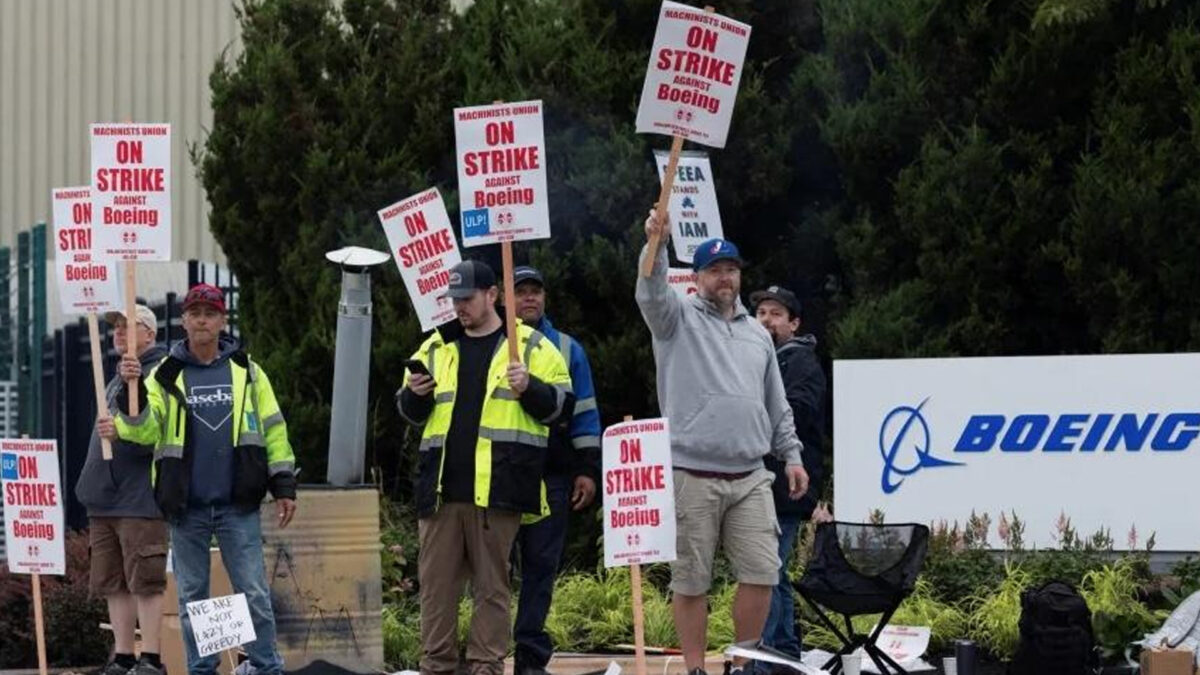
Boeing Defense Strike Continues as Workers Reject Contract Offer

Boeing’s defense workers in the St. Louis area have voted to continue their strike after rejecting the company’s latest contract proposal.

The vote, held on October 26, resulted in a narrow 51% to 49% decision against the five-year offer, marking the fourth time union members have turned down Boeing’s contracts since the strike began on August 4.

Approximately 3,200 members of the International Association of Machinists and Aerospace Workers (IAM) District 837, representing Boeing’s defense facilities in St. Louis, St. Charles, and Mascoutah, Illinois, are involved in the strike.

The union has criticized Boeing for offering terms they consider inadequate compared to agreements reached with commercial division workers in Seattle, who received a 38% wage increase and a $12,000 signing bonus last year.

The rejected contract included a 24% wage increase over five years, a $3,000 stock incentive, and a $1,000 retention bonus.

Union leaders contend that the offer fails to sufficiently address their demands for improved retirement benefits and bonuses comparable to those granted to commercial aircraft employees.

The strike has disrupted Boeing’s production of military aircraft, including the F-15EX and F/A-18 Super Hornet jets.

The U.S. Air Force has reported delays in aircraft deliveries, affecting operations at bases such as the Portland Air National Guard Base in Oregon.

Boeing has implemented contingency plans to mitigate production disruptions but has warned that the strike is financially harmful to workers and stated that no further increases in the contract’s overall value will be offered.

As the strike enters its 13th week, both sides remain at an impasse, with no immediate resolution in sight.

The union has filed an unfair labor practice charge against Boeing, alleging bad faith in negotiations.

The ongoing labor dispute highlights growing tensions between Boeing and its defense workforce, with potential implications for the company’s military operations and broader relations with aerospace labor unions.

Analysts suggest that the outcome of this strike could influence future contract negotiations and set a precedent for labor-management interactions in the sector.

Also Read: Novartis To Acquire Avidity Biosciences In US$12 Billion Deal

Categories
Corporate

Amazon Crosses US$20 Billion in Exports From India

Amazon has surpassed $20 billion in e-commerce exports from India, achieving its 2025 goal ahead of schedule, the company announced.

Since the launch of its Amazon Global Selling program in 2015, the platform has empowered over 200,000 Indian entrepreneurs to sell more than 750 million “Made in India” products to customers across the globe.

The program, which now spans more than 18 international marketplaces, has seen seller participation rise 33 percent in the past year alone, with vendors from 28 states, seven union territories, and over 200 cities joining the global trade revolution.

The initiative reflects the growing role of Indian small and medium enterprises (SMEs) in international e-commerce.

Cities such as Karur in Tamil Nadu and Junagadh in Gujarat have emerged as standout performers, reporting exports of $147 million and $60 million respectively in 2024.

Other towns including Erode, Anand, Haridwar, and Panipat also recorded multi-million-dollar export figures, highlighting how regional artisans and manufacturers are increasingly accessing global markets.

Srinidhi Kalvapudi, Head of Amazon Global Selling India, emphasized that the milestone underscores the potential of India’s traditional strengths in categories such as health and personal care, beauty, toys, home apparel, and furniture.

Scaling Indian Entrepreneurship Globally

The Amazon Global Selling program has enabled Indian sellers to establish global brands while simplifying the complexities of cross-border trade.

Through technological tools, logistics solutions, and compliance support, Amazon has created an ecosystem that helps entrepreneurs manage payments, shipping, and regulatory requirements seamlessly.

Companies such as HomeMonde, a maker of sustainable jute rugs, have leveraged the program to expand internationally.

Sarvesh Agarwal, the company’s founder, said Amazon’s platform has allowed them to connect with eco-conscious buyers and manage logistics efficiently, bringing authentic Indian craftsmanship to homes worldwide.

Building on this momentum, Amazon has set its sights on $80 billion in cumulative exports from India by 2030.

The company plans to continue innovating in technology, developing capacity-building programs, and forming ecosystem partnerships to make global selling more accessible for Indian businesses.

This aligns with broader government ambitions to increase India’s overall e-commerce export footprint to $200–300 billion by 2030.

Driving Global Demand from Tier 2 and Tier 3 Cities

The program’s success is not limited to metropolitan hubs. Entrepreneurs from smaller cities and towns are driving significant growth, reflecting the democratization of digital commerce in India.

Products from a wide range of Indian cities, including Delhi, Mumbai, Jaipur, Bengaluru, and Varanasi, are now reaching customers in more than 200 countries.

The program has also seen rising demand in major international markets such as the United States, United Kingdom, Germany, Canada, UAE, France, Italy, Spain, and Saudi Arabia.

As Amazon continues to expand its Global Selling program, it highlights how technology and strategic support can transform regional businesses into global players.

The success of India’s e-commerce exports underscores the country’s growing importance in global trade and demonstrates the potential for digital platforms to scale entrepreneurial growth from small towns to international markets.

Also Read: Zerodha to Launch U.S. Stock Investing by Next Quarter

Categories
Corporate

Zerodha to Launch U.S. Stock Investing by Next Quarter

India’s largest stockbroker by revenue, Zerodha, is preparing to introduce U.S. market investing for Indian customers by the next quarter, according to founder and CEO Nithin Kamath.

Speaking in a recent Ask Me Anything session, Kamath confirmed that the brokerage is actively working on the product and anticipates it will be available in the near term.

He said the company now has the necessary regulatory clarity, citing the role of GIFT City, and that the team is focused on delivering a seamless experience for users.

Though Zerodha had indicated plans to offer U.S. stocks as early as 2020, the launch was delayed largely due to regulatory hurdles, including the complexities of foreign remittances under India’s Liberalised Remittance Scheme and the absence of a clear domestic route for such investments.

With recent changes under GIFT City’s International Financial Services Centre regime, brokerages can now facilitate investment into U.S. securities via depository receipts or dematerialised instruments, which may be the model Zerodha adopts.

The planned rollout comes at a challenging time for Zerodha. The firm reported a roughly 15 percent drop in revenue for FY25, with net profit falling to about ₹4,200 crore from ₹5,500 crore in the previous fiscal.

In the first quarter of FY26, the company saw an even sharper decline, with brokerage revenue down nearly 40 percent year-on-year.

The fall was driven by reduced client activity and a series of regulatory changes that affected its core futures and options business.

Kamath has acknowledged that these shifts have reshaped the firm’s risk profile.

He pointed to increased securities transaction tax on options, the removal of exchange transaction charge rebates, curbs on weekly options expiries, and changes to Basic Services Demat Account thresholds as factors weighing on the traditional brokerage model.

The combined impact has forced Zerodha to consider a broader strategic pivot, including the possibility of charging fees for equity delivery trades, which have long been free of brokerage.

By introducing access to U.S. stocks, Zerodha aims to broaden its product offerings at a time when domestic trading volumes are under pressure.

If successful, the initiative could help the firm tap into growing investor interest in global equities, particularly large U.S. technology companies, while reducing dependence on domestic derivatives trading.

Industry observers suggest the move could also help retain existing clients and attract new users seeking international diversification.

For investors, key questions remain around how Zerodha will structure the new offering — whether it will allow direct ownership of U.S. shares, fractional holdings, or depository receipts through GIFT City.

Other considerations include pricing, tax treatment under India’s remittance rules, and how the user experience compares with existing global investment platforms. As Zerodha readies its launch next quarter, the rollout will mark both a product milestone and a potential inflection point in its business strategy.

Also Read: Tata Trusts Governance Row Deepens Amid Rising Internal Strife

Categories
Corporate

Tata Trusts Governance Row Deepens Amid Rising Internal Strife

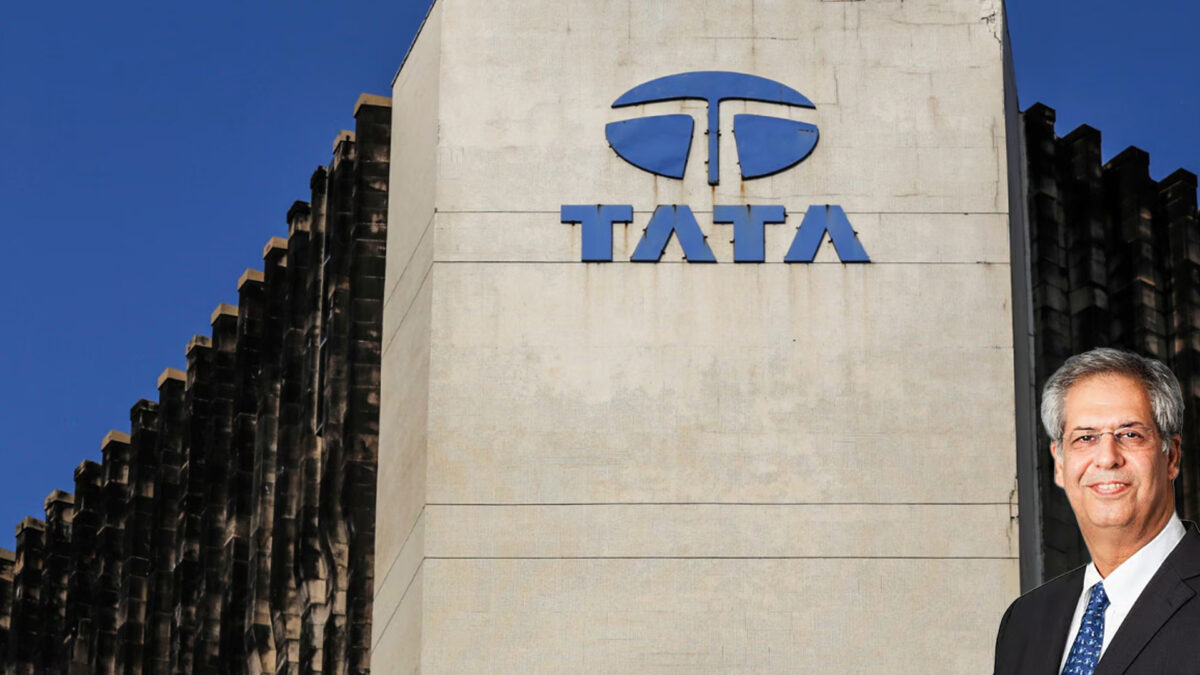
India’s renowned philanthropic arm, Tata Trusts, which holds a commanding majority stake of about 66 % in the conglomerate Tata Sons, is embroiled in a deep-seated governance dispute that threatens one of the country’s most respected business houses.

The conflict came to a head in September when the trustees of Tata Trusts voted against reappointing 77-year-old former defence secretary and Trustee Vice-Chairman Vijay Singh to the Tata Sons board, marking what insiders described as an “unprecedented” decision.

According to reports, four trustees — including Mehli Mistry, Darius Khambata, Pramit Jhaveri and Jehangir HC Jehangir — opposed Singh’s continuation, citing broader governance and strategic-direction concerns at Tata.

At the core of the dispute are divergent views over board nominations, the strategic future of Tata Sons and how to handle the planned exit of minority shareholder Shapoorji Pallonji Group (SP Group).

One faction of trustees, aligned with Mehli Mistry, is said to favour stronger voice and representation of the charitable trusts on Tata Sons’ board. Another faction, led by Chairman Noel Tata and long-time industrialist Venu Srinivasan, prefers continuity of existing directors and a consensus-based approach.

The boardroom rift has drawn attention from the Indian government, which intervened in an unusually public manner.

In early October, Home Minister Amit Shah and Finance Minister Nirmala Sitharaman held talks with Noel Tata and Tata Sons chairman Natarajan Chandrasekaran, urging a resolution to the internal dispute to safeguard the stability of the sprawling group.

The government’s involvement underscores the significance of the Tata group to India’s economy and the sensitivity of potential governance lapses.

Minutes of trustee meetings reveal that the September 11 session of Tata Trusts became a flashpoint.

According to the record, Mistry formally sought the reappointment discussion of Singh, but Singh did not attend.

Meanwhile, Noel Tata and Srinivasan countered that Singh’s long service and loyalty, including during the previous Cyrus Mistry era, warranted continuity.

Another emerging condition: Mehli Mistry has indicated that his own renewal as a trustee would depend on unanimous approval of fellow trustees for future reappointments — a move setting a new precedent in the Trusts’ governance.

Reports suggest that the divisions became public not because of major asset disputes but over institutional-level questions such as board representation, trust nominee rights and disclosure of documents and governance structures.

Some trustees have expressed concern about a two-tier system emerging between nominee-directors and non-nominee trustees and cite transparency gaps in decision-making.

For its part, Tata Trusts presented a façade of normalcy: a board meeting in early October was described by participants as “cordial” and focused on routine matters.

However, the underlying issues remain unresolved and could threaten group cohesion if allowed to fester.

Analysts say the dispute comes at a sensitive juncture for the Tata group, which is navigating global expansion, regulatory pressures, and an evolving leadership structure following the passing of long-time patriarch Ratan Tata in October 2024.

The current discord raises risks not simply for corporate governance but for the broader philanthropic ethos that has long been a distinguishing feature of the Tata empire.

How the parties resolve the impasse will not only determine the fate of individual trustees but may reshape the boardroom dynamics and legacy of the Tata-led group for years to come.

Also Read: Novartis To Acquire Avidity Biosciences In US$12 Billion Deal

Categories
Corporate

Supreme Court Provides Major Relief to Vodafone Idea

Vodafone Idea Ltd shares surged on Monday after the Supreme Court of India permitted the government to re-examine the telecom operator’s adjusted gross revenue (AGR) liabilities, offering potential relief in a long-running dispute that has weighed heavily on the company’s finances.

The stock, which opened more than 2 percent lower, reversed course, soaring about 11.4 percent to a fresh 52-week high of ₹10.52 on the National Stock Exchange. As of 12:20 p.m. the stock was at  ₹10.10, up about 5 percent.

The jump followed a bench led by Chief Justice B. R. Gavai, along with Justices K. Vinod Chandran and Vipul M. Pancholi, ruling that there was no reason why the Union government should be prevented from reconsidering the issue, which the court deemed a policy matter.

The judgment effectively opens the door for the Department of Telecommunications (DoT) to re-evaluate Vodafone Idea’s dues under the AGR framework — a metric used to calculate licence fees and spectrum usage charges owed to the government.

The Centre, represented by Solicitor General Tushar Mehta, told the court that the government held nearly 49 percent equity in Vodafone Idea following a debt-to-equity conversion, making it a direct stakeholder in the company’s future.

Mehta noted that the government was exploring ways to arrive at a viable solution, subject to judicial approval, acknowledging the company’s large subscriber base and strategic significance in India’s telecom market.

Vodafone Idea had filed a fresh plea challenging the DoT’s demand of ₹5,606 crore related to FY 2016–17, seeking a comprehensive reassessment in line with the “Deduction Verification Guidelines” issued in February 2020.

The company contends that the DoT’s computation included duplications and arithmetical errors, inflating its dues beyond what was legally justified. The telecom firm has repeatedly sought relief in the matter, maintaining that it faces existential pressure under the current liability structure.

The Supreme Court’s 2019 ruling on AGR had originally expanded the definition of revenue to include both telecom and non-telecom income, such as interest and asset sales.

In 2020, the court allowed telecom operators a ten-year window to pay their dues — which totaled ₹93,520 crore for the sector — mandating 10 percent payment by March 2021, with the remainder to be paid annually through March 2031.

However, the court also held that the DoT’s assessments were final and not subject to re-evaluation, rejecting pleas for correction of alleged calculation errors in 2021.

The latest order, while not altering that principle, allows the government to revisit the issue on its own accord given its equity stake and policy prerogatives.

Analysts said the decision marks a significant development for Vodafone Idea, offering a potential lifeline to a company struggling with debt and capital constraints.

The ruling is also expected to have positive spillover effects for infrastructure players such as Indus Towers, given Vodafone Idea’s status as a key tenant.

Still, the court emphasized that its decision applied only to the “peculiar facts and circumstances” of the case, making it clear that the underlying DoT demand remains legally valid for now.

The government’s next steps will be crucial in determining whether Vodafone Idea’s financial and operational outlook can improve meaningfully.

Investors and analysts alike are now watching closely to see how the DoT proceeds and whether a broader policy recalibration follows in India’s telecom sector.

Also Read: Novartis To Acquire Avidity Biosciences In US$12 Billion Deal