Categories
Corporate

Newgen Software Profit Surges 16 % in Q2 FY26

Newgen Software Technologies Ltd reported robust financial performance for the quarter ended September 30, 2025, with consolidated revenue increasing 11 % year-on-year to ₹400.8 crore and profit after tax rising 16.2 % to ₹81.7 crore. 

EBITDA for the quarter reached ₹102.4 crore, marking a 23.4 % increase compared with the same period a year ago, while the EBITDA margin improved to 25.5 % from 23.0 % in Q2 FY25. Profit before tax (PBT) rose to ₹105.3 crore, up 13.8 % year-on-year.

Subscription revenues emerged as a key growth driver during the quarter, climbing 20 % to ₹126 crore. 

Revenue from product and license sales stood at ₹74 crore, and implementation and related services accounted for ₹93 crore.

Together, annuity streams including support, cloud/SaaS, maintenance and subscription contributed ₹234 crore to total revenue.

Management highlighted an increased focus on expanding its footprint in target verticals and geographies. 

The company added fifteen new client logos during the quarter and reported strong traction in its EMEA markets.

Chairman & Managing Director Diwakar Nigam said the growth momentum stemmed from solid subscription numbers and large-deal breakthroughs in mature markets.

CEO Virender Jeet added that Newgen is deepening its presence in the banking vertical and expanding into insurance policy administration systems (PAS). 

He stressed the company’s commitment to an “AI-first” strategy and continuous investment in product innovation and cloud-native SaaS solutions.

The company’s performance comes amid a challenging macro-environment where many software firms are under pressure from softening demand and increased competition. 

Yet Newgen’s growth in annuity-based revenue and improving margins appear to have given it a competitive edge. 

The margin improvement in particular is notable, reflecting better operating leverage and disciplined cost controls.

For the half-year ended September 30, the company reported an 11.5 % year-on-year increase in net profit to ₹1,314.63 crore, with revenue rising 6.74 % to ₹7,214.49 crore.

Looking ahead, the management expressed optimism about continuing to scale the subscription business, capturing large deals in key markets and leveraging its product platform for growth. 

However, it also acknowledged the need to navigate broader global macro-risks, including currency fluctuations and softening enterprise spending.

In summary, Newgen Software’s Q2 performance stands out for its double-digit revenue growth, strong profit uptick and margin improvement — underpinned by recurring revenue strength and strategic vertical expansion. 

As the company pivots further toward cloud-native solutions and AI-driven platforms, its results may set the tone for how mid-cap software firms can maintain growth momentum in an otherwise cautious environment.

Also Read: Oil India’s $300 Million Dividend Stuck in Russian Banks

Categories
Corporate

Oil India’s $300 Million Dividend Stuck in Russian Banks

Oil India Ltd. has been unable to transfer a $300 million dividend arising from its stakes in two Russian oilfields after recent United States sanctions, with the funds currently held in Russian banks, Chairman Ranjit Rath said on Tuesday.

The dividend is linked to the company’s holdings in projects operated by Rosneft, and the payout cannot be repatriated because of restrictions imposed on the sanctioned entities and related payment channels.

Rath told reporters that Oil India, which holds its interests through Singapore-based special purpose vehicles alongside partners Indian Oil Corp. (IOC) and Bharat PetroResources (BPRL), is seeking legal advice on how to proceed with the frozen funds.

The company’s combined shareholdings amount to a minority stake in the two fields — JSC Vankorneft (Vankor) and Taas-Yuryakh — where dividends have been declared but cannot be moved across international banking corridors affected by the sanctions. 

The development underscores a wider problem afflicting several Indian public sector oil firms whose dividend income from Russian upstream projects has been increasingly difficult to access since the onset of Western sanctions related to the Russia-Ukraine conflict.

Independent estimates and prior reporting indicate that stranded dividends for Indian oil PSUs could total in the hundreds of millions of dollars, complicating cash management and repatriation plans for state-backed energy companies.

U.S. sanctions announced in recent weeks specifically targeted major Russian oil companies, restricting dealings with those firms and raising the risk of secondary sanctions for banks and intermediaries that facilitate transactions.

Market participants and analysts say those measures have tightened access to global payment systems for entities linked to Rosneft and others, leaving foreign minority investors with limited options to retrieve cash held in Russian financial institutions. 

Oil India’s predicament follows a pattern in which dividends declared by Russian joint ventures are parked in local accounts earning low returns while companies explore legal, diplomatic and commercial avenues to unlock value.

Options under consideration include seeking exemptions, arranging direct offset arrangements for supplies and services, or using local ruble-based channels — all of which carry legal and operational complications given the sanctions’ scope and the involvement of multiple jurisdictions. 

For New Delhi, the issue poses a policy conundrum: Indian energy security strategy has leaned on Russian supplies and upstream ties to secure crude and downstream feedstock, yet geopolitical shifts and sanctions regimes can swiftly impair the liquidity and utility of such investments.

Officials and company executives have previously signaled coordinated outreach to partner governments and international banks to find practical solutions while remaining compliant with applicable laws. 

As Oil India and its partners weigh legal counsel and diplomatic options, the trapped $300 million highlights the broader vulnerability of cross-border energy investments amid geopolitical tensions and demonstrates how sanctions can reverberate through corporate cash flows beyond the immediate targets of the measures. 

Also Read: Adani Green Energy Reports 39% YoY Surge in Energy Sales

Categories
Corporate

Adani Total Gas Reports 16% Volume Growth in Q2 FY26

Adani Total Gas Ltd (ATGL), the energy transition arm of the Adani Group, posted a 16% year-on-year rise in overall volumes for the quarter ended September 30, 2025, driven by strong growth in both compressed natural gas (CNG) and piped natural gas (PNG) segments.

The company’s revenue from operations grew 19% year-on-year to ₹1,569 crore, while EBITDA stood at ₹302 crore and profit after tax (PAT) at ₹162 crore. On a consolidated basis, PAT came in at ₹163 crore for the quarter.

For the first half of FY26, ATGL’s revenue rose 20% to ₹3,060 crore, EBITDA stood at ₹603 crore, and standalone PAT reached ₹324 crore. Consolidated PAT for the period was ₹329 crore.

Strong Operational Momentum

ATGL continued expanding its nationwide gas distribution footprint during the quarter, taking its CNG station network to 662 after adding nine new outlets.

The company also surpassed a significant milestone of connecting over one million households to its PNG network, with the total now standing at 1.02 million.

Industrial and commercial connections rose to 9,603 after adding 147 new consumers, while the combined CNG and PNG volume reached 280 million standard cubic meters (MMSCM).

“The company has delivered a steady operational and financial performance during the quarter, reflecting the strength of our integrated business model and the growing preference for cleaner energy solutions,” said Suresh P. Manglani, CEO and Executive Director, ATGL.

“Even with the tightening of APM gas availability, ATGL recorded a healthy double-digit year-on-year growth of 16% in volume and 20% in revenue. We are pleased to have surpassed the key milestone of connecting over one million households through our PNG home connections.”

Manglani added that the company’s diversified gas sourcing portfolio enabled it to maintain a calibrated pricing strategy despite cost pressures from reduced allocation of APM gas to the CNG segment.

Network Expansion and Credit Rating Upgrade

Including its joint venture with Indian Oil—Indian Oil-Adani Gas Pvt Ltd (IOAGPL)—the company’s pan-India footprint reached 1,091 CNG stations, with PNG home connections totaling 1.18 million. The company’s steel pipeline network expanded to 26,411 inch kilometers.

During the quarter, ATGL’s long-term credit rating was upgraded to ‘AA+ (Stable)’ by ICRA, with similar ratings assigned by CRISIL and CARE. According to the company, these upgrades reflect its growing scale, favorable demand outlook, and a robust financial profile backed by strong parentage and secure gas sourcing arrangements.

Regulatory Tailwinds and Energy Transition Push

Two key regulatory developments are expected to benefit the company in the coming quarters.

From October 1, 2025, APM and New Well Gas supplied outside Gujarat are being billed at a concessional CST rate of 2%, replacing the earlier 15% VAT.

Additionally, a new Zone 1 tariff for the priority segment will come into effect in November 2025, expected to ease cost pressures, particularly during the winter season.

ATGL also reported progress in its clean energy subsidiaries.

Adani TotalEnergies E-Mobility Ltd expanded its EV charging network to 4,209 installed points across 26 states and union territories.

Adani TotalEnergies Biomass Ltd sold 357 tonnes of compressed biogas (CBG) in the first half of FY26 under its “Harit Amrit” brand, which has now expanded into Uttar Pradesh, Madhya Pradesh, and Gujarat.

Recognition for Sustainability

Further underscoring its operational excellence, ATGL received three PNGRB awards, including two for health, safety, and sustainability, and one for customer service. “Our journey remains aligned with India’s energy transition vision,” Manglani said, emphasizing the company’s commitment to expanding cleaner and sustainable energy access across the country.

Also Read: Reliance, Meta Form $100 Million AI Joint Venture

Categories
Corporate

Adani Green Energy Reports 39% YoY Surge in Energy Sales

Adani Green Energy Ltd (AGEL), India’s largest renewable energy company, reported robust financial and operational growth for the first half of fiscal year 2026, driven by aggressive capacity expansion and strong plant performance.

The company’s energy sales rose 39 percent year-on-year to 19,569 million units, underpinned by significant additions in renewable capacity and higher generation efficiency.

Revenue from operations grew 26 percent to ₹6,088 crore in H1 FY26, compared with ₹4,836 crore in the corresponding period last year.

EBITDA increased 25 percent year-on-year to ₹5,651 crore, surpassing the company’s entire annual EBITDA for FY23, while maintaining an industry-leading EBITDA margin of 91.8 percent.

Cash profit surged 17 percent to ₹3,094 crore from ₹2,646 crore in the previous year, highlighting AGEL’s strong cash flow generation and disciplined cost management.

In the second quarter alone, revenue from power supply increased 20 percent year-on-year to ₹2,776 crore, while quarterly EBITDA rose 19 percent to ₹2,543 crore.

Cash profit for the quarter grew 8 percent to ₹1,349 crore, underscoring the company’s steady financial momentum.

AGEL attributed this performance to its greenfield capacity additions, deployment of advanced renewable technologies, and strong operational execution.

During the first half of FY26, the company added 2,437 MW of new capacity, accounting for nearly three-fourths of its total capacity addition in FY25.

Over the last twelve months, AGEL’s greenfield additions totaled 5,496 MW, comprising 4,200 MW of solar capacity—of which 2,900 MW was in Khavda, Gujarat—491 MW of wind capacity, and 805 MW of hybrid capacity.

This expansion drove a 49 percent increase in AGEL’s operational capacity, which now stands at 16.7 GW, solidifying its position as India’s largest renewable energy player. The company’s generation during the period reached 19.6 billion units of clean energy, equivalent to the annual power consumption of an entire country like Croatia.

“Having already added 2.4 GW renewable capacity in the first half of FY26, we are on a firm path to achieve 5 GW capacity addition for the full year and remain on track to reach our 50 GW target by 2030,” said Ashish Khanna, CEO of Adani Green Energy Ltd. “Our progress in developing the 30 GW renewable energy plant at Khavda in Gujarat is a testament to our execution strength and commitment to India’s energy transition. We continue to adopt cutting-edge technologies and digital tools to enhance operational efficiency and safety across our assets.”

The company’s operations and maintenance framework, managed in partnership with Adani Infra Management Services Pvt Ltd, leverages advanced data analytics, artificial intelligence, and machine learning.

This digital integration has helped improve plant availability and reduce O&M costs, supporting AGEL’s industry-leading EBITDA margin.

The company’s electricity generation exceeded its power purchase agreement (PPA) commitments, achieving 57 percent of the annual target within the first half of the fiscal year.

A major driver of AGEL’s growth is the ongoing development of the world’s largest renewable energy plant at Khavda in Gujarat, spread over 538 square kilometers—five times the size of Paris.

The project, which will reach 30 GW capacity by 2029, currently has an operational portfolio of 7.1 GW of solar, wind, and hybrid installations. The site utilizes cutting-edge renewable technologies, including bifacial solar modules, smart trackers, and 5.2 MW onshore wind turbines—among the largest in India.

The company has also deployed waterless robotic cleaning systems, which eliminate water usage for module maintenance while enhancing generation efficiency.

AGEL’s sustainability leadership has been widely recognized. The company ranks first in India and seventh globally in the renewable energy sector in the latest ESG assessment by Sustainalytics.

It was also named “Energy Transition Company” and “Energy Company of the Year – Renewables” at the ET Energy Leadership Awards 2025.

Adani Green Energy Ltd currently operates a renewable portfolio of 16.7 GW across 12 Indian states and aims to achieve 50 GW by 2030 in alignment with India’s decarbonization goals.

Its portfolio is certified water positive, single-use plastic free, and zero waste-to-landfill—reinforcing its commitment to sustainable growth and leadership in the global clean energy transition.

Also Read: Indian Oil Swings to Strong Q2 Profit on Refining Margin Boost

Categories
Corporate

Dream11 Launches in 11 Countries

Dream11, the Indian fantasy-sports major, has begun a rapid international expansion, launching its platform in 11 countries — including the United States, United Kingdom, Australia, and the United Arab Emirates — even as regulatory changes at home force a major reworking of its business model.

The company’s move, first reported by Moneycontrol, also extends to New Zealand, Canada, Malaysia, Nepal, Bangladesh, South Africa, and Sri Lanka.

The overseas roll-out will not include real-money contests, according to the report.

The expansion comes after a significant shift in India’s regulatory landscape.

In August 2025, Parliament approved legislation that effectively prohibited real-money online gaming and restricted advertising and sponsorship tied to such services. The new law prompted Dream11 and other platforms to suspend paid contests in India almost immediately.

Company communications and industry coverage indicate that Dream11 is now relying on a freemium model monetized through advertisers and brand partnerships rather than user entry fees.

The company has been onboarding advertisers and sponsors to the platform, with an emphasis on ad formats, sponsored contests, and features that boost user engagement without involving monetary wagers.

Industry analysts say the dual strategy — international expansion coupled with a free-to-play pivot — is designed to blunt the revenue shock from India’s regulatory overhaul while preserving the massive user base and engagement metrics that have made Dream11 one of the most valuable fantasy-sports brands globally.

The platform’s fantasy formats and new features, such as customizable leagues, remain highly engaging and the app continues to attract millions of daily active users, say experts.

The overseas rollout, however, presents its own challenges. Market conditions, competitive landscapes, and local gaming and gambling laws vary significantly across the 11 jurisdictions.

Dream11’s decision not to offer real-money contests abroad at launch reflects a cautious regulatory approach, even as the company aims to broaden its advertising inventory and partner with regional sports and media organizations.

Analysts have pointed out that long-term success will depend on user acquisition costs, local partnerships, and the company’s ability to adapt to different sports ecosystems and fan cultures.

Also Read: Renault Confirms Comeback of Duster in India

Categories
Corporate

HARMAN to Invest ₹345 Crore in Pune Plant Expansion

Harman International Industries, a subsidiary of Samsung Electronics, announced an investment of ₹345 crore (approximately US $42 million) over the next three years to expand its automotive electronics manufacturing facility in Chakan, Pune.

With this additional capital, the cumulative investment at the site will reach ₹554 crore (aboutUS$67 million) since operations began in 2014.

The expansion is part of a broader push by Harman to strengthen India’s position in its global manufacturing network for connected vehicle technologies.

The Pune plant, already a hub for the production of infotainment systems, car audio components and telematics control units (TCUs), will see its capacity increase by more than 50 percent.

By 2027, the site is expected to produce around four million audio parts, 1.4 million infotainment units and 0.8 million telematics units annually.

The investment is divided into two phases: approximately ₹45 crore is earmarked for immediate expansion, which includes the addition of 71,500 square feet of built-up area, with a new 45,000 square foot production floor and four new surface-mount technology (SMT) lines, as well as module and speaker manufacturing.

The remaining ₹300 crore will be allocated over the next three years toward development of advanced telematics and connectivity modules, including 4G and 5G TCUs.

Harman’s Pune facility supplies major Indian automakers such as Tata Motors, Maruti Suzuki and Mahindra & Mahindra, and also exports to Europe and North America.

The company aims to manufacture locally its “Harman Ready Connect” platform, co-developed with Samsung, which includes features such as over-the-air updates, vehicle diagnostics and vehicle-to-network connectivity.

Beyond capacity expansion, the initiative also emphasises sustainability and job creation.

The plant is set to create roughly 300 new jobs in Pune over the next two years.

It already generates over 317,000 kWh of electricity annually via its solar installations and aims to achieve 100 percent renewable electricity usage by 2030, having phased out diesel generators and optimised production lines for lower energy use.

Industry analysts see the move as a strategic indicator of India’s growing importance in the global automotive supply chain—particularly in connected vehicle electronics.

By locating development, manufacturing and export capability in India, Harman is reinforcing the country’s “Make in India, for the World” narrative and ensuring stronger localisation of advanced vehicle electronics.

The key challenge will be delivering on the projected capacity and component volumes amid intensifying global competition and supply-chain pressures.

Nonetheless, the expansion positions the Chakan facility as a critical node for manufacturing next-generation automotive electronics, particularly as automakers increasingly prioritise connectivity, telematics and smart vehicle architectures.

Also Read: Milky Mist Launches Largest IPO in India’s Dairy Sector

Categories
Corporate

Renault Confirms Comeback of Duster in India

Renault India has officially confirmed that the iconic Duster SUV will make its return to the Indian market, with a formal unveiling scheduled for January 26, 2026.

This announcement marks a key point in the company’s renewed product strategy for India and revives one of the most recognized nameplates in the country’s SUV segment.

First launched in India in 2012, the original Duster played a defining role in shaping the country’s mid-size SUV category.

The model’s success helped fuel the growth of a segment that today represents a substantial share of India’s passenger vehicle market.

Renault’s relaunch indicates the company’s ambition to re-engage with that market opportunity.

Under its broader “International Game Plan 2027” strategy and its local transformation initiative dubbed “Renault. Rethink.”, the company views the new Duster as a cornerstone for revitalizing its presence in India.

The SUV’s comeback is therefore more than a product launch—it is a strategic statement of intent.

While Renault has not yet disclosed full technical specifications or pricing details for the India-spec model, reports indicate that the new Duster will be built on the CMF-B platform. It will offer a modern design, enhanced connectivity and safety features, and petrol powertrains compliant with the latest emissions norms.

Earlier international versions of the Duster have featured turbo-petrol and mild-hybrid powertrains, and the India version is expected to be localized to ensure competitiveness.

The relaunch schedule begins with a waiting-list registration program already open in India, allowing interested buyers to sign up for updates and notifications ahead of the official reveal.

The January 26 date aligns with Republic Day, signaling Renault’s intent to make a high-visibility impact as it reintroduces one of its most successful models.

Industry analysts view the decision to bring back the Duster as a calculated move by Renault to reclaim relevance in a segment that has grown fiercely competitive, with domestic and international rivals offering feature-rich SUVs across multiple price bands.

By resurrecting a nameplate that still holds strong brand recall, Renault is aiming to leverage its legacy while updating the model for contemporary expectations.

The new Duster is expected to play a critical role in Renault’s effort to rebuild its market share in India, which has seen steady erosion in recent years due to limited product offerings.

The company’s leadership has emphasized that its future India portfolio will focus on globally proven products adapted for local conditions, with the Duster leading the charge.

However, the success of the revived Duster will depend on execution. Renault will need to deliver a compelling value proposition, ensure efficient local manufacturing, and position the SUV competitively amid rising input costs.

The company will also have to stand out in a crowded market dominated by players such as Hyundai, Kia, Mahindra, and Tata Motors.

With its unveiling set for January 26, 2026, the automotive industry will be closely watching how Renault updates its legacy SUV for modern drivers and whether it can successfully reclaim its place in one of the world’s most dynamic car markets.

Also Read: Tata Chemicals Wins ₹783 Crore Land-Rates Case in Kenya

Categories
Corporate

HAL Signs MoU to Produce SJ-100 Aircraft in Russia

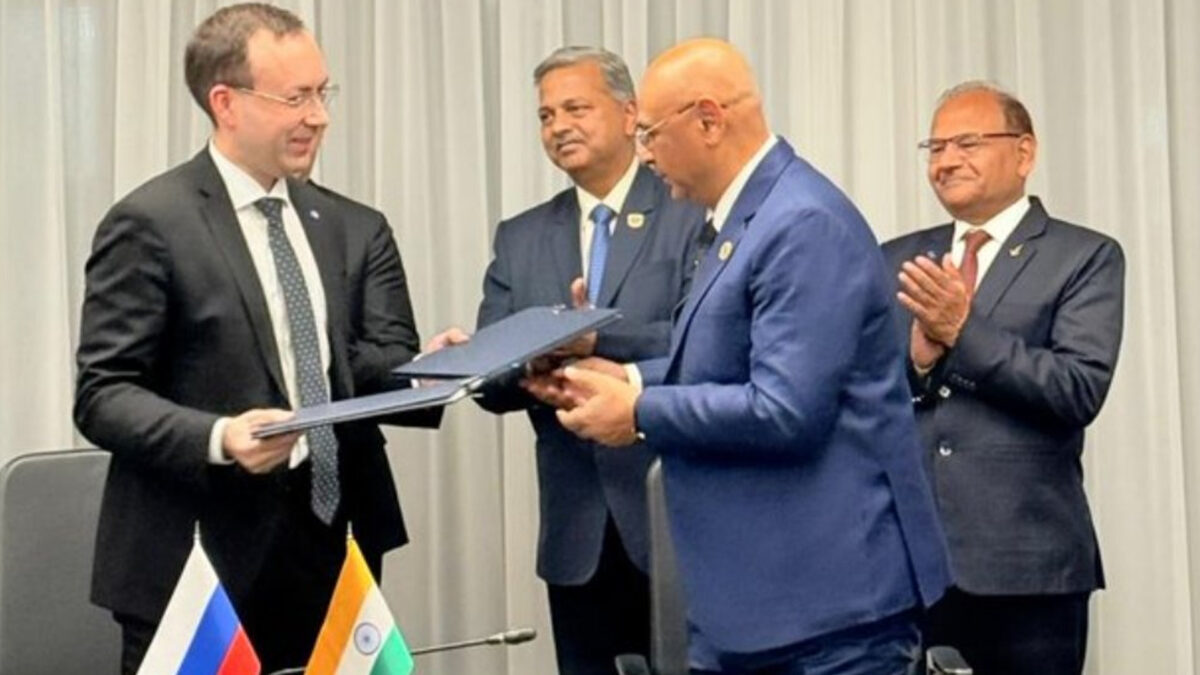
Hindustan Aeronautics Limited (HAL) announced on Tuesday that it has signed a memorandum of understanding (MoU) with Russia’s United Aircraft Corporation (UAC) to collaborate on the production of the SJ-100 regional commuter aircraft in Russia.

The agreement was formalized in Moscow and marks a significant advance in India-Russia civil aerospace cooperation.

Under the agreement, HAL and UAC will explore manufacturing, co-production, and potential support activities for the SJ-100 (also known as the Yakovlev SJ-100), which will be assembled or produced in Russia, leveraging both partners’ strengths in regional aircraft manufacturing.

Russia has already indicated that serial production of the SJ-100 is scheduled to begin in 2026.

The HAL–UAC pact comes as India’s aerospace sector seeks to deepen international linkages for civil aviation manufacturing and capability building.

For HAL, the deal opens a pathway into regional jets, expanding beyond its traditional focus on military aircraft production.

For UAC, partnering with HAL offers opportunities for international collaboration and potential access to India’s manufacturing and design ecosystem.

In remarks following the signing, HAL stated that the partnership aligns with its strategic goal of diversifying into civil aviation and regional transport aircraft programs.

Russian aviation industry officials noted that the SJ-100 is designed to replace aging regional fleets across remote and underserved regions in Russia and the Commonwealth of Independent States (CIS).

The SJ-100 aircraft, developed under UAC’s Yakovlev division, is a short-haul regional jet intended to serve domestic and international markets.

Reports from earlier this year indicated that about 20 SJ-100 airframes are already in production in Russia, with full-scale serial production expected to start next year.

While the MoU does not specify production volumes, delivery schedules, or financial terms, industry analysts view the agreement as a sign of HAL’s broader ambition to enter global civil aerospace value chains.

The collaboration also reflects India’s intent to build manufacturing linkages and gain technological expertise in commercial aircraft production.

The partnership could enable the SJ-100 project to expand beyond Russia, potentially reaching new markets by leveraging the combined manufacturing and service capabilities of the two companies.

For Russia, increasing production and potential export of the SJ-100 supports its national goal of strengthening domestic aircraft manufacturing and reducing reliance on Western suppliers.

For India, the collaboration offers an opportunity to enhance regional-aircraft capabilities and develop a foundation for domestic civil aviation manufacturing.

However, the success of the partnership will depend on achieving timely certification, maintaining cost efficiency, developing robust supply chains, and ensuring market acceptance of the SJ-100 platform.

India’s civil aviation ecosystem currently focuses primarily on smaller aircraft and turboprops, while regional jets face stiff competition from established global players.

HAL will need to adapt to civil-aviation manufacturing standards, regulatory frameworks, and commercial operations that differ from its defense-focused experience.

If successfully implemented, it could bolster regional-jet manufacturing, generate employment in both countries, and expand HAL’s footprint into commercial aviation.

Also Read: Tata Chemicals Wins ₹783 Crore Land-Rates Case in Kenya

Categories
Corporate

Milky Mist Launches Largest IPO in India’s Dairy Sector

Milky Mist Dairy Food Ltd (MMDF), the Tamil Nadu–based manufacturer of value-added dairy products, has received regulatory approval from the Securities and Exchange Board of India (SEBI) to raise up to ₹2,035 crore through an initial public offering (IPO) — marking the largest public issue in India’s dairy industry to date.

The IPO comprises a fresh equity issue of up to ₹1,785 crore and an offer-for-sale (OFS) of shares worth up to ₹250 crore by promoters T. Sathish Kumar and Anitha S.

The company, headquartered in Erode, Tamil Nadu, is known for its premium value-added dairy products including paneer, cheese, curd, yogurt, ice cream, butter, and ghee — a business model that allows for higher margins compared to liquid milk operations.

According to the company’s draft red herring prospectus, proceeds from the fresh issue will be used to repay borrowings of about ₹750 crore and to expand and modernize its manufacturing facility at Perundurai with an investment of ₹414 crore.

The expansion will include new production lines for whey protein concentrate, yogurt, and cream cheese.

Additionally, ₹129 crore will be allocated for retail equipment such as visi-coolers, ice-cream freezers, and chocolate coolers, while the remaining funds will go toward general corporate purposes.

Milky Mist has demonstrated strong financial performance over the past few years.

Its revenue grew from ₹1,394 crore in FY23 to ₹2,349 crore in FY25, representing a compound annual growth rate of nearly 30 percent.

The company reported an EBITDA of around ₹310 crore in FY25 with a margin of 13.2 percent.

Milky Mist sources milk from over 67,000 farmers across Tamil Nadu and operates one of India’s most technologically advanced dairy processing facilities.

The company stated that new product launches contributed ₹511 crore to its FY25 revenue, while its core products — paneer, curd, yogurt, ghee, and butter — accounted for over 75 percent of total revenue.

It also operates one of India’s largest paneer production lines, with a capacity of 150 tonnes per day.

Industry analysts view this IPO as a milestone for the Indian dairy sector, reflecting investor interest in branded, value-added dairy and FMCG companies.

The offering’s scale underscores the growing convergence between dairy and consumer packaged goods, driven by rising demand for high-quality, branded dairy products among urban consumers.

However, market experts caution that Milky Mist’s ability to sustain profitability amid fluctuating milk prices and increasing competition from established FMCG and dairy giants will determine its long-term success.

With SEBI’s approval now secured, Milky Mist is set to move forward with its public issue, signaling a major shift in the scale and ambition of India’s homegrown dairy companies.

Also Read: Tata Chemicals Wins ₹783 Crore Land-Rates Case in Kenya

Categories
Corporate

Ola Electric Unveils “HyperService” Platform

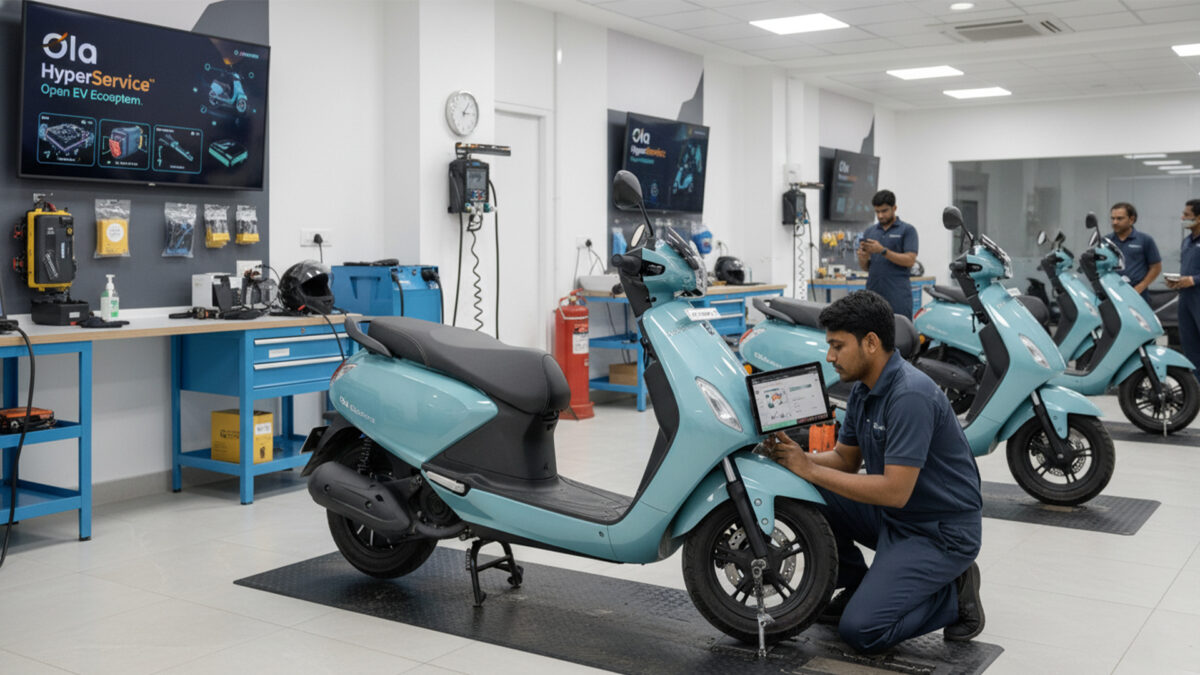
Ola Electric on Monday announced the launch of its “HyperService” platform, an initiative that opens its previously closed after-sales service network to independent garages, fleet operators, and direct customers across India.

The company said the move will allow users to procure genuine spare parts, access diagnostic tools, and receive technician training through its customer app and website—marking a major shift from a dealer-dependent model.

In the first phase of HyperService, Ola Electric has made available parts such as batteries, control modules, and drive belts for its e-scooters for direct purchase by customers and third-party service providers.

The company said this will reduce service turnaround times and costs while improving transparency and trust by cutting out intermediaries.

Later this quarter, Ola plans to expand the platform to include diagnostic software, service manuals, and certification programs for mechanics.

These additions will allow independent service shops to become certified to repair Ola vehicles, thereby expanding the company’s service ecosystem across the country.

“Ola Electric has built our service ecosystem from first principles, using technology to make it fast, transparent, and efficient,” said Bhavish Aggarwal, Chairman and Managing Director of Ola Electric. “With HyperService, we are opening this capability to everyone. Every garage, fleet, and customer can now access the same high-quality tools, parts, and systems that power Ola’s own network.”

Industry analysts see the launch as part of Ola Electric’s broader strategy to enhance profitability by scaling its high-margin parts and accessories business alongside its growing vehicle sales.

The open-ecosystem approach is designed to create a scalable nationwide service network while leveraging the company’s supply-chain strength and digital infrastructure.

The launch comes at a crucial time for India’s electric-two-wheeler market, where limited service access and spare-parts shortages have been major challenges.

By giving direct access to genuine components and certified repair options, Ola Electric hopes to address long-standing customer concerns over delayed repairs and reliability.

For independent garages and fleet operators, HyperService represents a new business opportunity.

Participating workshops will gain access to Ola’s training modules, diagnostic tools, and franchised-grade components, allowing them to become certified partners within Ola’s growing service ecosystem.

The company expects this to strengthen India’s EV servicing infrastructure while creating new employment opportunities for mechanics and small service operators.

From a customer standpoint, the direct-to-consumer model means faster access to parts, fewer dependencies on service centers, and more control over repairs. Ola has clarified that installing parts purchased through the official platform, as per company guidelines, will not void existing vehicle warranties—a move expected to boost user confidence in the system.

While the initial rollout covers key scooter components, the true measure of the program’s success will depend on the speed and efficiency of future phases, especially in extending access to diagnostic tools and technician certification.

Even so, industry observers say the HyperService initiative represents a turning point for the Indian EV industry—potentially setting new standards for openness, affordability, and after-sales reliability.

Also Read: Tata Chemicals Wins ₹783 Crore Land-Rates Case in Kenya