Categories
Corporate

Google Strikes AI Chip Deal with Anthropic

Google and Anthropic on Thursday announced a landmark agreement under which Google will supply up to one million of its custom-built Tensor Processing Units (TPUs) to the AI startup, marking one of the largest chip deals in the generative AI era.

The memorandum of understanding, valued in the “tens of billions of dollars,” will deliver well over one gigawatt of computing capacity to Anthropic by 2026 — a quantum leap in infrastructure terms, given that a gigawatt of compute is roughly equivalent to powering 350,000 homes.

Under the agreement, Anthropic will utilize Google’s TPUs to train and serve its next-generation model family, including the enterprise-oriented Claude chatbot.

In a blog post, Anthropic said the deal significantly expands its compute resources while deepening its long-standing partnership with Google Cloud.

For Google, the move underscores its bid to become not just a platform provider but a critical infrastructure enabler in the AI arms race. By opening up its TPU fleet to an external partner at scale, it positions itself as an alternative to rival hardware suppliers such as Nvidia and strengthens its influence in the fast-growing market for generative AI infrastructure.

Analysts say the timing and scale of the agreement reflect the fierce competition to secure hardware and cloud services at a moment when both training and serving large AI models demand enormous compute and power budgets. With Anthropic already relying on Amazon Web Services and Nvidia hardware, the expansion into Google’s chips signals a multi-platform strategy aimed at resilience and performance.

Anthropic, founded in 2021 by former OpenAI executives, was recently valued at about $183 billion following a $13 billion fundraising round. The company has emphasized safety, alignment, and enterprise use cases for Claude, targeting business clients amid mounting demand for generative AI solutions.

In a statement, Google Cloud CEO Thomas Kurian said Anthropic’s decision to expand its use of TPUs reflected the “strong price-performance and efficiency” its teams have experienced over several years. Anthropic noted that the collaboration would help ensure the responsible deployment of Claude models at scale.

While the financial terms were not disclosed beyond the “tens of billions” estimate, analysts expect it to be among the largest infrastructure deals ever signed between a cloud provider and an AI company. Industry experts have suggested that such large-scale agreements may draw attention from competition and national security regulators in the United States and Europe.

For Anthropic, the partnership offers a competitive edge in model training speed, scaling capacity, and cost efficiency. For Google, it reinforces its cloud and AI hardware ecosystem at a critical moment when the company faces growing competition from Amazon, Microsoft, and Nvidia in the enterprise AI infrastructure market.

Both companies have said they plan to maintain multi-cloud and multi-hardware strategies, indicating that the partnership is not exclusive.

With deliveries set to ramp up in 2026, the agreement could set a precedent for how AI developers and infrastructure providers collaborate to meet the ever-growing demand for computing power in the generative AI era.

Also Read: Starlink Begins Security Trials in India Ahead of Commercial Launch
Categories
Corporate

Starlink Begins Security Trials in India Ahead of Commercial Launch

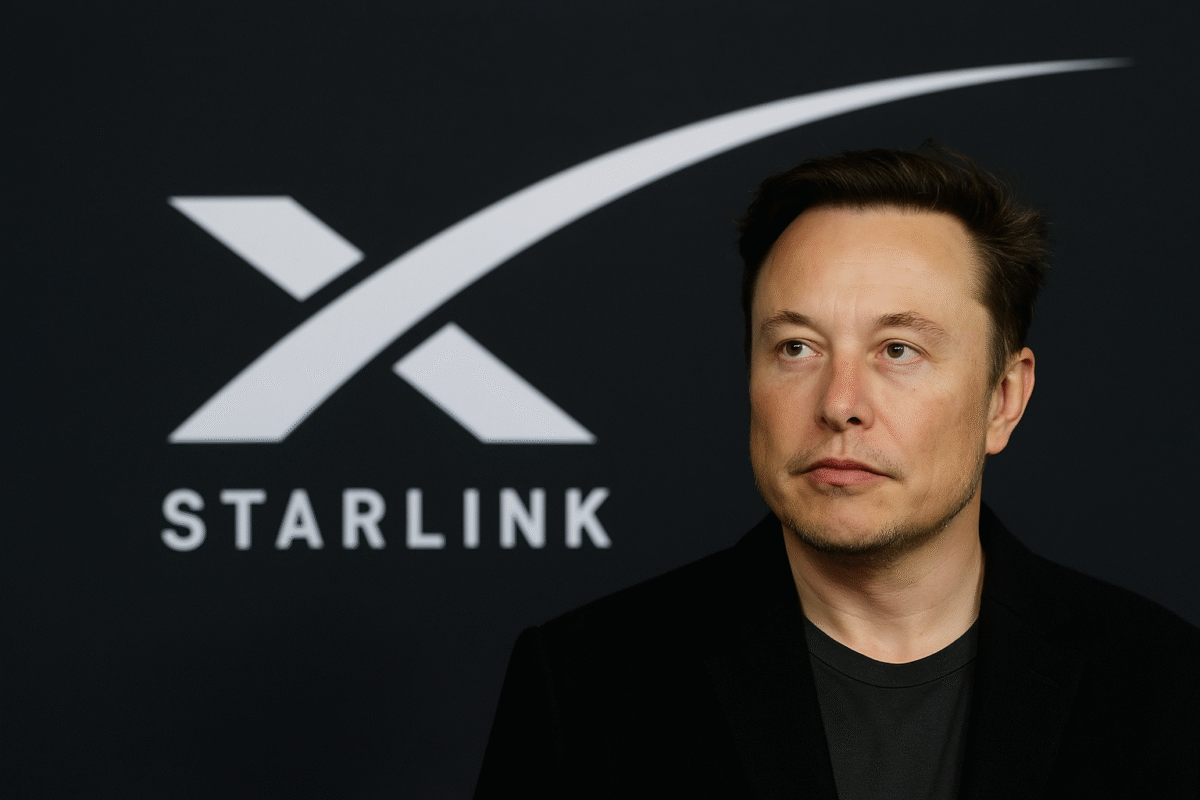
Starlink, the satellite internet service owned by Elon Musk’s SpaceX, has begun mandatory security testing in India, marking a significant step toward its anticipated commercial rollout.

The trials are part of the clearance process required by Indian regulators before Starlink can begin offering broadband services to the public.

According to government officials familiar with the process, the security trials represent one of the final regulatory stages for Starlink’s entry into the Indian market.

The company has already secured provisional approvals from the Department of Telecommunications (DoT) and the Indian National Space Promotion and Authorization Centre (IN-SPACe).

It now awaits a final pricing framework from the Telecom Regulatory Authority of India (TRAI), which will set parameters for satellite broadband services in the country.

Once the framework is issued, Starlink could begin commercial operations as early as 2026.

Starlink is simultaneously setting up infrastructure across the country. It plans to establish ground gateway stations in several major cities, including Mumbai, Noida, Hyderabad, Kolkata, and Lucknow.

Three ground stations are already operational in Mumbai, and work is underway to complete at least nine more across India.

These stations will link Starlink’s low-Earth orbit satellites to the terrestrial network and are essential for obtaining full regulatory clearance.

Security testing is a crucial component of India’s satellite communication licensing process.

Under existing rules, all data transmitted through satellite networks must be routed domestically, and only Indian nationals are allowed to operate the gateway stations until specific security permissions are granted for foreign staff.

Authorities have emphasized that the trials are designed to ensure complete data sovereignty and protect against potential misuse of satellite communications.

Earlier this year, Starlink received provisional spectrum approval from the DoT to conduct limited trials in India.

The company has been allowed to import a restricted number of user terminals for demonstration purposes, though these cannot yet be used for commercial services until security clearances are finalized.

Industry experts view Starlink’s progress as a major development for India’s broadband landscape, particularly in rural and remote regions where terrestrial connectivity remains limited.

The Indian government has been pushing for greater private-sector participation in space-based communication services as part of its broader “Digital India” and “BharatNet” initiatives.

Analysts say Starlink’s entry could complement these programs by extending high-speed connectivity to underserved areas.

However, challenges remain. Starlink will need to balance affordability and scalability in a market known for having some of the lowest data prices in the world.

The company will also face competition from Bharti-backed OneWeb, Reliance Jio’s satellite venture with Luxembourg-based SES, and Amazon’s Project Kuiper, which are also preparing to enter the Indian market.

Government officials have underscored that strict security and compliance requirements will continue to apply to all satellite operators.

This includes mandatory registration of network equipment, local data storage, and real-time sharing of operational details with Indian authorities.

With security trials underway and regulatory discussions advancing, Starlink’s long-awaited commercial debut in India appears closer than ever.

The company’s performance during these trials, along with its ability to meet India’s rigorous security and pricing standards, will determine how quickly it can transition from testing to nationwide service.

Also Read: Vedanta Commits ₹1 Trillion Investment in Odisha

Categories
Corporate

Eli Lilly, Cipla to Co-Market Tirzepatide in India Under New Brand Yurpeak

U.S. drugmaker Eli Lilly and Company (India) Pvt. Ltd. and Indian pharmaceutical major Cipla Limited announced a partnership to distribute and promote tirzepatide in India under a new brand name, Yurpeak, expanding access to the innovative diabetes and obesity treatment across the country.

Under the agreement, Cipla will distribute and promote Yurpeak, which will serve as the second brand of tirzepatide in India.

Eli Lilly will continue to manufacture and supply the drug, while Cipla will handle its distribution network to ensure wider availability, particularly in markets where Lilly currently has limited presence.

The companies said the price of Yurpeak will remain the same as that of Lilly’s original brand, Mounjaro, which was launched in India earlier this year.

Winselow Tucker, President and General Manager of Lilly India, said the collaboration underscores Lilly’s long-term commitment to improving access to advanced treatments for chronic conditions.

“The introduction of a second brand of tirzepatide in India through our commercial agreement with Cipla furthers Lilly’s commitment to expanding access to innovative treatments for chronic conditions,” Tucker said. “With India facing a growing burden of type 2 diabetes and obesity, broader availability of tirzepatide will ensure that more patients can benefit from this innovative therapy.”

Cipla’s Global Chief Operating Officer, Achin Gupta, said the partnership marks the company’s entry into obesity care, a therapeutic area of increasing public health importance.

“At Cipla, we remain steadfast in our commitment to advancing patient care by facilitating access to the best of global scientific innovation,” Gupta said.

“With the introduction of Yurpeak (tirzepatide), we are stepping into obesity care with the same commitment and scale that have defined our efforts in respiratory and chronic therapies. Our partnership with Lilly reflects our resolve to address one of the most pressing health concerns of our time and offer patients innovative, accessible solutions that can transform health outcomes.”

Tirzepatide, a prescription medicine, is the first and only dual agonist of glucose-dependent insulinotropic polypeptide (GIP) and glucagon-like peptide-1 (GLP-1) receptors.

It is indicated as an adjunct to diet and exercise for adults with type 2 diabetes and for chronic weight management in adults with obesity (body mass index ≥ 30) or overweight (BMI ≥ 27) with at least one weight-related comorbidity.

Yurpeak will be available in KwikPen form, a multi-dose, single-patient-use prefilled pen. Each pen will contain four fixed doses administered once weekly.

The drug will be offered in six dose strengths — 2.5 mg, 5 mg, 7.5 mg, 10 mg, 12.5 mg, and 15 mg — allowing healthcare professionals to personalize treatment for individual patient needs.

India faces one of the world’s largest burdens of diabetes and obesity.

According to recent estimates, about 101 million Indians live with diabetes, and nearly half of these patients experience poor glycemic control.

Obesity, which affects about 6.5 percent of Indian adults — roughly 100 million people — is a major contributor to the diabetes epidemic and is linked to more than 200 health complications, including heart disease, certain cancers, and sleep apnea.

Industry observers say the Lilly-Cipla agreement is poised to strengthen the availability of cutting-edge diabetes and obesity treatments in India while leveraging Cipla’s deep distribution network and Lilly’s global innovation expertise.

The partnership is also expected to intensify competition in India’s emerging metabolic health market, where demand for effective weight and glucose management therapies is growing rapidly.

Also Read:

Categories
Corporate

Vedanta Commits ₹1 Trillion Investment in Odisha

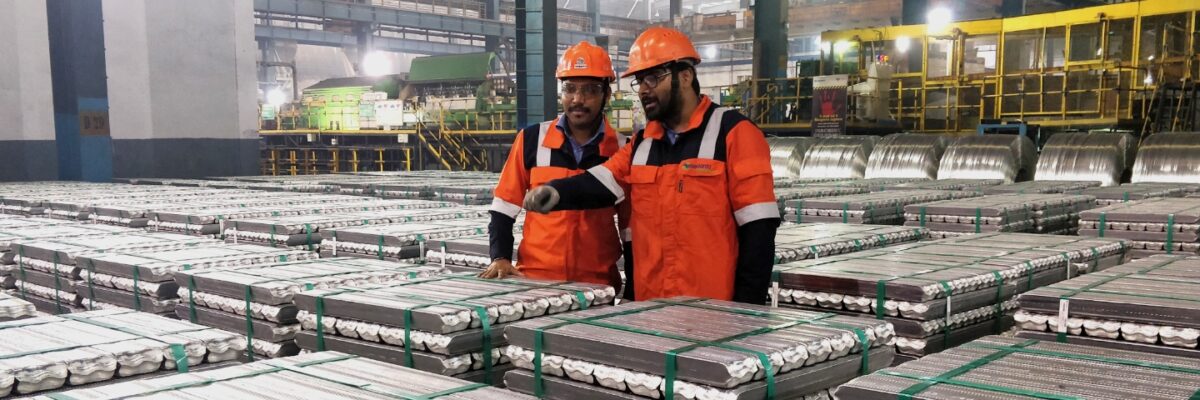
Vedanta Group on Thursday unveiled a plan to invest an additional ₹1 lakh crore (about ₹1 trillion) in the Indian state of Odisha, the company and state officials said, in a move aimed at expanding its aluminium and downstream manufacturing footprint and creating substantial employment.

The investment package, disclosed during meetings between Vedanta executives and Odisha government officials, is slated to fund a cluster of projects that include a large alumina refinery, a multi-million-tonne aluminium smelter and associated aluminium parks, as well as a ferro-alloys plant.

Company and state statements said the roadmap contemplates greenfield capacity tied to renewable power and an industrial ecosystem intended to feed medium and small downstream units.

Officials accompanying the announcement said the new plan will be rolled out across multiple districts, with proposals that name Dhenkanal and Jharsuguda among likely locations for smelting and aluminium-park facilities and Keonjhar for ferro-alloys capacity.

State authorities have signaled support for land allotment and infrastructure facilitation as part of a broader effort to accelerate project clearances.

Vedanta and the Odisha government said the investment is expected to generate direct and indirect employment for more than 100,000 people, with company projections pointing to thousands of jobs during construction and tens of thousands once plants reach steady operations.

Vedanta also framed the effort as a continuation of an existing industrial push in the state: the group has previously invested heavily in Odisha over recent years and says the state remains its single largest investment destination in India.

The proposed projects are presented as part of a long-term strategy to build an integrated aluminium value chain in Odisha, from alumina production to primary aluminium and downstream fabrication, powered largely by renewable energy to reduce carbon intensity.

Company documents released at earlier industry events described plans for multi-million-tonne refineries and smelters accompanied by captive power and logistics investments.

Analysts say the commitment, if realized, would further cement Odisha’s role as an aluminium manufacturing hub and likely induce investments among suppliers and ancillary manufacturers.

However, observers also note that large metal projects require complex clearances, secure land and long lead times for construction and commissioning, and may attract scrutiny over environmental and community impacts.

Vedanta’s announcement comes amid a broader push by the Odisha government to attract heavy industry and downstream manufacturing, and it follows a series of clearances by the state’s High-Level Clearance Authority for multiple large projects.

Both parties said they would soon finalize memoranda and implementation timetables, while underlining commitments to local employment and supply-chain development.

Also Read: Google Claims World’s First Verifiable Quantum Advantage With ‘Willow’ Chip

Categories
Corporate

WazirX Set to Restart Operations After Year-Long Hiatus

India’s cryptocurrency exchange WazirX is scheduled to resume operations on Friday, October 24, 2025, more than a year after a July 2024 security breach that resulted in losses exceeding $230 million and brought trading to a halt.

The relaunch comes after a restructuring process overseen in Singapore and follows a period of significant uncertainty for users and creditors of the platform.

WazirX founder Nischal Shetty confirmed on X, formerly Twitter, on Thursday that the platform’s “Funds” page with rebalanced tokens was live, crypto and Indian-rupee deposits were open, and that crypto withdrawals would begin the following day.

Shetty announced that trading along with withdrawals would start from October 24 and that the company would continue to add more tokens to its trading and withdrawal list in a phased manner.

In a move meant to rebuild user trust, WazirX said it will launch with zero trading fees across all trading pairs under a “Restart Offer.”

Initially, trading will be limited to selected crypto-to-crypto pairs and the USDT/INR pair, with additional markets to follow in the coming days.

The platform said it has partnered with custody provider BitGo to bolster asset security and implement institutional-grade protections.

The relaunch marks a critical juncture for a company that once commanded a leading position in India’s crypto market.

The July 2024 breach froze user funds, prompted the suspension of withdrawals, and triggered a protracted restructuring through the Singapore High Court under the parent company Zettai Pte. Ltd.

Over 95 percent of the platform’s creditors backed the arrangement, and the court’s approval paved the way for the restart.

For many users of the platform, the top priority has been clarity on the status of locked assets and when access to funds will be restored.

WazirX said token distributions to creditors and the issuance of recovery tokens will begin within weeks of the relaunch.

The timing of the reopening is significant in light of waning confidence in Indian crypto platforms.

Several exchanges in the country have faced security incidents, regulator scrutiny, and major user losses. Observers view WazirX’s ability to deliver full recovery and open operations as a test of the wider domestic market’s resilience.

As WazirX begins to offer crypto and INR withdrawals, the company emphasized its mission to “make crypto accessible to every Indian” while noting that asset security remains a top priority.

The platform said the relaunch was not simply a return to operational status but a “reinforcement of our integrity.”

The next few weeks will determine whether WazirX succeeds in restoring user service and confidence or whether lingering concerns from the hack and long shutdown will weigh on its comeback.

Users, creditors, and regulators alike will be watching closely as the platform takes its first steps into a new operating phase.

Also Read: HUL Q2 Net Profit Rises 3.8% to ₹2,694 Crore

Categories
Corporate

HUL Q2 Net Profit Rises 3.8% to ₹2,694 Crore

FMCG major Hindustan Unilever Ltd (HUL) reported a 3.8% increase in consolidated net profit to ₹2,694 crore for the second quarter ending September 2025, compared with ₹2,595 crore in the same quarter a year ago.

Revenue for the quarter rose 2.1% to ₹16,034 crore, up from ₹15,703 crore in the corresponding period of 2024.

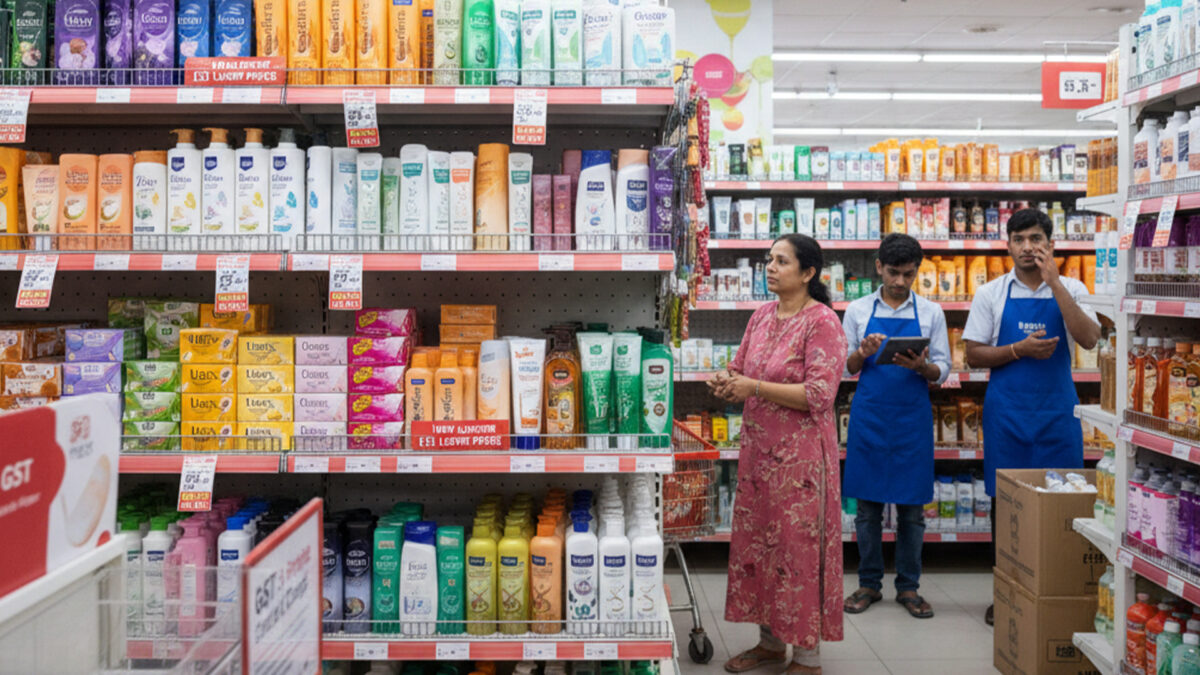
The company posted a consolidated Underlying Sales Growth (USG) of 2% and flat Underlying Volume Growth (UVG) for the quarter, reflecting a transitory impact from recent Goods and Services Tax (GST) reforms and prolonged monsoon conditions in certain parts of the country.

Total expenses rose 3.32% to ₹12,999 crore, while total income, including other revenue, increased 1.5% to ₹16,388 crore.

HUL’s board approved an interim dividend of ₹19 per share for fiscal year 2026 at a meeting held on Thursday.

The company’s performance highlights resilience amid temporary market adjustments caused by regulatory changes, which temporarily affected consumption patterns and product pricing.

Priya Nair, CEO and Managing Director of HUL, said the company delivered a competitive performance with a USG of 2% and an EBITDA margin of 23.2% for the quarter.

She noted that the recent GST reforms are expected to drive consumption by increasing disposable income and enhancing consumer sentiment, though the market needed time to adjust to the changes.

Nair added that the company anticipates normal trading conditions to return from early November, enabling a gradual and sustained market recovery.

Shares of HUL were trading at ₹2,597.60 apiece on the BSE on Thursday, up 0.23%, reflecting positive investor sentiment after the earnings announcement.

Analysts at Bloomberg and Reuters observed that while the quarter saw modest growth, HUL’s performance remained stable amid macroeconomic headwinds, highlighting the company’s strong portfolio and distribution network.

Industry experts noted that HUL’s steady earnings underscore the resilience of India’s FMCG sector despite regulatory transitions and weather-related challenges.

The company’s focus on premiumization, digital initiatives, and rural penetration continues to support growth, even as GST adjustments temporarily moderated consumer demand.

The results mark HUL’s continued ability to navigate structural shifts in the market, maintain profitability, and provide consistent shareholder returns.

Also Read: Reliance Industries to Adjust Russian Oil Imports Amid U.S. Sanctions

Categories
Corporate

Reliance Industries to Adjust Russian Oil Imports Amid U.S. Sanctions

Reliance Industries Ltd, India’s largest private oil refiner, plans to adjust its crude oil imports from Russia to comply with Indian government guidelines, as reported by news agency Reuters.

The announcement comes in the wake of new U.S. and European sanctions targeting Russian oil companies Lukoil and Rosneft, imposed amid growing tensions over Russia’s ongoing conflict in Ukraine.

India became the top importer of discounted Russian seaborne oil after Western nations suspended purchases following Moscow’s invasion of Ukraine in February 2022.

From January to September 2025, India imported approximately 1.7 million barrels per day of Russian crude, with private refiners Reliance Industries and Nayara Energy accounting for the bulk of these imports.

Reliance, which operates the world’s largest refining complex with a capacity of 1.4 million barrels per day, also procures oil from the spot market to support operations.

The U.S. sanctions, announced by President Donald Trump, require companies to wind down transactions with Rosneft and Lukoil by November 21.

In response, Reliance has stated that recalibration of Russian oil imports is ongoing and will be fully aligned with government directives.

State-owned refiners, including Indian Oil, Bharat Petroleum, Hindustan Petroleum, and Mangalore Refinery & Petrochemicals, have also paused Russian crude purchases as they reassess contracts to ensure compliance.

The adjustments in imports by Indian refiners mark a significant shift in the global oil trade.

India, which has been a major buyer of discounted Russian crude, now faces the challenge of securing alternative sources to maintain refining operations.

Experts note that this may lead to temporary changes in supply patterns, with Middle Eastern and African crude increasingly sought to meet domestic demand.

Reliance’s compliance underscores the delicate balance between energy security and international regulatory obligations.

The recalibration demonstrates how geopolitical developments, including sanctions and the Ukraine conflict, are shaping corporate strategies and impacting the global energy market.

As the November 21 deadline approaches, Indian refiners continue to evaluate contracts and logistics to ensure operational continuity while adhering to international sanctions.

The evolving situation will likely influence crude pricing, supply chains, and the broader oil trade in the months ahead.

Also Read: Dubai Islamic Bank, HCLTech Launch AI Partnership

Categories
Corporate

Jaguar-Land Rover Cyberattack Becomes UK’s Costliest, Disrupts 5,000 Firms

A cyberattack on Tata Motors–owned Jaguar Land Rover (JLR) earlier this year has been identified as one of the most damaging ransomware incidents in British corporate history, affecting over 5,000 companies across the supply chain.

According to new research by cybersecurity analysts, the breach, attributed to the Russia-linked LockBit ransomware gang, caused widespread disruption to production, logistics, and supplier networks across the United Kingdom and Europe.

The ransomware attack, which targeted JLR’s parent company Tata Motors in late April, forced the luxury automaker to temporarily halt operations at multiple sites, including its main manufacturing plants in Solihull and Halewood.

The disruption also spread to several suppliers, leaving thousands of firms unable to fulfill parts orders or process invoices. Investigations revealed that the breach originated from a compromised supplier system that provided access to JLR’s digital infrastructure.

Researchers said the scale of the breach made it one of the largest supply-chain cyber incidents in British history. The attack reportedly disrupted the operations of logistics companies, component manufacturers, and dealerships connected to JLR’s systems.

Cybersecurity firm Sophos described the breach as an example of “ransomware contagion,” in which one attack on a central node spreads rapidly through interconnected systems.

The LockBit ransomware group, known for targeting multinational corporations, claimed responsibility for the incident and demanded a ransom payment to prevent the release of stolen data.

Although JLR did not confirm the details of the ransom negotiations, reports suggest that sensitive internal documents and production schedules were among the data exfiltrated during the breach.

The UK’s National Cyber Security Centre (NCSC) and law enforcement agencies launched a joint investigation into the incident.

JLR said in a statement that it had contained the attack and restored most of its systems within days, emphasizing that customer data remained secure.

The company has since enhanced its cybersecurity protocols and initiated a review of third-party vendor access.

It also said that the breach highlighted the need for stronger digital resilience across the automotive supply chain.

Industry analysts said the JLR attack underscores the growing vulnerability of large manufacturers to ransomware threats, particularly in an era of increasingly digitalized operations.

The incident followed a string of high-profile cyberattacks on global automakers and suppliers, including incidents involving Toyota and Continental AG.

The UK government has reiterated its warnings to businesses about the risks of ransomware and has urged organizations to improve their cyber hygiene and incident response systems.

Experts say the fallout from the JLR breach could cost hundreds of millions of pounds in direct and indirect losses, making it the most financially damaging cyberattack in the UK’s corporate history.

Also Read: Meesho Grapples with ₹127 Crore Arbitration Dispute with AWS

Categories
Corporate

Dubai Islamic Bank, HCLTech Launch AI Partnership

Dubai Islamic Bank (DIB), the world’s first full-service Islamic bank and the largest in the United Arab Emirates, has announced a strategic partnership with HCLTech, a global technology services company, to accelerate the adoption of artificial intelligence (AI) across its operations.

The deal, unveiled during the GITEX GLOBAL 2025 technology show in Dubai, marks a deliberate move by the bank to embed intelligent systems throughout its banking ecosystem in line with Shariah-compliant, ethical finance principles.

Under the collaboration, Dubai Islamic Bank plans to leverage HCLTech’s full-stack AI capabilities, including advisory services and alliances with global hyperscalers and technology partners, to deploy scalable, responsible AI solutions across its infrastructure.

The bank intends to apply these capabilities to personalize customer engagement, streamline decision-making, enhance process efficiency, and strengthen risk and compliance frameworks—all while upholding the integrity and transparency demanded by Islamic finance standards.

DIB’s Chief Operating Officer emphasized that the bank’s innovation strategy is anchored in responsibility and purpose.

He noted that the partnership with HCLTech marks a pivotal step in achieving an AI-driven future that boosts value for customers and employees while reinforcing governance structures.

Meanwhile, HCLTech’s Middle East country head highlighted that the combined effort would unlock innovation, boost operational agility, and deliver differentiated experiences for the bank’s clientele.

The collaboration arrives at a time when the Middle East fintech and banking sectors are increasingly turning to AI and digitalization to gain competitive advantage.

At GITEX GLOBAL 2025, major deals and innovations in artificial intelligence, data infrastructure, cybersecurity, and digital banking were featured, underscoring the region’s ambitions to emerge as a global tech hub.

The bank’s commitment to integrating AI sits squarely within its broader objective of leading the evolution of Islamic finance.

DIB has long positioned itself as a pioneer in Shariah-compliant banking, with operations across the Middle East, Asia, and Africa, and assets exceeding USD 95 billion according to recent disclosures.

The partnership is expected to bolster DIB’s ability to deliver future-ready services while maintaining the ethical and governance standards intrinsic to Islamic financial institutions.

For HCLTech, the agreement strengthens its footprint in the financial services sector in the Middle East and aligns with its strategy of partnering with major regional banks to deploy AI at scale.

The firm, with over 226,000 employees across 60 countries and revenues of around USD 14.2 billion for the 12 months ending September 2025, brings deep domain expertise in technology services and a strong track record in working with banks and financial institutions globally.

As the partnership moves into implementation, key areas to watch will include how swiftly AI capabilities are embedded within the bank’s operations, how governance and Shariah-compliance are maintained in AI deployment, and what measurable impact the initiative produces in terms of customer experience, operational efficiency, and risk management.

With DIB seeking to position Islamic finance not just as an alternative but as a technologically advanced proposition, the collaboration with HCLTech could set a new benchmark for responsible innovation in faith-based banking.

Also Read: Infosys Promoters Opt Out of ₹18,000 Crore Buyback

Categories
Corporate

Infosys Promoters Opt Out of ₹18,000 Crore Buyback

Infosys shares gained on Thursday after the company confirmed that its promoters and members of the promoter group would not participate in its ₹18,000 crore share buyback programme.

The news of promoter non-participation boosted investor sentiment, sending Infosys shares up by nearly 5 percent in early trade.

In a regulatory filing dated October 22, Infosys stated that co-founders N.R. Narayana Murthy, his wife Sudha Murty, and Chairman Nandan M. Nilekani were among those who chose to opt out of the buyback.

The buyback, approved by the board on September 11, 2025, allows Infosys to repurchase up to 10 crore fully paid equity shares of face value ₹5 each at a price of ₹1,800 per share.

The move represents approximately 2.41 percent of the company’s paid-up equity on a standalone basis.

The company said in its filing that the promoter and promoter group, who collectively held 13.05 percent of the company’s equity share capital at the time of announcement, had conveyed their decision between September 14 and 19 not to participate in the buyback.

As a result, their shareholding will not be included in the calculation of entitlement ratios for eligible shareholders tendering shares in the buyback.

Depending on the overall participation of other shareholders, the voting rights of the promoter group could marginally change after the completion of the programme.

Market analysts said the decision by the promoters to abstain from tendering shares reflects their confidence in the company’s long-term growth potential and financial resilience.

The ₹18,000 crore buyback is part of Infosys’s broader capital allocation policy aimed at optimizing its balance sheet and returning surplus cash to shareholders.

The company has previously committed to returning around 85 percent of its free cash flow to investors over a five-year period through dividends and buybacks.

Analysts noted that the decision aligns with Infosys’s track record of consistent shareholder returns and its focus on maintaining financial flexibility while supporting growth investments.

The market reaction underscored the perception that Infosys remains on strong financial footing despite global macroeconomic headwinds and ongoing challenges in the technology services sector.

While the company has yet to announce the record date for determining shareholder eligibility, market participants expect strong participation from institutional and retail investors given the attractive buyback price and Infosys’s solid fundamentals.

The decision by key promoters to hold on to their shares is seen as reinforcing trust in the company’s future earnings prospects and operational stability.

Overall, Infosys’s latest buyback programme and the promoters’ decision to abstain have strengthened investor confidence in the company’s capital discipline and growth outlook.

The development is viewed as a strategic signal that Infosys’s leadership remains committed to long-term value creation rather than short-term liquidity gains.

Also Read: Nifty 50 Crosses 26,000 Amid India-US Trade Optimism