Categories
Corporate

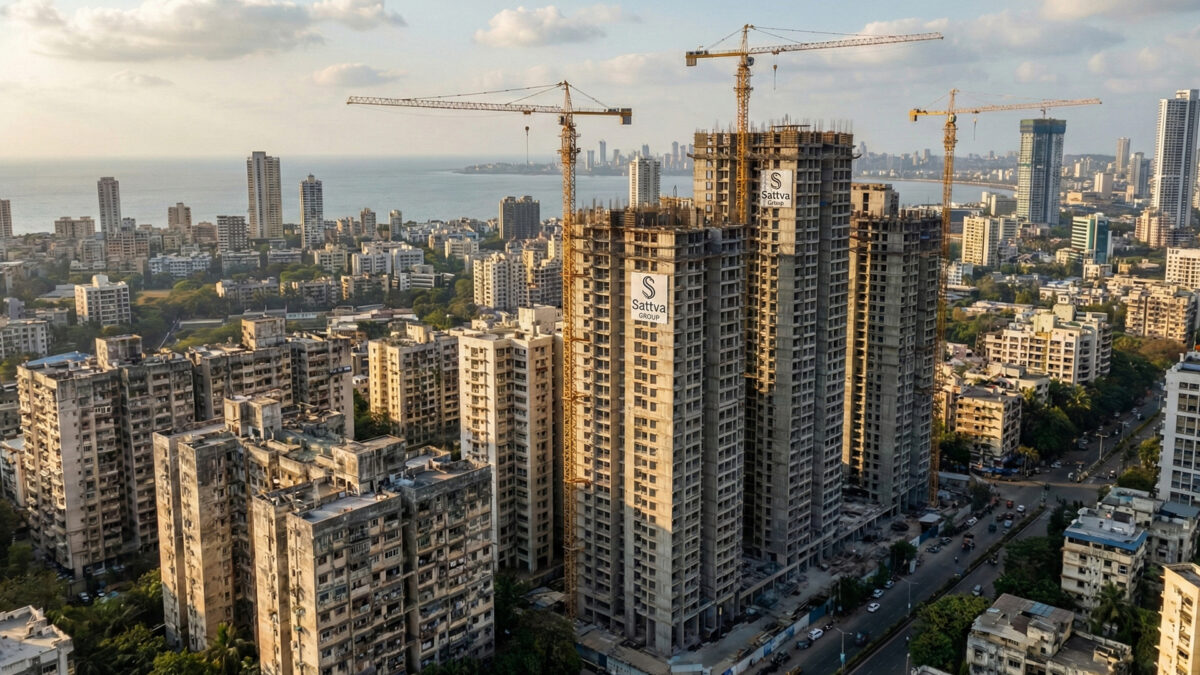
Sattva Group enters Mumbai with ₹11,000 cr projects

Bengaluru-based real estate developer Sattva Group has announced its entry into the Mumbai real estate market with six major redevelopment projects. Together, these projects cover more than 8 million sq ft and are valued at around ₹11,000 crore.

The projects are located in key Mumbai areas including Parel (Sewri), Prabhadevi, Goregaon East, Vile Parle West, Powai and near BKC. The company plans to start construction in 2026 and expects phased completion by 2032, with the first homes delivered around 2028.

Sattva will follow a rehabilitation-led redevelopment model, meaning they will provide upgraded homes for existing residents while also building new housing. The plan includes more than 2,500 homes for current residents and over 2,000 additional new units.

This move is a big step for Sattva, which already has a strong presence in southern cities like Bengaluru and Hyderabad. The company has completed around 78 million sq ft of projects and has 71 million sq ft under construction across India.

Bijay Agarwal, Managing Director of Sattva Group, said Mumbai is at a critical stage of urban renewal, with many old buildings needing replacement. He stressed that redevelopment in the city requires careful planning and long-term commitment, which Sattva aims to bring.

Sattva’s projects aim to modernize housing while keeping existing residents in mind, combining safety, sustainability, and better infrastructure. The company hopes its Mumbai portfolio will set an example for structured and responsible urban redevelopment in the city.

Experts say redevelopment is gaining importance in Mumbai due to limited land and high housing demand. New regulations under the DCPR 2034 are expected to make projects more feasible and attractive for developers.

Also Read: Cisco launches AI networking chip

Categories
Corporate

Carlyle invests ₹2,100 cr in Edelweiss unit

Shares of Edelweiss Financial Services surged nearly 9% on Tuesday following a sharp rise in quarterly profit and a major investment by global private equity firm The Carlyle Group.

Edelweiss reported a consolidated net profit of ₹264 crore for the December quarter, more than double the ₹125 crore earned in the same period last year. While interest income saw a slight decline, overall performance exceeded market expectations, boosting investor confidence.

The standout development was Carlyle’s agreement to invest ₹2,100 crore in Nido Home Finance, Edelweiss’s housing finance subsidiary. Under the deal, Carlyle funds will acquire a 45% stake in Nido, including ₹1,500 crore in primary equity and the rest through secondary share purchase. On a fully diluted basis, Carlyle and co-investors are expected to hold around 73% of Nido, making them the strategic majority backers.

Founded in 2010, Nido focuses on home loans for the affordable and mass-market segments, with an asset base of ₹4,804 crore and presence in over 800 talukas across India. The partnership with Carlyle is expected to strengthen Nido’s growth and expand its reach to underserved semi-urban and rural customers.

Edelweiss said the deal is part of its broader strategy to unlock value from subsidiaries and bring strong partners on board to scale key businesses. Carlyle’s involvement reflects continuing interest from global investors in India’s housing finance sector, driven by rising affordability and policy support.

Veteran banker Aditya Puri, senior advisor to Carlyle in Asia and former CEO of HDFC Bank, will also participate as a co-investor in Nido. The investment is subject to approvals from the Reserve Bank of India, National Housing Bank, and the Competition Commission of India.

Also Read: L&T wins ₹2,500 crore Dubai road project

Categories
Corporate

Sensex slips slightly, Nifty steadies at 25,900

On Wednesday, the BSE Sensex closed marginally lower, while the Nifty 50 held steady above 25,900, reflecting a session of consolidation after recent gains.

After opening with positive momentum, supported by modest gains in global markets, profit-booking in select stocks tempered the rally. Volatility remained moderate, with investors selectively buying into defensive sectors while booking profits in high-flying stocks.

Among individual stocks, SBI, Reliance Industries (RIL), and ICICI Bank emerged as top gainers, rising 2–3% during the session. These gains partially offset losses in other sectors and helped the indices hold key levels.

On the other hand, IT stocks came under pressure, with TCS, Infosys, and Wipro recording declines of 2–3%, reflecting profit-taking and rotation into banking and PSU stocks. Other laggards included HDFC Bank and HCL Tech, which also slipped amid sectoral weakness.

Market breadth was mixed, with auto and pharma stocks attracting selective buying, while mid-cap and IT names saw selling pressure. Foreign institutional investors were cautious, with some selective buying in large-cap stocks noted. The Indian rupee remained stable against the U.S. dollar, and commodity markets saw moderate inflows into safe-haven assets like gold.

Global cues were mixed, with Asian markets posting modest gains, while U.S. and European futures indicated slight upside. Analysts noted that the market is consolidating near technical support levels, and investors are awaiting fresh triggers for a sustained breakout.

Also Read: Sensex up 50 points, Nifty holds above 25,950

Categories
Corporate

Eicher Motors rises to ₹7,200 after Q3 profit jump

Eicher Motors Ltd. saw its shares hit a record ₹7,200 on Wednesday after reporting strong results for the third quarter of 2025–26. The stock rose 6–7% in early trade, driven by healthy earnings and revenue growth.

For the quarter ended December 31, 2025, the company posted a net profit of around ₹1,421 crore, up 21% from the same period last year. Revenue grew about 23% to ₹6,114 crore, while EBITDA rose nearly 30% to ₹1,557 crore, reflecting better operational performance.

The growth was led by Royal Enfield motorcycles, which sold 325,773 units, a 21% increase from last year. Demand for mid‑size bikes and increased production capacity supported these strong numbers. The commercial vehicle division, VE Commercial Vehicles, also contributed with higher revenue and improved profits. To meet future demand, the board approved a ₹958 crore expansion of its Cheyyar plant in Tamil Nadu.

Despite the strong performance, broker views are mixed. Choice Institutional Equities upgraded the stock to ‘Add’ with a target of ₹7,650, citing growth and a strong product line. Motilal Oswal Financial Services maintained a ‘Sell’ rating, pointing to normalising demand and limited margin gains. Nuvama Institutional Equities kept a ‘Hold’ rating, raising its target to ₹8,100 based on higher sales expectations.

Also Read: Government to sell 5% stake in BHEL at ₹254

Categories
Corporate

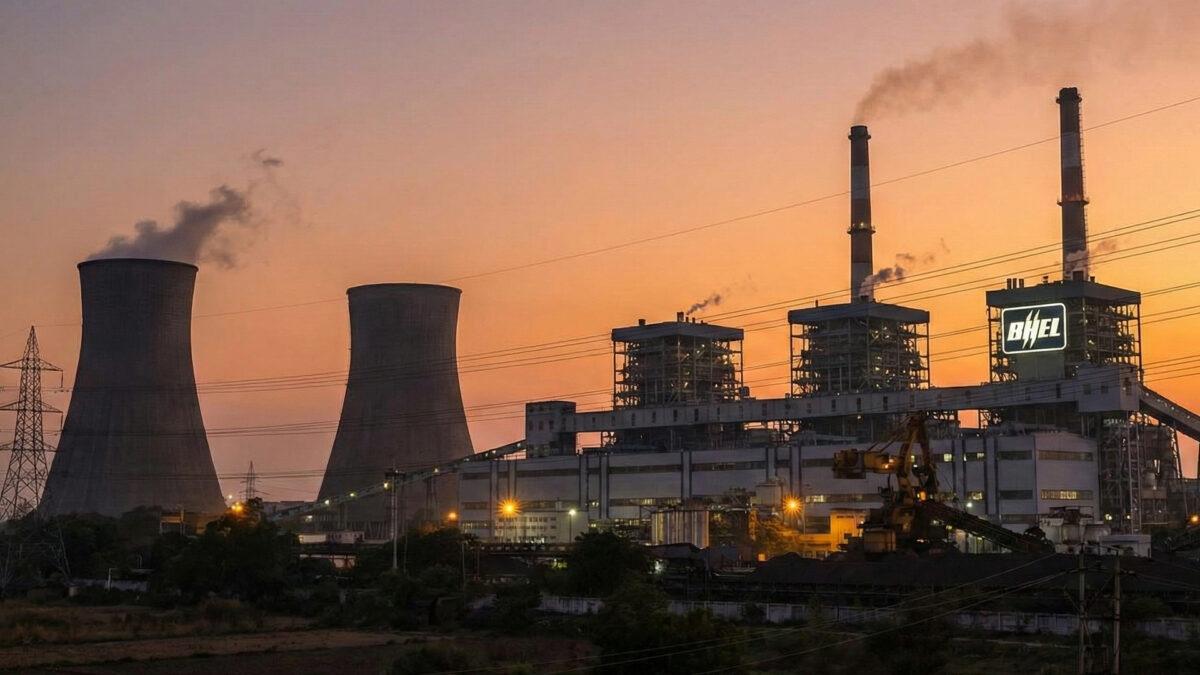
Government to sell 5% stake in BHEL at ₹254

The Government of India has announced an Offer for Sale (OFS) to sell up to 5 per cent of its stake in Bharat Heavy Electricals Ltd (BHEL). This move is part of the government’s ongoing plan to reduce holdings in public sector companies and raise funds.

Under the offer, the government will first sell 3 per cent, with an option to sell another 2 per cent if demand is strong. The floor price is set at ₹254 per share, about 8 per cent lower than BHEL’s previous closing price. If fully sold, the divestment could generate around ₹4,422 crore.

Bids for institutional investors opened first, followed by retail investors. The government currently holds a 63 per cent majority stake in BHEL. This OFS is aimed at increasing public shareholding and market liquidity while helping the government meet its fiscal targets.

After the announcement, BHEL shares fell about 5–6 per cent in early trading, reflecting the market’s reaction to the discounted price and additional shares being offered.

BHEL is a key company in India’s power and infrastructure sectors, supplying electrical equipment and engineering services. Investors are closely watching the OFS as it affects both the stock price and overall market activity.

Also Read: Tata Motors, Stellantis strengthen 20-year partnership

Categories
Corporate

Tata Motors, Stellantis strengthen 20-year partnership

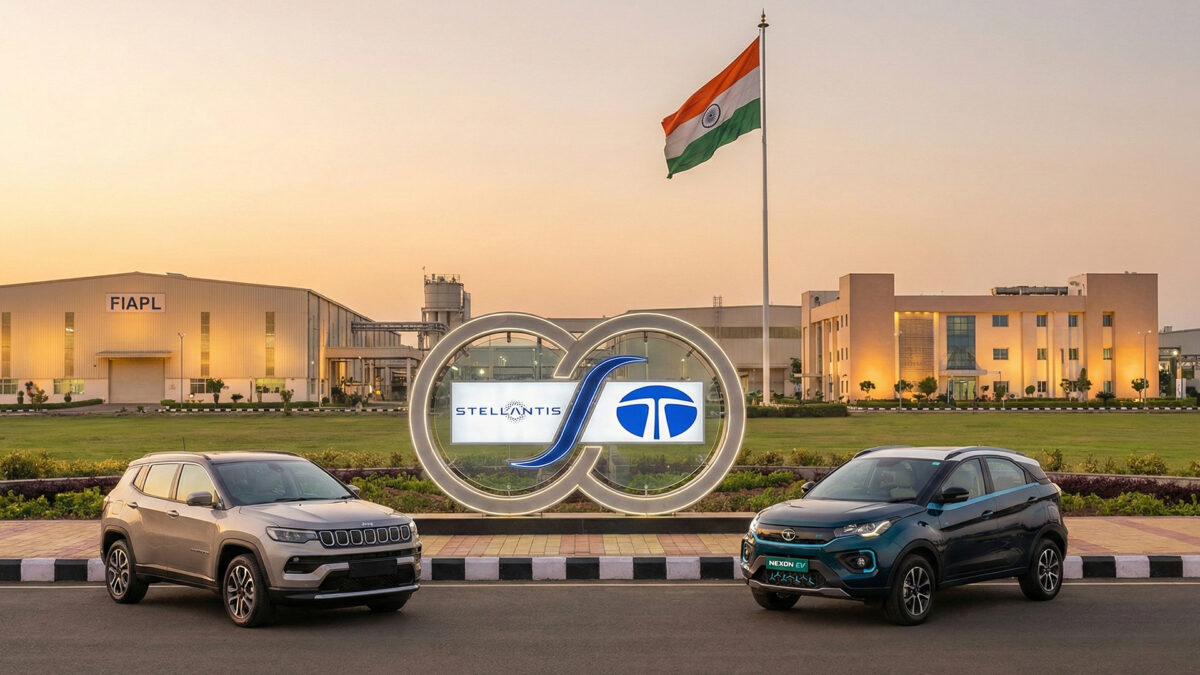
Tata Motors Passenger Vehicles (TMPV) and global auto major Stellantis have completed 20 years of their 50:50 joint venture and signed a fresh Memorandum of Understanding (MoU) to strengthen and expand their partnership.

The joint venture, Fiat India Automobiles Private Limited (FIAPL), was established in 2006 and operates an integrated manufacturing facility at Ranjangaon near Pune. Over the past two decades, the plant has produced more than 1.37 million vehicles. It currently has an annual production capacity of around 2.22 lakh units and employs nearly 5,000 people.

The Ranjangaon facility manufactures several models for both companies. For Stellantis, it produces vehicles such as the Jeep Compass and Meridian, along with CKD versions of the Jeep Grand Cherokee and Wrangler. For Tata Motors, models including the Nexon, Altroz and Curvv are built at the plant. The facility also manufactures engines, transmissions and traction motors, with some output exported to international markets including Japan and South Africa.

To mark the milestone, the two companies signed an MoU on February 10, 2026. Under the new agreement, Tata Motors and Stellantis will explore opportunities for future collaboration across manufacturing, engineering and supply chain operations in India as well as overseas. While specific projects were not detailed, the move signals intent to build on the long-standing industrial alliance.

Stellantis Asia Pacific COO Grégoire Olivier said the partnership demonstrates what two strong organisations can achieve together and will continue to focus on innovation and future-ready manufacturing. Tata Motors Passenger Vehicles MD and CEO Shailesh Chandra described the joint venture as a relationship built on trust and shared vision, adding that both companies remain committed to strengthening the alliance further.

Also Read: Akasa Air co-founder Praveen Iyer quits

Categories
Corporate

Sensex up 50 points, Nifty holds above 25,950

The equity benchmarks traded in a narrow range on 11 February 2026, with the BSE Sensex posting modest gains and the Nifty holding firm above the 25,950 mark. The session began on a positive note, supported by firm global cues and steady trends across Asian markets, but momentum remained stock-specific as the day progressed.

Investor sentiment was aided by softer US bond yields and stable commodity prices, though caution persisted ahead of key global economic data. Gold and silver prices edged higher, reflecting a defensive undertone in global markets.

Sectorally, automobile, metal and energy counters led the advance, attracting buying interest on the back of earnings expectations and improved demand outlook. Select consumer stocks also saw steady traction. However, IT and financial stocks faced mild selling pressure, limiting the broader market’s upside.

Among the prominent gainers, Eternal Ltd rallied sharply, while Tata Steel and ONGC recorded healthy gains. Auto majors such as Bajaj Auto and Mahindra & Mahindra also traded in the green, contributing to the positive bias in the indices.

On the downside, HCL Technologies declined amid weakness in the IT pack, while Bajaj Finance witnessed profit booking. Stocks such as Dr Reddy’s Laboratories and Shriram Finance also closed lower, reflecting selective selling in pharma and NBFC counters.

Meanwhile, institutional activity remained strong, with major financial institutions including HUDCO, NaBFID and SIDBI announcing plans to raise funds through bond issuances. Changes in global index constituents also remained on investors’ radar.

Also Read: Tata Motors launches ₹9,000 cr JLR plant in Tamil Nadu

Categories
Corporate

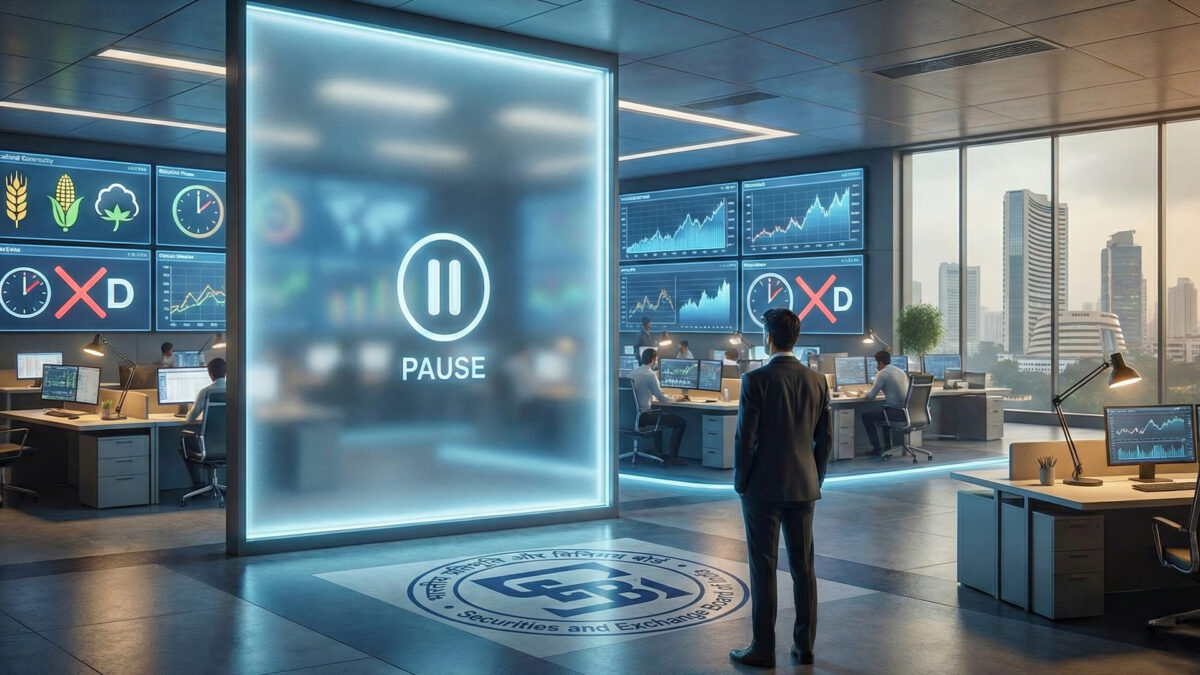
SEBI halts NCDEX, MSE from equity derivatives launch

The Securities and Exchange Board of India (SEBI) has paused plans by the National Commodity and Derivatives Exchange (NCDEX) and the Metropolitan Stock Exchange (MSE) to offer equity derivatives. The move is part of the regulator’s effort to ensure that new exchanges first develop strong and liquid cash equity markets before venturing into derivatives trading.

Both NCDEX and MSE had applied to enter the equity market last year, seeking approval to list shares and launch options and futures contracts. SEBI, however, has told them to focus on building a robust cash market first. Officials indicated that the regulator wants these exchanges to demonstrate sufficient liquidity, price discovery, and trading activity in cash equities before allowing more complex derivatives products.

Both exchanges have been preparing for this expansion. NCDEX raised around ₹770 crore from domestic and foreign investors, aiming to diversify beyond agricultural commodity contracts. MSE secured roughly ₹1,200 crore from private equity and brokerage backers to strengthen its technology platform and infrastructure. Despite these efforts, SEBI wants them to prove their readiness in cash equities first.

The regulator has also emphasized technology upgrades as a prerequisite for derivatives trading, underscoring the importance of market stability and investor protection. This move comes amid increasing caution around derivatives, following recent government steps such as raising Securities Transaction Tax (STT) on futures and options to curb excessive speculation.

Sources say SEBI prefers a gap of at least six months between starting cash trading and offering derivatives. The decision reflects broader concerns in the Indian market, where derivatives trading is already nearly double the size of the underlying cash equity market, a figure much higher than international standards.

SEBI’s directive signals that while new players are welcome, they must first ensure a solid foundation in the cash segment before entering the fast-moving derivatives market. For now, established exchanges like the National Stock Exchange (NSE) and the Bombay Stock Exchange (BSE) remain the primary platforms for equity and derivatives trading.

Also Read: Eternal shares soar 7% on heavy trading

Categories
Corporate

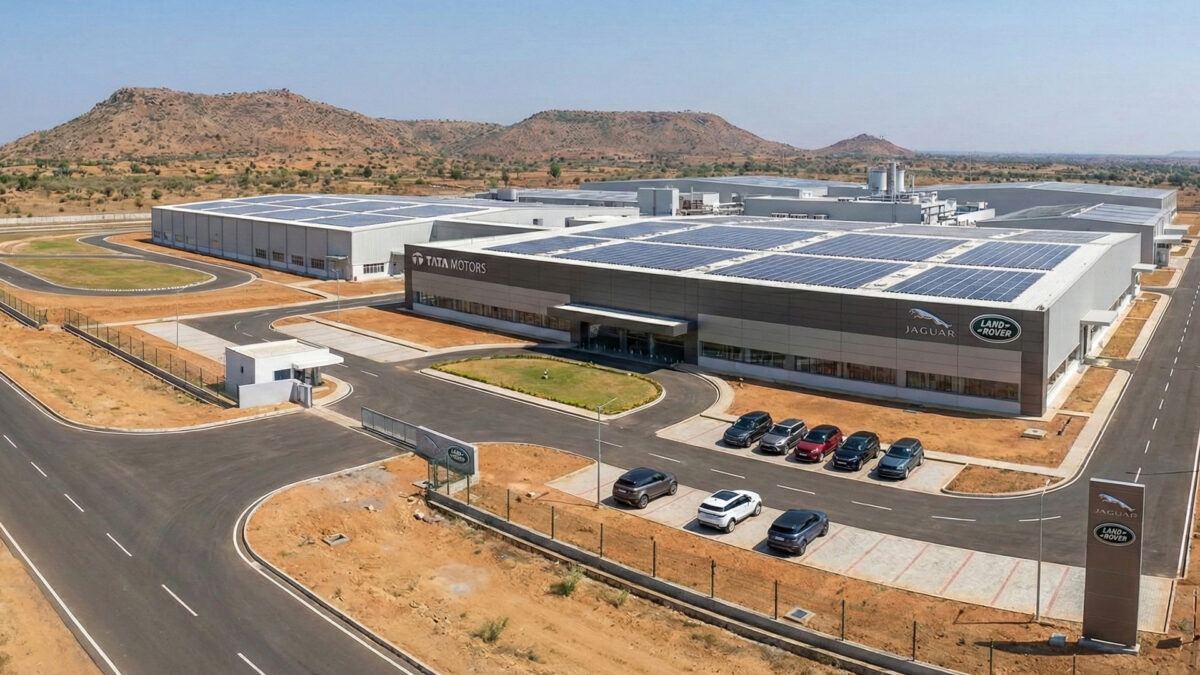
Tata Motors launches ₹9,000 cr JLR plant in Tamil Nadu

Tata Motors and its luxury arm, Jaguar Land Rover (JLR), have officially opened a new manufacturing plant in Panapakkam, Ranipet district, Tamil Nadu. The ₹9,000 crore facility is the company’s largest investment in India and will produce premium cars for both domestic and international markets.

The first vehicle to roll off the assembly line is the Range Rover Evoque, marking the start of local production of luxury SUVs. The launch was flagged off by Tamil Nadu Chief Minister M. K. Stalin alongside Tata Group Chairman N. Chandrasekaran.

Spread over a large area, the plant is designed to be sustainable, with renewable energy use and water-positive processes, reflecting Tata’s commitment to environmentally friendly operations.

Initially, the facility will focus on assembling the Range Rover Evoque, but it is expected to gradually expand to produce other Tata and JLR models, including future electric vehicles. The company aims to reach a production capacity of 2.5–3 lakh vehicles per year over the next few years.

The plant will also create more than 5,000 direct and indirect jobs, offering opportunities for local suppliers and boosting the region’s economy.

Tata Motors said the Panapakkam plant strengthens India’s position in JLR’s global manufacturing network, complementing existing facilities in the UK, China, and Brazil.

Also Read: Belagavi tech company in Karnataka sues Anthropic over name

Categories
Corporate

Sensex gains 208 points, Nifty crosses 25,900

The market extended its rally for the third straight session on Tuesday,  with benchmarks closing higher amid broad-based buying. The BSE Sensex rose 208 points to settle near 84,274, while the Nifty 50 ended at 25,935, maintaining its position above the 25,900 mark.

Sectoral buying was strong in autos, metals, and mid-cap stocks, supporting the overall market sentiment. Among the gainers, Eternal Ltd surged over 5%, Tata Steel climbed around 3%, and Mahindra & Mahindra and Tech Mahindra added more than 1.5% each. On the losing side, HCL Technologies, Bajaj Finance, Bharti Airtel, and Adani Ports saw modest declines during the session.

Foreign institutional investors continued net buying, which helped sustain the market’s uptrend. The broader indices, including mid-cap and small-cap segments, outperformed, showing participation beyond just the frontline stocks. Positive cues from global markets and selective corporate earnings also bolstered investor confidence.

A decisive move above these levels could continue the recovery. Strategists suggested selective accumulation in fundamentally strong stocks while monitoring earnings trends for sustained gains.

Also Read: Sensex gains 300+, Nifty climbs past 25,950