Categories
Corporate

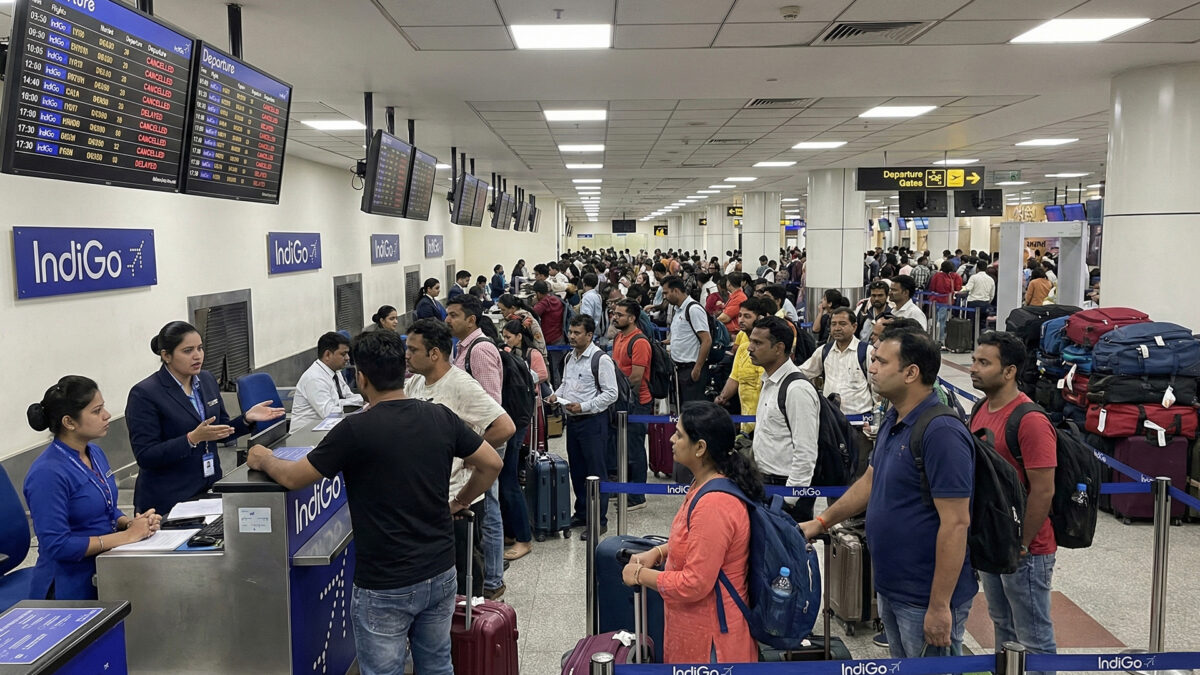
IndiGo slumps 7% as flight chaos hits harder

IndiGo, the airline in its peak of focus now, saw its shares drop sharply this week after major flight disruptions and regulatory scrutiny rattled investors. On December 8, 2025, the stock fell nearly 7%, adding to losses seen earlier in the week.

The problems began after new flight duty rules for pilots came into effect. These rules regulate how many hours pilots can fly and how much rest they must get. IndiGo struggled to adjust its crew schedules to comply with the changes, leading to a shortage of available pilots. The result was massive flight cancellations and delays. On December 5 alone, over 1,000 flights were cancelled, causing inconvenience for thousands of passengers and a hit to the airline’s reputation.

The Directorate General of Civil Aviation (DGCA), India’s aviation regulator, has launched a probe into the airline’s operations and issued a show-cause notice to IndiGo’s CEO. The DGCA has now extended the deadline for IndiGo to respond, giving the airline some time to stabilise operations.

IndiGo has set up a “Crisis Management Group” with top executives to manage the situation. The airline is working to adjust flight schedules, revise crew rosters, and restore on-time performance. Reports suggest that flight operations are gradually improving, with on-time performance recovering from a low of 30% back to around 75%.

Despite the short-term challenges, some analysts see a silver lining. Jefferies, a global brokerage firm, has maintained a “buy” rating on IndiGo. The firm believes the airline still has strong market dominance in India and potential for international growth. According to Jefferies, shares could rise by more than 30% once operations stabilise and normal schedules resume.

Investors are being advised to watch whether IndiGo can successfully meet the DGCA deadline and maintain operational improvements. Costs for fuel and crew, along with regulatory oversight, remain key risks in the short term.

While the airline faces immediate hurdles, experts say IndiGo’s long-term fundamentals remain strong. Once the disruptions are resolved, the company is expected to recover and continue its growth trajectory, making this period potentially a buying opportunity for investors.


Also Read: Eternal sees ₹1,535 cr block deal shake stock

Categories
Corporate

Eternal sees ₹1,535 cr block deal shake stock

Eternal Ltd, the parent company of Zomato and Blinkit, grabbed market attention on Monday as a large block deal worth ₹1,535 crore was executed. Around 5.3 crore shares changed hands at ₹290.4 per share, representing roughly 0.54% of the company’s total equity. The deal marked one of the biggest secondary-market transactions for Eternal in recent months.

Following the block sale, Eternal’s stock initially surged to an intraday high of ₹297.35, showing positive momentum. However, it later retreated to close near ₹285.75, reflecting a drop of about 4% from the day’s peak. This swing highlighted the market’s cautious sentiment amid heavy institutional selling.

This latest transaction is part of a broader trend of large institutional share movements in Eternal over the past year. In mid-November, nearly 90 lakh shares were sold in a block deal, and in June, another 61 lakh shares were traded. Such repeated activity underscores investors’ attention on the company’s stock despite its high-profile operations in food delivery and quick commerce.

On the financial front, Eternal reported mixed results for the second quarter of FY26. Revenue jumped 183% year-on-year to ₹13,590 crore, driven mainly by Blinkit’s expansion. Yet, net profit fell sharply by 63% to ₹65 crore compared with ₹176 crore in the same quarter last year. The company attributed the decline partly to recent acquisitions and the ongoing investment push into its quick-commerce business.

Eternal also issued a cautious outlook for its food-delivery segment. The company noted that growth in Zomato could slow due to weakening discretionary spending, rising competition from quick-commerce rivals, and unpredictable weather patterns.

Meanwhile, Eternal has been actively supporting Blinkit, injecting ₹2,600 crore in 2025 alone to fund expansion, cover operating losses, and maintain working capital.

With substantial block sales, a notable drop in profitability, and uncertain near-term growth prospects despite strong revenue growth, Eternal remains under close investor scrutiny. The company’s stock movements and institutional activity are likely to continue attracting attention in the coming months.

Also Read: Wakefit IPO opens at ₹185–195, raising ₹1,289 crore

Categories
Corporate

Wakefit IPO opens at ₹185–195, raising ₹1,289 crore

Wakefit Innovations Ltd., the direct-to-consumer (D2C) home-furnishing and mattress brand, opened its initial public offering (IPO) on 8 December 2025, targeting ₹1,288.9 crore. The price band is set at ₹185–195 per share, with ₹377.18 crore offered as a fresh issue and ₹911.71 crore through an offer-for-sale. The shares will list on both BSE and NSE, with allotment expected by 11 December and tentative listing on 15 December. Retail investors can apply for a minimum of 76 shares, which comes to about ₹14,820 at the upper price band.

Institutional investors have shown strong interest, with the anchor portion fully subscribed at the upper band, highlighting confidence in Wakefit’s growth story. The company recorded over 28% revenue growth in FY25 and turned profitable for the six months ending September 2025, marking a potential turnaround after several years of losses.

However, risks remain. Wakefit posted a net loss of about ₹35 crore in FY25. Its business continues to rely heavily on mattresses, making it sensitive to changing consumer preferences and raw material costs. High marketing and distribution expenses, coupled with intense competition, continue to put pressure on margins. Some brokerage firms have issued cautious ratings, urging investors to carefully weigh the IPO’s valuation against potential returns.

Grey-market activity suggests modest listing gains. While initial premiums were around ₹36 per share, these have cooled to roughly ₹16, implying expected listing gains of about 8%.

Wakefit’s IPO offers investors a chance to back a growing, brand-recognised D2C home-furnishing player. For long-term investors willing to take a calculated risk, there is potential. Yet, the combination of past losses, reliance on a narrow product range, and margin pressures calls for careful consideration before subscribing.

Also Read: Vodafone Idea seeks fresh AGR review to slash dues

Categories
Corporate

Vodafone Idea seeks fresh AGR review to slash dues

Vodafone Idea (Vi) has formally submitted a proposal to the Department of Telecommunications (DoT) requesting a fresh recalculation of its Adjusted Gross Revenue (AGR) dues. The telecom operator claims that previous assessments included arithmetic errors and duplicate entries, which significantly inflated its liability. Alongside the recalculation request, Vi has sought a one-time waiver of penalties and interest linked to these dues.

The company believes that rectifying these discrepancies could reduce its outstanding AGR payments by nearly half, easing its financial burden and improving liquidity. Vodafone Idea estimates that its current pending liability could be lowered by approximately ₹45,000–50,000 crore if the recalculation is accepted.

The proposal is not only aimed at financial relief but also at enabling strategic growth initiatives. Vi plans to raise around ₹25,000 crore from banks and financial institutions to support its planned capital expenditure of ₹50,000–55,000 crore for rolling out 5G services across India. This capital infusion would strengthen the company’s network infrastructure and enhance service offerings in the competitive telecom market.

Industry experts note that if the government approves the proposal, it could transform Vodafone Idea’s operational outlook. By reducing cash-flow pressure and freeing up capital, the company would be better positioned to invest in technology upgrades, expand 5G coverage, and maintain market competitiveness. Additionally, the restructuring of dues could open possibilities for government equity dilution, further supporting corporate flexibility and investor confidence.

Vodafone Idea has been navigating significant financial challenges since the Supreme Court’s ruling on AGR dues, which has affected several Indian telecom operators. The current proposal reflects the company’s proactive approach to regulatory engagement and its commitment to sustainable growth. Stakeholders, including investors, customers, and regulators, are closely monitoring the development, which has the potential to reshape Vi’s financial stability and accelerate its transition into the 5G era.

Also Read: Adani Green champions nature-positive growth in renewable energy

Categories
Corporate

Adani Green champions nature-positive growth in renewable energy

Adani Green Energy Ltd (AGEL), India’s largest renewable-energy producer, is taking a bold step to ensure its growth is in harmony with nature. The company has formally adopted the Taskforce on Nature-related Financial Disclosures (TNFD) framework, a global standard that helps businesses identify, manage, and reduce their impact on ecosystems and biodiversity.

Starting this year, AGEL has been assessing all its operational sites to understand how its projects interact with forests, water bodies, and local wildlife. The goal is not just to reduce environmental risks, but to actively create opportunities to support nature. CEO Ashish Khanna emphasised, “Nature is central to our growth story,” highlighting the company’s commitment to sustainable development.

AGEL has pledged to achieve “No Net Loss of Biodiversity” by 2030. This ambitious target includes planting 27.86 million trees across its solar and wind energy projects. Currently, the company operates more than 16.5 GW of renewable capacity in 12 states and aims to scale this to 50 GW by 2030, contributing significantly to India’s clean-energy transition.

Beyond energy generation, AGEL has already implemented sustainable practices across its projects, including being water-positive, single-use plastic-free, and zero waste-to-landfill. By integrating the TNFD framework, the company moves beyond standard ESG compliance, adopting a science-backed approach to measure and manage its ecological footprint.

This initiative sends a strong message to the renewable-energy sector: infrastructure growth and environmental stewardship can go hand in hand. By embedding nature-positive principles into its expansion plans, AGEL is setting a new benchmark for responsible clean-energy development in India and globally.

As India ramps up its renewable-energy ambitions, AGEL’s approach shows that development doesn’t have to come at the cost of nature. Instead, with thoughtful planning and commitment, it is possible to power the future while protecting the planet we rely on.

Also Read: DGCA gives IndiGo final 24‑hour response deadline

Categories
Corporate

Sensex falls 300+ points, Nifty slips below 26,100

Indian stock markets opened lower on December 8 as investors traded cautiously due to mixed global signals. The BSE Sensex fell by more than 300 points in early trade, while the Nifty 50 slipped below the 26,100 level.

Market sentiment was affected by weakness in the rupee and uncertainty ahead of key global interest rate decisions, especially from the US Federal Reserve. Foreign investors were also seen as cautious, with some money moving out of emerging markets.

Aviation stock InterGlobe Aviation, the parent company of IndiGo, saw a sharp fall in its share price after concerns over regulatory issues and recent flight operation disruptions. Heavyweight stocks like Bajaj Finance, Bajaj Finserv and Bharat Electronics also dragged the market.

Mid-cap and small-cap stocks showed weakness, while real estate shares remained under pressure. Analysts said investors are avoiding big bets until there is more clarity on global economic trends.

Experts believe market movements will remain volatile in the near term, depending on global cues, foreign fund flows and domestic liquidity conditions.

Also Read: SC to review Trump birthright citizenship order

Categories
Corporate

Ministry of Defence awards ₹120 cr order to Zen Technologies

Zen Technologies Ltd, a leading Indian defence training solutions provider, saw its shares rise over 2% following the announcement of a major contract win. The company has secured a ₹120‑crore order from the Ministry of Defence (MoD) for supplying a “Comprehensive Training Node” (CTN), which comprises a set of advanced simulators and related equipment designed to enhance training for defence personnel.

The company stated that the order is scheduled for delivery within a year and clarified that this is not a related-party transaction. The CTN package will bolster the Indian armed forces’ training infrastructure, providing realistic simulation-based training for various operational scenarios. This aligns with the government’s push for modernisation and self-reliance in defence technology.

Zen Technologies is known for its specialised defence simulators, anti-drone systems, and other defence-related products. The company has steadily built a reputation for providing technologically advanced and reliable solutions for training armed forces, paramilitary personnel, and police units across India and overseas.

The latest contract adds to Zen’s existing order book and enhances the company’s revenue visibility for the upcoming fiscal periods. Analysts noted that defence orders of this scale signal strong demand for indigenous training solutions and could position Zen Technologies as a key partner in India’s defence modernisation plans.

Financially, Zen reported a consolidated net profit of ₹59.4 crore in Q2 FY26, reflecting a slight decline compared to the same period last year, but showing sequential growth over the previous quarter. Revenue from operations also demonstrated resilience, supported by ongoing defence and training contracts.

Market observers believe that with rising focus on defence self-reliance and increased allocation in defence budgets, companies like Zen Technologies are likely to witness steady order inflows. The CTN order, combined with Zen’s ongoing projects, is expected to contribute positively to both revenue and profit margins in the medium term.

Investors reacted positively to the news, with Zen’s shares trading higher in early deals, reflecting market confidence in the company’s growth trajectory and its expanding role in India’s defence sector.

Also Read:

Categories
Corporate

Zepto becomes public company, plans IPO by June 2026

Bengaluru-based quick-commerce startup Zepto has officially converted from a private to a public limited company, taking a major step toward launching its initial public offering (IPO). Shareholders approved the move during an extraordinary meeting on November 21. Following the approval, the company’s legal name has changed from “Zepto Private Limited” to “Zepto Limited.”

The company also updated its legal documents, including its Memorandum and Articles of Association, to comply with public company regulations. These changes allow Zepto to file its draft IPO papers with market regulators, likely in the near future.

Founded in July 2021, Zepto has grown rapidly and is now valued at around USD 7 billion. It has raised about USD 1.8 billion (approximately ₹16,000 crore) from investors so far. Despite being a relatively young startup, Zepto operates over 900 “dark stores” across India and has managed gross sales worth about USD 3 billion (around ₹26,000 crore).

However, the company has faced high operating costs and has spent between ₹1,000–1,100 crore in cash. Company insiders say that while cash burn has been significant, it is now decreasing as operations become more efficient. Order volumes are reportedly increasing by 20–25% each quarter, and the company aims for over 100% growth year-on-year.

With the conversion to a public company, Zepto is now set to take the next big step in its growth journey. The startup plans to submit its draft IPO documents to regulators this month, with an aim to go public and list its shares on the stock market by June 2026.

The move signals Zepto’s intention to tap public markets to raise funds for expansion, strengthen operations, and solidify its position in the rapidly growing quick-commerce sector. Analysts see this as a significant development, as Zepto is among the first unicorns in India’s fast-paced quick-delivery segment to take steps toward becoming a listed company.

By going public, Zepto hopes to attract more investors, scale operations, and compete effectively with other players in the sector, while giving early investors and founders a path to unlock the value of their stakes.

Also Read: HUL’s record date for demerger Dec 5, shares drop 7%

Categories
Corporate

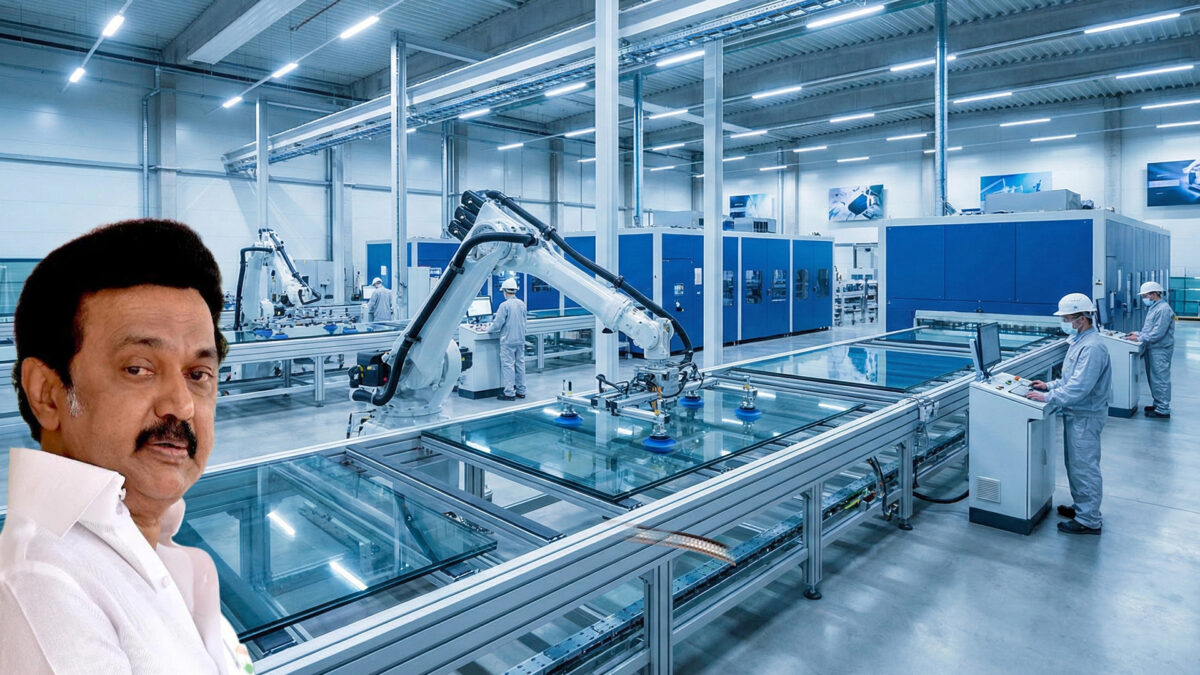
Tamil Nadu CM inaugurates ₹1,003 cr Gorilla Glass plant near Chennai

Tamil Nadu Chief Minister M. K. Stalin inaugurated a new state-of-the-art Gorilla Glass manufacturing facility near Chennai on Friday, marking a major milestone for India’s electronics industry. The plant, located at the SIPCOT industrial park in Pillaipakkam, Kancheepuram district, has been built with an investment of ₹1,003 crore and is expected to significantly strengthen the country’s high-tech manufacturing capabilities.

The facility is a joint venture between the US-based Corning Incorporated, globally known for its “Gorilla Glass,” and Indian firm Optiemus Infracom Ltd. It is the first plant in India to employ precision glass-processing technology to manufacture front cover glass for smartphones and other portable devices. The technology, widely used in premium mobile devices worldwide, will now be produced domestically, reducing reliance on imports and strengthening India’s electronics supply chain.

In its first phase, the plant is expected to produce approximately 30 million pieces of cover glass annually. The project will also generate around 840 direct jobs, providing employment opportunities and contributing to skill development in advanced manufacturing technologies. Officials noted that the initiative aligns with the central government’s “Make-in-India” strategy by promoting domestic production of high-value electronics components.

Stalin highlighted the significance of the facility in attracting further investment to Tamil Nadu’s electronics and manufacturing sectors. He pointed out that the state has been proactive in implementing industrial policies and MoUs, ensuring smooth project execution and creating an investor-friendly environment.

The plant is part of a broader trend of high-tech investments in the region, reinforcing Tamil Nadu’s position as a hub for electronics manufacturing in India. Industry experts say that domestic production of Gorilla Glass could open avenues for collaboration with global smartphone manufacturers and strengthen the country’s export potential in premium mobile components.

With the inauguration of this facility, India moves closer to self-reliance in critical smartphone technologies, while the state benefits from economic growth, employment generation, and enhanced technological capabilities. The plant is expected to play a key role in the country’s electronics ecosystem, attracting additional investments and supporting the growth of ancillary industries in the coming years.

Also Read: Netflix to buy Warner Bros Discovery for $72 billion

Categories
Corporate

HUL’s record date for demerger Dec 5, shares drop 7%

Hindustan Unilever Ltd (HUL) has set 5 December 2025 as the record date for the demerger of its ice‑cream business into a separate entity, Kwality Wall’s (India) Limited (KWIL). The move is part of HUL’s strategic plan to unlock value by separating its ice‑cream operations from its broader FMCG portfolio.

Under the approved demerger scheme, which came into effect on 1 December 2025, existing HUL shareholders as of the record date will receive one KWIL share for every HUL share held. This will give shareholders direct access to HUL’s ice‑cream business, which includes well-known brands like Cornetto, Magnum, Feast, and Creamy Delight. The newly formed KWIL is expected to be listed by February 2026, allowing investors to participate in the growth of the ice‑cream segment independently.

The announcement and record date triggered volatility in HUL shares. On the Bombay Stock Exchange (BSE), HUL’s stock fell sharply to an intraday low of ₹2,289, a drop of around 7%, before recovering to close the day down roughly 3.5%. Analysts attribute the initial decline to market adjustments as investors await the spin-off and recalibrate valuations for both HUL and the new ice-cream entity.

HUL’s management has emphasized that the demerger is intended to enhance operational focus and unlock shareholder value. By creating a pure-play ice‑cream company, the company aims to provide better visibility into the performance of its high-growth frozen dessert segment, separate from HUL’s core FMCG operations, which include personal care and household products.

The demerger follows a broader trend among large FMCG companies to unlock value through strategic spin-offs of high-potential business units. Analysts expect the move to strengthen both HUL and KWIL, with KWIL benefiting from dedicated management focus and increased investor interest, while HUL can concentrate on its core product categories.

For investors, the key takeaway is the opportunity to hold shares in both HUL and the newly listed KWIL, enabling participation in the growth trajectory of HUL’s ice‑cream business while retaining exposure to its established FMCG portfolio.

Also Read: Tamil Nadu CM inaugurates ₹1,003 cr Gorilla Glass plant near Chennai