Categories
Corporate

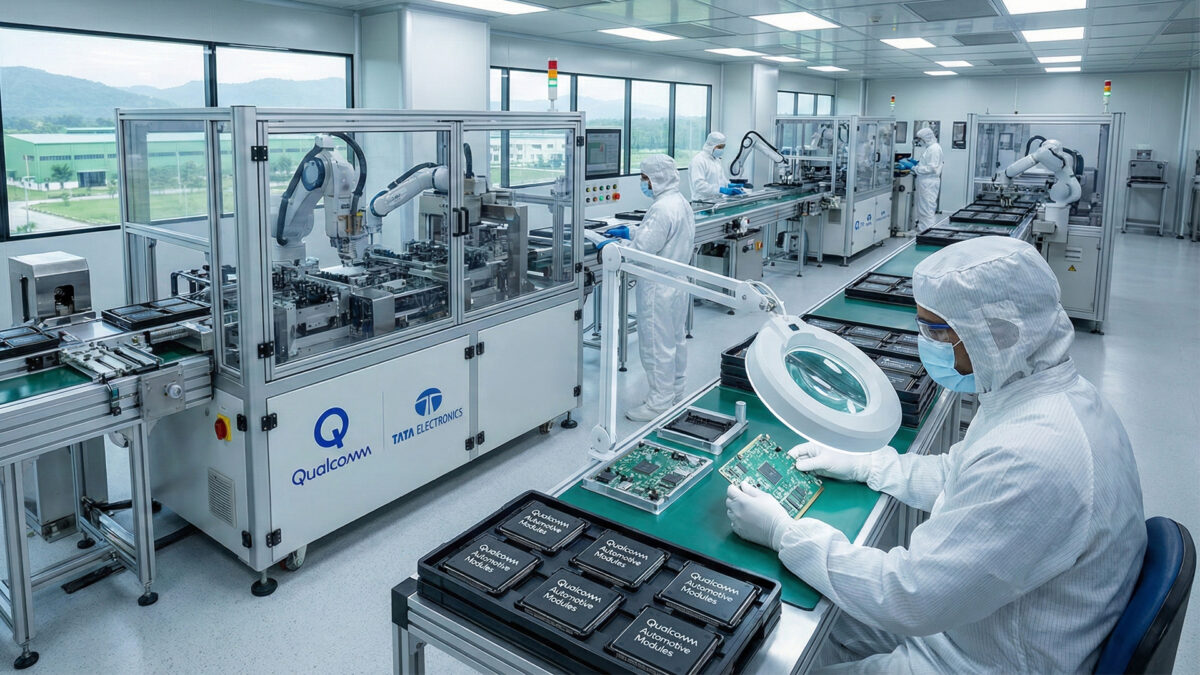
Qualcomm and Tata Electronics to make automotive modules in India

Qualcomm Technologies,  has partnered with Tata Electronics to manufacture Qualcomm Automotive Modules in India, a move aimed at boosting local production and supporting the country’s growing automotive electronics sector.

Tata Electronics will produce these modules at its upcoming semiconductor assembly and test facility in Jagiroad, Assam — India’s first indigenous Outsourced Semiconductor Assembly and Test (OSAT) plant. The facility, with an estimated investment of around USD 3 billion, will focus on advanced packaging technologies including wire bonding, flip-chip, and integrated systems packaging, which are crucial for automotive, AI, IoT, and communication electronics.

Qualcomm Automotive Modules combine Snapdragon Digital Chassis chips with essential system components into production-ready units. These modules simplify design for automakers, enabling faster development of digital cockpits, infotainment, connectivity, and intelligent vehicle systems. They are also key to the shift toward software-defined vehicles, providing scalable, ready-to-use solutions.

This collaboration aligns with India’s Make in India initiative and global efforts to diversify semiconductor supply chains. By manufacturing locally, Qualcomm and Tata Electronics aim to serve both Indian and international automakers more efficiently while enhancing supply-chain resilience.

Executives from Qualcomm highlighted the growing global demand for automotive modules and the importance of regional manufacturing hubs. For Tata Electronics, the partnership marks a major milestone in its ambition to become a global center for advanced electronics manufacturing, leveraging its expertise in integrated systems packaging to deliver high-performance products.

Also Read: Boeing secures 50-aircraft order from Vietnam Airlines

Categories
Corporate

Cristiano Ronaldo invests in Herbalife Health Tech, shares jump 15%

Cristiano Ronaldo, the Portuguese football icon, is making headlines off the field as well. The superstar has invested $7.5 million to acquire a 10 % stake in HBL Pro2col Software LLC, a health tech company owned by Herbalife. The company uses technology to provide personalised nutrition and wellness plans, combining health data with software to help users achieve better lifestyles.

The announcement immediately excited investors. Following news of Ronaldo’s investment, Herbalife’s shares surged more than 15 %, reflecting the market’s positive response. This boost comes alongside Herbalife’s recent financial results, which showed steady sales growth for 2025 and stronger performance in the fourth quarter, further cementing investor confidence.

Ronaldo has been associated with Herbalife for years as a brand ambassador, endorsing their products since 2013. However, this move marks his first publicly disclosed financial investment in the company. In a statement, Ronaldo described the deal as a “natural next step” in his long-standing relationship with Herbalife. He emphasized his personal commitment to health, wellness, and innovation, saying that the investment aligns with his passion for promoting healthier lifestyles.

For Herbalife, the investment is more than just a financial boost—it is also a significant endorsement from one of the world’s most influential athletes, highlighting the growing intersection between sports, wellness, and technology. The company’s platform, Pro2col, aims to revolutionize the way people approach nutrition and personal wellness, combining data-driven insights with tailored health plans.

Ronaldo’s involvement could attract more attention to the wellness technology sector, inspiring other high-profile investors to explore similar opportunities. For Ronaldo, this investment represents a blending of personal interest and strategic business acumen, demonstrating how athletes are increasingly leveraging their influence to make impactful business decisions.

Also Read: Mark Zuckerberg grilled in social media addiction trial

Categories
Corporate

Sensex rises 316 points, Nifty climbs past 25,550

Equity markets ended the week on a positive note on Friday, February 20, 2026, with strong buying in cyclical and rate-sensitive sectors. The BSE Sensex climbed 316.57 points to close at 82,814.71, while the NSE Nifty50 rose 116.90 points, settling at 25,571.25. Broad-based buying helped indices recover from midweek volatility, giving investors some relief after a week of swings.

Sectoral performance was mixed but tilted positive. Metals and public sector banks were the biggest gainers, reflecting renewed investor interest in sectors expected to benefit from economic activity and policy support. NTPC surged nearly 3%, L&T added 2%, and other PSU names like SBI and Tata Steel showed steady gains. Power, capital goods, and financials also contributed to the market’s upward momentum.

However, the rally was not uniform. IT and media stocks underperformed, with major technology counters ending in the red as investors rotated funds toward value-oriented and cyclical sectors. Midcap stocks recorded moderate gains, while smallcaps were slightly weaker, highlighting cautious sentiment in riskier segments.

Global cues remained mixed. Asian markets traded lower in early sessions, pressured by geopolitical concerns and rising oil prices, while US. futures showed moderate resilience. This combination kept domestic investors cautious, despite strong pre-market indications from GIFT Nifty futures, which suggested a slightly positive opening.

Also Read: Vishal Sikka sees AI boosting Indian entrepreneurs

Categories
Corporate

NCC shares plunge 10% to 52-week low on NHAI ban

Shares of NCC Ltd dropped about 10% to hit a 52-week low after the National Highways Authority of India imposed a two-year ban on the company and its step-down subsidiary OB Infrastructure Ltd from participating in its tenders.

The restriction, effective from February 17, 2026, bars the company from bidding for NHAI projects in any capacity, including as EPC contractor, concessionaire or consortium partner. The move triggered heavy selling in the stock as investors grew concerned about the impact on future order inflows.

NCC said the action is related to disputes in certain BOT (annuity) road projects. The company added that project delays were mainly due to issues such as land availability and other contractual constraints, and it is reviewing the order for possible legal action.

The decline in the share price also comes amid weak recent quarterly earnings, further dampening investor sentiment. The stock is now trading well below its 52-week high, reflecting a cautious market outlook.

The company clarified that the ban will not affect its existing order book or ongoing works. However, NHAI is a key client for highway developers, and the inability to bid for fresh projects for two years is expected to weigh on growth visibility.

Also Read: Sundar Pichai announces $15-bn AI investment for India

Categories
Corporate

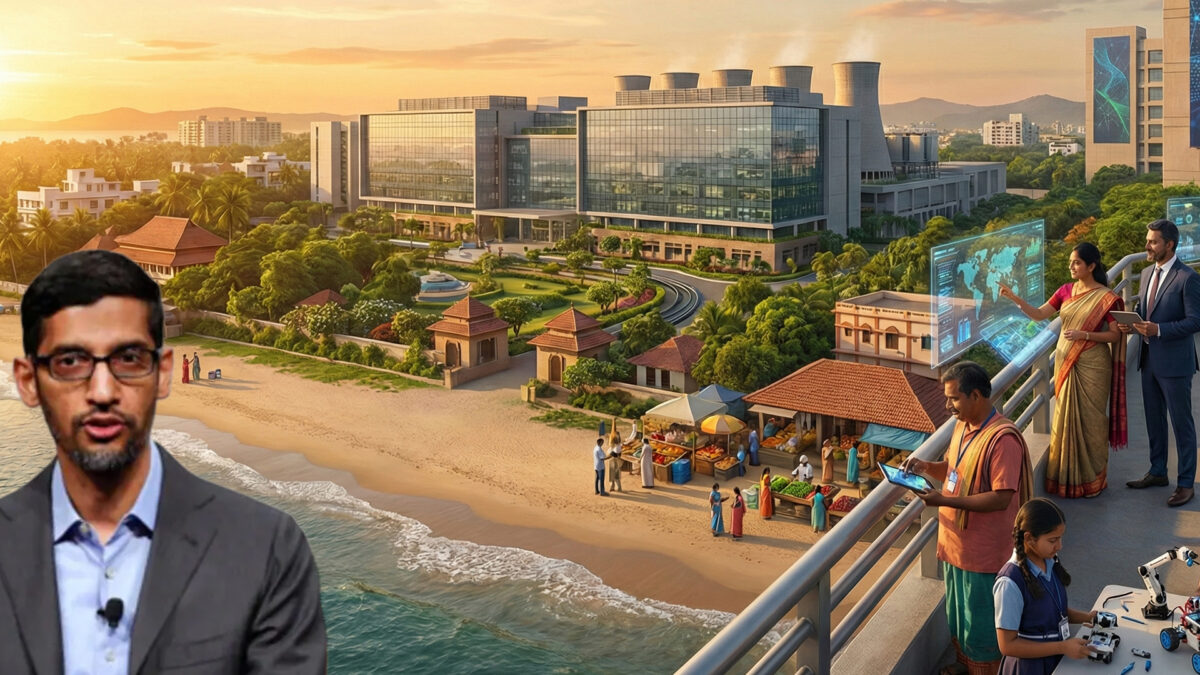
Sundar Pichai announces $15-bn AI investment for India

Google CEO Sundar Pichai on Friday announced a $15-billion investment to expand artificial intelligence infrastructure and capabilities in India, saying the country has the potential to become a major global hub for AI.

Speaking at the India AI Impact Summit, Pichai described AI as the most important technological shift of our time and said it can bring large-scale changes in sectors such as healthcare, education, agriculture and scientific research.

A major part of Google’s plan includes building strong digital infrastructure, improving compute capacity and supporting a full-stack AI ecosystem in the country. He also highlighted the need to train students, developers and professionals so that India’s workforce is ready for the AI era.

Pichai said India’s digital public platforms, large pool of tech talent and fast-growing startup ecosystem give it a unique advantage in the global AI race. He praised efforts to develop AI models that work in Indian languages and understand local needs, calling them essential for making the technology useful for millions of people.

At the same time, he cautioned that the benefits of AI will not come automatically. According to him, governments, companies and academic institutions must work together to ensure the technology is developed and used responsibly. He stressed that AI should reduce inequality, not increase it, and must be accessible and affordable to all.

Pichai also pointed to scientific breakthroughs powered by AI, such as AlphaFold, to show how the technology can help solve complex global challenges.

On the sidelines of the event, Pichai was seen tasting Indian GI-tagged coffee, reacting with a cheerful “wow”, a moment that quickly went viral on social media.

Also Read: AI key to India’s sovereignty, says Jeet Adani

Categories
Corporate

Novartis India 70.68% stake sold to ChrysCapital-led group

Swiss drug maker Novartis AG has agreed to sell its entire 70.68% stake in Novartis India to a consortium led by private equity firm ChrysCapital, along with Waverise Investments and Two Infinity Partners, in a transaction valued at about ₹1,446 crore. The move marks the Swiss company’s complete exit from its listed Indian subsidiary and will result in a change in management control.

The buyers will acquire around 1.74 crore shares at a price of ₹829.80 per share through a share purchase agreement. Following the acquisition, they have announced a mandatory open offer to purchase an additional 26% stake from public shareholders at ₹860.64 per share, in line with market regulations. If the open offer is fully subscribed, the consortium’s total holding could rise to nearly 96.7%.

The deal is part of Novartis’s global strategy to streamline operations and focus on core geographies and high-growth areas. Over the past few years, the company has been reducing its exposure to businesses that are not central to its long-term innovation-driven model. Its Indian arm primarily operates as a marketing and sales platform for pharmaceutical products, with limited manufacturing presence.

After the completion of the transaction and receipt of regulatory approvals, Novartis will cease to be the promoter of the Indian company.

Also Read: OpenAI–Tata partner for 100mw AI data centre in India

Categories
Corporate

OpenAI–Tata partner for 100mw AI data centre in India

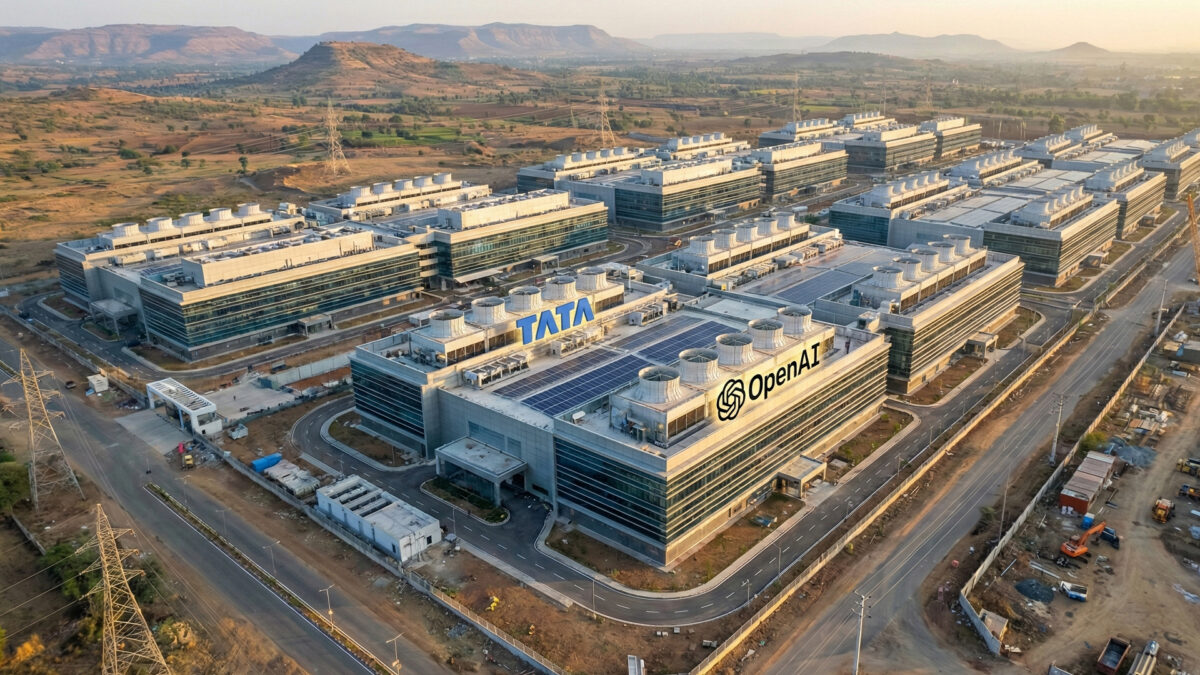
OpenAI has entered into a major infrastructure partnership with the Tata Group to build artificial intelligence-ready data-centre capacity in India, starting with 100 megawatts (MW) and with a long-term goal of expanding it to 1 gigawatt (GW). The move is aimed at strengthening the company’s presence in one of its fastest-growing user markets and supporting the rising demand for AI services in the country.

Under the agreement, Tata Consultancy Services (TCS) will provide the data-centre infrastructure, making OpenAI the first customer for its new AI-focused hosting platform. The facilities will be designed to handle high-performance computing required for training and running advanced AI models. Having local compute capacity is expected to improve speed, reduce latency and help meet India’s data-storage and regulatory requirements.

The project is part of OpenAI’s broader global plan to develop large-scale AI infrastructure through its “Stargate” programme. By hosting computing power within India, the company aims to enable wider adoption of AI across sectors such as finance, healthcare, manufacturing and government services, where domestic data processing is often essential.

The partnership also extends beyond infrastructure. ChatGPT Enterprise and other OpenAI tools will be deployed across several Tata Group companies to improve productivity, software development and automation. TCS is expected to integrate these AI solutions into its delivery platforms, helping clients adopt AI-driven workflows more quickly.

India has emerged as one of the largest markets for ChatGPT in terms of users, making local infrastructure a strategic priority for OpenAI. For the Tata Group, the deal provides a high-profile customer for its expanding digital and data-centre business and supports its ambition to become a key player in AI infrastructure.

Also Read: Trump’s first Japanese investments under $550 bn trade pact

Categories
Corporate

Sensex jumps 400 points, Nifty nears 25,600

Indian equity markets opened higher on Friday as investors sought opportunities after a sharp decline in the previous session. The BSE Sensex rose over 400 points, trading near 55,800, while the NSE Nifty 50 held around 25,600 in early deals, supported by buying in select heavyweight sectors.

The market rally was driven by value buying and sector-specific strength, particularly in public sector units, banks, and energy stocks. However, IT and realty counters underperformed, limiting the overall gains amid caution over global cues and recent volatility.

Among the top gainers, Coal India Ltd surged over 1%, while Oil & Natural Gas Corporation Ltd (ONGC) also rose about 1%. Heavyweight industrial stocks such as Bharat Electronics Ltd and Larsen & Toubro Ltd advanced around 0.8% each.

On the losers’ side, major IT stocks fell sharply. Infosys Ltd dropped more than 2%, while Tech Mahindra Ltd, Kwality Walls India Ltd, HCL Technologies Ltd, and Wipro Ltd all declined over 1%, reflecting profit-taking after recent gains.

Sector-wise, the Nifty Bank index showed resilience, while midcap and IT segments dragged market breadth lower. Investors remained watchful ahead of weekly derivatives expiry and potential global triggers that could influence market direction in the coming days.

After Thursday’s sharp sell-off, Friday’s session showed tentative stability, with defensive and cyclical stocks leading the rebound.

Also Read: Cigarette stocks jump up to 12% on sharp price hikes

Categories
Corporate

Data firm Palantir shifts HQ to Miami

Palantir Technologies, the data-analytics firm known for its work with governments and enterprises, has officially moved its headquarters from Denver, Colorado, to Miami, Florida. This relocation marks another milestone in a broader trend of companies seeking the financial and operational advantages offered by the Sunshine State. Over the past few years, Miami has become increasingly attractive to tech firms and executives, drawn by lower taxes, fewer regulations, and a vibrant business environment.

Founded in California in 2003, Palantir initially operated from Silicon Valley before moving to Denver in 2020. Its decision to relocate to Miami follows several high-profile corporate moves to Florida, including Tesla, Blackstone, and Citadel, reflecting a growing migration of talent and capital away from traditional tech hubs like California and New York. Florida’s governor and local business leaders have actively promoted the state as a destination for innovation, emphasizing the absence of personal income tax and a strong pro-business climate.

Palantir employs more than 4,000 people worldwide, including a significant number in the US., and its Miami headquarters is expected to strengthen the company’s operations and talent acquisition. Analysts say the relocation may also influence other tech startups to consider Florida, contributing to the city’s ambition to become a global technology hub.

While Miami is not yet on par with Silicon Valley in terms of startup ecosystem depth, venture funding, or established tech infrastructure, the city’s momentum is evident. Entrepreneurs, executives, and investors are increasingly exploring Miami for its combination of business incentives, lifestyle appeal, and connectivity to Latin America. Palantir’s move is seen as a significant endorsement of this emerging trend, underlining Florida’s potential to reshape the US tech landscape.

Also Read: Cigarette stocks jump up to 12% on sharp price hikes

Categories
Corporate

Sensex tumbles 1,236 pts, Nifty ends below 25,500

The equity markets fell sharply on Thursday, 19 February 2026, erasing nearly ₹8 lakh crore in investor wealth as widespread selling pressure dominated trading. The BSE Sensex plunged 1,236 points to 82,498, while the Nifty 50 slipped below 25,500, ending at 25,454, breaking a three-day rally.

Analysts attributed the sell-off to a combination of global and domestic factors. Escalating US-Iran tensions sparked fears of potential military action this weekend, driving investors away from emerging markets like India into safer assets. Meanwhile, Brent crude surged above $70 per barrel on concerns over Middle East supply bottlenecks, intensifying inflation worries and pressuring the Indian Rupee.

Investors also engaged in profit booking after the Sensex and Nifty had recorded gains over three consecutive sessions, particularly following major domestic events such as the Union Budget and RBI policy announcements. Adding to the pressure, uncertainty over US Federal Reserve policy and a “higher-for-longer” interest rate outlook strengthened the US Dollar, prompting Foreign Institutional Investors (FIIs) to reduce exposure to Indian markets.

Local technical factors compounded the decline, including a clearing holiday in India for Chhatrapati Shivaji Maharaj Jayanti that limited liquidity, as well as thin foreign participation due to Lunar New Year closures in key Asian markets.

Among the top gainers, Dr Reddy’s Laboratories Ltd and HDFC Life Insurance Co Ltd rose over 5 %, along with modest gains in Wipro Ltd. On the other hand, Trent Ltd, Adani Enterprises Ltd and InterGlobe Aviation Ltd fell 1–2 %, while Mahindra & Mahindra Ltd, Asian Paints Ltd and Jio Financial Services Ltd also ended lower, dragging the broader market down.

Also Read: Gold nears ₹1.53 lakh, silver tops ₹2.35 lakh