Categories
Corporate

PNC Infratech faces ₹42 lakh daily penalty

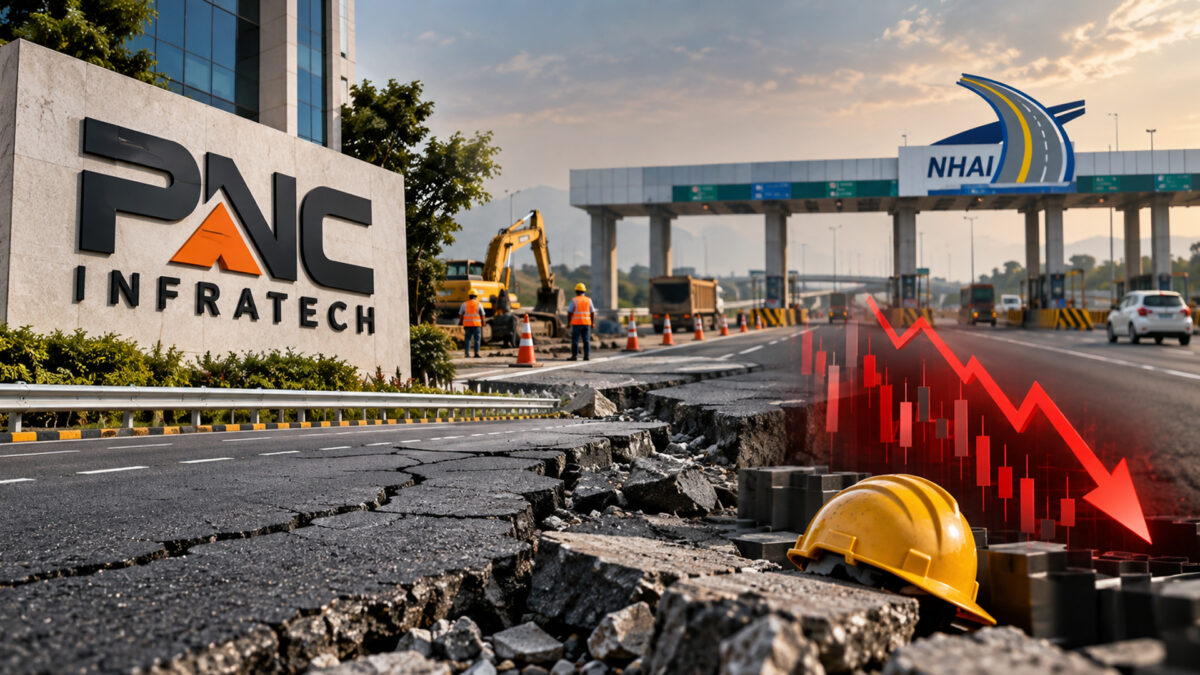
PNC Infratech shares fell 20% on September 15, hitting the lower circuit at around ₹140, after the National Highways Authority of India (NHAI) barred the company from bidding for new projects for three years. The action has put fresh pressure on the infrastructure company after defects were reported on the Kanpur-Lucknow Expressway.

The NHAI decision is the maximum debarment period allowed under the relevant contract conditions. The restriction prevents PNC Infratech from participating in bids floated by NHAI, the Ministry of Road Transport and Highways (MoRTH) and their executing agencies during the three-year period.

The action relates to the Kanpur-Lucknow Expressway, where structural problems emerged soon after the road was opened. The expressway has faced repeated reports of damage, including issues around an approach embankment and road surface. NHAI had earlier ordered inspections and corrective work after fresh damage was reported.

PNC Infratech was the concessionaire for the project through Awadh Expressway Private Limited. According to reports, NHAI’s September 11 communication extended the existing three-year debarment imposed on the project company to PNC Infratech as its promoter. The development was disclosed by the company in a regulatory filing.

The market reaction was immediate. PNC Infratech’s stock dropped 20%, its sharpest single-session decline in nearly two years, and touched a fresh 52-week low around ₹140.32. The fall also reduced the company’s market capitalisation significantly as investors assessed the possible impact of the bidding restriction on its future order pipeline.

The three-year ban is important because government highway contracts form a key part of the business environment for major infrastructure companies. Being unable to bid for NHAI and MoRTH projects could limit PNC Infratech’s access to new road and expressway opportunities during the restricted period.

The company, however, will continue to execute projects already awarded to it. The debarment relates to participation in new bids and does not by itself mean that existing contracts have been cancelled.

The Kanpur-Lucknow Expressway has faced scrutiny since defects appeared shortly after its opening. A fresh instance of road damage was reported near Korari in Uttar Pradesh’s Unnao district in August. NHAI subsequently ordered a safety and quality audit to examine the cause of the recurring problems.

NHAI project officials have said some of the reported damage was concentrated around an approach section rather than the main bridge structure. The authority had also directed the company to strengthen stormwater management and undertake repairs. PNC Infratech remains responsible for the operation and maintenance of the expressway under the project arrangement.

The latest action also carries a financial implication. NHAI has reportedly sought compensation from PNC Infratech at the rate of about ₹42 lakh per day for lost toll revenue linked to the road problems. The demand adds another potential financial burden to the debarment and repair-related issues facing the company.

The controversy has also renewed attention on the quality of highway construction and maintenance in India. Expressways are built to handle heavy traffic over long periods, making road quality, drainage, embankment stability and construction standards important factors in their performance.

The Kanpur-Lucknow Expressway is a key road link between the two Uttar Pradesh cities. The approximately 63-km greenfield corridor was developed as a six-lane access-controlled expressway and was intended to provide a faster connection between Kanpur and Lucknow.

PNC Infratech now faces the challenge of managing the fallout while remaining active in projects outside the NHAI and MoRTH bidding system. The three-year restriction could affect its ability to secure new central highway contracts, while the compensation demand and continuing scrutiny of the expressway could add to financial and operational pressures.

Investors will be watching the company’s response, the outcome of the ongoing technical assessments and any further action from NHAI. The stock’s sharp fall shows how quickly regulatory action linked to a major infrastructure project can affect market sentiment around an infrastructure company.

 

Categories
Corporate

FASTag annual pass to cost more from April

The National Highways Authority of India (NHAI) has announced a slight increase in the price of the FASTag Annual Pass, which will come into effect from April 1, 2026. The revised cost for the pass has been fixed at ₹3,075, up from the current ₹3,000, marking a hike of ₹75 for the financial year 2026-27.

The annual pass is mainly meant for private, non-commercial vehicles such as cars, jeeps and vans that frequently travel on national highways. With this pass, motorists do not have to pay toll charges separately at each toll plaza. Instead, they can travel seamlessly using the electronic toll collection system enabled by FASTag.

Once activated, the pass remains valid for one year or up to 200 trips through toll plazas, whichever is reached earlier. The facility is particularly useful for commuters who regularly drive on highways, helping them save time and avoid repeated toll payments.

The slight revision in the fee is part of the government’s periodic update of toll charges under the National Highways Fee Rules, which allow authorities to adjust rates based on factors such as inflation and operational costs of maintaining highways.

The FASTag Annual Pass was introduced to make toll payments more convenient and to encourage digital transactions on highways. By linking the pass directly to a vehicle’s FASTag, the system ensures automatic toll deduction without the need for cash payments or long queues at toll booths.

According to officials, the annual pass has become increasingly popular among regular highway users across India. The electronic toll collection system has also helped improve traffic flow at toll plazas by reducing congestion and waiting times.

Vehicle owners can buy or renew the annual pass through the Rajmargyatra mobile application, the NHAI website or authorised FASTag service providers. After the payment is completed and the vehicle details are verified, the pass is usually activated within a short time.

Also Read: IDBI Bank sale hits roadblock

Categories
Corporate

NHAI-backed Raajmarg InvIT IPO subscribed 13.74 times on final day

The initial public offering (IPO) of NHAI-backed Raajmarg Infra Investment Trust (InvIT) witnessed strong demand from investors, with the issue subscribed 13.74 times on the final day of bidding.

The ₹6,000-crore public issue, which opened for subscription on March 11 and closed on March 13, received bids far exceeding the units on offer, indicating healthy investor interest in infrastructure investment trusts.

Institutional investors drove the subscription, with their category seeing the highest demand. Other investor segments also recorded solid participation during the three-day bidding period.

The price band for the issue was fixed at ₹99–₹100 per unit.

According to market timelines, the basis of allotment is expected to be finalised on March 18, while the units are likely to be listed on the BSE and NSE on March 24.

Raajmarg InvIT manages a portfolio of operational highway assets developed under the National Highways Authority of India’s (NHAI) toll-operate-transfer (TOT) model. The InvIT structure allows investors to earn returns from income generated by infrastructure projects such as toll roads.

Proceeds from the issue will mainly be used to support project entities and meet financial obligations related to the highway assets.

Also Read: Iran to allow safe passage for Indian ships

Categories
Corporate

NCC shares plunge 10% to 52-week low on NHAI ban

Shares of NCC Ltd dropped about 10% to hit a 52-week low after the National Highways Authority of India imposed a two-year ban on the company and its step-down subsidiary OB Infrastructure Ltd from participating in its tenders.

The restriction, effective from February 17, 2026, bars the company from bidding for NHAI projects in any capacity, including as EPC contractor, concessionaire or consortium partner. The move triggered heavy selling in the stock as investors grew concerned about the impact on future order inflows.

NCC said the action is related to disputes in certain BOT (annuity) road projects. The company added that project delays were mainly due to issues such as land availability and other contractual constraints, and it is reviewing the order for possible legal action.

The decline in the share price also comes amid weak recent quarterly earnings, further dampening investor sentiment. The stock is now trading well below its 52-week high, reflecting a cautious market outlook.

The company clarified that the ban will not affect its existing order book or ongoing works. However, NHAI is a key client for highway developers, and the inability to bid for fresh projects for two years is expected to weigh on growth visibility.

Also Read: Sundar Pichai announces $15-bn AI investment for India