
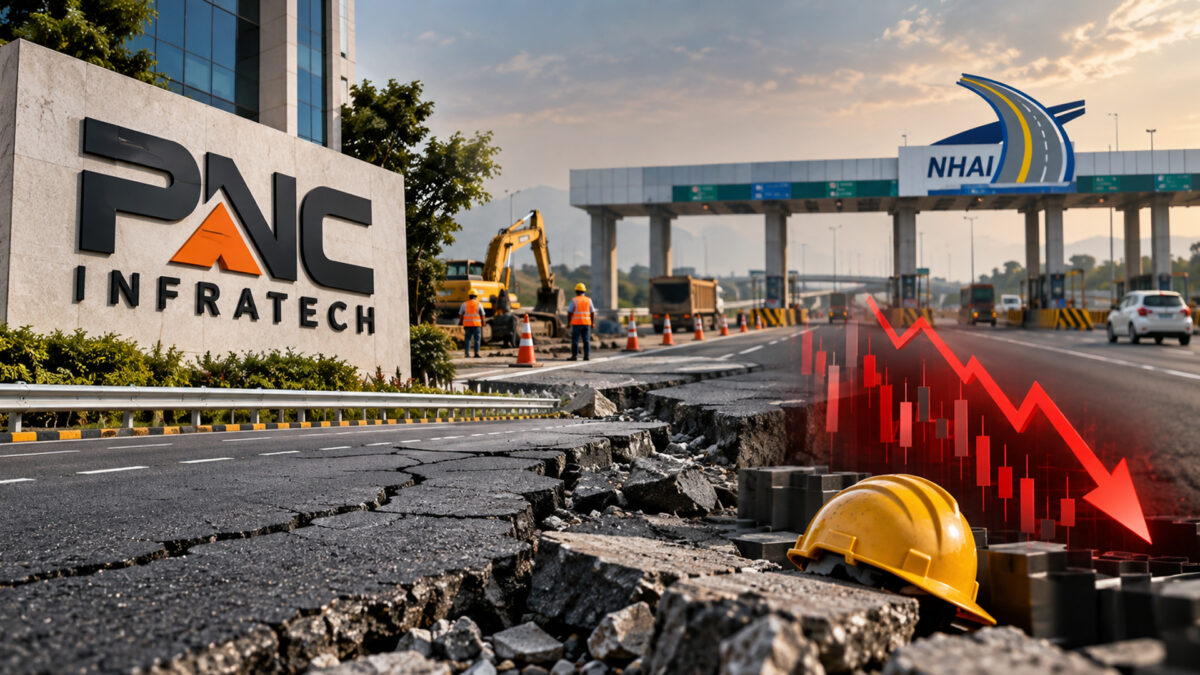
PNC Infratech shares fell 20% on September 15, hitting the lower circuit at around ₹140, after the National Highways Authority of India (NHAI) barred the company from bidding for new projects for three years. The action has put fresh pressure on the infrastructure company after defects were reported on the Kanpur-Lucknow Expressway.
The NHAI decision is the maximum debarment period allowed under the relevant contract conditions. The restriction prevents PNC Infratech from participating in bids floated by NHAI, the Ministry of Road Transport and Highways (MoRTH) and their executing agencies during the three-year period.
The action relates to the Kanpur-Lucknow Expressway, where structural problems emerged soon after the road was opened. The expressway has faced repeated reports of damage, including issues around an approach embankment and road surface. NHAI had earlier ordered inspections and corrective work after fresh damage was reported.
PNC Infratech was the concessionaire for the project through Awadh Expressway Private Limited. According to reports, NHAI’s September 11 communication extended the existing three-year debarment imposed on the project company to PNC Infratech as its promoter. The development was disclosed by the company in a regulatory filing.
The market reaction was immediate. PNC Infratech’s stock dropped 20%, its sharpest single-session decline in nearly two years, and touched a fresh 52-week low around ₹140.32. The fall also reduced the company’s market capitalisation significantly as investors assessed the possible impact of the bidding restriction on its future order pipeline.
The three-year ban is important because government highway contracts form a key part of the business environment for major infrastructure companies. Being unable to bid for NHAI and MoRTH projects could limit PNC Infratech’s access to new road and expressway opportunities during the restricted period.
The company, however, will continue to execute projects already awarded to it. The debarment relates to participation in new bids and does not by itself mean that existing contracts have been cancelled.
The Kanpur-Lucknow Expressway has faced scrutiny since defects appeared shortly after its opening. A fresh instance of road damage was reported near Korari in Uttar Pradesh’s Unnao district in August. NHAI subsequently ordered a safety and quality audit to examine the cause of the recurring problems.
NHAI project officials have said some of the reported damage was concentrated around an approach section rather than the main bridge structure. The authority had also directed the company to strengthen stormwater management and undertake repairs. PNC Infratech remains responsible for the operation and maintenance of the expressway under the project arrangement.
The latest action also carries a financial implication. NHAI has reportedly sought compensation from PNC Infratech at the rate of about ₹42 lakh per day for lost toll revenue linked to the road problems. The demand adds another potential financial burden to the debarment and repair-related issues facing the company.
The controversy has also renewed attention on the quality of highway construction and maintenance in India. Expressways are built to handle heavy traffic over long periods, making road quality, drainage, embankment stability and construction standards important factors in their performance.
The Kanpur-Lucknow Expressway is a key road link between the two Uttar Pradesh cities. The approximately 63-km greenfield corridor was developed as a six-lane access-controlled expressway and was intended to provide a faster connection between Kanpur and Lucknow.
PNC Infratech now faces the challenge of managing the fallout while remaining active in projects outside the NHAI and MoRTH bidding system. The three-year restriction could affect its ability to secure new central highway contracts, while the compensation demand and continuing scrutiny of the expressway could add to financial and operational pressures.
Investors will be watching the company’s response, the outcome of the ongoing technical assessments and any further action from NHAI. The stock’s sharp fall shows how quickly regulatory action linked to a major infrastructure project can affect market sentiment around an infrastructure company.