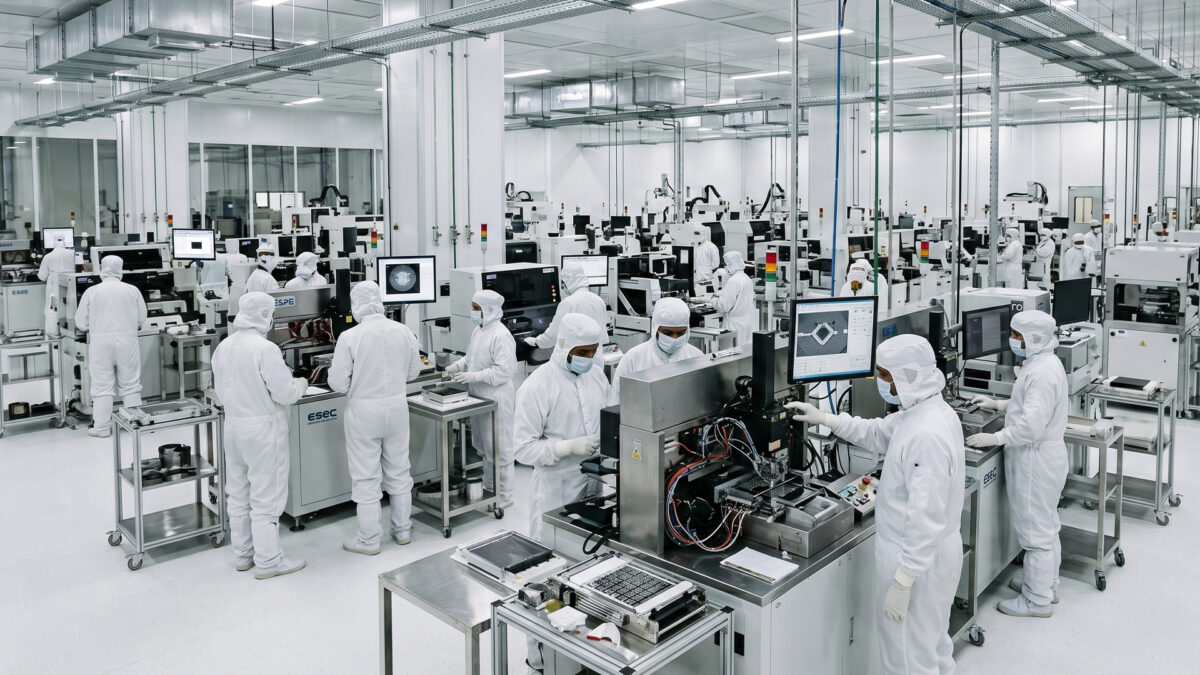
Semiconductor equipment major ASML has started operations in India, marking a significant step in the country’s efforts to build a stronger domestic chip manufacturing industry.
The Dutch company plans to begin with a small team of around 20 to 30 young engineering graduates. Its expansion in India, however, is expected to depend largely on how quickly the country’s semiconductor ecosystem develops and how successfully Tata Electronics’ planned chip fabrication plant in Dholera, Gujarat, takes shape.
Lin Kiat Yap, ASML’s executive vice-president and head of customer support, said the company would start with a limited workforce and assess how quickly it needs to expand. He linked that growth directly to India’s semiconductor ambitions and Tata Electronics’ progress.
ASML is one of the most important companies in the global semiconductor supply chain. It makes advanced lithography machines that chip manufacturers use to print extremely small circuit patterns onto silicon wafers. The technology is a crucial part of modern chip production.
Its arrival in India therefore goes beyond setting up an office and hiring engineers. The company’s presence is closely tied to the development of local chip manufacturing, equipment support, technical skills and suppliers.
Tata Electronics partnership
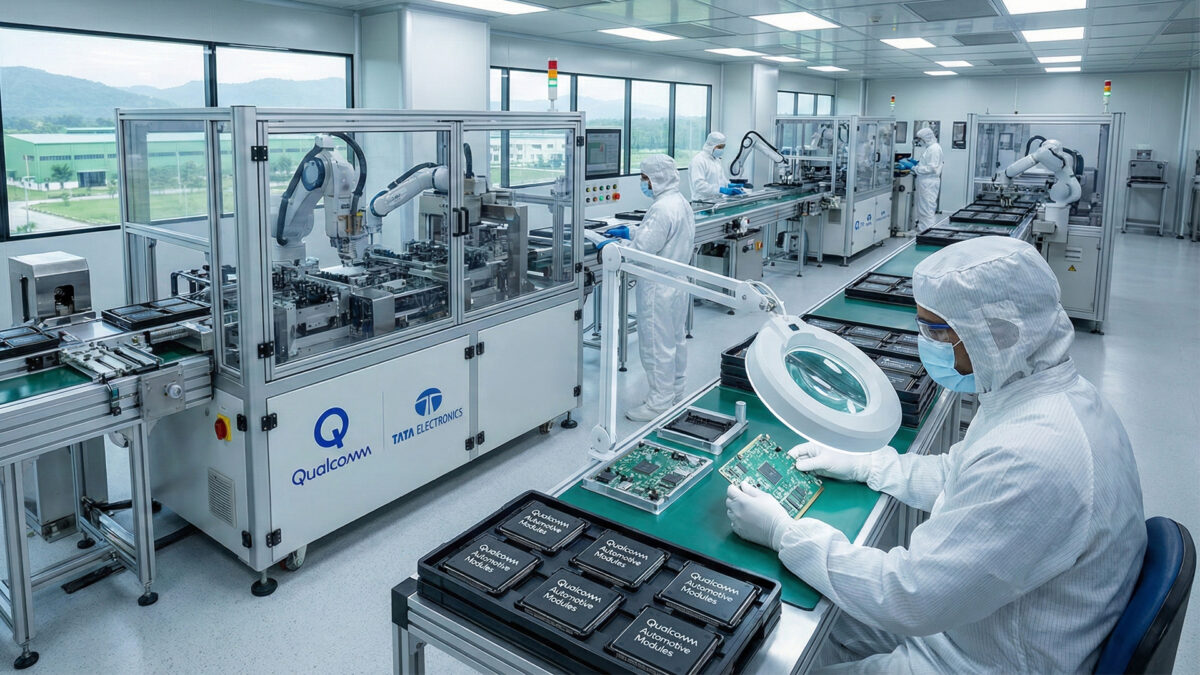
At the centre of the expansion is Tata Electronics’ upcoming 300-mm semiconductor fabrication facility in Dholera. ASML and Tata Electronics signed a strategic partnership in May to support the establishment and ramp-up of the fab.
Under the agreement, ASML will provide lithography tools and solutions and work with Tata Electronics on areas including local talent development, supply-chain resilience and research. The partnership is aimed at creating the capabilities needed to operate and expand a commercial semiconductor fab in India.
Tata’s Dholera plant is planned to have a production capacity of 50,000 wafers a month. It is scheduled to begin operations in 2028.
ASML’s senior leadership has stressed that the success of the first large-scale fab will be important for attracting more companies into India’s semiconductor sector.
ASML executive Allan Wayne said Tata Electronics is taking the first major steps in building the ecosystem, but more players will be needed. A successful first fab could encourage other global semiconductor companies and suppliers to look at India more closely.
The Dholera project is also expected to create a wider network of suppliers. Tata Electronics estimates that about 450 vendors will be required to support the plant and is developing a 363-acre vendor park for the ecosystem.
India wants more than one fab
ASML’s India strategy comes at a time when the government is trying to build the semiconductor industry across the entire value chain, from chip design and equipment to manufacturing, packaging and research.
The government’s Semicon 2.0 programme is aimed at expanding this ecosystem. The Centre has announced incentives of around ₹1.27 lakh crore under the programme, while Electronics and IT Minister Ashwini Vaishnaw has said investment proposals worth about $12 billion could come under the new scheme.
The government has also said around ₹1 lakh crore in investment commitments have emerged under the broader semiconductor push, with close to one lakh new employment opportunities expected across the ecosystem.
ASML executives have said India will need several semiconductor fabs if it wants to meet a larger share of its domestic chip demand through local manufacturing.
Wayne said India’s ambition for 2032 would require several fabs, while the government’s longer-term target of meeting a substantial share of semiconductor demand locally by 2035 could require around a dozen large manufacturing plants.
That means the Dholera facility is being watched as an important early test of India’s semiconductor ambitions.
Talent becomes critical
Building fabs is only one part of the challenge. India will also need engineers, technicians, equipment specialists and suppliers with experience in semiconductor manufacturing.
ASML sees India’s engineering talent as one of its strengths. Its initial hiring plan will give the company a local base while the semiconductor ecosystem develops.
The company has also indicated that its role in India could eventually go beyond supporting customers. As more fabs and semiconductor facilities emerge, ASML could expand its local capabilities depending on market demand.
The company has already been looking at India’s supplier base and the ability of domestic industries to meet the highly specialised requirements of semiconductor manufacturing.
A delay or weak production performance could slow the development of the wider supplier network, while a successful launch could help attract more investment and technology partners.
ASML’s India entry therefore comes at a crucial stage. The company’s initial presence may be modest in terms of employee numbers, but its technology is central to the chip manufacturing process.
As Tata Electronics builds its Dholera facility and the government expands its semiconductor incentives, ASML’s India operations will grow alongside the country’s efforts to move from being a major consumer of chips to becoming a larger manufacturing hub.