Categories
Corporate

AdaniConneX buys Trade Castle Tech Park for ₹231 crore

AdaniConneX, a joint venture between Adani Enterprises and global data-centre operator EdgeConneX, has acquired Trade Castle Tech Park Pvt Ltd for ₹231.34 crore, marking a significant step in its plan to expand India’s digital infrastructure. The deal was formalised through a Share Purchase Agreement on 21 November 2025, and the transaction is expected to be completed by 25 November 2025.

Although Trade Castle Tech Park has not yet generated commercial revenue, it comes with a substantial landholding and all the necessary regulatory approvals to kick-start infrastructure development. This makes it an ideal platform for AdaniConneX to set up new technology facilities or data centres without delays from regulatory hurdles.

The acquisition aligns with AdaniConneX’s broader ambition to develop a 1 GW national data-centre platform over the next decade. The company already operates in key Indian cities including Chennai, Navi Mumbai, Noida, Pune, and Hyderabad. By adding Trade Castle Tech Park to its portfolio, AdaniConneX aims to meet growing demand for high-performance computing, cloud services, and AI-driven applications.

In a statement, Adani Enterprises highlighted that the objective behind the acquisition is “to set up infrastructure facilities,” underlining the company’s focus on building modern, scalable tech infrastructure. Partnering with EdgeConneX, AdaniConneX can leverage global expertise to accelerate construction and bring world-class facilities to the country.

The deal also reflects the rising importance of digital infrastructure in India, where demand for data centres and technology parks is growing rapidly as businesses increasingly rely on cloud computing, AI, and advanced digital solutions. For AdaniConneX, Trade Castle Tech Park is more than just a property purchase as it represents a strategic move to strengthen its foundation for future growth in India’s tech ecosystem.

With this acquisition, AdaniConneX is well-positioned to expand its presence and contribute to India’s push toward a more connected and technologically advanced future. The addition of Trade Castle Tech Park is expected to fast-track the company’s plans and support its long-term vision of becoming a leading provider of digital infrastructure solutions in the country.

Also Read: TotalEnergies eyes ₹10,200 crore stake sale in Adani Green

Categories
Corporate

TCS faces $194 million penalty in US trade-secrets case

Tata Consultancy Services (TCS) has run into a major legal challenge in the United States. A federal appeals court has upheld a $194.2 million penalty in a trade-secrets dispute with Computer Sciences Corporation (CSC), which is now part of DXC Technology.

The court confirmed the damages awarded by a lower court in Dallas, including $56 million in direct compensation, $112 million in punitive damages, and $25.8 million in pre-judgment interest. On the brighter side for TCS, the appeals court overturned a ban on using certain CSC-owned software and sent that part of the case back to the lower court for review.

The dispute dates back to 2019, when CSC alleged that TCS misused confidential software while onboarding employees from Transamerica, who had previously worked on CSC systems. According to CSC, TCS used this insider knowledge to develop a competing insurance software platform.

TCS has expressed disagreement with the ruling and is considering its next legal moves, including possible further appeals. The company also said it will reflect the financial impact of the judgment in its accounts.

While the $194 million penalty still stands, the temporary lifting of the software-use ban gives TCS some breathing room as the lower court re-examines the injunction.

This case brings to light, the growing scrutiny faced by global IT firms handling sensitive client information and highlights the high stakes of intellectual property disputes in the technology sector.

Also Read: Excelsoft IPO sees massive demand, subscribed 43×

Categories
Corporate

Excelsoft IPO sees massive demand, subscribed 43×

Excelsoft Technologies’ public issue has turned out to be a major attraction for investors of all kinds, with the IPO receiving an impressive 43 times more bids than the shares available. The response reflects the market’s growing appetite for mid-sized tech companies that show steady growth and reliable business fundamentals.

By the time bidding closed, Excelsoft had collected requests for over 1.32 billion shares, though only 3.07 crore shares were up for grabs. Most of the excitement came from institutional and wealthy investors, but retail investors, too, put in strong numbers.

The Qualified Institutional Buyers (QIBs) segment led the charts with bids at 47.55 times the quota, signalling strong confidence from professional funds. The non-institutional investor (NII) category, often dominated by high-net-worth individuals, showed even higher enthusiasm with a massive 101.69 times subscription. Retail investors also played their part, offering a healthy 15.62 times subscription for their portion.

Now that the rush of applications is over, attention has shifted to the allotment process, which determines who actually secures shares. Applicants can check their allotment on the BSE website or through the registrar, MUFG Intime India, by using their application number, PAN, or Demat details.

While the company awaits official listing, the activity in the grey market offers early hints about investor expectations. Unlisted shares of Excelsoft were trading at around ₹128, suggesting a premium of about ₹8 over the issue’s upper price band of ₹120. Though the GMP is modest, it does reflect positive sentiment and the possibility of a stable debut.

The IPO, open from November 19 to 21, will now move through the final steps,  refunds and share credits are scheduled for November 25, followed by the long-awaited listing on both BSE and NSE on November 26.

Also Read: Apple, Amazon, Meta oppose 6 GHz auction for mobile

Categories
Corporate

Apple, Amazon, Meta oppose Jio-Vi 6 GHz auction

A new fault line has emerged in India’s digital landscape, with some of the world’s biggest technology companies urging caution just as Indian telecom operators push ahead. Apple, Amazon, Meta, Cisco and others have told TRAI that the 6 GHz band should not be handed over to mobile networks yet, arguing it is better used to strengthen India’s expanding Wi-Fi ecosystem.

Global tech majors submitted a joint response to TRAI’s spectrum consultation, challenging Reliance Jio and Vodafone Idea’s push to auction the 6 GHz band for future 5G and 6G use. According to these companies, the upper portion of the band is not technically ready for mobile services and is still under evaluation internationally.

They want regulators to keep the 6425–7125 MHz range unlicensed for now, allowing wider, faster and more affordable Wi-Fi, something they say benefits consumers, small businesses and India’s digital economy more immediately than reallocating it to telecom operators.

Global players have also urged the government to revisit the band only after 2027, when the next World Radiocommunication Conference is expected to lay down clearer global norms for upper-6 GHz usage.

India has already delicensed 500 MHz in the lower 6 GHz band, while about 400 MHz is likely to be auctioned soon. However, Jio wants the entire 1,200 MHz opened for IMT services to support future network growth.

Telecom operators, represented by COAI, argue that delicensing more spectrum will weaken mobile network capacity, hurt long-term planning and reduce government auction revenues.

Chipmaker Qualcomm has echoed Big Tech’s stance, saying India should wait for global clarity before moving the upper 6 GHz band into mobile services.

With both sides presenting sharply different priorities, telcos pushing for future mobile capacity and tech giants backing robust public Wi-Fi, TRAI now faces the challenge of balancing immediate connectivity needs with longer-term spectrum strategy.

Also Read: Lakshmi Mittal leaves UK as tax fears rise

Categories
Corporate

Sensex rises 100 points, Nifty tops 26,100

The stock market opened firm on Monday as the Sensex gained over 218 points to trade near 85,450, while the Nifty rose about 69 points to move past 26,137. Strong buying in IT and banking stocks supported the early uptrend, helping markets shrug off mixed global cues.

Technology shares led the rally, with Infosys, Tech Mahindra and HCL Technologies emerging as the top gainers in the opening session. Steady demand in large-cap IT counters helped boost sentiment across the broader market.

However, the advance was tempered by weakness in auto and defence-linked stocks. Bharat Electronics, Eternal and Mahindra & Mahindra were among the key losers, slipping in early deals as investors booked profits in select pockets.

Despite the mixed sectoral trend, overall sentiment remained constructive, with traders eyeing global market signals and domestic data releases to gauge whether the current momentum can sustain through the week.

Also Read: US court orders Byju Raveendran to pay $1 billion

Categories
Corporate

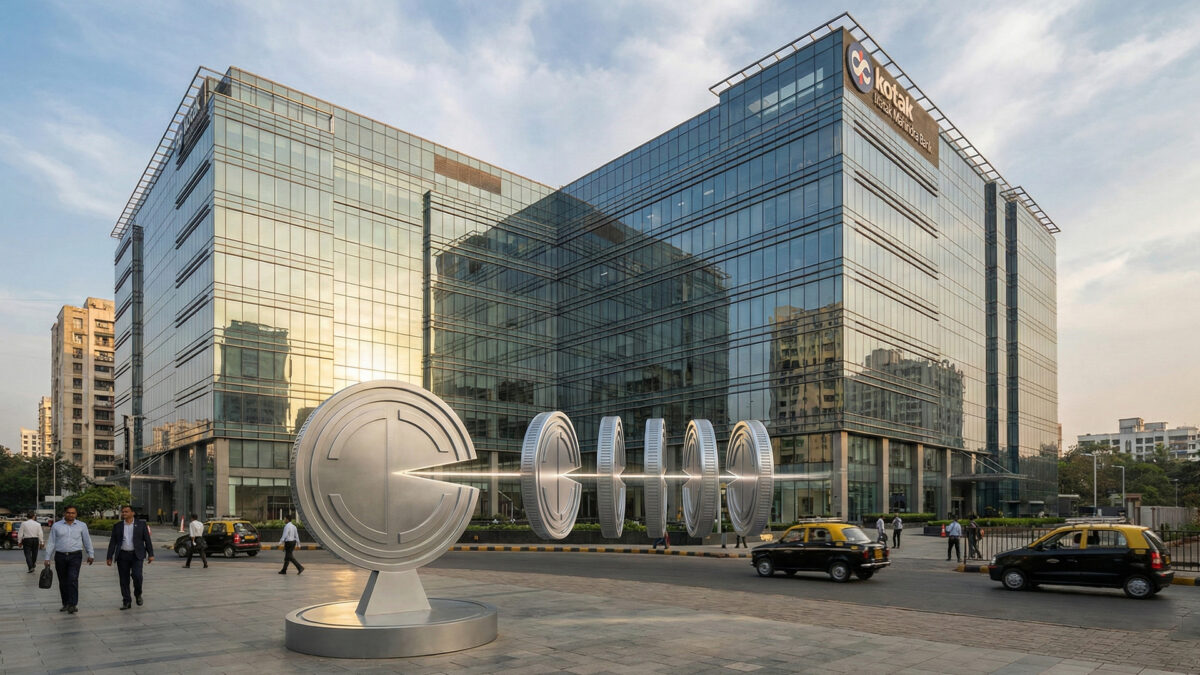
Kotak Bank approves 5‑for‑1 stock split, first since 2010

Kotak Mahindra Bank has announced a stock split in the ratio of 1:5, the first such move by the bank since 2010. Under this plan, each existing share with a face value of ₹5 will be split into five shares of ₹1 each. The move is aimed at making the bank’s shares more affordable and accessible to a wider group of investors.

The announcement comes as the bank celebrates its 40th anniversary, marking an important milestone in its growth journey. Kotak Mahindra Bank said the stock split is part of its efforts to increase liquidity in its shares and encourage more participation from retail investors, who can now buy smaller units of the stock at a lower price.

The board’s decision is subject to approvals from regulators and shareholders. The bank has not yet announced a record date, which will determine which shareholders are eligible to receive the split shares.

Kotak Mahindra Bank has grown steadily over the years and is among India’s leading private sector banks. Analysts say that a stock split does not affect the overall value of an investor’s holdings but makes trading more convenient by reducing the per‑share price.

On the day of the announcement, Kotak Mahindra Bank’s shares saw minor fluctuations, reflecting investor interest in the news. Financial experts note that stock splits can often attract more retail investors and improve market liquidity, as more people can afford to buy shares at a lower face value.

Also Read: M&M becomes top Nifty gainer, auto revenue hits ₹90,825 crore

Categories
Corporate

Skoda‑VW India hits 2 million vehicle milestone

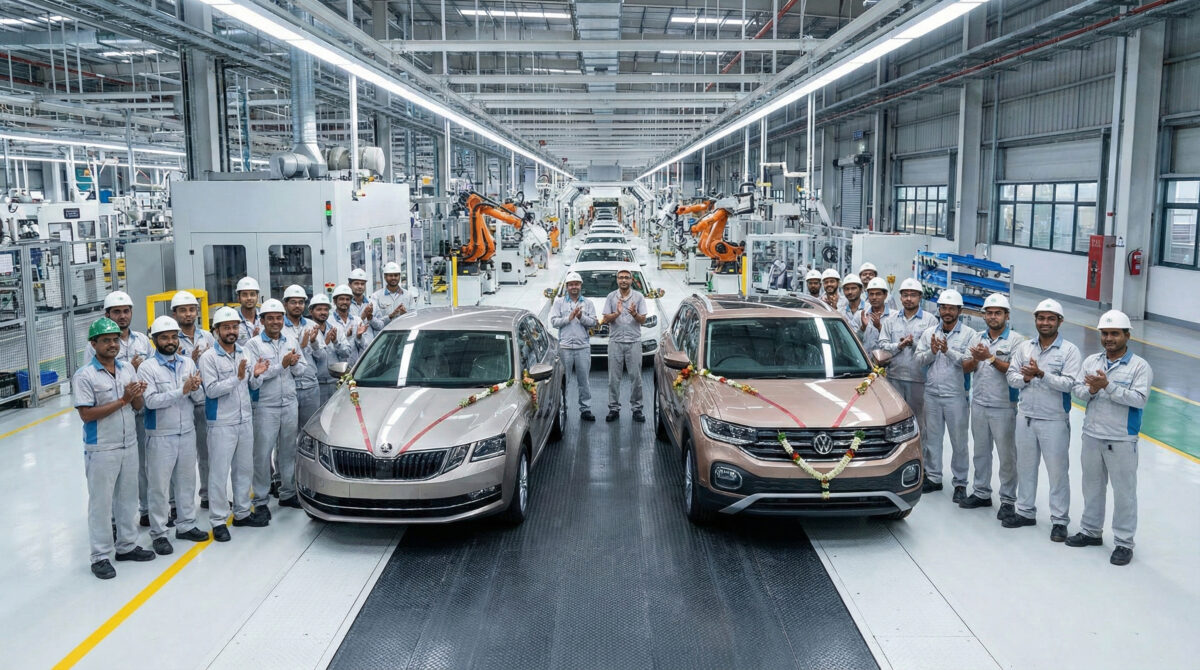
Škoda Auto Volkswagen India (SAVWIPL) has reached a remarkable milestone with two million vehicles produced in India since it began operations. This achievement marks over 25 years of manufacturing, innovation, and growth in the country.

A big part of this success comes from the MQB‑A0‑IN platform, designed and developed locally. It underpins popular models like the Škoda Kushaq, Slavia, and Kodiaq, as well as the Volkswagen Taigun and Virtus. Impressively, the last half a million cars on this platform rolled out in just 3.5 years, showing how quickly demand for these cars has grown.

The past few months have been particularly strong for the company. October 2025 was its best-ever sales month, while Škoda India reported 61,607 units sold in the first 10 months of 2025, more than double the same period last year. Volkswagen’s Virtus has also made its mark, now holding over 40% market share in the premium sedan segment.

Luxury brands under the group have added to the momentum. Bentley now has its own division in India with showrooms in Mumbai and Bengaluru. Porsche has expanded to 13 outlets and served more than 4,400 customers in six years. Lamborghini had a record year in 2024, delivering 113 cars, supported by its new hybrid models.

Exports have played a significant role as well. SAVWIPL has shipped over 700,000 India-made vehicles to markets including Latin America, Southeast Asia, Africa, and the Middle East.

To support this growth, the company has invested heavily in local manufacturing, with plants in Pune and Chhatrapati Sambhaji Nagar and strong localisation efforts in Bangalore.

Commenting on the milestone, Piyush Arora, CEO & MD of Škoda Auto Volkswagen India, said: “This achievement reflects our long-term commitment to India,  not just as a market, but as a hub for innovation, manufacturing, and global mobility.”

With this milestone, Škoda-Volkswagen India not only celebrates its past but also sets the stage for an ambitious future in local and global markets.

Also Read: Adani Group backs indology with ₹100 crore funding

Categories
Corporate

M&M becomes top Nifty gainer, auto revenue hits ₹90,825 cr

Mahindra & Mahindra (M&M) emerged as the top gainer on the Nifty 50 on Friday, driven by investor enthusiasm over its ambitious growth strategy.

The company outlined plans to expand its auto business revenue eight‑fold by FY2030 compared with FY2020. Its auto division already grew around 3.2 times over five years, reaching ₹90,825 crore in FY2025.

Brokerages welcomed the update. Emkay Global highlighted that electric vehicles remain central to M&M’s growth and profitability roadmap. PhillipCapital described the targets as “ambitious but largely achievable,” raising earnings estimates for FY26–FY28. Motilal Oswal maintained a “buy” rating, setting a target price of ₹4,275 for September 2027.

Strong guidance, clear strategic priorities, and the EV push helped lift investor confidence, making M&M the top performer among large-cap stocks.

M&M also aims to become the world’s fastest-growing SUV brand, focusing on both domestic and global markets, including the UK, Australia, New Zealand, South Africa, and select European countries. The company plans to put 1 million EVs on Indian roads by 2031 and expand electric commercial vehicle exports to over 10 countries.

Also Read: Eli Lilly becomes first pharma company to reach $1 trillion value

Categories
Corporate

Eli Lilly becomes first pharma company to reach $1 trillion value

Eli Lilly, the US based pharmaceutical company, has made history by becoming the first drugmaker to reach a market value of $1 trillion.

The company’s stock has climbed steadily this year, rising more than 35%, largely driven by strong demand for its diabetes and obesity treatments, including Mounjaro and Zepbound. These drugs have made Eli Lilly a leader in the growing global market for metabolic health treatments.

Analysts say this milestone reflects investor confidence in Eli Lilly’s focus on innovative therapies for diabetes and weight management, a market expected to grow significantly in the coming years.

This achievement also signals a shift in investor attention toward healthcare companies with strong growth potential, showing that pharma can deliver growth comparable to technology giants.

While the milestone is historic, maintaining such a high valuation will require continued innovation, regulatory approvals, and effective management of competition and pricing pressures.

Eli Lilly’s entry into the $1 trillion club marks a turning point for the pharmaceutical industry, highlighting the value of innovative treatments in reshaping healthcare growth.

Also Read: GE Aerospace to invest $14 million in Pune plant expansion

Categories
Corporate

Adani Group backs indology with ₹100 crore funding

Gautam Adani, Chairman of the Adani Group, announced a ₹100 crore contribution to support a new initiative aimed at preserving and promoting India’s ancient knowledge systems. The announcement was made at the inaugural Adani Global Indology Conclave, a three-day event held at the Adani Corporate House in Ahmedabad.

Organised in collaboration with the Ministry of Education’s Indian Knowledge Systems (IKS) division, the conclave focuses on reviving Indology—the academic study of India’s civilisation, languages, philosophies, sciences, and cultural heritage. The funding will be used to develop the Bharat Knowledge Graph, a first-of-its-kind digital framework designed to structure, preserve, and future-proof India’s knowledge in the era of Artificial Intelligence.

“This is the repayment of a civilisational debt,” Mr Adani said, highlighting that the initiative will also support scholars and technologists working on the project. He added that without proactive efforts to protect cultural frameworks, human behaviour risks being shaped by “the cold logic of machine algorithms.”

As part of the initiative, the Adani Group and IKS will run a five-year programme supporting 14 PhD scholars across leading institutions. Research will cover disciplines such as linguistics, computational linguistics, ancient astronomy, heritage studies, traditional sciences, indigenous healthcare, traditional engineering, sustainability, political thought, and classical literature. Scholars were selected through a rigorous national consultation involving IITs, IIMs, IKS-focused universities, and senior academics. The programme aims to integrate classical knowledge with modern tools such as data science, systems thinking, and multimodal archiving.

Swami Avimukteshwaranand Saraswati, Jagadguru Shankaracharya of Jyotir Math, who was the guest of honour, praised the initiative for supporting India’s vision of becoming a Vishwaguru (global teacher).

Aligned with the National Education Policy (NEP) 2020, the initiative seeks to bring ancient Indian wisdom into contemporary education and research, making traditional knowledge relevant in modern academic and technological contexts. Rooted in the ethos of Vasudhaiva Kutumbakam treating “the world as one family”, the project reflects the Adani Group’s commitment to nation-building, soft power, and civilisational leadership.

Also Read: Adani Enterprises wins Golden Peacock ESG Award