Categories
Beyond

Oil slides as US-Iran talks ease supply fears

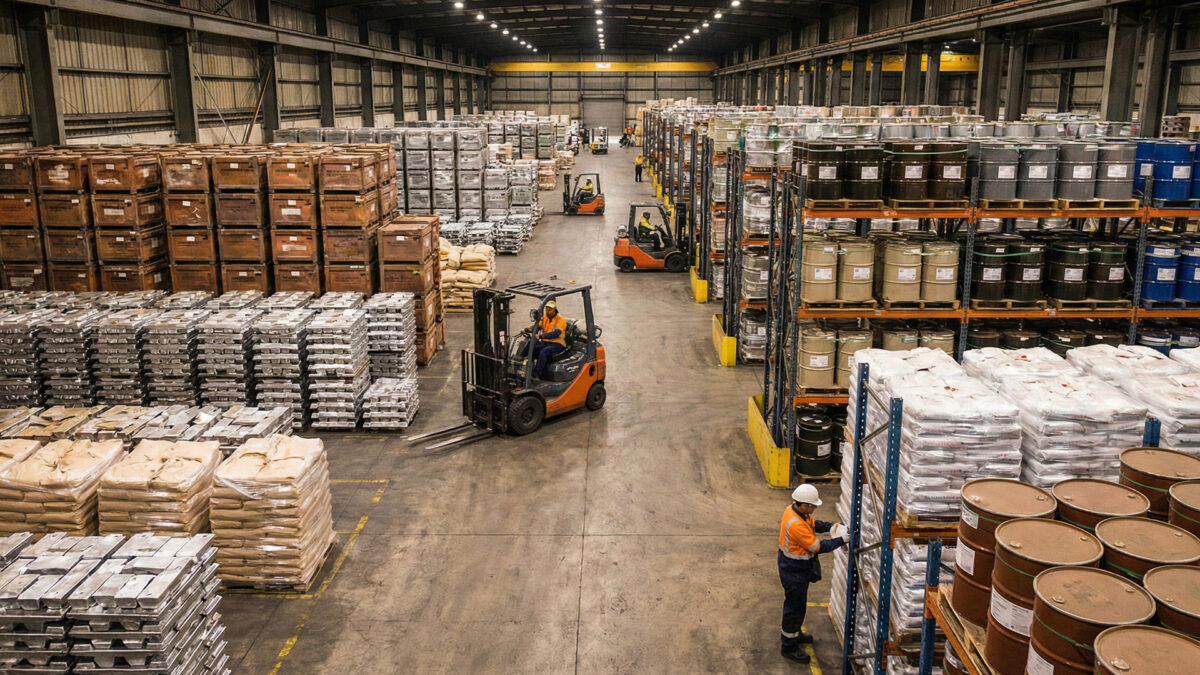
Global oil prices declined sharply after fresh signals suggested a possible easing of tensions between the United States and Iran, calming fears of supply disruptions that had driven prices higher in recent weeks.

Brent crude futures slipped by nearly 5%, falling back to around $66 a barrel, while US West Texas Intermediate (WTI) crude also dropped by a similar margin. The decline marked one of the steepest daily falls this year, as traders rushed to lock in profits after a strong rally in January.

The sell-off followed comments from US President Donald Trump indicating that Washington and Tehran were “seriously negotiating” over Iran’s nuclear programme. These remarks raised hopes that diplomatic engagement could replace confrontation, lowering the risk of conflict in the Middle East, a region critical to global oil supplies.

Until now, oil prices had been supported by fears that escalating tensions could disrupt shipments through key routes such as the Strait of Hormuz. Those concerns eased after there were no new military developments over the weekend and no signs of immediate escalation from either side.

Market analysts said the fall was driven by a sharp unwinding of the geopolitical risk premium that had been built into crude prices. Brent and WTI had climbed more than 10% last month amid worries over potential supply shocks.

A stronger US dollar also weighed on oil prices, making commodities more expensive for buyers using other currencies. In addition, broader commodity markets softened, with gold and silver giving up recent gains as investors moved away from safe-haven assets.

Supply-side factors added to the pressure. OPEC and its allies, including Russia, have signalled no immediate change to production plans, reducing concerns about tighter supply in the near term. Meanwhile, expectations of steady global demand growth have kept traders cautious about pushing prices higher.

Despite the decline, analysts warned that oil markets remain highly sensitive to geopolitical headlines. Any setback in talks or renewed tensions could quickly reverse the current trend.

Also Read: Capgemini to exit US unit linked to migrant tracking

Categories
Beyond

US plans $12 bn critical minerals

The United States has announced plans to create a $12 billion strategic stockpile of critical minerals, as President Donald Trump moves to reduce the country’s heavy dependence on China for materials essential to modern industry, clean energy, and national security.

The initiative, unveiled on February 2, will function on the lines of the Strategic Petroleum Reserve but will focus on minerals instead of oil. It is designed to protect American companies from supply disruptions, price shocks, and geopolitical risks linked to China’s dominance in the global minerals market.

Under the plan, funding will come from a mix of government-backed financing and private investment. The US Export-Import Bank is expected to provide the bulk of the support, while private companies will participate by committing to buy minerals from the reserve. The stockpile will include materials such as rare earth elements, lithium, nickel, cobalt, gallium, and graphite, all of which are critical for manufacturing electric vehicles, semiconductors, renewable energy equipment, electronics, and defence systems.

China currently controls a large share of the world’s mining and, more importantly, processing capacity for many of these minerals. Recent Chinese export controls and trade tensions have raised concerns in Washington about supply security. US officials say the new reserve is meant to ensure that American manufacturers are not left vulnerable during political disputes or global supply chain disruptions.

Several major US companies, including firms from the automotive, aerospace, technology, and energy sectors, have expressed interest in participating in the programme. Commodities trading firms will help procure, store, and manage the materials, ensuring they are available when needed.

According to officials, the stockpile is expected to hold around two months’ supply of selected critical minerals. While the move is seen as an important step, experts note that stockpiling alone will not solve long-term challenges. Expanding domestic mining, improving processing capacity, and building reliable supply partnerships with allied countries will remain crucial.

Also Read: Elon Musk’s SpaceX buys xAI in $1.25 trillion merger

Categories
Beyond

Gold up at ₹1,53,160, Silver stands at ₹2,99,900

Gold and silver prices in India eased slightly on Tuesday after a week of sharp swings in domestic and global markets.

Gold for 10 grams slipped ₹10, trading near ₹1,53,160, while silver fell ₹100 to ₹2,99,900 per kilogram, according to market sources. The modest decline comes after both metals reached record highs earlier this week, followed by a sharp correction. Tuesday saw a small rebound as investors looked for buying opportunities at lower price levels.

Analysts said the current trend reflects a mix of domestic and international factors. The Union Budget 2026 has been a key driver, with traders cautious about possible changes in gold import duties and other policy measures affecting bullion demand. At the same time, international markets remain volatile, influenced by a stronger US dollar, changes in US interest rate expectations, and ongoing geopolitical developments.

Investor sentiment is mixed. Some market participants see the recent dip as an entry point for long-term buying, while others prefer a wait-and-watch approach, waiting for more clarity on both domestic and global cues.

City-wise, gold and silver prices showed minor variations, but the overall trend was a small decline from recent highs. Traders expect volatility to continue in the near term, as domestic investors digest the Budget announcements and international markets respond to global economic developments.

Also Read: Trump announces India–US trade deal

Categories
Beyond

Bitcoin faces sharp fall during market chaos

Bitcoin has fallen to its lowest level since the 2025 tariff shock, dropping roughly 7% to $76,500 before slightly recovering to $78,000, about 11% below early-year levels.

The decline highlights growing caution among investors as geopolitical tensions and expectations of tighter monetary policy weigh on markets.

Long seen as “digital gold,” Bitcoin is increasingly behaving like a risk-sensitive asset. The downturn has also affected major altcoins, prompting corporate and institutional investors to carefully reassess exposure and balance potential opportunities against market volatility.

Categories
Beyond

Viksit Bharat banking panel proposed in Union Budget

In her Union Budget 2026–27 speech, Finance Minister Nirmala Sitharaman announced the formation of a High-Level Committee on Banking for Viksit Bharat. The panel will conduct a comprehensive review of India’s banking sector and align it with the country’s long-term economic vision, especially towards 2047, the centenary of independence.

Sitharaman highlighted that India’s banks have made significant progress, demonstrating strong balance sheets, record profitability, better asset quality, and extensive financial coverage across the population. These achievements provide a solid foundation for further reforms.

The committee will focus on the banking sector’s structure, governance framework, credit delivery, technological adoption, risk management, and financial inclusion. Ensuring consumer protection while maintaining stability is also a priority.

The minister stressed that the panel’s recommendations will help design a reform roadmap for banks capable of supporting a larger, technology-driven economy, guiding future policy and regulatory decisions.

The budget also includes measures for non-banking financial companies (NBFCs), which are crucial in providing credit to underserved segments. It proposes restructuring major public sector NBFCs, including the Power Finance Corporation and Rural Electrification Corporation, to boost efficiency and scale.

Also Read: India extends GIFT City tax holiday to 20 years

Categories
Beyond

Seven new high‑speed rails announced in budget

The Union Budget 2026–27 unveiled an ambitious plan to build seven new high‑speed rail corridors, marking one of the largest infrastructure initiatives in recent years. Finance Minister Nirmala Sitharaman highlighted the corridors as a step toward faster, safer, and environmentally sustainable travel between India’s major cities.

The proposed routes include Mumbai–Pune, Pune–Hyderabad, Hyderabad–Bengaluru, Hyderabad–Chennai, Chennai–Bengaluru, Delhi–Varanasi, and Varanasi–Siliguri, covering nearly 4,000 kilometres in total. Officials describe these lines as “growth connectors,” expected to boost regional economic activity while reducing congestion on highways and flights.

The total estimated cost for these projects is ₹16 lakh crore, demonstrating the government’s focus on modernizing inter‑city transport. The corridors will slash travel times significantly; for example, Chennai to Bengaluru could take about 1 hour 15 minutes, while Bengaluru to Hyderabad may take around 2 hours.

The Budget allocates ₹2.93 lakh crore to Indian Railways, with ₹1.20 lakh crore earmarked for safety improvements, including advanced signalling systems, electrification, and automatic train protection technologies.

Alongside passenger corridors, the government announced a 2,052-km East–West Dedicated Freight Corridor connecting Dankuni in West Bengal with Surat in Gujarat, aimed at enhancing cargo efficiency and reducing congestion on passenger lines.

Also Read: Defence budget nears 2% of GDP, gets ₹7.85 lakh cr

Categories
Beyond

Defence budget nears 2% of GDP, gets ₹7.85 lakh cr

The Union Budget 2026-27 has delivered a strong push to India’s defence preparedness, with Finance Minister Nirmala Sitharaman announcing an allocation of ₹7.85 lakh crore for the Ministry of Defence. The outlay marks a 15 per cent increase over the previous year and brings defence spending close to 2 per cent of the country’s GDP, a level long recommended by strategic and military experts.

Defence continues to remain the single largest item in the Union Budget, accounting for nearly 15 per cent of total government expenditure. The increase reflects India’s intent to strengthen its armed forces amid evolving regional security challenges and rising geopolitical uncertainties.

A major highlight of the allocation is the sharp rise in capital expenditure, which is aimed at acquiring new platforms, weapons and military infrastructure. Around ₹2.19 lakh crore has been earmarked for modernisation, supporting purchases of fighter aircraft, aero engines, naval vessels and advanced equipment for the Army, Navy and Air Force.

The budget also reinforces the government’s commitment to Atmanirbhar Bharat in defence. Nearly three-fourths of the capital procurement budget has been reserved for domestic manufacturers, providing a strong boost to India’s defence industry and reducing reliance on imports. This move is expected to encourage private sector participation and strengthen defence exports.

Support for research and innovation has also been enhanced. Funding for the Defence Research and Development Organisation (DRDO) has been increased by about 9 per cent, underlining the focus on indigenous technology development and next-generation defence systems.

Apart from capital spending, a significant portion of the defence allocation will go towards revenue expenditure, including salaries, pensions, training, operations and maintenance, ensuring operational readiness and troop welfare.

Also Read: FedEx CEO warns of global trade shift

Categories
Beyond

India offers tax-free AI cloud incentive until 2047

The Union Budget 2026–27 unveiled a major tax incentive to attract foreign cloud providers and AI firms to India. Under the new policy, companies operating AI and cloud services from Indian data centres will pay zero corporate tax on revenues until 2047, provided they serve Indian customers through a locally incorporated reseller.

The government has also introduced a 15% safe-harbour tax regime for Indian data centre operators serving foreign clients. This ensures predictability for investors and encourages long-term infrastructure expansion. The measures are aimed at strengthening India’s digital backbone, boosting cloud and AI capacities, and making the country a global hub for advanced computing services.

Industry leaders have welcomed the move as a significant step to attract multinational technology firms to set up or expand data centre operations in India. Analysts predict that the policy could generate thousands of jobs, enhance technology transfer, and position India competitively against established AI and cloud markets in the US, Europe, and Asia.

However, experts have also flagged potential challenges, including ensuring sufficient power and water supply, handling cooling requirements, and streamlining regulatory approvals. The government will need to address these infrastructure and operational hurdles to make the policy fully effective.

By offering a 21-year tax holiday, India aims to provide certainty and long-term incentives for global firms to invest in local infrastructure, secure local market participation, and establish a durable technological presence.

This initiative is part of a broader push to expand India’s digital ecosystem, encourage private investment in data centres, and foster growth in emerging technologies such as AI, cloud computing, and machine learning.

Also Read: Oracle plans massive layoffs through AI funding crunch


Categories
Beyond

New Income Tax law from April to ease compliance

Income Tax Act, 2025, a comprehensive rewrite of the country’s six-decade-old tax law, will come into force on April 1, 2026, Finance Minister Nirmala Sitharaman announced in the Union Budget 2026–27. This legislation replaces the Income Tax Act, 1961, marking one of the most significant updates to India’s direct tax system in decades.

The new law is designed to simplify the tax system and reduce confusion for taxpayers, rather than alter existing tax rates. Individuals and businesses will continue under the same tax slabs and rates as before. The government says the overhaul will cut complexity, reduce litigation, and make tax compliance more intuitive. The Act uses clearer language, fewer provisions, and simpler processes to reduce ambiguity and make it easier for taxpayers to understand their obligations.

As part of the reforms, authorities will introduce updated tax forms and clear guidance ahead of implementation, allowing taxpayers to adjust to the changes smoothly. One major administrative change is the extension of deadlines for filing or revising Income Tax Returns (ITRs). The revision deadline has been moved from December 31 to March 31, with a small fee for late revisions, and different types of returns will have staggered filing timelines to ease the compliance burden.

Other taxpayer-friendly measures include lower Tax Collected at Source (TCS) rates for overseas education and travel-related payments, as well as simplified Tax Deducted at Source (TDS) procedures, particularly for smaller taxpayers and non-resident property transactions.

Also Read: Union Budget has growth, health, defence priorities

Categories
Beyond

Union Budget has growth, health, defence priorities

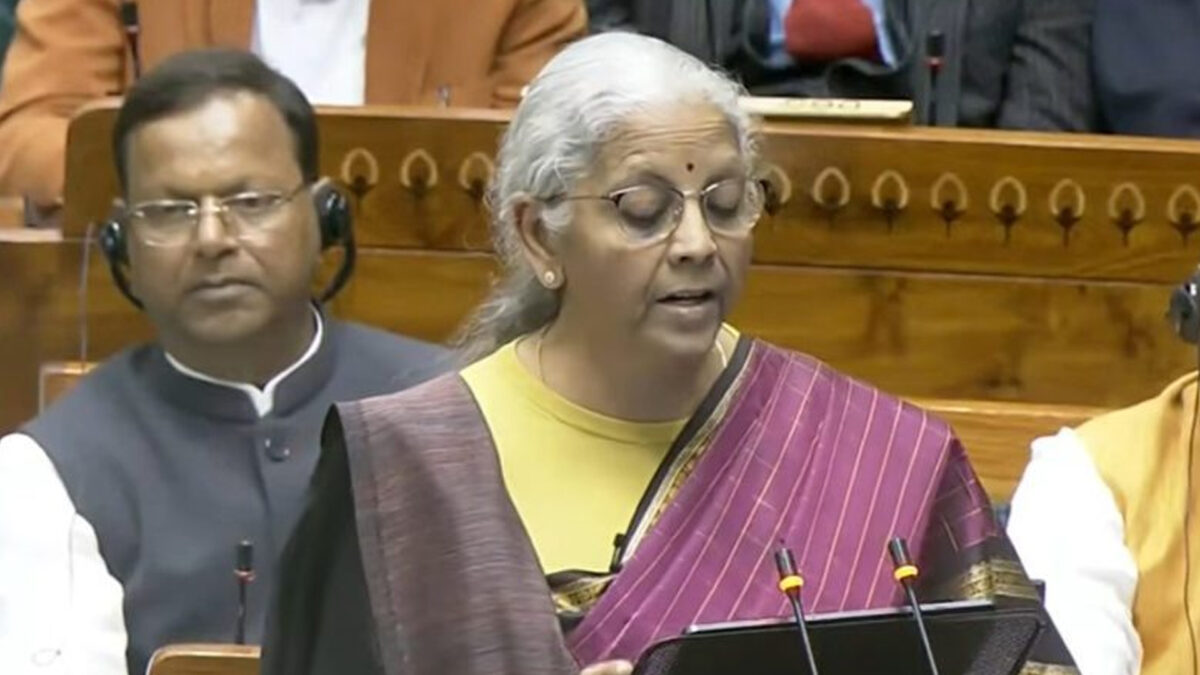
Finance Minister Nirmala Sitharaman presented the Union Budget 2026–27 in Parliament on 1 February 2026, laying out a roadmap for economic growth, job creation, healthcare improvement, defence self-reliance, and tax simplification. The Budget seeks to maintain fiscal discipline while supporting investment-led development across key sectors of the economy.

At the macroeconomic level, the government has set the fiscal deficit target at 4.3% of GDP, reflecting its commitment to gradual fiscal consolidation. Total expenditure has been increased, with a strong focus on capital spending, which has been raised to a record ₹12.2 lakh crore, signalling a continued emphasis on infrastructure development and long-term productivity.

Infrastructure remains a central pillar of the Budget. The government announced the creation of seven high-speed rail corridors connecting major urban and industrial hubs to improve connectivity and reduce travel time. A new Dedicated Freight Corridor from Dankuni to Surat is expected to enhance cargo movement, making trade faster and more cost-efficient. The development of 20 National Waterways aims to expand inland shipping and reduce the environmental impact of transport, while urban metro networks, road projects, and multimodal transport hubs will enhance last-mile connectivity. These investments are expected to generate employment and boost the efficiency of supply chains across the country.

The Union Budget also places strong emphasis on manufacturing and strategic industries. The India Semiconductor Mission 2.0 was announced to expand domestic chip manufacturing, research, and design capabilities, supporting India’s push for technological self-reliance. To reduce dependence on imports, Rare Earth Corridors will be developed in mineral-rich states, supporting clean energy, electronics, and defence industries. Additionally, the ₹10,000 crore Biopharma Shakti initiative seeks to position India as a global hub for biopharmaceuticals, with investments in vaccine production, biologics, and essential medicines. Measures to modernize textiles, container manufacturing, industrial parks, and promote startups are expected to generate employment and enhance exports.

Healthcare and social development received significant attention in the Budget. Expansion of cancer care infrastructure and early detection programmes was announced to improve access to treatment. Mental health services will be strengthened through district-level facilities, integration into primary healthcare, and expanded counselling and emergency support. The Budget also proposes the establishment of three new All India Institutes of Ayurveda to promote research, education, and the global outreach of AYUSH. Additional support has been allocated to public hospitals, life-saving medicines, and emergency care facilities, reflecting a comprehensive approach to health and wellness.

Defence and national security continue to be priorities. The Budget allocates higher funding for domestic defence manufacturing, research and exports under the ‘Make in India’ framework. Development of defence corridors and public-private partnerships is expected to reduce import dependence and strengthen India’s strategic autonomy.

The government has also taken measures to support farmers, rural communities, and MSMEs. Initiatives to improve productivity, promote high-value crops, strengthen fisheries, and enhance irrigation have been outlined, along with the use of digital platforms to improve access to markets and credit for farmers. MSMEs and startups are set to benefit from a proposed ₹10,000 crore Growth Fund, simplified compliance processes, and easier access to credit.

On the taxation front, the Budget introduces relief and simplification. A new Income Tax Act, effective from April 2026, will streamline forms and filing processes. Deadlines for revised returns have been extended, and penalties for minor defaults reduced. TCS rates on overseas education, medical treatment, and foreign travel have been lowered to 2%, while the Minimum Alternate Tax for companies has been cut to 14%. Tax incentives have also been provided to foreign cloud service providers operating from Indian data centres to attract investment in the digital economy.

The Union Budget 2026–27 seeks to balance fiscal prudence with growth-oriented reforms, focusing on infrastructure, manufacturing, healthcare, defence, rural development, and tax simplification.

Also Read: Sensex up over 100 points, Nifty above 24,800