Categories
Beyond

SC to review Trump birthright citizenship order

The US Supreme Court has agreed to hear a major case that could determine the future of birthright citizenship in the country. The decision comes after a series of legal battles over an executive order issued by President Donald Trump in January 2025, which seeks to deny automatic US citizenship to children born in the United States if their parents are undocumented or living in the country on temporary visas.

For more than 125 years, the United States has followed the principle that almost anyone born on American soil becomes a US citizen at birth. This practice is rooted in the 14th Amendment, which states that all persons born in the country and “subject to the jurisdiction” of the United States are citizens. Trump’s order challenges this interpretation, arguing that children of non-citizen parents do not fall under this jurisdiction.

Multiple lawsuits were filed soon after the order was announced, leading to nationwide injunctions from lower courts. Judges consistently ruled that the executive order likely contradicts the Constitution and longstanding legal precedent. One of the key cases, which began as a class-action suit on behalf of families who would be directly affected, eventually made its way to the Supreme Court after the administration appealed these lower-court decisions.

By accepting the case, the Supreme Court will now decide whether the executive branch has the authority to limit birthright citizenship without a constitutional amendment or congressional action. The hearing is expected to take place in the spring of 2026, with a final ruling anticipated by early summer.

The stakes are extremely high. If the Supreme Court upholds the order, hundreds of thousands of children born each year could lose the automatic right to citizenship, marking a dramatic shift in US immigration and nationality law. It would also redefine how the 14th Amendment is applied in modern America. On the other hand, if the Court strikes down the order, the traditional interpretation of birthright citizenship will remain firmly intact.

Until the ruling is delivered, the executive order remains blocked and unenforceable across the United States. The upcoming decision is expected to become one of the most consequential immigration rulings in decades, with long-term implications for families, legal status, and national identity.

Also Read: Zepto becomes public company, plans IPO by June 2026

Categories
Beyond

Russia begins fuel supply to Kudankulam plant, TN

Russia has delivered the first batch of nuclear fuel for the third reactor of the Kudankulam Nuclear Power Plant in Tamil Nadu, marking an important milestone in India’s largest civil nuclear project. The fuel assemblies, manufactured by Rosatom’s Novosibirsk Chemical Concentrates Plant, were flown in as part of a long-term agreement signed in 2024.

This delivery begins the initial fuel-loading process for Unit-3. Rosatom said seven flights will be used to ship the full core load and reserve fuel required for both Unit-3 and Unit-4. The supply deal covers the entire operational life of the reactors, ensuring steady fuel availability once they become active.

The development came as Russian President Vladimir Putin visited India and reaffirmed Russia’s commitment to expanding the Kudankulam project. Putin described the plant as a flagship of India–Russia cooperation and said Moscow would work closely with New Delhi to bring all six reactors to full capacity.

Currently, Units 1 and 2 are operational, while Units 3 through 6 are under construction. Once all units are completed, Kudankulam will generate 6,000 MW of electricity, making it India’s most powerful nuclear station.

Putin also highlighted potential future collaborations, including small modular reactors, floating nuclear plants, and peaceful applications of nuclear technology in areas such as healthcare and agriculture. He assured that Russia would continue to supply nuclear fuel reliably to support India’s growing energy requirements.

The fuel delivery is expected to accelerate progress at the site, strengthening the southern power grid and contributing to India’s clean-energy and energy security goals.

Also Read: IndiGo’s operational crisis enters Day 5, over 1000 flights affected

Categories
Beyond

RBI lowers repo rate to 5.25% for economic growth

The Reserve Bank of India (RBI) today, cut its key policy rate, the repo rate, by 25 basis points, bringing it down from 5.50% to 5.25%. The decision was unanimously approved by the six-member Monetary Policy Committee (MPC), which retained the overall monetary stance at “neutral.”

The move comes amid a robust economic backdrop. India’s GDP expanded by 8.2% in the second quarter, marking the fastest growth in six quarters. At the same time, consumer-price index (CPI) inflation remained near historic lows, dropping to 0.25% in October. The combination of strong growth and low inflation gave the central bank room to ease monetary policy and support further economic expansion.

In addition to the rate cut, the RBI announced fresh liquidity measures to ensure smooth credit flow. These include open-market operations worth ₹1 lakh crore in December and foreign exchange swap operations of up to $5 billion. Officials said these measures are aimed at easing funding conditions for banks and businesses, and promoting better transmission of lower interest rates across the economy.

The rate cut is expected to benefit borrowers across sectors, including homebuyers, auto buyers, and small businesses, by lowering borrowing costs. Financial stocks led market gains on the announcement, while real estate and auto sectors also reacted positively.

Analysts suggest that the RBI may be preparing for a broader easing cycle if inflation remains muted and economic growth continues at its current pace. Investors and markets will closely watch upcoming data on inflation, currency stability, and liquidity conditions to gauge the central bank’s next steps.

Overall, the RBI’s action signals a proactive approach to sustaining India’s economic momentum while maintaining price stability, reinforcing confidence in the financial system.

Also Read: Adani’s Dighi port to export 2 lakh cars annually with Motherson

Categories
Beyond

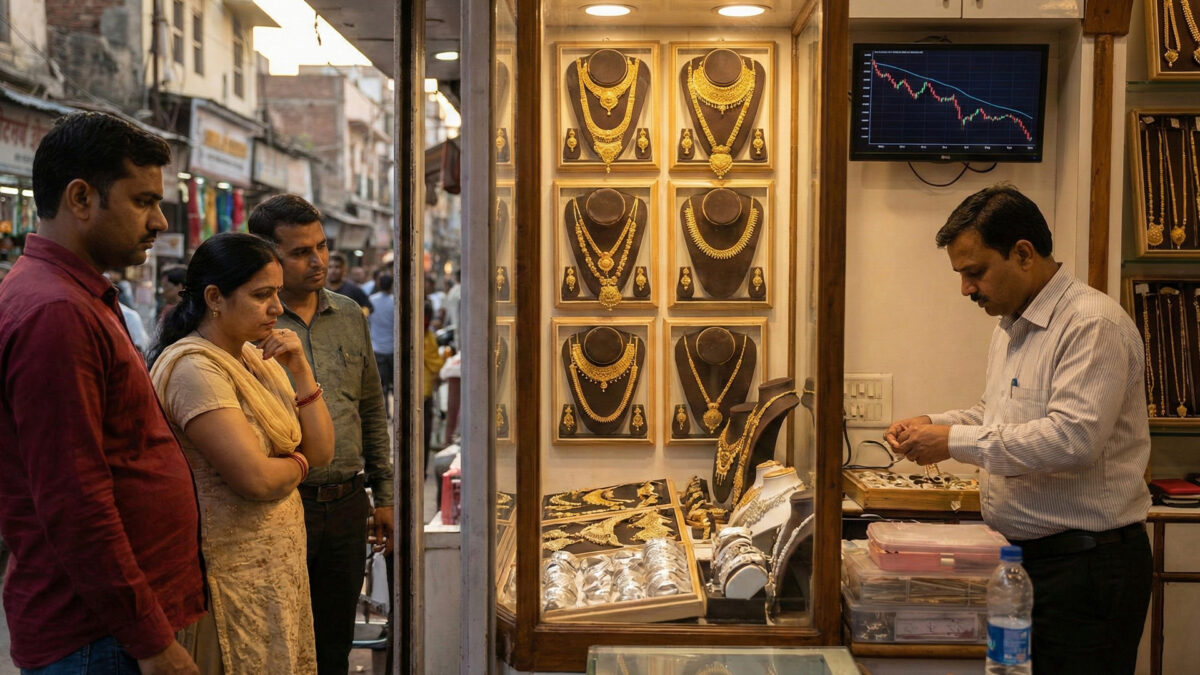
Gold prices stay flat across major Indian cities

Gold and silver prices in India saw minor corrections on December 5, 2025, with slight fluctuations across major cities. According to market sources, 24‑karat gold is trading at ₹12,965 per gram, while 22‑karat gold stands at ₹11,884 per gram. The 18‑karat variant is priced at ₹9,723 per gram.

City‑wise rates show some variations. In Chennai, 24K gold is ₹13,112 per gram, 22K is ₹12,019, and 18K comes to ₹10,024 per gram. Delhi sees 24K at ₹12,980 per gram, 22K at ₹11,899, and 18K at ₹9,738 per gram. Mumbai, Bengaluru, Kolkata, and Hyderabad report similar rates, reflecting a largely stable gold market.

Silver prices, however, experienced a modest dip. The national rate for silver is ₹190.90 per gram (₹1,90,900 per kilogram). In major cities, 10 grams of silver cost between ₹1,909 and ₹1,999, while 100 grams range from ₹19,090 to ₹19,990. One kilogram is priced at ₹1,90,900–₹1,99,900 depending on the city.

Analysts attribute the minor drop in silver prices to global market trends and the weakening rupee. The Indian rupee recently crossed the ₹90 mark against the US dollar, influenced by rising crude prices, foreign fund outflows, and uncertainties surrounding trade agreements. These factors have contributed to a cautious sentiment among investors and a dip in silver demand.

Despite these slight corrections, gold continues to attract Indian investors, prized for its long‑term value and as a hedge against inflation. While prices remain relatively flat, market watchers suggest investors keep an eye on global cues, currency movements, and geopolitical developments that may influence the bullion market in the near term.

Overall, Friday’s session saw stable gold and a marginal decline in silver, reflecting a cautious market amid mixed domestic and international signals.

Also Read: Sensex 85,187, Nifty 26,021 open flat ahead of RBI policy

Categories
Beyond

India signs $2B deal to lease Russian submarine

India has agreed to lease a nuclear submarine from Russia for about $2 billion, finalising a deal that had been under discussion for nearly ten years. The agreement coincides with Russian President Vladimir Putin’s visit to New Delhi, highlighting the strategic partnership between the two countries.

The leased submarine is expected to arrive within two years. It will be used mainly for training Indian Navy personnel in operating nuclear-powered submarines and cannot be used in combat. The lease will last ten years and includes maintenance and support services, continuing India’s practice of leasing advanced Russian submarines.

The deal gives India immediate access to advanced under-sea capabilities while its own nuclear and missile-capable submarines are still under development. Nuclear submarines have advantages over diesel-powered ones. They can stay submerged longer, are quieter, and can patrol larger areas,  strengthening India’s ability to monitor the Indian Ocean and beyond.

This lease was finalised as part of a wider set of agreements during Putin’s state visit, which also covers trade, energy, and defence cooperation. It reflects India’s effort to modernise its navy quickly while maintaining strong defence ties with Russia, even as it strengthens partnerships with other countries globally.

For the Indian Navy, this submarine lease is a fast way to gain experience with nuclear-powered vessels, helping personnel prepare for future indigenous submarines that will carry missiles and advanced weapons systems.

Also Read: Reliance starts Jio IPO process targeting record valuation

Categories
Beyond

IndiGo cancels 100+ flights, DGCA probes

IndiGo, India’s largest airline, has faced a major operational disruption over the past two days, cancelling more than 100 flights across key airports including Delhi, Bengaluru, Mumbai, and Hyderabad. Passengers were left frustrated as delays stretched for hours, with some forced to stay overnight at airports. The sudden cancellations have triggered widespread inconvenience, particularly affecting families, elderly travellers, and those with connecting flights.

The airline has pointed to multiple reasons behind the disruption. While minor technical issues, busy airports, and winter schedule adjustments played a role, the primary cause has been the implementation of updated crew-rest rules under the second phase of the Flight Duty Time Limitations (FDTL), introduced on November 1. These rules mandate longer rest periods for pilots and cabin crew between flights, limiting night schedules and requiring extended breaks. While designed to ensure safety, the rules have created an acute shortage of available crew, forcing IndiGo to cancel and reschedule flights on short notice.

The Directorate General of Civil Aviation (DGCA) has stepped in, summoning IndiGo officials to explain the widespread cancellations and demanding a detailed mitigation plan. According to DGCA data, IndiGo cancelled over 1,200 flights in November alone, with the majority attributed to crew shortages and FDTL compliance. Other reasons included airspace restrictions, ATC delays, and technical issues. The regulator has emphasised that passenger safety and minimal disruption must remain a priority.

IndiGo has assured passengers that it is working round the clock to stabilise operations. The airline is implementing “calibrated schedule adjustments” over the next 48 hours to bring flights back on track. Passengers are urged to check the latest flight status before leaving for airports and to use official channels for rebooking, refunds, or support.

The recent disruptions highlight the delicate balance airlines must maintain between operational efficiency and safety regulations. While the new crew-rest norms are intended to protect both passengers and staff, adapting to these changes has proven challenging, leaving travellers caught in the crossfire of scheduling adjustments and regulatory compliance.

Also Read: Rupee hits ₹90, consumer goods may get costlier

Categories
Beyond

Gold ₹13,000 per gram, Silver ₹1.91 lakh per kilogram

On December 4, 2025, gold and silver prices rose across India amid a weaker rupee and strong global demand. Silver climbed to around ₹191.10 per gram ( ₹1,91,100 per kilogram), reaching record highs.

Gold remained steady at elevated levels, with 24-carat gold trading at about ₹13,059 per gram and 22-carat gold near ₹11,971 per gram.

City-wise, in Chennai, 24K gold was around ₹13,158 per gram, and 22K gold at ₹12,061 per gram. Other major cities such as Delhi, Mumbai, Kolkata, Bengaluru, and Hyderabad saw similar rates, with 24K at ₹13,059/g and 22K at ₹11,971/g.

Silver also showed minor city variations: in most metros, it was priced at ₹1,91,000 per kg, while in Chennai and Hyderabad it was slightly higher, around ₹2,01,100 per kg, due to local market dynamics.

The main reason for rising prices is the depreciation of the Indian rupee against the US dollar, which makes imported precious metals costlier. Additionally, global demand for silver, both for investment and industrial use, including electronics and renewable energy, remains strong, pushing up rates.

With silver near ₹1.91 lakh per kg and gold holding above ₹13,000 per gram, it is important to check city-specific rates before making purchases. Prices can vary slightly between cities and fluctuate during the day, so timing and local rates are key considerations for jewellery purchases or investments.

Also Read: Sensex gains 100 points, Nifty steady above 26000 after early dip

Categories
Beyond

Rupee falls past ₹90 on trade and outflow pressure

The Indian rupee weakened further on Wednesday, slipping past the crucial ₹90-per-dollar mark for the first time. The currency opened lower and extended losses as persistent foreign fund outflows, strong demand for the US dollar, and uncertainty around India’s pending trade discussions pressured market sentiment.

Traders reported steady dollar buying from importers, especially in sectors like gold and electronics, which has added to the strain on the rupee. With India’s import bill rising, the demand for dollars continues to stay elevated even as global currency markets remain volatile.

Foreign investors have been pulling money out of Indian equities and bonds over the past few weeks, adding to the downward pressure. Many are staying cautious due to geopolitical tensions and concerns over global interest rate trends. This steady outflow has reduced dollar supply in domestic markets at a time when demand is already high.

Market participants also pointed to the lack of progress on the ongoing India–US trade discussions as another factor weighing on sentiment. With no clarity on when the deal might move forward, traders expect the rupee to remain under pressure in the near term.

Despite India’s strong macroeconomic backdrop, analysts say the rupee could weaken further if foreign inflows do not stabilise soon. Some expect the currency to hover near or slightly above the current levels unless global conditions improve or trade negotiations break the deadlock.

For now, the Reserve Bank of India is expected to step in when required to prevent excessive volatility, but traders believe the central bank will avoid aggressive intervention unless the rupee shows sharper swings. Overall, the mood in currency markets remains cautious as investors wait for clearer signals on trade and global risk trends.

Also Read: Gold hits ₹1.30 lakh mark, Silver climbs to ₹1.84 lakh

Categories
Beyond

Gold hits ₹1.30 lakh mark, Silver climbs to ₹1.84 lakh

Gold and silver prices continued their steady climb on Wednesday, offering yet another sign that investors are leaning heavily toward safe-haven assets amid global uncertainty. On the Multi Commodity Exchange (MCX), gold moved past ₹1.30 lakh per 10 grams, while silver surged to nearly ₹1.84 lakh per kilogram, marking a strong mid-week performance for the bullion market.

Gold opened with positive momentum and inched higher through the session. Traders say the metal is benefiting from growing expectations of an interest rate cut by the US Federal Reserve, an event that usually boosts gold’s appeal. At the same time, the Indian rupee’s weakness has added an extra push, making imports more expensive and naturally lifting local prices.

Silver’s rise has been even more striking. The white metal, supported by both investment demand and industrial use, rose around 1.5% during Wednesday’s session. Analysts note that global supply pressures and strong demand from sectors like electronics and renewable energy are helping silver maintain its sharp upward trajectory.

Market watchers say gold now finds support around ₹1.28 lakh, while immediate resistance lies close to ₹1.31 lakh. If prices hold above current levels, the metal could test new highs later this week. Silver, too, is expected to stay firm as long as it trades above the ₹1.84 lakh zone, with potential to move towards ₹1.86–₹1.88 lakh.

For everyday buyers, the latest jump may come as a mixed signal—good news for investors holding gold or silver, but slightly discouraging for those planning jewellery purchases. Still, the broader market mood suggests that bullion will remain attractive as long as global uncertainties linger and the rupee stays under pressure.

As the week progresses, traders will be watching key global data and central bank cues closely. For now, both gold and silver continue to shine brighter in the mid-week market.

Also Read: Sensex falls 250 Points, Nifty slips 80 as markets turn cautious

Categories
Beyond

Government says Sanchar Saathi optional

The Centre has clarified that the Sanchar Saathi mobile application, which recently triggered a political and public debate, will not be mandatory for smartphone users. Communications Minister Jyotiraditya Scindia informed Parliament that people are free to delete the app from their phones and that its installation is meant only to support citizens, not to monitor them.

The clarification comes days after the government directed smartphone manufacturers and importers to pre-install the app on all new devices and include it in upcoming software updates. This led to concerns that the app might collect sensitive data or open the door to state surveillance. Opposition leaders criticised the move, arguing that it risked turning smartphones into monitoring devices.

Scindia emphasised that these fears are unfounded. He stated that Sanchar Saathi neither listens to calls nor accesses private content, and that its purpose is limited to preventing telecom fraud. The app, developed by the Department of Telecommunications, provides tools that help users keep track of SIM cards issued in their name, report wrongly issued mobile connections, and block phones that have been lost or stolen.

One of its key features, the “Know Your Mobile” service, allows people to verify whether a device has a valid IMEI number — a step meant to curb the spread of cloned or fake phones often used in criminal activity. The app also connects users to the national portal where stolen devices can be blacklisted across networks, preventing their misuse. In addition, it supports reporting of spam calls and SMS, an issue that has grown alongside digital payment fraud.

While officials argue that the app strengthens digital safety, privacy experts worry about setting a precedent where government-backed apps could become compulsory in the future. They also question whether pre-installation will give citizens genuine choice.

By clarifying that Sanchar Saathi can be removed at any time, the government aims to ease public concerns and shift focus back to the app’s intended benefits. The debate, however, has highlighted a larger issue, the balance between improving cyber safety and ensuring that technological interventions do not compromise personal freedom. As smartphones continue to be central to daily life, this balance will remain under intense public scrutiny.

Also Read: Vodafone Idea shares jump 4% on relief hopes