Categories
Beyond

Rupee slips to ₹91 per dollar, stabilises after RBI action

The Indian rupee faced another bout of volatility on Wednesday, opening at a record low of ₹91.07 per US dollar before bouncing back later in the session. Early trading pressure pushed the currency to around ₹91.08, reflecting continued foreign fund outflows and repatriation of overseas corporate earnings.

Market watchers say the rupee’s weakness is part of a broader trend affecting emerging market currencies. Investors have been cautious amid global economic uncertainties and lingering concerns over trade negotiations with the United States.

The Reserve Bank of India (RBI) stepped in decisively to curb the slide. State-run banks, acting on the central bank’s guidance, sold dollars in the spot and forward markets, helping the rupee recover some ground. The currency strengthened to around ₹90.25 intraday and eventually settled near ₹90.28.

“The RBI’s timely action reassures the market that extreme volatility won’t persist,” said a currency strategist.Analysts noted that such intervention is part of the RBI’s strategy to prevent a one-sided depreciation, which could increase costs for importers and strain corporate treasuries.

Despite the rebound, traders remain cautious, noting that the rupee is likely to remain sensitive to foreign investment flows, global market moves, and domestic economic developments. With inflation and interest rate expectations in play, analysts expect short-term volatility to continue.

The rupee’s swings underline the delicate balancing act for the central bank: supporting the currency without disrupting economic growth. For businesses and investors, the message is clear, while short-term fluctuations are inevitable, RBI intervention can provide a stabilising influence when markets turn jittery.

Also Read: Gold steady at ₹13,385/gm, Silver nears ₹1.99 lakh/kg
Categories
Beyond

Gold steady at ₹13,385/gm, Silver nears ₹1.99 lakh/kg
Gold and silver prices in India remained mostly stable on Wednesday, with only minor changes seen across major cities.

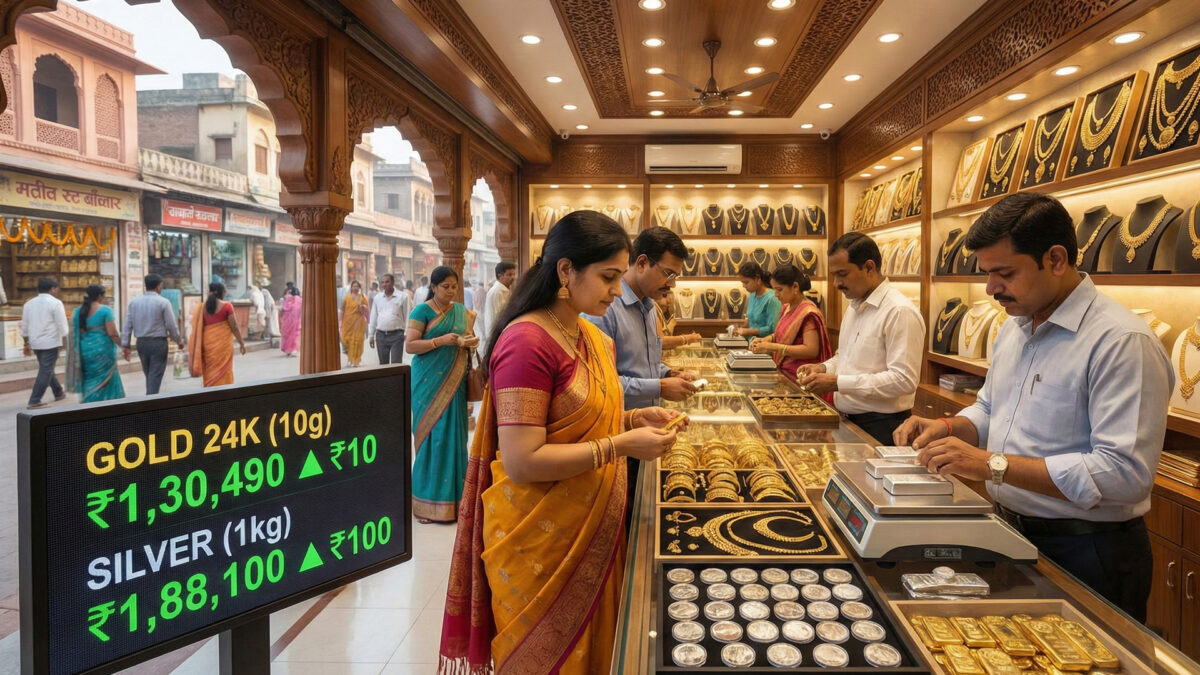
24-carat gold was priced at around ₹13,385 per gram in Mumbai, slipping by about ₹1 from the previous day. 22-carat gold stood at ₹12,269 per gram, while 18-carat gold was available at around ₹10,038 per gram. For bulk buyers, 10 grams of 24-carat gold cost approximately ₹1,33,850, and 100 grams was priced near ₹13,38,500.

Gold prices were largely similar in cities such as Mumbai, Kolkata, Bengaluru, Hyderabad and Pune. Chennai reported slightly higher rates, while Delhi prices were marginally above those in some other metros.

Silver prices also saw a small decline. Silver was priced at about ₹199 per gram, down nearly 10 paise from the previous session. The price of one kilogram of silver stood at around ₹1,99,000, a fall of roughly ₹100. In cities like Chennai and parts of Kerala, silver traded at slightly higher levels, close to ₹2,109 per 10 grams.

Market experts say gold and silver prices in India continue to be influenced by global bullion trends, movements in the rupee against the US dollar, and international economic cues. Small day-to-day fluctuations are common.

Buyers are advised to note that final jewellery prices may vary due to GST, making charges and local jeweller margins.

Also Read: Sensex slips 100 points, Nifty below 25,850

Categories
Beyond

SEBI to review key mutual fund, broker and IPO rules

The Securities and Exchange Board of India (SEBI) is set to take up a wide range of regulatory proposals at its upcoming board meeting, with a focus on mutual funds, stock brokers, IPO regulations and credit rating agencies. The discussions are expected to influence how key segments of India’s capital markets operate in the coming months.

One of the major areas under review is the mutual fund industry. SEBI is examining changes to existing norms to improve transparency in costs charged to investors. This includes a closer look at commissions and brokerage fees paid by mutual fund houses to distributors, as well as possible refinements to the total expense ratio framework. The regulator’s aim is to ensure that investors have a clearer understanding of charges and that costs remain reasonable across schemes.

The board will also deliberate on proposals related to stock brokers. These are expected to focus on rationalising compliance requirements and reducing regulatory burden, particularly for smaller intermediaries, while maintaining adequate safeguards for investors. Simplified norms could help improve operational efficiency without diluting market integrity.

Another key item on the agenda is a review of IPO lock-in rules. SEBI may consider the use of technology to streamline lock-in monitoring, especially in cases where shares are pledged. Any changes in this area could make the public issue process smoother for companies while ensuring that lock-in conditions are enforced more efficiently.

The role and mandate of credit rating agencies (CRAs) will also come under discussion. SEBI is looking at ways to strengthen the credit rating ecosystem by clarifying responsibilities and improving oversight, with the objective of enhancing the quality and reliability of ratings in the debt market.

In addition, the board may review measures related to dematerialisation of older share certificates, updates to conflict-of-interest norms for SEBI officials, and possible incentives for public debt issuances. Collectively, these proposals reflect SEBI’s ongoing effort to balance ease of doing business with robust investor protection and market transparency.

Also Read: SBI bets big on new YONO app

Categories
Beyond

Nepal lifts 10-year ban on Indian high-value notes

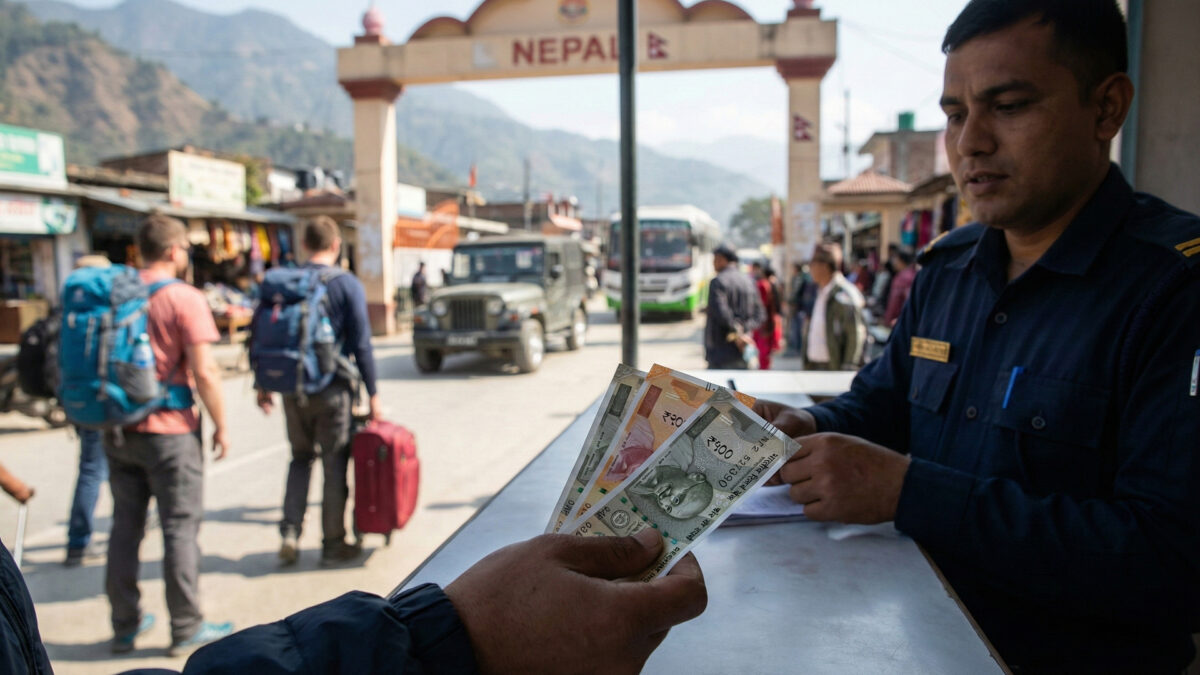
Nepal has finally lifted a decade-old restriction on high-value Indian currency notes, making life easier for travellers, traders, and migrant workers. From now on, people can carry ₹200 and ₹500 notes into Nepal, as long as the total does not exceed ₹25,000 per person.

The move comes after a recent cabinet decision, and the Nepal Rastra Bank will soon issue official guidelines to implement it. For many Nepalis working in India, this change means they no longer have to carry their earnings in countless smaller notes. Indian tourists will also find shopping, dining, and hotel payments much more convenient.

For the past ten years, only smaller notes of ₹100 or below were allowed in Nepal. The ban had made everyday transactions complicated, especially along busy border towns where trade and tourism are vital. With the new rules in place, cross-border business and travel are expected to flow more smoothly, benefiting both countries’ economies and easing daily life for those crossing the border.

Also Read: RBI clears HDFC Group to buy 9.5% in IndusInd

Categories
Beyond

Gold down ₹450, Silver slides ₹2,100

Gold and silver prices in India declined on Tuesday after reaching record highs in the previous session. The fall came as investors booked profits and stayed cautious ahead of important global economic updates.

On the Multi Commodity Exchange (MCX), gold futures fell by about ₹450 per 10 grams, easing from an all-time high hit a day earlier. Silver prices dropped more sharply, falling nearly ₹2,100 per kilogram, after briefly crossing the ₹2 lakh level. The decline marks a pause following a strong rally seen over recent weeks.

Market experts said such a correction was expected after the sharp rise in prices. Investors are now waiting for key economic data from the United States and policy decisions from major central banks, including the Bank of Japan. These developments are expected to influence interest rate expectations and currency movements, both of which impact gold and silver prices.

A slightly stronger US dollar and higher bond yields also put pressure on precious metals. When interest rates rise, gold and silver become less attractive compared to interest-bearing assets, leading to short-term selling.

Despite the dip, analysts believe the overall outlook for bullion remains supportive. Gold continues to attract buyers as a safe-haven asset during periods of global uncertainty. Silver, meanwhile, is benefiting from strong industrial demand and limited supply, which has helped it outperform gold in recent months.

In physical markets across Indian cities, gold and silver prices softened in line with futures markets, though buying interest remained mixed. Jewellers and retail buyers are closely tracking price movements, waiting for stable levels before making fresh purchases.

Also Read: Sensex slips over 350 pts at open, Nifty below 25,950

Categories
Beyond

Seven launches put ISRO on fast track for March 2026

The Indian Space Research Organisation (ISRO) is gearing up for one of its most demanding operational phases in recent years, with seven space missions planned up to March 2026. The ambitious launch schedule reflects India’s expanding role in space science, commercial launches, and advanced technology development.

The campaign is expected to begin shortly with the launch of Bluebird-6, a large communication satellite built for US-based company AST SpaceMobile. The satellite will be carried aboard India’s heavy-lift LVM3 rocket, marking another milestone for ISRO’s commercial arm, New Space India Limited (NSIL), which is managing the international contract.

A key focus during this period will be the Gaganyaan human spaceflight programme. ISRO plans to conduct the first uncrewed Gaganyaan mission early next year. The flight will carry a humanoid robot, Vyommitra, and will test crucial systems such as launch performance, on-orbit operations, and safe re-entry and recovery of the crew module. A second uncrewed test mission is also planned before India aims to send astronauts into space by 2027.

Another major development is the growing role of Indian industry in rocket manufacturing. For the first time, a PSLV built by private industry will be launched. This mission will place Oceansat, an earth observation satellite, into orbit along with the Indo-Mauritius Joint Satellite and LEAP-2, developed by space startup Dhruva Space. The move follows a contract awarded to a consortium led by HAL and Larsen & Toubro to manufacture multiple PSLV rockets.

ISRO will also conduct additional PSLV and GSLV-Mk II missions during this period. These include launching EOS-N1, carrying several small satellites for Indian and foreign customers, and placing EOS-5 (GISAT-1A) into orbit, replacing a satellite lost due to a launch failure in 2021.

Technology demonstration will remain a priority. The PSLV-63 mission will test high-thrust electric propulsion, quantum communication techniques, and indigenous satellite components. ISRO also plans a mission using the Small Satellite Launch Vehicle (SSLV), strengthening India’s ability to serve the growing small-satellite market.

Also Read: Vodafone Idea may get 4–5 years to pay AGR dues

Categories
Beyond

Rupee slides to ₹90.75 due to market pressure

The Indian rupee fell to a fresh all-time low on Monday, trading above ₹90 against the US dollar, continuing a downward trend that has been building over recent sessions. In early trade, the currency slipped past ₹90.55 and later touched around ₹90.75 per dollar, reflecting persistent pressure from both global and domestic factors.

Market analysts attribute the slide to several key reasons. Uncertainty surrounding trade negotiations with the United States has unsettled investor sentiment, contributing to a cautious approach by both domestic and foreign investors. Foreign capital outflows have accelerated, as investors pull money from Indian equities and bonds, increasing demand for dollars and reducing support for the rupee.

Another factor adding to the rupee’s weakness is the country’s widening trade deficit. India imports more goods than it exports, which increases the need for foreign currency and puts additional downward pressure on the domestic currency. Despite the Reserve Bank of India occasionally intervening to stabilize the rupee, these measures have not been enough to reverse the trend amid sustained selling of the currency in global markets.

The weakness of the rupee also affected domestic equity markets. Key stock indices recorded losses as foreign investors continued to offload holdings, reflecting broader caution in the market. Economic experts note that while India’s macroeconomic fundamentals, including GDP growth, remain relatively strong, the currency market often reacts to short-term factors such as capital flows, trade developments, and global dollar strength.

For the general public and businesses, the falling rupee has practical implications. Imports, including fuel, electronics, and other goods, become more expensive, leading to potential increases in prices for consumers. On the other hand, exporters may benefit as a weaker rupee makes Indian products more competitive in international markets.

Overall, the rupee’s slide underscores the challenges facing India’s currency in a volatile global economic environment. Investors and policymakers will continue to monitor foreign investment flows, trade negotiations, and macroeconomic indicators closely to gauge the currency’s direction in the coming months.

Also Read: China to limit silver exports from Jan 1

Categories
Beyond

China to limit silver exports from Jan 1

China, the world’s largest silver producer, will introduce tighter export controls on silver starting January 1, 2026. Under the new rules, only companies with special licences will be allowed to export silver, effectively limiting the amount of metal available to global buyers. Analysts say this move could further tighten global supply, which is already under pressure due to rising industrial demand.

China accounts for a significant portion of the world’s refined silver supply. The metal is widely used in electronics, solar photovoltaic panels, electric vehicles, and other industrial applications. Exchange-traded silver inventories in China are reported to be at their lowest levels since 2015, indicating a supply crunch that could be aggravated by the new export regulations.

Global demand for silver has been growing steadily. Industrial demand alone is estimated to exceed global annual production by hundreds of millions of ounces, creating persistent supply deficits. At the same time, investors have been buying silver as a safe-haven asset amid economic uncertainty, further increasing competition for the limited available supply.

Silver prices have already shown strong gains in response to supply concerns. On global exchanges, silver recently traded near $60 per ounce, while Indian domestic prices reached record levels above ₹80,000 per kilogram. Analysts predict that tighter Chinese exports could support further price increases, as fewer shipments enter international markets.

The policy does not impose a complete ban on exports but introduces stricter licence requirements. The ultimate impact will depend on how many licences are issued and how effectively the rules are enforced. Still, the move is expected to create a tighter market for both industrial buyers and investors, boosting silver’s value in the near term.

China’s licence-based silver export restrictions applicable from January 1, 2026, are likely to reduce global supply, intensify competition, and push silver prices higher.

Also Read: SpaceX hits $800 billion valuation ahead of 2026 IPO

Categories
Beyond

Gold slips ₹10 to ₹1,33,900, Silver falls ₹100

Gold and silver prices in the domestic market moved marginally lower on Monday, reflecting a mild correction after recent strong gains. According to market data, the price of 24-carat gold dipped by ₹10, with ten grams trading at ₹1,33,900. At the same time, silver prices declined by ₹100, with one kilogram quoted at ₹1,97,900.

The slight fall was seen across major cities. In Mumbai and Kolkata, 24-carat gold was priced at around ₹1,33,900 per ten grams, while Chennai recorded a slightly higher rate of ₹1,34,940. In the national capital Delhi, gold was selling at approximately ₹1,34,060 per ten grams. Prices of 22-carat gold also eased by ₹10 and were trading at about ₹1,22,740 per ten grams in most markets.

Silver prices followed a similar trend, with the metal trading lower in key urban centres. Despite the dip, silver continues to remain near elevated levels compared to the start of the year, supported by both investment interest and industrial demand.

Market experts said the modest decline is largely due to profit-booking at higher levels, as gold and silver have rallied sharply in recent weeks. Precious metals have benefited from global uncertainty, central bank policy expectations, and movements in the U.S. dollar and bond yields.

Internationally, gold prices have remained firm despite short-term fluctuations, supported by safe-haven demand. However, traders remain cautious ahead of key global economic data and central bank signals, which could influence near-term price direction.

Analysts note that while daily price movements may remain volatile, the broader outlook for gold continues to be positive in the medium term, especially amid ongoing geopolitical risks and expectations of easier monetary conditions. Silver, meanwhile, is expected to stay sensitive to global growth signals and industrial demand trends.

Also Read: Sensex down 260 points, Nifty slips near 25,950 in weak start

Categories
Beyond

Venezuela oil exports drop after US tanker seizure

Venezuela’s oil exports have fallen sharply after the United States seized an oil tanker carrying Venezuelan crude, triggering fresh tensions between the two countries.

The tanker, named Skipper, was taken over by US authorities earlier this week in what Washington described as an enforcement action linked to sanctions on Venezuela. Following the seizure, several ships waiting to load or transport Venezuelan oil have either halted operations or remained anchored, fearing similar action.

As a result, millions of barrels of crude and fuel are now stuck at sea, and daily oil exports from Venezuela have dropped significantly. At present, only shipments handled by U.S. energy major Chevron—operating under a special licence from Washington—are continuing normally.

Venezuela’s government strongly criticised the move, calling it illegal and accusing the US of “stealing” its oil. Officials said they would raise the issue with international bodies and warned that the action would worsen already strained relations between the two nations.

The seizure comes amid tighter US pressure on President Nicolás Maduro’s government, including new sanctions on shipping companies and vessels linked to Venezuelan oil trade. The United States has said the measures are meant to push for democratic reforms in Venezuela.

Political tensions have also intensified after opposition leader Maria Corina Machado travelled abroad to receive a Nobel Peace Prize. From overseas, she renewed calls for political change in Venezuela, while the Maduro government accused foreign powers of backing efforts to destabilise the country.

Together, the tanker seizure and diplomatic fallout have dealt a fresh blow to Venezuela’s oil-dependent economy and deepened its standoff with Washington.

Also Read: OpenAI introduces GPT‑5.2 to stay ahead of AI rivals