Categories
Beyond

India tests long-range submarine K‑4 missile

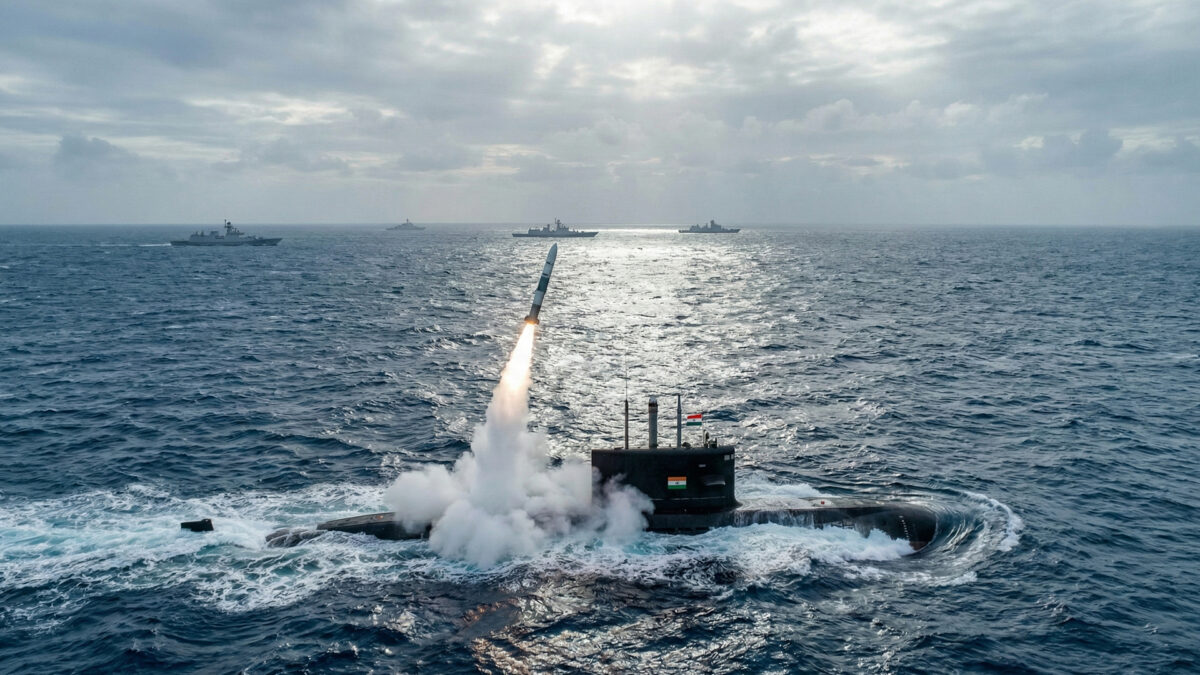
India has successfully test-fired its K‑4 submarine-launched ballistic missile (SLBM) from the nuclear-powered submarine INS Arighaat in the Bay of Bengal. The missile, with a range of 3,500 kilometres, represents a major step forward in strengthening India’s sea-based nuclear deterrence.

The launch was conducted under the supervision of the Strategic Forces Command. Defence analysts describe it as a significant move in boosting India’s “second-strike” capability, ensuring that the country retains the option to respond even if faced with a nuclear attack. The test underlines India’s progress toward operationalising a credible nuclear triad – the ability to deploy nuclear weapons from land, air, and sea.

Developed by the Defence Research and Development Organisation (DRDO), the K‑4 missile is a solid-fuel, intermediate-range weapon. It can carry a nuclear warhead of up to 2.5 tonnes. Designed for underwater launch, the missile exits the submarine, rises through the water, and then ignites its rocket motor to reach distant targets.

Previously, India’s submarines carried K‑15 missiles with a shorter range of around 750 km. The K‑4 dramatically extends the reach of India’s sea-based strategic forces, allowing for more flexible deployment and greater deterrence.

INS Arighaat, commissioned in August 2024, is India’s second nuclear-powered ballistic missile submarine. Its integration with the K‑4 missile marks a key milestone in strengthening the operational readiness of India’s strategic submarine fleet.

Although the Defence Ministry has not released an official statement, analysts say the test signals India’s growing strategic capabilities. With this achievement, India joins a small group of countries capable of firing long-range nuclear missiles from submarines, enhancing regional security posture and deterrence.

Also Read: North Korea shows first nuclear submarine

Categories
Beyond

North Korea reveals first nuclear submarine

North Korea has unveiled significant progress on its first nuclear-powered submarine, displaying an 8,700-ton vessel at a shipyard and signaling a major step in its naval modernization efforts. State media released images of leader Kim Jong Un inspecting the submarine, which is described as a “strategic guided missile submarine” meant to enhance the country’s nuclear deterrent.

The photos, published by the Korean Central News Agency (KCNA), show the submarine’s hull inside an assembly hall, suggesting that key internal systems, possibly including the nuclear reactor, may be nearing completion. Analysts note that while the hull is advanced, operational readiness—including sea trials and weapons testing—could take years. Some experts speculate about external technical assistance, potentially from Russia, though this has not been independently confirmed.

During the inspection, Kim Jong Un was accompanied by senior officials and his daughter, Ju Ae, whose rising public presence has drawn attention. Kim criticized South Korea’s plans, backed by the U.S., to develop nuclear-powered submarines, calling them a “threat” and a violation of North Korean sovereignty.

State media described the submarine as an “epoch-making” achievement, part of Pyongyang’s broader push to strengthen its military, which includes advances in ballistic missiles and long-range air defense systems.

International observers caution that a fully functional nuclear submarine remains years away, given the technical challenges and ongoing sanctions on North Korea. No independent verification has confirmed the vessel’s nuclear propulsion or weapons systems.

The unveiling comes amid rising tensions on the Korean Peninsula, with both North and South Korea pursuing advanced submarine and missile technology. Analysts warn this could trigger an arms buildup in East Asia, raising regional security concerns.

Pyongyang’s display underscores its continued focus on military self-reliance and the development of a credible sea-based nuclear deterrent, further complicating diplomatic efforts to reduce tensions in the region.

Also Read: Adani bags ₹80,000 cr in deals since 2023

Categories
Beyond

Gold at ₹1,39,260, Silver at ₹2,34,100 after fresh gains

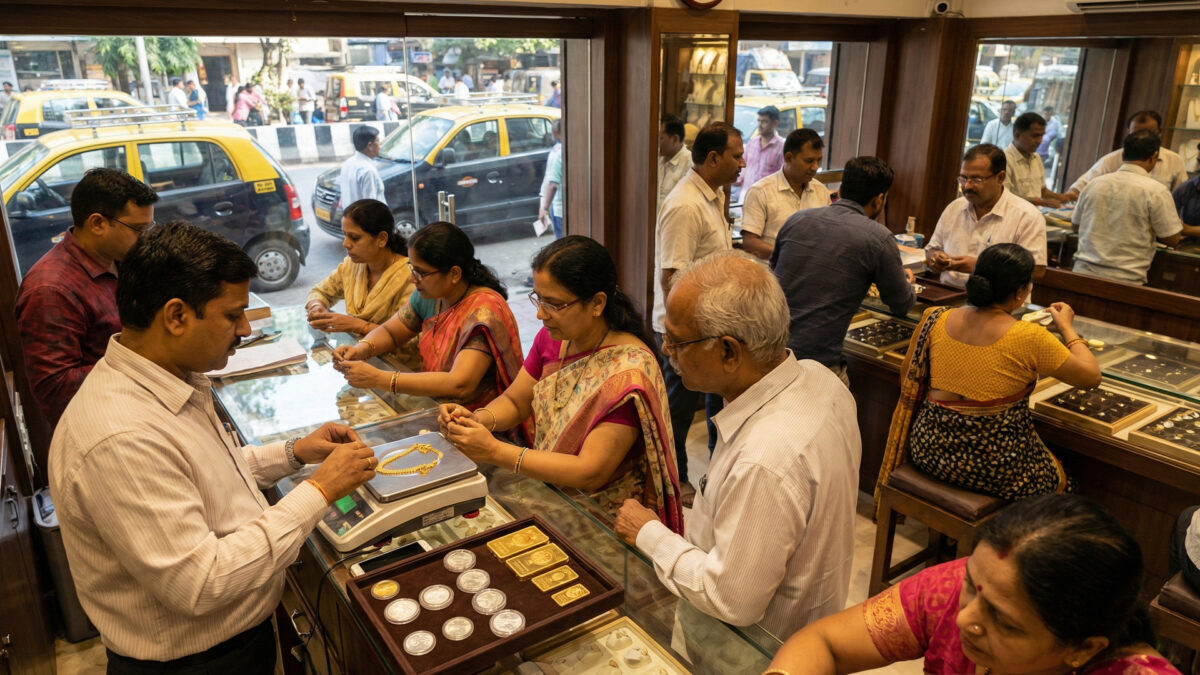
Gold and silver prices moved slightly higher in Indian markets on Friday, December 26, continuing their steady upward trend. According to market data, the price of 24-carat gold increased by ₹10, taking the rate to ₹1,39,260 per 10 grams. 22-carat gold also rose by ₹10 and was priced at ₹1,27,660 per 10 grams.

Gold prices showed small variations across major cities. In Mumbai and Kolkata, 24-carat gold was quoted at ₹1,39,260 per 10 grams. Prices were slightly higher in Delhi at ₹1,39,410, while Chennai recorded the highest rate at ₹1,39,870 per 10 grams. For 22-carat gold, most metros such as Mumbai, Kolkata, Bengaluru, and Hyderabad reported prices around ₹1,27,660 per 10 grams, with marginally higher rates in Delhi and Chennai.

Silver prices also moved up during early trade. The metal gained ₹100 per kg, taking the price to ₹2,34,100 per kg in markets such as Delhi, Mumbai, and Kolkata. In Chennai, silver was trading higher at ₹2,45,100 per kg, reflecting regional demand differences.

The mild rise in gold and silver prices follows firm trends in global bullion markets, where precious metals have remained strong due to investor interest and expectations around interest rates. Gold continues to be seen as a safe investment option, while silver has also attracted demand because of its industrial use and investment appeal.

Also Read: Sensex down 200 points, Nifty slips under 26,100

Categories
Beyond

Russia eyes moon nuclear power by 2036

Russia is setting its sights on the Moon with a bold plan: to build a nuclear-powered energy station on the lunar surface by 2036. The initiative, led by the Russian space agency Roscosmos in partnership with aerospace firm Lavochkin Association, aims to provide a reliable, long-term power source for lunar missions and research.

The lunar power station is expected to support rovers, scientific instruments, and the International Lunar Research Station (ILRS), a joint project with China. While Roscosmos has not officially confirmed the use of nuclear technology, Russia’s involvement of its top nuclear agencies strongly suggests that nuclear energy will be at the heart of the project. Unlike solar panels, nuclear power can operate continuously, including during the Moon’s two-week-long nights, ensuring uninterrupted exploration.

According to Roscosmos chief Dmitry Bakanov, the project signals a move from short-term lunar visits to sustained operations. “This station will enable longer missions, more research, and eventually human presence on the Moon,” he said. The plan also positions Russia alongside global space powers like the United States, which is developing its own lunar nuclear reactor for 2030.

This announcement follows earlier setbacks, including the failed Luna‑25 mission in 2023. Despite these challenges, Russia is determined to strengthen its role in international space exploration and secure a foothold on the Moon.

Over the next decade, the project will involve spacecraft design, testing, and deployment of infrastructure on the lunar surface. Experts say the nuclear power station could be a game-changer, allowing more ambitious missions and laying the foundation for future human settlements.

Also Read: Bharti, Warburg Pincus take 49% in Haier India

Categories
Beyond

RBI delays Jan 3 faster cheque clearance

The Reserve Bank of India (RBI) has indefinitely postponed the January 3, 2026 launch of the second phase of its faster cheque clearance system, which was expected to allow cheques to clear within three hours. The central bank cited the need to give banks more time to prepare for the tighter timelines.

The faster clearing system, known as the Cheque Truncation System (CTS) with Continuous Clearing and Settlement (CCS), began its Phase 1 rollout in October 2025. This phase already allows banks to scan, exchange, and settle cheque images electronically, cutting the traditional one- to two-day clearing period to just a few hours.

Phase 2 was designed to speed this up even further. Under the new rules, banks would need to approve or reject cheques within three hours of receiving them. If a bank did not respond within this window, the system would automatically clear the cheque. The goal was to make funds available to account holders faster and more reliably, benefiting both individuals and businesses.

However, implementing such a system across all banks proved challenging. Many banks needed additional time to streamline processes and ensure smooth integration with the new timelines. The RBI, acknowledging these practical difficulties, chose to postpone the rollout until further notice.

Meanwhile, the timings for cheque processing have been slightly adjusted. The presentation window now runs from 9 a.m. to 3 p.m., while the confirmation window is from 9 a.m. to 7 p.m. This gives banks more flexibility to manage cheque settlements under the existing Phase 1 system.

For everyday customers and businesses, there is no immediate change to the current clearing speed. The improvements from Phase 1 remain in effect, while the more ambitious three-hour settlement plan will be implemented only once banks are fully ready.

The RBI’s move highlights the delicate balance between speed and operational readiness in banking, ensuring that customers can enjoy faster payments without risking errors or delays during the transition.

Also Read: Navi Mumbai Airport opens with first flights

Categories
Beyond

Navi Mumbai Airport opens with first flights

Navi Mumbai International Airport (NMIA) marked a historic moment this week as it moved closer to full operations, celebrating the milestone with a grand drone show and the start of commercial flights. The new airport is expected to significantly reduce the burden on Mumbai’s existing Chhatrapati Shivaji Maharaj International Airport, which has been operating at near full capacity for several years.


Ahead of its operational launch, NMIA hosted a spectacular mega drone show, with more than 1,500 drones lighting up the night sky. The coordinated aerial display showcased visuals symbolising India’s progress, sustainability, aviation growth and the future of Mumbai’s connectivity. Images of aircraft, green energy themes and the airport logo were formed in the sky, drawing large crowds and creating excitement around the launch.

Commercial operations officially began on December 25, making it a landmark Christmas Day for Indian aviation. The first flight to land at the airport was an IndiGo service from Bengaluru, which was welcomed with a traditional water cannon salute. Soon after, the airport saw its first departure, with a flight heading to Hyderabad. These inaugural flights marked the start of regular passenger services at the long-awaited airport.

Speaking on the occasion, Adani Group Chairman Gautam Adani said Mumbai had been struggling with airport congestion for nearly a decade. He noted that the new airport would provide much-needed relief to passengers and airlines, while also supporting the city’s growing economic and travel needs. He described the launch as a proud moment for Mumbai and Maharashtra.

The Navi Mumbai International Airport is being developed under a public-private partnership, with Adani Airports Holdings Limited as the majority stakeholder and CIDCO, a Maharashtra government body, as the public partner. Once fully completed, the airport is planned to handle up to 90 million passengers annually, making it one of the largest airports in the country.

Airport officials highlighted that passenger comfort, smooth operations and accessibility have been key priorities in planning. Facilities have been designed to cater to both domestic and international travellers, with a focus on efficiency and affordability.

With flights now operational, NMIA is expected to play a major role in strengthening air connectivity, boosting regional development and supporting India’s fast-growing aviation sector in the years ahead.

Also Read: Gold near ₹1.39 lakh, Silver at ₹2.33 lakh

Categories
Beyond

Gold near ₹1.39 lakh, Silver at ₹2.33 lakh

Gold and silver prices stayed mostly stable across Indian markets on Wednesday, December 25, with rates holding near recent highs. The steady trend reflects continued demand and supportive global market conditions.

On Christmas Day, 24-carat gold was priced close to ₹1.39 lakh per 10 grams in major cities such as Delhi, Mumbai, Chennai, and Kolkata. 22-carat gold, which is widely used for jewellery making, was selling at around ₹1.27 lakh per 10 grams. Prices showed small differences across cities due to local taxes, transportation costs, and jewellers’ margins.

Among the metros, Chennai and other southern cities recorded slightly higher gold prices, while Delhi and Mumbai saw marginally lower rates. Despite these minor variations, gold prices remained firm nationwide.

Silver prices also showed strength. On December 25, silver was trading at around ₹2.33 lakh per kilogram in most major markets. In cities like Chennai, silver prices were quoted even higher. Strong industrial demand and positive global cues have supported silver prices in recent weeks.

Market experts say the firmness in prices is due to global economic uncertainty, inflation worries, and expectations of lower interest rates in key economies. These factors usually increase demand for gold and silver, which are considered safe investment options during volatile periods. Domestic demand from the festive and wedding season has also helped keep prices elevated.

Over the past few weeks, gold prices have moved up gradually, with December seeing sustained buying interest. Silver, meanwhile, has recorded sharper gains during the month, benefiting from both investment and industrial demand.

Analysts caution that while prices are currently high, short-term fluctuations are possible depending on global economic data, currency movements, and central bank decisions. Still, the overall outlook for precious metals remains positive towards the end of the year.

Also Read: Reliance gets one-month US nod for Russian oil

Categories
Beyond

Reliance gets one-month US nod for Russian oil

Reliance Industries Ltd (RIL) has received a one-month concession from the United States that allows it to continue receiving crude oil cargoes supplied by Russia’s state-owned oil major Rosneft. The temporary approval comes even as the US tightens sanctions on Russian energy companies following the Ukraine conflict.

The concession enables Reliance to take delivery of oil shipments that were contracted before fresh sanctions came into force. These are not new purchases but cargoes linked to existing agreements that are being gradually wound down in line with regulatory requirements, according to sources familiar with the matter.

In October, the US imposed sanctions on major Russian oil producers, including Rosneft and Lukoil, and asked companies to end transactions with them by November 21. However, the one-month waiver allows Reliance to continue receiving some Rosneft supplies beyond that deadline. Since November 22, the company has reportedly received around 15 cargoes of Russian crude under earlier commitments.

Reliance has a long-term supply agreement with Rosneft for about 500,000 barrels of crude oil per day. This oil is mainly used at its Jamnagar refining complex in Gujarat, which has a total capacity of about 1.4 million barrels per day and is among the largest refinery hubs in the world.

To manage sanctions compliance, Reliance has adjusted how it processes Russian crude. The company has said that Russian oil received after November 20 is being refined at its domestic-focused refinery unit. Fuel exports, especially to Europe, are being produced using non-Russian crude to meet European Union rules.

From January 21, the EU will not accept fuel made at refineries that have processed Russian crude within the previous 60 days. To avoid disruption to exports, Reliance has stopped using Russian oil at its export-oriented refinery in the Jamnagar Special Economic Zone and is sourcing alternative crude grades.

India has been a major buyer of Russian oil since the start of the Ukraine war, taking advantage of discounted prices. However, India’s imports of Russian crude are expected to decline in December as refiners respond to tighter sanctions and changing trade rules.

The US Treasury has not officially commented on the concession granted to Reliance.

Also Read: L&T bags major BPCL order worth up to ₹10,000 cr

Categories
Beyond

US bans new foreign drone imports

The US Federal Communications Commission (FCC) has barred imports and sales of new foreign‑made drones and critical components, including models from China’s DJI and Autel Robotics, citing national security concerns. The FCC added all foreign drones and related parts to its national security “Covered List,” preventing future models from receiving the authorizations required for sale in the US.

Officials said the move targets potential risks from foreign drones, including unauthorized surveillance and data breaches. The ban follows a 2024 defence review of foreign drone technology, conducted by a White House interagency task force. Certain drones or components could still be cleared if they are deemed safe by the Department of Defense or the Department of Homeland Security.

Drones already approved in the US are not affected. Current owners and agencies can continue using their equipment, and retailers may sell models that received prior authorization.

DJI, a global market leader, expressed disappointment and criticized the decision as lacking transparency. The company said that existing products will continue to operate and reaffirmed its support for a competitive market. Autel and other affected manufacturers have also questioned the security rationale behind the ban.

China condemned the ban, calling it discriminatory and urging US authorities to reverse the decision. The Chinese government described the measure as unfair to foreign businesses.

Industry groups, including the Association for Uncrewed Vehicle Systems International, welcomed the move as a step toward reducing dependence on foreign technology and strengthening domestic drone production. However, US commercial operators warned that the ban could disrupt businesses that rely on advanced foreign drones, highlighting the gap in domestic alternatives.

The FCC said the measure aligns with broader US efforts to safeguard technology and national security ahead of major international events, including the 2026 FIFA World Cup and the 2028 Olympics, when drone use is expected to rise.

The ban marks a significant shift in US drone policy. It signals stricter oversight of foreign technology while promoting domestic innovation in unmanned aerial systems.

Also Read: Reliance tops India’s wealth creation in 2025

Categories
Beyond

US changes H‑1B rules, prioritises top-paid talent

The US government is overhauling the H‑1B visa programme, replacing the decades-old lottery with a wage- and skill-based selection system. The change, effective February 27, 2026, is aimed at prioritising highly skilled and higher-paid foreign workers while reducing reliance on lower-wage hiring.

Under the new model, the annual 65,000 visa cap, and 20,000 for holders of US advanced degrees, remains, but applications will no longer be randomly selected. Employers offering higher salaries and advanced skills will have better odds, while lower-paid positions will face reduced chances of approval.

Officials say the move is designed to protect domestic wages and prevent misuse of the lottery system, which some companies exploited to fill entry-level roles cheaply. The reform comes alongside higher H‑1B filing fees and stricter enforcement in other visa categories.

Business groups have voiced concerns that the changes could limit access to critical foreign talent, particularly in tech, healthcare, and engineering sectors. Advocates, however, argue that prioritising high-skill, high-pay workers aligns with the programme’s original intent and strengthens the US workforce.

The reform represents one of the most significant H‑1B policy shifts in decades, signalling a tighter focus on economic value and workforce protection.

Also Read: OYO Parent Prism clears ₹6,650 cr IPO plan