Categories
Beyond

India’s industrial growth rockets 7.8% in December

India’s industrial sector showed a strong revival in December 2025, with industrial output rising 7.8% year-on-year, marking the fastest growth in over two years, according to official data released on January 28. This growth rate exceeds analysts’ expectations and signals a broad-based improvement across industry.

The Index of Industrial Production (IIP), which measures the performance of manufacturing, mining, and electricity sectors, revealed that manufacturing led the expansion, growing by 8.1%. Key segments such as computers, electronics, optical products, and motor vehicles contributed significantly to the uptick.

Mining output also improved, rising 6.8%, while electricity production rebounded with a 6.3% increase, reversing the slight decline seen in November. Together, these sectors helped drive overall industrial growth and indicate robust industrial activity across the economy.

On a use-based basis, infrastructure and construction goods led the growth, supported by strong performance in consumer durables, capital goods, and intermediate goods. This indicates healthy domestic demand as well as ongoing investment activity in the industrial space.

Compared to November’s growth of 7.2%, December’s figures show a clear acceleration, underlining the momentum in factory production and industrial output toward the end of 2025. However, cumulative growth for the April–December period remains lower than the same period last year, reflecting uneven activity earlier in 2025.

Economists see December’s strong growth as a positive signal for India’s economic momentum in early 2026. The data suggest that industrial production is rebounding, supported by robust manufacturing and improving infrastructure-related activity, which could further boost employment and investment in the sector.

Also Read: Elon Musk hits back at Vinod Khosla over racism claims

Categories
Beyond

Rupee rises 11 paise to ₹91.57 against dollar

Indian rupee showed a positive sign as it rose by 11 paise to ₹91.57 per US dollar in early trade on Wednesday. This came as the US dollar weakened slightly and optimism grew after India and the EU agreed on a new trade deal. The rupee opened around ₹91.60 and recovered a little to ₹91.57. Stock markets also reacted positively in early trade.

However, the rupee’s overall trend remains weak and unstable. In recent days, it has hit record lows near ₹91–₹92 per dollar because of global uncertainties and foreign investors pulling out money from India.

Trade tensions with the United States are adding pressure. Threats of tariffs have made investors cautious, leading them to prefer the US dollar over emerging market currencies like the rupee.

Foreign investment flows also play a big role. Continuous selling by foreign investors increases demand for dollars, which weakens the rupee. Analysts warn that unless more foreign money comes in or global conditions improve, the rupee may continue to struggle.

High demand for dollars for imports like oil and capital goods is another factor keeping the rupee under pressure. A slight weakening of the US dollar gives only short-term relief.

Investors are now watching key factors, such as global interest rates, foreign investments, and trade talks with the US, to see where the rupee will go next. The Reserve Bank of India is expected to step in if the currency becomes too volatile.

Also Read: Gold falls to ₹1,61,940, Silver rises to ₹3,70,100

Categories
Beyond

Gold falls to ₹1,61,940, Silver rises to ₹3,70,100

Gold prices in India saw a slight dip on Wednesday, reflecting short-term profit booking after recent gains. The price of 24‑carat gold fell by ₹10 to ₹1,61,940 per 10 grams, while 22‑carat gold also dropped by ₹10, trading at ₹1,48,440 per 10 grams.

City-wise, Mumbai and Kolkata recorded 24‑carat gold at ₹1,61,940, while Chennai’s rate was marginally higher. For 22‑carat gold, Mumbai, Kolkata, Bengaluru, and Hyderabad matched the national benchmark, with Chennai and Delhi slightly above it.

Silver bucked the trend, rising by ₹100 to trade at ₹3,70,100 per kilogram in Delhi, Kolkata, and Mumbai, with other cities recording slightly higher prices. Analysts say silver’s gains are driven by sustained industrial demand and strong investor interest, even as gold consolidates.

On the international front, US gold prices eased slightly after hitting recent peaks, reflecting a phase of profit-taking and market consolidation. Analysts note that minor fluctuations in bullion prices are influenced by global economic conditions, currency movements, and safe-haven demand amid geopolitical uncertainties.

Also Read: Sensex up 300+ points, Nifty crosses 25,250

Categories
Beyond

India LNG buyers put long-term deals on hold

India’s liquefied natural gas (LNG) importers are deliberately slowing down long-term purchase agreements as they anticipate a sharp rise in global gas supply over the next few years. Key buyers, including state-run companies such as GAIL India and Bharat Petroleum, believe that waiting could help them secure better prices and more flexible contract terms once new LNG projects come online worldwide.

According to industry observers, global LNG supply is expected to expand significantly toward the end of this decade, driven by large projects in the United States, Qatar, and other major gas-producing regions. This surge could increase global capacity by nearly 50% by around 2030, potentially easing prices that have remained volatile since the energy shock triggered by the Russia-Ukraine conflict.

Indian buyers have been in discussions with LNG suppliers for more than a year but have avoided finalising long-term commitments. Instead, they are focusing on short-term and spot market purchases while keeping future options open. Many importers are reportedly looking at contracts that would begin closer to 2028, when the expected supply wave is likely to peak.

The cautious approach also reflects India’s struggle to raise the share of natural gas in its overall energy mix. Despite a government target of increasing gas usage to 15% by 2030, consumption has remained largely flat since 2020. High LNG prices have made gas less attractive compared to coal and other fuels, particularly for power generation and industrial use.

If LNG prices ease as expected, demand could pick up across city gas distribution networks, refineries, and petrochemical plants, helping India gradually expand gas usage. Until then, importers appear content to wait, betting that patience will strengthen their negotiating position in a rapidly changing global gas market.

In the near term, Indian companies are relatively comfortable, having secured enough LNG through contracts signed in 2024 and 2025 to meet immediate demand. This has reduced the urgency to lock in fresh long-term supply at current price levels.

Also Read: India-EU FTA sealed after 20 years

Categories
Beyond

India-EU FTA sealed after 20 years

India and the European Union have finally signed a Free Trade Agreement (FTA) on January 27, 2026, ending nearly 20 years of negotiations. The agreement was announced at the India-EU Summit in New Delhi by Prime Minister Narendra Modi and European Commission President Ursula von der Leyen, and is being seen as a major step forward in strengthening ties between the two sides.

The deal brings together two huge markets, India and the EU together account for about 2 billion people, nearly a quarter of the world’s economy, and around one-third of global trade. At a time when global trade is facing uncertainty and higher tariffs in many countries, the agreement is expected to create new opportunities for businesses and workers on both sides.

Under the FTA, import duties will be removed or sharply reduced on about 96–97% of goods traded between India and the EU over the coming years. This is expected to help Indian exporters, especially in sectors such as textiles, leather, gems and jewellery, chemicals, engineering goods, and marine products, by making it easier and cheaper to sell their products in Europe.

European companies will also benefit. The EU is expected to save around €4 billion every year as tariffs come down. One of the most talked-about decisions is India’s agreement to cut car import duties from as high as 110% to about 10%, in phases and within a fixed annual limit. Taxes on wines and spirits from Europe will also be reduced gradually.

At the same time, both sides have been careful to protect sensitive areas. Dairy products, cereals, and small cars have been kept out of full tariff cuts to protect local producers, especially in India.

Beyond goods, the agreement opens the door to closer cooperation in services, investment, supply chains, standards, and regulations. It also allows room for future discussions on professional mobility and people-to-people exchanges, which could benefit students, professionals, and businesses.

The agreement now needs to go through legal checks and approvals in India and the EU. Once cleared, it is expected to take effect in late 2026 or early 2027, setting the stage for closer economic cooperation and stronger trade ties between India and the European Union.

Also Read: China’s Anta Sports invests in Puma for $1.8 bn

Categories
Beyond

Public sector banks disrupted by nationwide strike

Public sector banks across India faced major disruptions on Tuesday, January 27, 2026, as employees went on a nationwide strike. The action was organized by the United Forum of Bank Unions (UFBU), which represents staff from government-run banks. Major banks affected include State Bank of India (SBI), Punjab National Bank (PNB), Bank of Baroda, Canara Bank, and Union Bank of India.

The strike was called to press for the implementation of a five-day work week. Union leaders say that while partial agreements exist, the plan has not been fully put into action, prompting the protest. They emphasize that a five-day schedule would improve work-life balance without affecting productivity.

As a result of the strike, many bank branches remained closed, while others operated with minimal staff, limiting services such as cash withdrawals, deposits, cheque clearances, and in-person banking. Customers experienced delays and were advised to plan essential banking tasks in advance.

Banks encouraged people to use digital banking channels, including mobile apps, online banking, UPI payments, and ATMs, most of which continued to operate. However, some ATMs reported cash shortages due to staff unavailability for refills.

Private sector banks like HDFC Bank, ICICI Bank, and Axis Bank were not part of the strike and continued normal operations, both at branches and through digital platforms.

The strike highlights ongoing tensions between bank employees and management over working conditions and scheduling. Customers were urged to rely on digital services where possible and exercise patience while branches gradually resume normal operations.

Union leaders stated that the strike will continue until management and government authorities address the pending demands. Meanwhile, banking authorities have assured that services will be restored promptly once discussions progress.

Also Read: Amazon to cut 16,000 jobs on Jan 27, Indian teams mostly

Categories
Beyond

Gold at ₹1,61,960, silver rises to ₹3,60,100

Gold prices in India moved marginally higher on Tuesday, continuing their firm trend in the domestic bullion market. According to market data, the price of 24-carat gold increased by ₹10, taking the rate to ₹1,61,960 per 10 grams. Silver also registered a small gain, rising ₹100 to trade at ₹3,60,100 per kilogram.

The price movement reflects steady buying interest and supportive global cues, even as daily fluctuations remain limited. In major cities such as Mumbai, Delhi, and Kolkata, 24-carat gold was largely priced at similar levels, while 22-carat gold rose to around ₹1,48,460 per 10 grams. Minor variations were seen across regions, with cities like Chennai quoting slightly higher rates.

Silver continued to trade near elevated levels, supported by both industrial demand and investment interest. In some southern markets, including Chennai, silver prices were higher than the national average, reflecting regional demand patterns.

Market experts say precious metals remain strong due to ongoing global economic uncertainty. Gold, in particular, continues to attract investors as a safe-haven asset amid concerns around inflation, interest rates, and geopolitical developments. International gold and silver prices have also been trading close to recent highs, providing support to domestic prices.

For consumers, elevated prices mean higher jewellery costs, especially during the wedding and festive season. However, traders note that small daily price changes, such as Tuesday’s increase, are part of a broader trend rather than sudden volatility.

Investors are closely watching global cues, including movements in the US dollar, interest rate signals from major central banks, and global economic data, all of which influence precious metal prices. Any sharp changes in these factors could impact gold and silver prices in the days ahead.

Also Read: Sensex slides over 250 points, Nifty breaches 25,000

Categories
Beyond

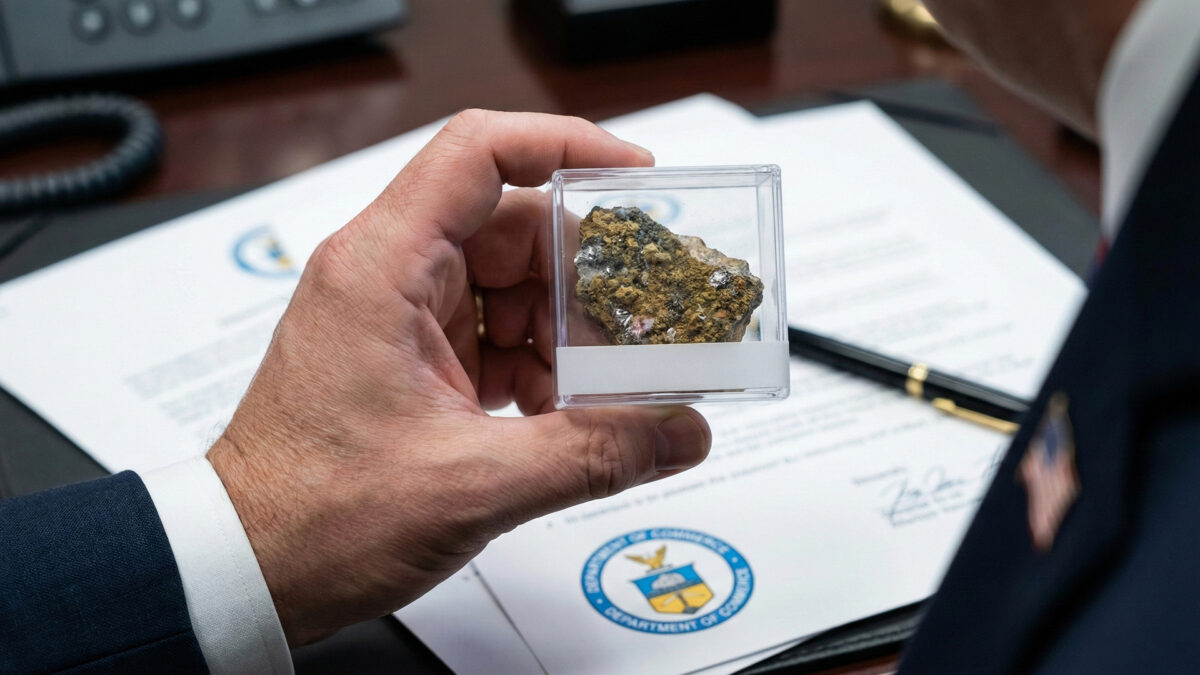
US takes 10% stake in rare earth miner $1.6 bn deal

The Trump administration has moved to strengthen domestic supply chains for critical minerals by agreeing to acquire a 10 per cent stake in USA Rare Earth in a deal valued at $1.6 billion, according to media reports.

The investment is part of a broader push to expand US-based rare earth mining and processing, reduce dependence on China, and secure materials vital for defence, clean energy, electric vehicles and advanced electronics.

Under the proposed arrangement, the US government will receive equity and warrants in USA Rare Earth, alongside providing significant debt financing. Reports indicate that the funding package includes about $1.3 billion in federal loans, with the remaining amount coming through direct equity participation. The financing is expected to be supported by federal programmes aimed at strengthening strategic industries.

USA Rare Earth is developing a rare earth mine at Sierra Blanca in Texas, in partnership with Texas Mineral Resources. The project is expected to begin production by 2028 and will focus on heavy rare earth elements, which are especially important for defence and high-performance technologies.

In parallel, the company is setting up a magnet manufacturing facility in Stillwater, Oklahoma, scheduled to start operations later this year. The plant will produce permanent magnets used in electric motors, wind turbines, military equipment and consumer electronics. Together, the mine and magnet facility are designed to create a fully domestic “mine-to-magnet” supply chain.

Rare earth elements consist of 17 minerals that are critical to modern technology but are largely processed and refined in China, which currently dominates global supply. US officials have repeatedly warned that this concentration poses economic and national security risks.

The investment in USA Rare Earth marks one of the largest federal interventions in the rare earth sector so far. It follows similar government actions aimed at supporting critical mineral producers and ensuring long-term supply security.

Also Read: Samsung nears Nvidia approval for HBM4 AI chips

Categories
Beyond

PFRDA reviews NPS investment rules

The Pension Fund Regulatory and Development Authority (PFRDA) has set up an expert committee to review and modernise the investment framework of the National Pension System (NPS). The move aims to strengthen long-term retirement savings, improve risk management and align NPS investments with evolving market conditions and global best practices.

The nine-member panel, named the Strategic Asset Allocation and Risk Governance (SAARG) Committee, will be chaired by Narayan Ramachandran, former India head and CEO of Morgan Stanley. The committee includes experienced professionals from the fields of asset management, capital markets and financial research.

The National Pension System is a key retirement savings scheme in India, covering government employees, private sector workers and individual subscribers. Any changes to its investment framework are expected to have a significant impact on long-term pension savings and capital market participation.

According to PFRDA, the committee’s main task is to examine the current investment guidelines of NPS and suggest changes that can enhance returns while managing risks effectively. The review will cover strategic asset allocation, diversification across asset classes, and the overall investment structure followed by pension funds under NPS.

The committee will also study governance mechanisms, risk monitoring systems and performance measurement standards. Special focus will be placed on evaluating alternative asset classes such as real estate, infrastructure investment trusts (InvITs), real estate investment trusts (REITs) and private equity, along with their valuation and liquidity norms.

In addition, the panel will assess portfolio stability, liquidity management and the role of intermediaries within the NPS ecosystem. Another key area of review is the integration of environmental, social and governance (ESG) principles into investment decisions, reflecting the growing importance of sustainable investing.

The SAARG committee has been given a nine-month timeline to complete its review and submit recommendations to PFRDA. Based on these suggestions, the regulator may revise existing NPS investment rules to provide greater flexibility, stronger governance and improved retirement outcomes for subscribers.

Other members of the committee include well-known market experts such as Raamdeo Agrawal, Kalpen Parekh, Devina Mehra and Ananth Narayan.

Also Read: Samsung nears Nvidia approval for HBM4 AI chips

Categories
Beyond

Rupee slides to ₹92, raising costs for imports

Rupee fell sharply to a record low of ₹92 per US dollar on January 23, 2026, before recovering slightly to ₹91.88. Experts attribute the slide to foreign investors pulling out funds and continued strong dollar demand from importers.

This depreciation affects both households and businesses. Imported goods, particularly crude oil, electronics, and machinery, are becoming more expensive. With India importing nearly 85% of its crude oil, fuel prices and inflation are expected to rise. Families face higher costs for overseas travel and education, while Non-Resident Indians (NRIs) benefit slightly as their remittances now convert into more rupees.

Exporters stand to gain from the weaker rupee, receiving more rupees for every dollar earned. However, companies that rely heavily on imported materials may see their benefits limited. Sectors such as textiles, which are less import-dependent, are likely to benefit the most.

Looking ahead, a Business Standard poll suggests the rupee could trade near ₹92.50 per dollar by the end of March 2026 if current trends persist and foreign outflows continue. Analysts point to delays in a US‑India trade deal and ongoing global uncertainties as key factors keeping the currency under pressure.

The Reserve Bank of India (RBI) has intervened at times to curb volatility, but broader global and domestic forces continue to influence the rupee. Policymakers face the challenge of balancing currency stability with inflation control and economic growth, as households, businesses, and exporters navigate the effects of a weaker rupee.

Also Read: ChatGPT cites Elon Musk’s Grokipedia in responses