Categories
Corporate

ICICI Prudential AMC gets SEBI nod for $12 billion IPO

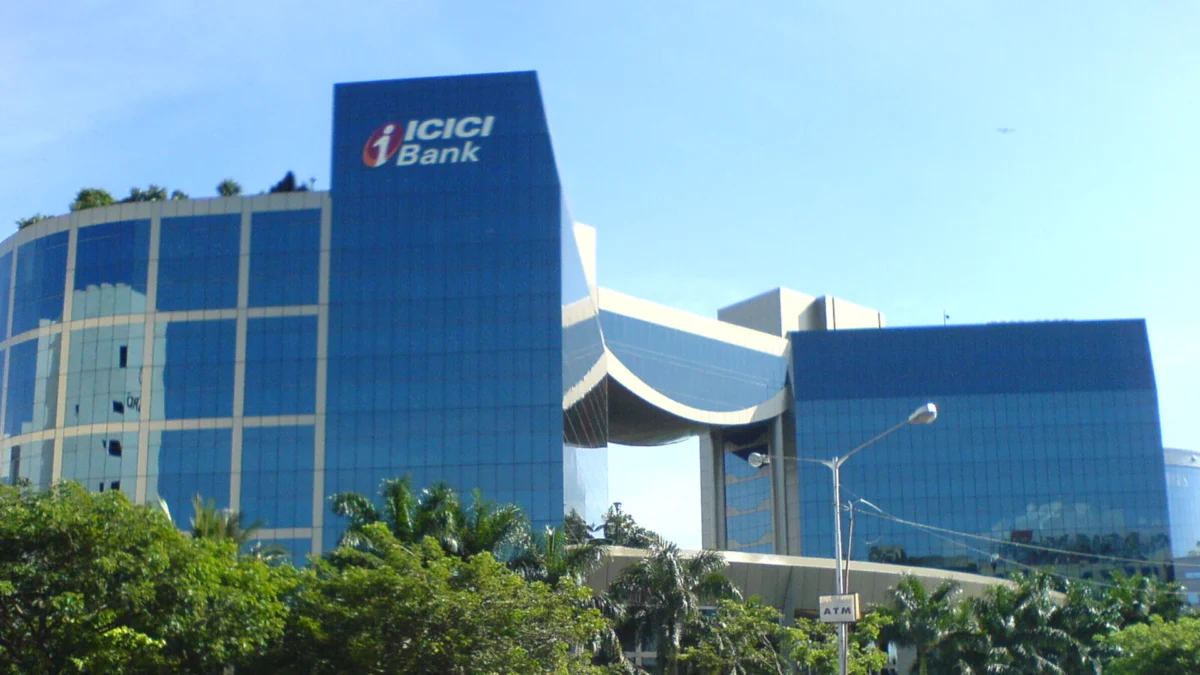
ICICI Prudential Asset Management Company (AMC), India’s second-largest mutual fund house, has received approval from the Securities and Exchange Board of India (SEBI) to launch its initial public offering (IPO). The company is aiming for a valuation of $12–12.5 billion, making it one of the biggest listings from the financial sector in recent years.

The IPO will be a complete offer-for-sale (OFS) by its UK-based shareholder, Prudential Corporation Holdings (PCHL). Prudential plans to sell around 10% of its stake, equal to about 1.76 crore shares. Since it is a pure OFS, the company will not issue new shares, and all proceeds will go directly to the selling shareholder. ICICI Bank, which currently owns 51% of the AMC, has also proposed buying an additional 2% stake from Prudential before the IPO to maintain its majority shareholding.

ICICI Prudential AMC manages assets worth over ₹10.6 lakh crore and serves more than 1.5 crore investors. It has a strong presence across equity, debt and passive funds, and holds a market share of about 13% as of March 2025. The AMC is considered one of the most trusted fund houses in the country, backed by the ICICI brand and its long operational track record.

Once listed, ICICI Prudential AMC will become the fifth ICICI Group company to debut on the stock market, joining ICICI Bank, ICICI Prudential Life Insurance, ICICI Lombard General Insurance and ICICI Securities. The public issue is expected to attract strong interest from institutional and retail investors due to the company’s scale, profitability and established market position.

The IPO is likely to hit the market soon, making it one of the major offerings to watch in India’s financial markets this year.

Also Read: ED arrests WinZO founders in money-laundering case
Categories
Leaders

ED arrests WinZO founders in money-laundering case
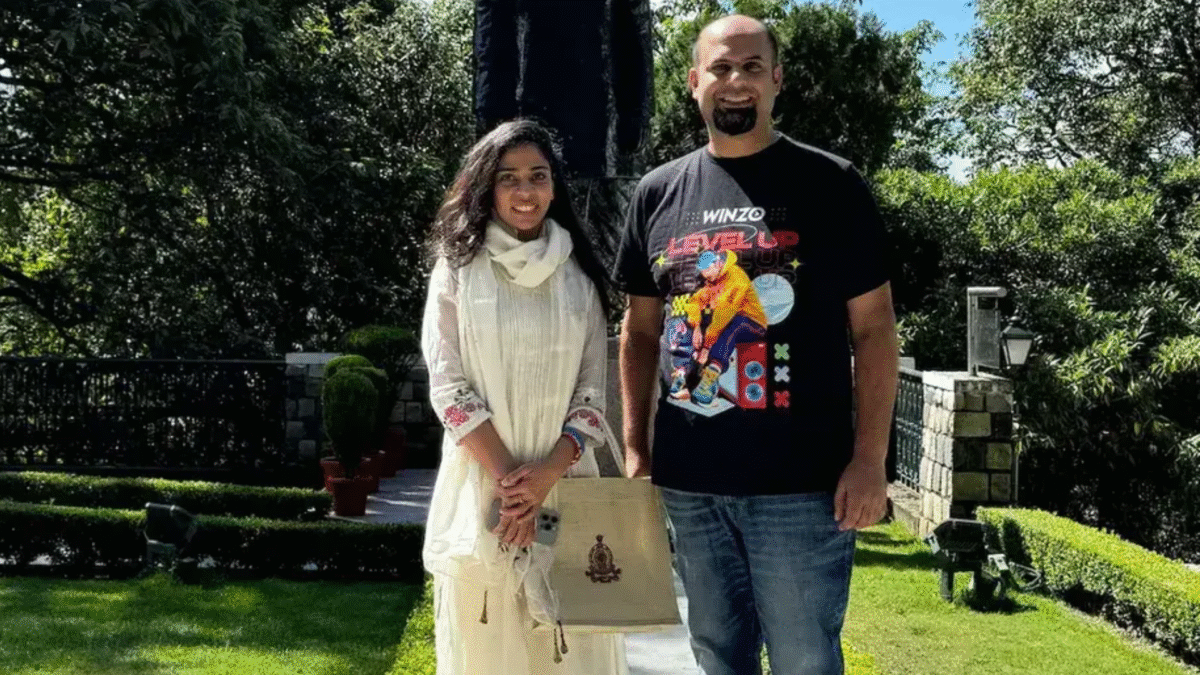
The Enforcement Directorate (ED) has arrested the two founders of the gaming platform WinZO, Saumya Singh Rathore and Paavan Nanda, for allegedly laundering money.

According to the ED, WinZO did not return around ₹43 crore to users after the government banned real-money gaming. Instead, the agency says the company moved the money around, hid it in different accounts, and even sent some funds abroad in suspicious ways.

During searches in Delhi, Bengaluru and Gurgaon, the ED froze assets worth over ₹500 crore. This includes bank accounts, fixed deposits, mutual funds and investments linked to WinZO and its founders.

Investigators also claim that WinZO used unfair systems inside the app. They say the company made players unknowingly compete against software “bots” instead of real people, which made users lose money more often.

The case is being investigated under the Prevention of Money Laundering Act (PMLA). After the arrests, the founders were taken to a Bengaluru court, and the ED was given custody for further questioning.

WinZO has said it is cooperating with authorities and following the law.

The arrests are part of a wider crackdown on online gaming companies, especially after stricter rules were introduced on real-money gaming in India.

Also Read: Bandhan Bank to sell nearly ₹7,000 cr of bad Loans

Categories
Corporate

Bandhan Bank to sell nearly ₹7,000 cr of bad Loans

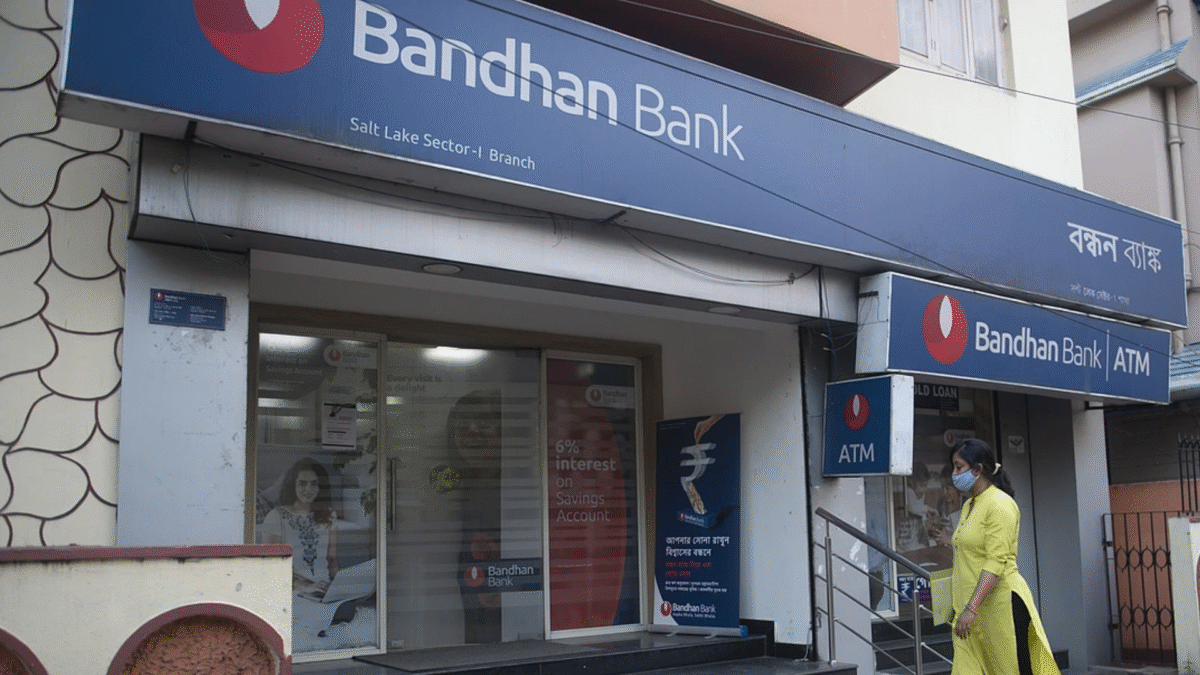
Bandhan Bank has decided to sell a big chunk of its old, unpaid loans, almost ₹7,000 crore, to companies that specialise in recovering bad debts. These loans are unsecured retail loans, mostly given to small businesses, micro-entrepreneurs, and group borrowers.

The bank says many of these loans have not been repaid for over six months, and some were already written off earlier because recovery seemed unlikely. Instead of keeping these stressed loans on its books, Bandhan now wants to hand them over to asset reconstruction companies (ARCs), which take on the risk and try to recover whatever money they can.

The overdue loans (₹3,212 crore) will be sold through a Swiss Challenge method, where the bank invites bids and then allows competing buyers to improve upon them. The written-off loans (₹3,719 crore) will be auctioned separately.

Most of these loans come from Bandhan’s micro-finance and small-business segments,  borrowers who often run tiny shops, farms, or home-based enterprises. The bank says selling these loans will help it clean up its balance sheet and focus on healthier business.

If the sale attracts strong interest, Bandhan may consider more such transactions later.

Also Read: GAIL shares drop 6.5% after ₹65.69 tariff

Categories
Corporate

GAIL shares drop 6.5% after ₹65.69 tariff

GAIL (India) Limited’s shares declined 6–6.5% on 28 November 2025 following the Petroleum and Natural Gas Regulatory Board’s (PNGRB) announcement of a revised pipeline tariff.

The regulator approved an increase for GAIL’s integrated natural-gas pipeline network to ₹65.69 per MMBtu from the current ₹58.60, reflecting a 12% rise. However, this was below both market expectations of approximately 15% and GAIL’s requested tariff of ₹78 per MMBtu, or a 33% increase. The new tariff will be effective from 1 January 2026, with a comprehensive review deferred until FY 2028.

Market analysts noted that while the tariff adjustment provides incremental revenue support, the smaller-than-anticipated revision limits its immediate impact on the company’s earnings. Certain cost components were revised, but the overall effect on realized tariffs is expected to be moderate.

Investor sentiment reflected caution as the stock adjusted to the tempered revenue outlook amid broader business uncertainties in GAIL’s petrochemicals and gas marketing segments.

Also Read: Omnicom merges with IPG, becomes advertising giant

Categories
Corporate

Omnicom merges with IPG, becomes advertising giant

Global advertising giants Omnicom Group and Interpublic Group (IPG) have officially merged, forming the world’s largest advertising and marketing company. The deal, valued at around $13.25 billion in an all-stock transaction, gives former Omnicom shareholders 60.6% and IPG shareholders 39.4% of the combined company. IPG shareholders received 0.344 Omnicom shares for each IPG share.

The merger brings together some of the most prominent creative and media agencies worldwide, including McCann, FCB, MullenLowe, and IPG Mediabrands, under one roof. With a combined annual revenue exceeding $25 billion, the new entity will dominate global advertising and become the second-largest network in India, after WPP plc.

Regulatory approvals were completed recently, with the European Commission giving unconditional clearance, allowing the merger to finalize. Industry analysts note that while the merger strengthens the company’s global scale and resources, it may also lead to job consolidations and operational changes as overlapping agencies restructure.

 The merger highlights how major advertising firms are seeking scale to compete amid declining traditional ad revenues and the rise of digital and AI-powered marketing solutions. For Indian advertisers, this consolidation could influence media buying, campaign strategies, and pricing, as fewer large networks control a bigger share of the market.

Also Read: Adani buys India’s top pilot-training company for ₹820 cr

Categories
Corporate

Adani buys India’s top pilot-training company for ₹820 cr

Adani Defence Systems & Technologies, part of the Adani Group, has bought a majority stake in Flight Simulation Technique Centre (FSTC), India’s largest independent pilot-training company, for ₹820 crore.

The deal gives Adani control of around 73% of FSTC, while the original owners retain the remaining 27%. FSTC runs 11 advanced flight simulators and 17 training aircraft, offering services from commercial pilot licenses to specialized skill courses. The company has training centers in Gurugram and Hyderabad and flying schools in Haryana. It is certified by India’s DGCA and Europe’s EASA.

This acquisition marks Adani’s entry into pilot training and flight simulation. With India’s aviation industry growing fast, the demand for trained pilots is increasing. By acquiring FSTC, Adani aims to offer complete aviation services, covering training, maintenance, and defence support  and expand its presence in both civil and military aviation.

Also Read: Asian Paints to invest ₹340 crore in new UAE plant

Categories
Beyond

Gold nears ₹1.26 lakh, silver climbs up ₹1.64 lakh

Gold and silver futures on the Multi Commodity Exchange of India (MCX) climbed on Friday, fueled by expectations of a U.S. Federal Reserve rate cut and strong domestic demand ahead of the wedding season.

MCX December gold contracts rose 0.39% to ₹1,25,999 per 10 grams, while silver December contracts gained 0.85% to ₹1,63,849 per kilogram in early trading.

Analysts said the rally was driven by a softer U.S. dollar, healthy spot-market demand, and a high probability of a Fed rate cut in December. Some profit-booking was also seen, reflecting caution amid global market volatility and currency fluctuations.

With both global cues and domestic buying supporting the market, bullion, particularly gold, remains in focus for investors.

Also Read: Sensex gains 100 Points, Nifty tops 26,200

Categories
Corporate

Sensex gains 100 Points, Nifty tops 26,200

The Indian market began the session on a firm note on Friday, with the Sensex opening around 85,788, up 68 points, and the Nifty starting near 26,233, adding about 17 points. The early tone remained positive as investors continued to buy into cyclicals after the recent record-high rally.

Auto and metal stocks supported the market at the open, with Mahindra & Mahindra, Reliance Industries, Hindustan Unilever, Tech Mahindra and Titan gaining between 1% and 2%. Sectorally, the metal index rose around 0.5%, while auto stocks also saw steady traction.

However, the broader mood was mixed as oil & gas stocks traded lower, keeping overall gains in check. Analysts said the opening reflects cautious optimism, with markets expected to stay in a consolidation phase after hitting new peaks earlier in the week.

Also Read: Sensex 85,720, Nifty 26,215 end higher after record peaks

Categories
Technology

OpenAI API user data exposed in Mixpanel hack

OpenAI has confirmed that a security breach at Mixpanel, one of its third-party analytics partners, exposed personal details of some users who rely on the company’s paid API services. The incident took place on 9 November 2025, when hackers gained access to Mixpanel’s systems. Mixpanel later informed OpenAI about the intrusion and shared the compromised dataset for investigation.

According to OpenAI, the leaked information is limited but still sensitive. It includes names linked to API accounts, email addresses, user or organisation IDs, approximate location data based on browser information, and technical details such as the browser, operating system and referring website. This data was collected to track user analytics on OpenAI’s API platform.

Importantly, no confidential user content, passwords, API keys, payment information, billing details, or chat logs were exposed. OpenAI emphasised that the breach does not affect regular consumers using ChatGPT, as this dataset only involved analytics connected to the platform.openai.com API service. All OpenAI models and systems continue to operate normally.

Following the incident, OpenAI immediately removed Mixpanel from all its production environments and ended its use of the company’s analytics services. The company is now contacting all affected users directly through email. OpenAI has also launched a broader review of its security and vendor-management processes to reduce the risk of similar breaches in the future.

Security experts warn that the exposed information could still be used for phishing attempts. With names and email addresses now potentially outside OpenAI’s secure ecosystem, attackers may try to send convincing scam emails pretending to be from OpenAI or related platforms. Users are advised to be cautious about unexpected messages, avoid clicking suspicious links and ensure that multi-factor authentication (MFA) is enabled on all critical accounts.

The incident highlights the vulnerabilities that can arise from third-party service providers, even when a company’s own systems remain secure. As more businesses depend on cloud and AI services, the security of every partner in the chain becomes crucial. OpenAI has reassured customers that it is strengthening auditing practices and increasing oversight of external vendors to prevent similar issues.

Also Read: JP Morgan predicts Nifty50 could hit 30,000 by 2026

Categories
Leaders

Robinhood CEO’s AI venture Harmonic hits $1.45 billion

Harmonic, the AI startup co-founded by Robinhood CEO Vlad Tenev, has closed a fresh $120 million funding round, lifting its valuation to $1.45 billion. The raise underscores Tenev’s growing influence as a tech leader betting on a new direction for artificial intelligence,  one built on mathematical rigour, transparency and verifiable reasoning.

Founded in 2023, Harmonic is attempting to solve a leadership-level challenge facing the AI industry: trust. While most AI models risk “hallucinating,” Harmonic’s flagship system, Aristotle, reasons using formal logic and expresses outputs in a provable programming language. This makes its decision-making traceable, a quality that leaders in high-stakes fields like finance, aerospace and software reliability have been demanding.

Though still pre-revenue, Harmonic’s rapid valuation growth shows that investors view this approach as the future of responsible AI leadership. The new capital will boost computing power, accelerate model development and strengthen its push to build AI that organisations can depend on for mission-critical decisions.

Tenev’s involvement also reflects a shift among global technology leaders,  moving from building apps to building the foundations of the next era of intelligence, where safety, logic and accountability matter as much as raw capability.

Also Read: IMF shifts India to crawl-like regime