Categories
Leaders

Vinay Tonse named Yes Bank MD & CEO

The Reserve Bank of India (RBI) has approved Vinay Muralidhar Tonse as the new Managing Director and CEO of Yes Bank for a three‑year term. He will succeed Prashant Kumar, whose extended tenure ends in April 2026.

Tonse, a former SBI Managing Director, brings extensive experience in retail banking and operations. His appointment is subject to shareholder approval and aligns with Yes Bank’s plans to strengthen governance, expand services, and boost customer outreach.

The market reacted positively to the news, with shares drawing investor attention following the announcement. Yes Bank confirmed that Tonse meets all regulatory requirements and is not barred by any authority from holding the position.

This leadership change comes as Yes Bank continues to implement strategic growth initiatives and leverage past restructuring efforts, including backing from global partners.

Also Read: Senior Peak XV partners exit to launch new VC firm

Categories
Leaders

Senior Peak XV partners exit to launch new VC firm

Three senior partners of Peak XV, a leading venture capital (VC) firm in India, have resigned to launch their own investment firm. The departing partners are Ashish Agrawal, Ishaan Mittal, and Tejeshwi Sharma. Agrawal and Mittal had been with Peak XV and its predecessor Sequoia Capital India for over a decade, while Sharma brought expertise in SaaS and fintech investments.

Peak XV confirmed the departures and said the decision was made after internal discussions. The firm cited differences over economics and executive payouts as the main reason for the exits. Peak XV’s leadership said these changes are normal and are in the long-term interest of the firm and its investors.

The move comes amid a period of senior-level changes at Peak XV since it split from Sequoia Capital India in 2023. The firm has been restructuring and focusing on new areas, including artificial intelligence. To fill the leadership gap, Peak XV promoted Abhishek Mohan to managing director and Saipriya Sarangan to chief operating officer.

The departing partners said they want to pursue their entrepreneurial ambitions and build a new investment firm with trusted colleagues. Industry experts see this as part of a growing trend where experienced VC investors in India are starting their own specialised funds.

Despite the exits, Peak XV remains committed to its investment plans and sees the leadership changes as an opportunity to strengthen its team and continue backing innovative startups.

Also Read: Alphabet expands Bengaluru offices, adds thousands of AI jobs

Categories
Corporate

Alphabet expands Bengaluru offices, adds thousands of AI jobs

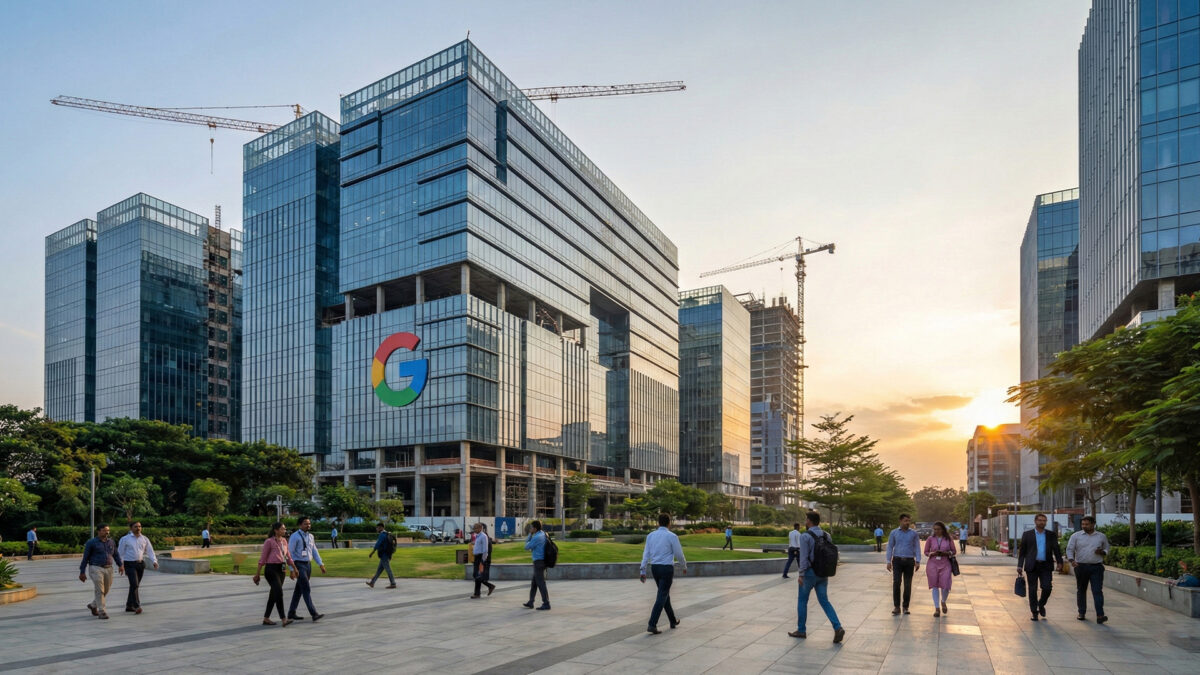
Alphabet Inc, the parent company of Google, is planning a major expansion in India, with a focus on Bengaluru, one of the country’s top tech cities. The company is leasing a new office tower in the Whitefield tech corridor and is considering two more buildings, creating a massive new campus for its growing workforce.

If Alphabet occupies all three towers, the new space could accommodate up to 20,000 employees, more than doubling its current staff in India, which is around 14,000. The first office is expected to be ready in the coming months, with the other two set to open next year.

A company spokesperson confirmed Alphabet’s strong presence in Bengaluru and other Indian cities, while highlighting that the new tower lease reflects its long-term plans in the country. The company, however, did not comment on the total number of employees or future expansion plans.

Experts say the expansion is partly due to tighter U.S. visa rules, which have made it harder for American tech companies to bring talent from abroad. With these restrictions, India is emerging as a key hub for global tech and AI talent, and companies like Alphabet are increasingly investing in local growth.

Bengaluru, already known as India’s Silicon Valley, is quickly becoming a global centre for artificial intelligence. Several AI companies are setting up shop here, and local talent is gaining worldwide recognition. For Alphabet, this expansion is not just about more office space—it’s a bet on India’s growing role in shaping the future of technology.

Industry insiders see this as a long-term commitment, showing that global tech giants are not just outsourcing to India, they are building major operations here. For Bengaluru, it’s another step in solidifying its place on the world’s technology map.

With more jobs, more innovation, and a growing focus on AI, Alphabet’s plans are set to strengthen India’s position in the global tech ecosystem, while giving thousands of professionals a chance to be part of cutting-edge technology projects right at home.

Also Read: Bajaj Finance shares drop 6% as Q3 provisions weigh

Categories
Corporate

Bajaj Finance shares drop 6% as Q3 provisions weigh
Shares of Bajaj Finance fell sharply after the lender reported its Q3 results, as investors reacted nervously to a spike in credit provisions, despite healthy business growth and a supportive broker outlook.

For the December quarter, Bajaj Finance posted a year-on-year decline in net profit, largely due to higher provisioning for potential loan losses and one-time costs. While the company continued to grow its loan book at a strong pace, the higher buffers taken to protect against future stress weighed on earnings and market sentiment.

The stock came under pressure even though the company’s core operations remained resilient. Net interest income rose strongly, supported by steady demand for consumer and SME loans. Assets under management also recorded robust growth, highlighting that borrowing activity remains intact across segments.

Adding a contrasting note, global brokerage JPMorgan upgraded the stock, citing confidence in Bajaj Finance’s long-term growth story, strong franchise, and improving asset quality over time. However, the upgrade failed to calm near-term concerns, as investors focused on the immediate impact of elevated provisions on profitability.

Market participants remain cautious, noting that while Bajaj Finance continues to deliver on business expansion and customer acquisition, credit costs and regulatory-related expenses could keep earnings under pressure in the short term.

Also Read: ChrysCapital picks minority stake in Nash Industries

Categories
Corporate

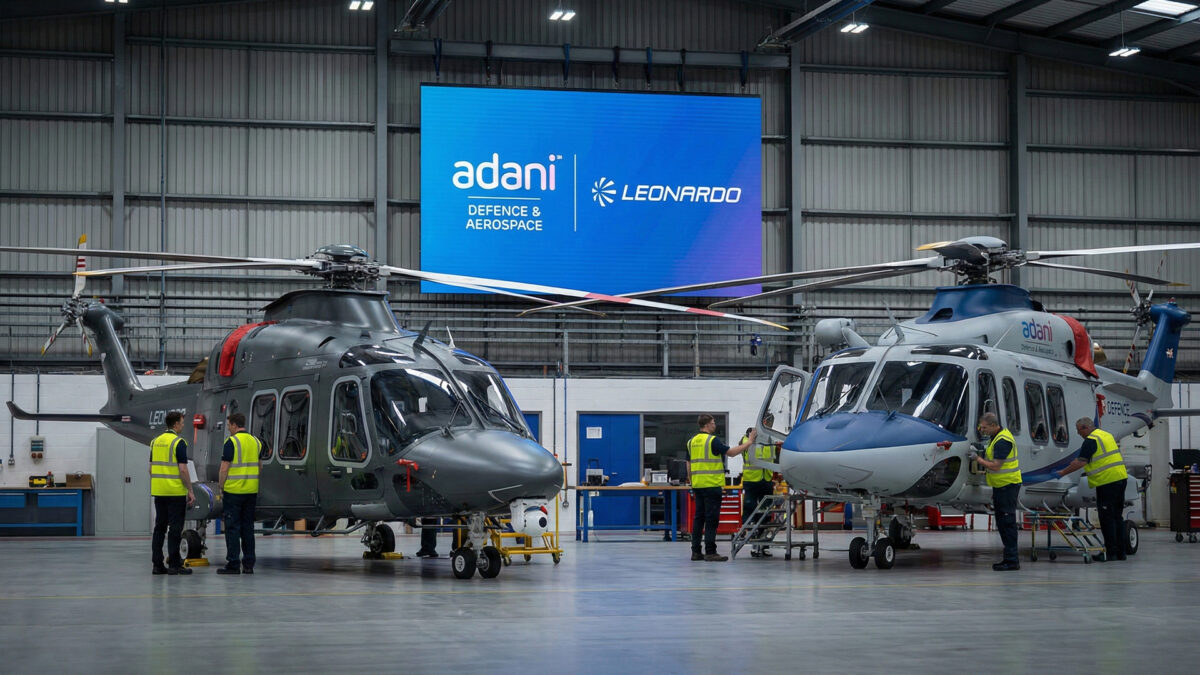
Adani Defence and Leonardo join hands to build helicopters in India

Adani Defence & Aerospace and Italian aerospace major Leonardo have come together in a strategic partnership that could reshape India’s helicopter manufacturing landscape. The collaboration, announced this week, signals a shared commitment to building advanced helicopters in India while developing a strong, self-reliant aerospace ecosystem.

At its core, the partnership blends Leonardo’s global experience in helicopter design and technology with Adani Defence’s growing manufacturing and systems integration capabilities. The aim is not just to assemble helicopters locally, but to gradually build end-to-end capability — from production and testing to training and long-term maintenance.

The tie-up comes at a time when India’s armed forces are preparing for significant fleet modernisation. Over the next decade, the military is expected to require a large number of helicopters across roles such as transport, surveillance, utility and maritime operations. By manufacturing helicopters in India, the partnership hopes to ensure quicker availability, reduced dependence on imports and better lifecycle support.

Equally important is the focus on people and skills. The proposed ecosystem includes training programmes for pilots and technicians, development of maintenance, repair and overhaul (MRO) facilities, and the creation of a local supplier network. This approach is expected to generate high-skill employment and open opportunities for Indian small and medium enterprises to enter the aerospace supply chain.

Executives from both companies have described the alliance as a long-term commitment rather than a transactional deal. For Adani Defence, it represents a step toward building sovereign defence capability and positioning India as a serious aerospace manufacturing hub. For Leonardo, it reflects confidence in India’s industrial potential and its role as a strategic partner in the global defence market.

Beyond military use, the partnership could also support civil and commercial helicopter demand in the future, including emergency medical services, offshore operations and regional connectivity. As capabilities mature, India could emerge as a base for exports and global support services.

Industry observers say the collaboration fits squarely within the government’s ‘Make in India’ and ‘Aatmanirbhar Bharat’ vision, where international partnerships help accelerate domestic capability.

Also Read: Asia IT shares slide as AI triggers global tech sell-off

Categories
Corporate

Asia IT shares slide as AI triggers global tech sell-off

Asian software and IT stocks fell sharply after a heavy sell-off in U.S. technology markets, as investors grew increasingly nervous about the disruptive impact of new artificial intelligence tools on traditional software and services businesses.

The market jitters were triggered by recent announcements from U.S.-based AI startup Anthropic, which unveiled advanced automation features for its AI model, Claude. The tools are designed to perform complex tasks across areas such as legal research, marketing, sales, coding and data analysis. While Anthropic has said the outputs are meant to assist professionals rather than replace them, investors fear that such technology could significantly reduce demand for conventional software products and subscription-based services.

These concerns sparked a sharp global reaction. In the U.S. and Europe, software, data and professional services companies suffered steep losses, wiping out nearly $300 billion in market value in a single session. Shares of major information and analytics firms, including legal and financial data providers, dropped by double digits, dragging down broader tech indices such as the Nasdaq and the S&P 500.

The negative sentiment quickly spilled over into Asian markets. Software and IT stocks across the region declined as investors reacted to the overnight rout in global tech shares. India’s IT sector was among the worst hit, with shares of leading exporters such as Infosys, Tata Consultancy Services (TCS), Wipro and HCLTech falling as much as 6–7%. The sector is particularly vulnerable because a large share of its revenue comes from U.S. and European clients, where spending sentiment is closely tied to technology trends.

China’s software services stocks also came under pressure, with sector indices falling around 3%. Technology shares in Hong Kong and parts of Japan weakened as well, reflecting broader concerns that rapid AI adoption could disrupt existing business models faster than companies can adapt.

However, the sell-off was not uniform across the tech space. Hardware and semiconductor stocks held up better in parts of Asia, supported by expectations that demand for AI-related chips and infrastructure will continue to grow. South Korea’s market, for instance, found support from chipmakers seen as direct beneficiaries of the AI boom.

Also Read: Gold up ₹1,53,940, Silver slips to ₹2,79,900

Categories
Beyond

Gold up ₹1,53,940, Silver slips to ₹2,79,900

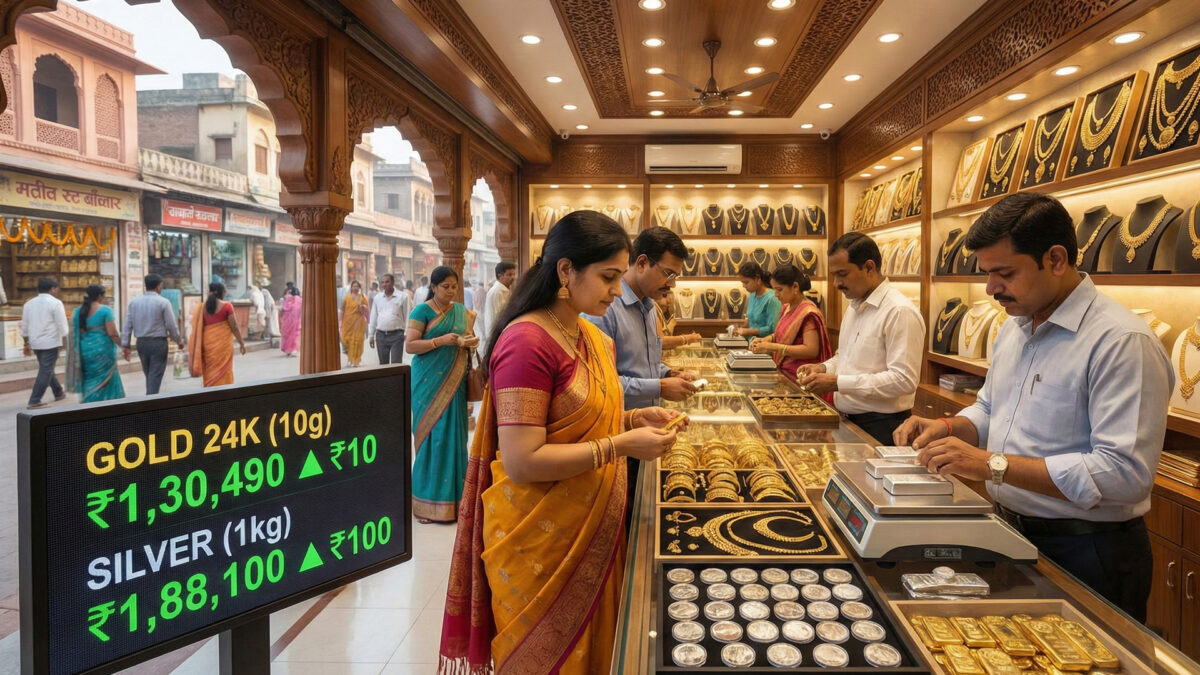
Gold prices in India edged higher on Wednesday, while silver saw a marginal decline, reflecting continued volatility in the precious metals market. According to latest market data, 24-carat gold rose by ₹10 to ₹1,53,940 per 10 grams, while silver prices fell by ₹100 to ₹2,79,900 per kilogram.

The modest rise in gold comes after a period of intense price fluctuations. In recent weeks, gold prices surged to record highs, driven by strong safe-haven demand amid global uncertainty. However, those gains were followed by bouts of profit-booking, leading to sharp intraday corrections. Despite these swings, gold continues to trade at historically elevated levels, signalling sustained investor interest.

Market participants said gold’s resilience is linked to ongoing concerns around global economic growth, currency movements, and geopolitical tensions. When uncertainty rises, investors often turn to gold to protect value, helping the metal recover quickly even after short-term corrections. Traders noted that buying interest remains intact, especially on dips, keeping prices supported above the ₹1.5-lakh mark.

Silver, meanwhile, showed mild weakness in today’s trade. After witnessing steep rallies earlier this year, at times nearing ₹3 lakh per kilogram, silver prices have been more volatile than gold. Analysts attributed the latest dip to profit-taking by traders and cautious sentiment after recent sharp moves. Changes in global trading margins and reduced speculative positions have also added pressure on silver prices.

On the Multi Commodity Exchange (MCX), both metals have seen wide intraday movements over the past few sessions, underlining nervous market conditions. Experts say silver, being both a precious and industrial metal, tends to react more sharply to changes in global demand outlook, making it more prone to sudden price swings.

Also Read: Sensex swings in range, Nifty breaches 25,750 mark

Categories
Corporate

Sensex swings in range, Nifty breaches 25,750 mark

Markets traded with high volatility on Wednesday, as the BSE Sensex swung between gains and losses through the session, while the Nifty 50 slipped below the crucial 25,750 mark, signalling cautious investor sentiment.

 Selling pressure intensified as the session progressed, led by sharp losses in IT stocks. The Nifty IT index fell nearly 6%, making it the worst-performing sector of the day. Major IT stocks such as Infosys, TCS, Wipro and HCL Tech were among the top losers, hurt by weakness in US technology stocks and concerns over near-term demand outlook.

Auto and metal stocks also witnessed selling pressure, adding to the weakness in benchmarks. Stocks like Tata Motors, JSW Steel and Hindalco traded lower as investors stayed cautious on global growth prospects. Broader markets mirrored the weak sentiment, with mid-cap and small-cap indices trading in the red amid heightened volatility.

On the positive side, select FMCG and banking stocks helped limit deeper losses. Hindustan Unilever, ITC and Nestlé India were among the key gainers, supported by defensive buying. In the banking space, heavyweight stocks such as HDFC Bank and ICICI Bank showed mild gains, providing some stability to the indices.

Global cues remained mixed, with Asian markets trading unevenly after overnight weakness in US tech stocks. While optimism over recent international trade developments had lifted markets earlier, investors chose to book profits in the absence of fresh triggers. Ongoing uncertainty around global interest rates and geopolitical tensions also weighed on sentiment.

Investors are closely watching developments related to the Union Budget, corporate earnings announcements and global macro signals for further cues. Market experts said near-term movement is likely to remain range-bound, with stock-specific action and sector rotation driving trade.

Also Read: Sensex rallies 2,073 points, Nifty tops 25,700

Categories
Leaders

Ex-RBI Director joins Bajaj Housing finance board

Bajaj Housing Finance Limited has appointed Ajay Kumar Choudhary as an Independent Director on its board, the company announced on February 2, 2026. His appointment will take effect from March 1, 2026, and will continue for five years, subject to approval by the company’s shareholders.

Choudhary brings over three decades of experience in central banking and financial regulation. He retired as an Executive Director of the Reserve Bank of India (RBI) and has played key roles in areas such as payments, regulatory operations, and financial policy. His expertise is expected to strengthen the company’s governance, risk management, and compliance framework.

The decision to nominate Choudhary was made following the recommendation of the company’s Nomination and Remuneration Committee, which evaluates candidates for their experience, independence, and ability to contribute to board-level decisions. Once approved by shareholders, Choudhary will serve a full term of five years and will not be subject to retirement by rotation.

This appointment is part of Bajaj Housing Finance’s broader effort to enhance its board quality and governance as the company expands in India’s housing finance sector. Since its IPO in 2024, the company has been actively growing its lending portfolio and strengthening its regulatory compliance practices.

By bringing in a seasoned central banker like Choudhary, Bajaj Housing Finance signals its focus on strong corporate governance and strategic oversight, especially in a market where regulatory expectations and operational complexities are increasing.

Also Read: India eyes higher 49% FDI in public banks

Categories
1 Minute-Read

Capgemini to exit US unit linked to migrant tracking

French IT major Capgemini has decided to sell its US-based subsidiary, Capgemini Government Solutions, after concerns were raised about its role in supporting migrant tracking and deportation systems for US immigration agencies.

The move comes amid political and public scrutiny in France over ethical issues linked to such contracts. Capgemini said legal constraints limited its control over the unit’s operations, prompting the decision to divest.

The company clarified that the subsidiary contributes only a small portion to its overall revenue and that the sale process will begin immediately.